Skip to content
21K School

Primary School in Puducherry for Grades 1 to 5

Strong foundations. Growing independence. A wider world of possibility.

A boy raising his hand eagerly with a pencil in his other hand

Primary years that build both capability and confidence

Primary School is where curiosity begins to meet discipline. Children move from learning through immediate experience to reading with greater purpose, reasoning with numbers, investigating the world and expressing ideas with increasing clarity.

At 21K School, Puducherry, Grades 1–5 combine strong academic foundations with active learning, creativity, movement, technology and close human relationships. A consistent homeroom facilitator understands the child across the school year, while specialist facilitators bring depth to languages, arts, physical education, technology and other learning areas.

The goal is not simply to help children remember more. It is to help them understand, apply, question, communicate and become increasingly responsible for their own learning.

A primary school where every learner remains visible

  • Maximum 24 learners in a section
  • Maximum two sections per grade
  • Monday to Friday
  • 8:30 a.m. to 3:30 p.m.
  • Homeroom facilitator supported by specialists

Primary School classrooms are housed in Aarambh—The Beginning—within La Lumière, the campus identity of 21K School, Puducherry.

Why families choose primary school at 21K School, Puducherry

  • Strong academics without passive learning

    Children build fluency in language and mathematics, explore science and society, and learn to communicate across different forms. Concepts are taught directly when needed, then strengthened through discussion, practice, projects, demonstrations, field experiences and application.

  • A homeroom facilitator who sees the whole child

    Academic performance is only one part of a learner’s story. A homeroom facilitator sees how the child participates, organises work, collaborates, responds to feedback and approaches difficulty. This continuity helps the school intervene early, recognise emerging strengths and keep parents meaningfully informed.

  • Challenge for learners who are ready for more

    Personalisation is not limited to remediation. Learners who demonstrate readiness receive deeper questions, enrichment, Mastery opportunities, advanced concepts and greater independence. The aim is to keep capable learners intellectually engaged while ensuring that foundations remain secure.

  • Support before a gap becomes a barrier

    Learning evidence helps facilitators identify misconceptions, unfinished foundations or a need for a different explanation. Zero Period, targeted practice, small-group support and the personalised learning platform allow intervention to happen within the school system.

  • A complete childhood within a serious school

    The school day includes books, handwriting, dialogue, laboratories, making, sports, arts, friendships and outdoor time. Technology extends what children can do; it does not replace relationships, movement or the physical experience of learning.

Looking for a primary school in Puducherry? Get admission updates.

How learning develops from Grade 1 to Grade 5

  1. 1

    Grade 1: Making the transition with confidence

    Grade 1 builds on the child’s early-years foundations while introducing a more structured academic rhythm. Children strengthen reading, writing, number sense, classroom routines, communication and independence without losing play, movement and hands-on discovery.

  2. 2

    Grade 2: Strengthening fluency and expression

    Learners read and write with growing confidence, use mathematics more flexibly and begin to explain observations and ideas in greater detail. They learn to plan simple tasks, work with peers and take increasing responsibility for materials and routines.

  3. 3

    Grade 3: Connecting ideas and learning more independently

    Science and Social Studies become more distinct areas of study. Learners use evidence, organise information, solve multi-step problems and begin using a prescribed laptop for purposeful learning, coding, formative assessments, presentations and research.

  4. 4

    Grade 4: Applying knowledge with greater depth

    Children work with more complex texts, mathematical relationships, scientific explanations and social contexts. Projects, discussions and presentations require them to select information, justify choices and communicate with greater precision.

  5. 5

    Grade 5: Preparing for subject-specialist learning

    Grade 5 consolidates core knowledge and learning habits before Middle School. Learners practise sustained inquiry, more independent planning, constructive collaboration, reflection and the ability to transfer understanding from one context to another.

What your child will learn

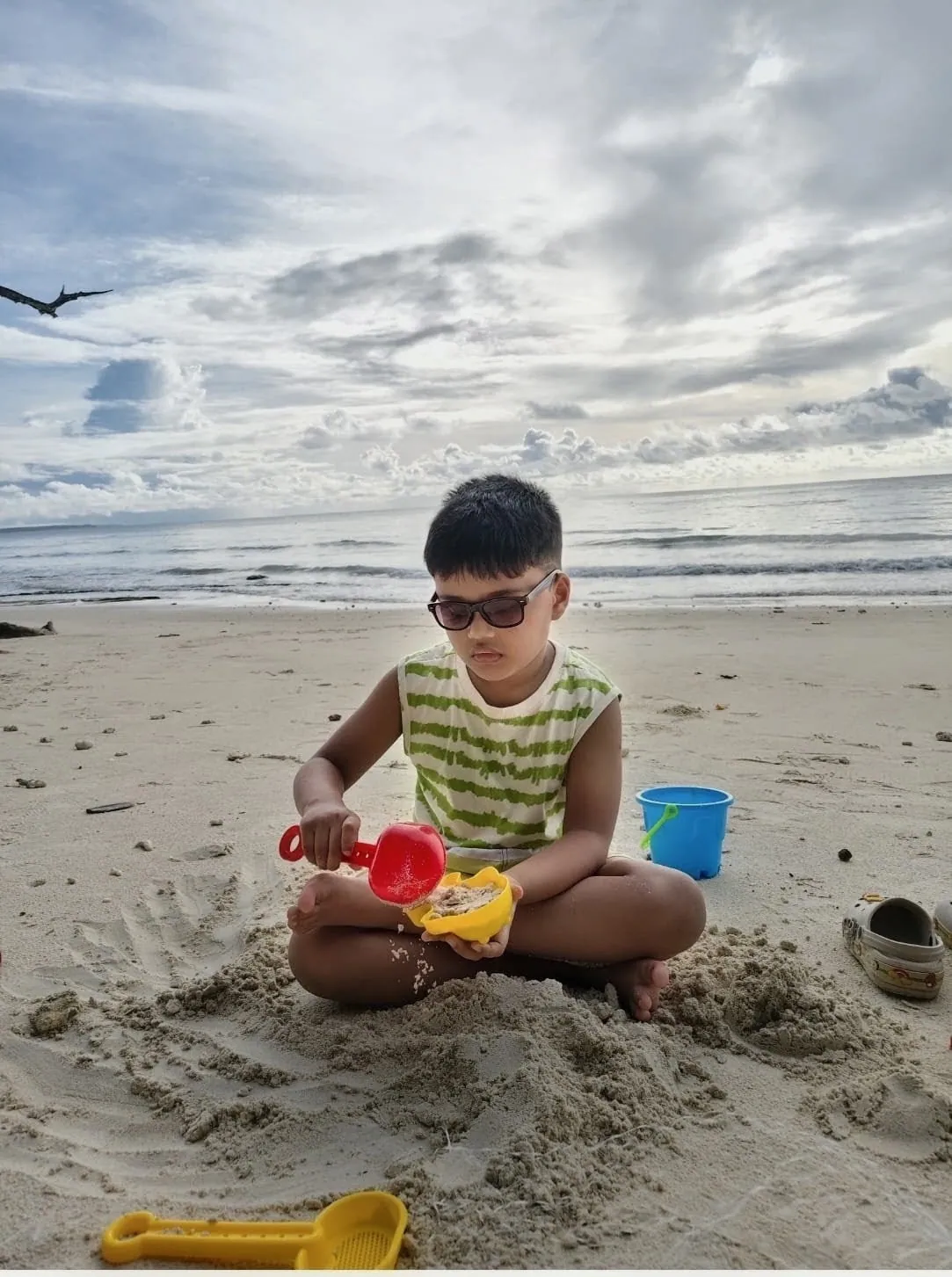
A young learner building a sandcastle on the beach
  • English

    English is the medium of instruction. Learners develop reading comprehension, vocabulary, grammar, writing, listening, speaking and an appreciation of different forms of literature. They learn to communicate for different purposes—not only complete language exercises.

  • Languages

    From Grade 1, learners enter the school’s language-learning structure. Tamil and French are available on campus, while 11 additional languages may be accessed online through the wider 21K ecosystem, subject to grade, timetable and programme availability.

  • Mathematics

    Mathematics develops number sense, operations, patterns, measurement, geometry, data handling and problem-solving. Children use objects, visual models, discussion, written methods and real-life contexts so that procedures are connected to understanding.

  • Environmental studies, science and social studies

    In Grades 1–2, Environmental Studies helps children understand themselves, communities and the natural world through integrated themes. From Grade 3, Science and Social Studies develop as clearer disciplines, with inquiry, observation, evidence, geography, history, civics and responsible engagement with the environment.

  • Computer science and digital capability

    Learners build age-appropriate computational thinking, digital literacy and safe technology habits. Grades 1–2 use the Computer Lab or a device at home when an activity requires it. From Grade 3, a prescribed laptop becomes part of the daily learning toolkit.

  • Arts, movement and physical education

    Visual art, music, dance, drama, theatre and physical education are part of the regular programme. These areas develop expression, coordination, discipline, confidence, collaboration and ways of thinking that enrich academic learning.

  • Learning Garage

    Design, electronics, robotics, AI, making and applied problem-solving allow learners to move from an idea to something they can test, improve and explain. Learning Garage experiences are part of the regular school programme.

A curriculum designed for understanding

The Primary curriculum is organised to help children move from the familiar to the wider world, from concrete experience to abstract thinking and from guided participation to increasing independence.

  • Connected learning

    Ideas are connected across subjects where the connection adds meaning. A theme may combine reading, measurement, scientific observation, social understanding, art and presentation without weakening the integrity of any subject.

  • Learning by doing

    Discussion, field visits, models, experiments, surveys, demonstrations and projects help children construct understanding through activity. A well-designed task asks a learner to use knowledge—not merely repeat it.

  • Spiral progression

    Important ideas return across grades with greater complexity. Learners connect new understanding to what they already know, strengthen foundations and gradually develop the language and methods of each subject.

  • Competency and life skills

    Communication, critical thinking, creativity, collaboration, self-management, digital responsibility and practical life skills are developed within academic learning rather than treated as occasional add-ons.

Want to see theme-based learning in action? Book a campus visit.

A day designed around attention, energy and growth

The Primary School day runs from 8:30 a.m. to 3:30 p.m., Monday to Friday.

  • Arrival, movement and time to settle into the campus
  • Morning assembly and community connection
  • Focused academic sessions with active learner participation
  • Short recesses and a longer lunch break
  • Laboratory, arts, sports, language, project and Learning Garage experiences
  • Purposeful technology use at defined points in the day
  • Zero Period for personalised enrichment, reinforcement or remediation

Children bring food from home. The sequence of the day balances concentration with movement, social interaction, making and reflection.

Personalised. Flexible. Accelerated.

  • Personalised

    Facilitator observation, assessment evidence and learning-platform data help identify what a learner understands, where support is needed and when the child is ready for greater challenge.

  • Flexible

    Within a structured school day, learners experience meaningful choices through languages, clubs, projects, reading, creative expression and different ways of demonstrating understanding. Flexibility does not mean optional attendance or reduced expectations.

  • Accelerated

    Acceleration means deeper challenge, enrichment, Mastery programmes, benchmark-led interventions, access to advanced online learning and opportunities to learn additional concepts. It does not mean routine grade skipping.

Technology with a clear educational purpose

Technology is introduced progressively. Grades 1–2 do not require a personal laptop; learners may use the Computer Lab or a device at home for selected activities. From Grade 3, learners bring a prescribed laptop with a webcam and headphones each day.

Devices may be used for personalised practice, coding, formative assessment, presentations, research and selected online experiences. They will not be used continuously. Reading, writing by hand, direct teaching, discussion, practical work, sport, art and outdoor activity remain essential parts of the day.

A limited day-loan laptop facility will be available through the library.

Ask how much screen time primary learners have on campus.

Progress that parents can understand

Primary assessment is designed to improve learning, not create rank-based pressure. Facilitators use different forms of evidence because a single test cannot show the full depth of a child’s understanding.

  • Classroom observation and questioning
  • Competency-based and formative assessments
  • Projects, portfolios, presentations and practical work
  • Age-appropriate summative assessments
  • Online formative assessments where appropriate
  • Narrative feedback and proficiency indicators
  • Formal report cards at the end of Term 1 and Term 2

The school does not provide marks, ranks or competition-based comparisons in Primary School. Parents receive scheduled and on-demand parent–teacher meetings, Coffee Meets, one-to-one connects, surveys and access to a dashboard showing relevant learning progress and conceptual understanding.

Homework that has a reason

Primary learners may receive reading, purposeful practice, reflection, preparation or project follow-through. Homework will not be assigned simply to keep a child occupied. Most guided academic work is designed into the school day so home can remain a place for reading, conversation, rest, interests and family life.

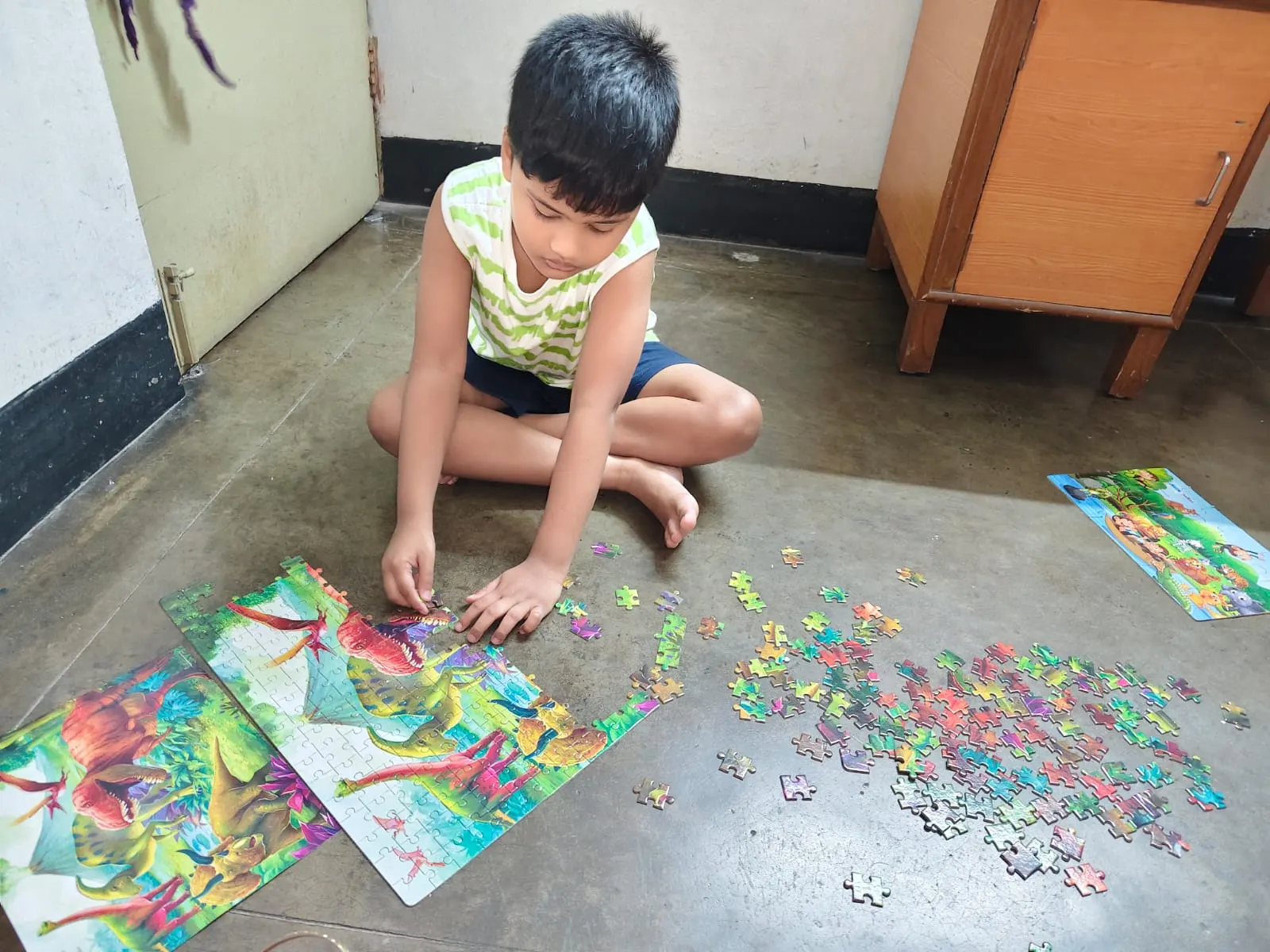
A child putting together a jigsaw puzzle on the floor at home

Clubs, houses and experiences beyond lessons

Every Primary learner selects at least one and no more than two age-appropriate clubs during the academic year. Clubs may include the TED-Ed Student Talks Program, Book Reading Club and other experiences in communication, creativity, innovation, science, entrepreneurship and practical life skills.

The House system—Google, Amazon, Microsoft and Apple—creates belonging and opportunities for leadership, service, collaboration and participation. It does not use competitive points, ranks or winners.

Sports Day, Arts Festival, Science Fest, Literary Festival, Annual Day, exhibitions, learner-led conferences, cultural celebrations and the School Carnival give children meaningful ways to contribute and be seen.

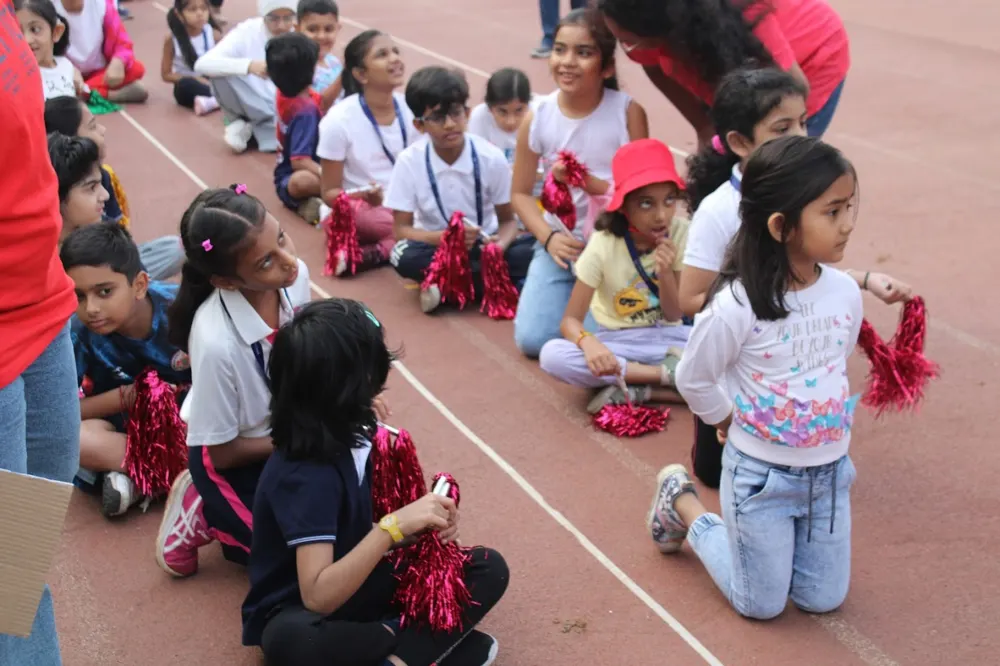
Young learners with red pom-poms cheering on the track at Sports Day

Which clubs can your child join? Register to get the list.

Learning beyond the campus

Field visits and day experiences help learners connect classroom ideas with real places, people and work. As children grow, they may access regional and domestic learning journeys and, when age-eligible, selected national or international programmes across the wider 21K community.

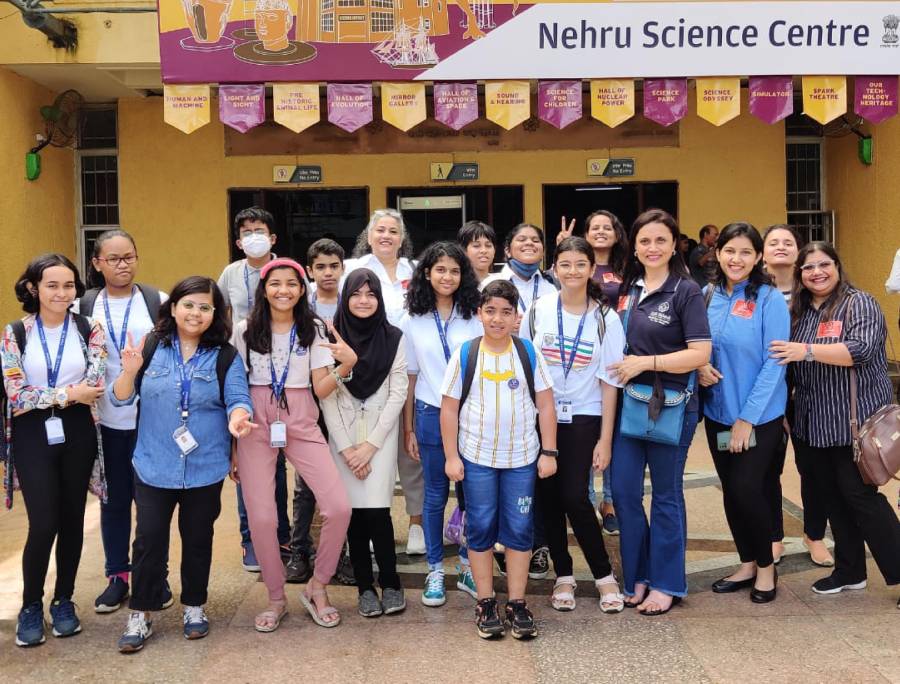
A group of learners and adults on an outing outside the Nehru Science Centre

Educators who combine knowledge with learning science

Primary learners have a consistent homeroom facilitator supported by specialist facilitators. Educators will be graduates or postgraduates with B.Ed. qualifications or other relevant credentials and will continue their development through 21K’s Learning Excellence system.

Training extends beyond subject knowledge to include assessment, learning science, inclusive practice, child development, classroom relationships, technology and the ability to design experiences that make learners think.

Learning support for foundations and potential

Learning support is not limited to children with identified special educational needs. It includes remediation, reinforcement, enrichment, support for gifted learners, emotional and psychological wellbeing, and guidance in life and personal-safety skills.

Zero Period and data-led interventions make support part of the school day. Online counsellors and relevant specialists may contribute where appropriate. Identified learning, developmental, medical or accessibility needs are considered individually, based on the learner’s needs and the school’s ability to provide appropriate support.

Does your child need extra help or extra challenge? Let’s talk.

A safe, inclusive campus

21K School, Puducherry is being developed as an inclusive and physically accessible campus. A full-time qualified nurse, infirmary, hospital tie-up, trained staff and defined emergency procedures support learner wellbeing.

The safeguarding system will include a designated safeguarding lead, POCSO and POSH compliance, staff background and police verification, controlled visitor access, CCTV across classrooms, entrances and appropriate common areas, campus security, professional housekeeping and age-appropriate digital-safety practices. CCTV footage will remain restricted to authorised personnel and will not be available for routine parent viewing.

A partnership with parents

Parents receive formal report cards at the end of both terms, but communication does not wait for a report card. Scheduled and on-demand parent–teacher meetings, Coffee Meets, surveys, one-to-one parent connects and the parent dashboard create a fuller view of the child’s learning and experience.

The aim is a candid, constructive partnership: celebrate progress, identify concerns early and agree on what the learner needs next.

School year, age and entry

The academic year runs from June to May across two terms. April is a compulsory Summer School Programme for enrolled learners, and May is the summer break.

Grade 1 learners should be six years of age as of 1 July of the academic year. Recommended ages for later grades progress accordingly. Exceptional age consideration may be given where appropriate, subject to the school’s review and applicable requirements.

Admission considers age eligibility, previous school records, a parent interaction, an age-appropriate learner interaction, the school’s ability to support the learner appropriately and seat availability. There is no standard competitive entrance examination.

Classes begin June 2027. Register to get admission updates.

Questions parents ask

Which grades are included in Primary School?

Primary School covers Grades 1–5. All five grades are planned for the inaugural 2027–28 intake.

Which curriculum will the school follow?

The school proposes to follow the CISCE curriculum and syllabus from Primary School onward, within a broader learning model built around conceptual understanding, competency, application, personalisation and active learning. This remains subject to the prescribed recognition and affiliation requirements.

What is the medium of instruction?

English is the medium of instruction.

Which languages can my child learn?

Tamil and French will be available on campus. Learners may also access 11 additional languages online through the wider 21K ecosystem, subject to grade, timetable and programme availability.

How many learners will be in a section?

Each section will have a maximum of 24 learners, with no more than two sections per grade.

Will my child need a laptop?

Grades 1–2 do not require personal laptops and may use the Computer Lab or a device at home when needed. From Grade 3, learners bring a prescribed laptop with a webcam and headphones each day.

Will children spend the school day on screens?

No. Devices are used at selected points for a defined learning purpose. Direct teaching, books, handwriting, discussion, experiments, making, arts, sports, friendships and outdoor activity remain central.

How will progress be reported without marks?

Progress is shown through assessment evidence, proficiency indicators, narrative feedback, portfolios, projects, formal term reports, parent–teacher meetings and the parent dashboard. The focus is on what the learner understands, can apply and is ready to learn next.

How does the school support high achievers?

High achievement is supported through deeper questions, enrichment, Mastery programmes, advanced concepts, benchmark-led planning and opportunities to work with greater independence. Personalisation raises the ceiling as well as strengthening the floor.

What support is available if my child has a learning gap?

Facilitators use observations and assessment evidence to plan reinforcement, different explanations, targeted practice, small-group support and Zero Period interventions. Specialist support may be added where appropriate.

Are sports, arts and clubs part of the regular programme?

Yes. Sports, visual and performing arts, Learning Garage experiences and selected clubs are part of the regular programme.

What should learners bring for food?

Learners bring food from home, following the school’s final food, allergy and safety guidance.

Is a uniform required?

Yes. A school uniform is compulsory and will be supplied by the school. Details will be shared before the academic year begins.

Will transport be available?

The school plans transport coverage across Puducherry city through a carefully selected transport partner. Final routes and stops will be announced closer to opening.


Give your child foundations that keep opening doors

The Primary years should do more than prepare a child for the next examination. They should build the knowledge, habits and confidence that make future learning possible.

At 21K School, Puducherry, children are encouraged to read deeply, reason carefully, create boldly, work with others and keep expanding what they believe they can learn.

Regulatory disclosure

21K School, Puducherry is a proposed school, subject to recognition by the Directorate of School Education, Government of Puducherry.

The school proposes to follow the CISCE curriculum and syllabus and intends to seek affiliation with the Council for the Indian School Certificate Examinations (CISCE), New Delhi, subject to the prescribed approvals and requirements.

Your next step

Register your interest to hear first when admissions open, or book a visit to see the campus.

Cookies on 21K School

Essential cookies keep the site working. With your OK we also use analytics and marketing cookies. Privacy policy · Cookie policy