


Did you know that in education, learning one skill can help you learn another?
The knowledge we gain in one situation is used in another for better understanding. This concept is known as “Transfer of Learning”.
The term transfer of learning is popular among psychologists and educators and helps in making learning more impactful and meaningful.
However, transfer of learning has various types and each type is useful in different situations. Let’s explain what transfer of learning means and its types.
Contents
What is Transfer of Learning?
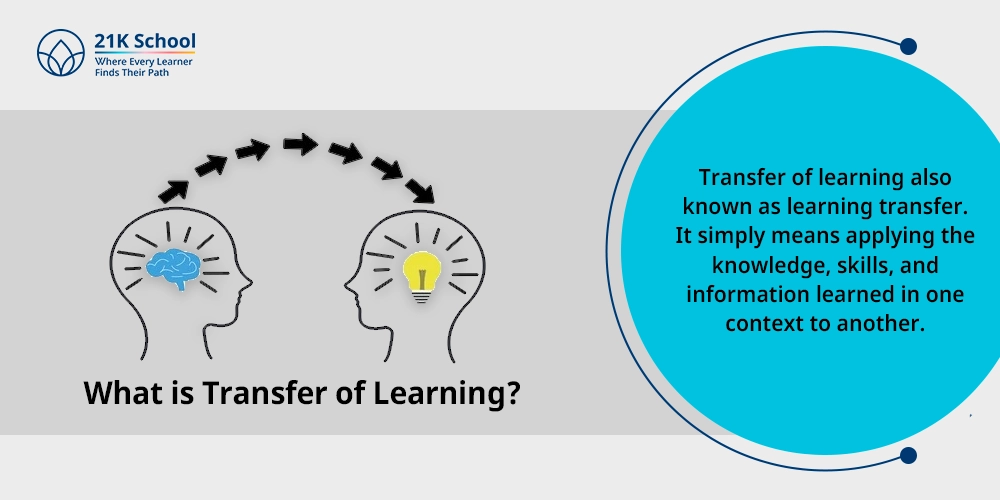
Transfer of learning also known as learning transfer. It simply means applying the knowledge, skills, and information learned in one context to another.
An individual turns theoretical knowledge or information into practical application, to assess the efficacy of learning. It helps in better understanding of information.
It is beneficial for better concept understanding, increased productivity, and retention of knowledge .
There are various benefits of learning transfer, including:
- Higher staff engagement rates
- Increased morale
- Better motivation
- Increased confidence levels
- Reduced staff attrition
- Improved customer service
- Higher revenues and profits
- Reduced costs
Why Do We Need Transfer of Learning?

The primary need of transfer of learning is to gain more knowledge . Learners apply the concepts learned in another situation to understand more about the learned concept.
Transfer of learning is ideal to increase the learning capacity of people. It is important to recognise and interpret relationships.
There are different types of transfer of learning used in different situations to make learning effective and meaningful. Positive, negative and zero transfer are the main types.
Real-life Examples of Types of Transfer Learning
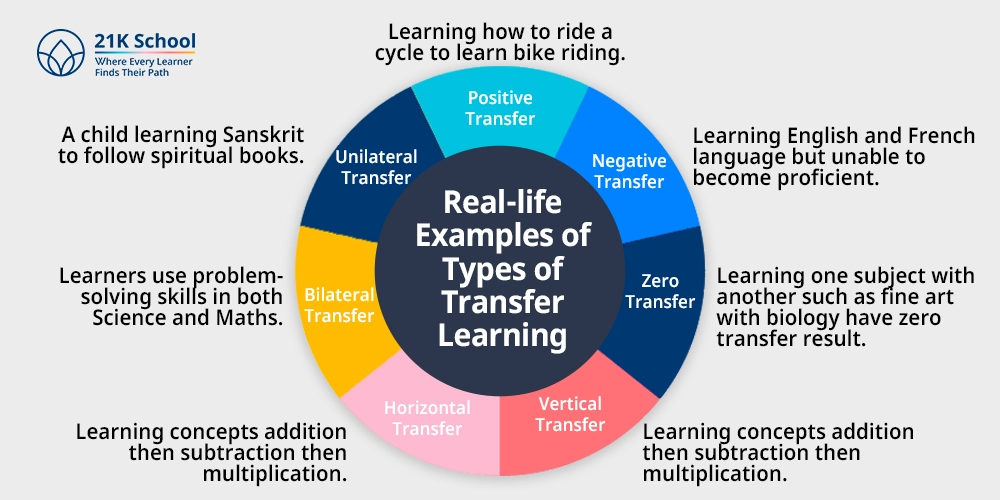
To understand different types of transfer of learning, individual must go through some real-life examples:
- Positive Transfer: Individual learning how to ride a cycle to learn bike riding. A child learning Hindi language to become proficient in Sanskrit.
- Negative Transfer: While learning a child using incorrect grammar rules from one language in another. A learner learning English and French language but unable to become proficient.
- Zero Transfer: Learning one subject with another such as fine art with biology have zero transfer result. A learner playing board game doesn’t affect learning
- Vertical Transfer: Students learning concepts addition then subtraction then multiplication. Children learn how to write alphabets then words then sentence formation.
- Horizontal Transfer: In classroom learning , learners use problem-solving skills in both Science and Maths. Using grammar in both reading and writing.
- Bilateral Transfer: A child learning to write with the right hand helps in writing with the left hand. Children learn how to play instruments and enhance hand-eye coordination.
Unilateral Transfer: Learning foundational literacy and numeracy to master in tough concepts. A child learning Sanskrit to follow spiritual books.
Types of Transfer of Learning
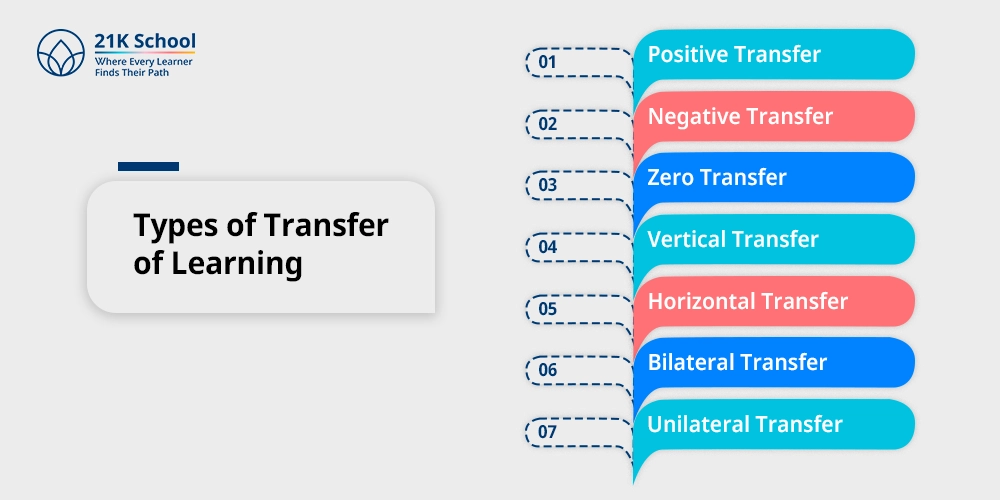
There are different types of transfer of learning which helps in customising effective teaching strategies. Let’s go through one by one:
1. Positive Transfer
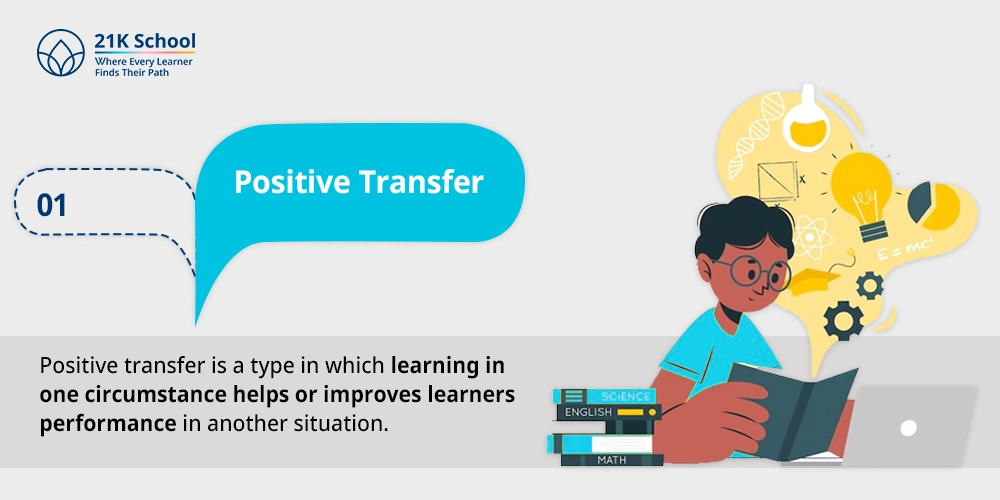
Positive transfer is a type in which learning in one circumstance helps or improves learners performance in another situation.
In this way, previous learned information or skills make new learning easier, faster, or more effective than before.
When to Use:
- When subjects or skills are similar or related it is ideal
- In curriculum design in which concepts build upon each other positive transfer can be used
2. Negative Transfer
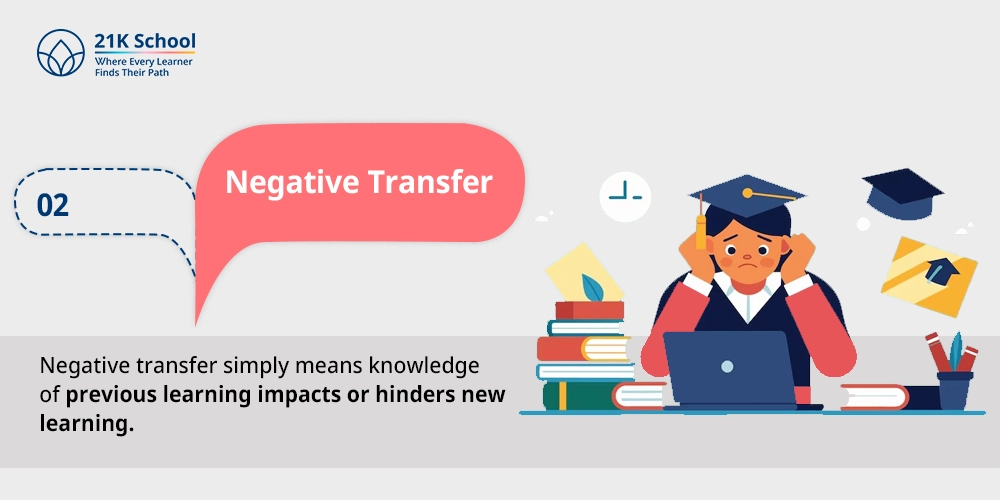
Negative transfer simply means knowledge of previous learning impacts or hinders new learning.
This generally happens if information within two learning contexts conflict with each other. Negative transfer is an effective type of transfer of learning to identify misconceptions and learning gaps .
Negative transfer makes learning difficult and confusing for people.
When to Use:
- Important in identifying learning barriers
- Helps teachers correct wrong prior knowledge
3. Zero Transfer
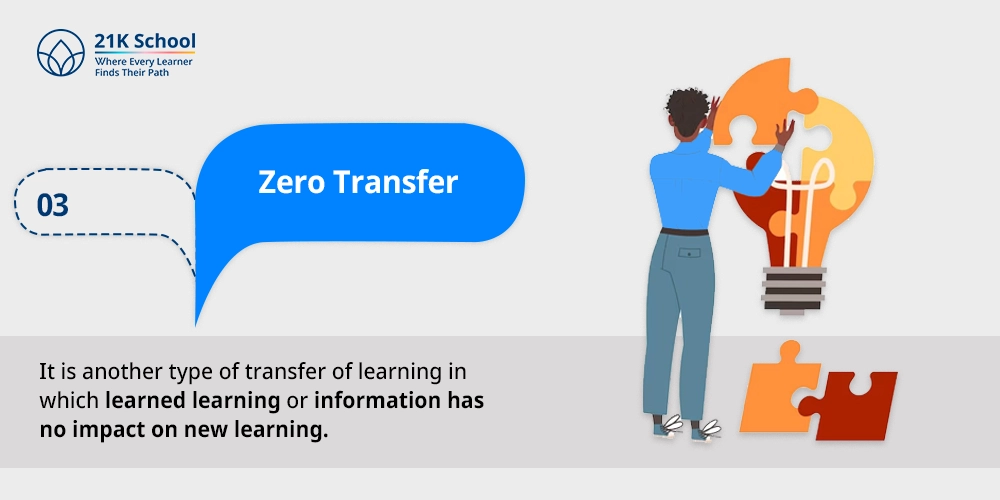
Zero transfer is also known as neutral transfer. It is another type of transfer of learning in which learned learning or information has no impact on new learning.
In simple words, zero transfer doesn’t help nor hinders learning.
When to Use:
- When tasks are completely unrelated
4. Vertical Transfer
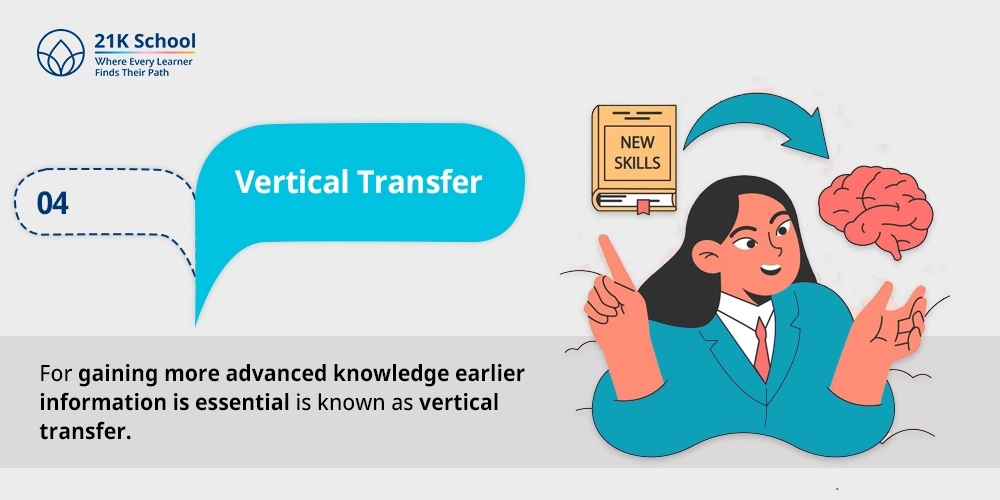
For gaining more advanced knowledge earlier information is essential is known as vertical transfer.
Through this type of transfer of learning individuals can master a higher-level task. Vertical transfer promotes structured and progressive learning.
In this way, one can strengthen foundational knowledge.
When to Use:
- In subjects requiring sequential learning like Mathematics and Science
5. Horizontal Transfer
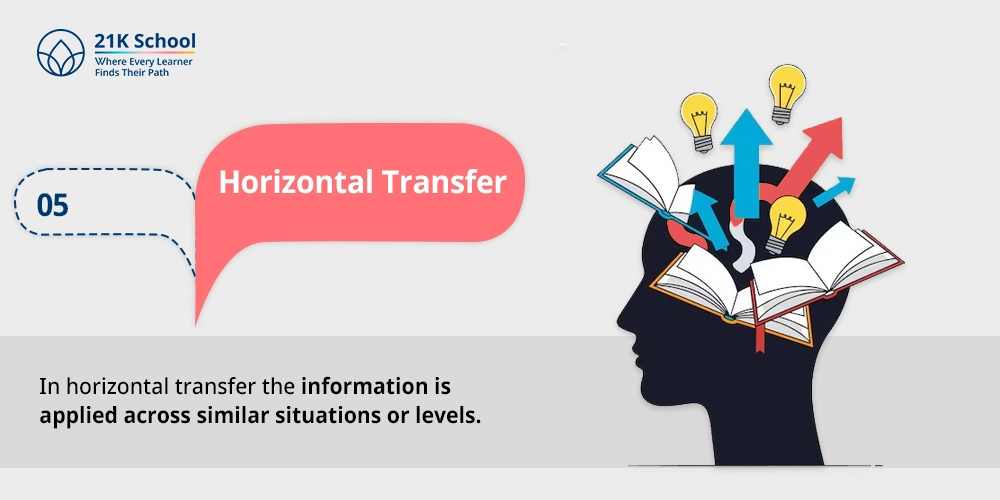
In horizontal transfer the information is applied across similar situations or levels.
In simple words knowledge of one subject is useful for another subject. For example, learners apply analytical skills in two subjects.
This type of transfer of learning encourages learners for practical application.
When to Use:
- In real-life learning situations
- For interdisciplinary learning .
6. Bilateral Transfer
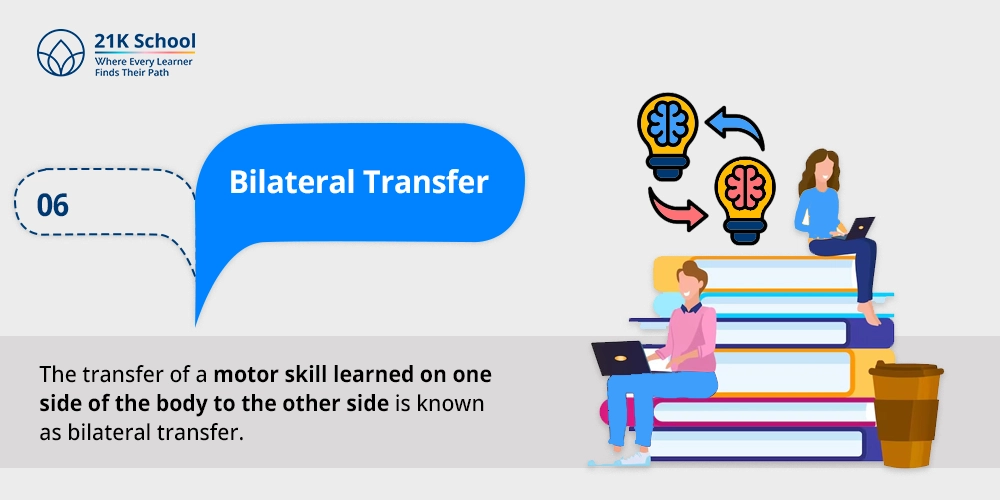
The transfer of a motor skill learned on one side of the body to the other side is known as bilateral transfer. It is ideal to improve coordination.
Bilateral transfer is useful in physical training and rehabilitation.
When to Use:
- In sports training, physical education , and physiotherapy
7. Unilateral Transfer
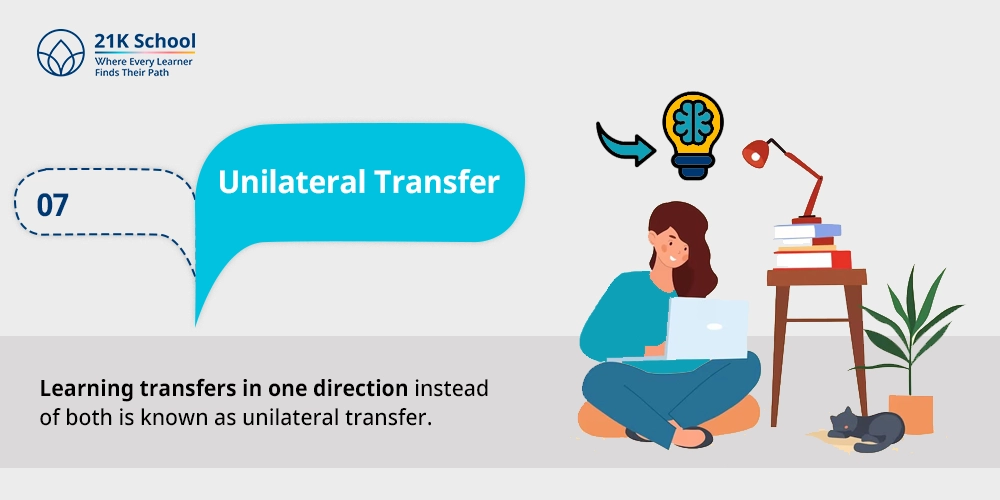
Learning transfers in one direction instead of both is known as unilateral transfer. In simple words learned skills can be used in another but cannot be reversed.
It helps in targeted skill development of learners.
When to Use:
- When learning follows a specific direction or hierarchy unilateral transfer is useful
Let’s check out a quick table help in understanding different types of transfer of learning:
| S.No. | Transfer of Learning | Effect on Learning | Example | Key Use / Situation |
| 1. | Positive Transfer | Improves performance | Learning cycling helps in riding a motorbike | When tasks are similar or related |
| 2. | Negative Transfer | Reduces performance | Using incorrect grammar rules from one language in another | Identifying misconceptions and correcting errors |
| 3. | Zero Transfer | No impact | Hobbies like drawing or painting does not affect learning mathematics | When tasks are unrelated |
| 4. | Vertical Transfer | Essential for progress | Learning addition then multiplication then algebra. | Sequential subjects like Maths and Science |
| 5. | Horizontal Transfer | Enhances application | Using grammar rules in speaking and writing | Real-life and interdisciplinary learning |
| 6. | Bilateral Transfer | Improve coordination | Practicing with right hand improves left hand skill | Sports and physical training |
| 7. | Unilateral Transfer | Limited transfer | Typing skills help touchscreen use, but not vice versa | Skill-specific or directional learning |
Factors Affecting Transfer of Learning
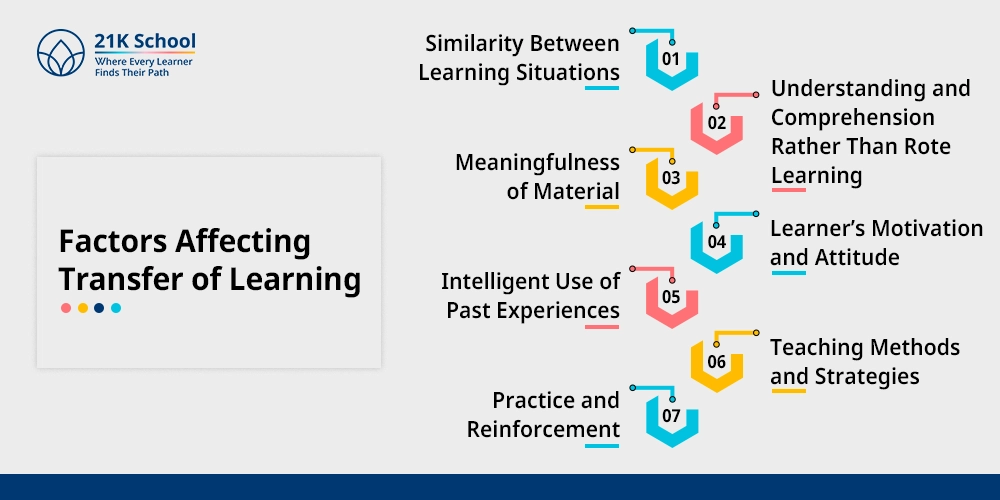
To understand various factors affecting transfer of learning, given below are jey points to consider:
1. Similarity Between Learning Situations
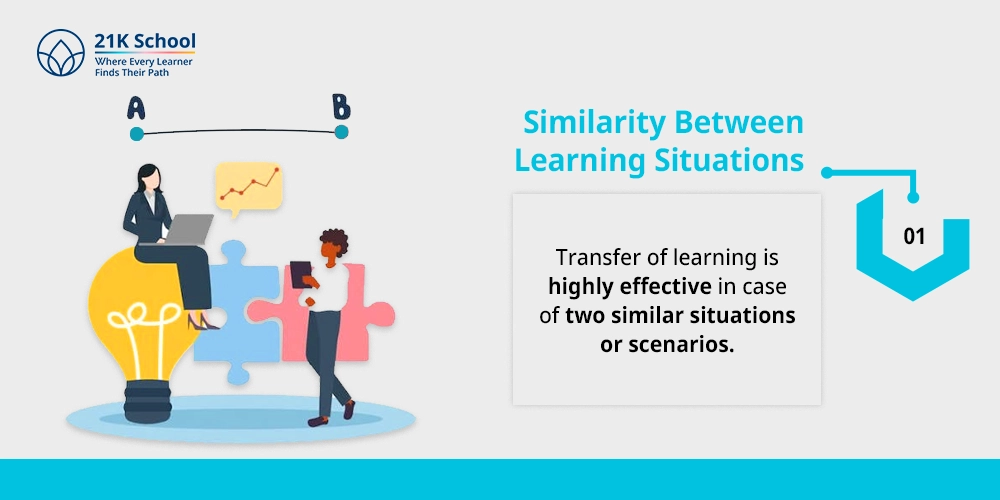
Transfer of learning is highly effective in case of two similar situations or scenarios. This is an ideal way to use previous knowledge without confusion.
2. Understanding and Comprehension Rather Than Rote Learning
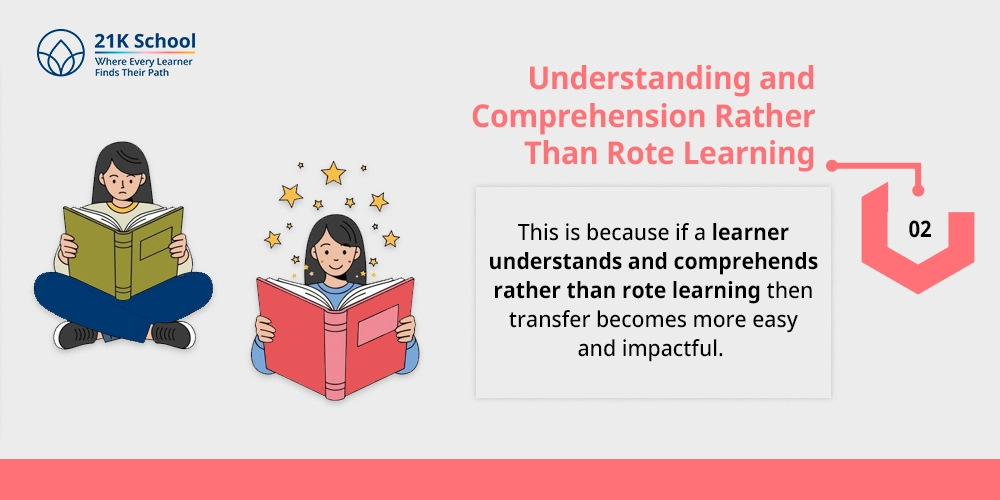
For learners, concept understanding is more effective as compared to rote learning .
This is because if a learner understands and comprehends rather than rote learning then transfer becomes more easy and impactful.
3. Meaningfulness of Material
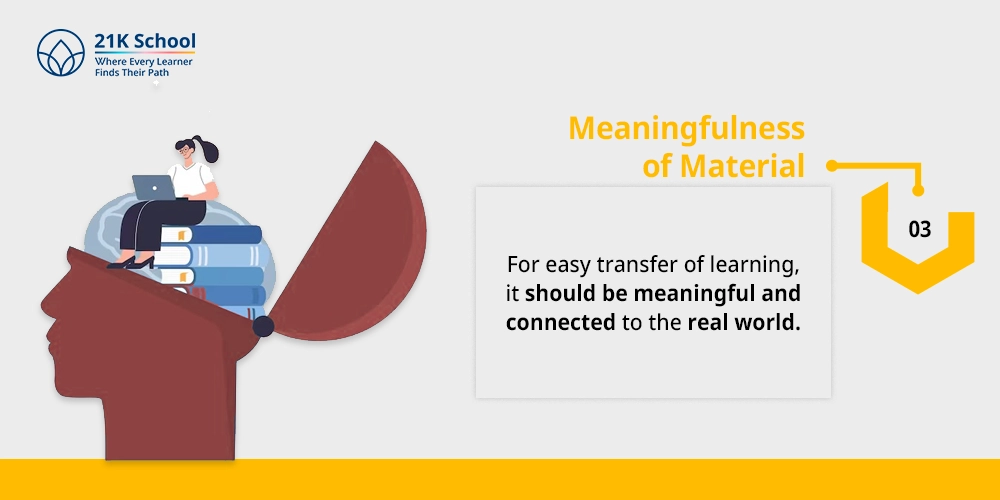
For easy transfer of learning, it should be meaningful and connected to the real world. For example, using home science learning to prepare unique food items.
4. Learner’s Motivation and Attitude
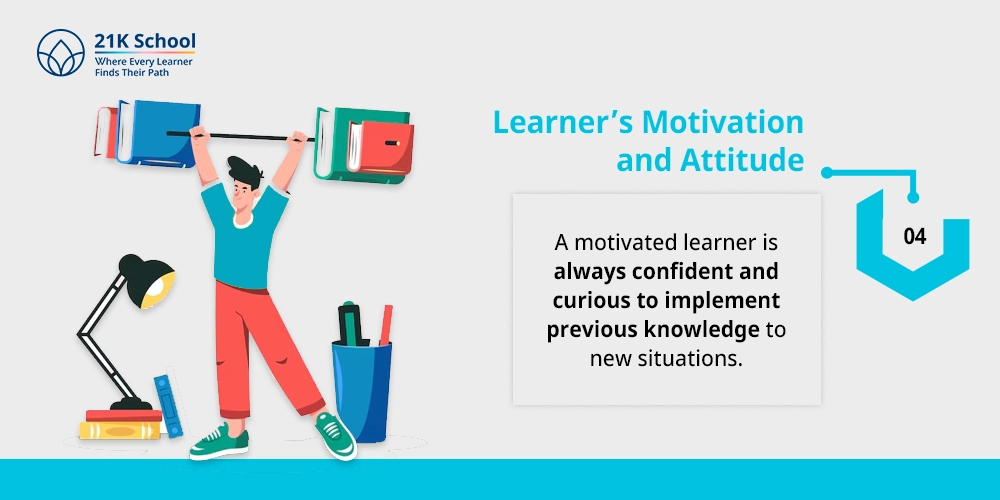
A motivated learner is always confident and curious to implement previous knowledge to new situations.
For example, learners curious to showcase their history knowledge in quiz competitions.
5. Intelligent Use of Past Experiences
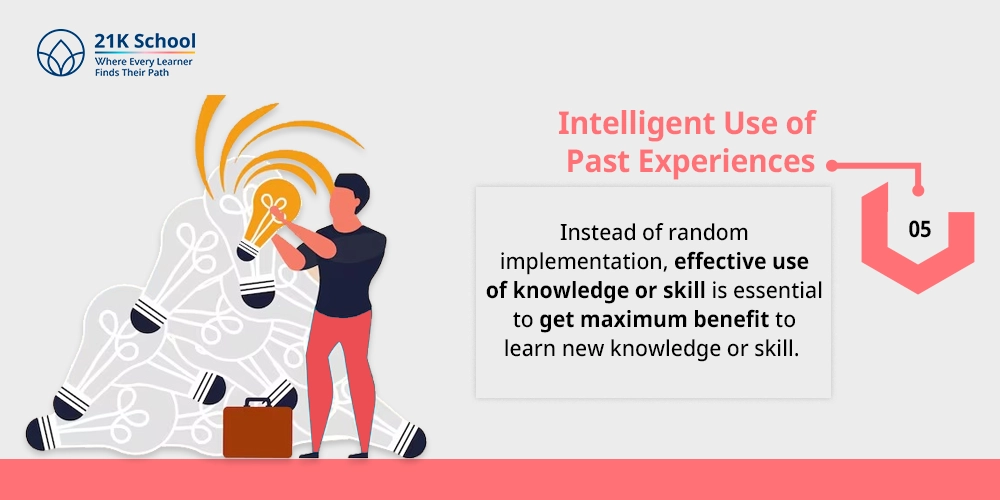
Instead of random implementation, effective use of knowledge or skill is essential to get maximum benefit to learn new knowledge or skill.
6. Teaching Methods and Strategies
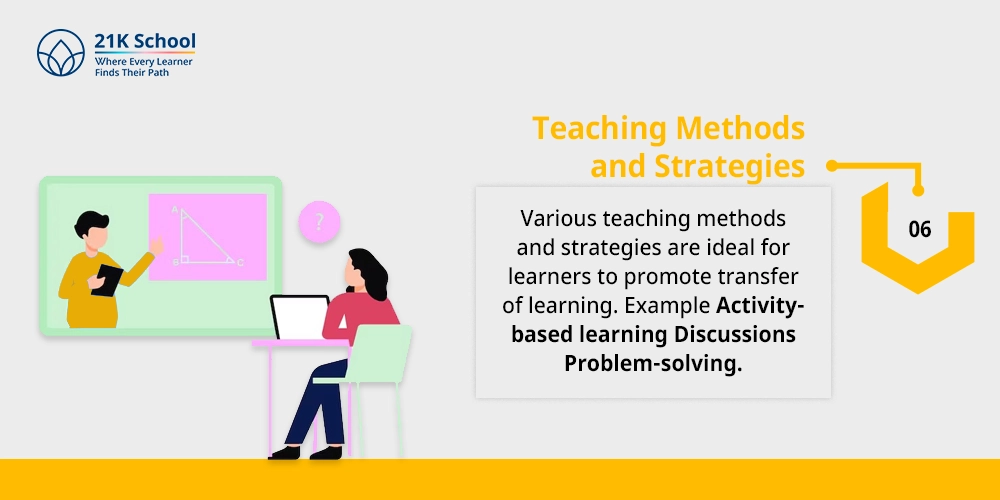
Various teaching methods and strategies are ideal for learners to promote transfer of learning. Some common methods such as:
- Activity-based learning
- Discussions
- Problem-solving
7. Practice and Reinforcement
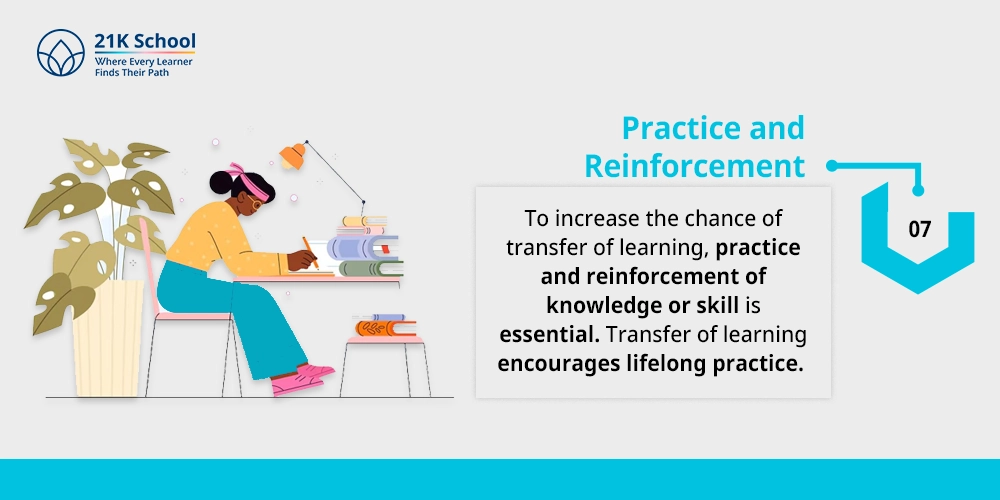
To increase the chance of transfer of learning, practice and reinforcement of knowledge or skill is essential. Transfer of learning encourages lifelong practice.
Applications of Transfer of Learning
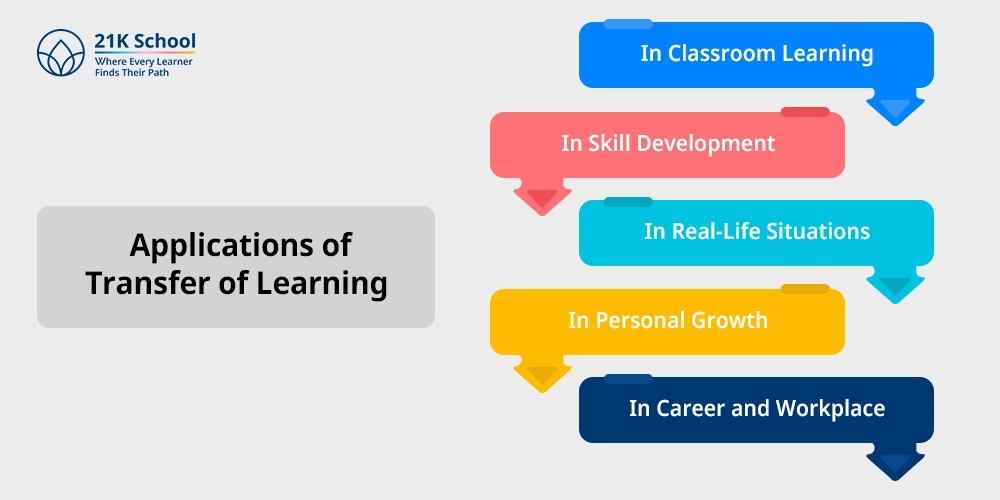
Transfer of learning is one of the ideal approaches that can be applied in education as well as in daily life. Let’s go through applications of transfer of learning:
1. In Classroom Learning
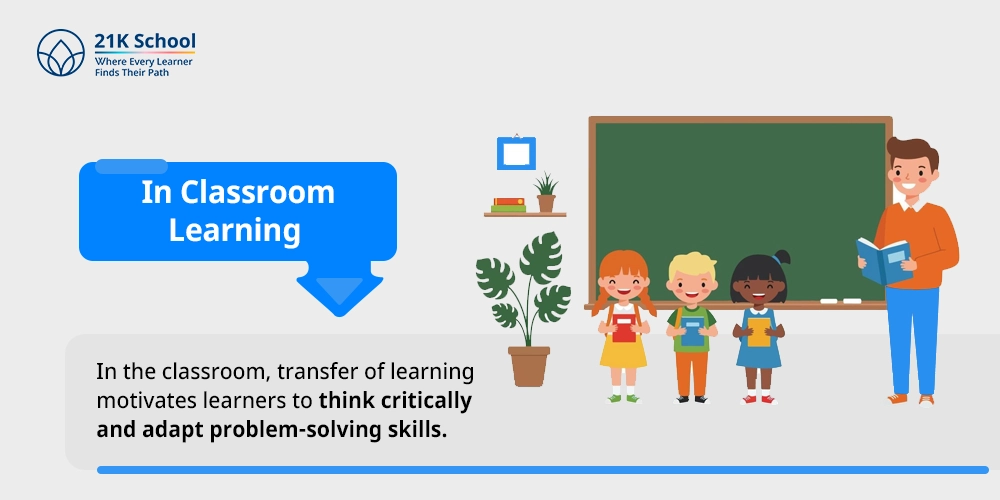
In the classroom, transfer of learning motivates learners to think critically and adapt problem-solving skills.
Learners become highly proficient in various subjects through past knowledge they have.
2. In Skill Development
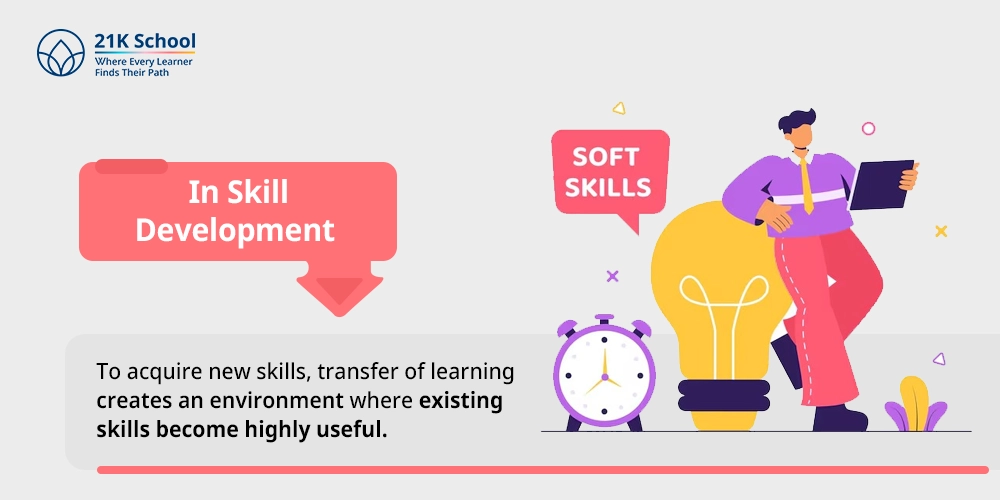
To acquire new skills, transfer of learning creates an environment where existing skills become highly useful.
It is ideal for vocational and professional training.
3. In Real-Life Situations
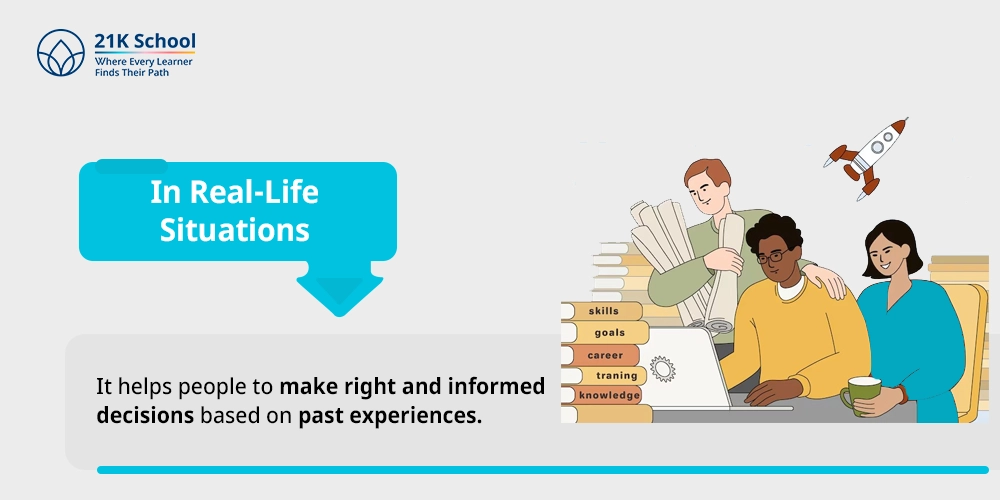
Learning transfer/transfer of learning is also applicable in real-life situations. It helps people to make right and informed decisions based on past experiences.
4. In Personal Growth
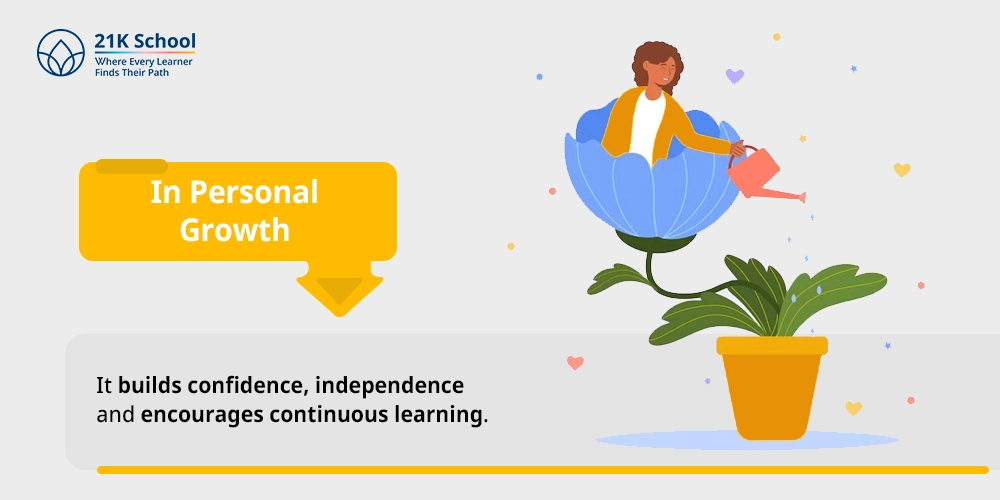
Learning transfer is ideal for an individual’s personal growth. It builds confidence, independence and encourages continuous learning .
5. In Career and Workplace
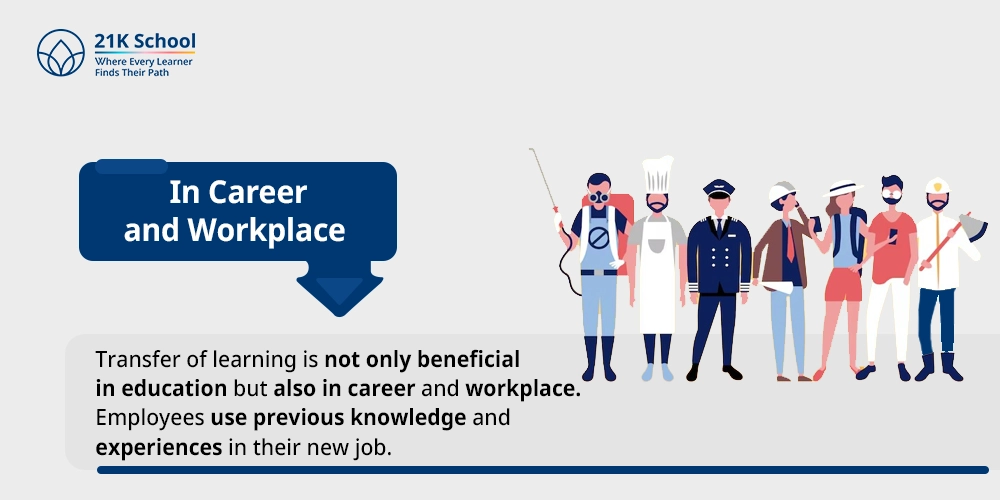
Transfer of learning is not only beneficial in education but also in career and workplace. Employees use previous knowledge and experiences in their new job.
It improves productivity and efficiency of employees.
Conclusion
Transfer of learning is a meaningful approach to help learners to understand their concepts in a better way. There are many types of transfer of learning including positive, negative, and zero transfer.
In this changing world, transfer of learning is important to solve new problems through past experiences.
Facilitators must go through different types for practical and lifelong learning . They can promote positive transfer by reducing negative transfer.
Hopefully you have understood each type and examples in detail to implement effectively.
