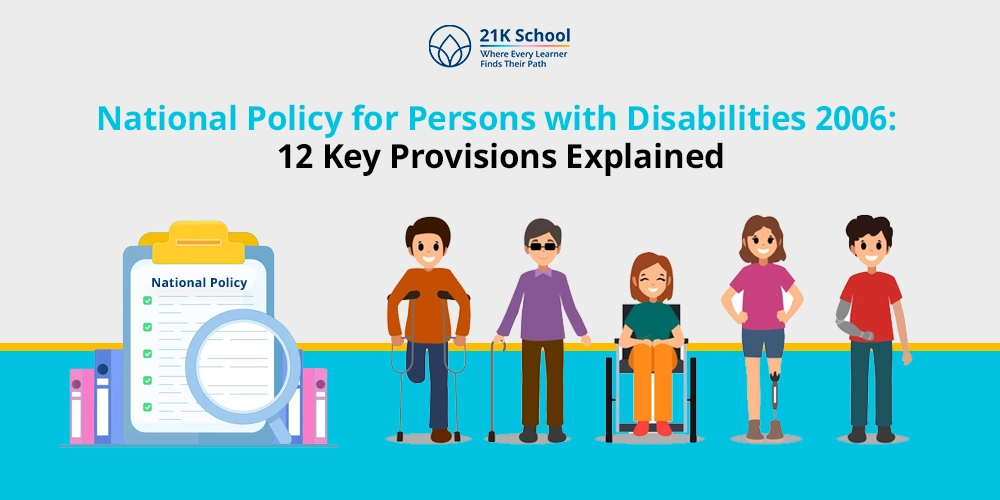
National Policy for Persons with Disabilities 2006: 12 Key Provisions Explained
 Written byAnkita SinghaContent Specialist
Last modified: Jul 27, 2026 9 min read
Education in the 21st century plays an essential role for future growth and development. A free and quality education is a right of every child.
Do you know about the National Policy for Persons with Disabilities 2006?
If not, this blog is for you. Check out a brief analysis of the National Policy for Persons with Disabilities 2006
What is the national policy for persons with disabilities 2006?
With time, the number of persons with disabilities are increasing. According to the census of 2001
India has 2.19 crore of persons with disabilities, making up 2.13% of the total population. Various types of disabilities include:
- Visual
- Hearing
- Speech
- Locomotor
- Mental disabilities
75% of persons with disabilities live in rural areas 49% are literate and only 34% are employed. The status showcases the need for proper education and employment .
The National Policy for Persons with Disabilities 2006 helps to provide equality, freedom, justice, and dignity for all citizens including disabled people.
The legal framework for disability in India includes three popular laws by the Government of India:
- Persons with Disabilities Act, 1995
- National Trust Act, 1999
- Rehabilitation Council of India Act, 1992
12 key pillars and strategies of the national policy for persons with disabilities 2006
Understand the major focus areas of the National Policy for Persons with Disabilities 2006:
1. Prevention of disabilities
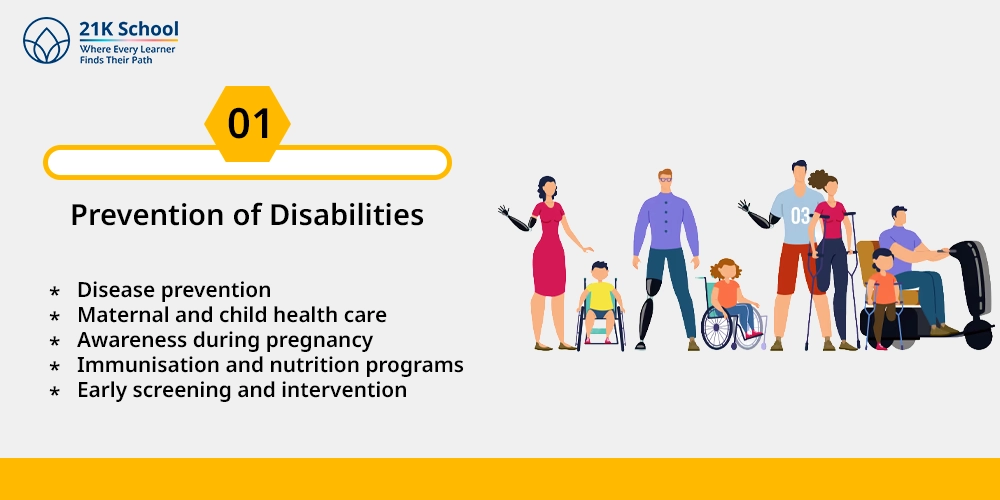
There are many disabilities which are preventable. That’s why the policy focuses on:
- Disease prevention
- Maternal and child health care
- Awareness during pregnancy
- Immunisation and nutrition programs
- Early screening and intervention
There are a lot of health programs, awareness campaigns, early screening and intervention services to help identify the problem.
2. Rehabilitation measures
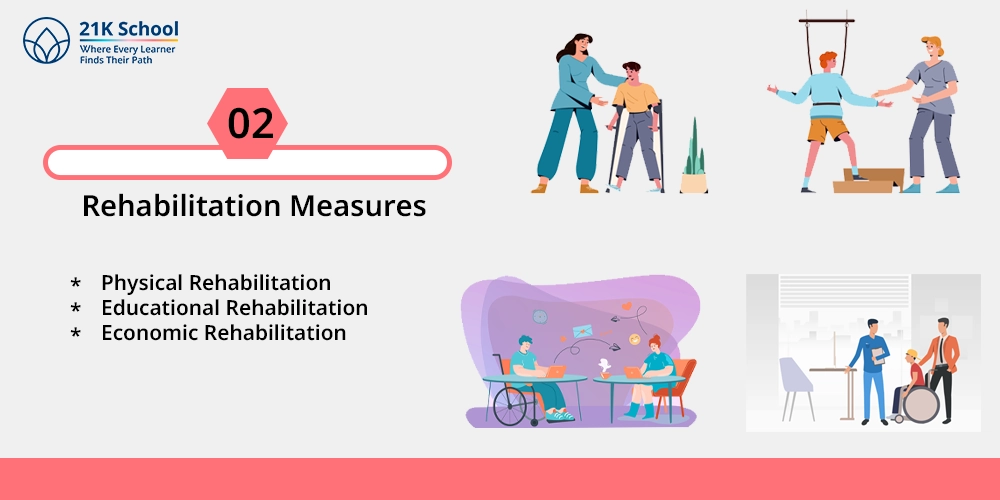
Rehabilitation measures are divided into three parts:
- Physical Rehabilitation
Physical rehabilitation of persons with disabilities includes:
- Early detection and intervention
- Counseling and medical rehabilitation
- Assistive devices
- Development of rehabilitation professionals
- Educational Rehabilitation
Educational rehabilitation of persons with disabilities includes:
- Free and compulsory education up to 18 years
- Programs under Sarva Shiksha Abhiyan and other schemes
- Inclusive schools and specialised support (special teachers, learning aids)
- Scholarships and vocational training for higher education and skill development
- Economic Rehabilitation
Economic rehabilitation of persons with disabilities includes:
- Government job reservations
- Vocational and skill training for private sector placement
- Promotion of self-employment through loans and incentives
- Support for self-help groups of persons with disabilities
3. Women with disabilities
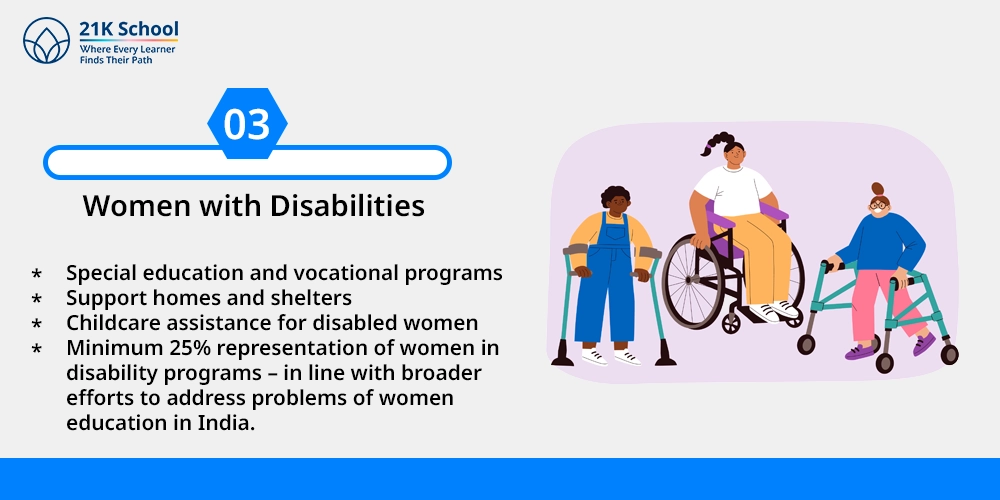
Women with disabilities require protection against exploitation and abuse because they face challenges in both gender-based and disability-related ways.
To resolve this problem, one of the key pillars and strategies of the National Policy for Persons with Disabilities 2006 calls for:
- Special education and vocational programs
- Support homes and shelters
- Childcare assistance for disabled women
- Minimum 25% representation of women in disability programs – in line with broader efforts to address problems of women education in India.
4. Children with disabilities
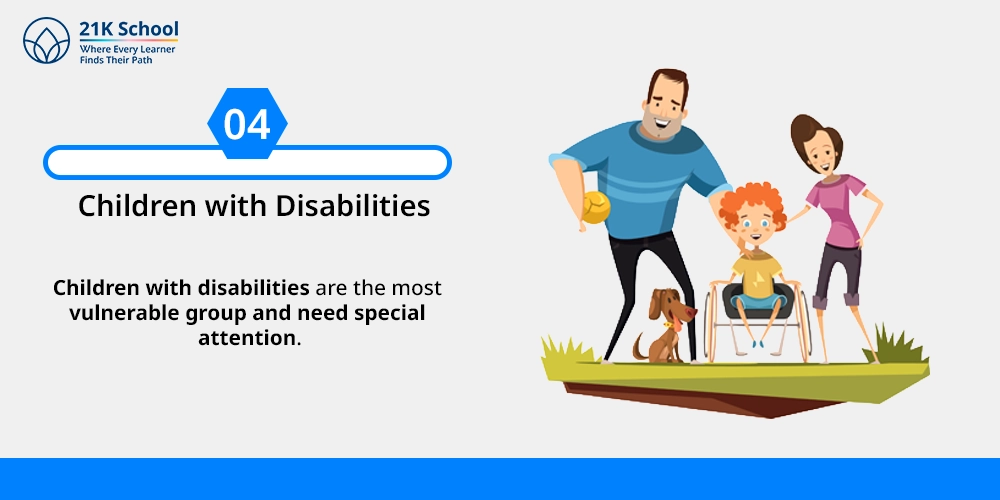
Children with disabilities are the most vulnerable group and need special attention. That’s why the Government policy ensures:
- Right to care, protection and security for children with disabilities.
- Ensure the right to development with dignity and equality creating an enabling environment where children can exercise their rights, enjoy equal opportunities and full participation in accordance with various statutes
- Ensure inclusion and effective access to education, health, vocational training along with specialised rehabilitation services to children with disabilities.
- Ensure the right to development as well as recognition of special needs and of care, and protection of children with severe disabilities.
5. Barrier-free environment
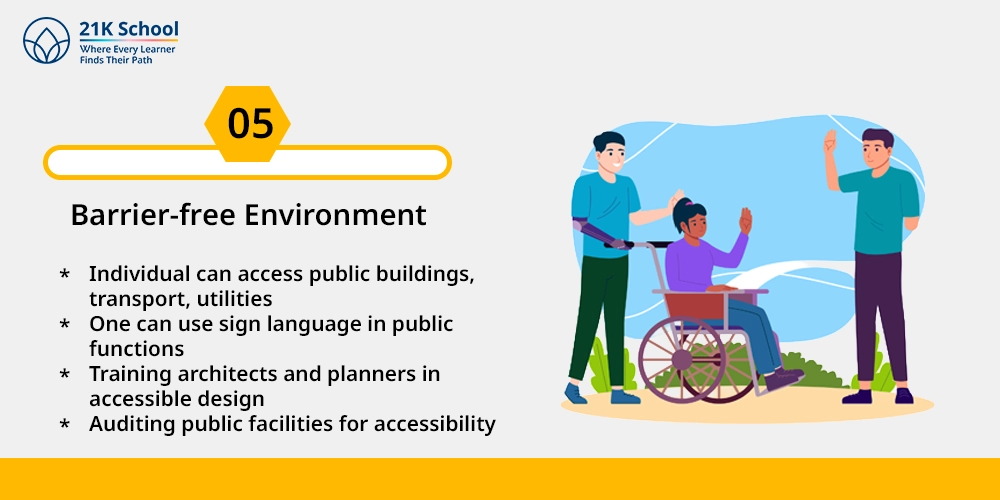
For independence and dignity people with disabilities need a barrier-free environment. The National Policy for Persons with Disabilities 2006 promotes:
- Individual can access public buildings, transport, utilities
- One can use sign language in public functions
- Training architects and planners in accessible design
- Auditing public facilities for accessibility
6. Issue of disability certificates
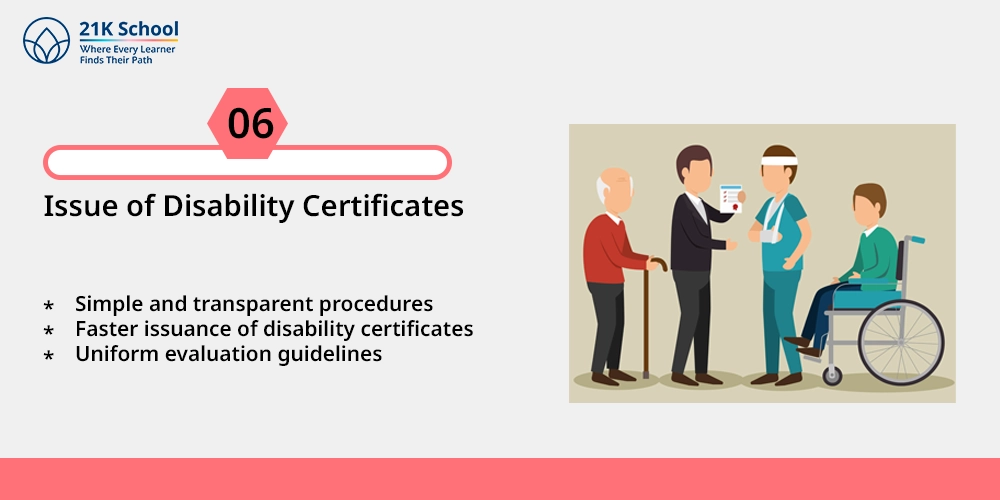
Disability certification and social security play an important role. That’s why the Government of India has notified guidelines to ensure easy access to benefits:
- Simple and transparent procedures
- Faster issuance of disability certificates
- Uniform evaluation guidelines
7. Social security
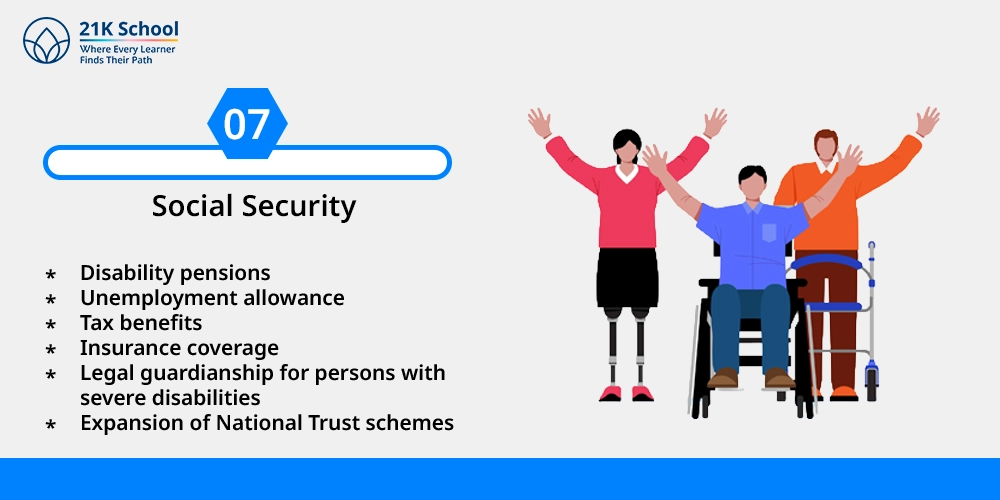
Social security includes:
- Disability pensions
- Unemployment allowance
- Tax benefits
- Insurance coverage
- Legal guardianship for persons with severe disabilities
- Expansion of National Trust schemes
8. Promotion of non-governmental organizations (NGOs)
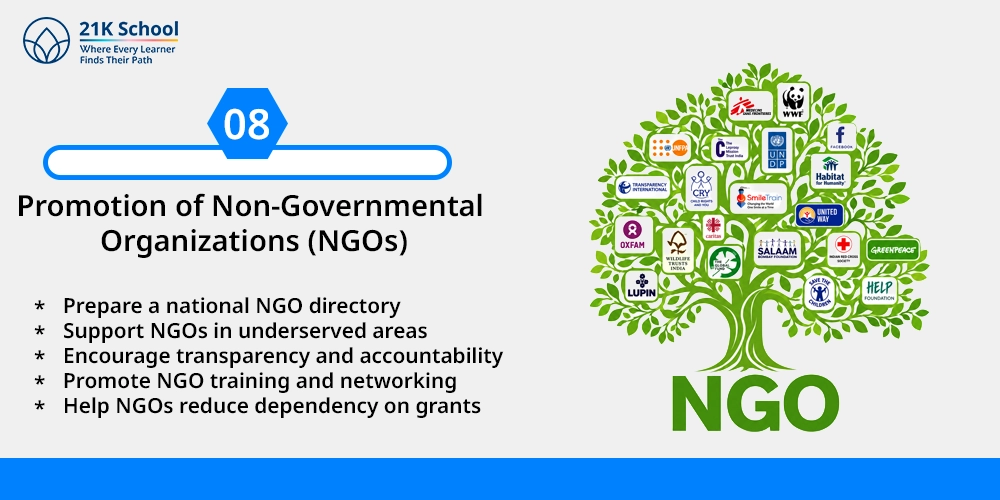
For children with disabilities, Non-Governmental Organizations (NGOs) play an important role. The following programmes will be undertaken:
- Prepare a national NGO directory
- Support NGOs in underserved areas
- Encourage transparency and accountability
- Promote NGO training and networking
- Help NGOs reduce dependency on grants
9. Collection of regular information on persons with disabilities
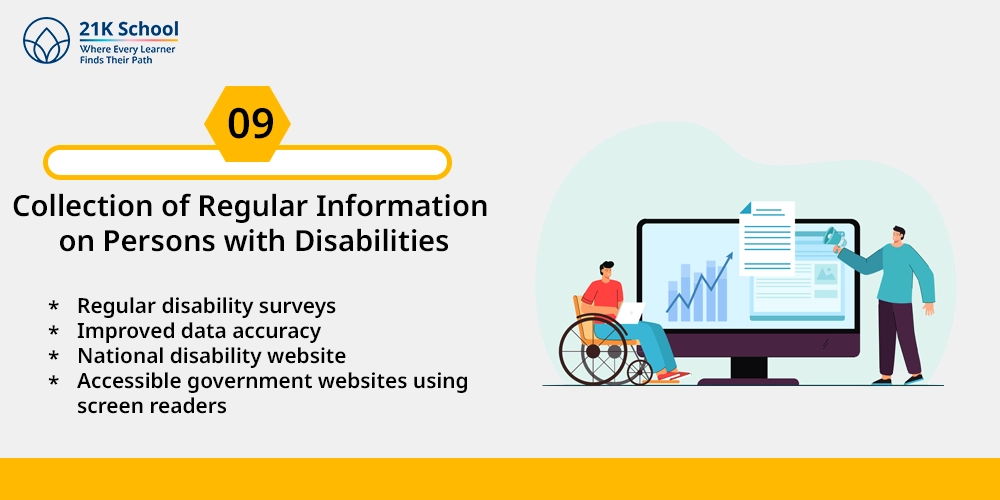
There is a requirement to regularly collect, compile and analyse data relating to socio-economic conditions of persons with disabilities. Key points to consider:
- Regular disability surveys
- Improved data accuracy
- National disability website
- Accessible government websites using screen readers
10. Research
Research is important to understand the scenario and make policies. However, consent by people with disabilities is essential.
The National Policy for Persons with Disabilities 2006 focuses on:
- Causes of disabilities
- Assistive technologies
- Genetic research
- Social attitudes towards disability
11. Sports, recreation and cultural life
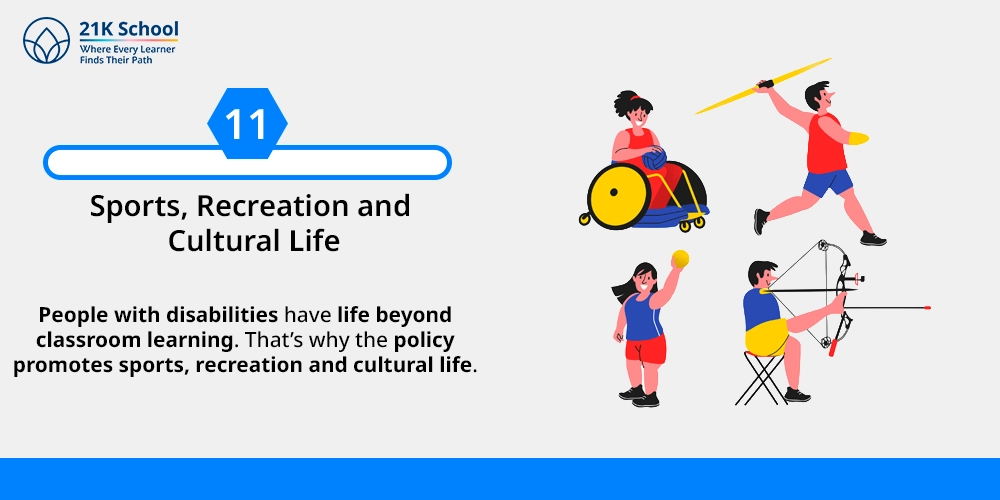
People with disabilities have life beyond classroom learning. That’s why the policy promotes sports, recreation and cultural life.
Some key points include:
- Equal access to sports and cultural activities
- Disability-friendly sports infrastructure
- National awards for disabled athletes
- Support for participation in national and international events
12. Amendments to existing acts dealing with the persons with disabilities
Ten years after the Persons with Disabilities Act, 1995 was implemented, the experience gained and changes done in the disability sector showcased that few improvements were needed.
- The Act would be amended after consulting all stakeholders.
- The Rehabilitation Council of India (RCI) Act and the National Trust Act would also be reviewed and amended wherever needed for a better future.
Responsibility for implementation of national policy for persons with disabilities 2006
Key responsibilities and mechanisms for implementation include:
- The Ministry of Social Justice & Empowerment (MSJE) and the Department of Empowerment of Persons with Disabilities (DEPwD) are the nodal bodies responsible for implementation of National Policy for Persons with Disabilities 2006.
- The role of other ministries such as Home Affairs, Health & Family Welfare, Rural Development, Urban Development etc also play an important role.
- Other local bodies and NGOs like Panchayati Raj Institutions and Urban Local Bodies are involved through District Disability Rehabilitation Centres (DDRCs).
- The Chief Commissioner for Disabilities at Central level and State Commissioners at the State level coordinate in implementation of National Policy for Persons with Disabilities 2006.
List of national institutes (NIs) under national policy for persons with disabilities 2006
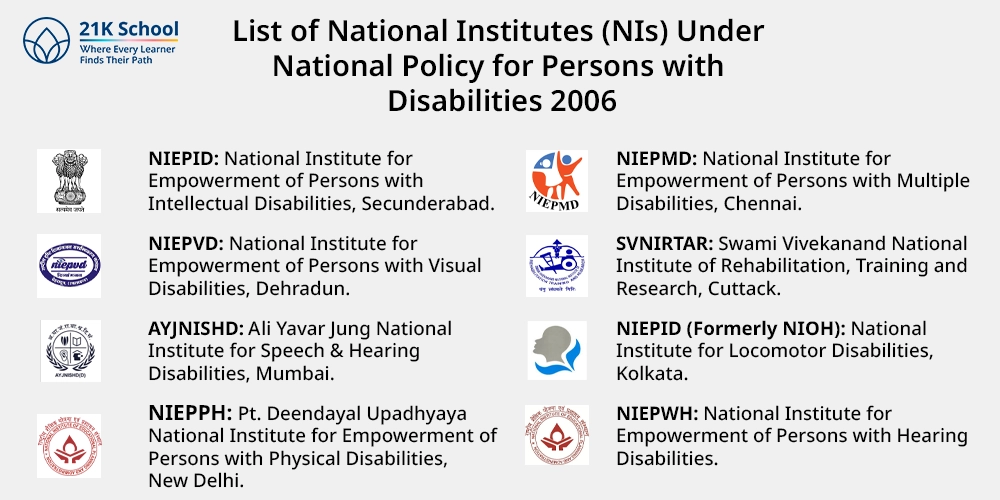
Go through the National Institutes (NIs) under the Department of Empowerment of Persons with Disabilities:
- NIEPID: National Institute for Empowerment of Persons with Intellectual Disabilities, Secunderabad.
- NIEPVD: National Institute for Empowerment of Persons with Visual Disabilities, Dehradun.
- AYJNISHD: Ali Yavar Jung National Institute for Speech & Hearing Disabilities, Mumbai.
- NIEPPH: Pt. Deendayal Upadhyaya National Institute for Empowerment of Persons with Physical Disabilities, New Delhi.
- NIEPMD: National Institute for Empowerment of Persons with Multiple Disabilities, Chennai.
- SVNIRTAR: Swami Vivekanand National Institute of Rehabilitation, Training and Research, Cuttack.
- NIEPID (Formerly NIOH): National Institute for Locomotor Disabilities, Kolkata.
- NIEPWH: National Institute for Empowerment of Persons with Hearing Disabilities.
Other Key Institutions one must know:
- CRCs: Composite Regional Centres for Persons with Disabilities.
- DDRCs: District Disability Rehabilitation Centres.
- DRCs: District Rehabilitation Centres.
Conclusion
The National Policy for Persons with Disabilities (2006) is a government policy. The document aimed to improve the education of individuals with disabilities.
Instead of becoming a barrier it helps in providing inclusive education with other facilities such as sports, recreation and cultural life.
Through empowerment and equal opportunity the policy is essential for students with disabilities. Hopefully, the guide helped to understand the document in detail.
Frequently asked questions
7 questions
What are the challenges of National Policy for Persons with Disabilities (2006)?
Implementation of the National Policy for Persons with Disabilities (2006) faces some major challenges such as: physical and digital inaccessibility educational and employment barriers rural-urban disparity lack of comprehensive support
What is the disability discrimination Act 2006?
The disability discrimination Act 2006 protects individuals by prohibiting unfair treatment of disabled people in different areas. Areas such as employment, transport, education, and services.
What is the RPwD Act 2016?
The RPwD Act 2016 is Indian law aligned with the UN Convention on the Rights of Persons with Disabilities objective to uphold the dignity of people with disabilities and prevent discrimination.
What are the benefits of National Policy for Persons with Disabilities (2006)?
Implementation of the National Policy for Persons with Disabilities (2006) is beneficial for students academic and personal development. Some key benefits are: barrier-free environment social security and students empowerment comprehensive rehabilitation inclusive education and skill development
What is the 2006 Convention on the Rights of Persons with Disabilities?
The 2006 Convention on the Rights of Persons with Disabilities is a landmark UN human rights treaty adopted on December 13, 2006. The objective is to protect dignity and ensure equal rights for people with disabilities.
What is the significance of Uncrpd 2006?
The Uncrpd 2006 is an international treaty which shifted the global approach to disability from a charity-based, medical model to a rights-based, social model.
Is RA no 7277 Magna Carta for Disabled persons?
Yes. Republic Act No. 7277 is enacted for the individual with disabilities to have the same rights as other people.
About the author
Ankita Singha
Content Specialist
Ankita Singha is an Education Content Specialist at 21K School, India’s first accredited fully online K-12 School. She focuses on the in-depth research and creation of the well-drafted guides on early childhood education, school admission processes, and CBSE/ICSE curriculum guidance. With more than 2 years of experience at 21K School, a fully accredited institute- Cambridge International (IA702) and Pearson Edexcel (94883), Ankita works closely with the school’s curriculum heads and academic coordinators. Ankita’s every article reflects on the official board guidelines, practical realities, and current policies of online education in 78+ countries. Ankita’s content has helped thousands of parents in understanding the topics like RTE eligibility, NIOS pathways, and age-appropriate admission criteria.
Every 21K School guide is written by our education team and reviewed by a subject facilitator before publishing.
Exploring a CBSE-pathway online school?
Talk to an advisor about 2026–27 admissions — no obligation.
Talk to an advisorComments
No comments yet — be the first to share your thoughts or ask a question.