

Inclusive education has become a crucial part of our modern education systems.
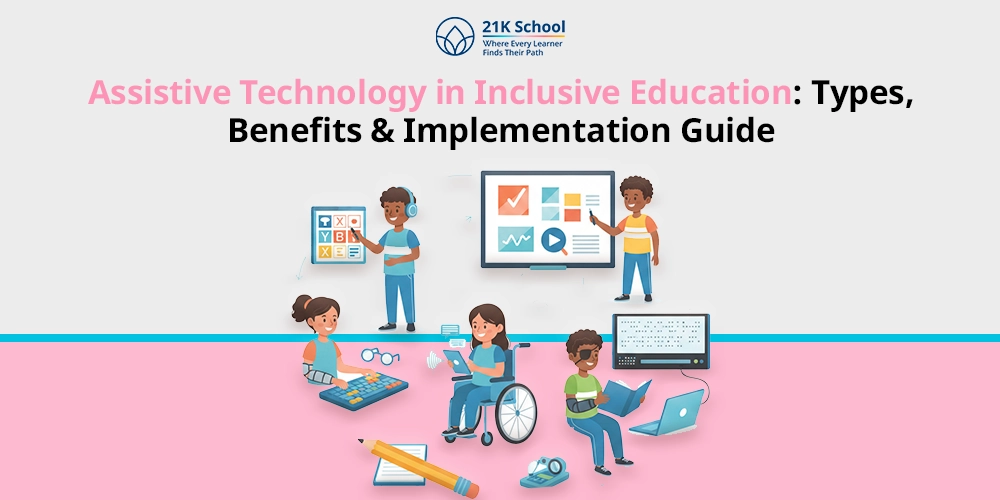
Assistive technology would be required to make inclusive education successful in daily practice.
This is because assistive technology can be a way to help students with their learning , despite their physical, mental, or learning disabilities .
Assistive technology includes hardware and software that can improve the delivery of education for these children.
In this article, we will be knowing more about assistive technology in inclusive education, its types, benefits, limitations, and future aspects.
Contents
- What is Assistive Technology in Inclusive Education?
- What is the Need of Assistive Technology in Inclusive Education?
- 3 Types of Assistive Technology in Inclusive Education
- 6 Benefits of Assistive Technology in Inclusive Classrooms
- Common Assistive Technology for Different Types of Disabilities
- Challenges in Implementing Assistive Technology in Inclusive Education
- Future of Assistive Technology in Inclusive Education
- Wrap It Up
What is Assistive Technology in Inclusive Education?
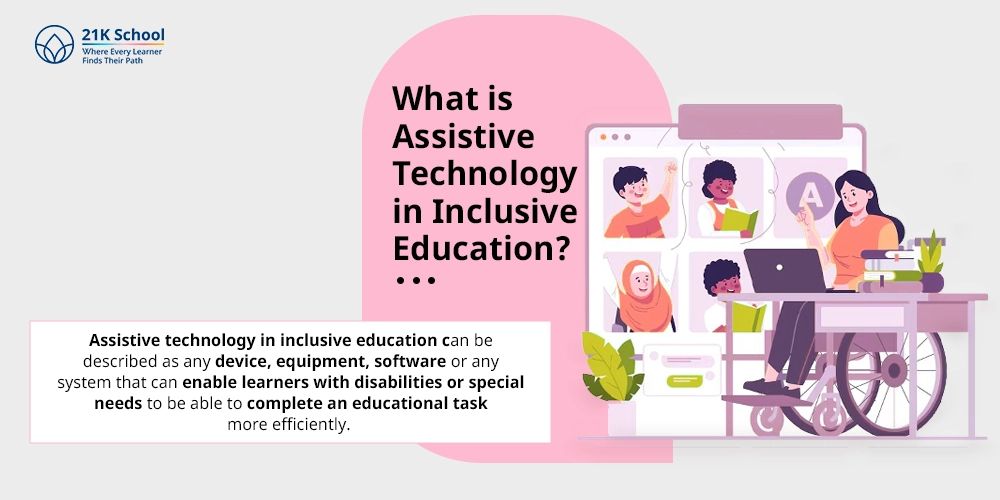
Assistive technology in inclusive education can be described as any device, equipment, software or any system that can enable learners with disabilities or special needs to be able to complete an educational task more efficiently.
It has the main aim of improving functional abilities including learning, communication, mobility, and independence.
Assistive technology is used in inclusive classrooms to aid students with physical, sensory, cognitive, or communication needs to study together with their peers.
It helps learners to surpass other hurdles along with compensating for teaching and learning challenges.
There is low-tech, mid-tech, and high-tech assistive technology based on the complexity and amount of support one needs.
What is the Need of Assistive Technology in Inclusive Education?
Assistive technology becomes necessary due to differences in the needs of various learners in the inclusive classrooms.
The main obstacles that face students with disabilities include the inaccessible textbooks, communication, mobility challenges, or information processing problems.
Assistive technology is required to provide equal education to all learners.
This can be done by serving personalized learning needs resulting in minimal learning barriers and encouraging learner’s participation.
Another important factor assistive technologies work on is the self-esteem of learners with disabilities. With added support, they feel capable enough to get their education efficiently.
Without assistive technologies it would be really tough for children with special needs to keep up with the classroom instruction. This might result in frustration, low self-esteem, or dropout.
3 Types of Assistive Technology in Inclusive Education
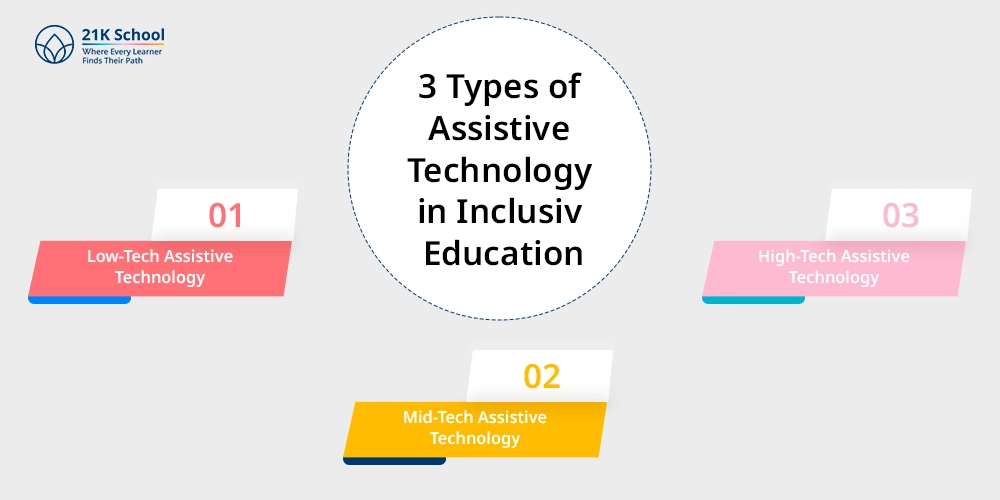
Following are the types of assistive technology used for inclusive education:
1. Low-Tech Assistive Technology
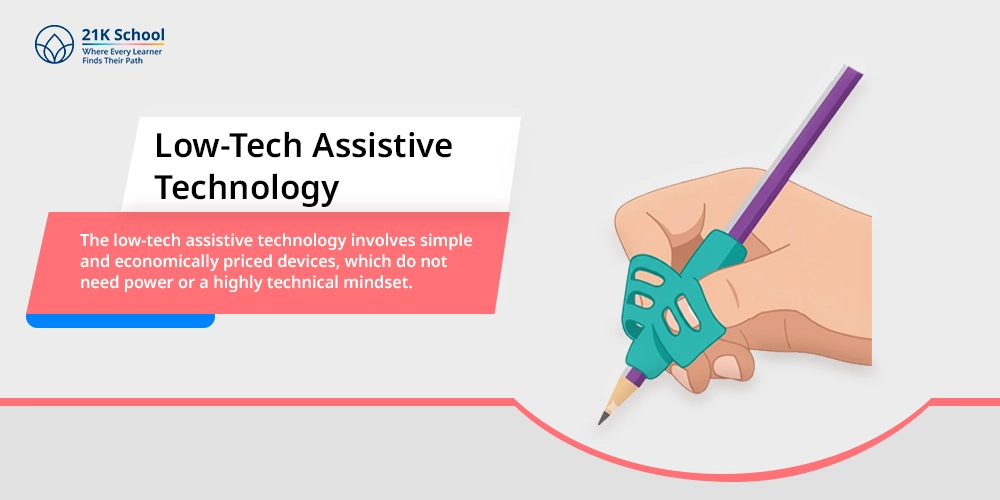
The low-tech assistive technology involves simple and economically priced devices, which do not need power or a highly technical mindset.
Inclusive classes mainly use these tools, particularly where there is a limitation of resources.
Examples include pencil grips, adaptive writing pens, slant boards for writing, flashcards, raised-line paper, and magnifying glasses.
The low-tech tools assist children having fine-motor challenges, visual challenges, and learning challenges to achieve easier learning.
2. Mid-Tech Assistive Technology
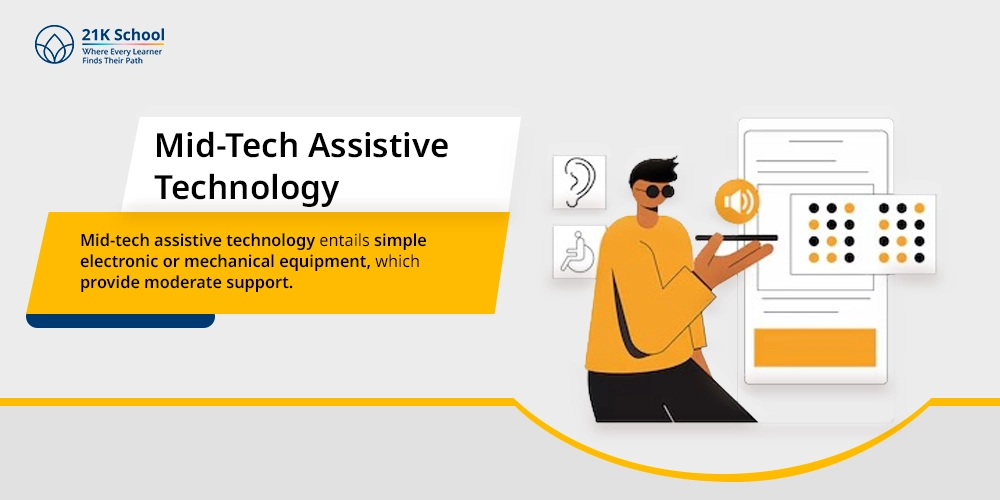
Mid-tech assistive technology entails simple electronic or mechanical equipment, which provide moderate support.
This equipment needs very little training and is more expensive compared to low-tech aids.
Audio recorders, calculators, talking dictionaries, word processors, and simple hearing aids can be used as mid-tech aids.
Mid-tech assistive technology can aid students with learning disabilities, hearing impairments, and memory difficulties.
3. High-Tech Assistive Technology
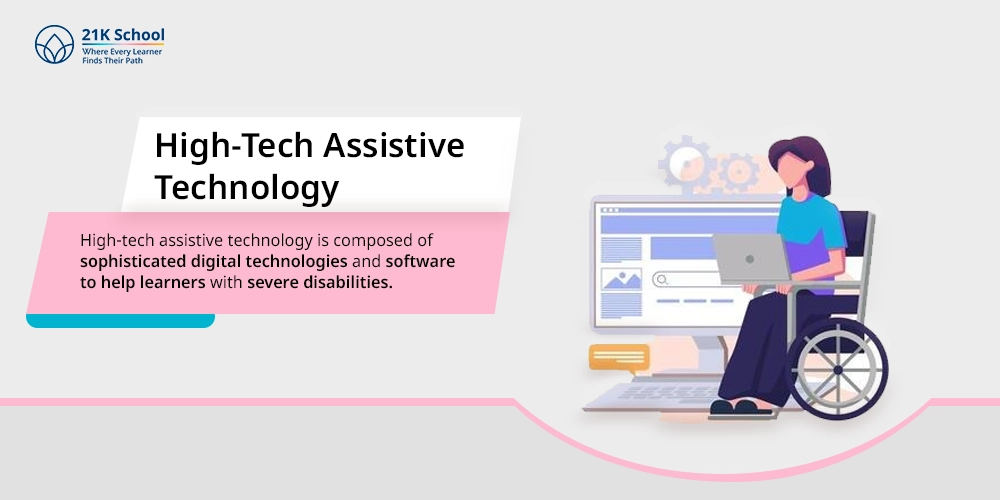
High-tech assistive technology is composed of sophisticated digital technologies and software to help learners with severe disabilities.
These tools are usually expensive in terms of training and technical support.
Access, communication and participation in inclusive classrooms can be significantly improved with the use of high-tech assistive technology.
Gadgets like screen magnification, speech recognition programs, text-to-speech software, Augmentative and Alternative Communication(AAC) devices, braille machines, and eye-tracking systems are included in high-tech equipment.
6 Benefits of Assistive Technology in Inclusive Classrooms
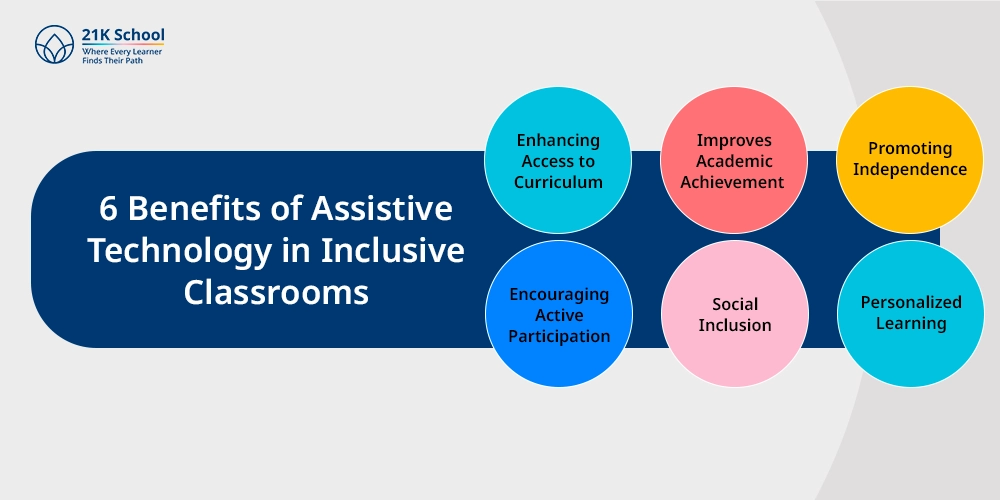
Assistive technology delivers the following advantages in inclusive classrooms:
1. Enhancing Access to Curriculum
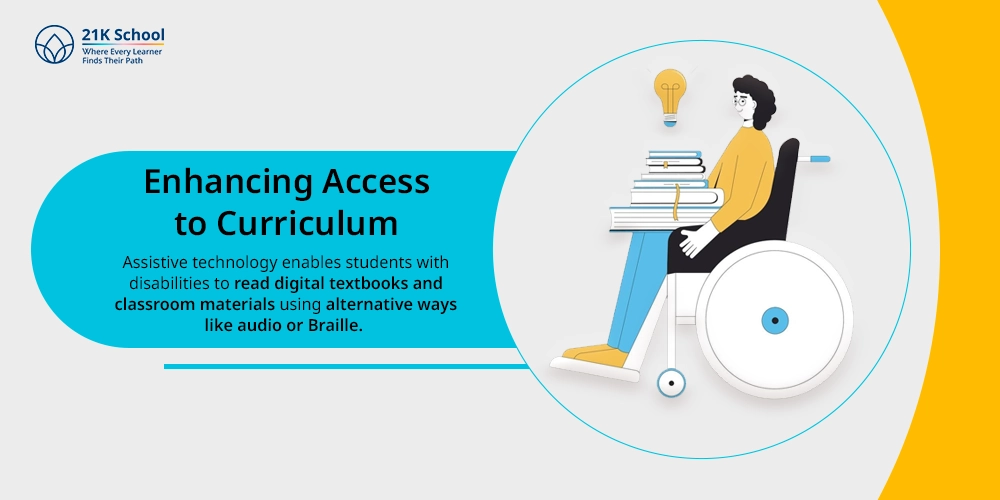
Assistive technology enables students with disabilities to read digital textbooks and classroom materials using alternative ways like audio or Braille.
This will provide equal access to content of the curriculum .
2. Improves Academic Achievement
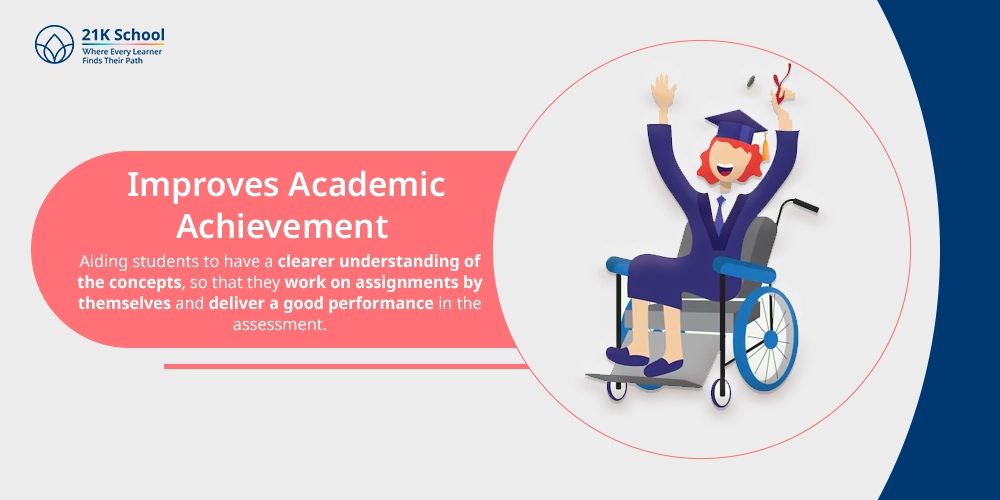
Assistive technology lowers the barrier to learning.
Thereby, aiding students to have a clearer understanding of the concepts, so that they work on assignments by themselves and deliver a good performance in the assessment .
3. Promoting Independence
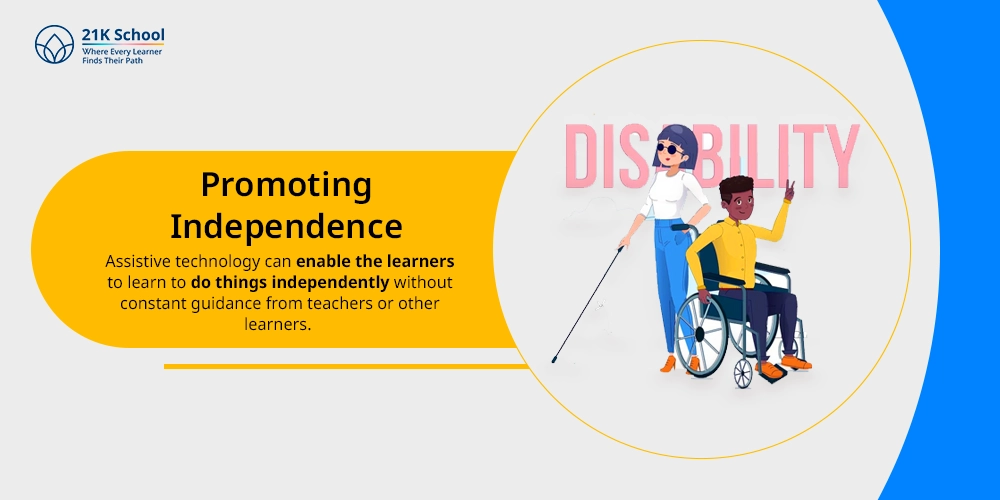
Assistive technology can enable the learners to learn to do things independently without constant guidance from teachers or other learners.
This encourages self-dependency and self-confidence.
4. Encouraging Active Participation
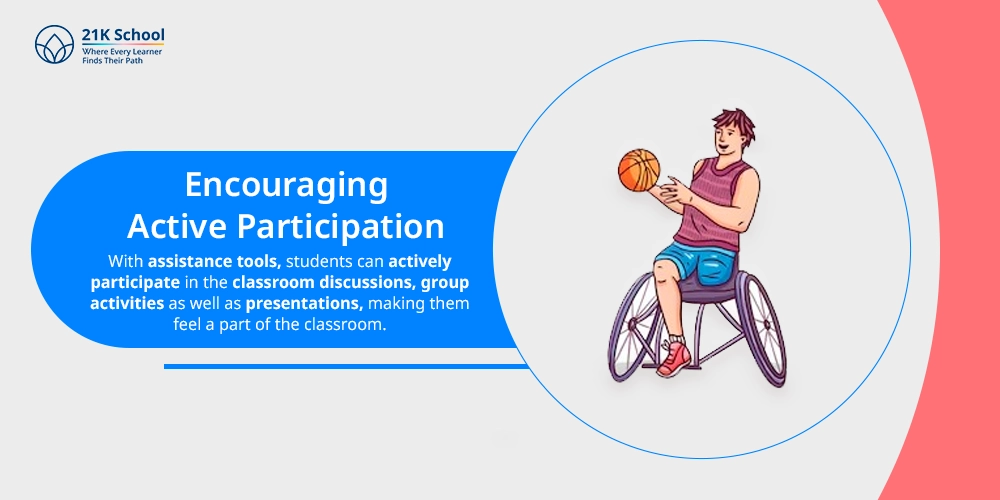
With assistance tools, students can actively participate in the classroom discussions, group activities as well as presentations, making them feel a part of the classroom.
5. Social Inclusion
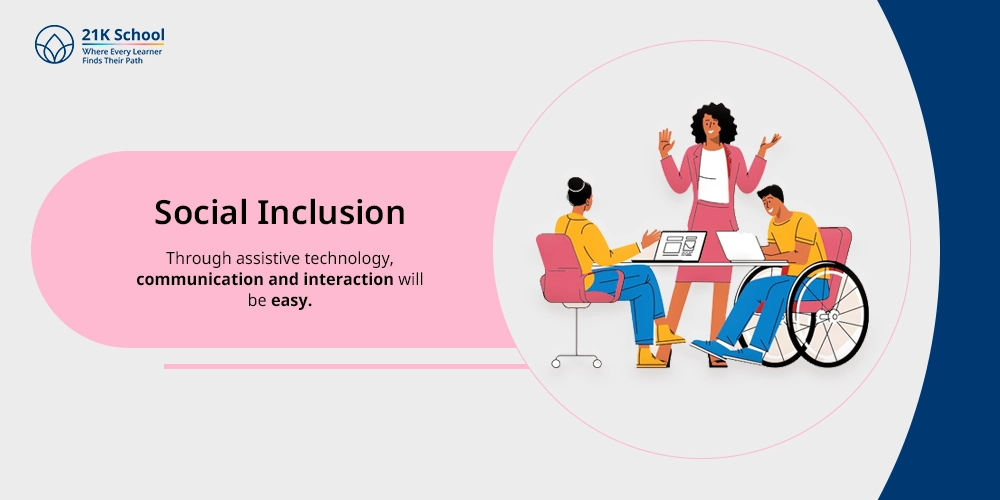
Through assistive technology, communication and interaction will be easy.
This would allow the students to establish peer relationships and feel less isolated.
6. Personalized Learning
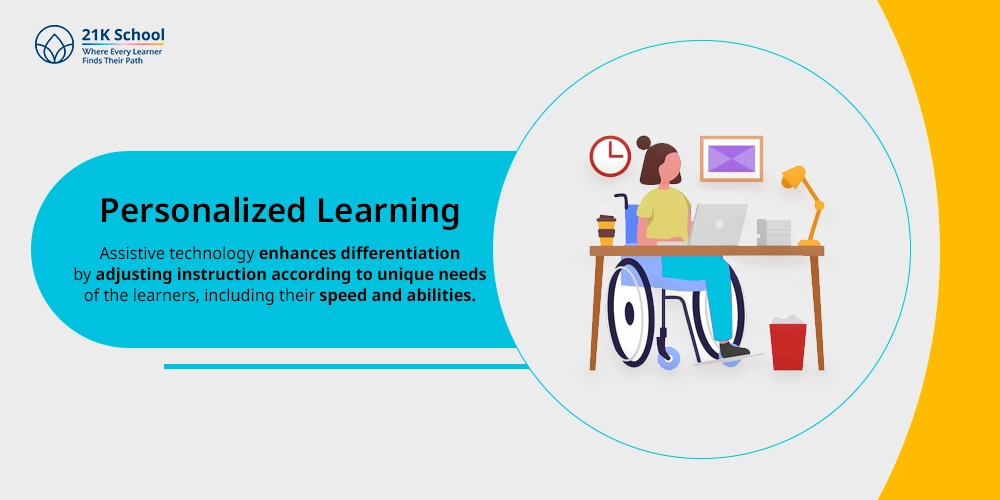
Assistive technology enhances differentiation by adjusting instruction according to unique needs of the learners, including their speed and abilities.
Common Assistive Technology for Different Types of Disabilities
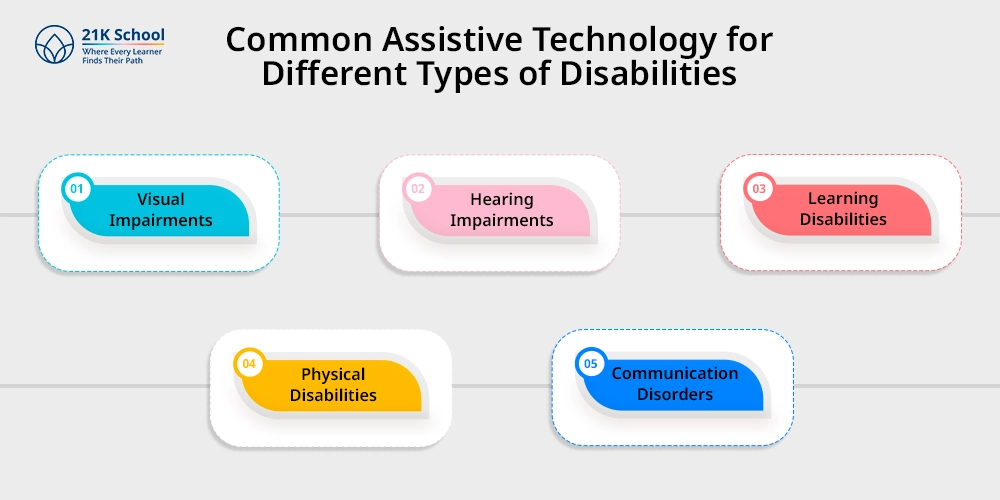
Different learners need different assistive technologies that can cater to their specific needs.
Some of the most commons of those assistive technologies would be:
1. Visual Impairments
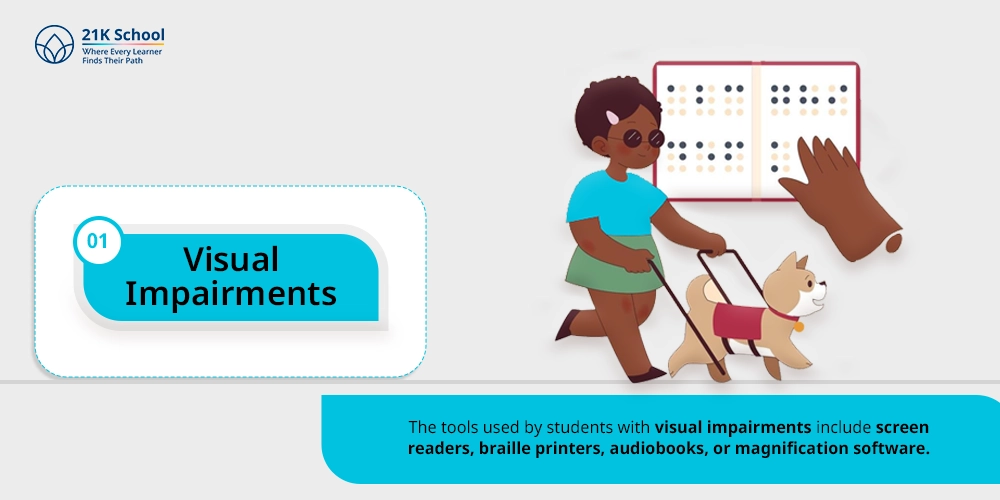
The tools used by students with visual impairments include screen readers, braille printers, audiobooks, or magnification software.
These are tools that can allow access to digital and written forms of contents.
2. Hearing Impairments
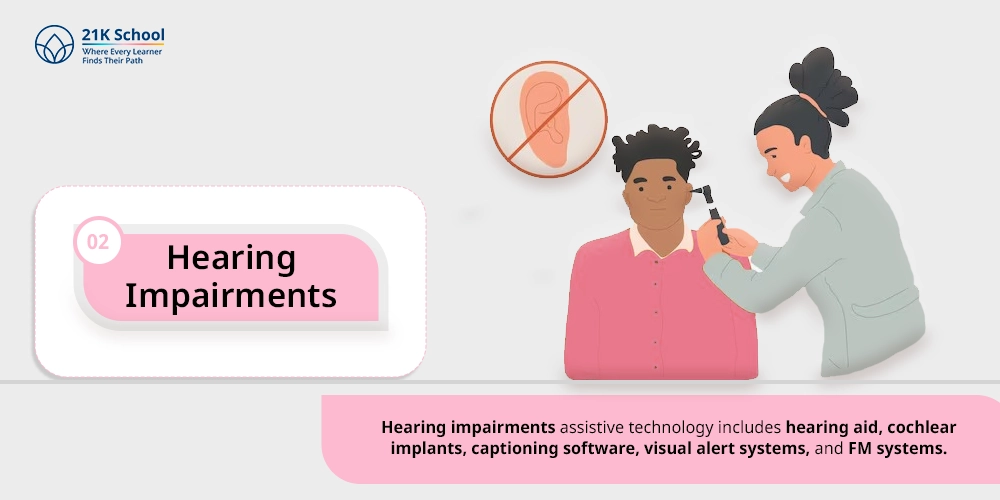
Hearing impairments assistive technology includes hearing aid, cochlear implants, captioning software, visual alert systems, and FM systems.
These technologies enhance the availability of visual or auditory data.
3. Learning Disabilities
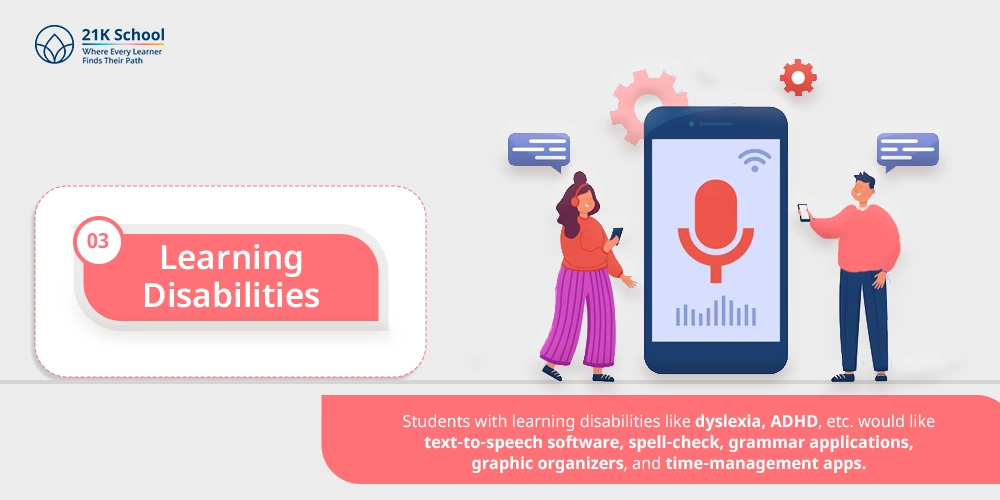
Students with learning disabilities like dyslexia, ADHD, etc. would like text-to-speech software, spell-check, grammar applications, graphic organizers, and time-management apps.
These are aids for reading, writing and organization.
4. Physical Disabilities
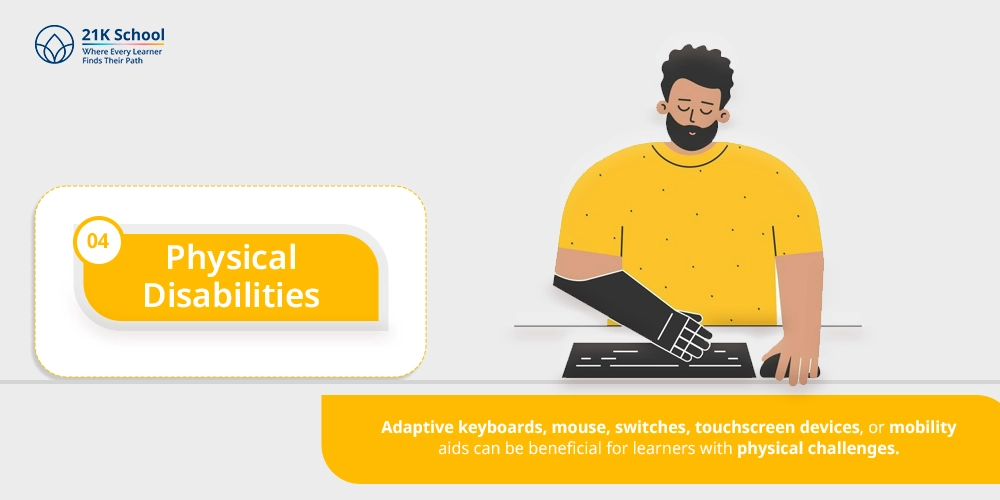
Adaptive keyboards, mouse, switches, touchscreen devices, or mobility aids can be beneficial for learners with physical challenges.
These tools assist students to engage with learning material.
5. Communication Disorders
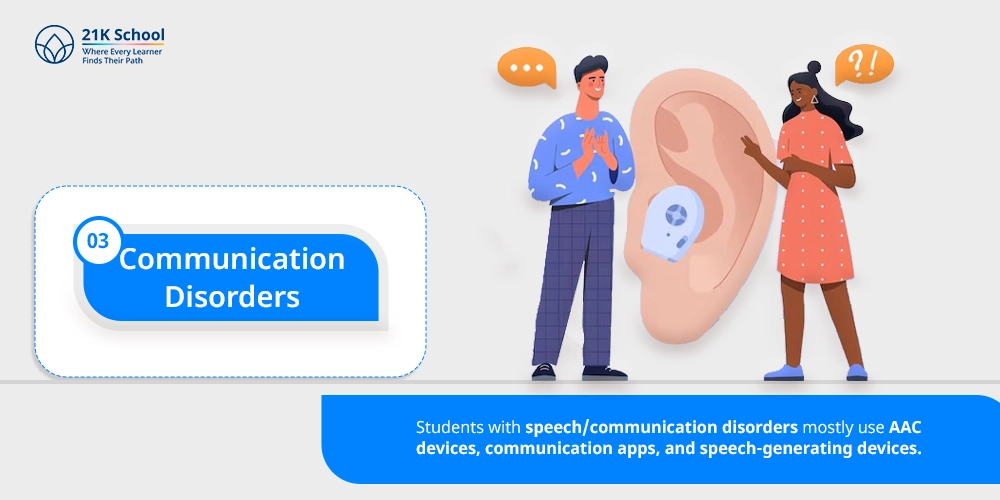
Students with speech/communication disorders mostly use AAC devices, communication apps, and speech-generating devices.
Such tools can facilitate good expression and communication skills .
Challenges in Implementing Assistive Technology in Inclusive Education
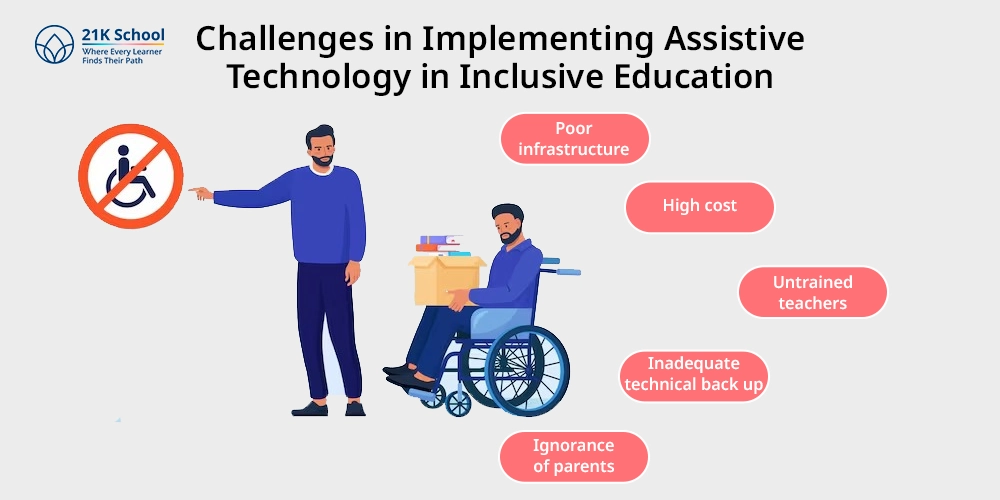
Irrespective of its benefits, there are a number of impairments to successful assistive technology implementation.
High cost is one of the major challenges especially to advanced technologies. Most of the schools do not have much funding to acquire and maintain them.
The untrained teachers are another problem that denies the opportunities to recognize the correct assistive tools and apply them in classrooms.
Poor infrastructure, inadequate technical back up, or ignorance of parents and administration can also be a great hindrance.
Moreover, the wrong choice or wrong usage of assistive technology can result in less use and lower efficiency.
Future of Assistive Technology in Inclusive Education
The future of assistive technology in inclusive education is prevailing because the trend in digital technology is at peak.
Artificial intelligence , adaptive learning systems, mobile applications, and cloud-based tools are some of the innovations that have opened the assistive technology to a wider and affordable market.
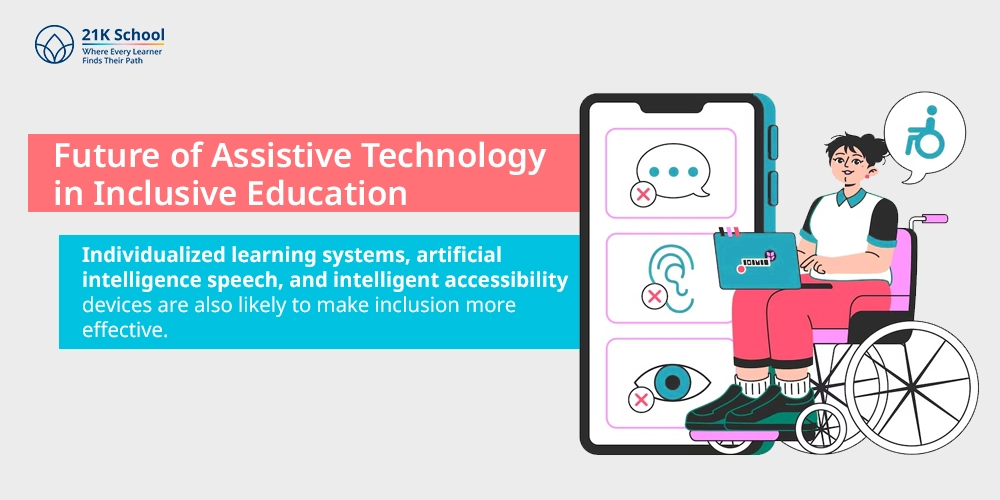
Individualized learning systems, artificial intelligence speech, and intelligent accessibility devices are also likely to make inclusion more effective.
Assistive technology can transform inclusive education and promote equal learning opportunities to everyone with the support of the policies, teacher training, and investments.
Wrap It Up
Assistive technology can be of great use for learners facing learning limitations due to their disabilities.
By improving student-engagement and boosting their confidence, assistive technology assists diligently to support inclusive education.
Besides some challenges like inappropriate professional development of teachers and huge costs, assistive technology is still positively impacting the education systems.
Be it high cost or low cost assistive technologies, it should be used by educators to bring effectiveness in their teaching methods for special needs students .

You may also want to read