

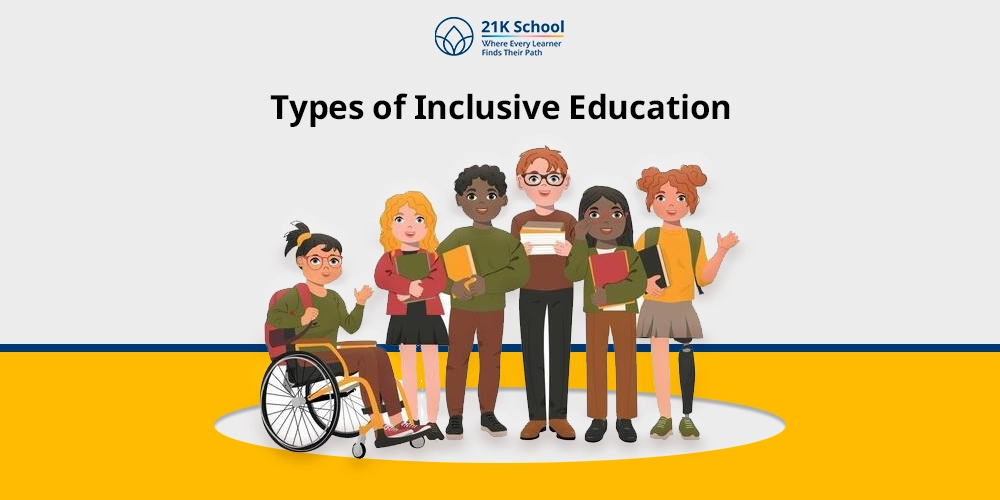
Have you ever thought about how many types of inclusive education there are?
Inclusive education accommodates the heterogeneous learning requirements by making sure that students are taught together in reasonable and equality in learning conditions.
Knowledge of the nature of inclusive education will enable tutors and parents to select reasonable ways of dealing with learners with disabilities.
These models range from total integration into general classes to specialised support programmes like co-teaching, resource classrooms and mainstreaming. All types attempt to eliminate barriers to learning, encourage involvement and facilitate meaningful learning experiences in all children.
Contents
What is Inclusive Education?
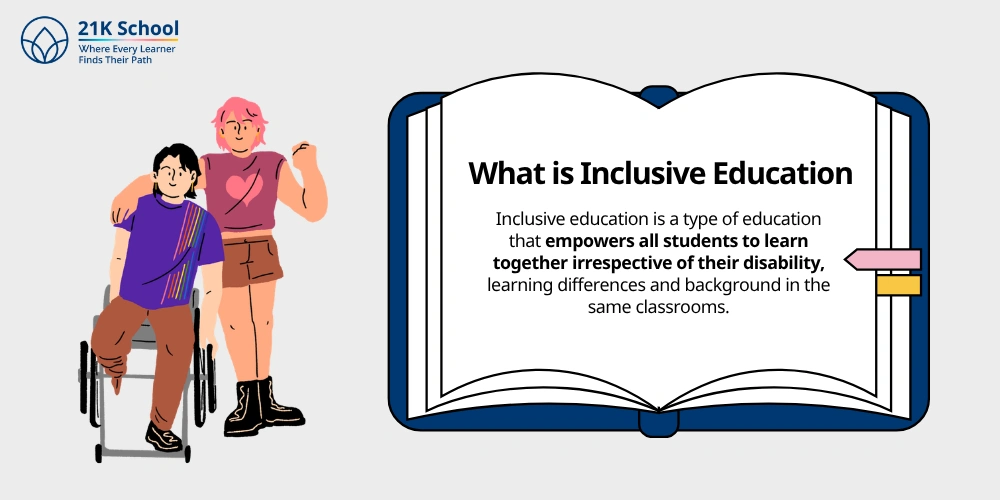
Inclusive education is a type of education that empowers all students to learn together irrespective of their disability, learning differences and background in the same classrooms.
It aims at ensuring equal access to education through the modification of teaching and learning methods , issues in the curriculum, and learning conditions in order to address the diverse requirements. Inclusive education fosters participation, respect, and belonging as well as encourages academic, social, and emotional growth among all learners.
Top 5 Types of Inclusive Education
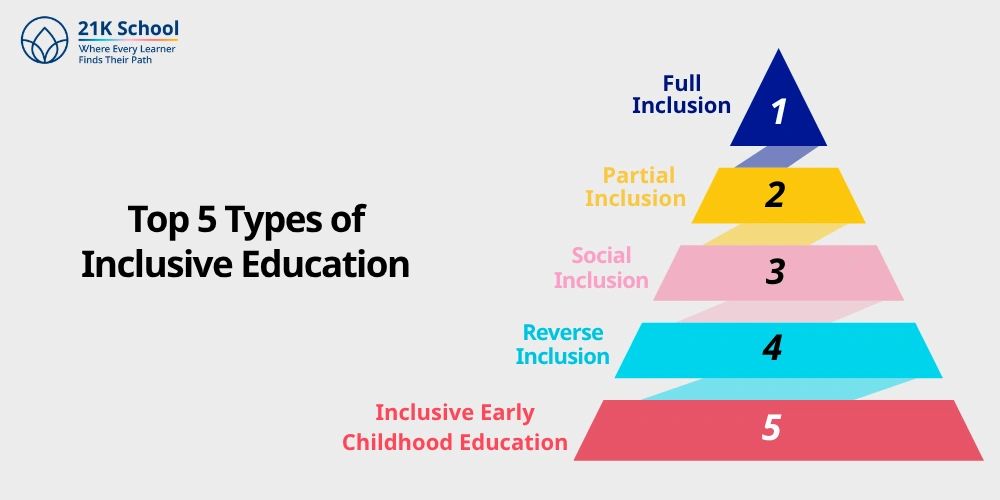
Different types of inclusive education describe various approaches to accommodate learners with all abilities, whereby full inclusion and partial inclusion are given, along with a special model where learners are given equal participation, access, and meaningful opportunities to learn. Inclusive education is of the following type.
1. Full Inclusion
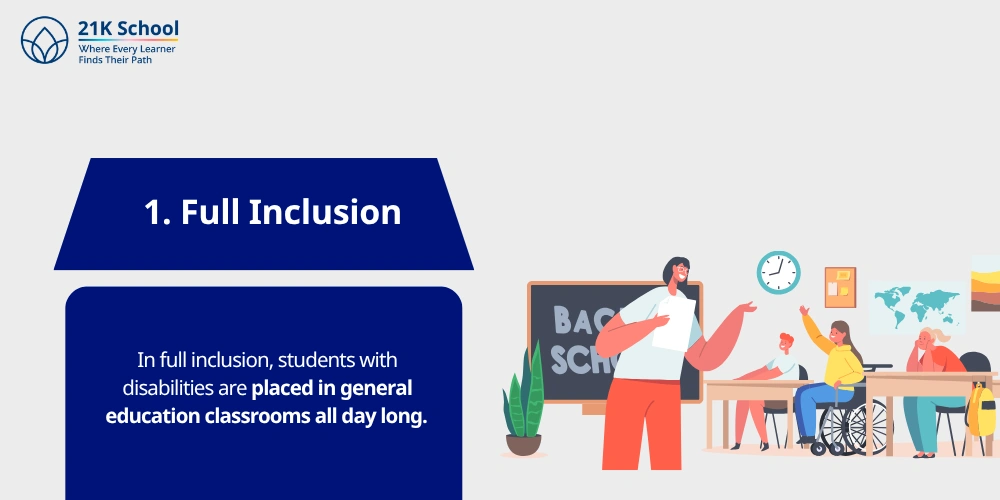
In full inclusion, students with disabilities are placed in general education classrooms all day long. They study with peers without disabilities and get the required assistance, accommodations and special services in the classroom.
This practice encourages equal involvement, interpersonal skills , communication and a feeling of belonging. Full inclusion focuses on modifying instructional interventions in order to address the needs of various learners without segregating them.
2. Partial Inclusion
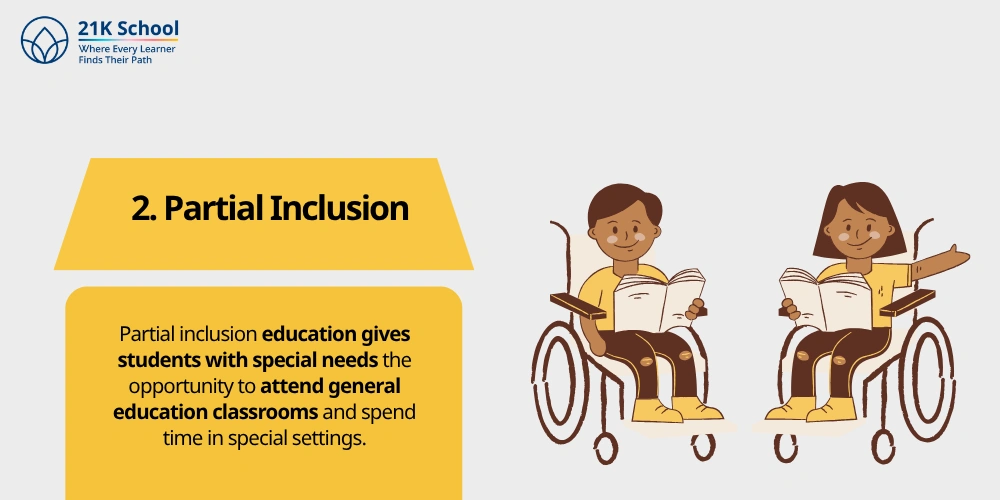
Partial inclusion education gives students with special needs the opportunity to attend general education classrooms and spend time in special settings. This model incorporates a balance between inclusion and specialised assistance.
Students are grouped with others to study appropriate subjects or activities and get individual instructions where necessary. Partial inclusion promotes academic and social skill development as well as overcoming special learning problems.
3. Social Inclusion
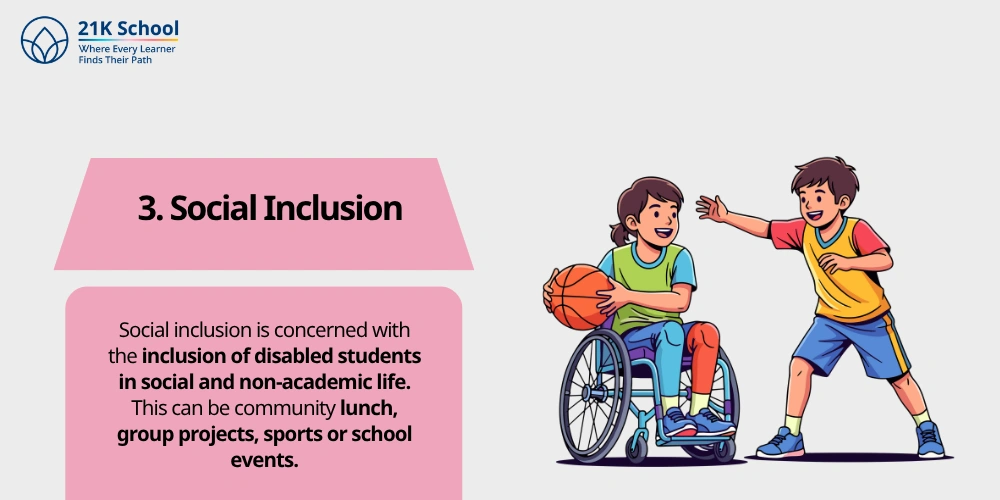
Social inclusion is concerned with the inclusion of disabled students in social and non-academic life. This can be community lunch, group projects, sports or school events.
It is aimed at making friends, learning to communicate, and gaining social self-confidence. . Social inclusion reduces isolation and leads to the development of acceptance, and assists students in creating meaningful peer relationships with other members of the school community, not necessarily only academics.
4. Reverse Inclusion
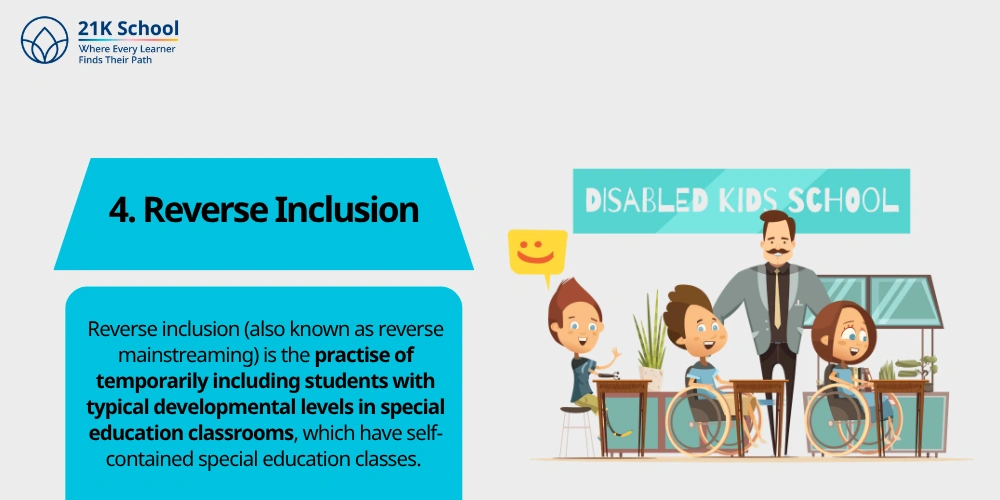
Reverse inclusion (also known as reverse mainstreaming) is the practise of temporarily including students with typical developmental levels in special education classrooms, which have self-contained special education classes. This model facilitates learning through an interactive setting that is supportive and which benefits each learner.
Reverse inclusion encourages compassion, collaboration , and empathy and enables students with disabilities to get educated within environments that they know. Inclusive early childhood education (IEC) is an education philosophy that involves both students with disabilities and their teachers equally.
5. Inclusive Early Childhood Education
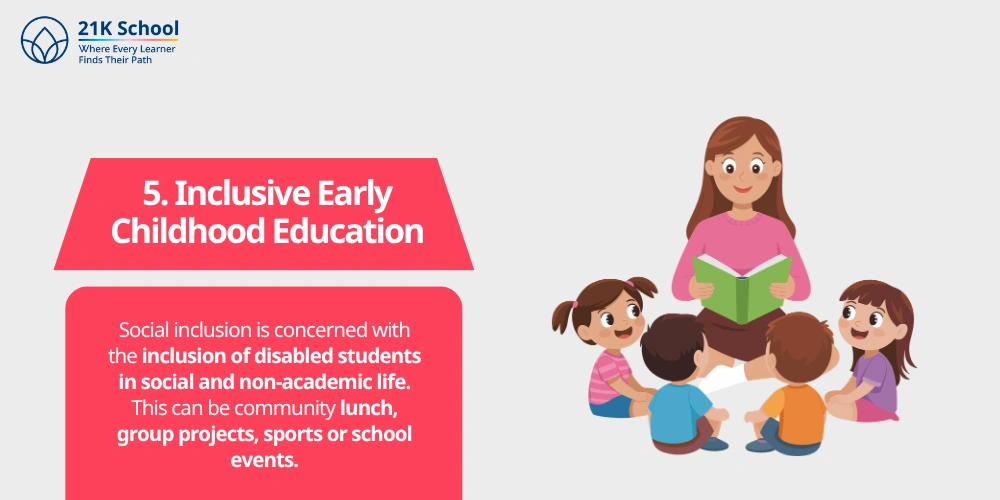
Early childhood education involves the inclusion of children with different abilities in early learning institutions. It deals with early intervention, play-based learning and developmental provision during critical growth years.
The strategy helps the children to develop social, learning and communication skills at an early age. Early inclusion promotes acceptance, reduces the developmental disparities and amplifies accessibility to formal education easily.
Aims of Inclusive Education
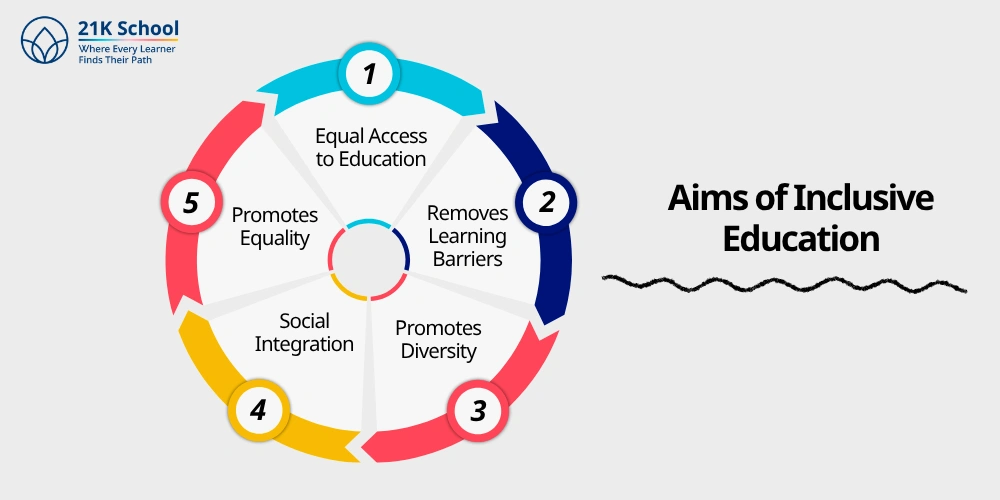
Inclusive education has the objectives of equal opportunities and access, the lack of barriers to learning, the promotion of diversity, social integration support, and justice that will allow every learner to be involved and succeed. Inclusive education has the following objectives.
1. Equal Access to Education
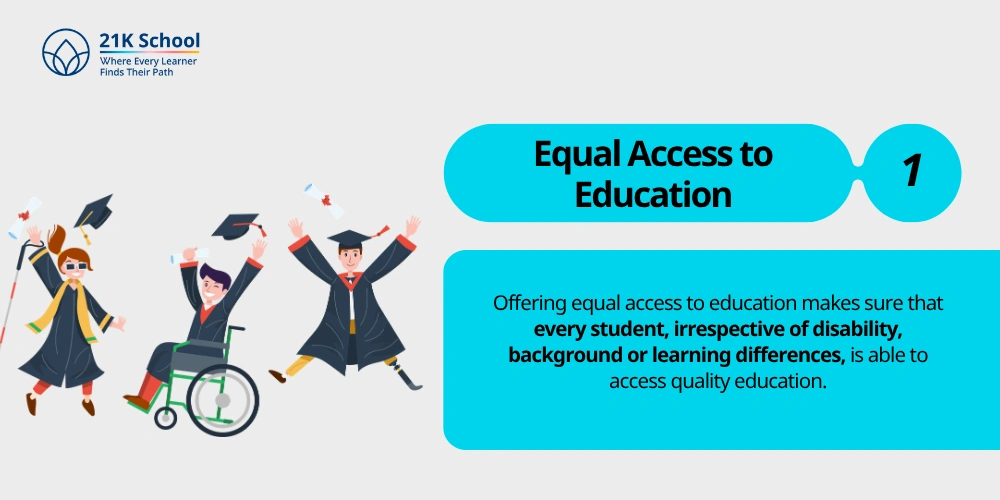
Offering equal access to education makes sure that every student, irrespective of disability, background or learning differences, is able to access quality education. Inclusive education also equips them with the right resources, accommodations and support services in order to have a chance to succeed.
This objective is concerned with fairness, accessibility and participation such that no kid gets overlooked in the learning process because they have physical, cognitive, social and emotional difficulties.
2. Removes Learning Barriers
Inclusive education tries to eliminate obstacles that restrict the learning and participation of students. Such barriers can be inflexible instruction, unreachable environments, or a lack of support.
Through curriculum modifications, teaching methods , and classroom materials, inclusive education allows the establishment of flexible learning environments. The elimination of barriers also enables students with a variety of needs to interact productively, advance in their studies and develop confidence in their learning potential.
3. Promotes Diversity
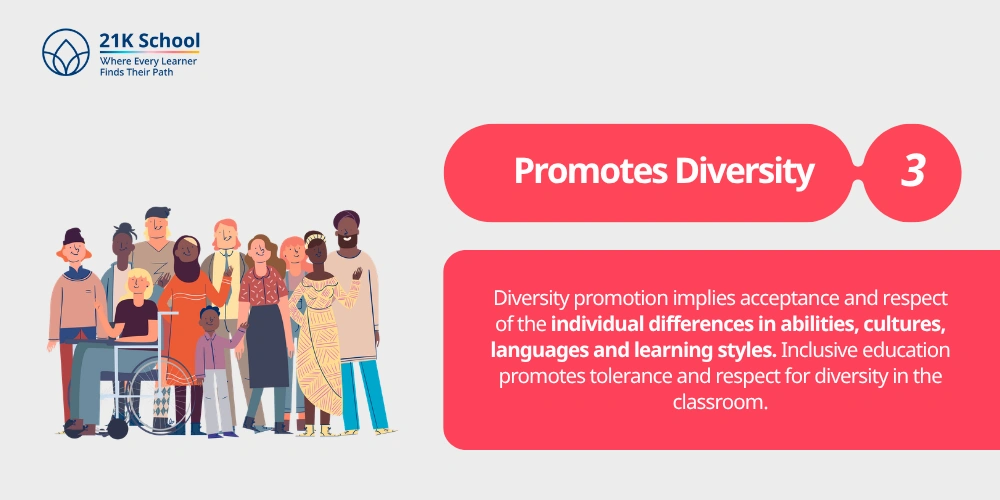
Diversity promotion implies acceptance and respect of the individual differences in abilities, cultures, languages and learning styles. Inclusive education promotes tolerance and respect for diversity in the classroom.
The students are taught to listen to others and be respectful, which creates empathy and collaboration. The contact with diverse peers enriches the learning experience and makes the students ready to engage in an inclusive and multicultural society positively once they leave the school setting.
4. Social Integration
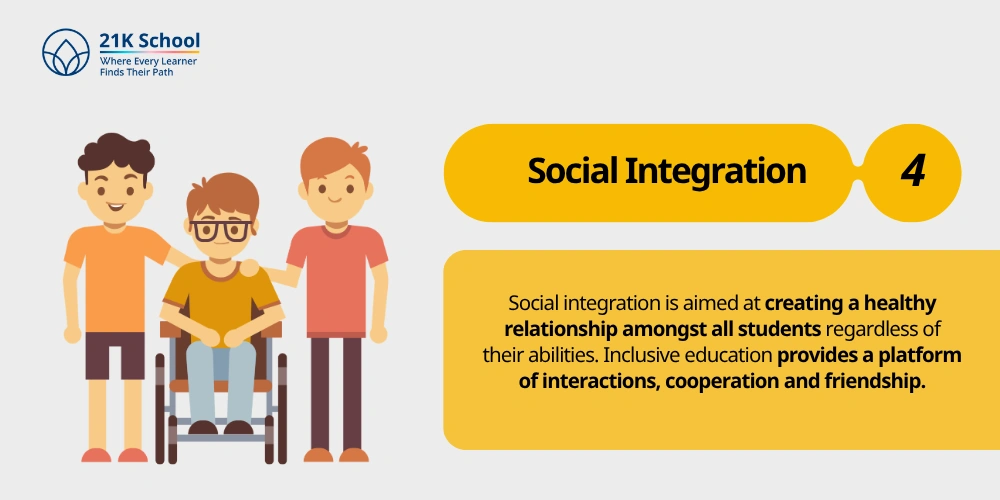
Social integration is aimed at creating a healthy relationship amongst all students regardless of their abilities. Inclusive education provides a platform of interactions, cooperation and friendship. Through shared experiences, students acquire social skills, teamwork and communication.
Social integration will lessen the feeling of isolation and stigma and encourage the feeling of belonging. It promotes emotional health and aids students to gain confidence, strength and emotional abilities in life.
5. Promotes Equality
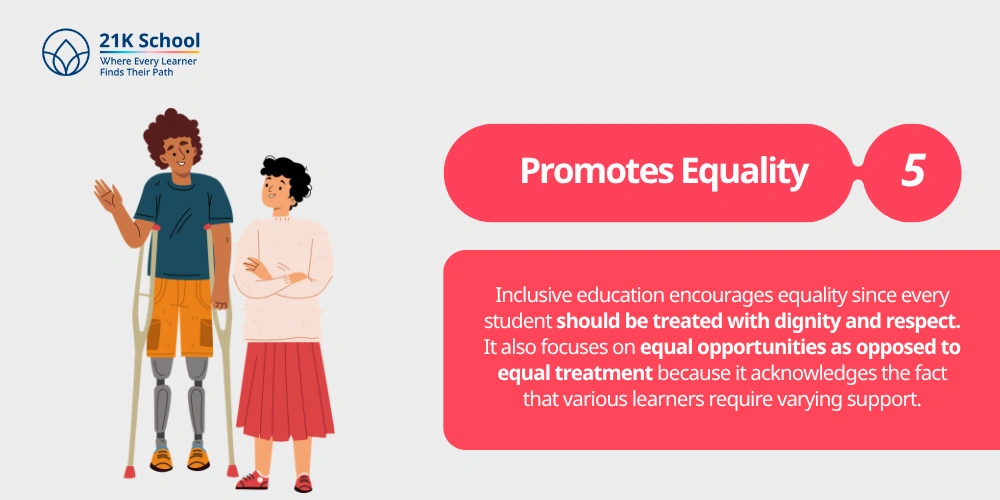
Inclusive education encourages equality since every student should be treated with dignity and respect. It also focuses on equal opportunities as opposed to equal treatment because it acknowledges the fact that various learners require varying support.
Due to the fairness in meeting individual needs, inclusive education minimises discrimination and educational disparities. The objective promotes equality, empowerment, and participation, which contribute to the achievement of the potential of all learners both academically and socially.
Conclusion
Inclusive education plays a significant role in the development of positive learning environments where all students are treated with respect, welcomed and accepted.
The teachers and the parents would be able to assist the diversity in the needs of learning by becoming more familiar with the different types of inclusive education and their goals.
Inclusion practices entail that there is no barrier, equality, social integration and diversity. Inclusivity positively affects not only academic performance but also fosters compassion, self-esteem, and social competencies that will enable students to succeed in an inclusive and equal society when implemented well.

You may also want to read