

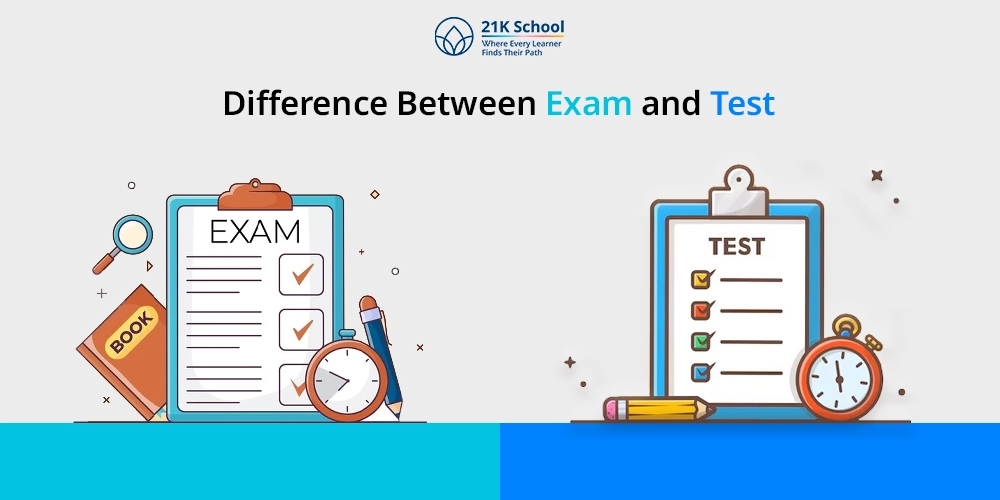
We all hear common terms like exam and test on a daily basis. But, do we exactly know the real difference between them or just using them interchangeably.
Both exams and tests are a type of assessment used by different institutes like schools to measure the growth of students. However, it is not only helpful for evaluation but also essential to strategies accordingly.
Let’s go through the meanings, a quick table, and detailed information of key differences between exam and test.
Contents
What Is an Exam?
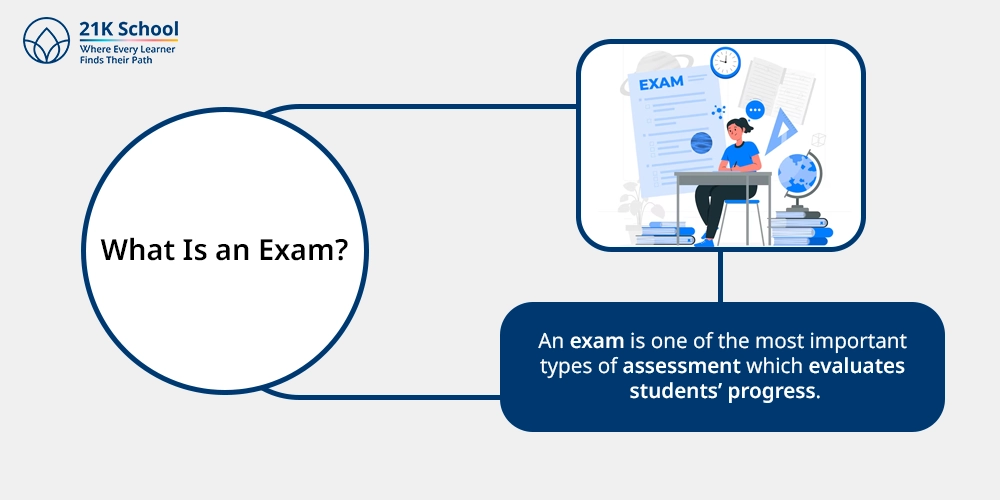
An exam is one of the most important types of assessment which evaluates students’ progress.
It is also defined as a formal assessment tool used by institutes to measure learning outcomes and overall understanding of a particular subject or course.
Exams are conducted at regular intervals like end of the year, semester, or yearly basis. And the outcome of exams are certification, ranking, or qualification for further studies.
What Is a Test?
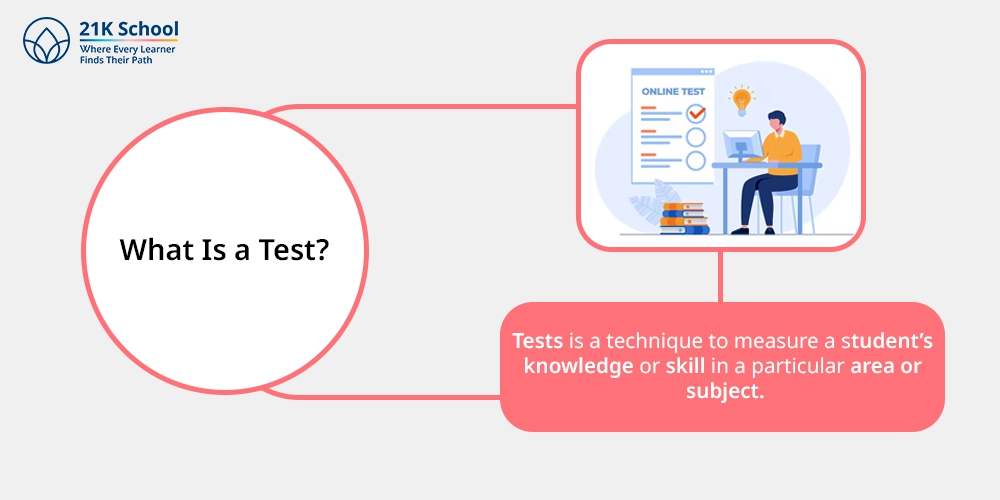
Tests is a technique to measure a student’s knowledge or skill in a particular area or subject. It can be used by parents at home, teachers in the classroom, or self to understand and evaluate performance.
Tests are conducted throughout a course to understand the progress over time. In this way, one can find out the right strategies to implement for performance improvement.
Unit tests, surprise tests, class tests, quiz competitions, etc, are some common examples.
Difference Between Exam and Test: 11 Key Points
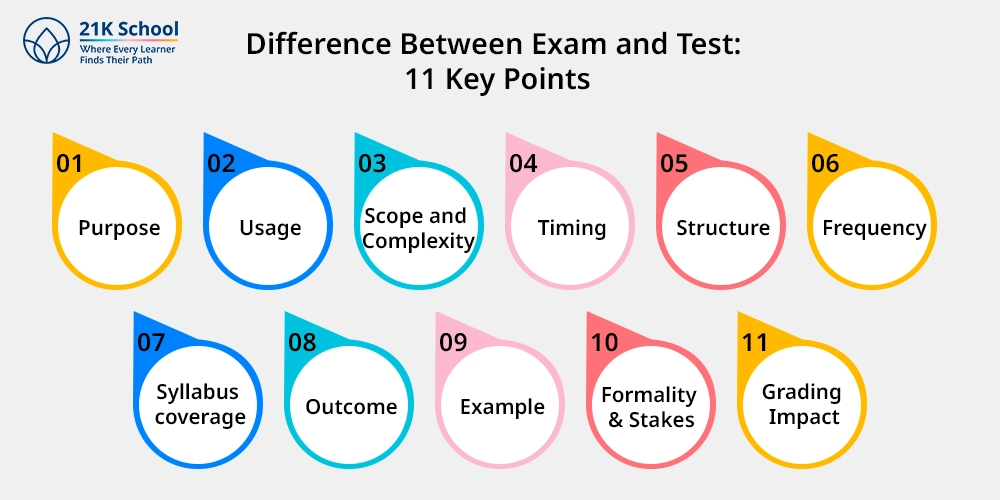
Given below is a quick overview of 11 key differences between exam and test in the form of table comparison and important insights one must know:
| Number | Aspects | Exam | Test |
| 1. | Purpose | Exams are important to evaluate overall understanding and mastery of a subject over a long period | Tests help to assess knowledge of a specific topic or short-term learning |
| 2. | Usage | Exams are conducted at the end of a term, semester, or academic year | Tests are conducted during the course to check progress and understanding |
| 3. | Scope and Complexity | It has a broader scope and is more detailed and comprehensive | It has a narrower scope and focuses on specific topics |
| 4. | Timing | Exams are scheduled at fixed academic intervals (final exams, board exams) | Tests can be conducted anytime during the learning process |
| 5. | Structure | It is for a longer duration. An exam includes multiple sections like MCQs, short answers, essays, and practicals. | It is for a shorter duration. A test includes objective or short-answer questions. |
| 6. | Frequency | It is conducted less frequently in comparison to tests. | It is conducted more frequently like weekly, monthly, or topic-wise |
| 7. | Syllabus coverage | Exams cover the entire syllabus or a large portion of it. | Tests cover limited chapters or recently taught material. |
| 8. | Outcome | The outcome of the exam is promotion, certification, ranking, or qualification | The outcome of the tests is to identify strengths, weaknesses, and learning gaps |
| 9. | Example | Final exams, board exams, entrance exams, semester exams | Unit tests, surprise tests, class quizzes, mock tests |
| 10. | Formality and Stakes | It is more formal and high-stakes | It is less formal and can be conducted within classroom settings |
| 11. | Grading Impact | Exams are highly impactful on final grades or academic record | Tests contribute partially or minimally to overall grades. However, in many educational systems, it can contribute significantly to final grades |
1. Purpose
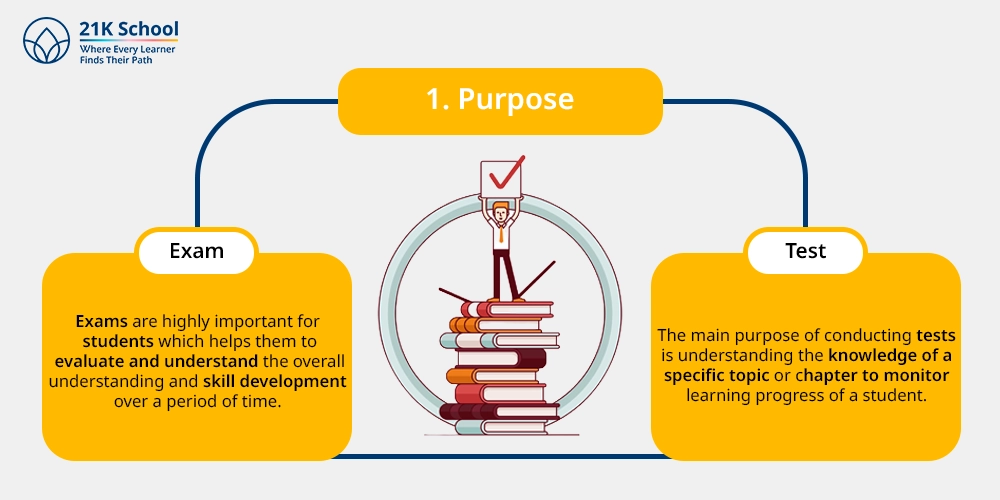
Exam: Exams are highly important for students which helps them to evaluate and understand the overall understanding and skill development over a period of time.
Test: The main purpose of conducting tests is understanding the knowledge of a specific topic or chapter to monitor learning progress of a student.
2. Usage
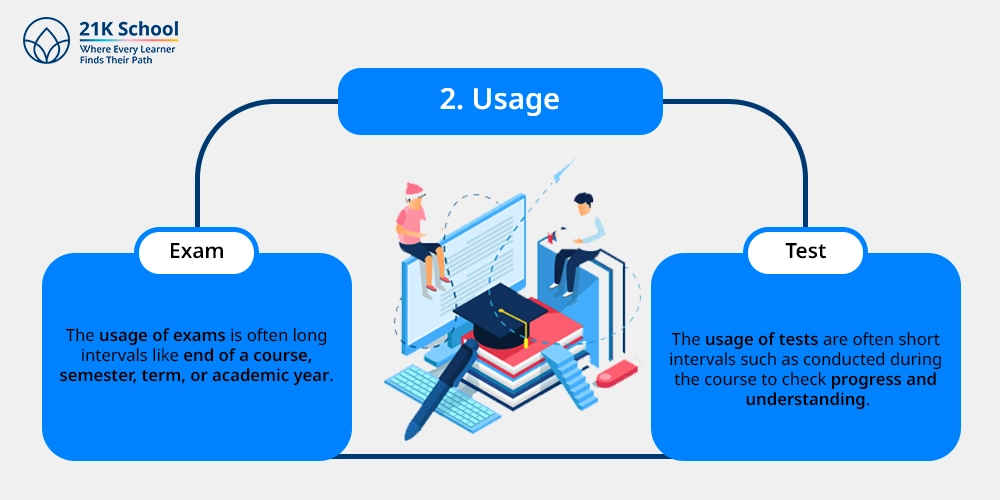
Exam: The usage of exams is often long intervals like end of a course, semester, term, or academic year.
Test: The usage of tests are often short intervals such as conducted during the course to check progress and understanding.
3. Scope and Complexity
Exam: As compared to tests exams have a broader scope and are more complex which includes different types of questions including MCQs, long answer questions, short answer questions etc.
Test: On the other hand, tests are limited in focus to specific topics or a subject which makes it less complex than exams.
4. Timing
Exam: Exams are often scheduled at fixed intervals especially in schools. For example, on a yearly basis exams to successfully complete a particular grade.
Test: Tests can be conducted at any time during the year such as monthly quiz competitions or surprise tests.
5. Structure
Exam: The structure of an exam is mainly Longer duration as compared to tests. It mostly consists of multiple types of questions like MCQs, short answers, essays, and practical exams.
Test: While tests include short duration such as an hour or two. It mainly consists of objective tests or short-answer questions.
6. Frequency
Exam: The frequency of exams is once or twice a year but in many systems it is different.
A simple example of the CBSE with mid-term and final exams, or semester systems with multiple exam cycles.
Test: On the other hand, in tests the frequency is weekly, monthly, or randomly.
7. Syllabus coverage
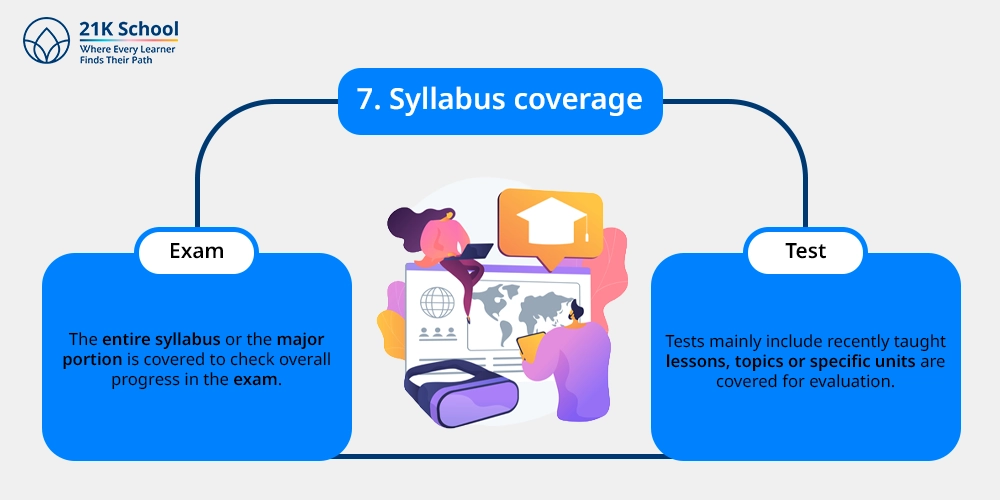
Exam: The entire syllabus or the major portion is covered to check overall progress in the exam.
Test: Tests mainly include recently taught lessons, topics or specific units are covered for evaluation.
8. Outcome
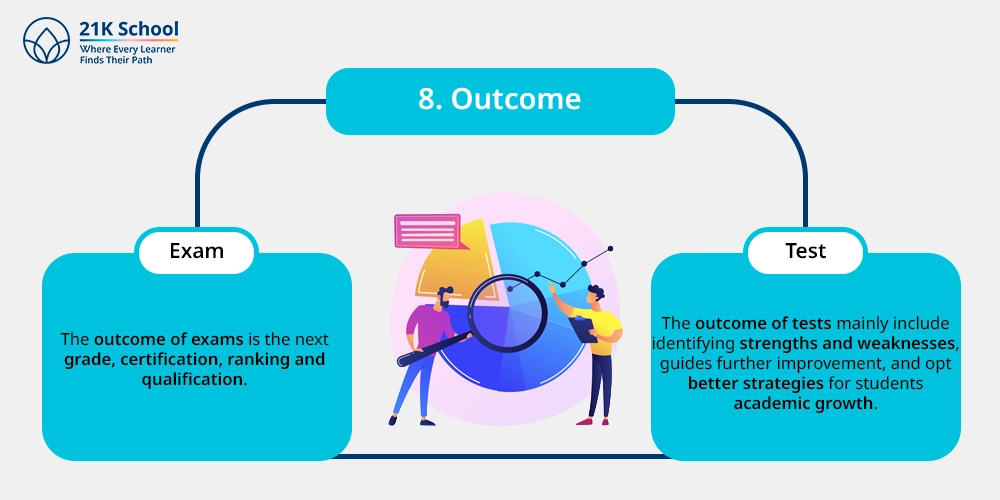
Exam: The outcome of exams is the next grade, certification, ranking and qualification.
Test: The outcome of tests mainly include identifying strengths and weaknesses, guides further improvement, and opt better strategies for students academic growth.
9. Example
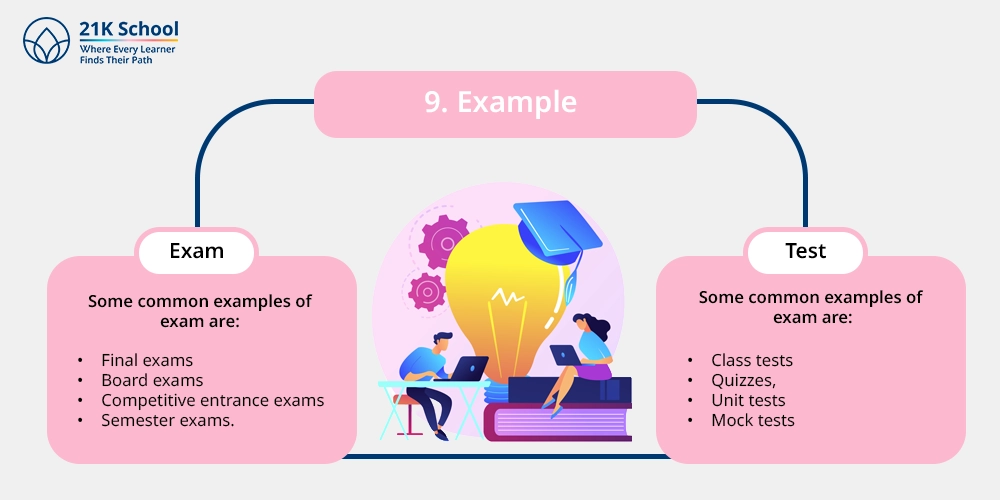
Exam: Some common examples of exam are:
- Final exams
- Board exams
- Competitive entrance exams
- Semester exams.
Test: Some common examples of exam are:
- Class tests
- Quizzes,
- Unit tests
- Mock tests
10. Formality and Stakes
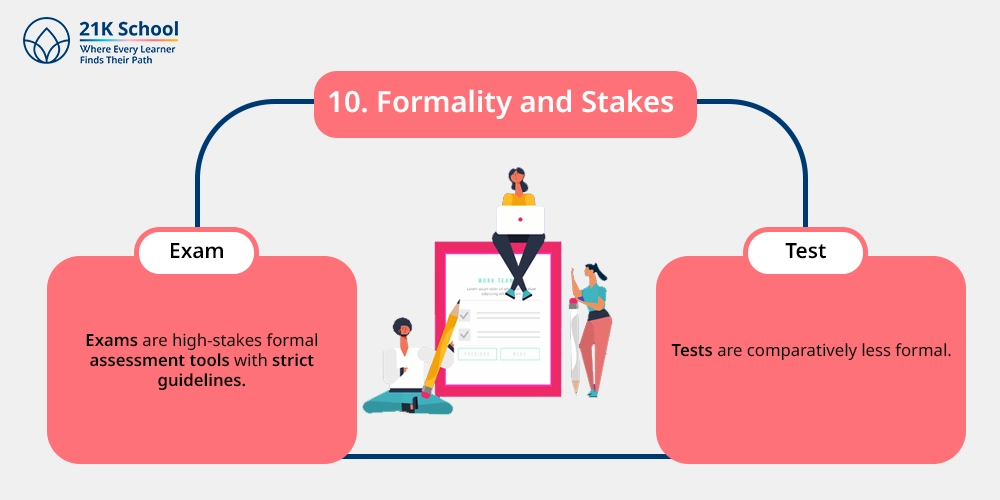
Exam: Exams are high-stakes formal assessment tools with strict guidelines.
Test: Tests are comparatively less formal.
11. Grading Impact
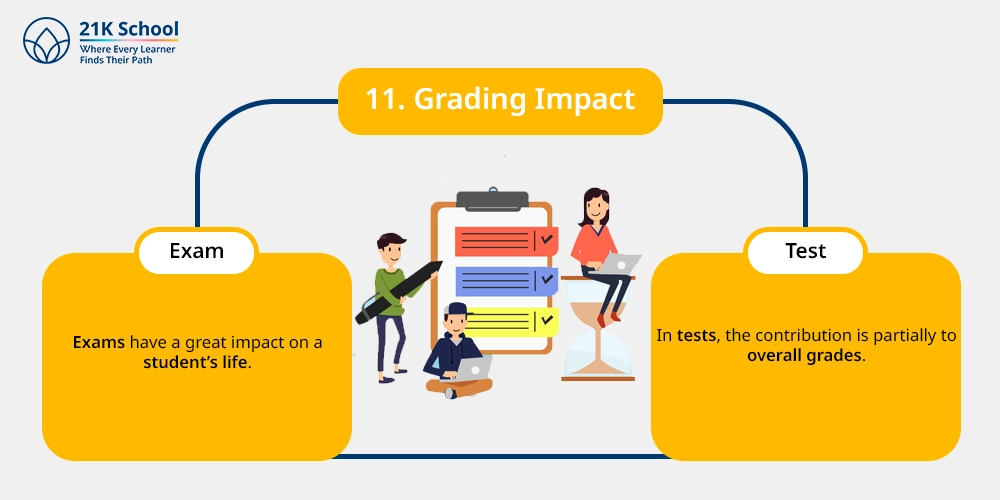
Exam: Exams have a great impact on a student’s life. It represents final grades and academic records throughout the academic journey and beyond.
Test: In tests, the contribution is partially to overall grades.
However, some educational systems, especially continuous assessment models like CBSEs internal assessment or Cambridge IGCSE coursework, can contribute significantly to final grades.
Conclusion
Exams and tests play a major role through which performance can be measured accurately. However, exams are a broader term as compared to tests.
Understanding the terms effectively helps in implementation of the right assessment tool without lacking students’ requirements. In this way, teachers can strategise monthly, quarterly, and yearly educational needs.
Hopefully, the given quick table helped in understanding the key differences and explanation guide you towards detailed information.

You may also want to read