![Role of Parents in Inclusive Education: 10 Key Strategies [Complete Guide]](/image-assets/uploads/wp/2026/01/Role-of-Parents-in-Inclusive-Education-10-Key-Strategies-Complete-Guide.webp)
Role of Parents in Inclusive Education: 10 Key Strategies [Complete Guide]
 Written byAnkita SinghaContent Specialist
Last modified: Jul 24, 2026 5 min read
Inclusive education is one of the popular approaches that helps students to enhance their academic journey. But, do you know the main role of parents in inclusive education?
As we all know, schools and teachers play a vital role in students’ inclusive education. But parents are also one of the true pillars.
To understand the role of parents in inclusive education and work accordingly we will go through a detailed guide. Let’s begin with what inclusive education really means.
What is inclusive education?
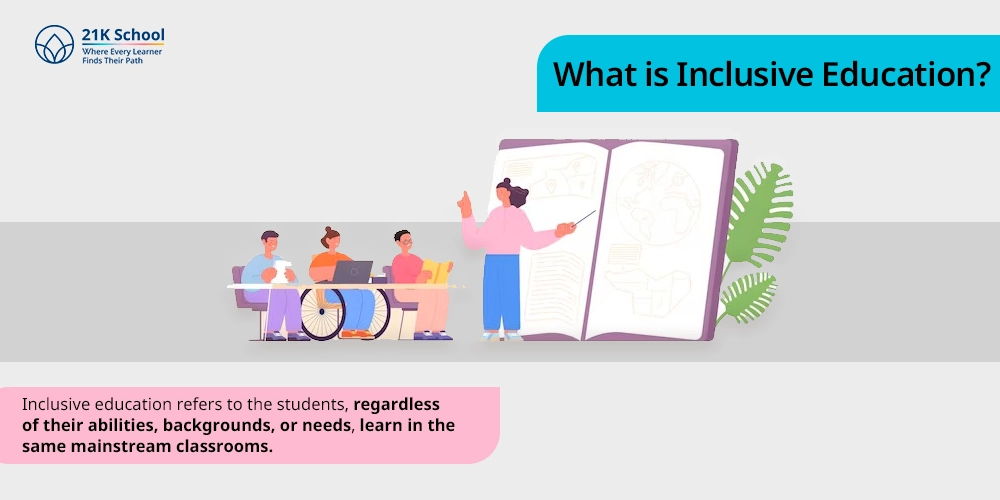
Inclusive education refers to the students, regardless of their abilities, backgrounds, or needs, learn in the same mainstream classrooms.
It is an approach that promotes equality, togetherness, teamwork, support and feel valued in the classroom.
In this way, each student gets an equal chance to participate, achieve, and get benefits of learning .
Also, explore a detailed guide on the importance of inclusive education .
10 key role of parents in inclusive education
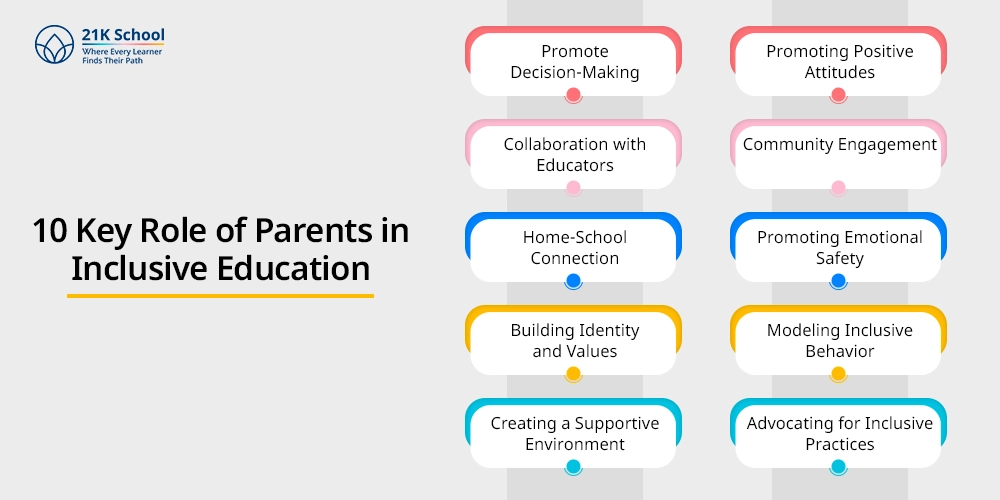
To understand in-depth go through the 10 key roles of parents in inclusive education:
1. Promote decision-making
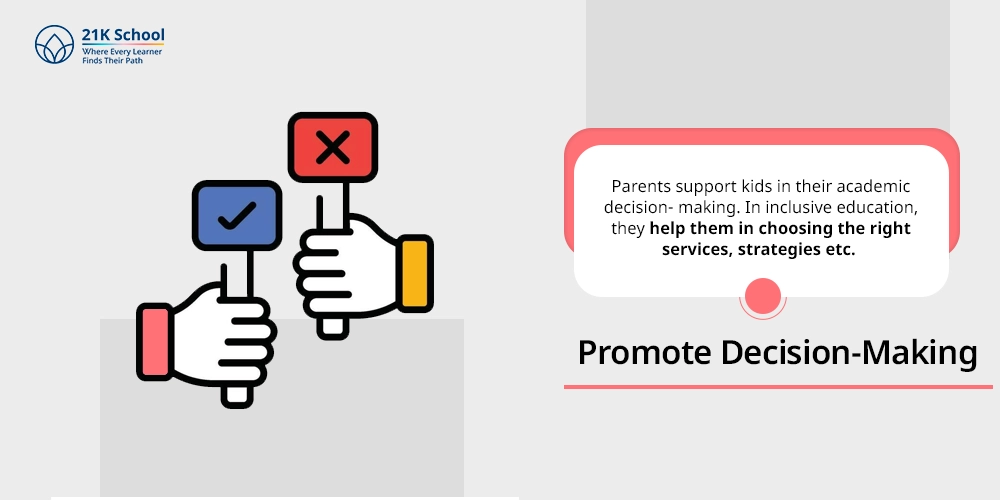
Parents support kids in their academic decision-making . In inclusive education, they help them in choosing the right services, strategies etc.
Parents understand the needs, strengths, and challenges to make decisions for the future. In this way, students learn effectively.
2. Collaboration with educators
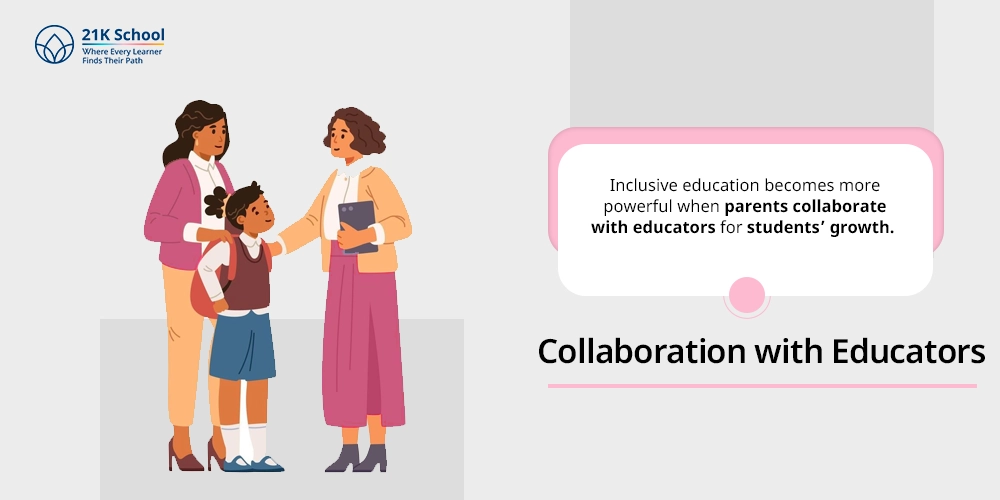
Inclusive education becomes more powerful when parents collaborate with educators for students’ growth.
Parents and educators share valuable insights mainly related to kids' behavior, learning progress, areas of improvement etc.
This way parents can provide consistent support at home. Learn the key role of special educator in inclusive education .
3. Home-school connection
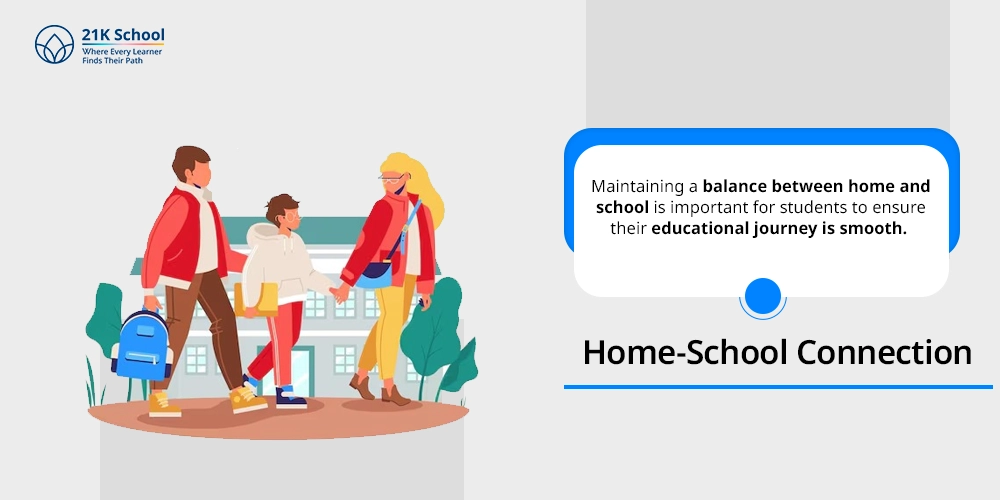
Maintaining a balance between home and school is important for students to ensure their educational journey is smooth.
This can be done by including good habits like at home by creating routines, supporting homework, and practicing skills at school.
4. Building identity and values
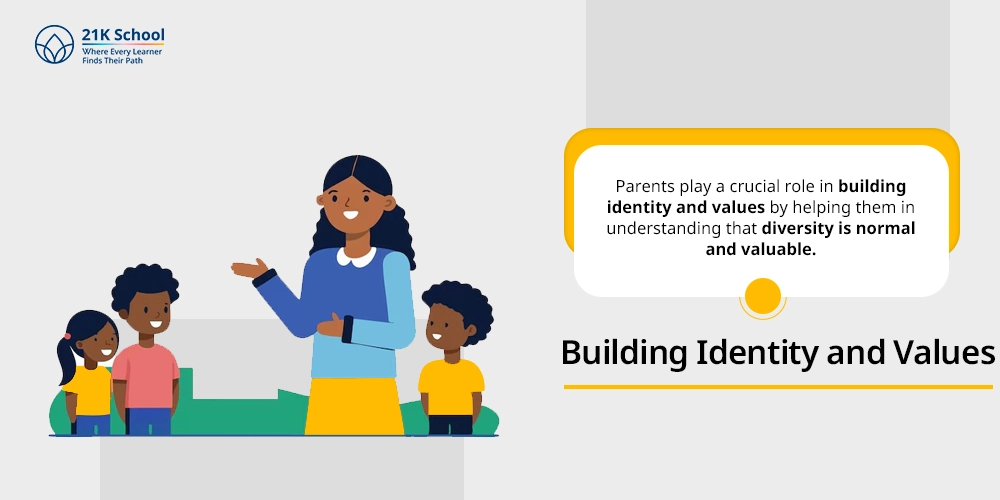
In inclusive education, parents play a crucial role in building identity and values by helping them in understanding that diversity is normal and valuable.
In this way, students can develop positive behavior, especially towards special needs students. Learn more on inclusive education for children with special needs .
5. Creating a supportive environment
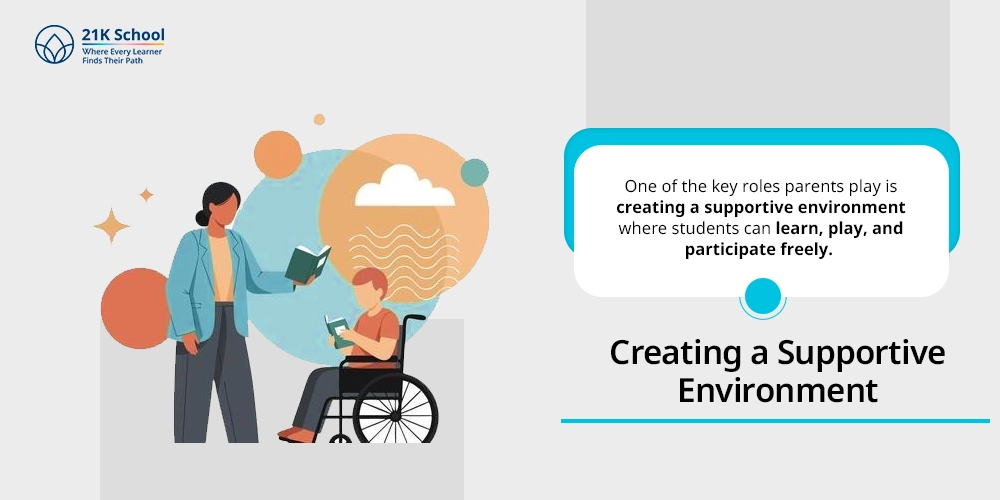
One of the key roles parents play is creating a supportive environment where students can learn, play, and participate freely.
A safe, comfortable, positive learning environment encourages positivity, concentration, and resilience.
6. Promoting positive attitudes
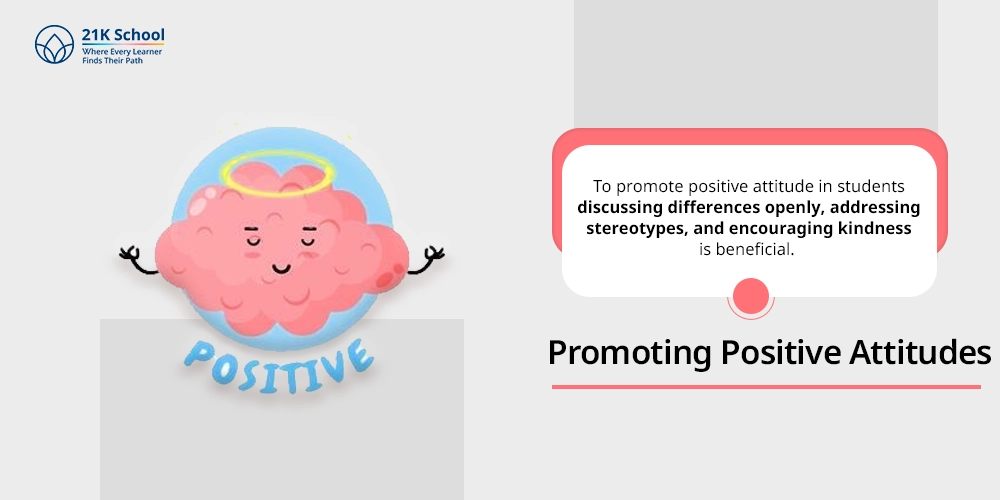
To promote positive attitude in students discussing differences openly, addressing stereotypes, and encouraging kindness is beneficial.
A positive parents increase students’ productivity to learn with focus.
7. Community engagement
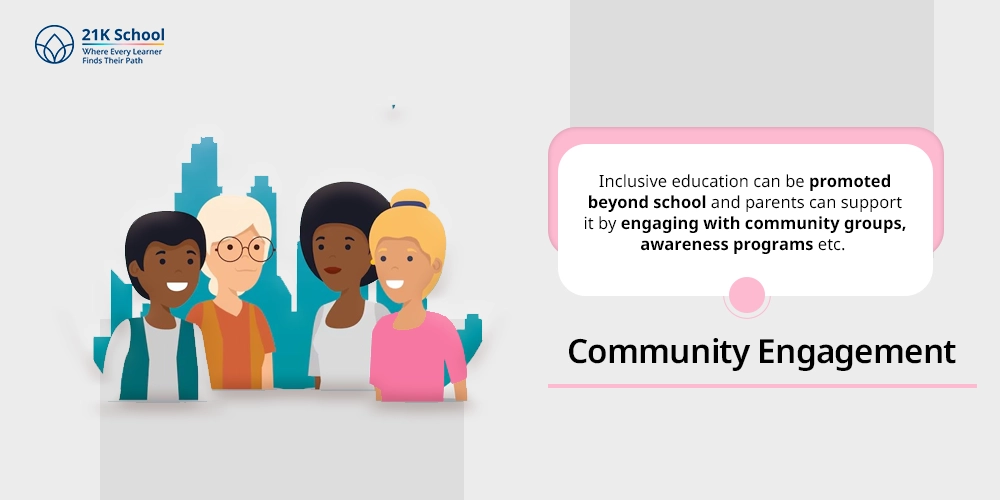
Inclusive education can be promoted beyond school and parents can support it by engaging with community groups, awareness programs etc.
Participation encourages children to feel included in the community, share experiences, access resources, and many more.
8. Promoting emotional safety
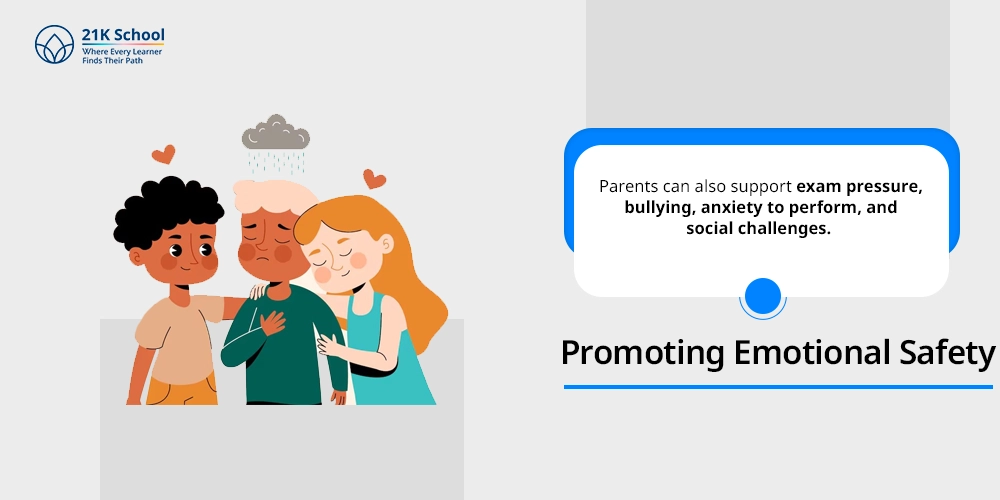
With physical safety emotional support is also important in inclusive education. Parents can provide support by:
- listening to concerns.
- validating the feelings.
- offering reassurance.
Parents can also support exam pressure , bullying, anxiety to perform, and social challenges.
9. Modeling inclusive behavior
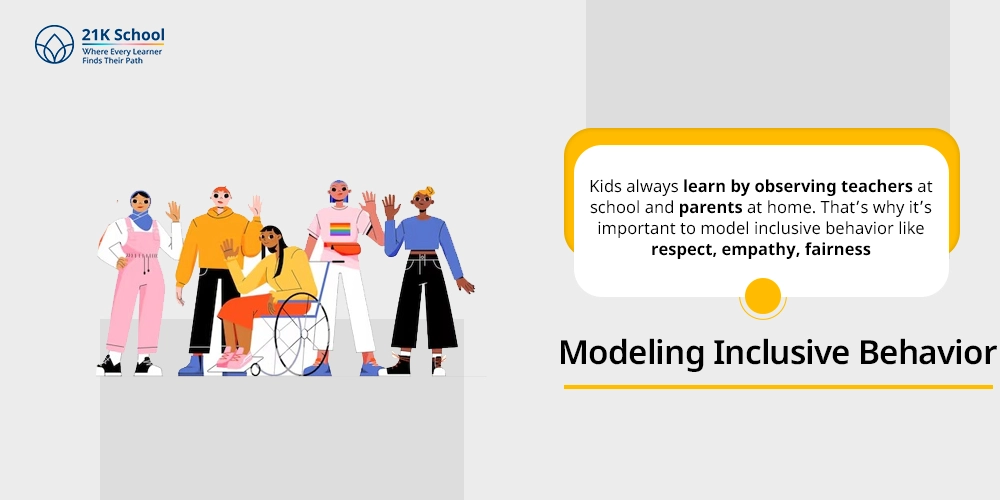
Kids always learn by observing teachers at school and parents at home. That’s why it’s important to model inclusive behavior like:
- respect
- empathy
- fairness
This helps children in boosts confidence , building strong relationships, and improves academic success.
10. Advocating for inclusive practices
Parents can advocate voice concerns, suggest improvements, and push for policies that support inclusive practices in schools.
This helps in maintaining their commitment toward diverse learning needs of students.
Know different ways on how to promote inclusive education in schools .
Conclusion
Hopefully, the above-mentioned points are informative for parents and students to understand the benefits of inclusive education .
Here, parents act as a supporter, collaborators, advocates who help kids to improve their educational journey.
Explore the future of inclusive education in India and enhance students’ potential by guiding them towards the right pathway of learning.
Frequently asked questions
7 questions
What is the 7-7-7 rule parenting?
The 7-7-7 rule has two main forms: First, an Islamic parenting model based on Prophet Muhammad's teachings: 0 to 7 years: Focus on play period 7 to 14 years: Focus on teaching period 14 to 21 years: Focus on guiding/advisory period Second, a modern wellness concept which includes 7 mins morning, 7 mins reunion, 7 mins bedtime.
What are the 4 C's of parenting?
The common 4 C's of parenting include care, consistency, choices, and consequences.
How can parents be involved in their children's education?
Parents can be involved in their children's education by: Creating supportive environment Open communication Connecting with teachers Introducing new concepts Attending school events
What are the 5 principles of parenting?
The 5 principles of parenting, popularized by Dr. Aliza Pressman are: Relationship Reflection Regulation Rules Repair
How to be an inclusive parent?
Parents who want to become inclusive must: model respect expose kids to diversity foster empathy and self-esteem, encourage open dialogue about differences
What are the 4 pillars of inclusion?
The four pillars of inclusion are not universally fixed. Some popular options are: Present, Participating, Achieving, and Supported Safe, Welcomed, Celebrated, and Cherished Bias Awareness, Cultural Competence, Acknowledging Privilege, and Empathy
What are the 5 roles of responsible parents?
The 5 core roles of responsible parents are: Providers Nurturers Educators/Guides Role Models Disciplinarians/Protectors
About the author
Ankita Singha
Content Specialist
Ankita Singha is an Education Content Specialist at 21K School, India’s first accredited fully online K-12 School. She focuses on the in-depth research and creation of the well-drafted guides on early childhood education, school admission processes, and CBSE/ICSE curriculum guidance. With more than 2 years of experience at 21K School, a fully accredited institute- Cambridge International (IA702) and Pearson Edexcel (94883), Ankita works closely with the school’s curriculum heads and academic coordinators. Ankita’s every article reflects on the official board guidelines, practical realities, and current policies of online education in 78+ countries. Ankita’s content has helped thousands of parents in understanding the topics like RTE eligibility, NIOS pathways, and age-appropriate admission criteria.
Every 21K School guide is written by our education team and reviewed by a subject facilitator before publishing.
Exploring a CBSE-pathway online school?
Talk to an advisor about 2026–27 admissions — no obligation.
Talk to an advisorComments
No comments yet — be the first to share your thoughts or ask a question.