
The Learning Garage at 21K School, Puducherry
A space to imagine, design, build, test and improve




Where ideas become working solutions
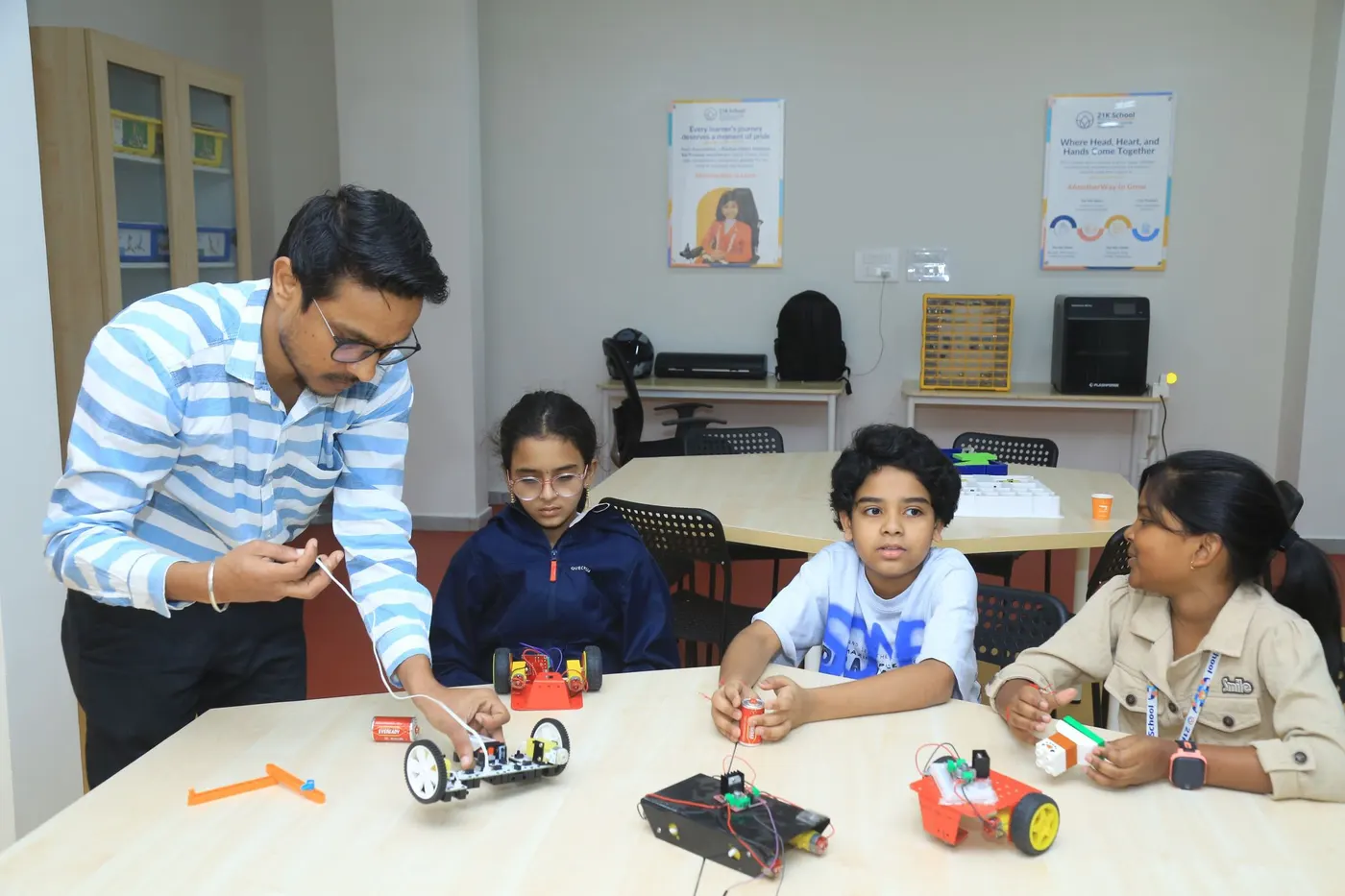
The Learning Garage is planned as a practical environment for design, electronics, robotics, artificial intelligence, making and applied problem-solving. It gives learners the freedom to move from asking “Why?” to exploring “What if?” and then creating something they can test, explain and improve.
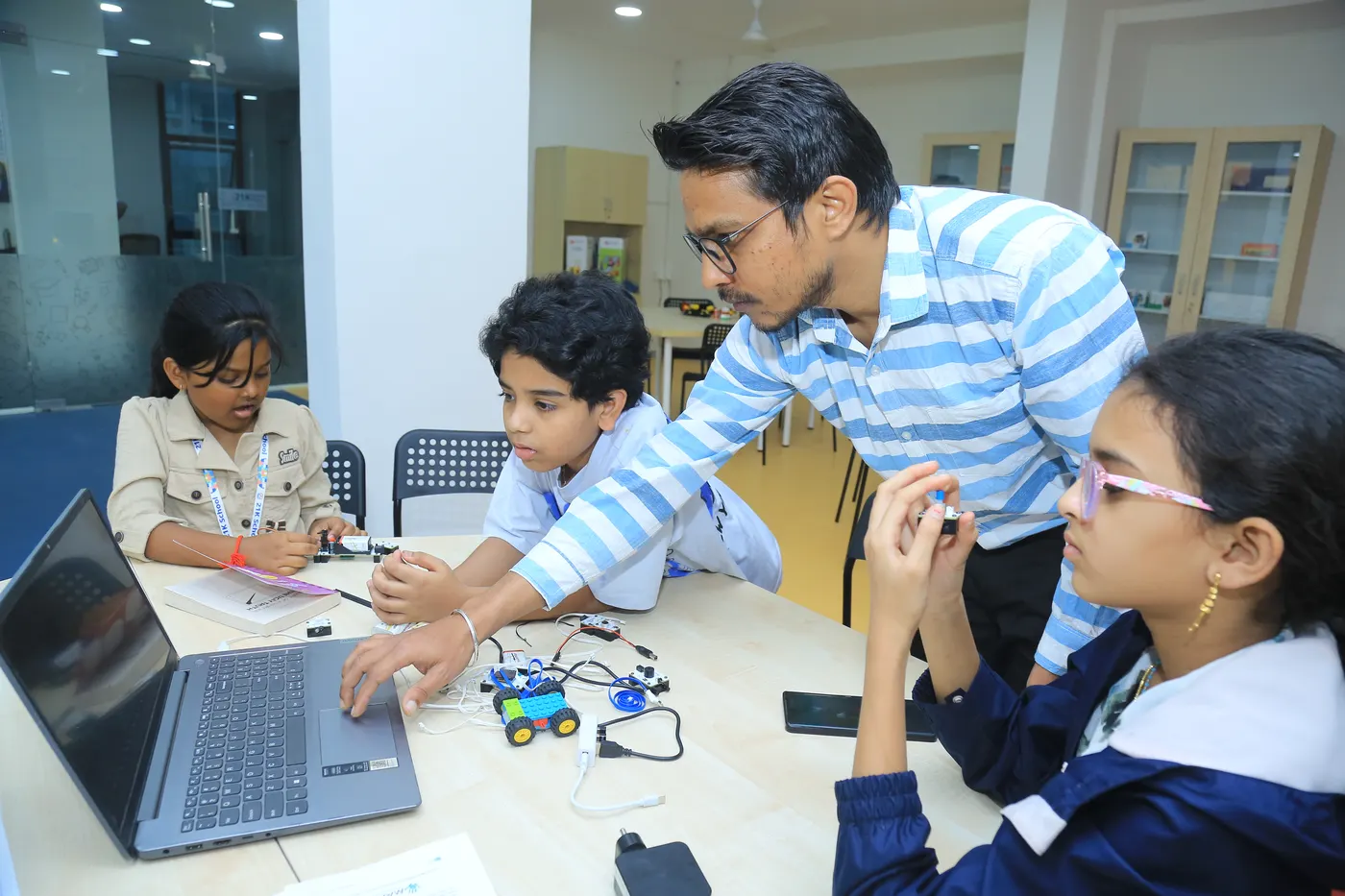
Garage learning is not intended to be an occasional add-on. Projects can connect science, mathematics, technology, art, communication and real-world challenges. A learner might build a simple mechanism, prototype a useful object, test a sensor, programme a response, analyse why a design failed or present a solution to peers. The value lies as much in the thinking process as in the finished product.
Learning by making
A typical Garage experience begins with a problem or possibility. Learners research, generate ideas and select an approach. They then plan, make and test their solution. Feedback and reflection help them refine the result. Through this cycle, children learn that a first attempt is evidence, not a verdict.
Projects will be calibrated to age and readiness. Younger learners may explore structures, patterns, movement and simple materials. Older learners can progressively work with electronics, coding, robotics, AI-enabled tools and more complex design briefs. Clear demonstrations, supervised tool use and safe working routines will be integral to every activity.
Capabilities for a changing world
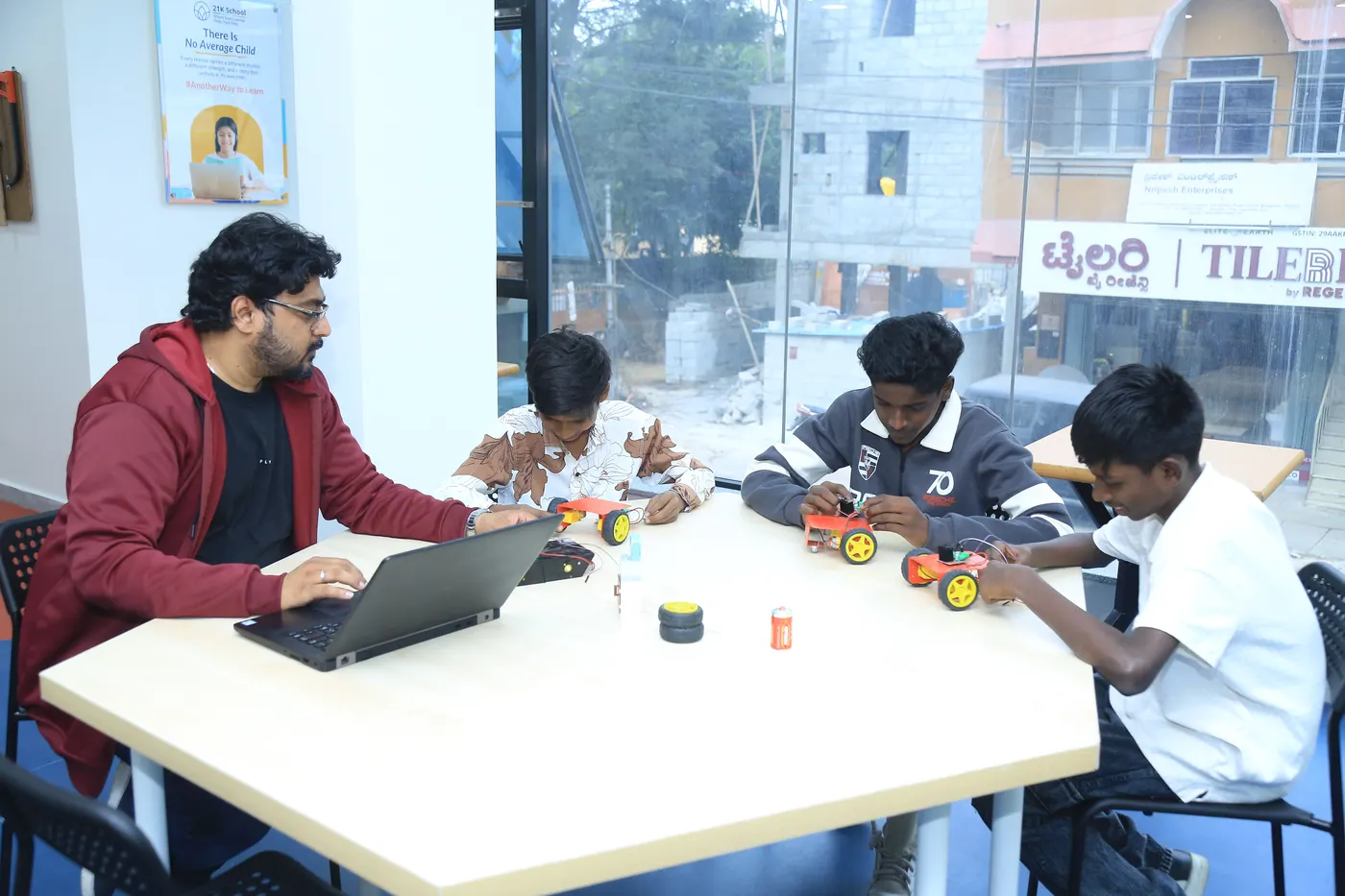
The Garage helps learners build curiosity, creativity and practical confidence. It also develops planning, collaboration, communication and perseverance. When a prototype does not work, learners must diagnose the problem, consider alternatives and try again. These are valuable habits in school, higher education and life.
Facilitators will guide learners through the process without solving every challenge for them. The intention is to create productive independence: knowing when to persist, when to seek help, how to use evidence and how to explain a decision. Individual and team projects can both form part of the experience.
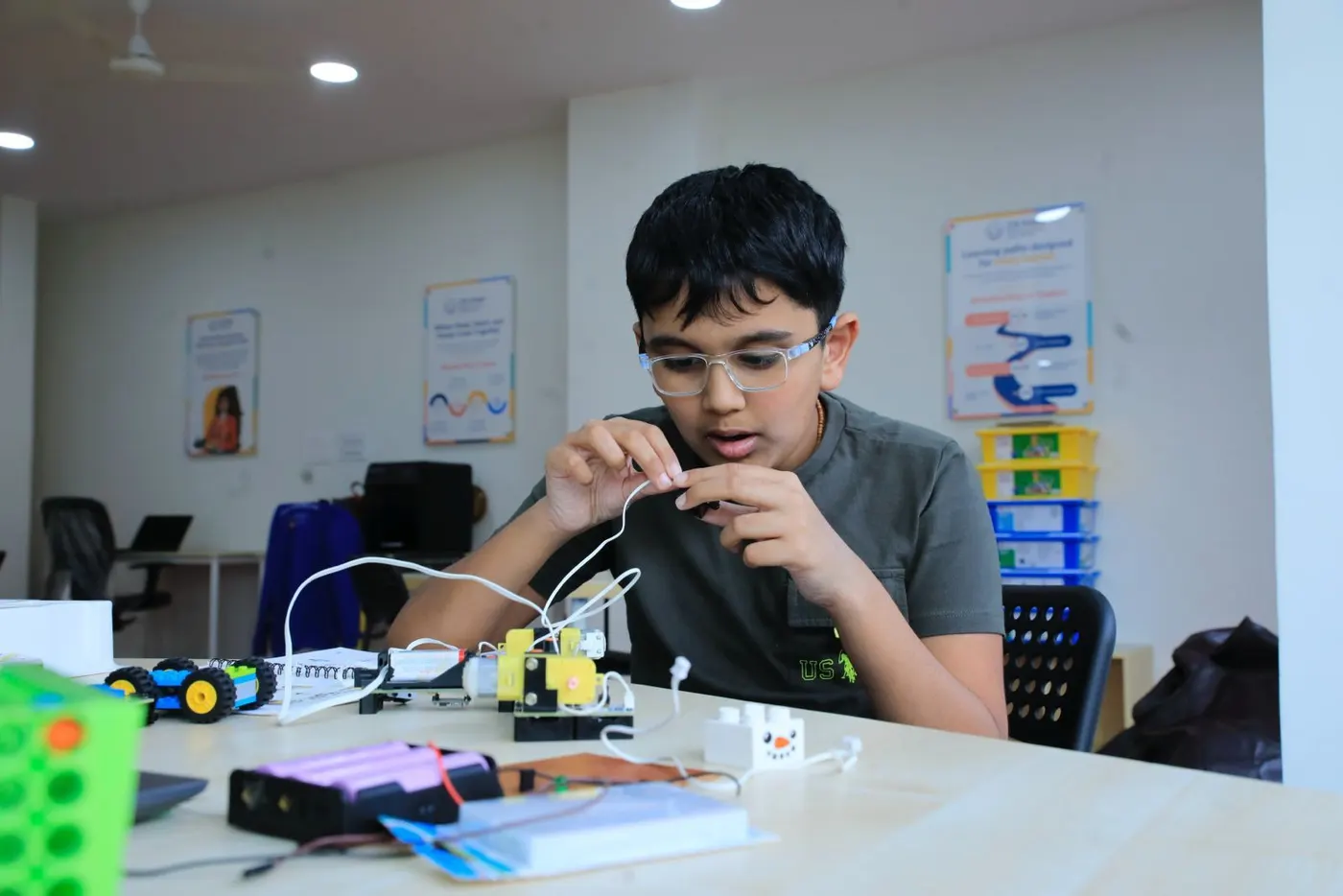
The Garage helps learners build curiosity, creativity and practical confidence.
Connected to the wider campus
The Learning Garage is planned within Anantha — The Infinite, the future Senior School wing of the La Lumière campus. Anantha will also bring together science laboratories, recreation and activity spaces, and areas for discussion, brainstorming and technology-enabled independent learning. Access to facilities will be scheduled according to age, programme requirements, readiness and safety.
Questions parents ask
Is the Learning Garage only for learners interested in engineering?
No. Its purpose is broader: to help every learner investigate problems, make informed choices, create solutions and learn from testing. Projects can connect multiple subjects and interests.
Will learners use robotics and artificial intelligence?
Robotics, electronics and AI are among the planned areas of exploration. Activities will be age-appropriate, guided and linked to clear learning outcomes.
How will safety be managed?
Learners will receive instructions before using tools or equipment. Activities will be supervised, and access will be matched to age, readiness and the risk level of the task.
Will Garage work be assessed?
Facilitators may assess the process as well as the outcome, including planning, application of concepts, collaboration, documentation, reflection and improvement.
Regulatory status
21K School, Puducherry is a proposed school, subject to recognition by the Directorate of School Education, Government of Puducherry.
The school proposes to follow the CISCE curriculum and syllabus and intends to seek affiliation with the Council for the Indian School Certificate Examinations (CISCE), New Delhi, subject to the prescribed approvals and requirements.