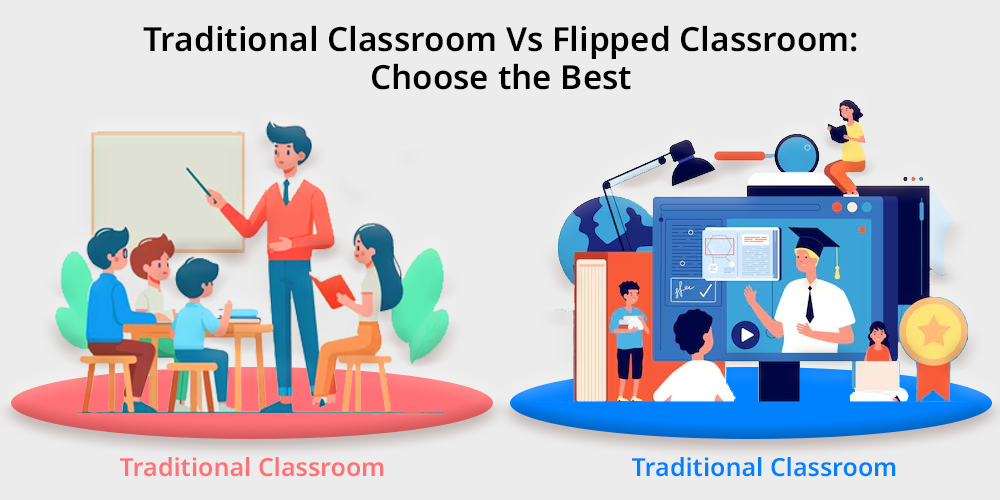
Traditional Classroom vs Flipped Classroom: Choose the Best
 Written byAnkita SinghaContent Specialist
Last modified: 27 Jul 2026 5 min read
With time, education is evolving and bringing better opportunities for everyone. New teaching models are reshaping and students learn and engage with resources.
There are two approaches which students can use for learning traditional classroom and the flipped classroom in modern education
Both traditional and flipped classrooms are ideal for students and easily fulfill the learning objectives. However, both have some differences.
Also, explore the key benefits of flipped learning
Choosing one from these two approaches is quite difficult. That’s why understanding the differences, similarities, and characteristics of each kind can help teachers and learners make informed choices.
In this blog we will explore everything in depth and know what works best for your child.
What is a traditional classroom?
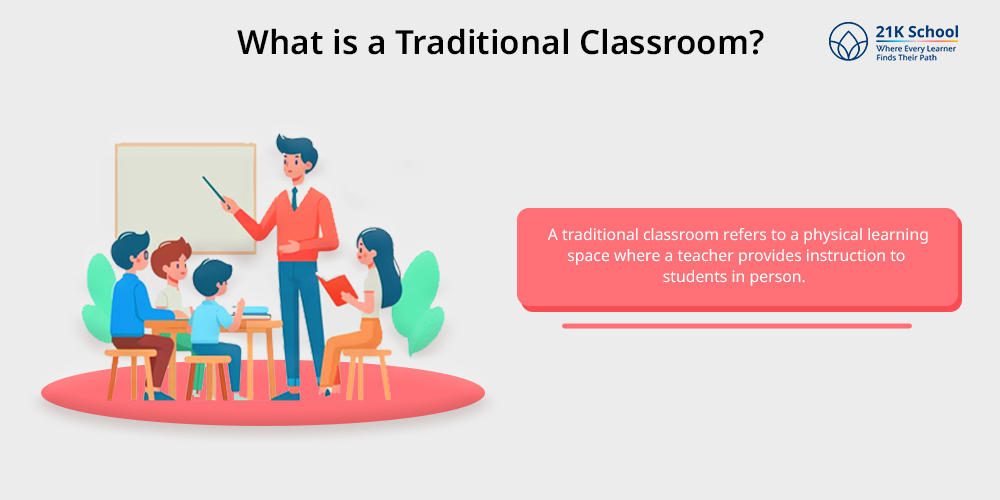
A traditional classroom refers to a physical learning space where a teacher provides instruction to students in person. It happens in a structured environment and a focus on teacher-led activities.
Some key characteristics of a traditional classroom are teacher-led instruction during class, students passively receiving information, homework involves practice or reinforcement of taught concepts.
What is a flipped classroom?
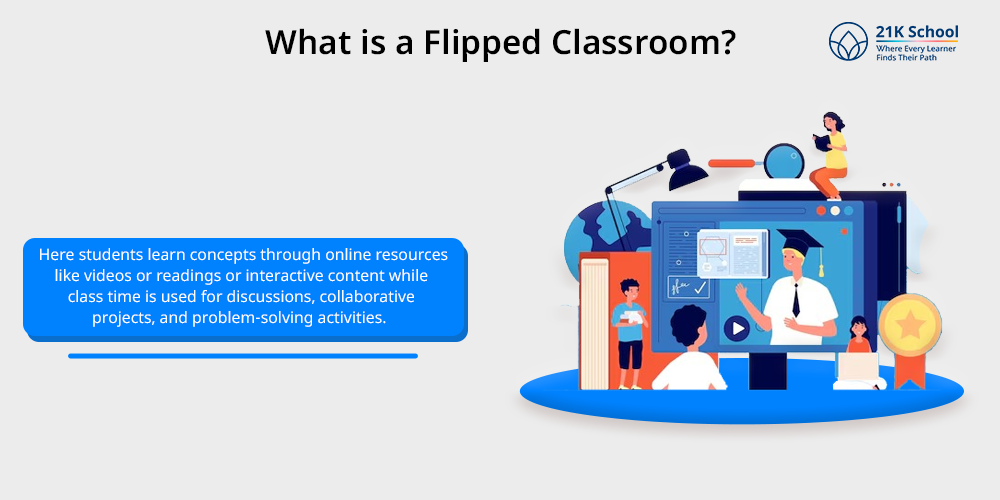
A flipped classroom is an instructional strategy that converts the traditional lecture-homework model.
Here students learn concepts through online resources like videos or readings or interactive content while class time is used for discussions, collaborative projects, and problem-solving activities.
Key characteristics of flipped classrooms include students studying new content at home before class, class time is used for active learning, encourages student participation and critical thinking.
Key differences between traditional classroom and flipped classroom
Understanding the primary difference between traditional and flipped classrooms is crucial for choosing the right classroom.
In a traditional classroom, direct instruction like lectures happens in the classroom. Later, students work on assignments, practice approaches or projects at home.
On the other hand, flipped classroom students learn the core content through videos at home, and the classroom becomes a space for practice learning.
Let’s explore a quick comparison between traditional and flipped classrooms:
| S.No. | Particulars | Traditional Classroom | Flipped Classroom |
|---|---|---|---|
| 1. | Teaching Style | Traditional classrooms are teacher-centered and lecture-based. | Flipped classrooms are student-centered, active collaborative environments. |
| 2. | Role of Teacher | The role of teacher is providing primary knowledge to students. | There are multiple roles of teacher in flipped classroom such as facilitator, mentor, and guide. |
| 3. | Role of Student | Students are passive listeners in traditional classrooms. | Students are active learners and participants in flipped classrooms. |
| 4. | Use of Technology | Use of technology in traditional classrooms is minimal or optional. | In flipped classrooms, use of videos, online content, and digital tools are common. |
| 5. | Homework vs In-Class Work | Homework after lessons in traditional classrooms for practice. | Homework before class such as watching videos. Here class time is saved for practice. |
| 6. | Student Engagement | Student engagement is often low in traditional classrooms, especially in lectures. | flipped classrooms have high student engagement due to discussions, problem-solving, peer collaboration. |
| 7. | Learning Pace | Same learning pace for all students. | Students can learn at their own pace at home. |
| 8. | Classroom Activities | Classroom activities in traditional classrooms include note-taking, lectures and some Q&A. | Classroom activities in flipped classrooms are group activities, case studies, project work. |
| 9. | Assessment Approach | Assessment approach here is traditional tests and quizzes. | Assessment approach is continuous assessment through class participation and projects. |
| 10. | Student Accountability | Less self-directed and teacher-led reminders. | Requires student responsibility and preparation before class. |
Similarities between traditional classroom and flipped classroom
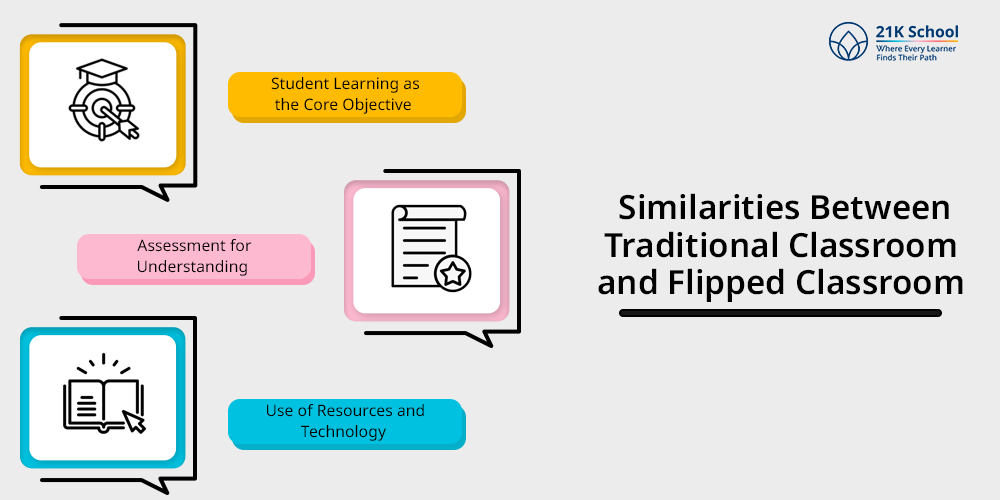
Both traditional classrooms and flipped classrooms share the common objective of student learning. Both rely on a teacher to facilitate that learning to students.
Here’s are dime common similarities:
1. Student learning as the core objective
Traditional and flipped classrooms work for student learning as the core objective. With the help of different strategies this can be fulfilled.
Traditional classroom learning focuses on teacher-led instruction and passive learning. However, flipped classrooms include active learning and student engagement
2. Assessment for understanding
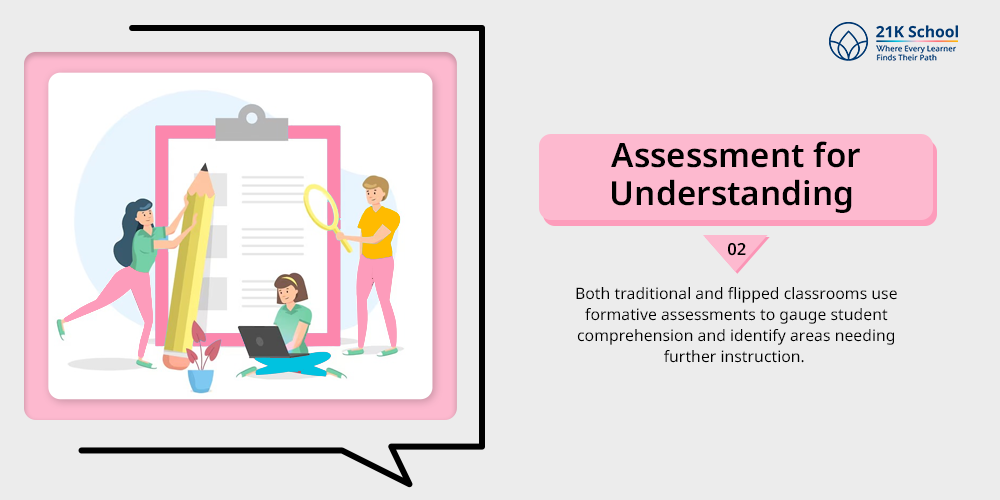
Both traditional and flipped classrooms use formative assessments to gauge student comprehension and identify areas needing further instruction.
Also both types use summative assessments to evaluate overall learning at the end of a unit or course.
3. Use of resources and technology
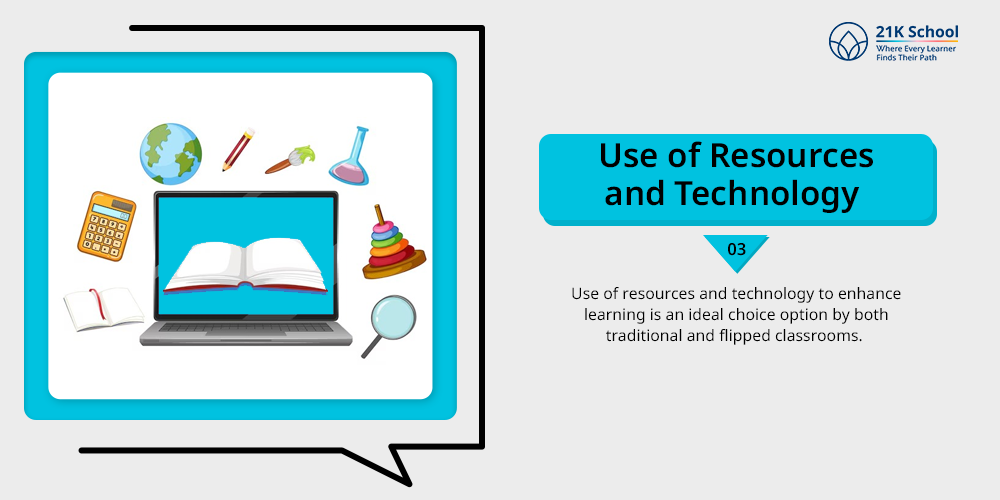
Use of resources and technology to enhance learning is an ideal choice option by both traditional and flipped classrooms.
However, both have their own unique way to do so.
Conclusion
Selection between a traditional and flipped classroom depends on the learning objectives, resources available, and the needs of the students.
However, both have different characteristics which offer different learning facilities. From teaching style to classroom activities, choose the best for you.
While the traditional model offers familiarity and structure, the flipped learning model promotes active learning and student independence. This makes them different.
In many situations a blended approach may be the most effective, combining the strengths of both.
Frequently asked questions
5 questions
How does the flipped classroom model differ from traditional teaching methods?
The flipped classroom model fundamentally shifts the traditional approach to learning by inverting the typical cycle of content delivery and application. Instead of learning new topics in class, students practise it at home. They study content at home through videos, articles, etc. Students can use classroom time for discussions and activities.
What are the three 3 principles of a flipped classroom?
The three main principles of a flipped classroom include pre-class learning, in-class activities, and post-class assessment. Each principle is crucial to provide a better learning environment to students.
How is a traditional classroom different from a modern classroom?
A traditional classroom is majorly based on lecture and direct instruction. On the other hand, modern classrooms integrate advanced technology, student-centered learning, collaboration, and flexible teaching methods.
What are the two types of flipped classroom?
The two main types of flipped classrooms are traditional classrooms also known as conventional flipped classrooms and interactive classrooms also called discussion-oriented flipped classrooms.
What are the benefits of traditional classroom learning?
Some common benefits of traditional classroom learning include a structured environment that fosters social interaction. It also provides access to resources, and allows for immediate feedback.
About the author
Ankita Singha
Content Specialist
Ankita Singha is an Education Content Specialist at 21K School, India’s first accredited fully online K-12 School. She focuses on the in-depth research and creation of the well-drafted guides on early childhood education, school admission processes, and CBSE/ICSE curriculum guidance. With more than 2 years of experience at 21K School, a fully accredited institute- Cambridge International (IA702) and Pearson Edexcel (94883), Ankita works closely with the school’s curriculum heads and academic coordinators. Ankita’s every article reflects on the official board guidelines, practical realities, and current policies of online education in 78+ countries. Ankita’s content has helped thousands of parents in understanding the topics like RTE eligibility, NIOS pathways, and age-appropriate admission criteria.
Every 21K School guide is written by our education team and reviewed by a subject facilitator before publishing.
Exploring a CBSE-pathway online school?
Talk to an advisor about 2026–27 admissions — no obligation.
Talk to an advisorComments
No comments yet — be the first to share your thoughts or ask a question.