
The Seven Dimensions of Success at 21K School
The seven areas our school develops in every child, and what you’ll notice at home



Education is not defined by marks alone. Your child also needs to think clearly, care for physical and emotional wellbeing, build healthy relationships, make responsible choices, understand the world of work and money, and contribute with purpose.
The Seven Dimensions of Success give 21K School a practical framework for this wider responsibility. They connect academic learning with the knowledge, habits and experiences children need beyond an examination paper:
- Purpose & Values
- Health and Wellbeing
- Relationships
- Career and Passion
- Financial Understanding
- Impact and Community Contribution
- Academic Achievements
Seven Dimensions built into every class, not added after it
The dimensions run through lessons, projects and leadership, at every age
At 21K School, holistic development is part of the core design. It is not an optional after-school club or a statement in a prospectus.
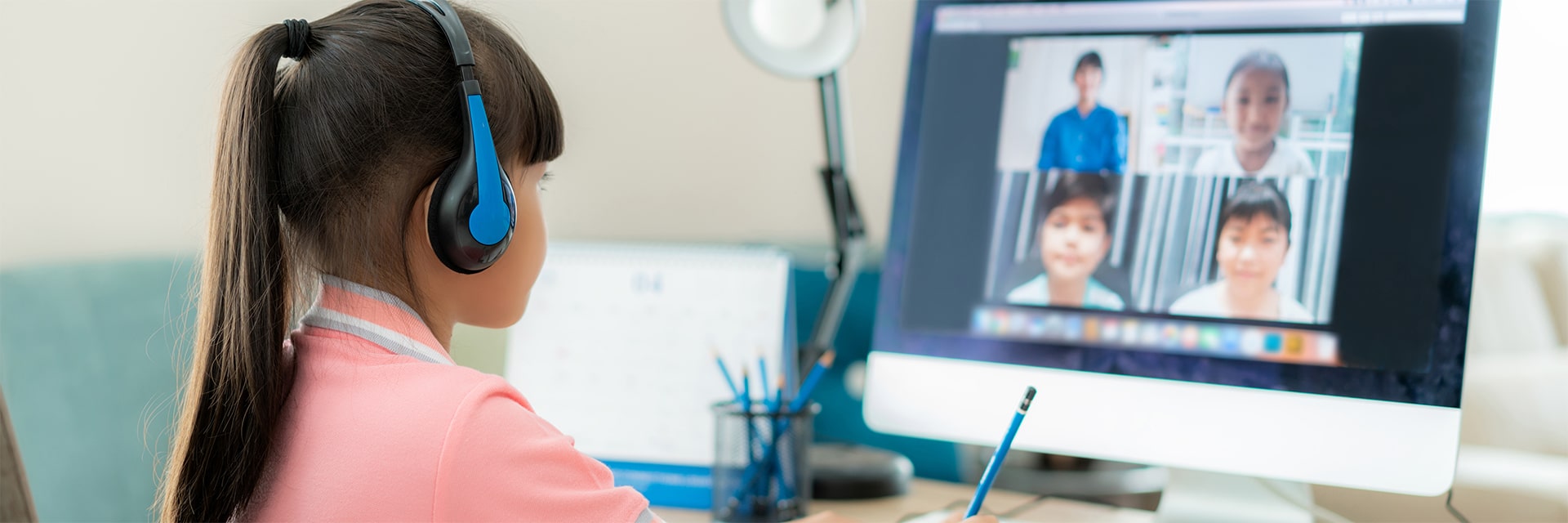
We integrate the seven dimensions directly through live classes, interdisciplinary projects, leadership roles, capstones, arts, physical activity, community action, reflection, and daily teaching. As the first school in Asia recognised as an International Habits of Mind Learning Community of Excellence (with certification renewed at Milestone 3 on 1 September 2026), we embed these core thinking habits into every age level.
| Dimension | Where It Shows Up | Classroom Example |
|---|---|---|
| Purpose & Values | Leadership & Reflection | Setting personal ethical targets and leading peer mentoring discussions. |
| Health and Wellbeing | Live Wellness & Movement | Managing examination pressure through guided stress-management tools. |
| Relationships | Cross-Cultural Projects | Group projects across international cohorts spanning multiple time zones. |
| Career and Passion | Capstones & Expert Talks | Direct Q&A sessions with industry leaders and research capstone projects. |
| Financial Understanding | Applied Math & Enterprise | Budgeting and trade-off simulations within real-world problem scenarios. |
| Impact & Community | Service Learning | Student-led community initiatives addressing local sustainability challenges. |
| Academic Achievements | Core Classes & STEM Labs | Retrieval practice, virtual laboratory experiments, and Board preparation. |
- Dimension
- Purpose & Values
- Where It Shows Up
- Leadership & Reflection
- Classroom Example
- Setting personal ethical targets and leading peer mentoring discussions.
- Dimension
- Health and Wellbeing
- Where It Shows Up
- Live Wellness & Movement
- Classroom Example
- Managing examination pressure through guided stress-management tools.
- Dimension
- Relationships
- Where It Shows Up
- Cross-Cultural Projects
- Classroom Example
- Group projects across international cohorts spanning multiple time zones.
- Dimension
- Career and Passion
- Where It Shows Up
- Capstones & Expert Talks
- Classroom Example
- Direct Q&A sessions with industry leaders and research capstone projects.
- Dimension
- Financial Understanding
- Where It Shows Up
- Applied Math & Enterprise
- Classroom Example
- Budgeting and trade-off simulations within real-world problem scenarios.
- Dimension
- Impact & Community
- Where It Shows Up
- Service Learning
- Classroom Example
- Student-led community initiatives addressing local sustainability challenges.
- Dimension
- Academic Achievements
- Where It Shows Up
- Core Classes & STEM Labs
- Classroom Example
- Retrieval practice, virtual laboratory experiments, and Board preparation.
Purpose & values: An inner compass for decisions
Integrity, empathy and considered choices, built through reflection and leadership
Children need an inner compass as well as external achievement. This dimension develops integrity, empathy, responsibility, gratitude, courage and the ability to make considered decisions.
Learners reflect on personal growth, set meaningful goals, participate in leadership and community experiences, and consider how their choices affect others. We help each learner act with increasing self-awareness, personal accountability, and moral clarity.
How you’ll see purpose & values at home
Your child begins to explain why a decision matters rather than just what was decided. You will notice them accepting responsibility for shared tasks, showing empathy for another person’s perspective, or persisting through difficulty because their goal carries personal meaning.
Health and wellbeing: Meeting challenge with healthier tools
Emotional literacy, resilience and physical activity, with more support in high school
Learners perform best when they feel emotionally secure, physically active and socially connected. This dimension develops self-awareness, emotional literacy, resilience, healthy routines, relationships and physical wellbeing.
Experiences include social-emotional learning sessions, wellness conversations, physical movement, mindfulness practices, and age-appropriate guidance on managing workload. In Senior School, dedicated counsellors lead structured support programs to help learners navigate exam pressure, peer dynamics, and future transitions.
How you’ll see health and wellbeing at home
Your child becomes better able to articulate complex emotions, ask for help when needed, and recover after a setback. They learn to protect a balanced routine that sustains their energy. Wellbeing is not presented as the total absence of challenge. It is the capacity to meet life's challenges using healthier tools.
Relationships at 21K: Learning together, even online
Communication, collaboration and belonging, across countries
Learning is inherently social, even in an online setting. This dimension builds active listening, respectful communication, team collaboration, and a genuine sense of global belonging.
Learners work with peers in live group classes, present at school assemblies, lead clubs, and interact with a diverse student body representing 78 countries and 46 nationalities (as of 1 September 2026). Selected in-person events and optional trips and tours provide further opportunities to deepen lifelong friendships.
How you’ll see relationships at home
Your child listens more carefully to alternative opinions, communicates disagreement respectfully, and takes clear ownership of their role in team tasks. They discover that true collaboration goes beyond splitting up work. It means thinking and creating together.
Career and passion: Exploring futures early
Interests and possibilities, long before a university choice
Children benefit from discovering strengths and possibilities long before they must choose a university course. This dimension helps learners explore interests, fields of study, work and the relationship between present choices and future opportunities.
Projects, capstones, visiting experts, career assessments, counselling and senior-school subject guidance create age-appropriate exposure. The aim is informed exploration—not pressuring a young child to select one fixed career. For instance, middle-school student Kavish directly challenged a visiting nanotechnology expert with advanced questions during an interactive masterclass.
How you’ll see career and passion at home
Your child clearly articulates what topics interest them and why. They connect classroom subjects with real-world applications and ask informed questions about future fields. By Grades 9 to 12, this matures into deliberate pathway selection, subject mapping, and university preparation.
Financial understanding: Value, choice and planning
Budgeting, saving and weighing trade-offs, at every age
Financial capability is a life skill. Learners need to understand value, choices, planning, risk and responsibility, not only calculations involving money.
Age-appropriate experiences can develop budgeting, saving, decision-making, entrepreneurship and the ability to evaluate financial information. These ideas may appear in projects, capstones and real-world applications across subjects.
How you’ll see financial understanding at home
A younger child begins to distinguish between needs and wants while managing limited resources like pocket money or screen time. An older learner evaluates choices, calculates financial trade-offs, creates realistic project budgets, and considers how financial decisions align with long-term ethical goals.
Impact and community contribution: Acting on real problems
Learners move from caring about a problem to doing something about it
Education should help learners understand that they belong to local and global communities. This dimension develops awareness, responsibility, ethical participation and the confidence to contribute.
Learners investigate environmental sustainability, engage in community service projects, debate public policy questions, and design practical solutions to real-world problems. For example, student Madina Behbod founded the UDA initiative, mobilizing peers to deliver educational resources and support to underprivileged young learners.
How you’ll see impact and community contribution at home
Your child moves from observing that a problem exists to actively researching what can realistically be done. You will see them gather factual information, consider different community perspectives, and realize that meaningful contribution requires listening, persistence, and accountability.
Academic achievements: Understanding that transfers
Inquiry, application and results that last beyond one exam
Academic excellence at 21K School goes beyond memorising content. Learners inquire, analyse, connect, create and apply knowledge. Competency-based instruction, learning-science practices and authentic assessment help them develop understanding that can transfer beyond one question paper.
This approach delivers consistent, verifiable academic excellence:
- 100% pass rates in NIOS Grade 10 and Grade 12 Board examinations over consecutive academic cycles from 2024 onward.
- Near-100% IGCSE pass rates across more than 350 learners who have sat Cambridge IGCSE, AS, and A Level examinations through 21K School since May 2022.
- Global Recognition, such as student Sanskriti being shortlisted for the prestigious international John Locke Prize.
Experiences include inquiry, STEM investigations, virtual laboratories, interdisciplinary projects, retrieval practice, reflection, targeted support and extension.
How you’ll see academic achievements at home
Your child can explain their methods, defend ideas using solid evidence, apply theoretical concepts to everyday situations, and evaluate which study strategies work best. High examination marks remain important, but deep conceptual understanding ensures those achievements endure.
How the seven work together
Each dimension steadies the others
Future readiness is the natural result of all seven dimensions operating together in balance:
- Knowledge without wellbeing can become fragile
- Confidence without ethics can become careless
- Creativity without discipline may never become useful
- Ambition without relationships can narrow a child’s world
The Seven Dimensions framework actively cultivates the key learner attributes defined in our educational model:
- Agentic Learner
- Resilient Thinker
- Critical & Creative Problem Solver
- Effective Communicator
- Collaborative Global Citizen
- Ethical & Empathetic Individual
- Lifelong Learner
What the dimensions look like at each age
From play in preschool to university planning in high school
In Pre-Primary, development is visible through play, movement, language, routines, curiosity and interaction. In Primary School, learners build habits, foundational knowledge and confidence participating. In Middle School, they encounter greater complexity, independence and identity. In Senior School, the dimensions support subject choices, Board readiness, wellbeing, university planning and responsible adulthood.
As learners grow, the expression of the seven dimensions adapts to their developmental stage:
| Academic Stage | What You'll See in Action |
|---|---|
| Preschool | Learning through play, physical movement, foundational language, daily routines, emotional safety, and social sharing. |
| Primary School | Building core study habits, foundational academic skills, positive peer relationships, and initial group collaboration. |
| Middle School | Navigating complex topics, developing personal identity, leading peer projects, and applying critical thinking to social questions. |
| High School | Strategic subject selection, Board exam preparation, independent research, university pathway planning, and wellbeing management. |
- Academic Stage
- Preschool
- What You'll See in Action
- Learning through play, physical movement, foundational language, daily routines, emotional safety, and social sharing.
- Academic Stage
- Primary School
- What You'll See in Action
- Building core study habits, foundational academic skills, positive peer relationships, and initial group collaboration.
- Academic Stage
- Middle School
- What You'll See in Action
- Navigating complex topics, developing personal identity, leading peer projects, and applying critical thinking to social questions.
- Academic Stage
- High School
- What You'll See in Action
- Strategic subject selection, Board exam preparation, independent research, university pathway planning, and wellbeing management.
The language and depth of challenge evolve at each level, but our commitment to the whole child remains constant.
How you’ll see growth beyond marks
Observations, portfolios and learner-led conferences, not rankings
Not every dimension becomes a numerical mark. We use facilitator observations, self-reflection journals, interdisciplinary projects, digital portfolios, and learner-led progress conferences to make holistic growth visible to parents.
21K School has shown us that growth isn't just a number on a report card—our daughter has found her voice, manages her time independently, and approaches challenges with real confidence."
We track progress to guide personal development and support meaningful conversations, never to create superficial comparisons between children.
Questions parents ask about the Seven Dimensions
Does holistic learning reduce academic rigour?
No. Academic Achievements is one of our core dimensions. Developing wellbeing, clear communication, and strong thinking habits directly enhances your child's capacity to engage with academically rigorous content.
Are all seven dimensions separate subjects?
No. They are not taught as separate standalone subjects. Instead, they are woven naturally through core academic subjects, interdisciplinary projects, Learning Support, school clubs, assemblies, and daily online interactions.
Will every learner have identical experiences?
No. While the framework provides a shared institutional purpose, specific experiences vary depending on your child's age, chosen curriculum pathway, personal interests, and participation in extra-curricular opportunities.
How can online school develop physical wellbeing?
Live online classes occupy only a portion of your child's day. We promote physical wellbeing through guided movement breaks, structured physical activity goals, sports challenges, and healthy offline routines tailored to each age group.
How does the school develop social skills online?
Learners collaborate regularly in small group classes, join international clubs, present at assemblies, and interact within a global community spanning 78 countries. Optional in-person meetups and school trips provide additional real-world connection.
How will parents see progress beyond marks?
You will see progress through qualitative progress reports, portfolio presentations, facilitator observations, and learner-led conferences where your child presents their own work and reflections.
Can parents support the framework at home?
Yes. You can reinforce the framework through everyday conversations at home about personal choices, routine management, financial trade-offs, community awareness, and emotional health.