
Middle School in Puducherry for Grades 6 to 8
Deeper knowledge. Greater independence. The confidence to think for yourself.




The years when learners begin to find their intellectual voice
Middle School is a decisive stage. Subjects become more specialised, expectations rise and learners begin forming stronger views about what interests them, what challenges them and what they may be capable of doing.
At 21K School, Puducherry, Grades 6–8 combine academic depth with personal attention, specialist teaching, purposeful technology, practical application and a strong support system. Learners are expected to think carefully, participate actively, communicate clearly and become more responsible for the quality of their work.
These years prepare learners not only for the planned ICSE stage, but also for the independence, judgement and resilience that increasingly complex learning requires.
A focused learning community
- Maximum 24 learners in a section
- Maximum two sections per grade
- Monday to Friday
- 8:30 a.m. to 3:30 p.m.
- Subject-specialist facilitators
Middle School classrooms are housed in Aarambh—The Beginning—with access to the specialist spaces across La Lumière, including the science laboratories and Learning Garage in Anantha.
Why families choose middle school at 21K School, Puducherry
Subject depth without losing the learner
Specialist facilitators bring the vocabulary, methods and ways of thinking of their subjects into the classroom. At the same time, limited sections, learning evidence and parent communication help the school retain a clear view of the individual learner.
Academic ambition with the right support
Learners who are ready for more receive deeper problems, enrichment, Mastery opportunities, advanced concepts and greater independence. Learners who need reinforcement receive targeted explanations, practice and intervention before gaps become harder to close.
A bridge to board-level learning
Grades 6–8 progressively develop the reading, writing, reasoning, subject vocabulary, laboratory habits, study discipline and assessment readiness needed for the planned ICSE stage. Preparation is built into everyday learning rather than postponed until Grade 9.
Independence without being left alone
Middle School learners need increasing responsibility, but they still need adults who notice patterns, ask the right questions and help them organise decisions. Subject facilitators, counsellors, the learner-support system and parent communication provide that structure.
A broader world than the timetable alone
Languages, technology, Learning Garage, clubs, Capstones, sports, arts, events and selected global experiences allow learners to discover strengths that may not appear in a conventional written lesson.
How learning develops from Grade 6 to Grade 8
- 1
Grade 6: Moving into specialist learning
Grade 6 helps learners adjust from a homeroom-led Primary model to subject-specialist teaching. They learn to manage multiple subjects, organise materials, use subject vocabulary, plan work over longer periods and seek help with greater independence.
- 2
Grade 7: Connecting evidence, ideas and perspectives
Learners engage with greater conceptual depth in Mathematics, Science, languages and the humanities. They compare sources, interpret data, conduct investigations, construct arguments and begin recognising that complex questions may have more than one defensible response.
- 3
Grade 8: Building readiness for the secondary stage
Grade 8 consolidates core knowledge and raises expectations for analytical writing, mathematical reasoning, scientific method, disciplined study and independent responsibility. Learners reflect on strengths, interests and learning habits before entering the planned ICSE stage.
What your child will study
English
Learners develop increasingly sophisticated reading, writing, listening and speaking. They analyse literary and informational texts, build vocabulary, write for different audiences and purposes, discuss interpretations and communicate reasoned viewpoints.
Languages
Tamil and French are available on campus, while 11 additional languages may be accessed online through the wider 21K ecosystem, subject to grade, timetable and programme availability. Language learning develops communication, literature appreciation and cultural understanding.
Mathematics
Middle School Mathematics strengthens number relationships, algebraic thinking, geometry, measurement, data handling, probability and problem-solving. Learners are expected to show reasoning, test methods, interpret results and apply mathematics beyond a familiar exercise.
Science: Physics, chemistry and biology
Science branches into its disciplinary foundations while retaining meaningful connections across fields. Learners observe, hypothesise, measure, experiment, analyse evidence and explain phenomena using increasingly precise scientific ideas.
Separate Physics, Chemistry and Biology laboratories support practical investigation and safe, supervised experimentation. The emphasis is on understanding why a result occurs, not merely following a procedure.
History, civics and geography
Learners study change over time, institutions, citizenship, people, place, resources and human–environment relationships. They learn to interpret evidence, examine different perspectives, understand cause and consequence and connect public issues with responsible citizenship.
Computer science and digital capability
Coding, computational thinking, digital creation, information literacy and responsible use of technology become increasingly important. Learners use digital tools to solve problems, present ideas, analyse information and create—not simply consume.
Arts and physical education
Visual art, music, dance, drama, theatre, sports and physical education remain part of the regular programme. These experiences develop expression, discipline, wellbeing, teamwork, performance and the confidence to contribute in public.
Learning Garage
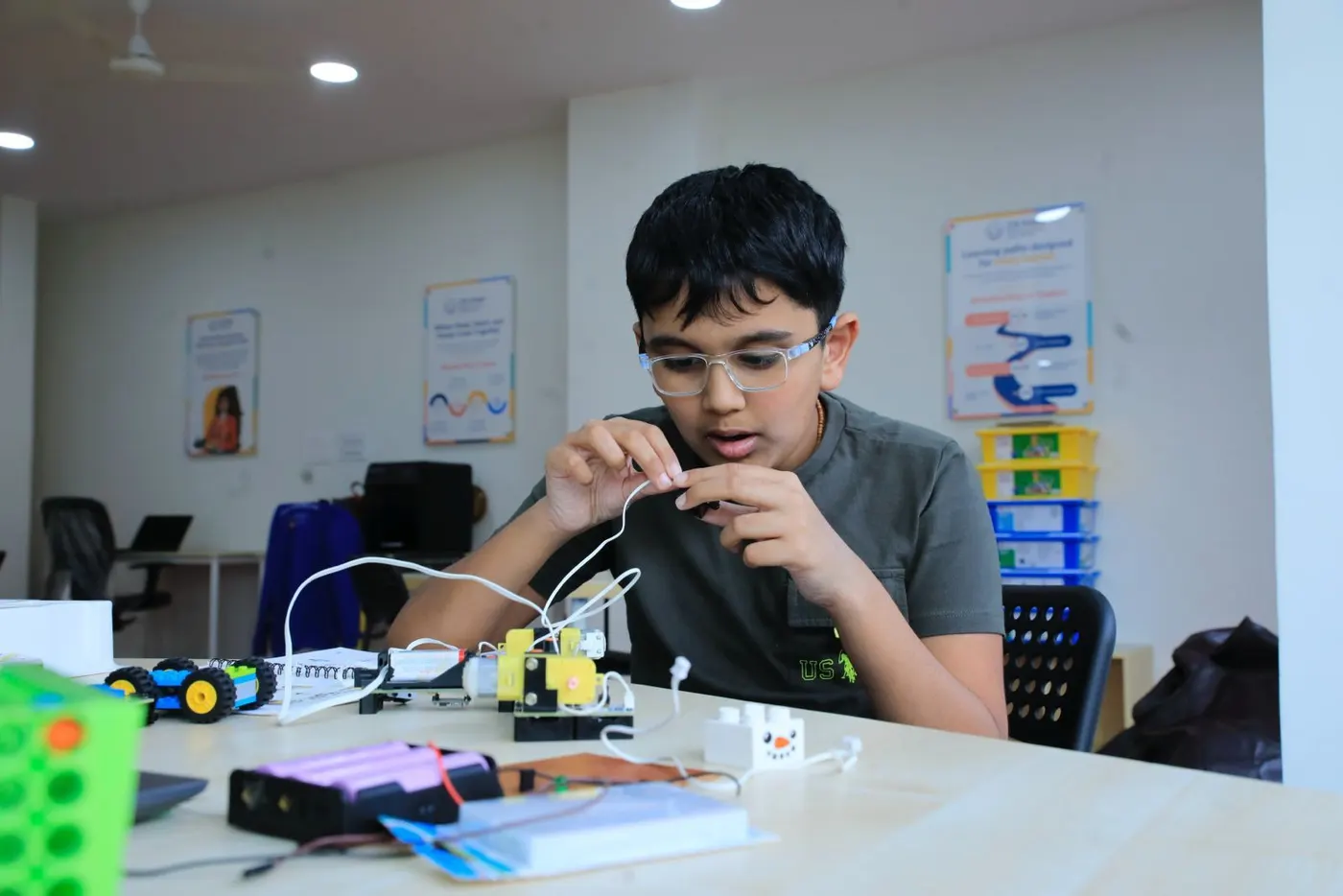
In the Learning Garage, learners work with design, electronics, robotics, AI, making and applied problem-solving. They move from identifying a problem to researching, building, testing, receiving feedback and improving a solution.
How we teach in middle school
From information to understanding
Facilitators teach essential knowledge clearly, then ask learners to use it. A learner may solve an unfamiliar problem, interpret evidence, design an investigation, defend a conclusion or apply an idea in a new context.
Learning through inquiry and application
Laboratory work, field experiences, models, case studies, debates, surveys, projects and presentations make learning visible. These experiences help learners understand how a subject works outside the textbook.
Spiral progression
Core concepts return with greater complexity across grades. New learning is connected to earlier understanding so that knowledge becomes more coherent, durable and available for application.
Interdisciplinary thinking
Learners are encouraged to see relationships across subjects without blurring academic rigour. A question about water, for example, may require scientific understanding, data analysis, geography, civic awareness and persuasive communication.
Feedback, reflection and revision
Quality improves when learners can examine their work, understand feedback and revise intelligently. Reflection is built into projects, assessments and conversations so that learners recognise both progress and next steps.
A full school day with room for depth
The Middle School day runs from 8:30 a.m. to 3:30 p.m., Monday to Friday.
- Arrival, movement and time to settle
- Morning assembly and community connection
- Subject-specialist academic sessions
- Short recesses and a longer lunch break
- Laboratory, language, arts, sports, project and Learning Garage experiences
- Purposeful technology use, coding and online learning
- Zero Period for enrichment, reinforcement, remediation or focused guidance
Learners bring food from home. The school day is designed to balance concentration, collaboration, movement, practical work and reflection.
Personalised. Flexible. Accelerated.
Personalised
Assessment evidence, facilitator observations and learning-platform data show where a learner is secure, where misconceptions remain and when the learner is ready for greater complexity.
Flexible
Learners experience meaningful choice through languages, clubs, projects, Capstones, reading, creative work and different ways of demonstrating learning within a structured academic programme.
Accelerated
Acceleration means deeper challenge, enrichment, Mastery programmes, benchmark-led intervention, advanced online learning, wider educator expertise and access to additional concepts. It does not mean routine grade acceleration.
Technology that develops agency—not dependence
Middle School learners bring a prescribed laptop with a webcam and headphones each day. The device supports personalised learning, coding, formative assessment, research, presentations, collaboration and selected online programmes.
Device use is purposeful and bounded. Direct instruction, books, handwritten work, discussion, laboratories, making, arts, sport and outdoor experiences remain central. Learners also develop digital judgement: how to evaluate information, protect privacy, communicate responsibly and use emerging technologies ethically.
A limited day-loan laptop facility will be available through the library.
Assessment that prepares learners without reducing them to a rank
Middle School assessment builds the discipline needed for more demanding academic work while continuing to value application, communication and growth.
- Competency-based and formative assessment
- Projects, portfolios, presentations and practical work
- Laboratory observations and investigation records
- Age-appropriate summative assessments
- Online formative assessments where appropriate
- Narrative feedback and proficiency indicators
- Formal report cards at the end of Term 1 and Term 2
The school does not provide marks, ranks or competition-based comparisons in Middle School. Parents and learners receive a clearer picture through evidence, proficiency indicators, feedback, formal reports, parent–teacher meetings and the learning dashboard.
Homework, study habits and responsibility
Homework may include reading, purposeful practice, preparation, revision, research or project follow-through. It should reinforce or extend a clear learning purpose—not become repetitive volume.
Across Grades 6–8, learners are coached to plan time, organise work, meet commitments, ask for help, review feedback and prepare independently. These habits matter as much as any single study technique when learners enter the secondary stage.

Zero period: The right next step before the day ends
Zero Period creates protected time for what a learner needs next. That may be reinforcement of a foundation, a different explanation, feedback on work, an enrichment task, a Mastery challenge or focused guidance on organisation and study.
Because this time is built into the school day, support and stretch do not depend entirely on families arranging help after school.
Clubs, leadership and public expression
Every Middle School learner selects at least one and no more than two clubs during the academic year. Options may include the TED-Ed Student Talks Program, Book Reading Club and clubs centred on communication, science, innovation, entrepreneurship, technology, arts and practical life skills.
The House system—Google, Amazon, Microsoft and Apple—creates opportunities for leadership, service, collaboration and participation without points, ranks or winner-based comparisons.
Sports Day, Arts Festival, Science Fest, Literary Festival, Annual Day, exhibitions, learner-led conferences, cultural celebrations and the School Carnival allow learners to present work, lead experiences and contribute to the community.
Global learning from a physical campus
Core academic learning remains face-to-face on campus. Selected languages, Mastery programmes, Capstones, benchmark testing, events and collaborative experiences connect learners with the wider 21K ecosystem.
The purpose is not online learning for its own sake. It is access: access to additional languages, specialist educators, different perspectives, advanced opportunities and peers beyond one physical location.
Learning beyond school walls
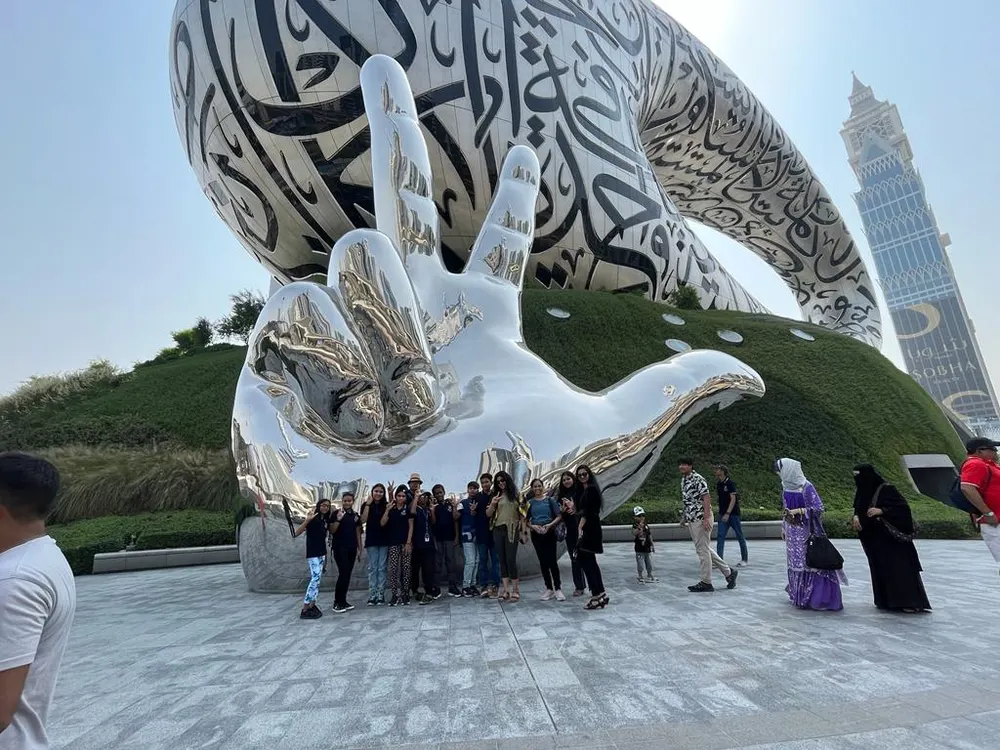
Local field visits and day experiences deepen understanding of places, institutions, ecology, culture and work. As learners grow, they may participate in regional, domestic and selected international learning journeys, subject to age, readiness, calendar and programme availability.
Subject specialists who make thinking visible
Middle School learners are taught by subject-specialist facilitators who understand both their discipline and how adolescents learn. Educators will be graduates or postgraduates with B.Ed. qualifications or other relevant credentials and will continue professional development through 21K’s Learning Excellence system.
The best subject teaching does more than explain an answer. It reveals how a mathematician reasons, how a scientist investigates, how a historian uses evidence, how a writer shapes meaning and how a learner can improve through deliberate practice.
Learning support for achievement, wellbeing and growth
Learning support includes remediation and reinforcement, but it also includes enrichment for gifted and advanced learners, emotional and psychological support, safeguarding, personal-safety education and age-appropriate life skills.
Online counsellors and relevant specialists may work with learners, families and educators where appropriate. Identified learning, developmental, medical or accessibility needs are considered individually, based on the learner’s needs and the school’s ability to provide appropriate support.
Middle School also creates space for conversations about friendships, peer pressure, digital behaviour, identity, stress, setbacks and responsible decision-making.
A strong partnership with parents—and a growing voice for the learner
As children grow, parent partnership changes. Learners should increasingly participate in conversations about their progress, goals, habits and choices rather than remain the subject of conversations held only by adults.
Formal term reports, parent–teacher meetings, Coffee Meets, on-demand conversations, one-to-one parent and learner connects, surveys and the parent dashboard provide multiple views of progress and experience.
Learner-led conferences help students reflect, present evidence, discuss challenges and take greater ownership of what happens next.
Safety, inclusion and wellbeing
The campus will include a full-time qualified nurse, infirmary, hospital tie-up, online counsellors, trained staff and defined emergency procedures.
Safeguarding will include a designated lead, POCSO and POSH compliance, staff background and police verification, controlled visitor access, CCTV in classrooms, entrances and appropriate common areas, campus security, professional housekeeping, cybersecurity controls and digital citizenship education. CCTV footage will remain restricted to authorised personnel and will not be available for routine parent viewing.
21K School, Puducherry is being developed as an inclusive and physically accessible campus.
Preparing for the planned ICSE stage
Grade 8 is not treated as an isolated endpoint. Across Middle School, learners progressively build the subject understanding, academic vocabulary, analytical writing, problem-solving, laboratory practice and study discipline required for Grades 9 and 10.
The transition will also consider the learner’s strengths, interests, readiness and support needs. Senior School will be introduced progressively, subject to statutory permissions, CISCE affiliation and applicable requirements.
School year, age and entry
The academic year runs from June to May across two terms. April is a compulsory Summer School Programme for enrolled learners, and May is the summer break.
Recommended age progresses from the Grade 1 benchmark of six years as of 1 July. Admission considers age eligibility, previous school records, a parent interaction, an age-appropriate learner interaction, the school’s ability to support the learner appropriately and seat availability.
There is no standard competitive entrance examination. The school may use records and interaction to understand readiness and plan appropriate support.
Questions parents ask
Which grades are included in Middle School?
Middle School covers Grades 6–8. All three grades are planned for the inaugural 2027–28 intake.
Which curriculum will the school follow?
The school proposes to follow the CISCE curriculum and syllabus within a learning model that emphasises conceptual understanding, competency, application, active learning and personalisation. This remains subject to prescribed recognition and affiliation requirements.
Are Science subjects taught separately?
Middle School Science develops through Physics, Chemistry and Biology, with meaningful connections across the disciplines. Learners will use separate science laboratories for supervised practical work and investigation.
What languages will be available?
Tamil and French will be available on campus. Learners may access 11 additional languages online through the wider 21K ecosystem, subject to grade, timetable and programme availability.
How many learners will be in a section?
Each section will have a maximum of 24 learners, with no more than two sections per grade.
Will learners have subject-specialist teachers?
Yes. Middle School uses subject-specialist facilitators.
Is a laptop compulsory?
Yes. Middle School learners bring a prescribed laptop with a webcam and headphones each day. A limited day-loan facility will be available through the library.
How does the school prevent excessive screen use?
Devices are used only where they add learning value. Books, handwriting, direct discussion, laboratory work, making, arts, sport, movement and face-to-face collaboration remain central to the day.
How are learners assessed?
Assessment includes formative and summative tasks, competency evidence, projects, practical work, presentations, portfolios, feedback, proficiency indicators and formal term reports. Middle School does not use rank-based comparison.
How does the school support high achievers?
Advanced learners may receive deeper problems, enrichment, Mastery programmes, advanced concepts, benchmark-led planning and greater independence. The aim is sustained intellectual challenge, not simply more work.
What happens if a learner has academic gaps?
Facilitators use assessment evidence to identify the precise gap and provide reinforcement, a different explanation, targeted practice, small-group intervention or Zero Period support.
How will the school support emotional wellbeing?
Learners will have access to online counsellors and a broader learner-support system. Middle School guidance may address friendships, stress, peer pressure, digital conduct, setbacks and responsible decision-making.
Are clubs, sports and arts part of the school programme?
Yes. Sports, visual and performing arts, Learning Garage experiences, school events and selected clubs are part of the regular programme.
Will transport be available?
The school plans transport coverage across Puducherry city through a carefully selected transport partner. Final routes and stops will be shared closer to opening.
Middle school should expand ambition—not narrow it
These years should help a learner discover that difficult ideas can be understood, strong work can be improved and emerging interests deserve to be explored seriously.
At 21K School, Puducherry, learners are challenged to know more, think more clearly, communicate with confidence and take increasing ownership of the path ahead.
Regulatory disclosure
21K School, Puducherry is a proposed school, subject to recognition by the Directorate of School Education, Government of Puducherry.
The school proposes to follow the CISCE curriculum and syllabus and intends to seek affiliation with the Council for the Indian School Certificate Examinations (CISCE), New Delhi, subject to the prescribed approvals and requirements.