Co-Education: Meaning, History, Importance, Key Aspects, Benefits & More!
 Written byAnkita SinghaContent Specialist
Last modified: 25 Oct 2026 11 min read
Do you know what co-education really means?
We often go through various terms like mixed-gender education , joint education, or co-ed etc. By understanding the real meaning of co-education, learners gain the benefit in both personal and professional life.
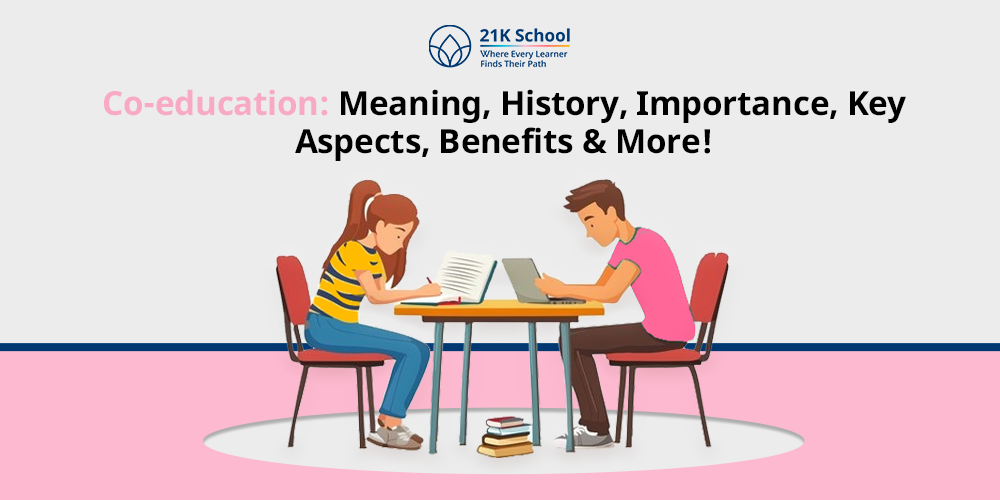
Co-education simply means male and female learners study together in the same classroom instead of separate space.
To understand co-education meaning, history, aspects, benefits, challenges, and importance, let’s go through this blog.
What is co-education?
Co-education simply means a type of educational design where the boys and girls learn together in the same classroom without any distinction.
Co-education is also known as:
- Co-ed
- Mixed-gender education
- Joint education
By incorporating co-ed in the classrooms, facilitators can promote gender equality, socialization, mutual respect, and interactions.
Learners from different backgrounds, cultures or socioeconomic status collaborate and avail equal opportunities and knowledge transfer.
History of co-education
The history of co-education reflects social, cultural, and political changes in the world. To understand in detail go through some key points:
1. Early roots (18th century)
In the 18th century, Quaker settlements in the American colonies were pioneers. They foster co-ed education in their communities.
2. 19th century expansion
Later, in the 19th Century, following the American Revolution, “common schools” were almost always coeducational.
One of the popular institutes adopted this model is "Oberlin Collegiate Institute in Ohio (1833)."
3. European adoption
In the late 19th and early 20th centuries, European countries saw a growth of co-education and adapted to different timelines. In the mid-20th century, it became the dominant mode of schooling in various locations.
4. Post-war global shift
After World War 2, co-education expanded significantly in different areas including China, Cuba, and India. It was introduced to promote equality in elementary education .
Importance of co-education
Through co-education learners of both genders such as boys and girls learn together under the same roof. This approach is followed all over the world to make learning meaningful .
Co-education is important because:
- In this dynamic world co-education helps learners to achieve their academic goals .
- Co-education promotes balanced collaboration, open communication and creative problem-solving between both male and females.
- By interacting with opposite gender peers help children process emotions, conflicts, and friendships.
- Through co-education learners become motivated to perform better through balanced academic and personal challenges.
5 key aspects of co-education
To understand co-education in-depth we need to go through some of the key aspects in detail:
1. Gender equality and respect
Co-education promotes gender equality and respect between genders. By accepting opposite gender perspectives, presence, and opinion learners help in gender equality.
It promotes respect and equal accessibility of resources.
2. Real-world preparation
Learners in their daily operation connect with opposite gender people which promotes co-education. By incorporating real-life approaches, co-education helps learners to understand what real-life looks like.
Co-education is ideal for each learner to prepare themselves for real-life situations. By coordinating, collaborating, communicating, and guiding each other, learners feel and adapt to the mixed environment.
3. Social and emotional development
For social and emotional development, separate education is less effective than co-education. Through co-education each learner whether in the classroom or playground connect with each other understand with respect and care.
This helps in the development of social and emotional support for each other in diverse situations.
4. Healthy academic competition
Co-education often promotes healthy academic competition and normally motivates each other to perform better.
The exposure of diverse talent including boys and girls make education more meaningful.
5. Socialization and diversity
For socialization and diversity in learning, co-education is one of the ideal approaches promoted by many institutions.
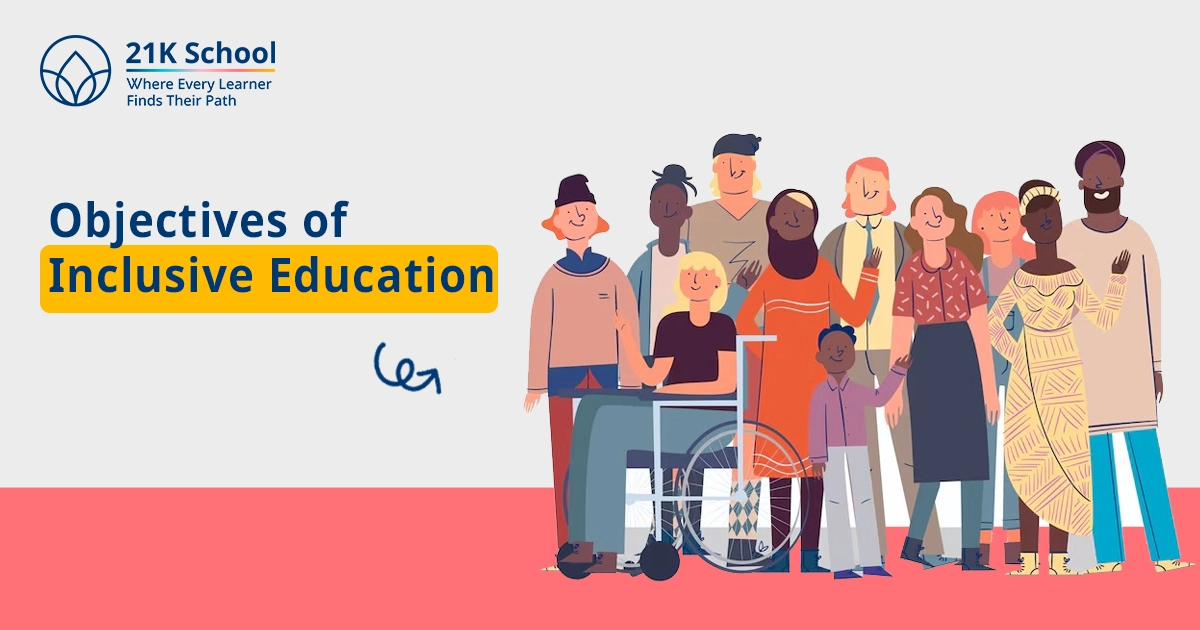
Co-education promotes inclusive education where all children learn in the same classroom and school with diverse background culture and genders.
5 advantages of co-education
Including new approaches provides benefits to the classroom. Co-education is one of the ideal approach provide various advantages to learners including:
1. Balanced social skills
To balance social skills in life, co-education is important for every learner, as it teaches them how to socialise and formulate long-term relationships.
These skills tell you how to interact with others, create a positive environment, accept different opinions, and build a relationship that lasts long.
2. Healthy competition
Children who learn together often engage themselves in healthy competition. Healthy competition simply means individuals or as a team working to improve knowledge skill or abilities to perform better.
Through co-education learners meet with diverse competitors who motivate them to compete at their best.
3. Mutual respect and inclusivity
Instead of separate education , co-education in the classrooms offers various advantages. It helps learners to understand each other’s opinion and perspective which directly promotes mutual respect and inclusivity.
Through regular interaction of learners gender-based discrimination can be avoided.
4. Fulfill long-term goals
Co-education fulfils long-term goals by introducing a real-world environment in the classrooms. Learners develop skills which are essential for dealing with real life challenges.
These skills are not only helpful for higher education but also in the workplace, where each gender collaborates to fulfill daily operations.
5. Breaks gender stereotypes
One of the advantages of co-education is it breaks gender stereotypes by collaborating and encouraging diverse interests.
Co-education gives an environment where each learner whether male or female gets equal opportunities in education and work.
5 disadvantages of co-education
Every approach has various advantages and disadvantages. Go through commonly known disadvantages of co-education in the classroom:
1. Distractions and reduced concentration
One of the primary disadvantages of co-education is gender distraction and concentration.
Learners often interrupt each other in the classroom. This can affect both concentration and academic performance.
However, schools like 21K School offer a positive learning environment for learners.
Learners get structured classroom routines and a focused curriculum to reduce distraction.
2. Social and personal pressures
Social and personal pressures often negatively impact co-education. In this case, learners feel stressed or pressured to fit into the classroom.
However, various schools, for example 21K School, guide learners to promote self-worth, individuality, and open discussions to overcome peer pressure.
3. Lack of facilitators training
One of the key reasons why implementation of co-education fails in the schools is lack of facilitators training.
To avoid this challenge schools should hire well-trained facilitators or conduct workshops or training programs for effective classroom management strategies .
4. Unethical behaviour and safety
Unethical behaviour and safety is a common concern of co-education. It requires strict policies and safety rules for learner.
This helps to avoid:
- Bullying
- Harassment
- Inappropriate behaviour
5. Infrastructure limitations
Unavailability of resources and infrastructure can negatively impact co-education.
For example:
- Separate sanitation facilities
- Secure spaces
- Adequate monitoring systems
To avoid infrastructure limitations, schools should invest in gender-inclusive clubs, events and many more.
Co-education vs single-gender education: 5 key difference
Go through a quick overview on differences between co-education vs single-gender education to understand the key comparison:
| S.No. | Aspects | Co-education | Single-Gender Education |
|---|---|---|---|
| 1. | Environment | The environment of co-ed is a diverse and inclusive environment with both genders learning together. | The environment of single-gender education is a more controlled and uniform environment with same-gender peers. |
| 2. | Social skills | It enhances communication, cooperation, and mutual respect between genders. | It has limited interaction with the opposite gender and may affect social adaptability. |
| 3. | Social Development | Co-education, high social interaction. | Single-gender education, limited interaction. |
| 4. | Competition | Healthy mixed-gender competition | Here, competition remains within the same gender. It may reduce comparison pressure. |
| 5. | Real-world Preparation | It prepares learners for real-life mixed-gender environments. | It may require later adjustments in the real world. |
4 role of co-education in personality development
Co-education is an essential role in learners personality development . It helps in understand how real-world works:
1. Builds confidence and self-esteem
Personality development is important in adapting to any situation by changing mindset and behaviour.
By interacting with opposite gender learners, they are able to reduce anxiety and hesitation.
2. Enhances emotional intelligence
Co-ed promote emotional intelligence , through which each learner learns to understand and respect others:
- Different perspectives
- Manage emotions better
- Develop empathy
3. Improves leadership and teamwork skills
Co-ed improves teamwork and leadership skills in both genders in the classroom by educating them in a mixed environment.
In this way, learners become skilled in both academic and personal level.
4. Encourages respect for diversity
Learners should respect different opinions, backgrounds, and perspectives. It directly encourages learners to respect diverse environments.
In this way, each learner values others in the classroom and real life.
5 tips for making co-education effective
To make co-education effective, go through some key tips important to maintain the classroom environment:
1. Strong discipline policies
By following strong discipline policies in the classroom and school, it is helpful to maintain respect and a good environment.
In this way, co-education prevents inappropriate behaviour and activities.
2. Gender sensitivity training
Schools should conduct various seminars or training programmes on gender equality in education and respectful behaviour to promote co-education.
Through gender sensitivity training learners understand and respect each other.
3. Safe and inclusive environment
In schools and classrooms creating a positive learning environment that provides safe and inclusive learning to each learner is crucial.
Implementation of anti-bullying policies, provide counseling support is helpful for inclusivity.
4. Parental involvement
Parents play a major role in their children’s education and proper parent-teacher meetings ensure better implementation of co-education at school and at home.
5. Facilitators awareness and training
For implementation of co-education, facilitators awareness and training is important. The main objective of facilitators is to:
- Encourage equal participation
- Avoid biases
- Promote collaboration between learners
3 common myths about co-education
Misunderstanding co-education can be a disadvantage. There are various myths parents and facilitators should aware of such as:
1. Myth: Co-education leads to distractions only
People often believe that co-education leads to distractions. However, that is not true.
Co-education is a distraction is one of the common myths. Distraction can be possible in separate learning also. To avoid distraction, facilitators in the classrooms should pay attention, support and guide learners.
In this way, learners develop senses of focus, discipline , and respect towards the opposite gender.
2. Myth: Single-gender schools are always better
Which type of learning is better depends on parents and children. Because both single-gender and co-education schools have different advantages.
- Co-education schools: It offers a real-world environment through which learners get social exposure and diverse learning opportunities.
- Single-gender schools: It offers a more focused environment.
3. Myth: Co-education affects academic performance negatively
Academic success is a long-term objective of learners and co-education does not affect academic performance if it is implemented effectively.
Facilitators support and guidance in the classroom promotes:
- Healthy competition
- Diverse perspectives
- Collaborative learning
Conclusion
Co-education is an ideal way of learning that promotes togetherness, collaboration, and positive behavior. It creates a positive learning environment that encourages learners to participate in activities.
However, co-education is not limited to classroom activities. Parents should encourage co-ed at home. It is an ideal way to balance learning .
Parents at home and facilitators in the classroom should spread awareness and encourage learners for social integration, confidence, and readiness for the real world.
Frequently asked questions
10 questions
Why is co-ed better?
Co-ed is better because it prepares learners for the real world by promoting: Gender equality Enhancing communication skills Encouraging diverse perspectives Promote collaborative environment
Is co-ed better for girls?
For each leather co-ed school offers better social preparation for a mixed-gender world. However, whether it is good or not for girls depends on their personal needs and perspectives.
What is another name for co-education?
Another name for co-education is mixed-gender education or simply co-ed. People also use synonyms and related terms such as: Mixed-sex education Coeducational Integrated education Mixed schooling
What is the role of teachers in co-education?
Teachers play an important role in co-education such as: Creating a balanced environment Respectful and inclusive learning Implement cooperative learning methods Personalised support
Why is co-education beneficial for students?
Co-education beneficial for students because it makes them: Real-World readiness Gender equality and respect Social and emotional development Improved healthy competition
Is co-education right for every student?
Co-education is an effective model to teach different genders together in the same classroom instead of separate institutions. However, it is not right for every student. So, it's important to choose the best depending on the student's personality.
Which is better, co-education or separate?
Both co-education or separate education have similar academic outcomes. Selection of a particular approach depends on learners' needs.
What is the opposite of co-education?
The opposite of co-education is single-sex education. It is also known as single-gender, sex-segregated, or separate education. Separate or single-sex education means both boys and girls learn in separate institutions or classes.
Are co-education schools better than single gender schools?
None from co-education and single gender schools is better. The selection between them depends on an individual learner's personality.
Is co-education good or bad?
Co-education is generally considered good. It is not only helpful for academic growth and personality development but also promotes equality, togetherness, and respect for the opposite gender.
About the author
Ankita Singha
Content Specialist
Ankita Singha is an Education Content Specialist at 21K School, India’s first accredited fully online K-12 School. She focuses on the in-depth research and creation of the well-drafted guides on early childhood education, school admission processes, and CBSE/ICSE curriculum guidance. With more than 2 years of experience at 21K School, a fully accredited institute- Cambridge International (IA702) and Pearson Edexcel (94883), Ankita works closely with the school’s curriculum heads and academic coordinators. Ankita’s every article reflects on the official board guidelines, practical realities, and current policies of online education in 78+ countries. Ankita’s content has helped thousands of parents in understanding the topics like RTE eligibility, NIOS pathways, and age-appropriate admission criteria.
Every 21K School guide is written by our education team and reviewed by a subject facilitator before publishing.
Exploring a CBSE-pathway online school?
Talk to an advisor about 2026–27 admissions — no obligation.
Talk to an advisorComments
No comments yet — be the first to share your thoughts or ask a question.