Cultural Activities in School: 11 Popular Examples & Their Key Benefits
 Written byAnshu KumariContent Specialist
Last modified: 22 Jul 2026 8 min read
You might have participated in cultural activities in your school when you were young.
These cultural activities were to build our other areas of personality development apart from academics.
The overall development of children is highly dependent on the cultural activities as they offer meaningful learning and teaches human interaction.
Kids who participated in such activities are admired by teachers and other students as well.
In this article we'll learn about cultural activities and its types in detail.
What are cultural activities in school?
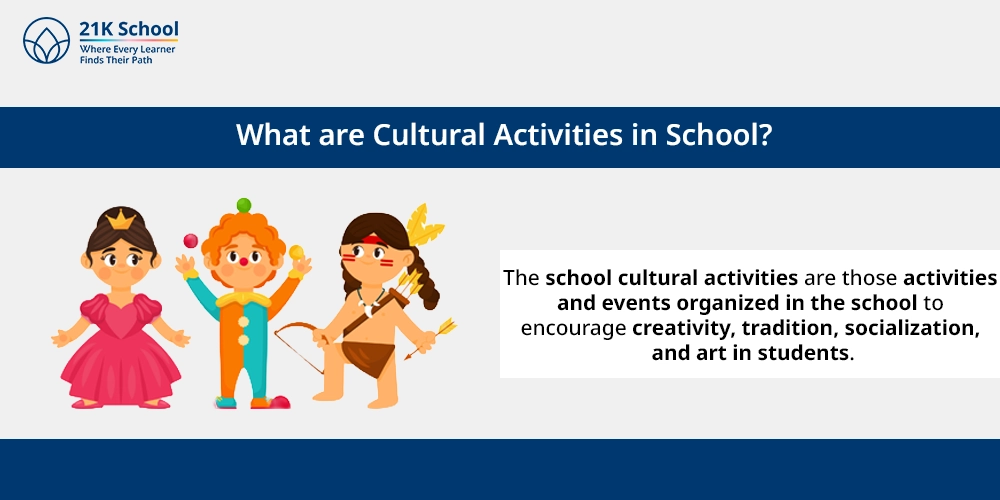
The school cultural activities are those activities and events organized in the school to encourage creativity, tradition, socialization, and art in students. These activities portray the cultural heritage, traditions, languages, and values of the society.
Cultural practices are normally planned as co-curricular or extracurricular activities which might be conducted during the various annual functions or special school occasions.
These activities provide students with the platform to demonstrate their talents and learn outside textbooks. While students showcase their own cultural background, they also learn to respect that of others.
Cultural activities build discipline, self-expression, enhance participation, and teamwork in learning processes which makes education more holistic and appreciable.
Importance of cultural activities in school
Educational institutions organize cultural activities because it is necessary for the overall development of learners along with cultural integrity.
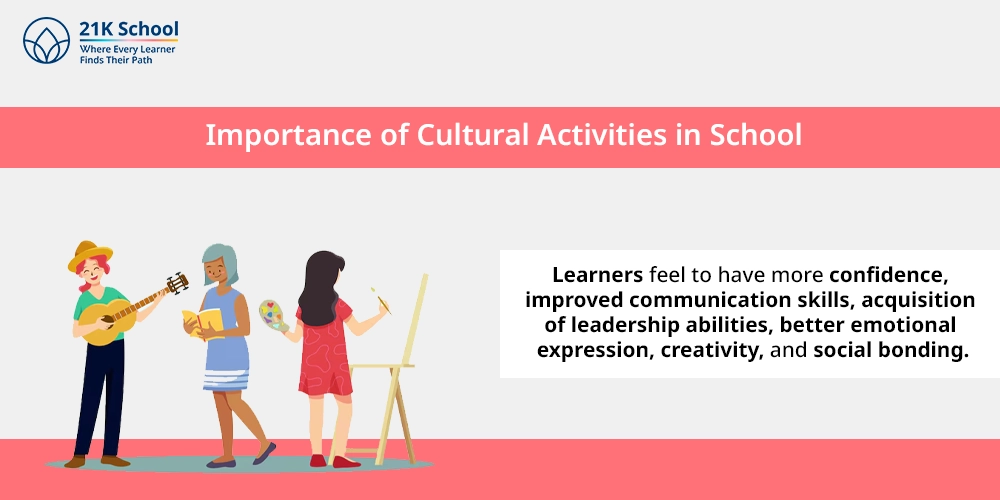
Learners feel to have more confidence, improved communication skills, acquisition of leadership abilities, better emotional expression, creativity, and social bonding.
Some of the values students acquire by engaging in cultural programs include respect, tolerance, cooperation, togetherness, and diversity. The cultural activities also help in reducing academic pressure and even ensure fun in learning.
11 cultural activities in school
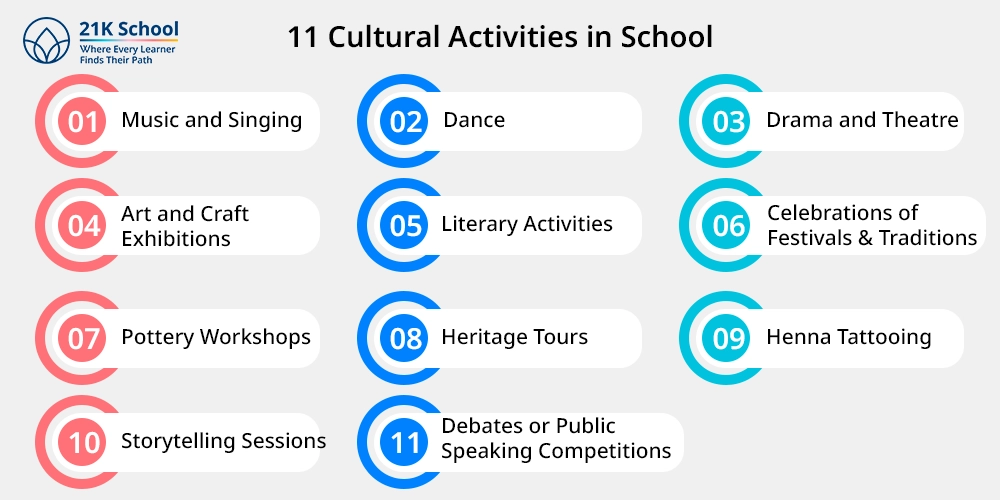
The most common cultural activities that you can witness in almost all schools include the following:
1. Music and singing
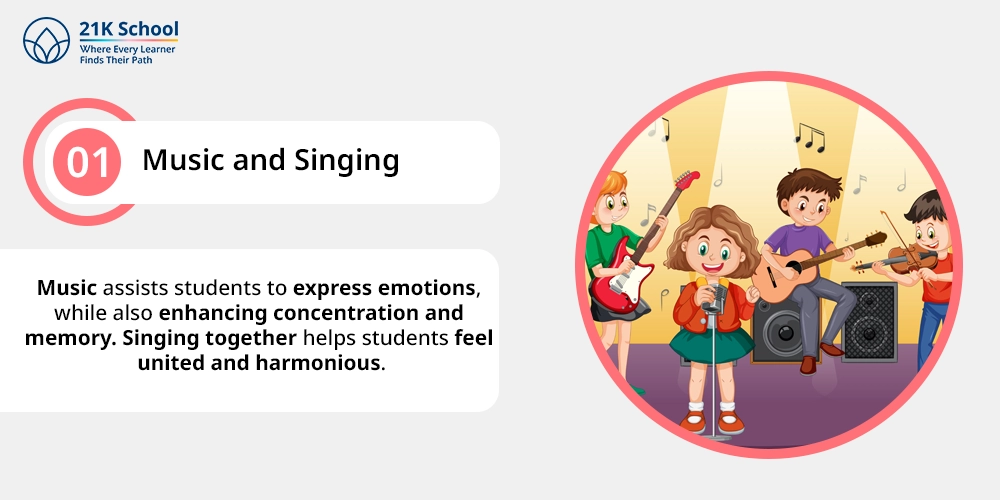
One of the most popular school culture activities include music and singing. Students take part in solo singing, group singing, choir performance, and instrumental music plays.
Music assists students to express emotions, while also enhancing concentration and memory. Singing together helps students feel united and harmonious.
Different events in schools call for singing different genres of songs including patriotic, cultural, folk, classical, and bollywood.
Singing songs in front of a huge audience in schools reduces the stage fear and gives confidence to the participants.
2. Dance
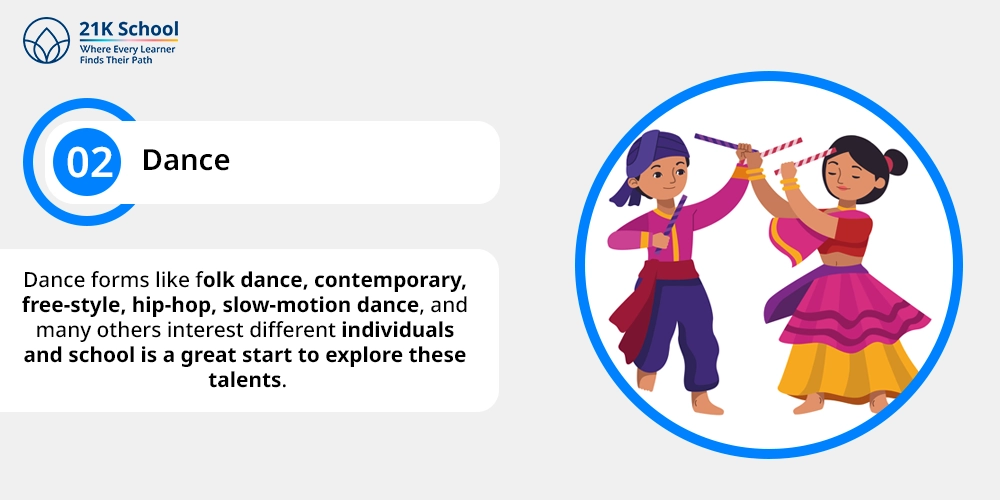
Dance is the one of the best art forms that induces self-expression through bodily movements and expressions.
Folk dance teaches students about regional customs and traditions. Learning about the cultural heritage and classical dance can provide students with improved posture and expression.
Dance forms like folk dance, contemporary, free-style, hip-hop, slow-motion dance, and many others interest different individuals and school is a great start to explore these talents.
Dance induces fitness, coordination, flexibility, and rhythm in learners. It also develops self-confidence and removes stage fear. Group performances in dances enable children to learn about teamwork, cooperation, and synchronization.
3. Drama and theatre
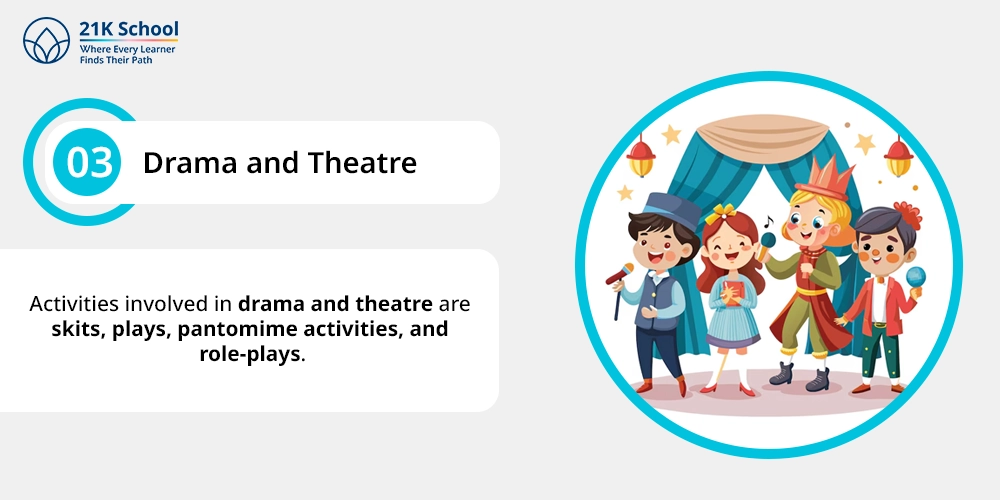
Activities involved in drama and theatre are skits, plays, pantomime activities, and role-plays. Such activities enable students to release their feelings, thoughts, and social messages in a creative way.
Drama can assist students in eliminating the fear of performing before the audience and enhances communicating and acting techniques.
Students learn to be empathetic and emotionally aware by adopting various roles.
Theatre activities are also useful in boosting imagination, creativity, teamwork, and leadership. In most schools, drama has been used to attain moral values and social awareness on real issues.
4. Art and craft exhibitions

Art and craft activities help in bringing out the creativity of the students through drawing, painting, sculpture, collage-making, and hand-made crafts.
Here are some of the creative art and craft ideas for kids.
You might have seen the stalls of art and craft exhibitions in school fests that sell the art pieces made by students.
In this way, students also earn some money through these artworks along with enhancing their creativity, fine-motor skills, imagination, and patience.
Students give life to their thoughts and emotions through their art and craft activities. The importance of creativity, recycling, and other forms of traditional art is also taught through craft activities.
5. Literary activities

Literary activities contribute significantly to enhancing language and communication of children.
These activities consist of essay writing, poetry recitation, story telling, debates, quizzes, book reviews, as well as creative writing.
Literary lessons assist learners to acquire vocabulary, critical thinking, and imagination. They make students read more and think of ways to communicate their ideas.
Involvement in literary activities improves self-esteem and improves oratory skills.
6. Celebrations of festivals and traditions
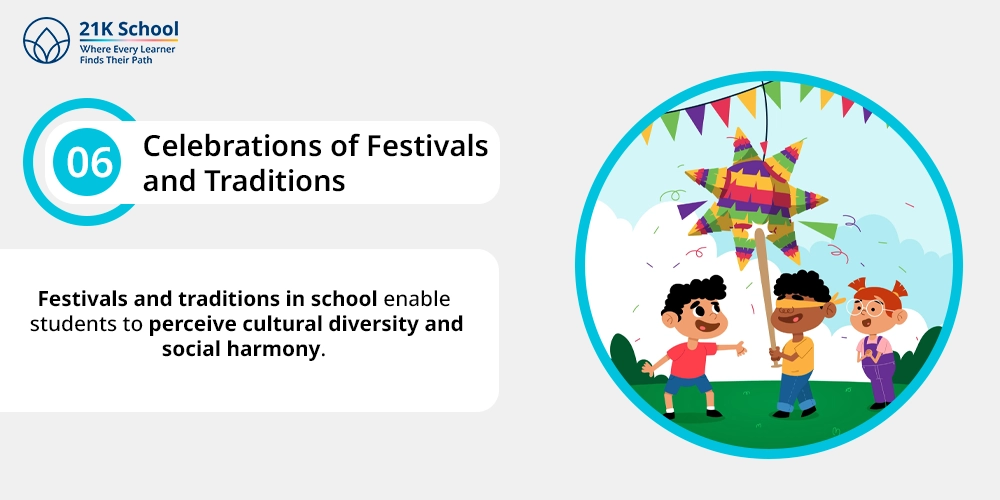
Festivals and traditions in school enable students to perceive cultural diversity and social harmony.
Though most festivals include holidays in schools, still some regional festivals like Pongal, Onam, Lohri, Navratri, etc are celebrated in schools through small functions or parties.
These events are used to educate students about values of togetherness and respect. The celebrations are also educational and fun, since the students engage in cultural performances and speeches.
7. Pottery workshops
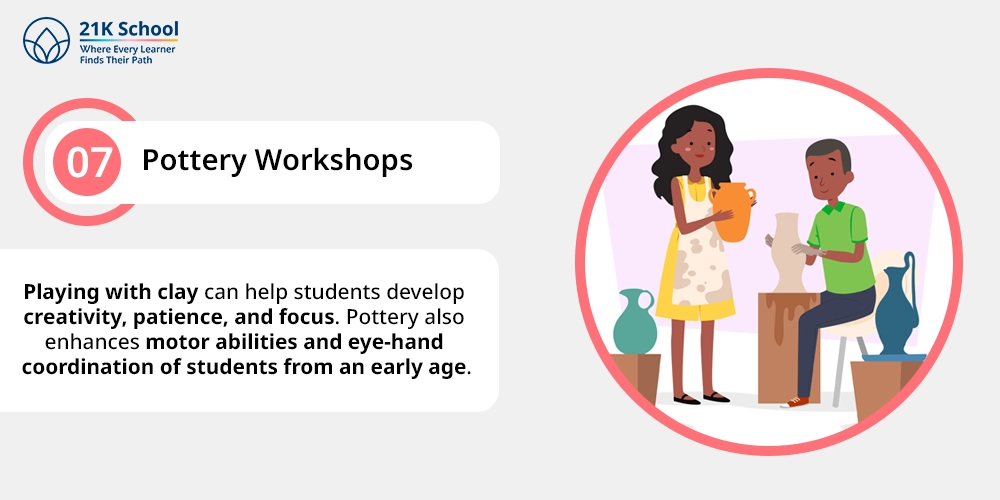
Students are exposed to traditional and indigenous art forms in the pottery workshops.
Playing with clay can help students develop creativity, patience, and focus. Pottery also enhances motor abilities and eye-hand coordination of students from an early age.
These types of workshops allow students to admire the masterful work of traditional craftsmen and learn their cultural history.
Students feel a sense of accomplishment and gratification seeing something they have created by their own hands.
8. Heritage tours

Heritage tours involve learning at tourist sites, museums, cultural centers, and historical sites. These tours offer the students real-life learning experiences that cannot be possible to teach in traditional classrooms.
Students learn about history, architecture, culture, and traditions in an interactive manner. Heritage tours can assist students to gain curiosity, appreciation of the cultural heritage, and national pride.
9. Henna tattooing
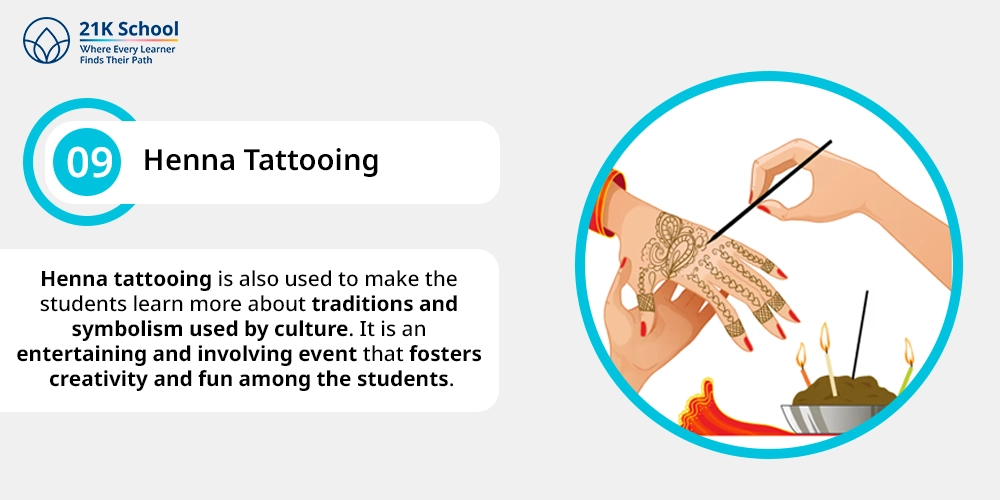
Henna tattooing is an ancient art observed in most cultures.
During cultural fests, schools organize henna events. Various designs and patterns are learnt by the students which improves creativity and artistic abilities in the students.
Henna tattooing is also used to make the students learn more about traditions and symbolism used by culture. It is an entertaining and involving event that fosters creativity and fun among the students.
10. Storytelling sessions
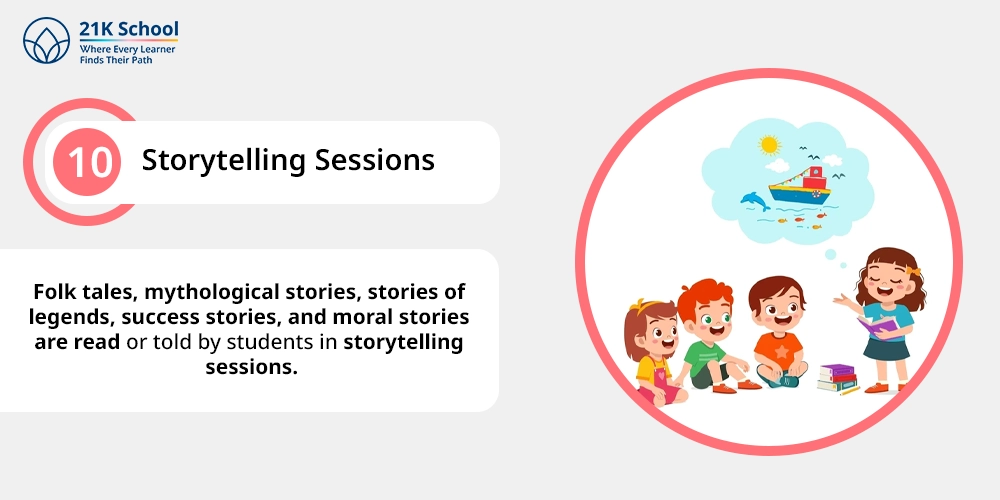
Storytelling for learning is a good way to transfer cultural values, morals, and traditions.
Folk tales, mythological stories, stories of legends, success stories, and moral stories are read or told by students in storytelling sessions.
Storytelling enhances listening, imagination, and communication skills.
It also teaches learners about cultural history and moral teachings in an entertaining way.
11. Debates or public speaking competitions

Public speaking competitions and debates are common school cultural activities.
Apart from building communication skills and confidence of speaking, children also learn to research and present themselves well.
These kinds of activities also improve the student's academic performance as they learn more about their syllabus content and beyond.
Conclusion
School cultural activities are necessary to develop students in a holistic manner.
They assist students to find their talents, develop confidence, and understand cultural differences.
Cultural activities should be encouraged in schools to boost overall development of children, including their personality and professional capabilities.
Though all cultural activities are great for students, it is also important to maintain the implementation quality of these activities.
In this way, we can ensure that the right exposure and guidance in school cultural activities can create a confident and positive individual in future.
Frequently asked questions
8 questions
Why do schools put emphasis on cultural activities?
The overall development of students through improved confidence, social skills, expression, and creativity necessitates the conduction of school cultural activities.
What is the role of cultural activities in personality development?
With the increase in confidence, collaboration, leadership abilities, and communication skills, cultural activities build the personality of a learner.
What types of cultural activities are commonly organized in schools?
The most common cultural activities organized in schools are debates, story telling, celebration of festivals, heritage tours, music, dancing, drama, art exhibition, and literary competitions.
Do cultural activities affect academic performance?
Yes, involvement in cultural activities enhances focus and emotional well-being of students contributing positively to their academic achievements.
Are cultural activities compulsory for all students?
Cultural activities are not compulsory in educational institutions but are encouraged for better development of children.
What are socio-cultural activities?
Socio-cultural activities are those activities that bring multiple traditions and cultures together to learn from each other, respect them, and live in harmony.
What are examples of cultural activities in school?
Dance shows, singing contests, drama plays, art shows, debates, recitations of poems, festivals, and heritage tours are examples of cultural activities in school.
What activities can be done on cultural day?
Activities that can be done on cultural day involve folk dances, traditional performances, cultural skits, music shows, art exhibitions, story telling, and food festivals.
About the author
Anshu Kumari
Content Specialist
Anshu Kumari is an Education Content Specialist at 21K School- a fully accredited institute- Cambridge International (IA702) and Pearson Edexcel (94883). She focuses on the in-depth research and creation of the well-drafted guides on NIOS admission, Indian Education Policy, and competitive exam preparation. With around 2 years of experience at 21K School, her psychology background informs her approach to the education content and hence focuses on creating guides to address the real anxieties of the guardians. She writes well-researched articles on competitive exam timelines, stream selection, and board choices by referring to the official resources. All Anshu’s content pieces are fact-checked against the board and primary government official resources and is dedicatedly reviewed by the school’s academic team.
Every 21K School guide is written by our education team and reviewed by a subject facilitator before publishing.
Exploring a CBSE-pathway online school?
Talk to an advisor about 2026–27 admissions — no obligation.
Talk to an advisorComments
No comments yet — be the first to share your thoughts or ask a question.