6 Powerful Benefits of Activity Based Learning
 Written byPoulomi GangulyContent Specialist
Last modified: Jul 27, 2026 5 min read
Every parent in the world wants their children to study well and so they arrange for tuition and spend enough money on them.
However, learning is more than all of these as it is also about how the child takes it. Has it become a routine or is it very enjoyable?
That is where activity-based learning takes the centre stage! It is a way to make the child learn through activity and not stay in the shadows. The benefits of activity-based learning is the reason behind its huge appeal
This article will list down all the benefits of active based learning but before that, let's get into the details of....
What is activity-based learning?
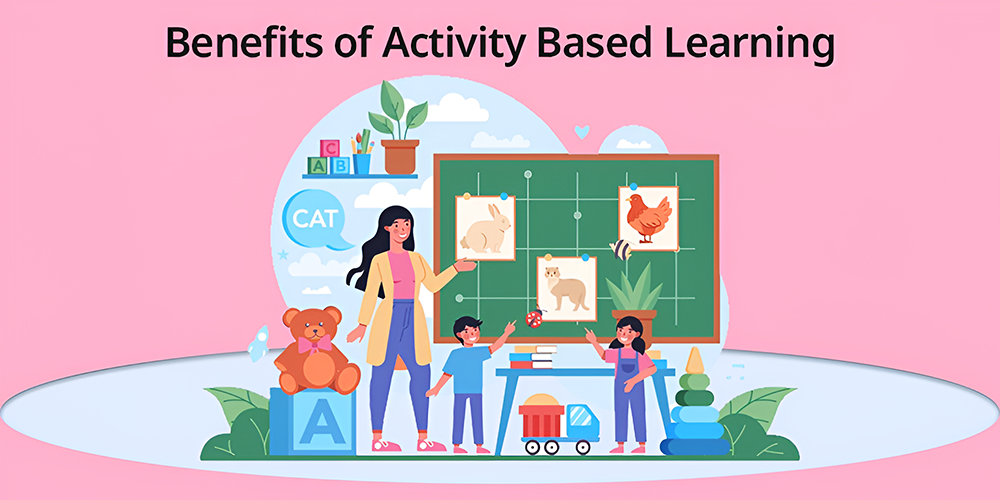
Activity-Based Learning (ABL) is where learning meets fun as children can explore the study life by making different activities a part of their daily schedule. In an ordinary learning process, students simply sit and listen while their teachers explain the lessons.
Activity-Based Learning is a way out of the usual and a step into the world of application and experimentation. Creative projects and teamwork mostly define a learning that is guided by activities.
Examples of Activity-Based Learning:
- Bringing fruits in class to become better at calculation as this will reinforce learning through real-life examples.
- To show how seeds germinate, live examples can be experimented with.
Benefits of activity based learning
1. Independent learning
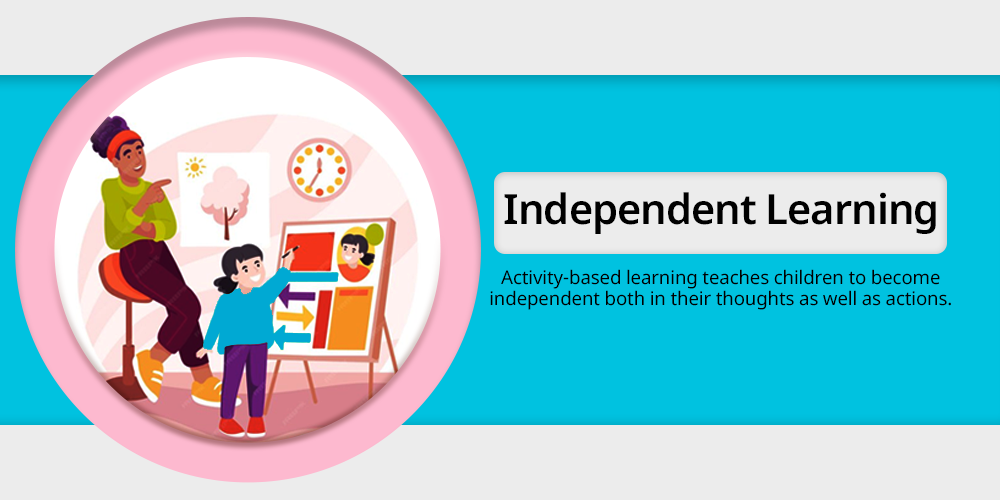
Activity-based learning teaches children to become independent both in their thoughts as well as actions. While exploration helps in finding expression, experimentation teaches them to realise what works and what doesn't.
Also Read: How to Make a Child Study Independently .
Making mistakes and trying to improve are what is needed to make a child progress forward. When students experience more freedom in going with their choices, they are ready to take in the responsibility of their activities.
2. Creative development
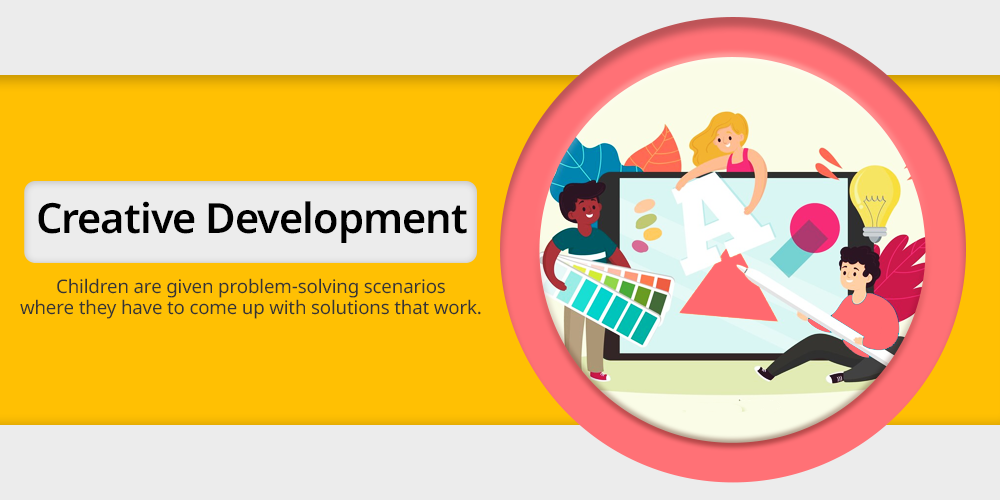
Children are given problem-solving scenarios where they have to leave their comfort zones and come up with solutions that work. These games are created so that the thinking power of children develops and they show more creativity while working.
The participation calls for the need for expressions that they eventually become an expert at.
Read to Know: Creative Activities for Kids .
3. Fun in learning
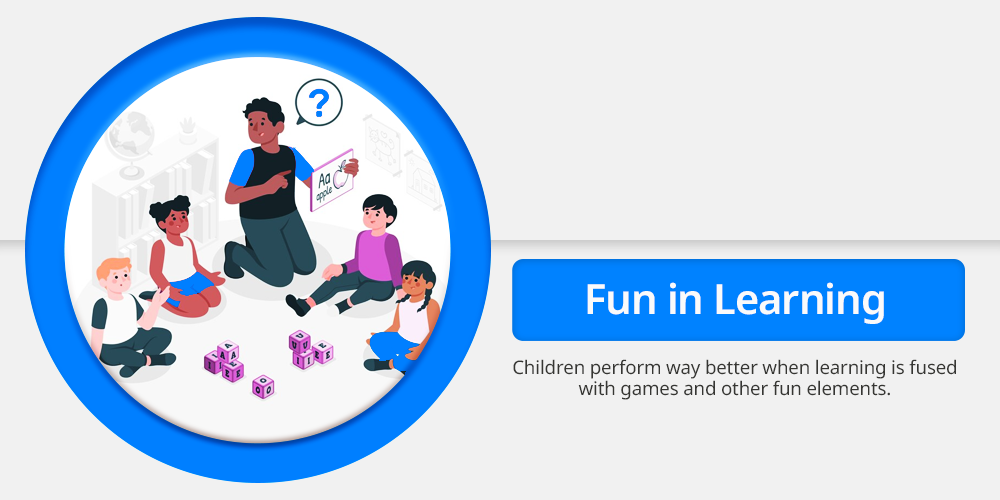
Children perform way better when learning is fused with games and other fun elements. Education won't seem to be something too difficult when activities are created to ensure that the child's experiences are enriching.
Participating in art and craft and learning at the same time is a fun process for children to grow and become better in expression.
4. Team spirit
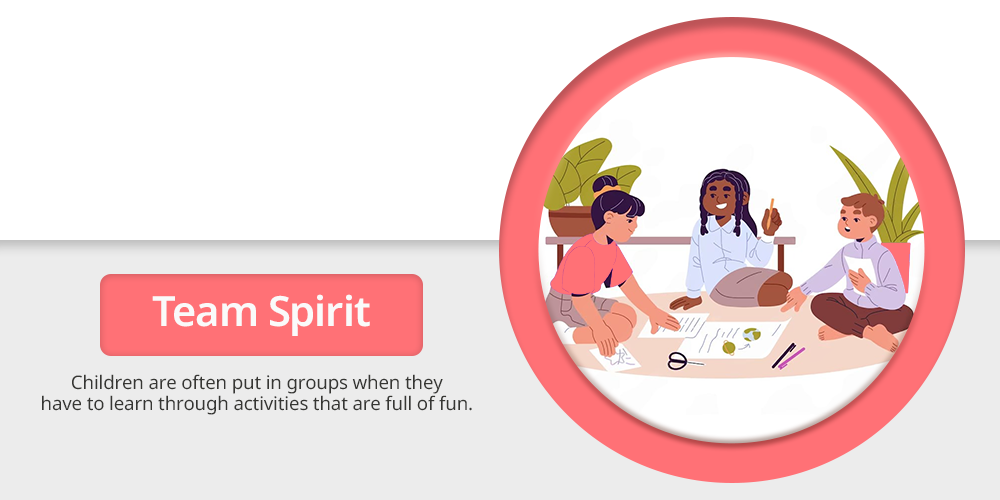
Children are often put in groups when they have to learn through activities that are full of fun. As a result, they know how to fulfill a certain goal by forming a team that is meant to ensure each one's progress.
They learn about adapting, compromising and agreeing on similar terms that pushes the team spirit forward. The overall confidence in a group takes an upward curve when children are thinking of winning as a team.
5. Student-centric in nature
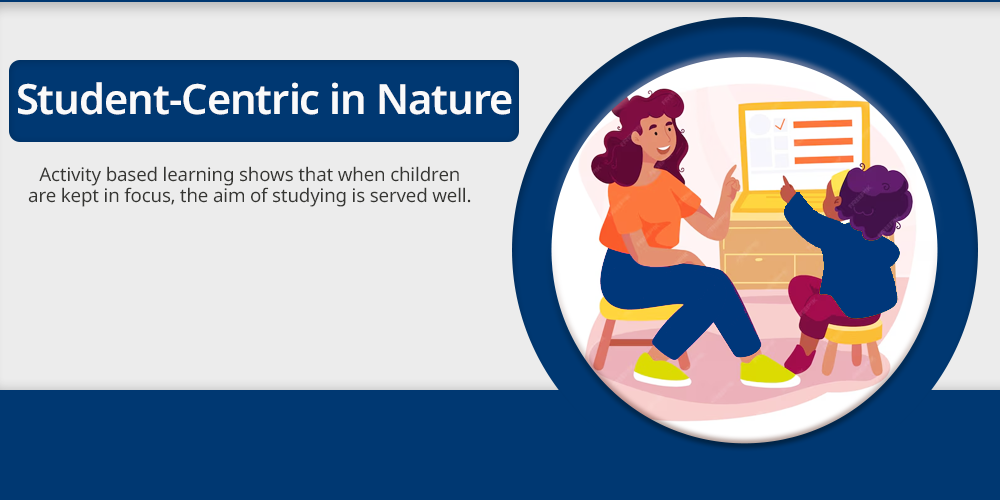
ABL shows that when children are kept in focus, the aim of studying is served well. As a result, encouraging them through student-centered learning mostly goes a long way in shaping their future.
Afterall, development only starts happening when the role of the student shifts to an active learner from the position of passivity. There are no chances of getting reduced to a mere listener as these activities welcome more role-playing.
6. Ease in remembering key information

It is easier to remember things when theory turns into experiences and it applies in education as well. For example, children can't help but wonder at the science experiments during class and can reconjure the experiences at will.
There is a popular idea that people remember 80% of what they experience and be it a truth or a myth, the differences in activity-based learning makes it quite easy to figure out.
Conclusion
Learning is very enjoyable when the child doesn't assume it to be a boring adventure by bringing theories to live experiences.
ABL factualizes that education is a worthwhile journey where the child can study and freely express themselves through tasks.
The benefits of activity-based learning are here to make the child step up the ladder of creative endeavours and celebrate the journey of learning all throughout.
Frequently asked questions
5 questions
How effective is activity-based learning?
Activity based learning is a fun way to celebrate the occasion of learning. It taps on the potential of creativity and stimulates children to think outside the box.
What is the purpose of learning activities?
Learning activities have an aim to fulfill and that is to have the child absorb the lessons and have a memory that is sharp at recalling studies. Overall, it is meant to make the journey of learning worth enjoying.
Who is the father of activity based curriculum?
The activity based curriculum was born out of David Horsburgh's innovation to make music, art and crafts as sources for improving learning.
What is the other name of activity based learning?
Activity Based Learning can also be called ABL and experiential learning.
Who is the father of pedagogy?
Johann Heinrich Pestalozzi is the father of pedagogy as he delivered a pathway where the child is at the centre of the universe in education. It is taking a break from rote learning by investing in a process where experiences matter.
About the author
Poulomi Ganguly
Content Specialist
Poulomi Ganguly is a content specialist at 21K School India, writing in-depth guides on education, school admission processes, and curriculum frameworks.
Every 21K School guide is written by our education team and reviewed by a subject facilitator before publishing.
Exploring a CBSE-pathway online school?
Talk to an advisor about 2026–27 admissions — no obligation.
Talk to an advisorComments
No comments yet — be the first to share your thoughts or ask a question.