13 Importance of Resilience in Students for Academic Growth
 Written byAnkita SinghaContent Specialist
Last modified: Jul 27, 2026 6 min read
Learners are full of energy, confidence and capable of indulging in education . Skills development also plays an essential role in this situation.
However, learners sometimes deal with academic, social, and emotional challenges in life. These challenges can be a simple exam stress to future career growth.
To understand in-depth, learners must know the term: "Resilience". It is an amazing way to deal with academic and personal challenges.
This blog contains the importance of resilience in students which helps to build strength for future growth.
What is resilience in students?
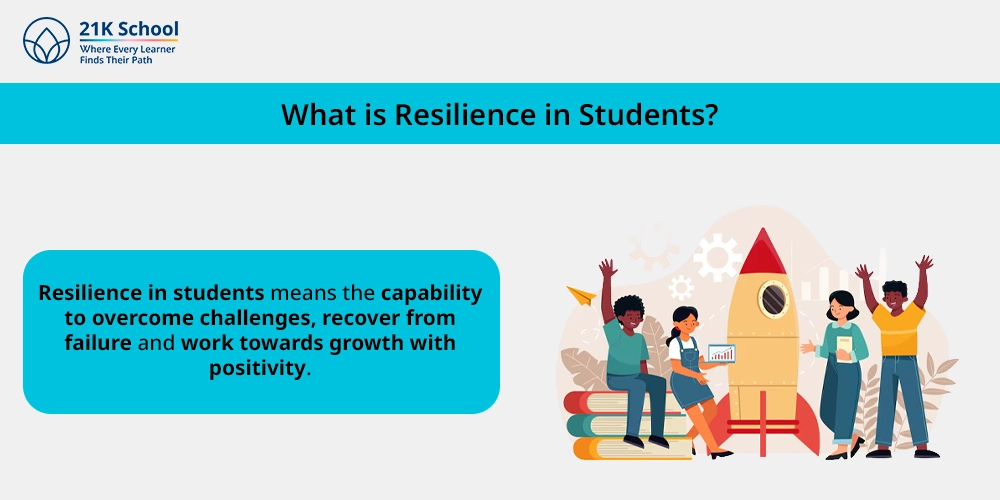
Resilience in students means the capability to overcome challenges, recover from failure and work towards growth with positivity.
Resilience involves mental toughness, emotional regulation, and persistence. Learner even with poor grades to learn and try again.
For example, a student reappears in a competitive exam even after getting less marks.
13 importance of resilience in students
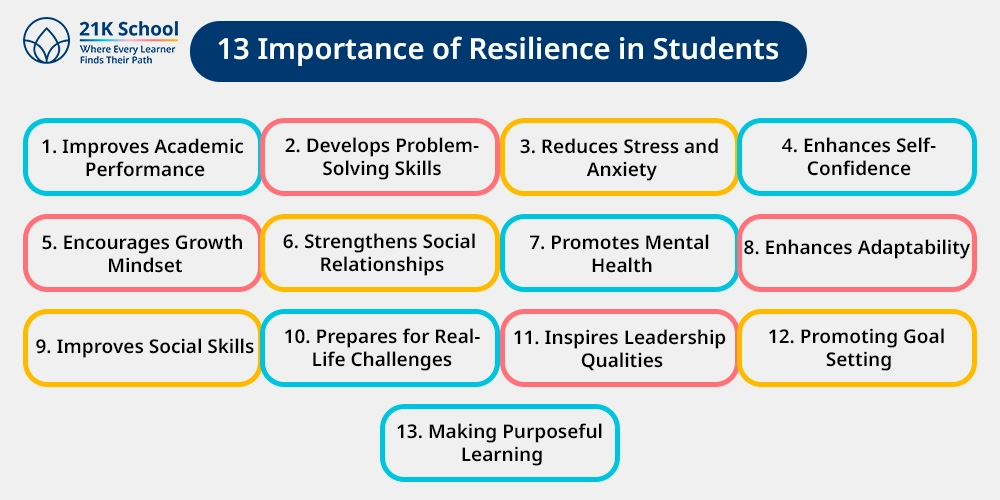
To understand the importance of resilience in students life go through the top 13 points:
1. Improves academic performance
Resilience improves academic performance of students in which they spend extra time to get good scores in difficult subjects.
This will create an environment for continuous learning and improvement instead of setback in short term failure.
By this way learners can improve their academic performance.
2. Develops problem-solving skills
Problem-solving skills are one of the most important parts of academic and personal life. With resilience one can identify problems, analyse and look for the ideal solutions.
It is important to build analytical skills, logical thinking and patience in students , patience and logical thinking in students. Learners can also seek feedback to improve.
3. Reduces stress and anxiety
It is very important to understand the causes of stress in students matters because stress and anxiety can negatively impact students and let them setback in difficult scenarios. Resilient students often overcome problems.
By managing exam stress , academic pressure and feelings students can use proven strategies like mindfulness, self-reflection, or reaching out for guidance.
4. Enhances self-confidence
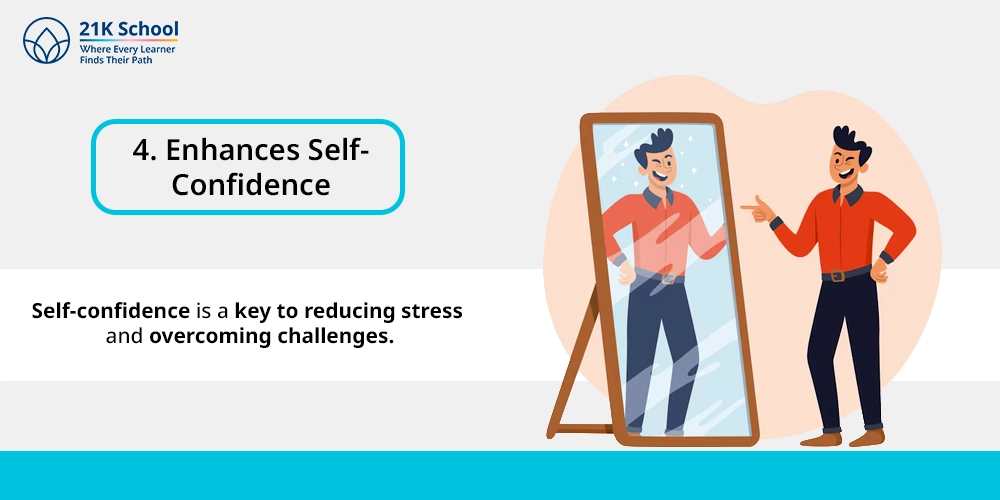
Resilience builds inner strength and confidence even in multiple setbacks.
With continuous effort students are able to achieve desired results and feel the senses of accomplishment.
Self-confidence is a key to reducing stress and overcoming challenges.
5. Encourages growth mindset
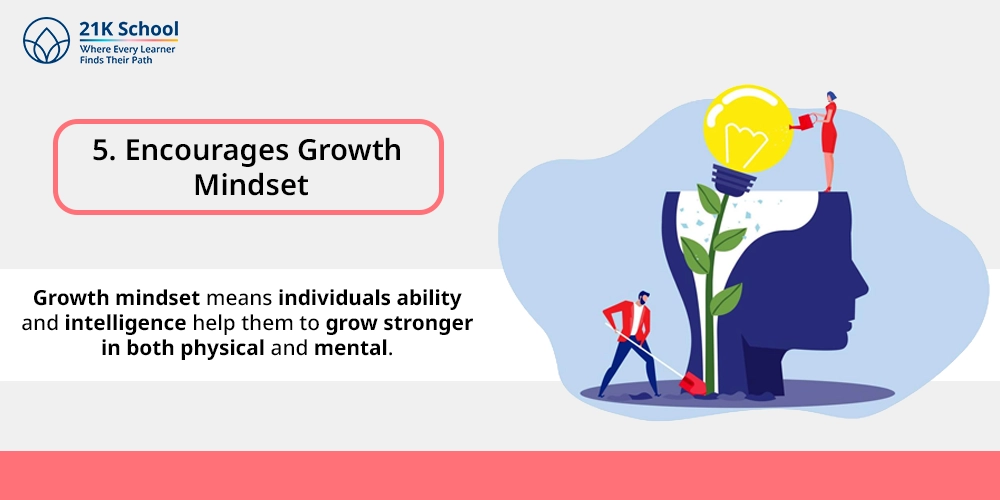
Growth mindset means individuals ability and intelligence help them to grow stronger in both physical and mental.
Failure is a part of life and resilience is a key to success which leads to continuous personal and academic improvement.
6. Strengthens social relationships
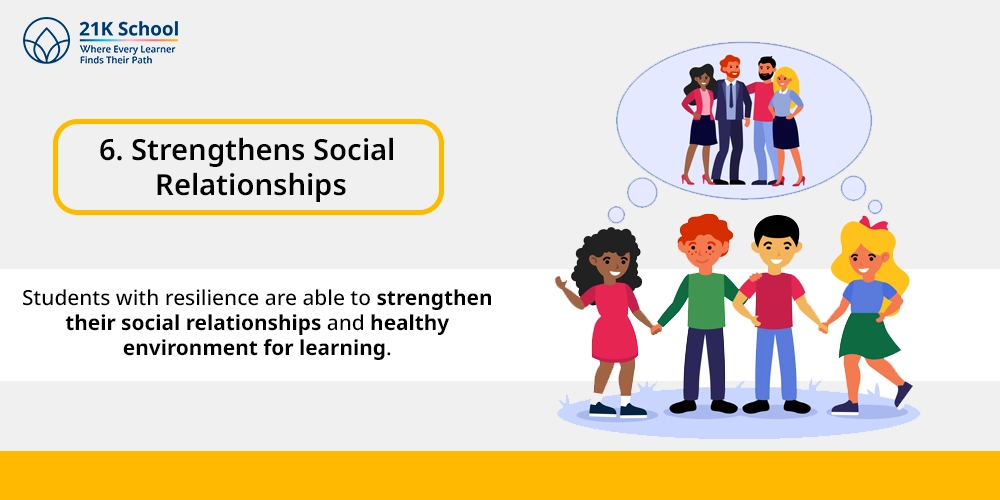
Students with resilience are able to strengthen their social relationships and healthy environment for learning .
They can handle conflicts, disagreement and debate without difficulties. This improves communication skills .
7. Promotes mental health
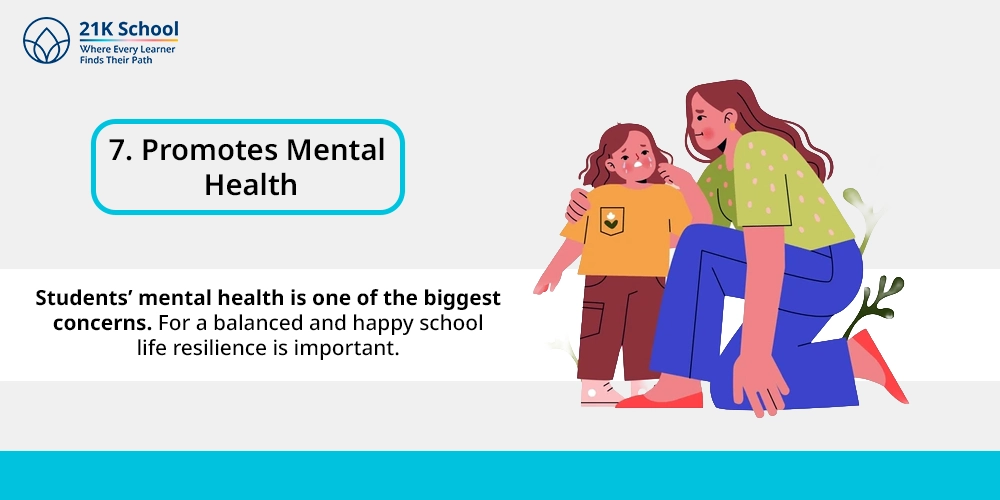
Students mental health is one of the biggest concerns. For a balanced and happy school life resilience is important.
With resilience students can overcome fear of failure, chronic stress, depression, or burnout.
Some common ways by which schools and facilitators can promote resilience are counseling, open communication, and mindfulness activities .
8. Enhances adaptability
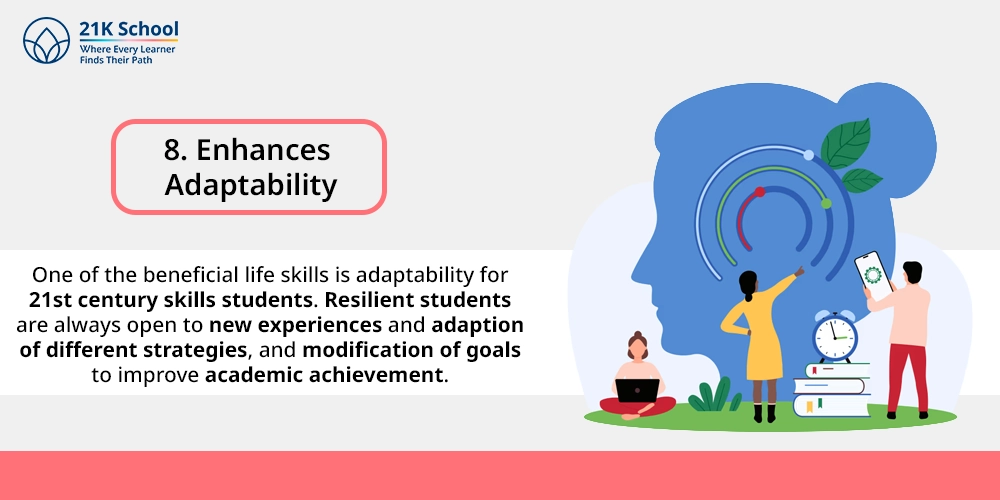
One of the beneficial life skills is adaptability for 21st century skills students . Resilient students are always open to new experiences and adaption of different strategies, and modification of goals to improve academic achievement.
This environment helps them to stay strong for future challenges.
9. Improves social skills
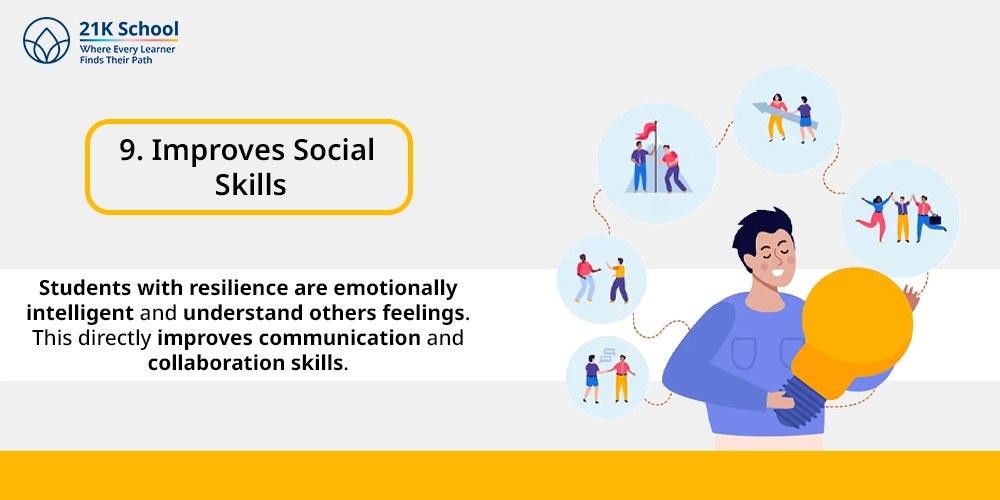
Students with resilience are emotionally intelligent and understand others feelings. This directly improves communication and collaboration skills .
It helps in becoming a team player, building leadership qualities , group projects and peer-to-peer education .
Various social skills like active listening conflict resolution etc naturally improve resilience in students.
10. Prepares for real-life challenges
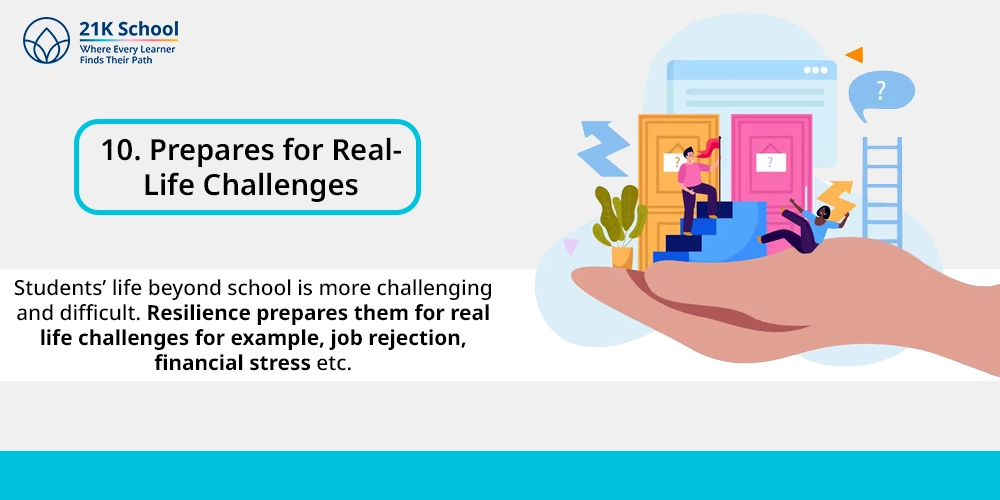
Students’ life beyond school is more challenging and difficult. Resilience prepares them for real life challenges for example, job rejection, financial stress etc.
Handling small academic difficulties like exam pressure, homework deadlines, and failures help them to stay strong for challenges.
11. Inspires leadership qualities
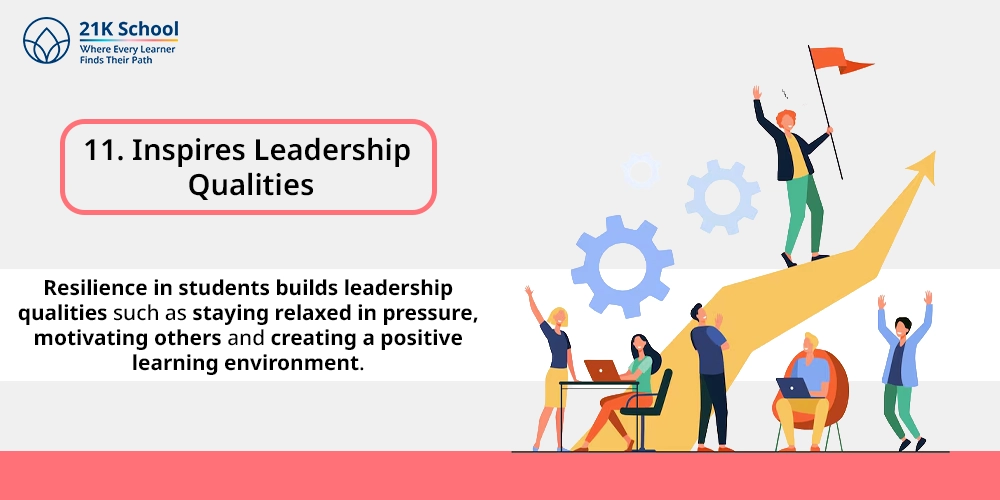
Resilience in students builds leadership qualities such as staying relaxed in pressure, motivating others and creating a positive learning environment .
This quality benefits not only a particular student but the whole classroom to gain a supportive environment.
12. Promoting goal setting

Sometimes small failures limit the students’ efficiency but with resilience students can overcome challenges focused on long-term goals .
This can be done by setting objectives, learning habits of students , and working on feedback. Celebrating small successes can motivate hard work.
13. Making purposeful learning
Building resilience is an important and meaningful part for students’ academic and personal growth. Learners can engage in concepts instead of stressing out.
They can view the challenges as an opportunity to do better and transform it into long-term success rather than temporary tasks.
Conclusion
For lifelong learning of students, resilience is an initial or foundational step. It helps them to understand the difficulties, analyse effectively and look for the best possible solutions.
Implementation of resilience from an early age is beneficial for future growth of learners. Parents, facilitators, and school can help by guiding them by taking care of physical and mental health. A resilient student is capable of achieving the desired outcome, and shaping the future with success, strength, and purpose.
Frequently asked questions
5 questions
What are the main 4 types of resilience?
Mental, emotional, physical, and social are four types of resilience. Each one is important to increase individuals capabilities to deal with challenges.
What are 5 characteristics of resilience?
The top five characteristics of resilience include adaptability, flexibility, problem solving skills, social connect and self-awareness.
What is a real life example of resilience for students?
A real life example of resilience is after giving a test a student asks feedback from the facilitator to use it and retry with more planning, strategy and knowledge.
What causes lack of resilience?
Some of the main causes of resilience are trauma, social isolation, fixed mindset, physical issues, mental health etc. There are various environmental factors that impact resilience.
How can teachers and parents build resilience in students?
By providing extra support, a good environment, problem solving strategies, encouraging growth mindset and self-care help students to build resilience.
About the author
Ankita Singha
Content Specialist
Ankita Singha is an Education Content Specialist at 21K School, India’s first accredited fully online K-12 School. She focuses on the in-depth research and creation of the well-drafted guides on early childhood education, school admission processes, and CBSE/ICSE curriculum guidance. With more than 2 years of experience at 21K School, a fully accredited institute- Cambridge International (IA702) and Pearson Edexcel (94883), Ankita works closely with the school’s curriculum heads and academic coordinators. Ankita’s every article reflects on the official board guidelines, practical realities, and current policies of online education in 78+ countries. Ankita’s content has helped thousands of parents in understanding the topics like RTE eligibility, NIOS pathways, and age-appropriate admission criteria.
Every 21K School guide is written by our education team and reviewed by a subject facilitator before publishing.
Exploring a CBSE-pathway online school?
Talk to an advisor about 2026–27 admissions — no obligation.
Talk to an advisorComments
No comments yet — be the first to share your thoughts or ask a question.