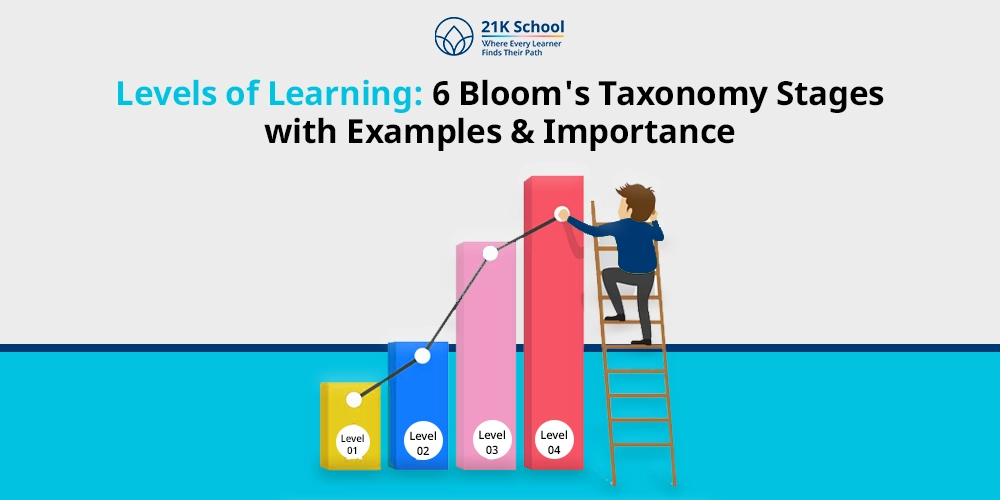
Levels of Learning: 6 Bloom's Taxonomy Stages with Examples & Importance
 Written byAnnapurna SContent Specialist
Last modified: 21 Jul 2026 10 min read
In general, the learners memorise and give systematic and patterned responses in the test. This might perhaps be effective in an idyllic situation, but to derive more insight and bring intricate thoughts into simple and digestible thoughts would require going through levels of learning.
In the process of the students discovering the degrees of learning, a sense of curiosity and interest is brought out as students tend to ask, compare and even invent something new out of what they are learning.
Now we shall have a glance at each of them, and how they may help the students get to a better level, and to practice what they have gone through not only in exams but in life, as well.
What are the levels of learning?
Learning has 6 levels of hierarchy, starting with the simplest level of knowledge and then progressing to the complex levels. These phases can assist facilitators in analysing the richness and complexity of how a person interprets a bit of information .
Knowing the highest level of learning chronologically can help you go past the memorising aspects of the concepts to mastering them.
Why are levels of learning important?
Levels of learning play an important role in grouping learning phases that would help learners progress in the learning process that started on the basic level of creation and evaluation to the complex.
Now, let's deep dive into the importance of these levels:
- It is founded on the learning process, to conceptual knowledge , to become a master of it and to become a learner of how to apply the knowledge to real-life examples.
- The given taxonomy by Bloom guarantees that students not only memorise but understand the basic knowledge.
- The learning process is tailored to the suitability of the student to absorb the information and speed.
What are some of the levels of learning?
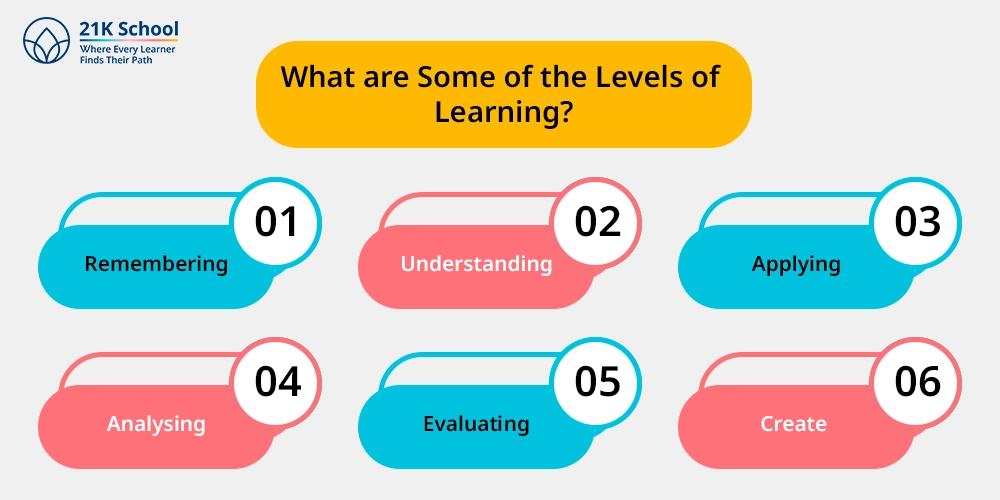
The levels of learning in accordance with the theory of Taxonomy by Bloom are in a progressive order. To activate the level of the ideas of remembrance to the level of analysis and application of the knowledge and experience obtained to a real situation.
Let's explore the 6 levels of learning:
1. Remembering
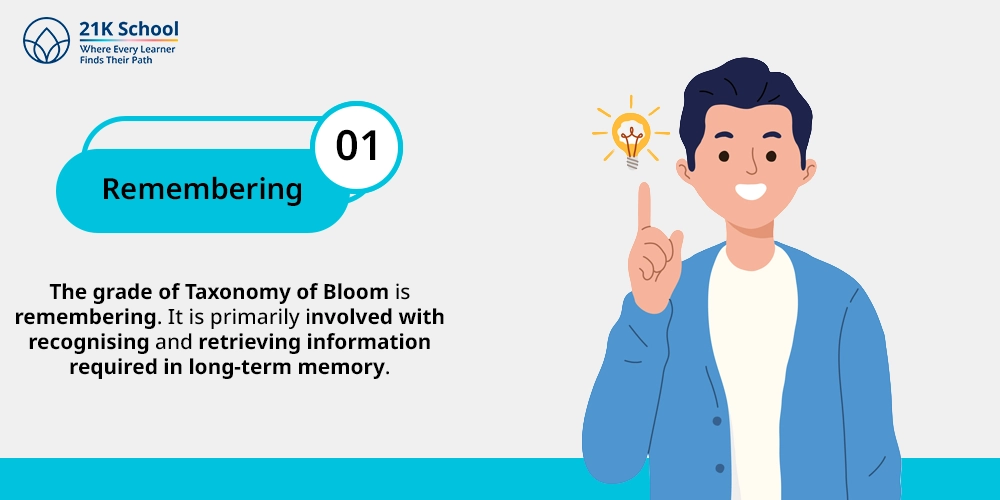
The grade of Taxonomy of Bloom is remembering. It is primarily involved with recognising and retrieving information required in long-term memory.
At this stage, the information is listed down, and ideas are briefed without rushing to the next stage.
2. Understanding
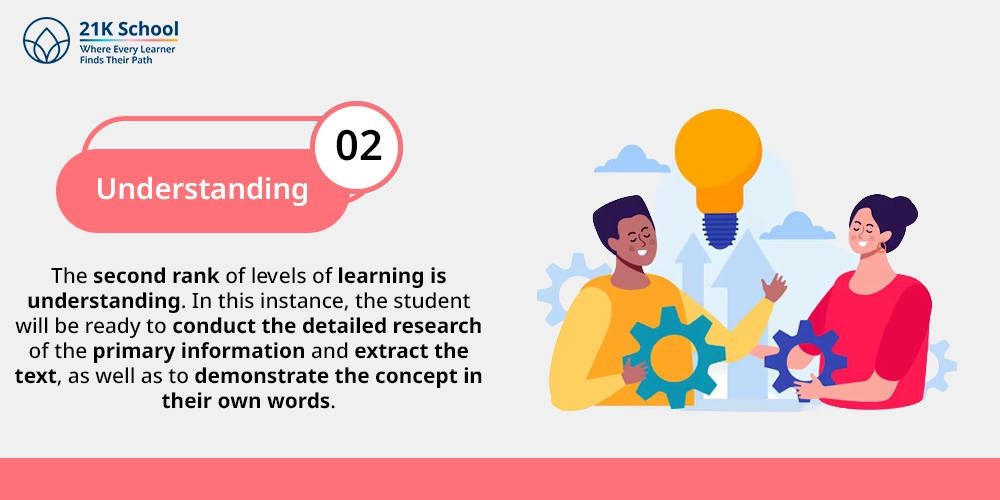
The second rank of levels of learning is understanding. In this instance, the student will be ready to conduct the detailed research of the primary information and extract the text, as well as to demonstrate the concept in their own words.
At this level, students can also be able to identify and draw parallels on a topic. They learn the subject and perceive it in their own way.
3. Applying
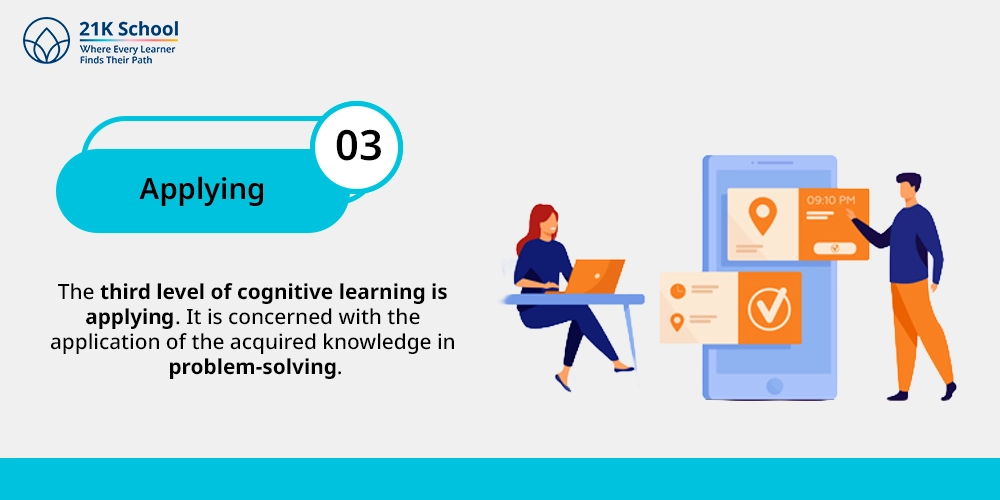
The third level of cognitive learning is applying. It is concerned with the application of the acquired knowledge in problem-solving . It applies the knowledge in the areas of implementation, demonstration and operation of the knowledge acquired.
4. Analysing
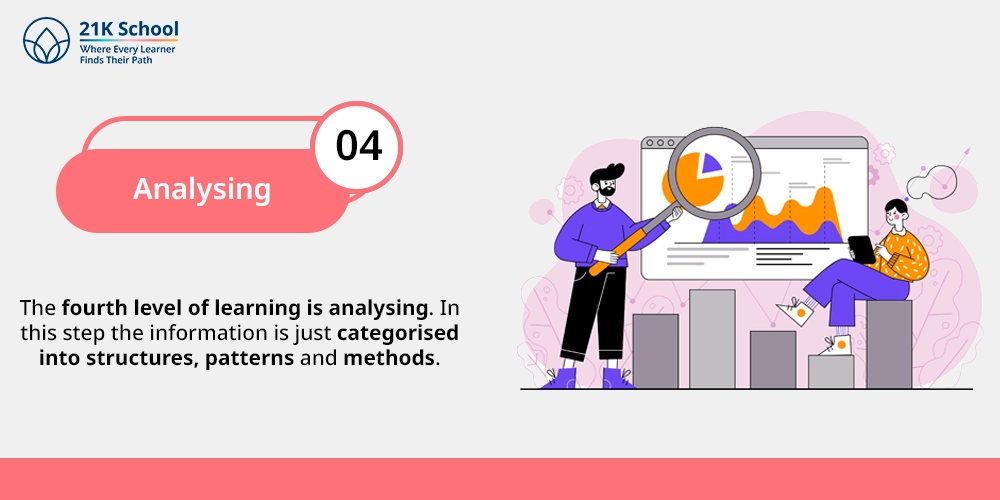
The fourth level of learning is analysing. In this step the information is just categorised into structures, patterns and methods. The information in this level is compartmentalised and differentiated as a whole.
5. Evaluating
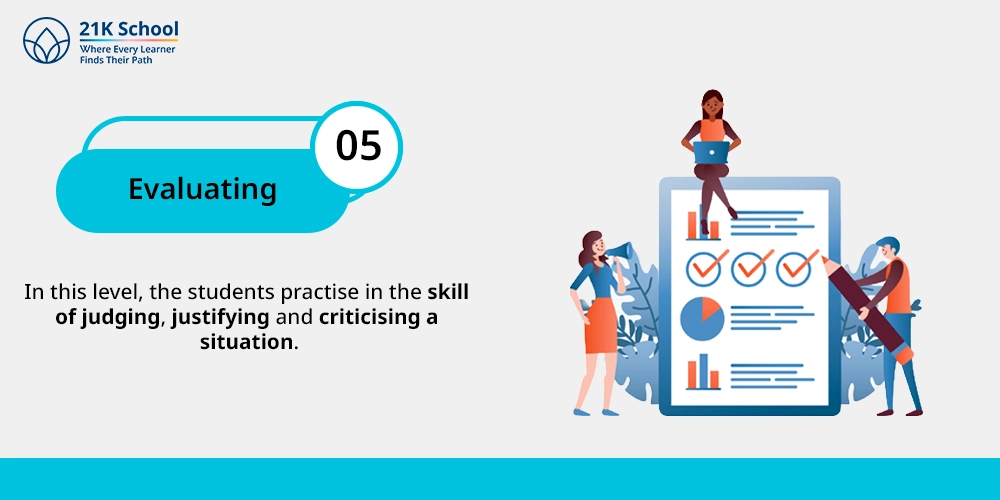
In this level, the students practise in the skill of judging, justifying and criticising a situation. Critical thinking is used to aid in the decision-making process and evaluate the information.
6. Create
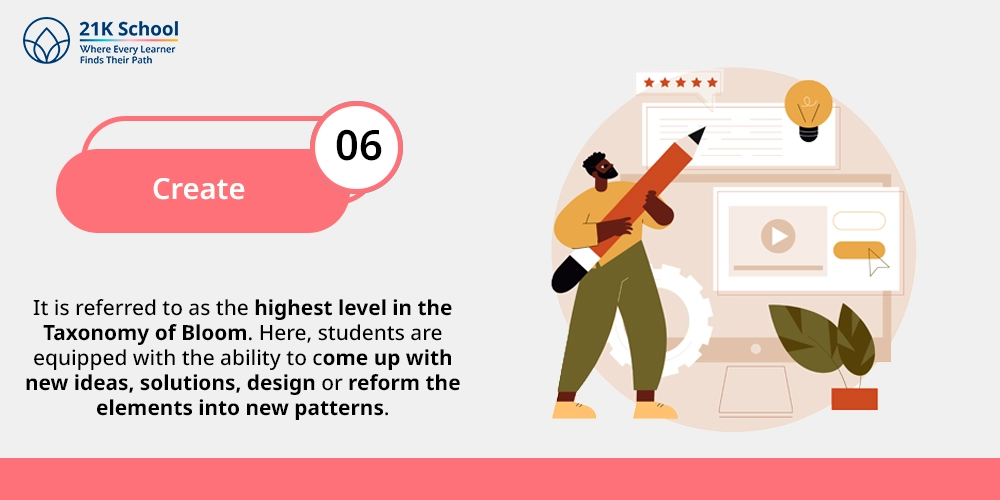
It is referred to as the highest level in the Taxonomy of Bloom. Here, students are equipped with the ability to come up with new ideas, solutions, design or reform the elements into new patterns.
Real-life examples of learning levels
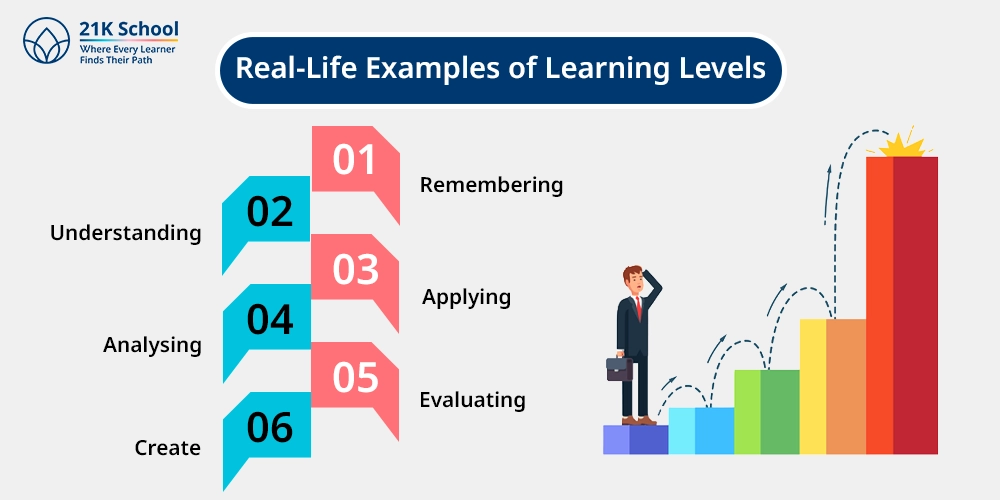
Traditionally, learning is not within traditional classrooms . We see some of the examples of the ways in which our skills and knowledge can be applied to our day-to-day lives.
Take the following case:
1. Remembering
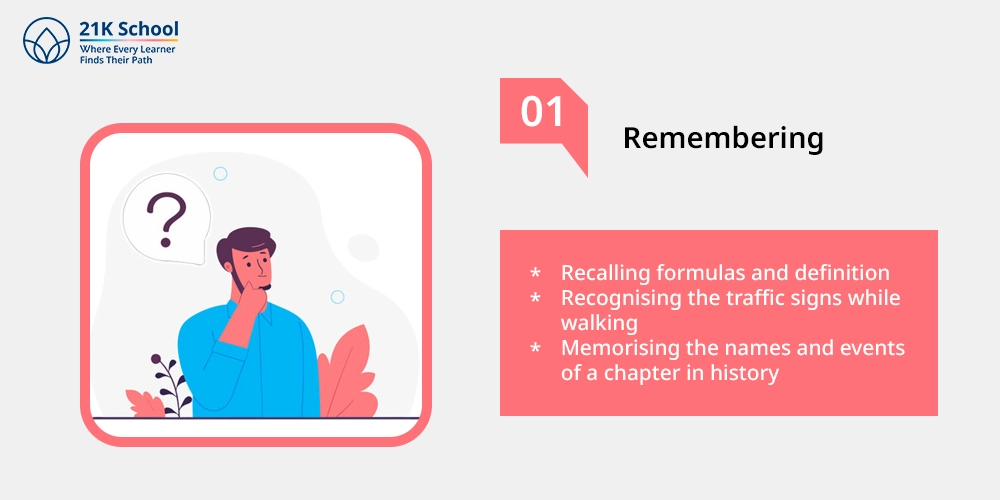
In this learning of the facts and definitions, the instructors will use placards, pop quizzes, and memorisation to re-touch the facts and definitions. An example of the step-by-step process of photosynthesis.
Examples include:
- Recalling formulas and definition
- Recognising the traffic signs while walking
- Memorising the names and events of a chapter in history
2. Understanding
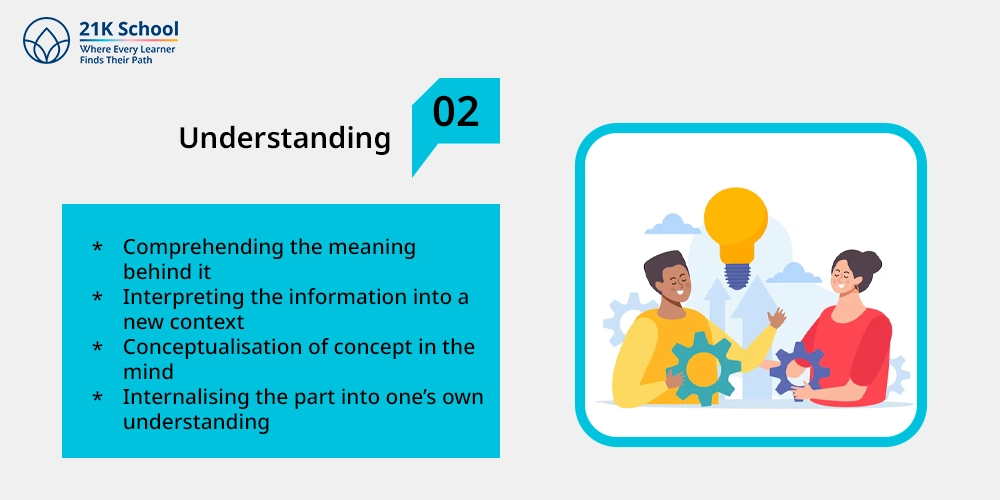
In this instance the students put the learnt knowledge into practice in a concept. To illustrate, the necessity of giving an explanation of the cause of the phenomena.
Examples include:
- Comprehending the meaning behind it
- Interpreting the information into a new context
- Conceptualisation of concept in the mind
- Internalising the part into one's own understanding
3. Applying
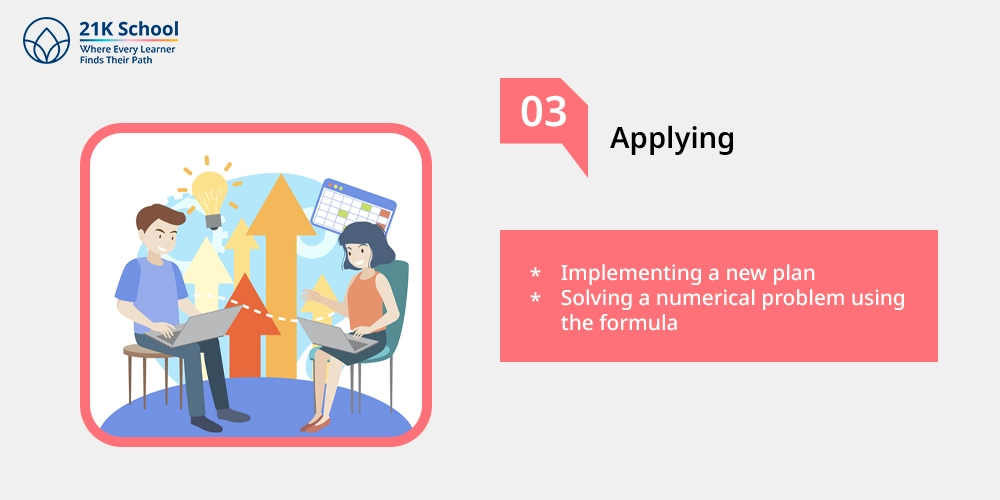
It applies the learned knowledge in case study solving and uses the needed techniques to simulate the information.
Examples include:
- Implementing a new plan
- Solving a numerical problem using the formula
4. Analysing
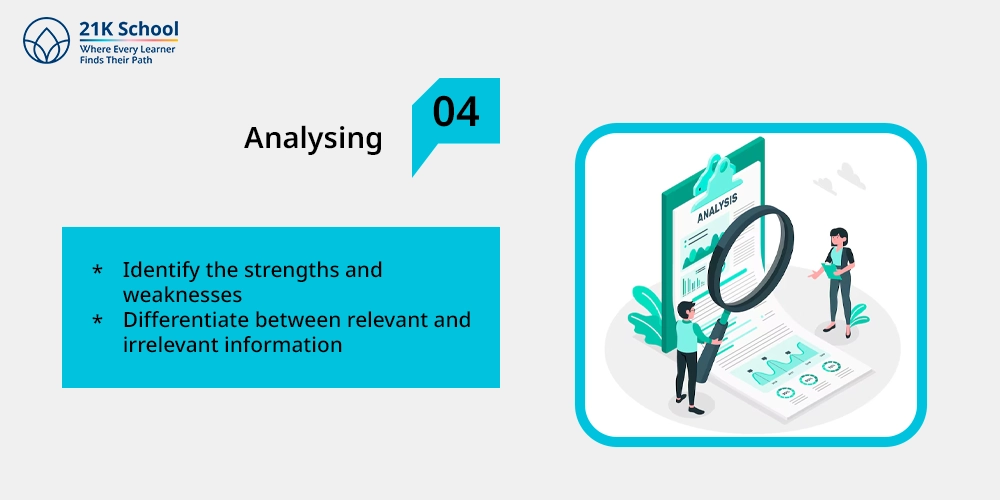
By analysing the piece of information, analytical skills can be enhanced by de-stitching it to comprehend the advantages and disadvantages.
Examples include:
- Identify the strengths and weaknesses
- Differentiate between relevant and irrelevant information
5. Evaluating
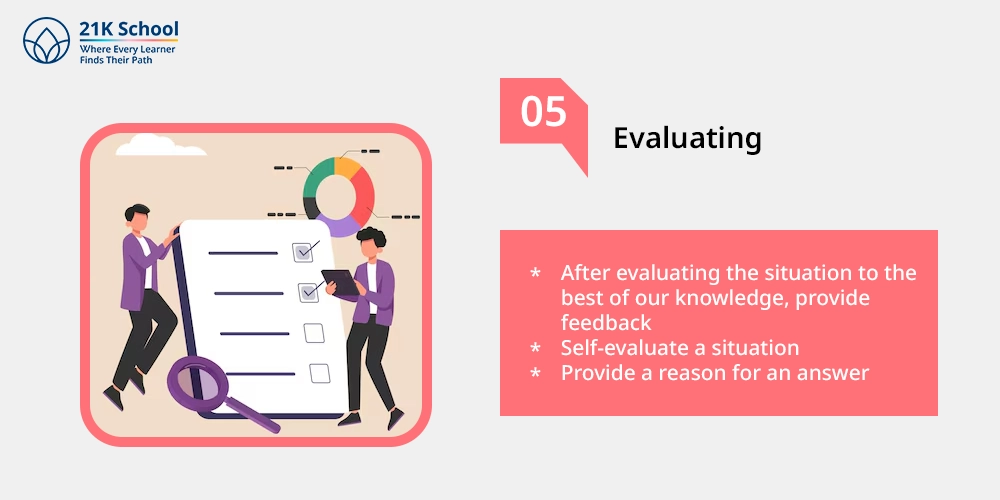
One of the students will justify the nature of the behaviour or action. Logical to make a decision.
Examples include:
- After evaluating the situation to the best of our knowledge, provide feedback
- Self-evaluate a situation
- Provide a reason for an answer
6. Create
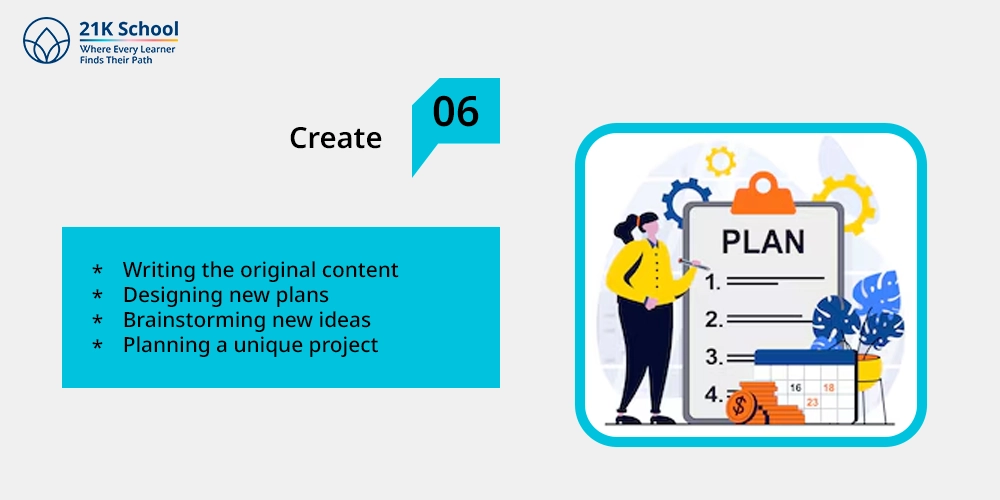
The concepts are manifested into a physical form here.
Example includes:
- Writing the original content
- Designing new plans
- Brainstorming new ideas
- Planning a unique project
Minimum level of learning
Minimum Level of Learning (MLL) is a means of ensuring that every student gets a minimum of learning at every level.
MML does not just pass the syllabus; it also provides the assurance that not only has the student visited the syllabus, but he/she has also mastered the subject matter contained in the syllabus . That being said, it can only be applied to such countries as India.
1. Key minimum level of learning:
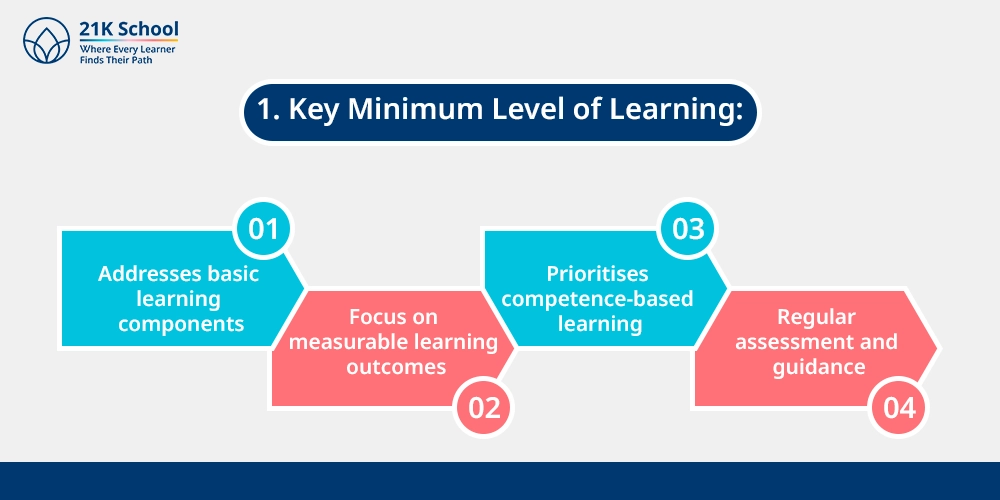
- Addresses basic learning components
Specialise in some simple subjects such as Mathematics, Environmental Studies, and first language subjects. These are the elements of elementary education .
- Focus on measurable learning outcomes
Learning is a process that is outcome-driven in this case. In this way, students will be able to show what they have learnt after completion of the course.
- Prioritises competence-based learning
Make sure students learn in-depth and understand the complex topics instead of memorising it.
- Regular assessment and guidance
Continued Assessment and review of whether or not all the students are up to standard.
How can students move to higher levels of learning?
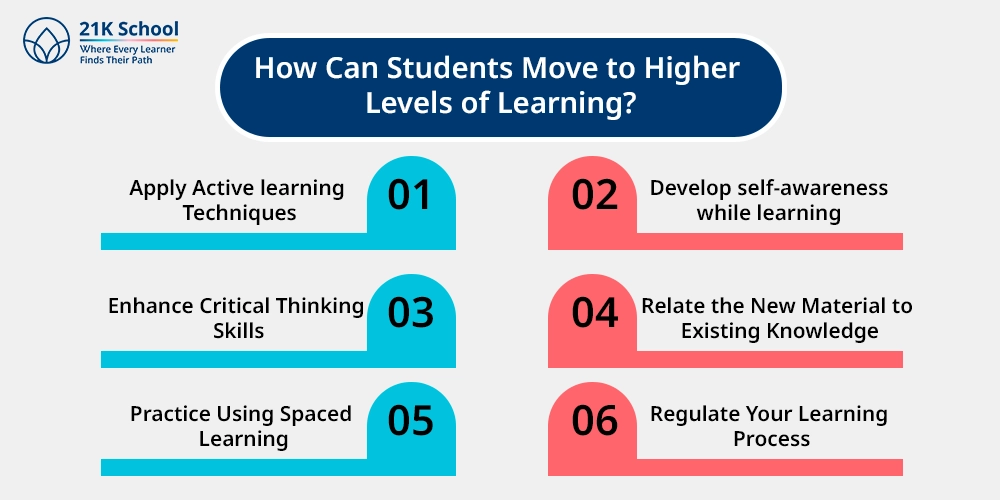
The students will be able to take their levels of learning to the next level, beyond the passive learning where students simply focus on memorising the topics, to active learning . This will assist them in being more knowledgeable and enhance their ways of learning.
1. Apply active learning techniques
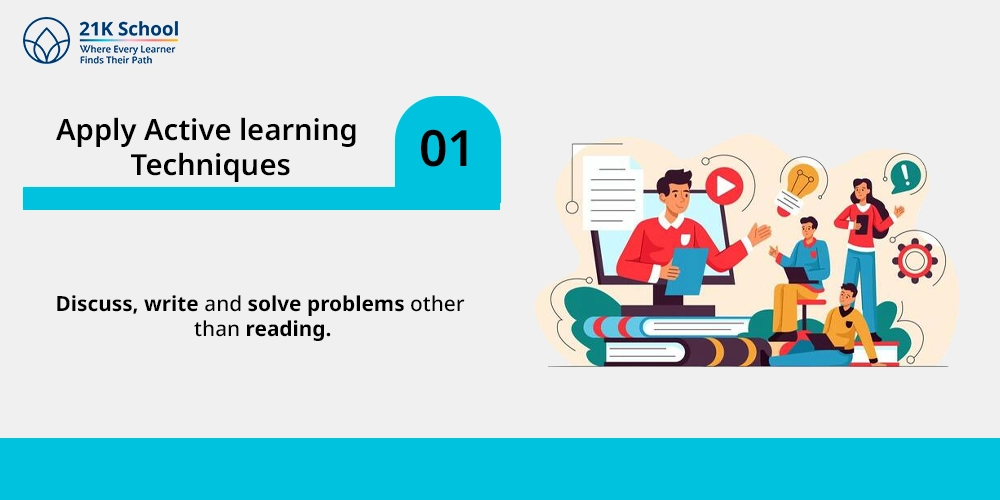
Discuss, write and solve problems other than reading.
2. Develop self-awareness while learning
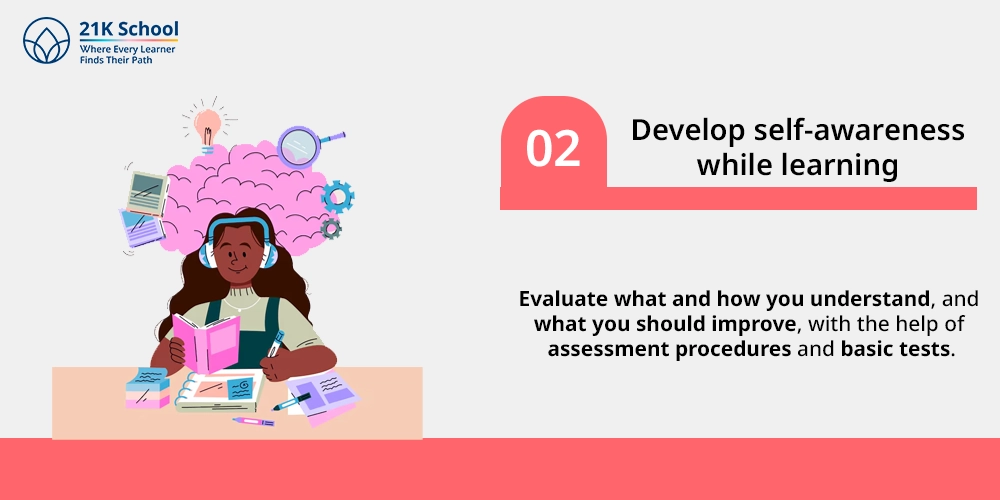
Evaluate what and how you understand, and what you should improve, with the help of assessment procedures and basic tests.
3. Enhance critical thinking skills
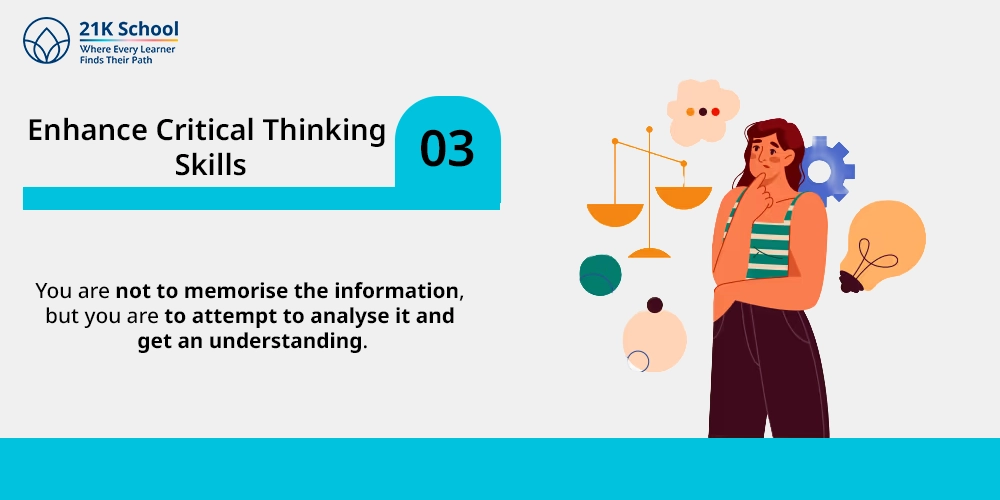
You are not to memorise the information, but you are to attempt to analyse it and get an understanding.
4. Relate the new material to existing knowledge
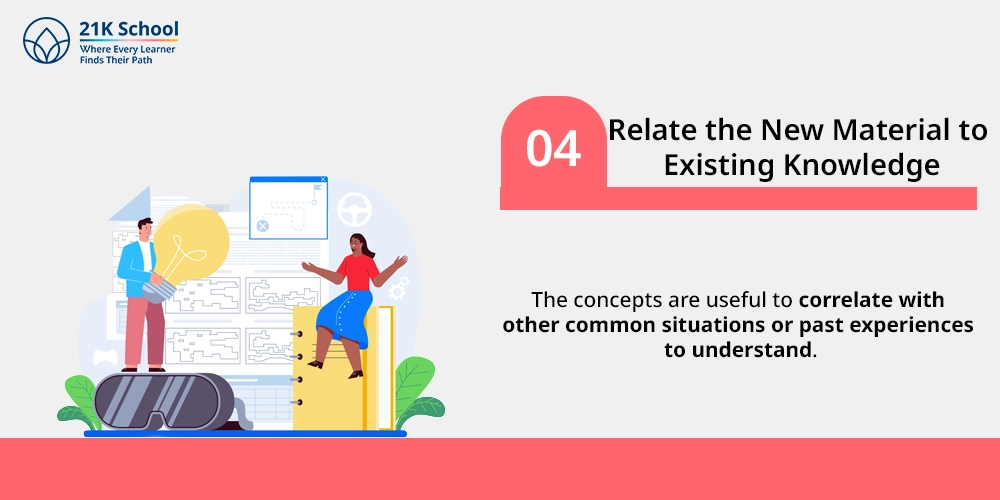
The concepts are useful to correlate with other common situations or past experiences to understand.
5. Practice using spaced learning
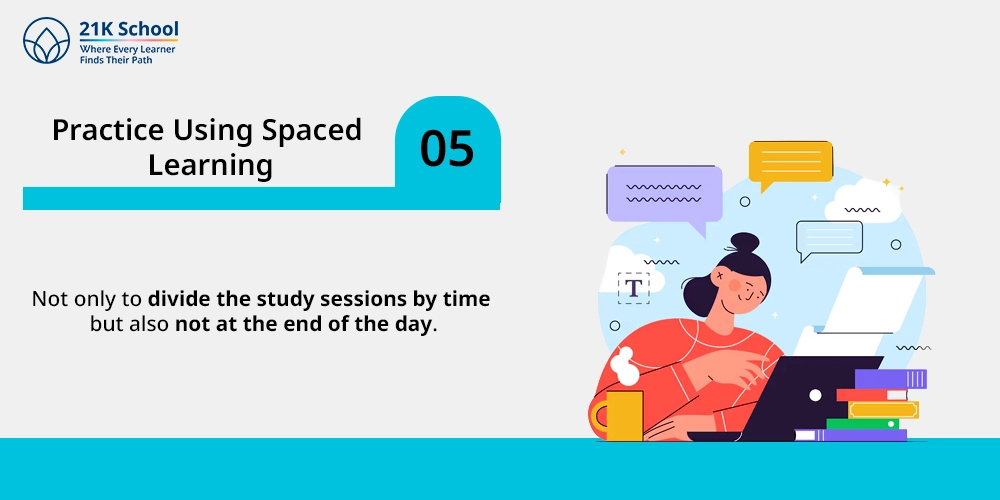
Not only to divide the study sessions by time but also not at the end of the day.
6. Regulate your learning process
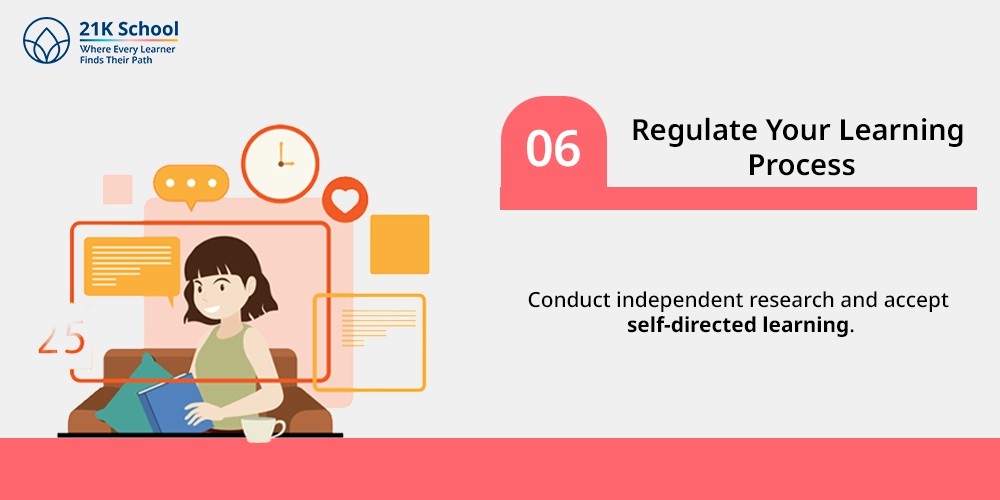
Conduct independent research and accept self-directed learning .
Common mistakes students make
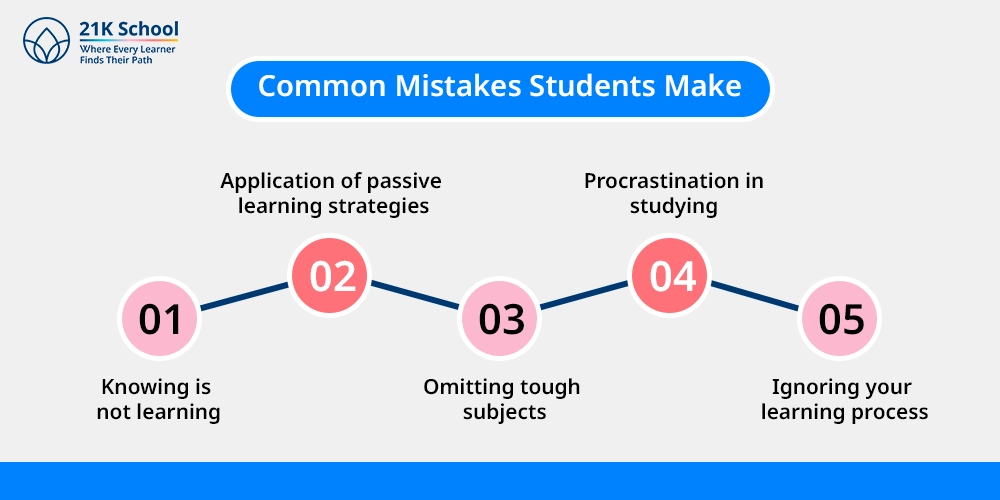
Most of the students are not able to advance through the different levels of learning because of the errors that they make during learning. The following are some of the errors to try to prevent when studying:
- Knowing is not learning
One may think knowing means reviewing your work, but it doesn't really have much purpose when you take an exam.
- Application of passive learning strategies
Such passive methods of learning as underlining and rereading are low in terms of understanding.
- Omitting tough subjects
The lack of more challenging and complex issues brings about a discontinuity and influences the overall comprehension.
- Procrastination in studying
Last-minute study not only imparts the performance of the exam in memory, but also recollection proves not to be effective.
- Ignoring your learning process
You have not practised tests, and this means that you are overconfident, and when you fail to perform, it will be due to the fact that you have not practised.
Stages of learning child development
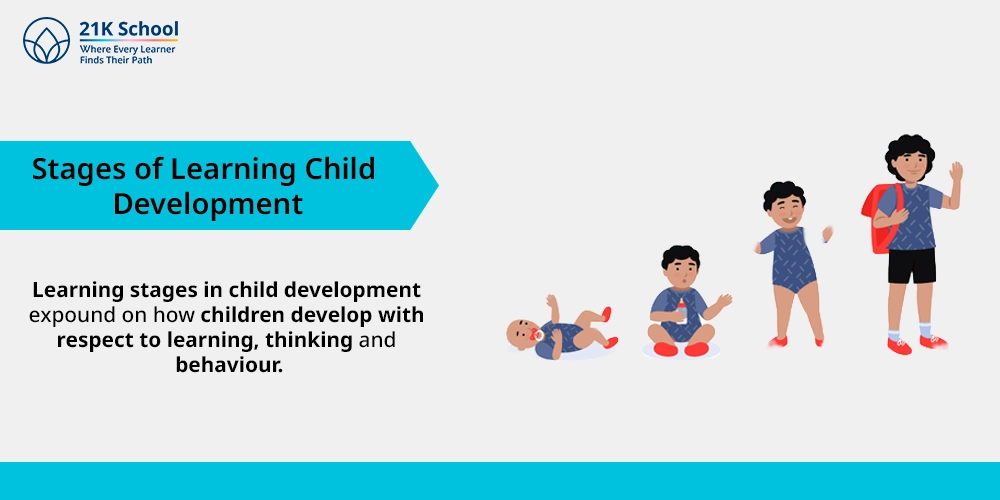
Learning stages in child development expound on how children develop with respect to learning, thinking and behaviour. The developmental phases of children are diverse in nature and associated with the cognitive, linguistic, motor and socio-emotional developments.
1. Phases of a child’s development:
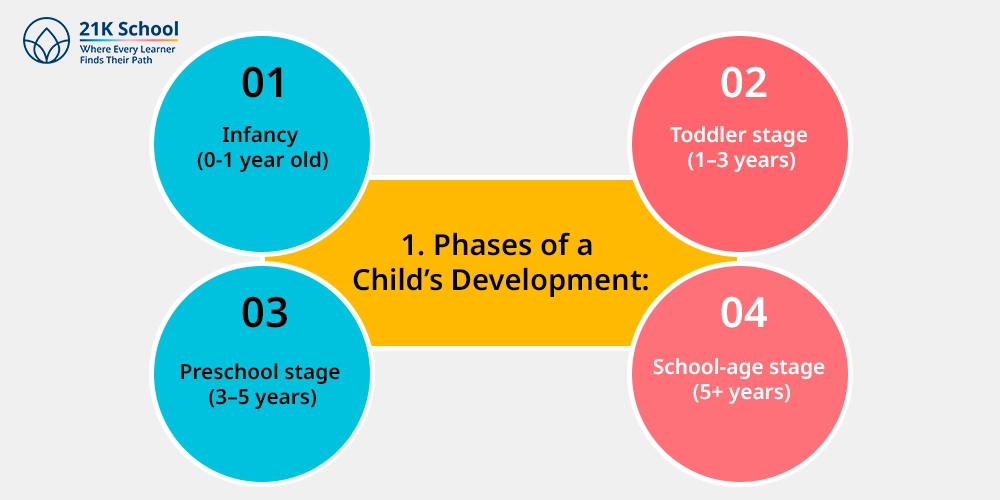
- Infancy (0-1 year old)
Learning happens from sensory and motor interactions. Children start to develop cognitive skills by recognising and reacting to sounds and faces.
- Toddler stage (1-3 years)
Toddlers are inquisitive and active. Language is rapidly developing and some indications of independence and socialisation already show signs of emerging.
- Preschool stage (3-5 years)
This level will be marked by rapid cognitive and social development as a result of play and the use of language, ingenuity and the acquisition of new rules.
- School-age stage (5+ years)
A more systematic way of learning takes place. Logical reasoning and social relationships are established.
Development stages of children give an idea about how learning changes from a basic to a systematic process to enable children with essential skills to perform in society.
Conclusion
Learning will be productive as students will learn at different levels of learning. It does not solely concern the balance, but a body of knowledge and cognitive levels.
Academic success plays an important role in combination of the learning processes with the levels of learning, based on the level of simplest recollection to the higher level of application.
These levels of learning will be used to assist the students to be clear on concepts and have more memory space.
Frequently asked questions
7 questions
Why are levels of learning important for students?
Learners need learning levels, as they provide learners with systematised educational progress, whereby focus is no longer on rote memorisation but on the advanced, cognitive and critical thinking skills
What is the highest level of learning?
As per Gagne, the highest level of learning is considered problem-solving learning.
Are learning levels useful for exams?
Yes, levels of learning are beneficial in examinations because it provides clear, structured standards to motivate students at various levels of learning.
Do all subjects follow the same level of learning?
No, there are differences in various subjects in regard to their level of learning.
What are three domains of learning?
These three domains of learning are Cognitive, Affective and Psychomotor.
What are the 5 major categories of learning?
Five major groups of learning outcomes include Knowledge, Comprehension, Application, Analysis, and Evaluation.
What are the four levels of learning disability?
There are four levels of learning disabilities, including mild, moderate, severe and profound levels.
About the author
Annapurna S
Content Specialist
Annapurna is an Education Content Specialist at 21K School, India’s first accredited fully online K-12 School with more than 20,000 learners across 78+ countries. She holds a Bachelor’s degree in Electronics and Communication Engineering that helps her structure information logically and structure technical concepts for an understandable educational content. With more than 3 years of experience at 21K School, a fully accredited institute- Cambridge International (IA702) and Pearson Edexcel (94883), Annapurna specialises in creation of the learner-centric resources for school-age students. Annapurna’s every article is based on the official resources and focuses on Cambridge/Edexcel, and CBSE curriculum frameworks. Annapurna’s content helps guardians, and learners to navigate through the modern online education system.
Every 21K School guide is written by our education team and reviewed by a subject facilitator before publishing.
Exploring a CBSE-pathway online school?
Talk to an advisor about 2026–27 admissions — no obligation.
Talk to an advisorComments
No comments yet — be the first to share your thoughts or ask a question.