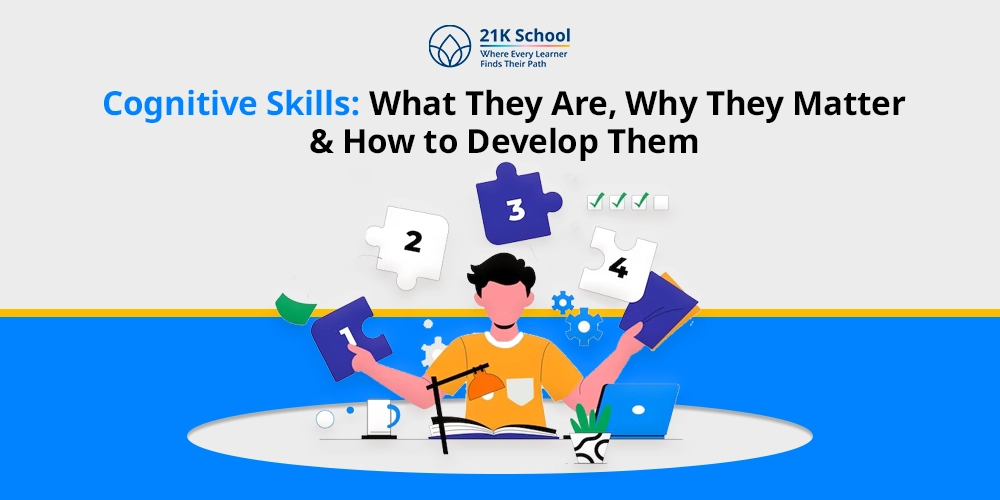
Cognitive Skills: What They Are, Why They Matter & How to Develop Them
 Written byAnshu KumariContent Specialist
Last modified: 25 Oct 2026 15 min read
What would you say is the reason behind your thinking, waking up, doing daily work, and going to sleep?
Well, these tasks might appear simple to us, but the cognitive processes involved behind them are comprehensive.
Cognitive skills can be said to be the mental abilities that enable us to think, memorize, make decisions, visualize, sing, and what not.
In this article, we will read about cognitive skills, how we can improve it, its types, its importance, and everything you would need to know.
What are cognitive skills?
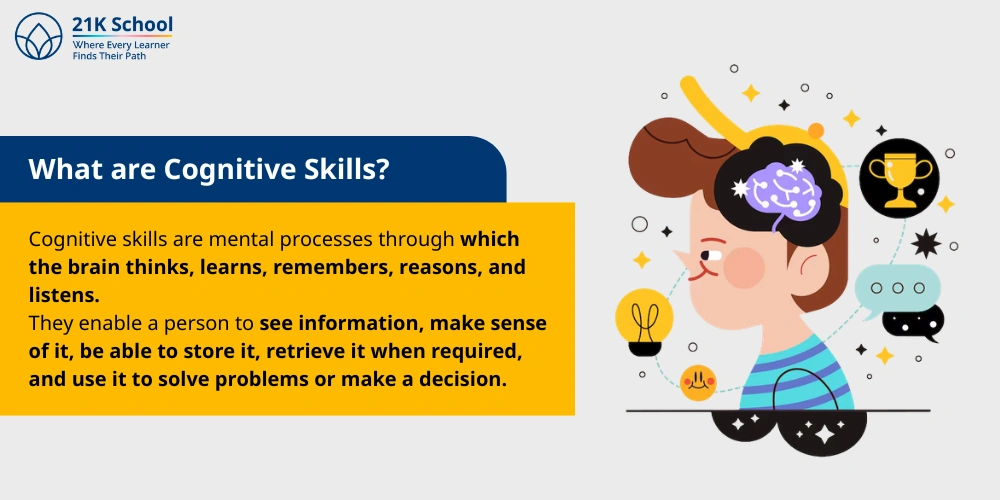
Cognitive skills are mental processes through which the brain thinks, learns, remembers, reasons, and listens.
They enable a person to see information, make sense of it, be able to store it, retrieve it when required, and use it to solve problems or make a decision.
Cognitive skills are different from knowledge of a person, since the former is the determining factor of how a person can learn and apply his/her knowledge efficiently.
Such skills encompass attention, memory, speed of processing, reasoning ability, understanding of language, and executive functioning.
The cognitive skills do not work independently.
As an illustration, the activity of reading comprehension involves the combination of attention, memory, language, and logical reasoning.
The development of cognitive skill is affected by biological (child brain development, genetics, etc.) and environmental (education, nutrition, stimulation, social interaction) factors.
Some of the cognitive skills change as a person ages, but most of them can be enhanced through practice and specific interventions.
How to improve cognitive skills in students?
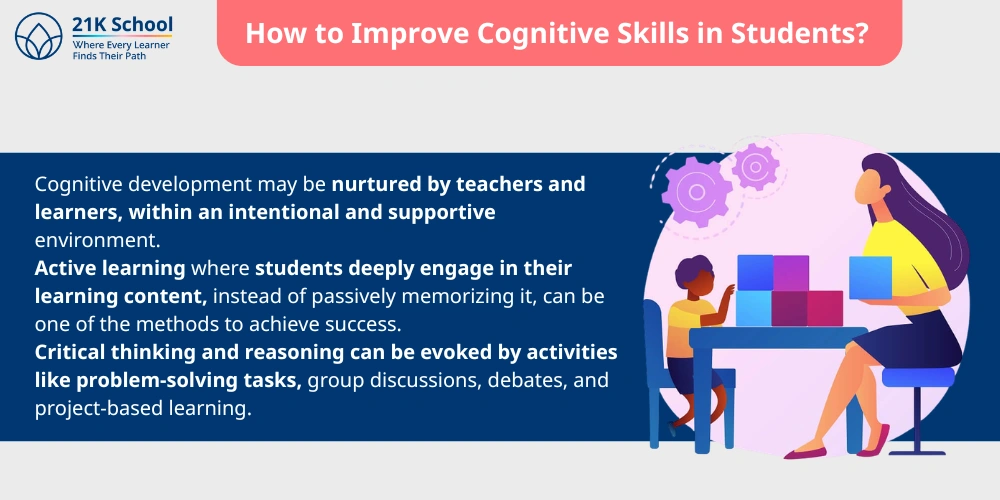
The development of cognitive abilities among students is one of the key objectives of learning.
Good cognitive skills can promote learning abilities and future academic achievement.
Cognitive development may be nurtured by teachers and learners, within an intentional and supportive environment.
Active learning where students deeply engage in their learning content, instead of passively memorizing it, can be one of the methods to achieve success.
Critical thinking and reasoning can be evoked by activities like problem-solving tasks, group discussions, debates, and project-based learning.
The other significant technique is the metacognitive training when students are taught to take a look at the way they think.
The ability to plan, monitor, and assess learning can enhance the executive functions of self-regulation and organization of students.
Repetition, splitting the information into smaller units, visual aids, as well as integrating multisensory methods of teaching can be used to reinforce memory and attention.
To illustrate, the use of both verbal description and diagrams, videos, and practical activities helps to increase information retention.
For example when we are exposed to multiple languages, our vocabulary and understanding of languages boosts up.
This can be done by depending on reading varied texts, storytelling, or participating in public discussions.
Physical and mental aspects like physical exercises, food, nutrition, exam-stress, and others can also affect the cognitive development of children.
Studies have also indicated that exercising more often can enhance blood flow to the brain, which would boost attention and memory.
Similarly, emotional support and a beneficial classroom atmosphere can decrease anxiety and facilitate cognitive development.
8 types of cognitive skills
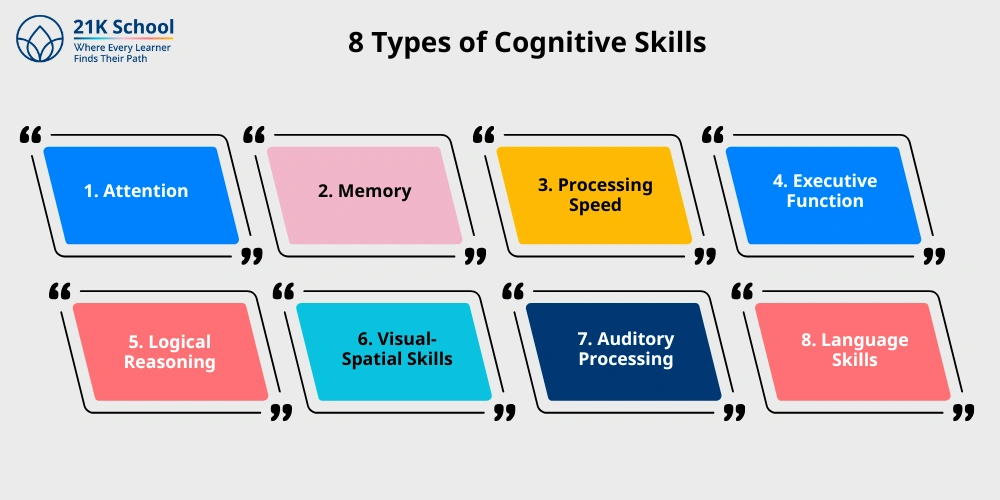
The following list consists of the types of cognitive skills that facilitate our learning and living:
1. Attention
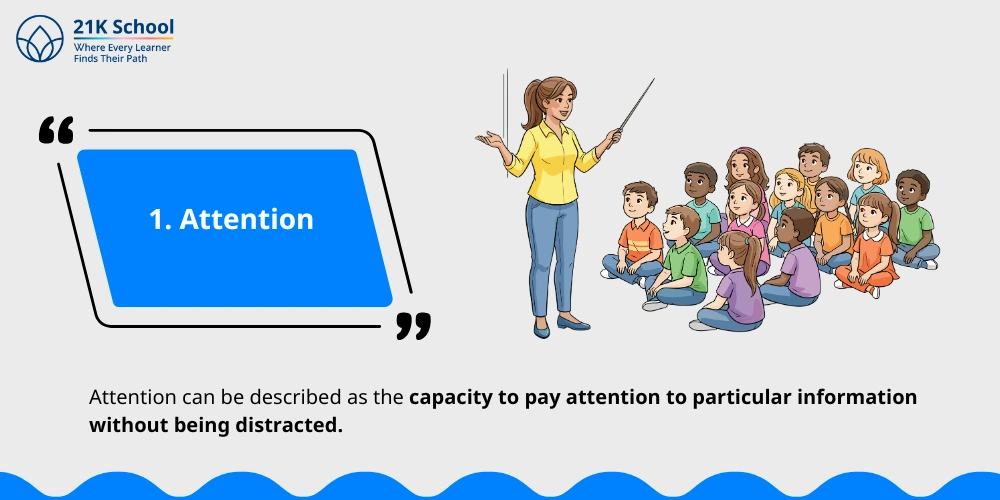
Attention can be described as the capacity to pay attention to particular information without being distracted.
It is necessary as one has to maintain attention throughout the lessons, instructions, as well as tasks.
Attention has 3 subtypes including sustained attention (the ability to remain focused with time), selective attention (the ability to focus on one stimulus amidst several), and divided attention (the ability to deal with more than one activity at a time).
The absence of good attention capabilities might result in problems with academic achievement.
2. Memory
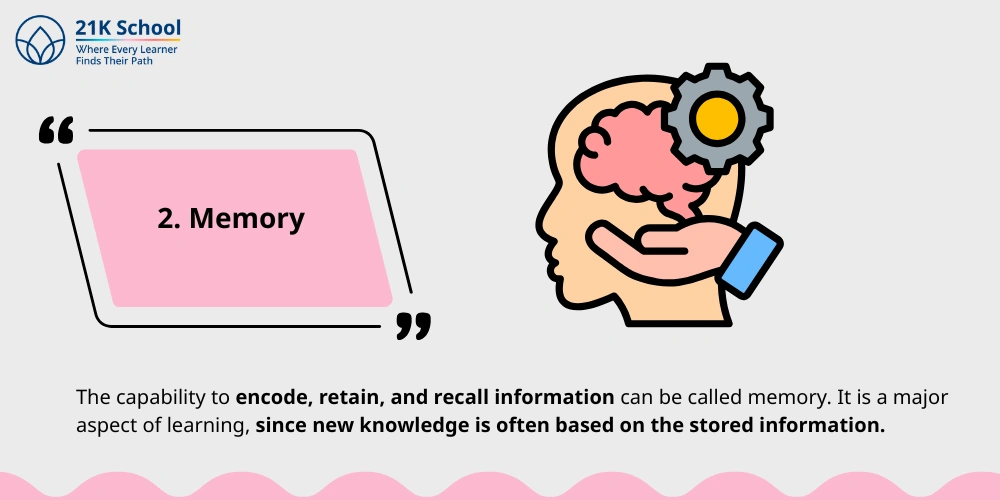
The capability to encode, retain, and recall information can be called memory.
It is a major aspect of learning, since new knowledge is often based on the stored information.
Memory is divided into short term memory, working memory, and long term memory.
Out of these, working memory is significant to problem-solving and understanding since it can enable people to store and manipulate information in their minds.
You can utilize repetition, visualization, mnemonic tools, and significant associations as the techniques to improve memory.
3. Processing speed
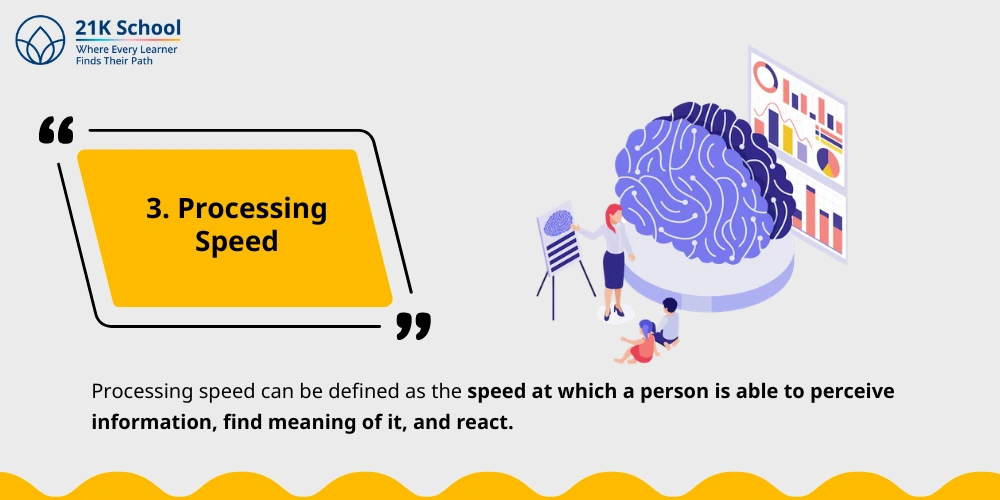
Processing speed can be defined as the speed at which a person is able to perceive information, find meaning of it, and react.
An increased processing speed can enable students to accomplish tasks effectively, while following the instructions that match the classroom requirements.
A low processing speed does not imply low intelligence, although it can influence school achievement when there is a time limit.
In the presence of training, and exposure to positive learning environments, processing speed can be enhanced with time.
4. Executive function
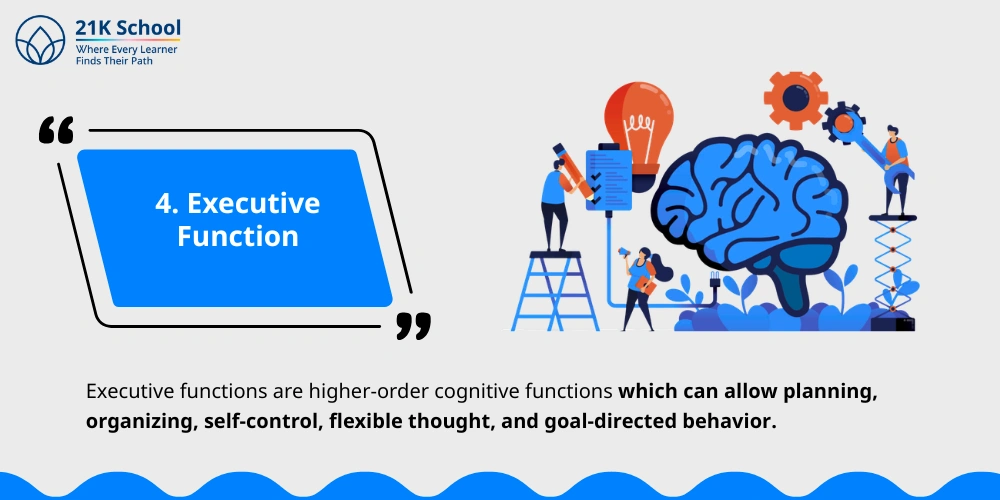
Executive functions are higher-order cognitive functions which can allow planning, organizing, self-control, flexible thought, and goal-directed behavior.
These abilities serve to manage the brain.
Time-management, problem-solving, decision-making, and emotional regulation require executive functioning.
Students having good skills in terms of executive functions are able to prioritize the tasks and resist distraction.
The skills are trainable by following a good routine, goal-setting, and self-reflective practices.
5. Logical reasoning
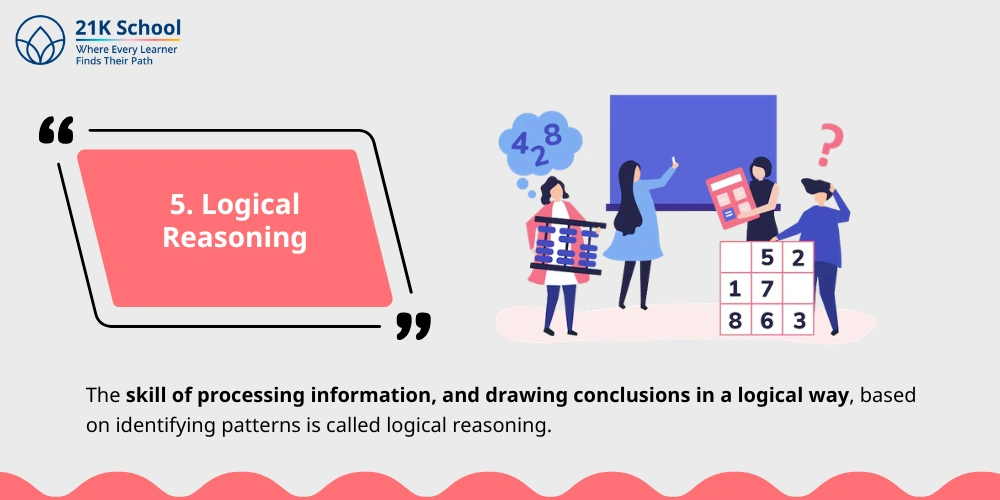
The skill of processing information, and drawing conclusions in a logical way, based on identifying patterns is called logical reasoning.
Mostly, it is utilized in subjects like science and mathematics that require critical thinking.
Playful activities like solving puzzles can boost your logical reasoning and also introduce you to problem-based learning.
Reasoning skills are enhanced when students are encouraged to think.
6. Visual-spatial skills
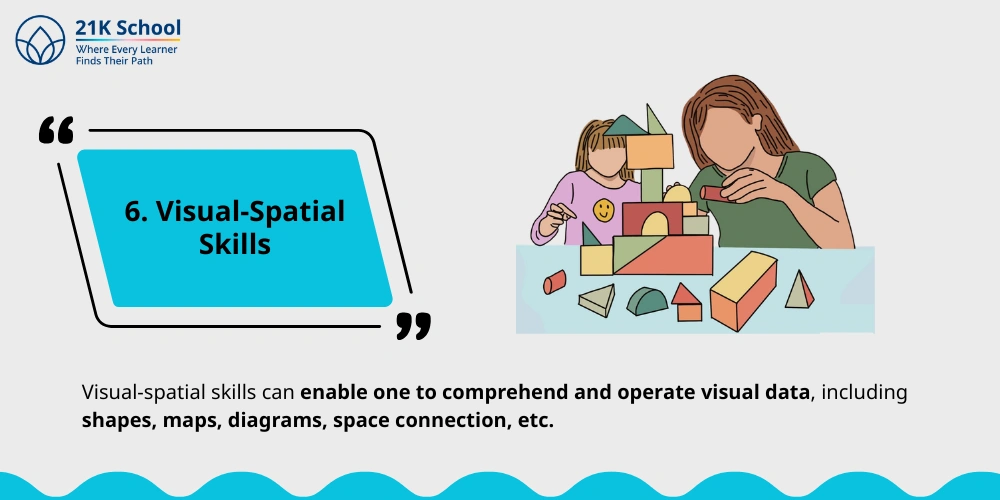
Visual-spatial skills can enable one to comprehend and operate visual data, including shapes, maps, diagrams, space connection, etc.
These are applicable in subjects such as geometry, engineering, art, and architecture.
Drawing, model-building, strategy games, and visual aids, among others, can be the activities that might improve visual-spatial skills.
7. Auditory processing
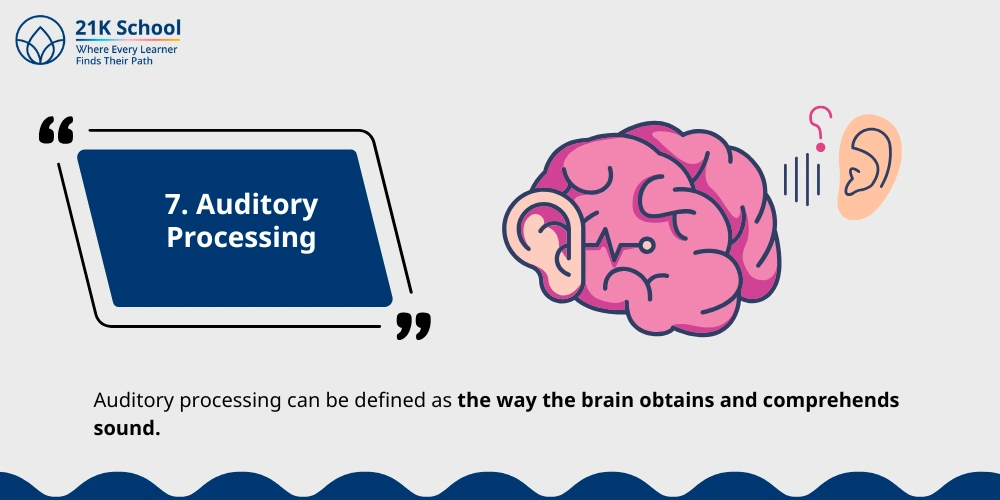
Auditory processing can be defined as the way the brain obtains and comprehends sound.
Listening comprehension, verbal instructions, and language development require strong auditory processing skills.
Auditory processing disorders can make the student have difficulties in a noisy setting.
Auditory processing can be developed through strategies through the use of clear instructions, repetition, visual aids, and learning in quiet learning spaces.
8. Language skills
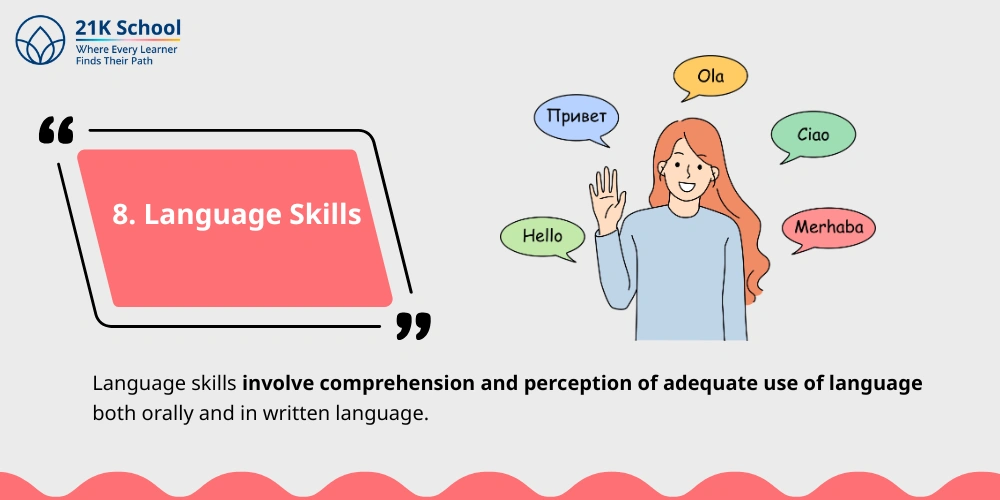
Language skills involve comprehension and perception of adequate use of language both orally and in written language.
These competencies form a prerequisite for all the subjects as they include vocabulary, grammar, understanding, and communication.
Language development and cognitive development can occur through reading, writing, talking, and being exposed to different languages that engages the mind.
4 importance of cognitive skills
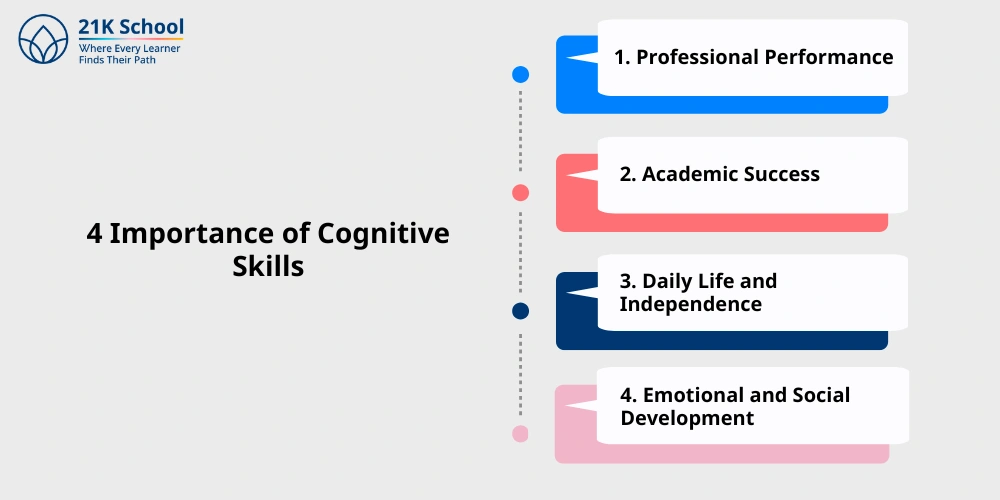
Cognitive skills are really crucial because of the following reasons:
1. Professional performance
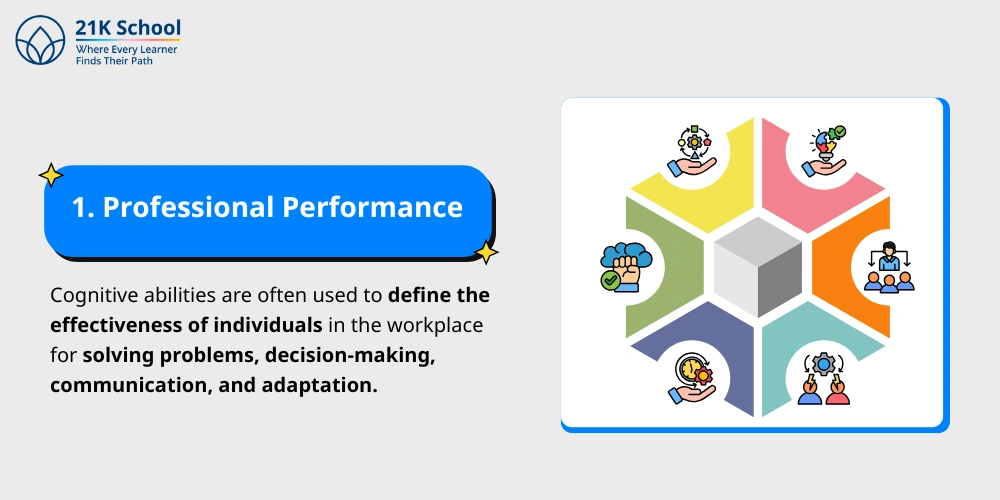
Cognitive abilities are often used to define the effectiveness of individuals in the workplace for solving problems, decision-making, communication, and adaptation.
Employers are interested in those employees who can think critically as well as learn new skills fastly.
Leadership and innovation are also supported by cognitive skills, and thus, are required to seek progress in career in a competitive job market.
2. Academic success
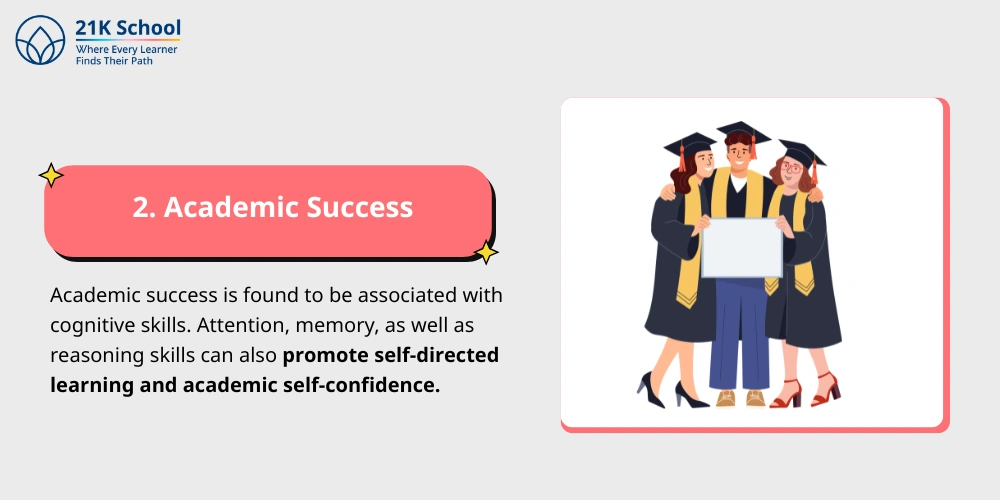
Academic success is found to be associated with cognitive skills.
Attention, memory, as well as reasoning skills can also promote self-directed learning and academic self-confidence.
Good cognitive abilities may allow students to comprehend lessons and memorize them appropriately.
3. Daily life and independence
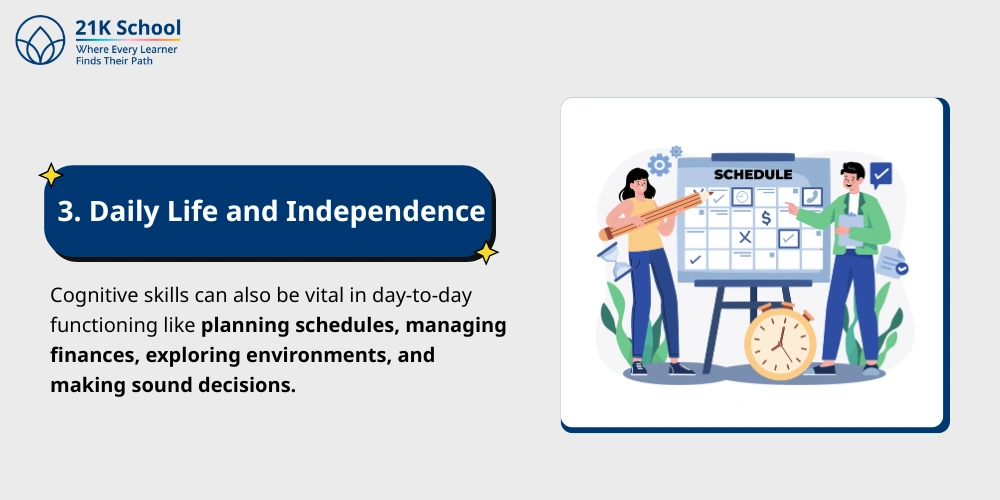
Cognitive skills can also be vital in day-to-day functioning like planning schedules, managing finances, exploring environments, and making sound decisions.
Good intellectual skills can enhance self-reliance.
Cognitive skills can assist people to operate efficiently in their daily life by enabling them to assess their real-life decisions.
4. Emotional and social development
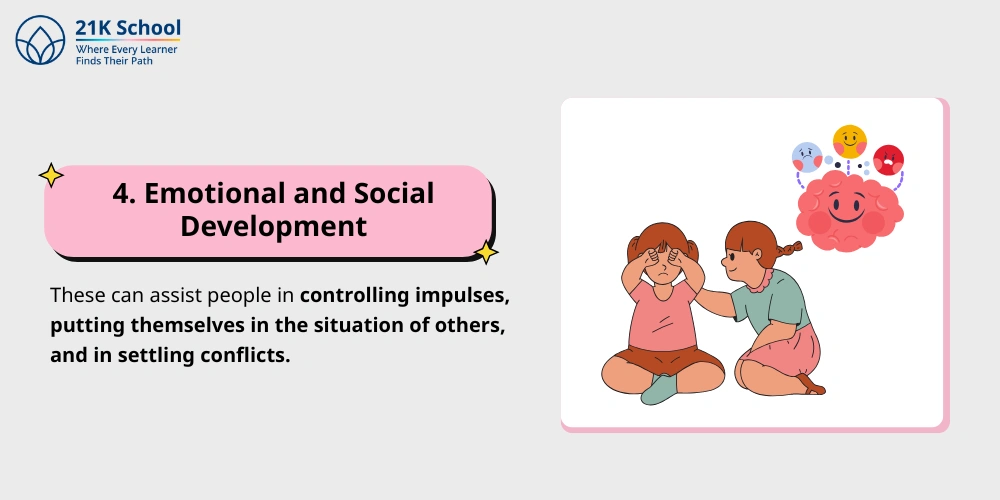
Thought processes have an impact on emotional stability and social skill development.
These can assist people in controlling impulses, putting themselves in the situation of others, and in settling conflicts.
Cognitive skills can assist in forming better relationships, which can lead to overall well-being.
Development of cognitive skills across the lifespan
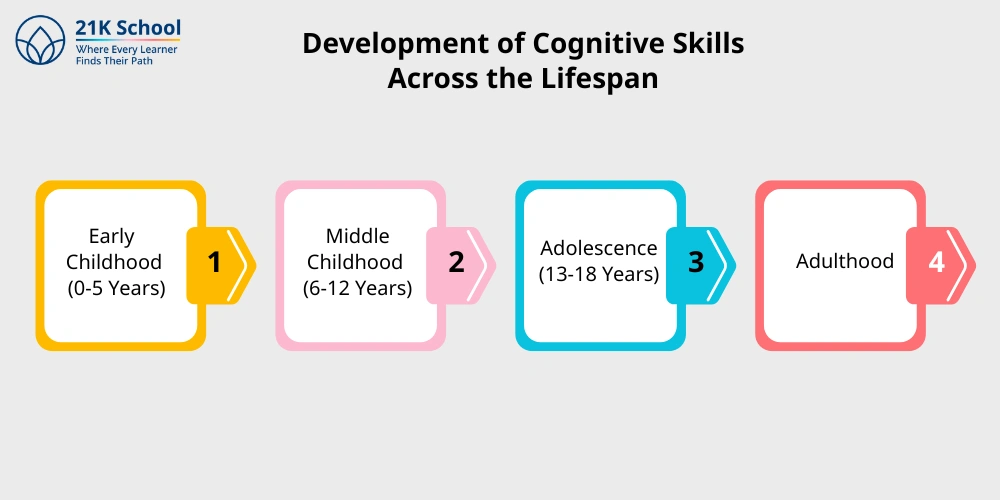
Cognitive skills develop throughout the age of individuals. But, at last it would decrease its efficiency with aging.
1. Early childhood (0-5 years)
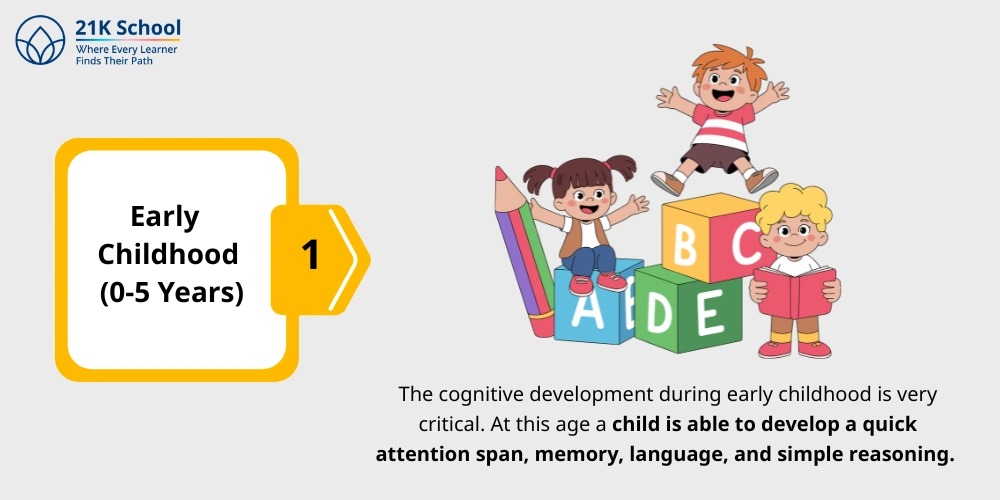
The cognitive development during early childhood is very critical.
At this age a child is able to develop a quick attention span, memory, language, and simple reasoning.
Cognitive development depends greatly on play-based learning for exploration and interacting socially.
Story-telling, singing, puzzles, and imagination playing are all activities that can promote brain growth and precondition further learning.
2. Middle childhood (6-12 years)
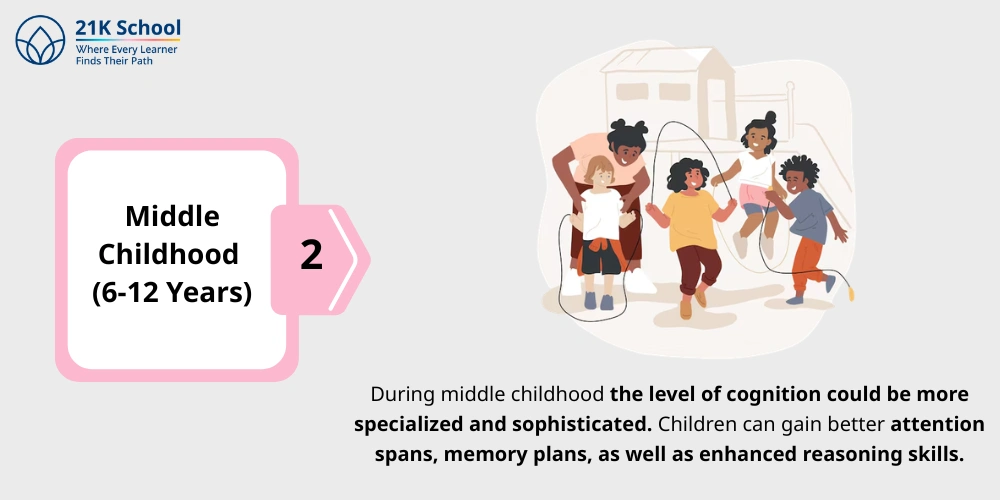
During middle childhood the level of cognition could be more specialized and sophisticated.
Children can gain better attention spans, memory plans, as well as enhanced reasoning skills.
Formal education is an important aspect of this stage, since this is when the children acquire academic skills and self-regulation techniques.
3. Adolescence (13-18 years)
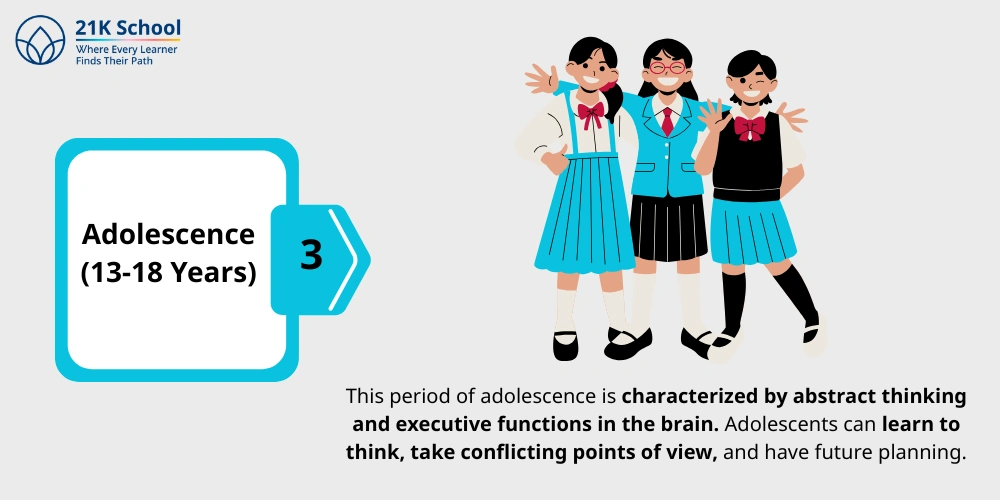
This period of adolescence is characterized by abstract thinking and executive functions in the brain.
Adolescents can learn to think, take conflicting points of view, and have future planning.
But, cognitive performance can be affected by emotions and social aspects.
Healthy cognitive development involves guiding, mentoring, and allowing independent decisions at this stage.
4. Adulthood
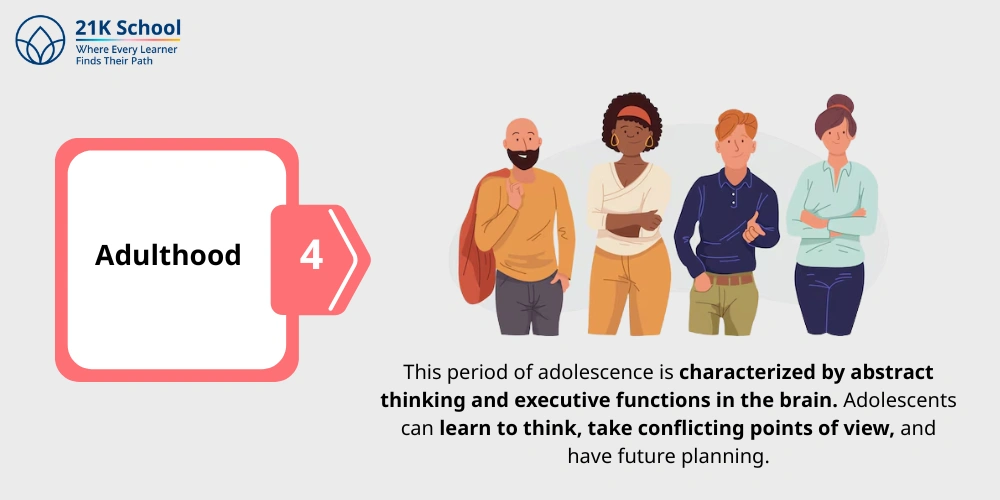
Cognitive skills are under work even in adulthood.
Lifelong learning from intellectual works, social interaction, and healthy lifestyles can preserve cognitive functioning or even delay age-related cognitive decay.
Cognitive and non-cognitive skills
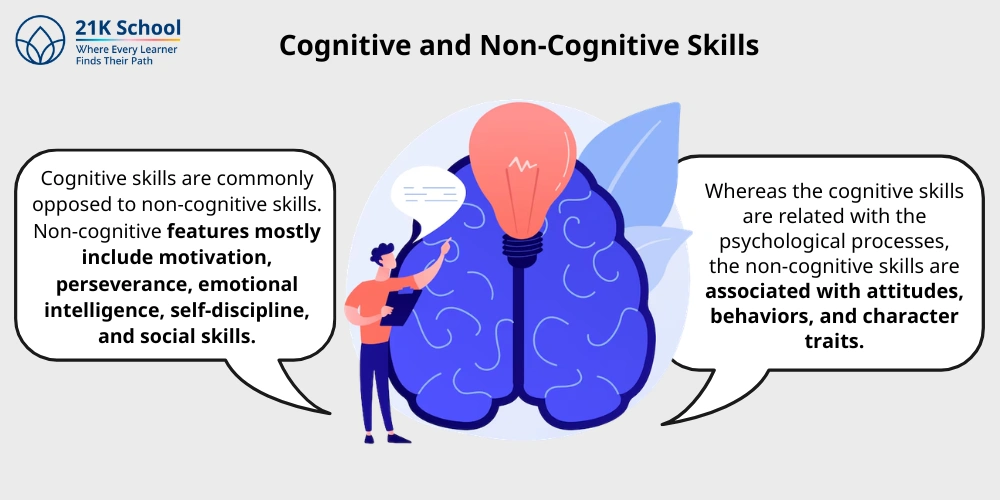
Cognitive skills are commonly opposed to non-cognitive skills. Non-cognitive features mostly include motivation, perseverance, emotional intelligence, self-discipline, and social skills.
Whereas the cognitive skills are related with the psychological processes, the non-cognitive skills are associated with attitudes, behaviors, and character traits.
The two kinds of skills are crucial in achieving success.
Cognitive skills can help an individual to learn and think. But, non-cognitive skills can determine the rate of consistency and effectiveness of an individual while applying cognitive skills.
One of your students can be a bright student with good reasoning skills but not show good results due to lack of motivation and self control.
The world of modern education is gradually accepting the significance of inculcating cognitive and non-cognitive skills.
A balanced approach produces well-rounded persons, who are intelligent, resilient, adaptive, and socially competent.
Activities to develop cognitive skills
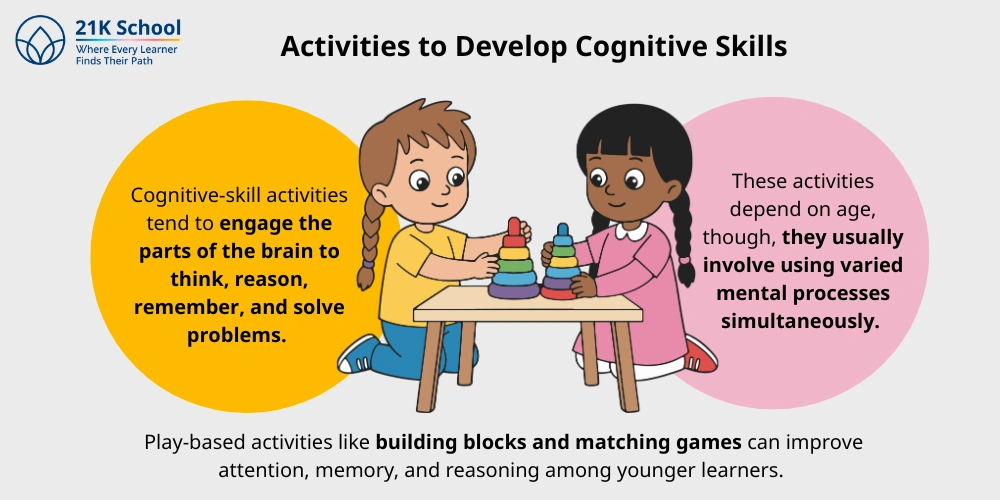
Cognitive-skill activities tend to engage the parts of the brain to think, reason, remember, and solve problems.
These activities depend on age, though, they usually involve using varied mental processes simultaneously.
Play-based activities like building blocks and matching games can improve attention, memory, and reasoning among younger learners.
Debates, case studies, coding, brain teasers, and reflective journaling are activities that can help the executive functions and logic of older students.
Cognitive development can also be possible with a proper use of digital technology in education.
Interactive learning platforms, simulations, as well as educational apps can support student-engagement.
Balance is, however, necessary, as too much screen time for kids may have some negative impact on attention and emotional status.
6 common factors affecting cognitive skills
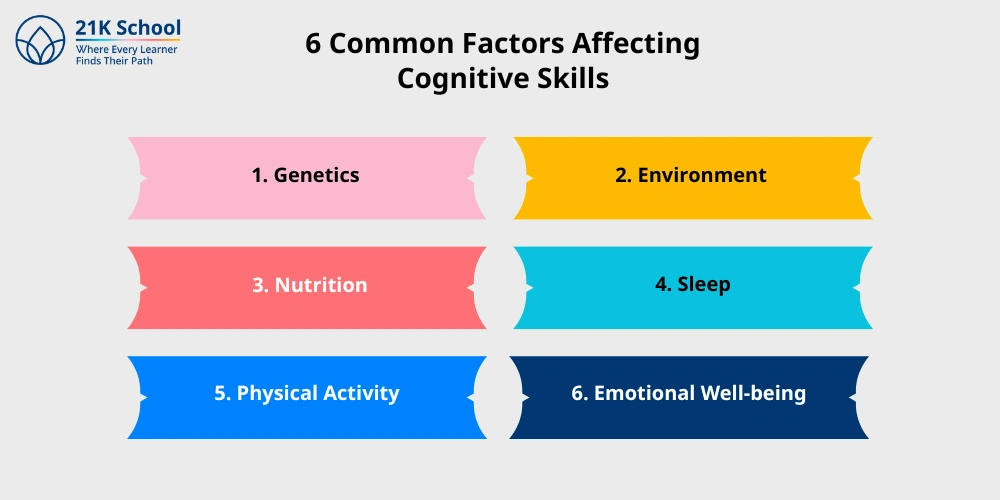
Cognitive factors are built with age, and therefore, can be the outcome of many other factors present in our surroundings and within us. These include:
1. Genetics
Genetics is a very important factor in cognitive development.
Some of the skills including the memory capacity, processing speed, and reasoning potential can be inherited.
Still, to your surprise, learning experiences and environmental stimulation may develop or reduce genetic potential to a large extent.
2. Environment
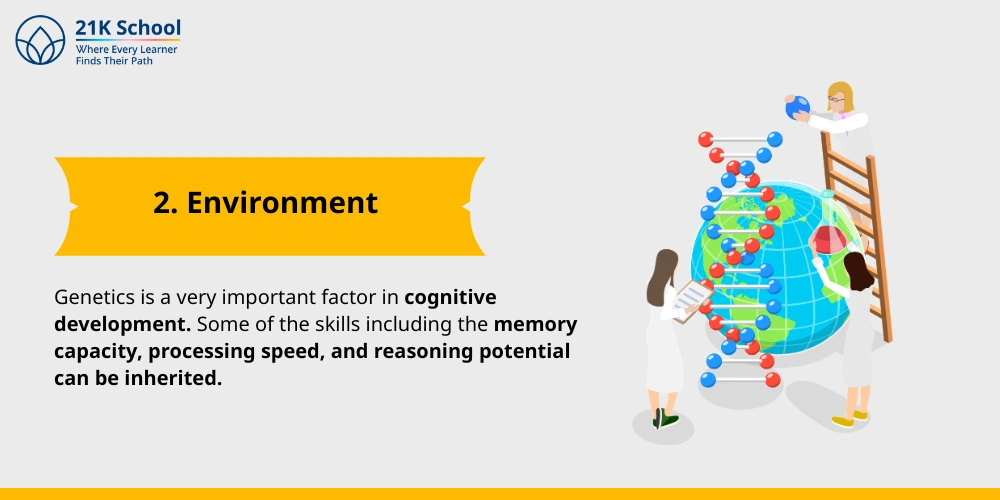
The surroundings where an individual develops can be an influential factor behind cognitive skills.
Cognitive growth is achieved with the help of a stimulating environment, where language exposure, educational toys, supportive relationships, and good education are involved.
On the other hand, neglectful, poor, and stressful settings may impede cognitive learning.
3. Nutrition
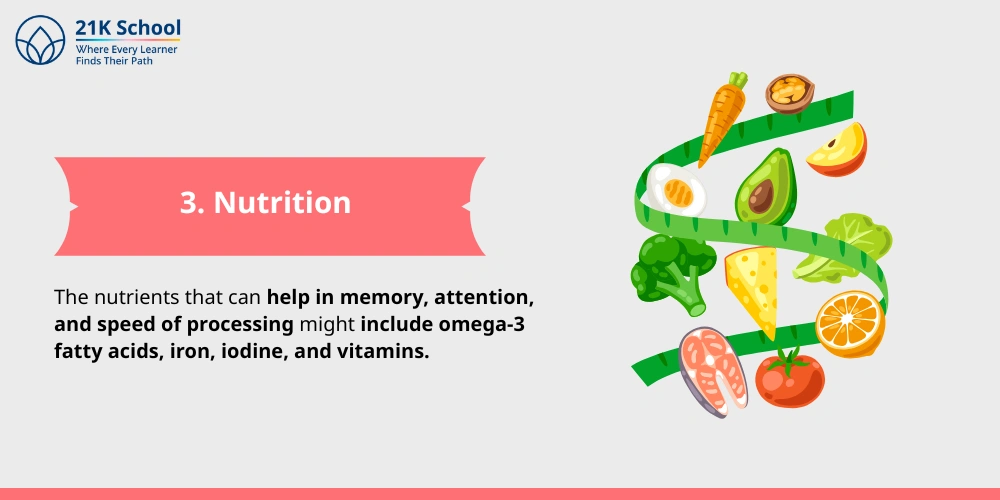
Proper nutrition is always necessary for a properly functioning mind and its optimum development.
The nutrients that can help in memory, attention, and speed of processing might include omega-3 fatty acids, iron, iodine, and vitamins.
Inadequate nutrition in the early stage of a child may result in long-term deficits in cognitive functions.
4. Sleep
For storing memories, attention, and emotional control, sleep is essential.
New information is processed and stored in the brain when it is in a state of sleep.
The consequence of long-term sleep deprivation can result in loss of concentration, and efficient decision-making at all ages.
Before moving ahead, find how many hours is enough for a student.
5. Physical activity
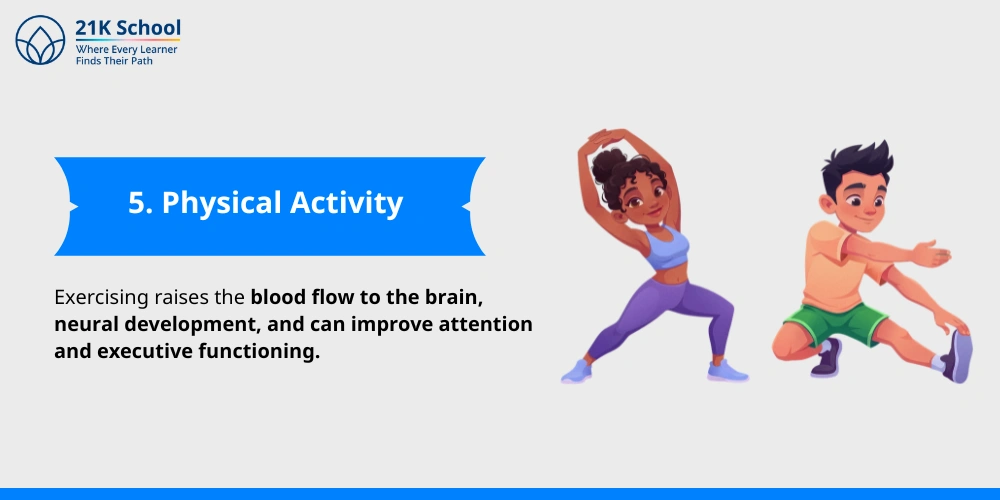
Exercising raises the blood flow to the brain, neural development, and can improve attention and executive functioning.
The effect of exercise on memory, stress, and the general cognitive well-being is mostly seen as positive.
6. Emotional well-being
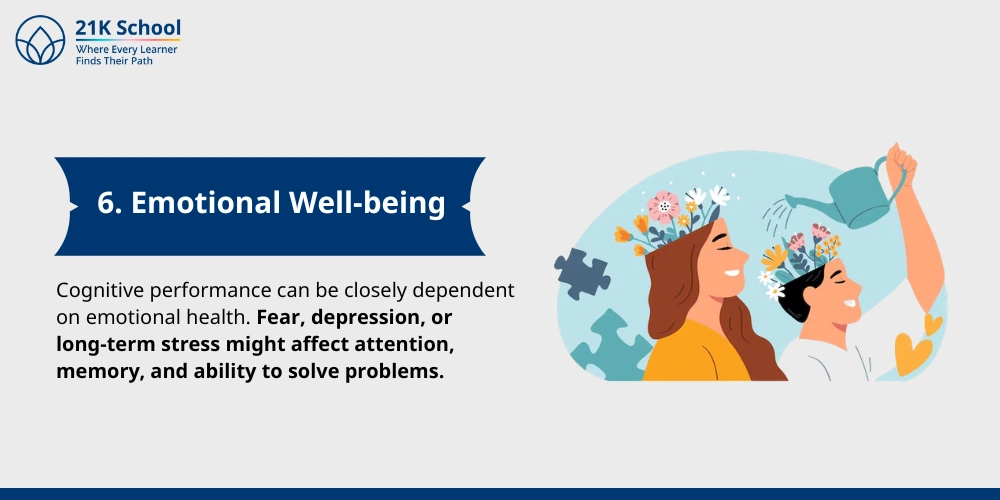
Cognitive performance can be closely dependent on emotional health.
Fear, depression, or long-term stress might affect attention, memory, and ability to solve problems.
When there is emotional security, positive relationships, and good self-esteem, it might be the best for cognitive functioning.
3 impactful strategies to improve cognitive skills-with age
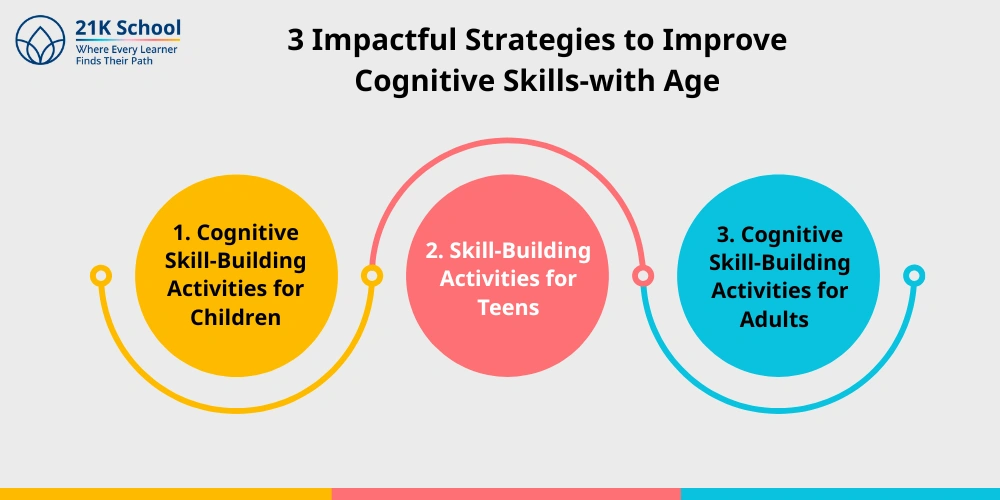
Cognitive skills might be improved in a fun way with certain activities with the age of children.
1. Cognitive skill-building activities for children
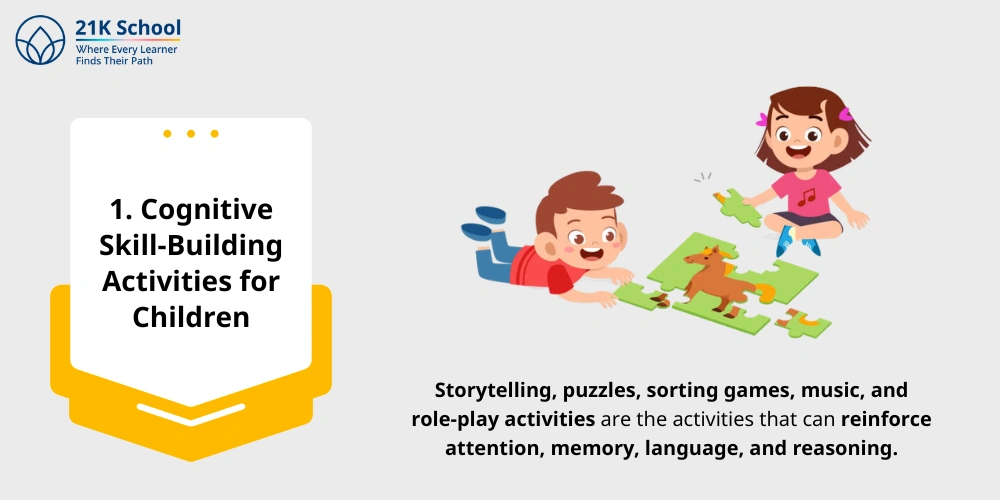
Play-based exploration and guided learning can be good ways of developing cognitive skills in children.
Storytelling, puzzles, sorting games, music, and role-play activities are the activities that can reinforce attention, memory, language, and reasoning.
Listening to a story, asking open-ended questions, and evoking curiosity could aid children to develop thinking and understanding.
Following a healthy routine can also be beneficial for executive functions because it teaches structure and self-control to children.
2. Skill-building activities for teens
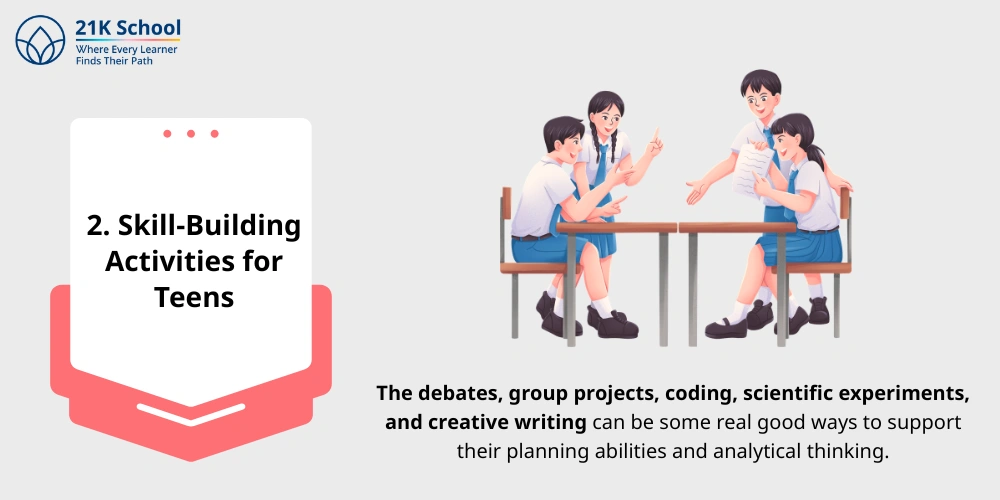
In teenagers, cognitive development is concerned with higher-order thinking, executive functions, and abstract reasoning.
The debates, group projects, coding, scientific experiments, and creative writing can be some real good ways to support their planning abilities and analytical thinking.
It can also be essential to engage in physical activity and socialization at this stage.
3. Cognitive skill-building activities for adults
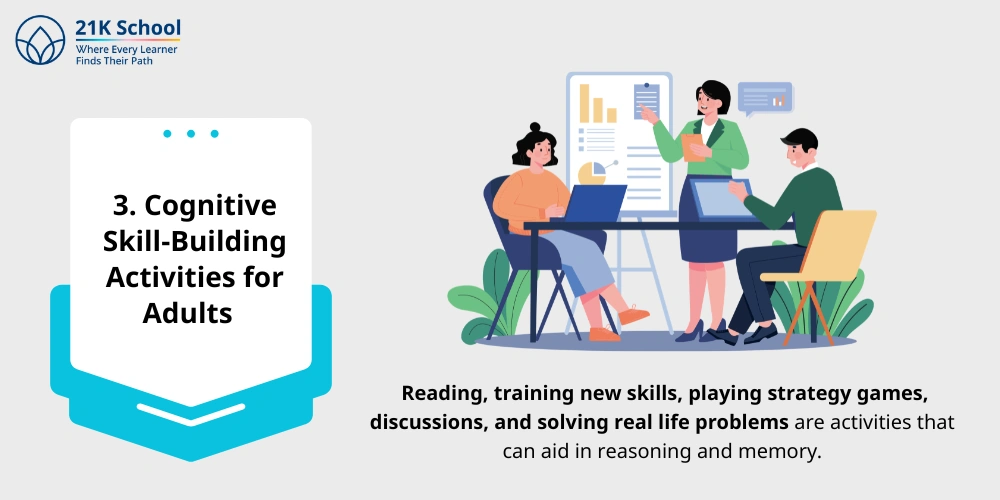
Cognitive skills can be retained and enhanced even in adult life through lifelong learning.
Reading, training new skills, playing strategy games, discussions, and solving real life problems are activities that can aid in reasoning and memory.
Cognitive decline can be prevented with mindfulness practices, physical exercise, and social interaction.
In the case of older adults, neuromotor challenges, including learning a new language or instrument can be helpful.
Role of education in cognitive skills development and its measurement
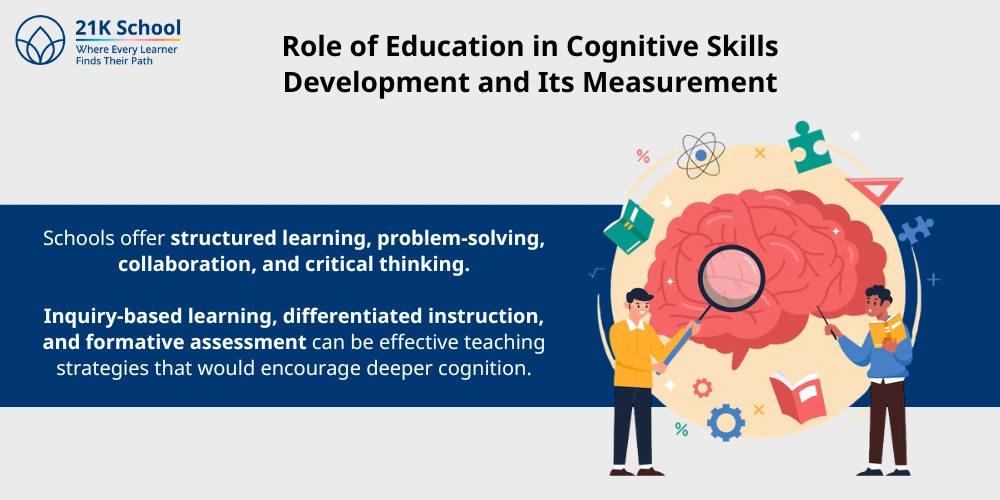
Learning can be an important aspect when it comes to building cognitive skills.
Schools offer structured learning, problem-solving, collaboration, and critical thinking.
Inquiry-based learning, differentiated instruction, and formative assessment can be effective teaching strategies that would encourage deeper cognition.
Teachers can promote metacognition by engaging students in reflecting, self-assessing, and setting of goals.
Reasoning and transfer of learning is enhanced with the help of curriculum design incorporating real-life applications.
The measurements of cognitive skills can be done through the standardized tests, classroom tests, cognitive ability tests, and observation.
Such measures can be used to find the strengths, weaknesses of learning, and changes in interventions for holistic evaluation of learners.
Cognitive skills and special learning needs
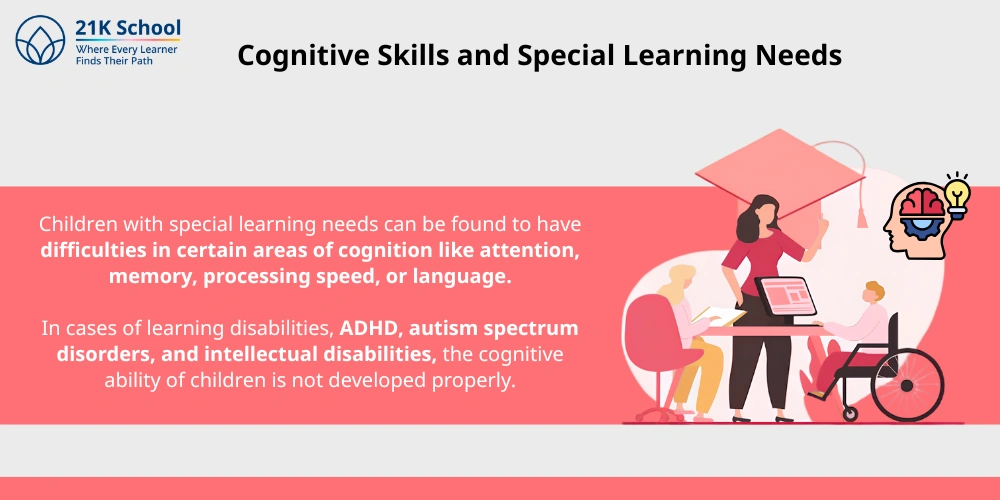
Children with special learning needs can be found to have difficulties in certain areas of cognition like attention, memory, processing speed, or language.
In cases of learning disabilities, ADHD, autism spectrum disorders, and intellectual disabilities, the cognitive ability of children is not developed properly.
Therefore, it would be better if these inabilities are identified at the earliest stage and given professional attention.
Assistive technology, multisensory instruction, explicit teaching, and other accommodations are among strategies that can contribute to the educational access of learners.
Notably, students with special needs usually have their own set of strengths which can be developed under the support of inclusive learning conditions.
Conclusion
Cognitive skills are a part of our daily reasoning and understanding of the world.
Therefore, enhancing the cognitive skills from an early age becomes necessary for the parents of children.
They need to ensure that their kid is getting enough nutrients during prenatal growth and postnatal period as well.
Besides, as the child grows up, he can be trained to acquire better cognitive skills through play-based activities that involve memory, attention, imagination, and problem-solving.
Though it might be a bit tough for special needs children, still early care and intervention can assist them to be confident adults.
Frequently asked questions
6 questions
How do cognitive skills develop?
Cognitive skills develop depending on the brain development, early care, surroundings, and exposure to learning at the right age.
Can cognitive skills be improved?
Yes, cognitive skills can be improved with practice, exposure, apt environment, motivation, and the right nutrients at the right age.
What activities help improve cognitive skills in children?
Activities like puzzles, telling stories, reading, memory games, building blocks, music and imaginative play can enhance cognitive skills of children.
How can parents support cognitive skill development at home?
Parents can support cognitive skill development at home by providing healthy food, following a good routine, giving a positive environment, reinforcing curiosity, reading, and sleep.
What are cognitive and non-cognitive skills?
Cognitive skills are related to functions of the brain, while non-cognitive skills are about the attitude and behaviour of learners.
What are poor cognitive skills?
Poor cognitive skills would include inefficiency in memory, attention, processing, or logic formation, thus impacting daily lives decisions and functioning.
About the author
Anshu Kumari
Content Specialist
Anshu Kumari is an Education Content Specialist at 21K School- a fully accredited institute- Cambridge International (IA702) and Pearson Edexcel (94883). She focuses on the in-depth research and creation of the well-drafted guides on NIOS admission, Indian Education Policy, and competitive exam preparation. With around 2 years of experience at 21K School, her psychology background informs her approach to the education content and hence focuses on creating guides to address the real anxieties of the guardians. She writes well-researched articles on competitive exam timelines, stream selection, and board choices by referring to the official resources. All Anshu’s content pieces are fact-checked against the board and primary government official resources and is dedicatedly reviewed by the school’s academic team.
Every 21K School guide is written by our education team and reviewed by a subject facilitator before publishing.
Exploring a CBSE-pathway online school?
Talk to an advisor about 2026–27 admissions — no obligation.
Talk to an advisorComments
No comments yet — be the first to share your thoughts or ask a question.