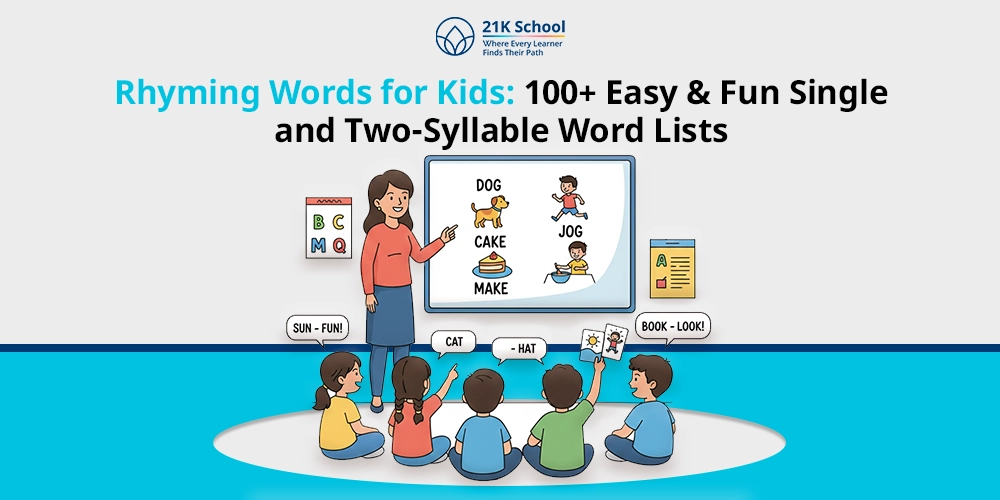
Rhyming Words for Kids: 100+ Easy & Fun Single and Two-Syllable Word Lists
 Written byRahul PalContent Specialist
Last modified: Aug 15, 2026 10 min read
Is it possible to use rhymed words in learning, reading and spelling having fun?
Speaking of rhyme, children can learn language and it is great and entertaining. Sound pairs (cat and hat or ball and tall) are used to make the children understand the sound patterns.
Children will have an opportunity to develop their listening skills, speaking, and reading skills and abilities with the help of playing with songs, reading, and poems as well as performing some playful acts – much like the structured fun found in preschool nursery rhymes. Rhyming is also the foundation of early literacy and communication skills , as well as make learning interesting.
What are rhyming words for kids?
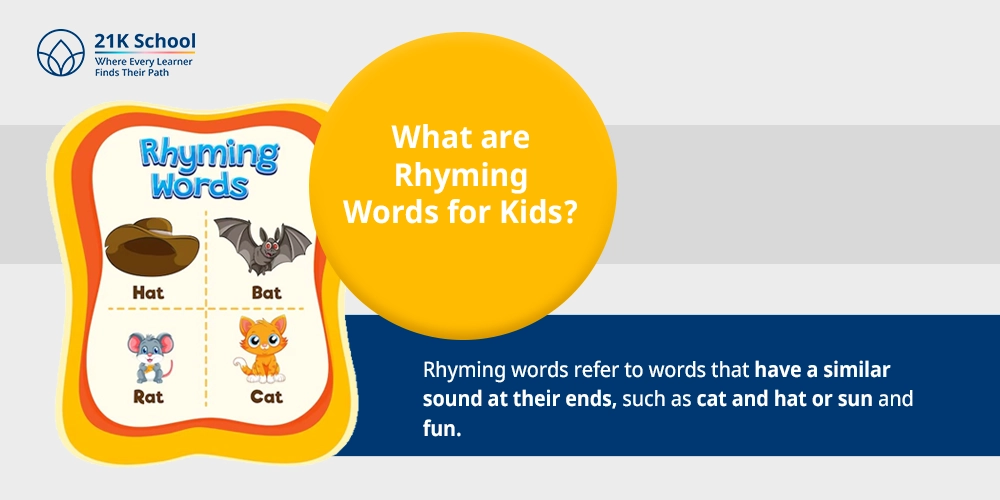
Rhyming words refer to words that have a similar sound at their ends, such as cat and hat or sun and fun. To children, learning rhyming words is a fun in learning method of enhancing language, reading, speaking as well and listening.
It aids kids in the realisation of sound patterns, the enlargement of vocabulary, and phonemic awareness. Kids can have fun learning using rhymes, songs, and games, which will provide a firm base of reading and communication skills.
Top 50 single-syllable rhyming words
Single-syllable rhyming words refer to words with one syllable which have words with the same ending sound. The words are simple to pronounce and memorise, and, therefore, they are used in early language education .
Single-syllable rhyme practices can also assist the children to identify sound patterns, enhance pronunciation and develop a solid basis for reading and spelling skills.
| Words | Rhyms |
|---|---|
| Cat | Rat, Bat, Mat, Hat |
| Dog | Jog, Hog, Log, Fog |
| Day | Hay, May, Say, Pay |
| Cake | Make, Wake, Lake, Take |
| Bell | Fell, Sell, Tell, Well |
| Light | Right, Bright, Fight, Night |
| Bug | Jug, Rug, Hug, Dug |
| Ball | Hall, Fall, Tall, Call |
| King | Ring, Sing, Bring, Wing |
| Book | Look, Cook, Took, Hook |
| Sun | Run, Fun, Bun, Gun |
| Tree | Bee, See, Knee, Free |
| Road | Toad, Load, Code, Mode |
| Rain | Pain, Gain, Train, Chain |
| Nose | Rose, Hose, Those, Close |
| Bear | Hair, Chair, Care, Share |
| Boat | Coat, Goat, Note, Dote |
| Car | Star, Far, Jar, Bar |
| Fish | Dish, Wish, Swish, Squish |
| Sheep | Deep, Keep, Sleep, Creep |
| Moon | Soon, Spoon, Noon, Tune |
| Hand | Sand, Band, Land, Stand |
| Feet | Meet, Street, Sweet, Beat |
| Box | Fox, Socks, Rocks, Locks |
| Smile | Mile, Pile, While, Tile |
| Fly | Sky, Try, Cry, Dry |
| Pen | Ten, Hen, Den, When |
| Red | Bed, Fed, Led, Shed |
| Chip | Ship, Trip, Slip, Flip |
| Cut | But, Nut, Shut, Hut |
| Brown | Town, Down, Crown, Frown |
| Cold | Gold, Hold, Bold, Fold |
| Meat | Heat, Seat, Neat, Treat |
| Sail | Tail, Mail, Nail, Pail |
| Dice | Rice, Mice, Nice, Twice |
| Back | Pack, Sack, Track, Black |
| Pink | Drink, Think, Sink, Blink |
| Pot | Hot, Dot, Lot, Spot |
| Jet | Pet, Wet, Get, Set |
| Lamp | Camp, Stamp, Damp, Clamp |
| Thing | Spring, String, Sting, Cling |
| Snow | Bow, Grow, Flow, Glow |
| Game | Name, Same, Fame, Blame |
| Luck | Duck, Truck, Stuck, Pluck |
| Blow | Show, Slow, Throw, Know |
| Best | Nest, Test, Rest, West |
| Jump | Bump, Pump, Dump, Lump |
| Stone | Bone, Phone, Cone, Zone |
| Bride | Ride, Hide, Side, Wide |
| Grape | Tape, Shape, Cape, Drape |
Top 50 two-syllable rhyming words
Words that contain two syllables and have the same end sound are two-syllable rhyming words. Knowing these rhymes can make kids understand that there is a rhythm and patterns in the words, which enhance their pronunciation, makes reading faster, and listening abilities.
Compared to single-syllable rhymes, two-syllable rhymes are a little bit more difficult, but they are nonetheless a good method for children to develop vocabulary and language skills .
| Words | Rhymes |
| Better | Letter, Sweater, Wetter, Setter |
| Happy | Snappy, Scrappy, Nappy, Flappy |
| Yellow | Mellow, Fellow, Bellow, Hello |
| Garden | Harden, Pardon, Warden, Lardon |
| Magic | Tragic, Logic, Topic, Comic |
| Money | Honey, Funny, Sunny, Bunny |
| Teacher | Preacher, Feature, Creature, Bleacher |
| Paper | Caper, Taper, Draper, Vapor |
| Winter | Splinter, Printer, Hinter, Sprinter |
| Nation | Station, Ration, Patient, Patience |
| Monster | Sponsor, Lobster, Roster, Foster |
| Running | Cunning, Stunning, Gunning, Sunning |
| Simple | Dimple, Pimple, Temple, Tremble |
| Balloon | Cartoon, Harpoon, Monsoon, Platoon |
| Action | Reaction, Traction, Faction, Attraction |
| Baby | Maybe, Daily, Shady, Lady |
| Perfect | Affect, Deject, Reflect, Refect |
| Mountain | Fountain, Certain, Curtain, Captain |
| Answer | Dancer, Cancer, Glancer, Prancer |
| Circus | Surface, Purpose, Nervous, Service |
| Talking | Walking, Chalking, Stalking, Baulking |
| Silent | Violent, Client, Giant, Compliant |
| Open | Broken, Token, Spoken, Woken |
| Season | Reason, Treason, Freezing, Pleasing |
| Finger | Linger, Singer, Ringer, Swinger |
| Always | Hallways, Railways, Highways, Pathways |
| Morning | Warning, Dawning, Yawning, Spawning |
| Between | Machine, Marine, Routine, Canteen |
| Never | Clever, Lever, Sever, Haver |
| Children | Building, Willing, Filling, Killing |
| Inside | Besides, Decide, Provide, Divide |
| Tiger | Fighter, Lighter, Tighter, Brighter |
| Father | Rather, Gather, Lather, Bother |
| Sister | Mister, Blister, Twister, Glister |
| Later | Greater, Waiter, Crater, Hater |
| Finish | Spinach, Diminish, Replenish, Blemish |
| Problem | Bottom, Autumn, Blossom, Possum |
| Window | Rainbow, Elbow, Shadow, Meadow |
| Question | Mention, Tension, Pension, Dimension |
| Little | Middle, Fiddle, Riddle, Brittle |
| Fancy | Nancy, Chancy, Prancy, Glancy |
| Crayon | Bacon, Taken, Waken, Shaken |
| Summer | Drummer, Hummer, Plumber, Bummer |
| Famous | Shameless, Aimless, Blameless, Nameless |
| Harbor | Barber, Farmer, Armour, Arbour |
| Candy | Handy, Sandy, Dandy, Brandy |
| Follow | Hollow, Swallow, Wallow, Apollo |
| Thunder | Wonder, Blunder, Plunder |
| Power | Tower, Flower, Shower, Hour |
| Berry | Cherry, Merry, Ferry, Very |
Importance of rhyming words for kids
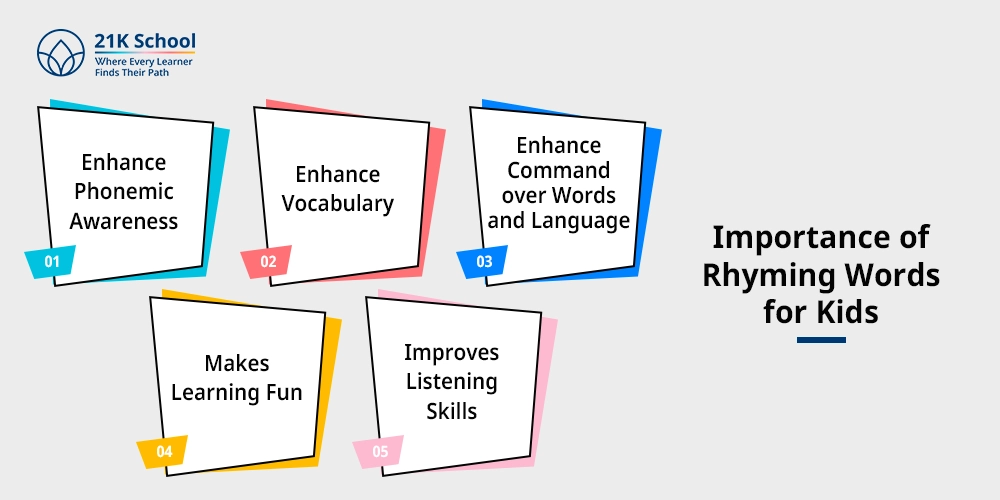
Early childhood learning depends significantly on the rhyming of words. They assist children in identifying sound patterns, enhance language and love words.
Songs, rhymes and playful activities enable the kids to learn more easily without having to lay a strong background to reading, listening and speaking skills.
1. Enhance phonemic awareness
Rhyming of words makes the children identify and learn similar sounds in words. This enhances phonemic awareness, which is the capacity to listen, recognise and manage oneself with sounds.
Good phonemic awareness promotes early reading and spelling and enables children to decode words with less difficulty - a key skill developed further through structured reading activities.
2. Enhance vocabulary
The idea of learning rhyming words presents new words to the children in an easy and entertaining manner.
Children can acquire the rhyming partners of a word they are taught with the same ease. This increases vocabulary, enhances word recognition and makes children comprehend the meaning of words and their application in various contexts.
3. Enhance command over words and language
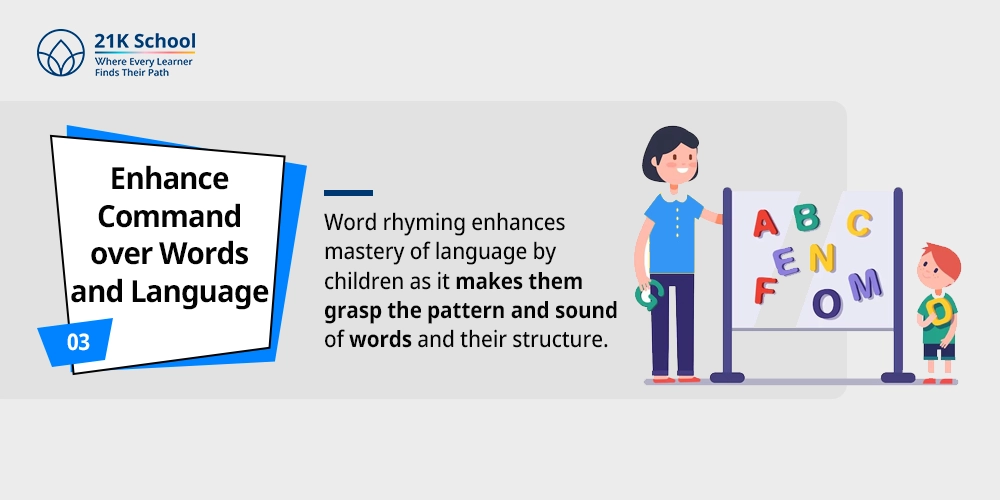
Word rhyming enhances mastery of language by children as it makes them grasp the pattern and sound of words and their structure.
Frequent rhyming exercise allows pronunciation, fluency and sentence composition to be improved – skills that also connect with teaching children to write English alphabets correctly. It also enhances childs confidence in speech, reading and clarity of idea expression.
4. Makes learning fun
Learning through rhyming words is enjoyable because it comes in the form of songs, poems, games, and playful activities. Playful learning helps the children to remain active, be less stressed on learning, and stimulates them children to participate.
Children are more encouraged to use language skills more often when learning occurs to be fun for them.
5. Improves listening skills
Rhyming exercises prevent children from having poor listening skills as they make them pay attention to sounds and endings of words.
Listening can also make kids recognise rhymes, instructions, and comprehend spoken language, and this can aid communication and classroom learning .
Conclusion
The word rhyming is a crucial element of the first language development of a child. They make the process of learning fun, besides enhancing the skills of listening, speaking, reading, and spelling.
Children can identify the pattern of sounds, vocabulary, and phonemic awareness by practising single-syllable and two-syllable rhymes.
In general, the rhyming of words provides a very good base of literacy and even lifelong education and interest in learning and language.
Frequently asked questions
7 questions
Why are rhyming words important for kids?
Rhyming words make children identify similar sounds in words. This enhances the ability to listen, vocabulary, pronunciation and early reading. Learning is also entertaining to young children when they use rhymes.
How do rhyming words help children learn to read?
Rhyming words make children learn about the sounds of words. As children begin to perceive the similarity in the way words end, they perceive that they can more readily predict words, decode new words and have good phonemic awareness, a prerequisite to reading.
What are some easy rhyming words for beginners?
Simple rhyming words are used by the novices, and they are: cat-hat, bat-rat, sun-fun, dog-log and pen-hen. The words are simple and easy to remember and pronounce.
At what age should kids start learning rhyming words?
Children are able to begin to learn to rhyme words at the age of 3-4 years. Children at this level love songs, poems, and word play and therefore they are able to grasp the rhyming sounds naturally.
How can parents teach rhyming words at home?
Rhyming words can be taught by the parents in the form of songs, nursery rhymes, storybooks, and word games. Repetition of rhymes, clapping to rhythms and requesting the kids to identify similar sounds are very interesting and effective in learning.
What are the 10 rhyming words for Class 1?
Here are 10 simple rhyming word pairs for Class 1: cat-hat, bat-rat, sun-fun, pen-hen, dog-log, pig-wig, fan-man, box-fox, cap-map, bed-red
What is a simple 4-line rhyme?
A simple 4-line rhyme is a short poem with four lines where some words rhyme. Example: The cat sat on a mat, wearing a funny hat. It looked around with glee and smiled happily at me.
About the author
Rahul Pal
Content Specialist
Rahul Pal is an Education Content Specialist at 21K School- India’s fully accredited online school recognised by the Cambridge International (IA702) and Pearson Edexcel (94883). His graduation from Journalism and Mass Communication from Swami Vivekananda University gives him a strong foundation in factual reporting, source verification, and investigative research. With around 2 years of experience at 21K School, he has written extensively for the CGPA conversion guides, marking schemes, and Indian and International boards (IGCSE, GCSE, and A-Levels). His articles are highly relevant for the guardians looking to guide their learners for board exam preparation across 78+ countries. All Rahul’s content is reviewed by the school’s academic team to ensure alignment with the latest board guidelines and latest notifications from the official resources
Every 21K School guide is written by our education team and reviewed by a subject facilitator before publishing.
Exploring a CBSE-pathway online school?
Talk to an advisor about 2026–27 admissions — no obligation.
Talk to an advisorComments
No comments yet — be the first to share your thoughts or ask a question.