


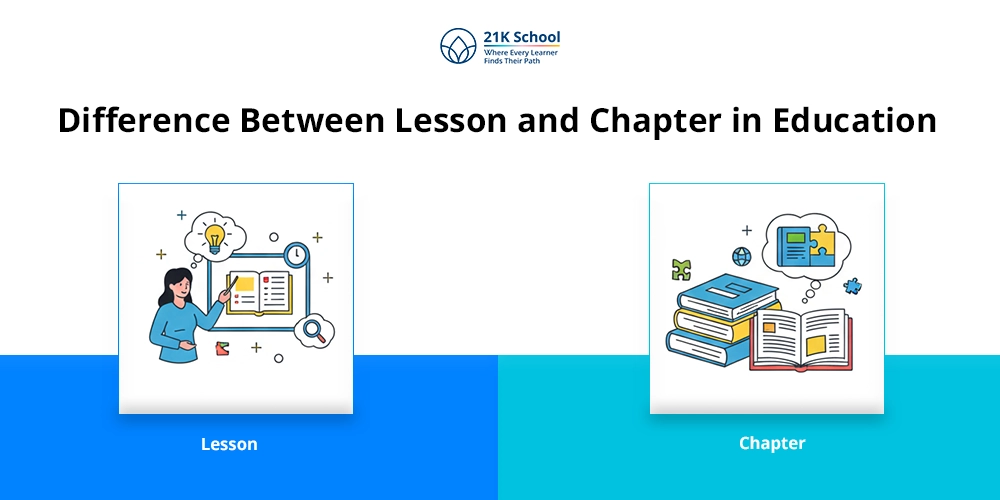
You might have noticed that being a teacher, you often say “open your textbooks and start a new chapter”, or “we shall read a new lesson today”.
We have been using both these terms so exchangeably that we didn’t even wonder if they were different
To your surprise, the lesson points to a class period with a small segment of learning , while chapters constitute a major unit of textbook having several lessons.
In this article, we shall come across the difference between lesson and chapter to remove your doubts while also introducing their individual characteristics.
Table of Contents
What is a Lesson?
A lesson is a small portion of a chapter that is guided towards completing one theme in a single class period.
It is designed a focused instruction from teachers where a student learns a small part of a broader topic
Lessons enable the teacher to structure the flow of the instruction process that assists students to fulfill a specific learning outcome .
They constitute the units of the instruction process.
Features of a Lesson
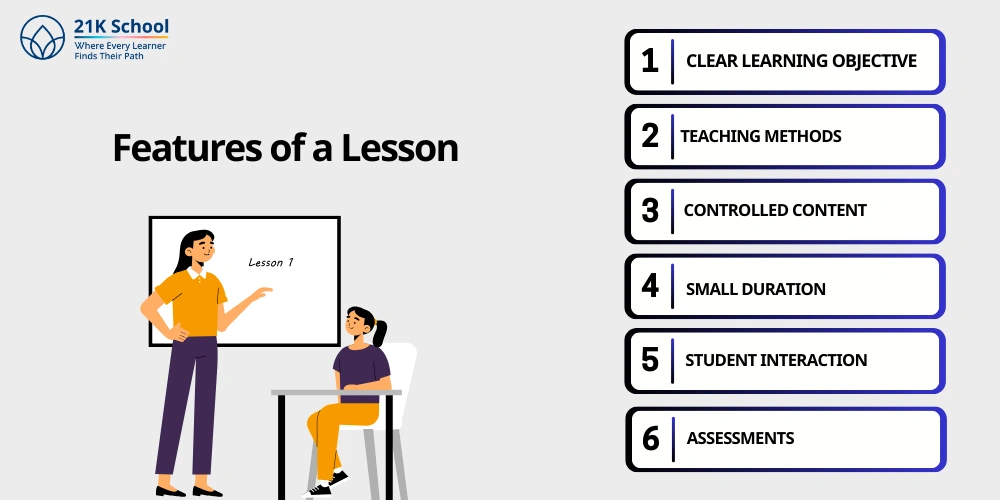
A lesson typically includes:
- Clear learning objective : What the student should learn/be able to do at the end of class.
- Teaching methods: Explanations, demonstrations, discussions, or activities.
- Controlled content: Limited and narrow issue that is not quite complicated.
- Small duration: Normally a class period varies by country, subject, and school system
- Student interaction: Activities, questions, exercises, or hands-on activities.
- Assessments : Short activities with questions, quizzes, viva, or worksheets.
The lessons are developed into practical ones, interactive and attainable within a duration of a short period.
They can assist the students to receive information bit after bit and the learning process becomes far more organized and easy.
What is a Chapter?
A chapter is an amalgamation of a number of lessons planned in a textbook.
It covers a subject where it takes more time in completion.
The curriculum is designed coherently into varied chapters so that children can understand the subjects efficiently.
As an illustration, a lesson about plant parts, photosynthesis, plant types and plant growth may be part of a chapter on plants.
Chapters serve to give the context and foster a further enlightenment of the subject matter.
Features of a Chapter
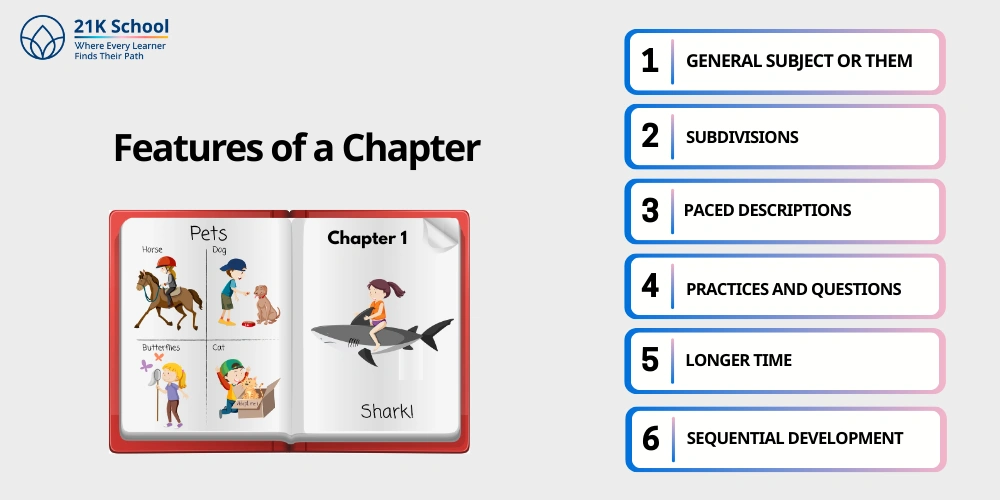
You can recognize a chapter with below mentioned features:
- General subject or theme: Dealing with two or more related ideas.
- Subdivisions: Some of these lessons or sub-sections subdivide the chapter.
- Paced descriptions: Long length with several illustrations.
- Practices and questions: To review or assess at the chapter level.
- Longer time: Can require days or weeks.
- Sequential development: A logical pattern of presentation of information.
Chapters enable students to have a comprehensive grasp of a subject. It also assists a teacher to design units of study as opposed to a series of separate lessons.
Key Difference Between Lesson and Chapter
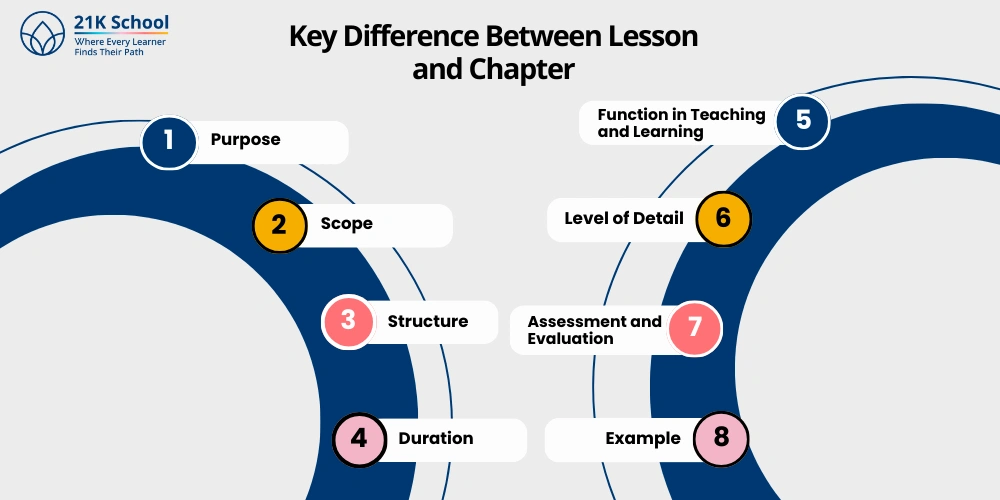
We will learn the difference between lesson and chapter with help of a comparison table, moving on with illustrated comparison with bullet points.
| Feature | Lesson | Chapter |
| Purpose | To teach a specific concept or skill | To cover a broad topic or theme |
| Scope | Narrow and focused | Wide and comprehensive |
| Structure | Includes objectives, activities, and assessments | Contains multiple lessons and detailed content |
| Duration | One class period or short time frame | Several days or weeks |
| Function in Teaching and Learning | Provides step-by-step learning | Gives overall understanding and context |
| Level of Detail | Basic, focused on one idea | In-depth, detailed explanation |
| Assessment | Short quizzes, worksheets, classroom activities | Summaries, long exercises, tests |
| Example | “Parts of brain” as a lesson | “Human brain” as a chapter |
1. Purpose
- Lesson: The aim here is to teach children one concept at a time.
- Chapter: A chapter gives a full insight into a general subject.
2. Scope
- Lesson: Well-focused, containing a small portion of a particular chapter.
- Chapter: Discusses multiple ideas and teaching methods .
3. Structure
- Lesson: A lesson has a beginning, a middle, and an end along with direct instruction, focused teaching, and tests.
- Chapter: A chapter has varied lessons while ending with weekly tests, assignments, short and long answers, etc.
4. Duration
- Lesson: Most often, one-hour for a cooperative learning lesson.
- Chapter: A chapter can take several days or weeks, completed after a number of lessons.
5. Function in Teaching and Learning
- Lesson: Assistance in everyday instruction of teachers for meeting a particular objective.
- Chapter: The major contribution of a chapter sums as planning long-term learning and curriculum.
6. Level of Detail
- Lesson: There is only one idea that is addressed.
- Chapter: It has detailed explanations and several concepts.
7. Assessment and Evaluation
- Lesson: We can find if a lesson could be taught effectively, with oral questions, assignments, group discussions , and review tests.
- Chapter: A chapter is assessed by either tests, long exercises, or summary questions.
8. Example
- Lesson: An example of a lesson would be “Punnett square”.
- Chapter: This “Punnett square” would be a part of the chapter “Heredity and Evolution” from Class 10 biology.
Conclusion
A lesson and chapter are different in their individual aims in education , processes, testing, and completion.
You might complete a lesson in just an hour, but not an illustrated chapter, requiring multiple lessons to be completed.
We have already discussed how both the terms were used interchangeably, but with differences between a lesson and chapter, teachers can be more in light.
