


Education plays a crucial role in students’ life and basic education is a foundation to growth and success.
Students from pre-primary to upper primary learn various skills like critical thinking , reading, writing etc to fulfill daily needs.
To understand the meaning, objectives, structure, and challenges of basic education, let’s explore everything in detail.
Table of Contents
What Is Basic Education?
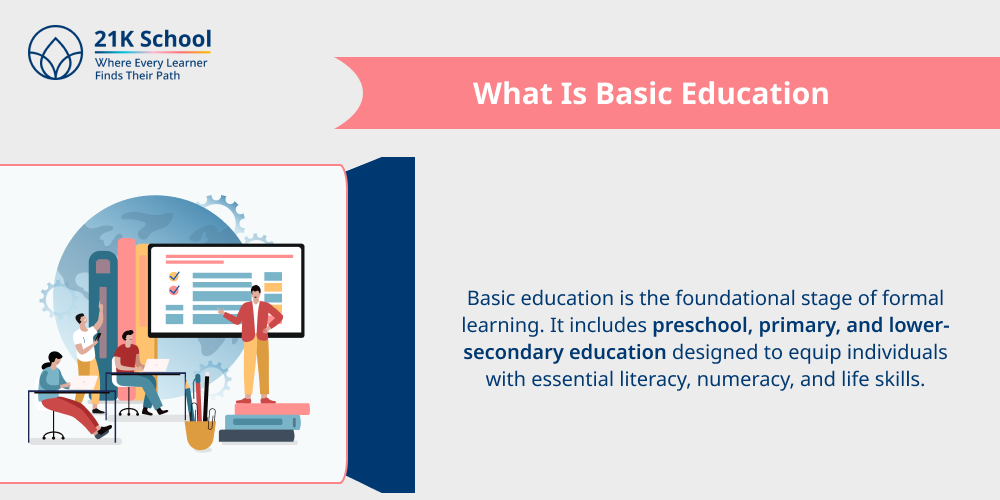
Basic education is the foundational stage of formal learning. It includes preschool , primary, and lower-secondary education designed to equip individuals with essential literacy, numeracy, and life skills.
Basic education is an effective way to gain knowledge and skills required to be functional in society.
For development of literacy, numeracy, communication, critical thinking, and moral values, basic education is important.
Various countries like India mandate the Right to Education (RTE) Act which ensures free and compulsory education for students’ development.
6 Objectives of Basic Education
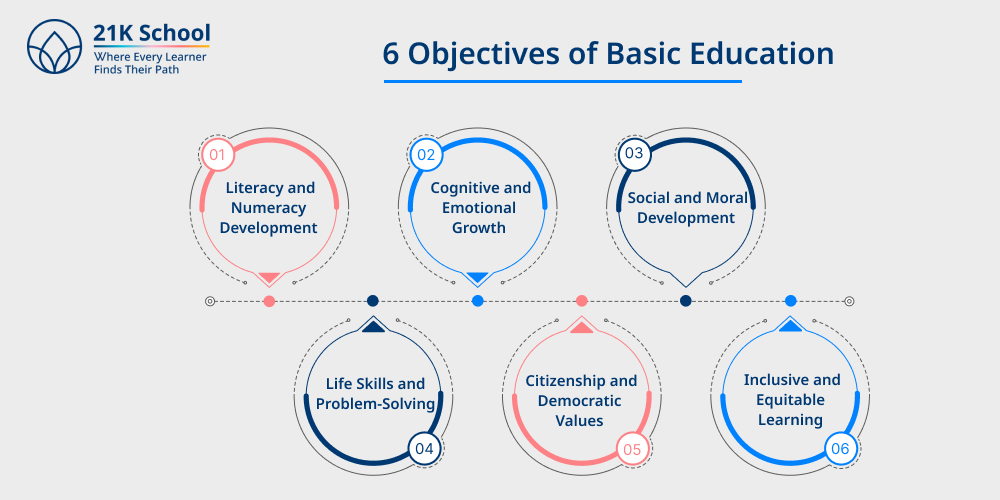
The main objective of basic education includes:
1. Literacy and Numeracy Development
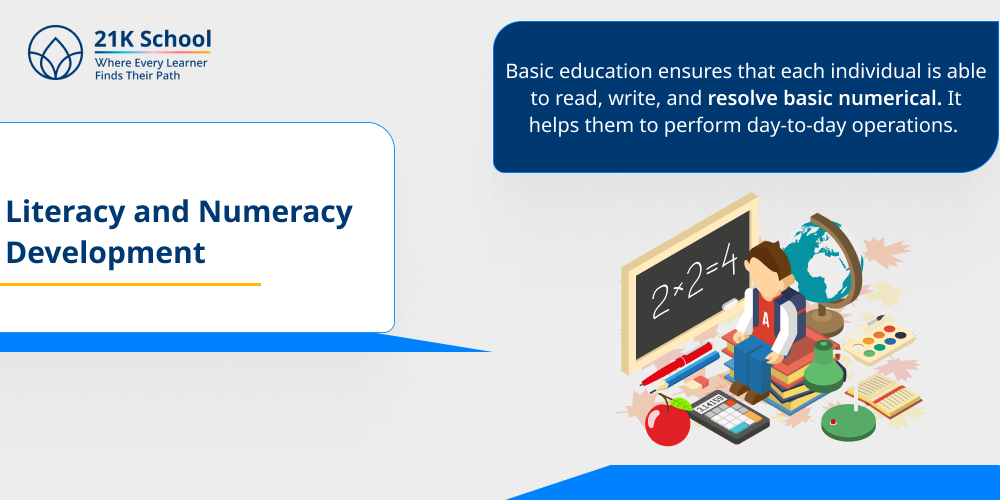
Basic education ensures that each individual is able to read, write, and resolve basic numerical. It helps them to perform day-to-day operations.
2. Cognitive and Emotional Growth
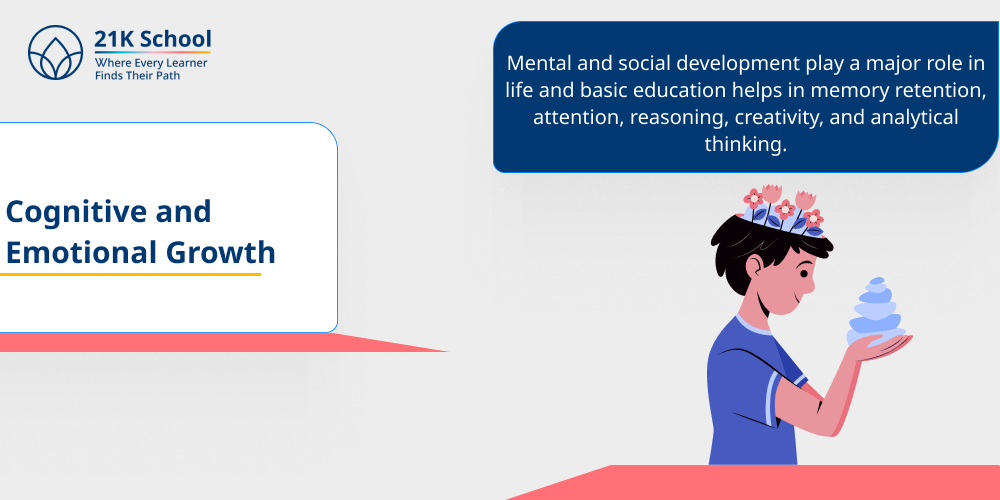
Mental and social development play a major role in life and basic education helps in memory retention, attention, reasoning, creativity, and analytical thinking.
3. Social and Moral Development
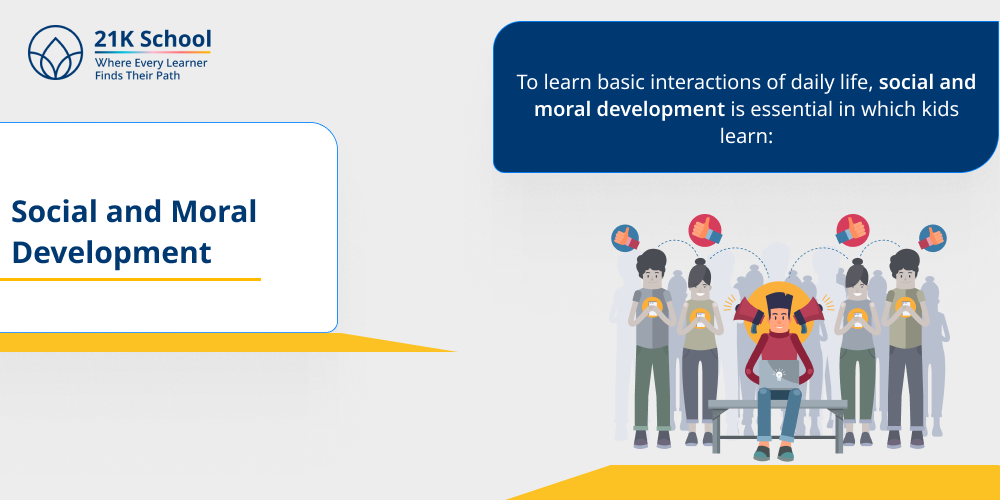
To learn basic interactions of daily life, social and moral development is essential in which kids learn:
- cooperation and teamwork
- respect for diversity
- empathy and compassion
- honesty and responsibility
4. Life Skills and Problem-Solving
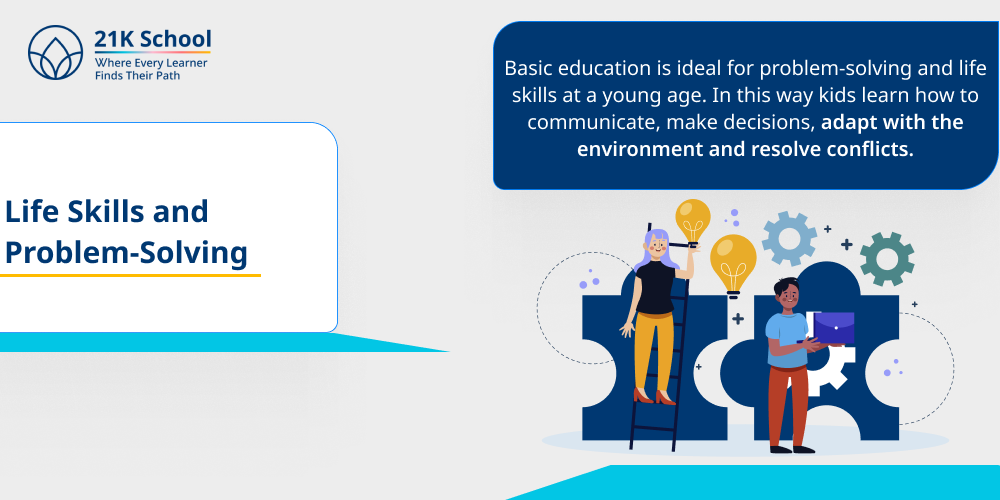
Basic education is ideal for problem-solving and life skills at a young age. In this way kids learn how to communicate, make decisions, adapt with the environment and resolve conflicts.
5. Citizenship and Democratic Values
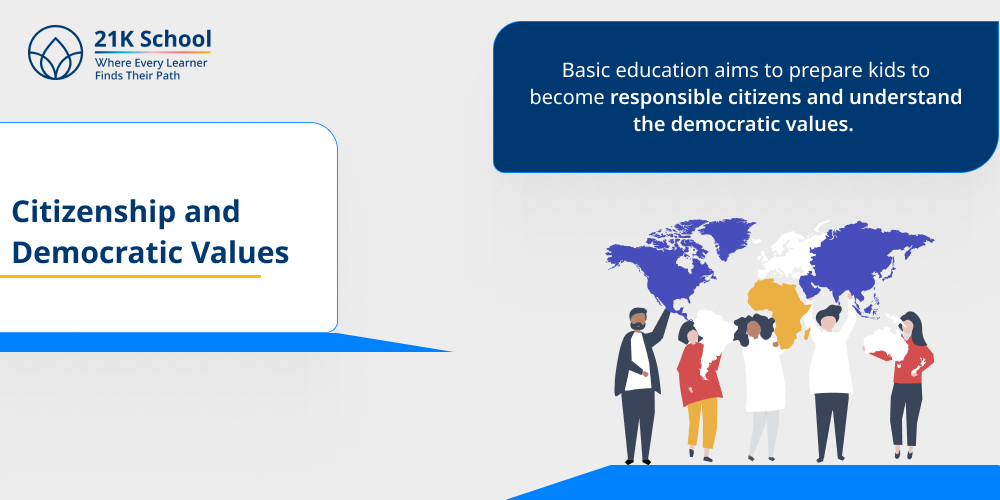
Basic education aims to prepare kids to become responsible citizens and understand the democratic values.
The knowledge of rights and duties, social justice and equality etc contribute to living in a positive learning environment .
6. Inclusive and Equitable Learning
One of the broader objectives of basic education is inclusive and equitable learning . This means each individual gets equal opportunity to learn.
It promotes accessibility, flexibility, and support to make the environment ideal for learners.
Structure of Basic Education System in India
The basic education system in India follow pre-designed structure ideal to fulfill the needs:
1. Early Childhood Care and Education (ECCE)
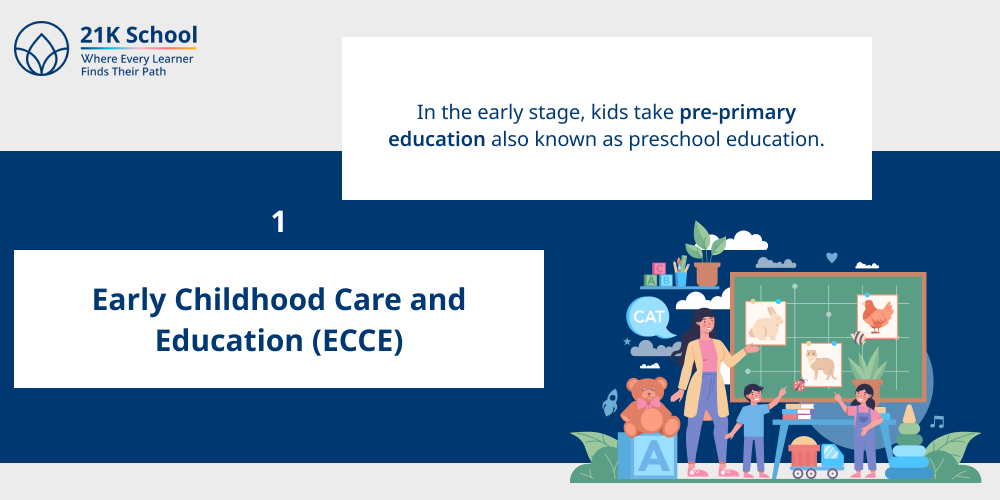
In the early stage, kids take pre-primary education also known as preschool education.
Here, The National Education Policy gives strong emphasis to Early Childhood Care and Education (ECCE).
Age Group and Types: 3 to 6 years and Play School, Nursery, LKG, UKG.
2. Primary Education
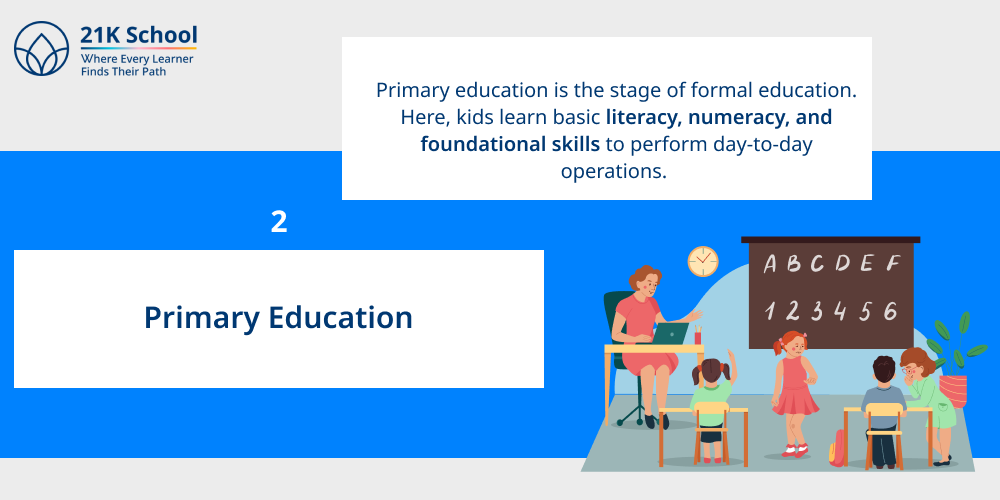
Primary education is the stage of formal education . Here, kids learn basic literacy, numeracy, and foundational skills to perform day-to-day operations.
Age Group and Types: 6 to 10 years (Classes 1 to 5) and Primary Stage.
3. Upper Primary Education – Classes 6 to 8 (Ages 11 to 14)
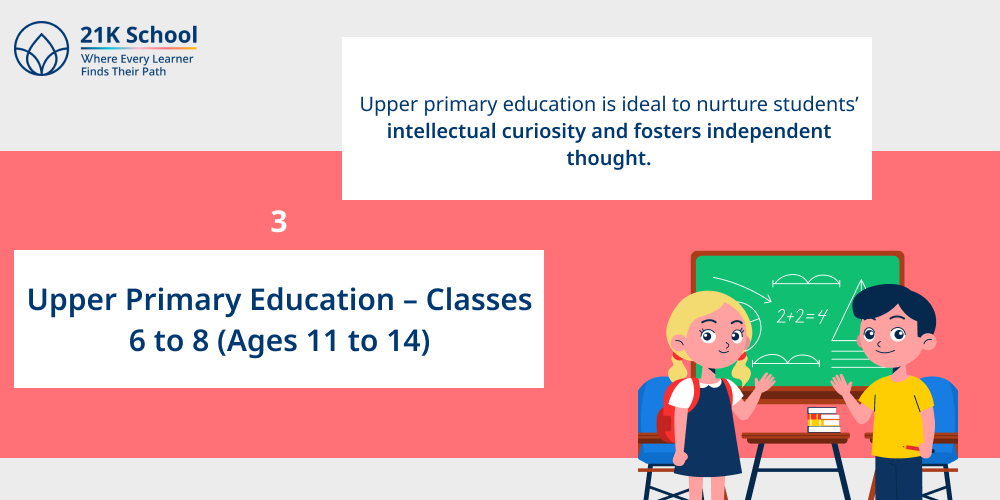
Upper primary education is ideal to nurture students’ intellectual curiosity and fosters independent thought.
They also learn subject-based learning and develop cognitive and analytical skills with time.
Age Group and Types: 11 to 14 years (Classes 6 to 8) and Middle Stage.
Key Policies and Programs Supporting Basic Education in India
Basic education is a foundation that prepares students for lifelong learning . Some key policies and programs supporting basic education in India are:
1. Right to Education (RTE) Act, 2009
Right to Education is one of the popular acts that support basic education of students. The objective of RTE is providing a fundamental right to kids between 6 to 14 years old.
The RTE Act laid the foundation for universal elementary education in India.
2. Samagra Shiksha Abhiyan
Samagra Shiksha Abhiyan is a scheme which aims for inclusive, high-quality, unified, and modern education for every kid.
From the first classroom to class 12th ensures students are future ready.
3. National Education Policy (NEP) 2020
National Education Policy (NEP) 2020 is a new education system in which the 5+3+3+4 model is introduced to enhance students’ learning.
It is the replacement of the old 10+2 model by new model. Stages includes:
- Foundational (5 years): Nursery to Class 2
- Preparatory (3 years): Classes 3 to 5
- Middle (3 years): Classes 6 to 8
- Secondary (4 years): Classes 9 to 12
4. Mid-Day Meal Scheme (PM POSHAN)
Mid-Day Meal Scheme/PM POSHAN are a powerful scheme in which learners from different castes, religions, and backgrounds sit together to share food.
5. Digital Education Initiatives
Various digital education initiatives such as DIKSHA, SWAYAM, and PM eVIDYA promote students’ home based learning.
It transforms students’ educational journey into the modern world.
5 Role of Teachers and Parents in Basic Education
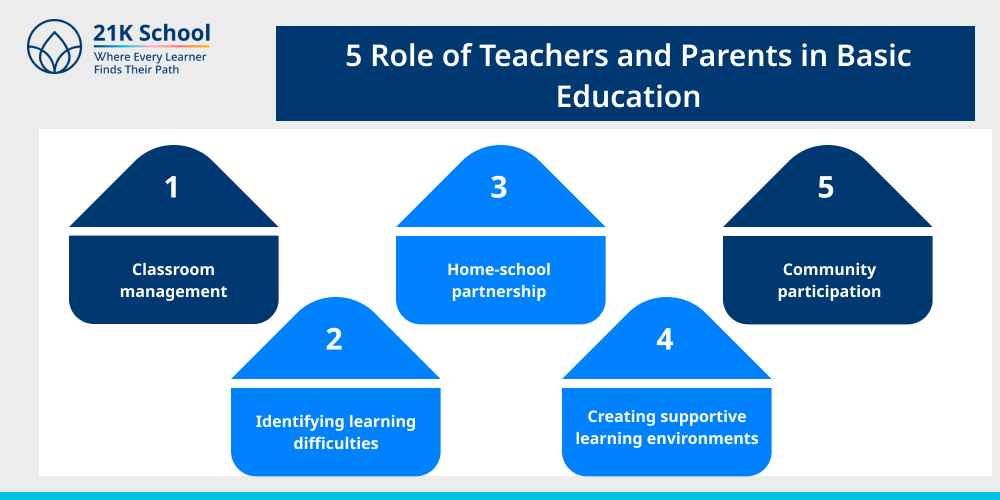
Teachers and parents play a major role in the basic education of students. Some of the key roles they play:
1. Classroom management
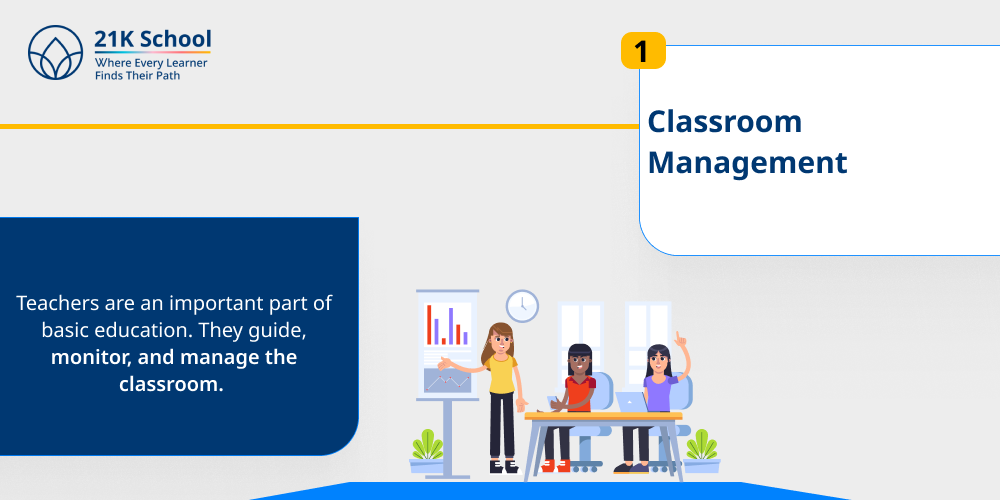
Teachers are an important part of basic education. They guide, monitor, and manage the classroom.
This helps students to stay focused in the classroom and gain knowledge for maximum retention.
2. Identifying learning difficulties
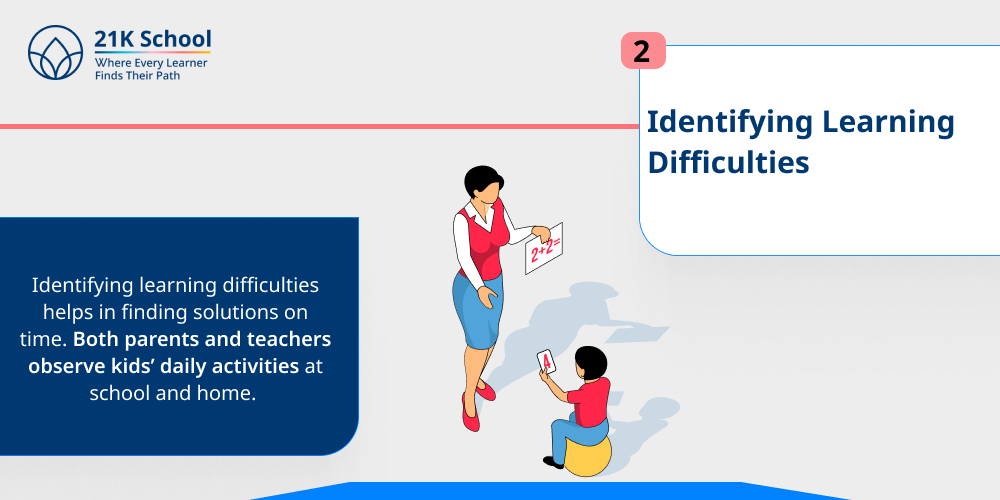
Identifying learning difficulties helps in finding solutions on time. Both parents and teachers observe kids’ daily activities at school and home.
3. Home-school partnership
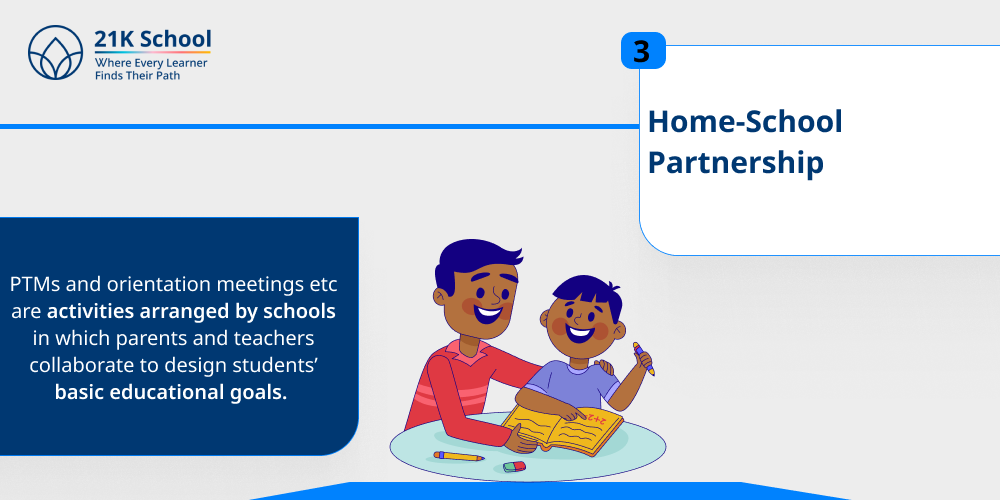
PTMs and orientation meetings etc are activities arranged by schools in which parents and teachers collaborate to design students’ basic educational goals.
In this way, one can learn effectively without distractions.
4. Creating supportive learning environments
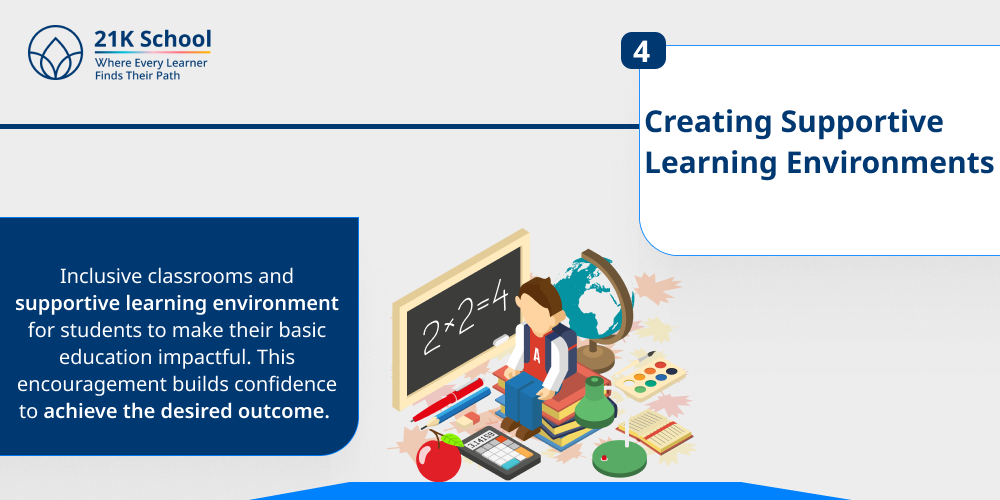
Inclusive classrooms and supportive learning environment for students to make their basic education impactful. This encouragement builds confidence to achieve the desired outcome.
5. Community participation
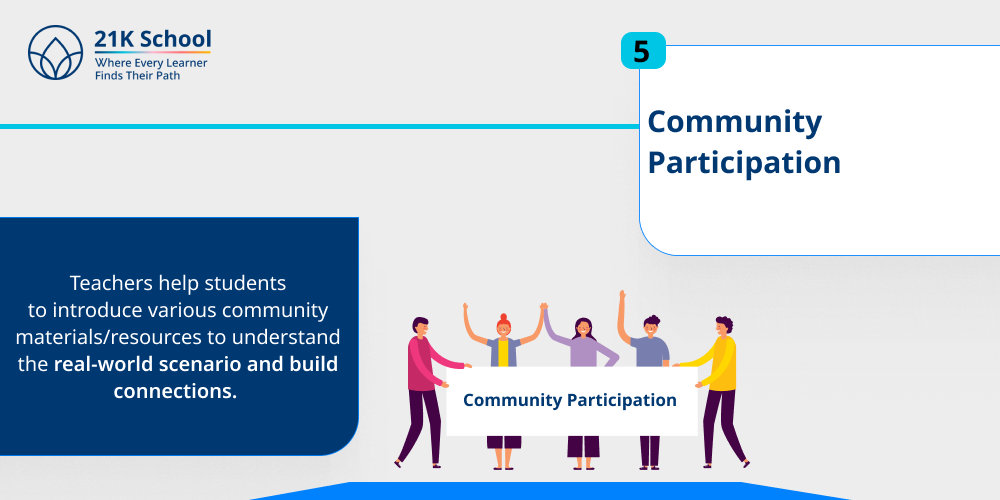
Teachers help students to introduce various community materials/resources to understand the real-world scenario and build connections.
5 Challenges in Basic Education
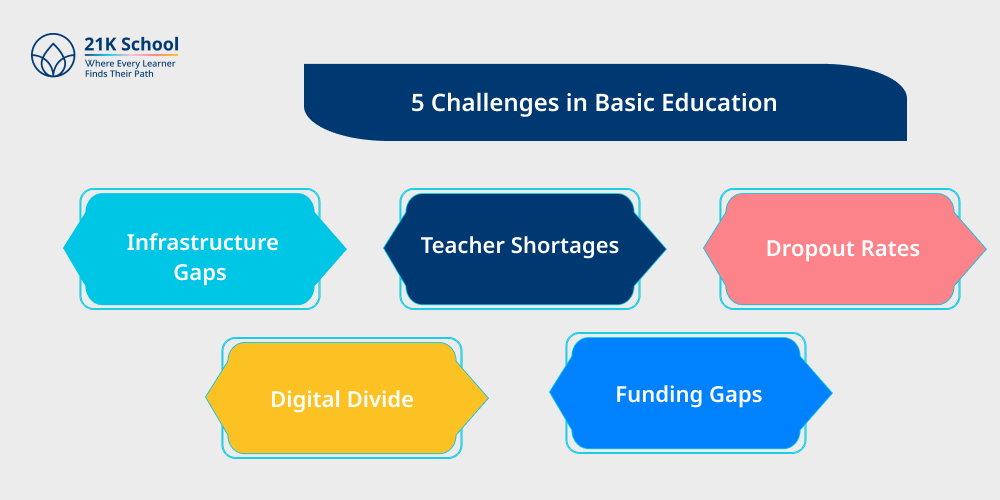
There are various challenges faced in implementation of basic education such as:
1. Infrastructure Gaps
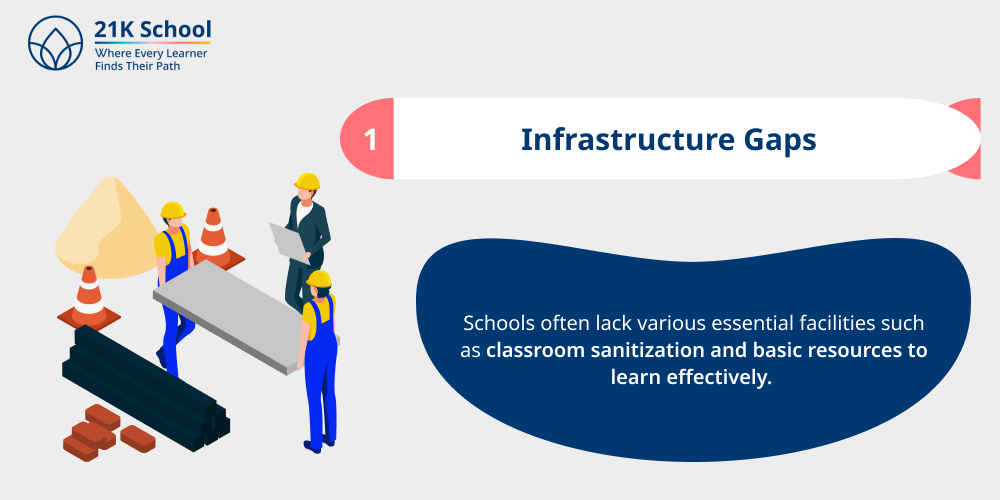
Schools often lack various essential facilities such as classroom sanitization and basic resources to learn effectively.
2. Teacher Shortages

Due to the shortage of teachers, the quality of basic education negatively impacts students’ growth.
3. Dropout Rates
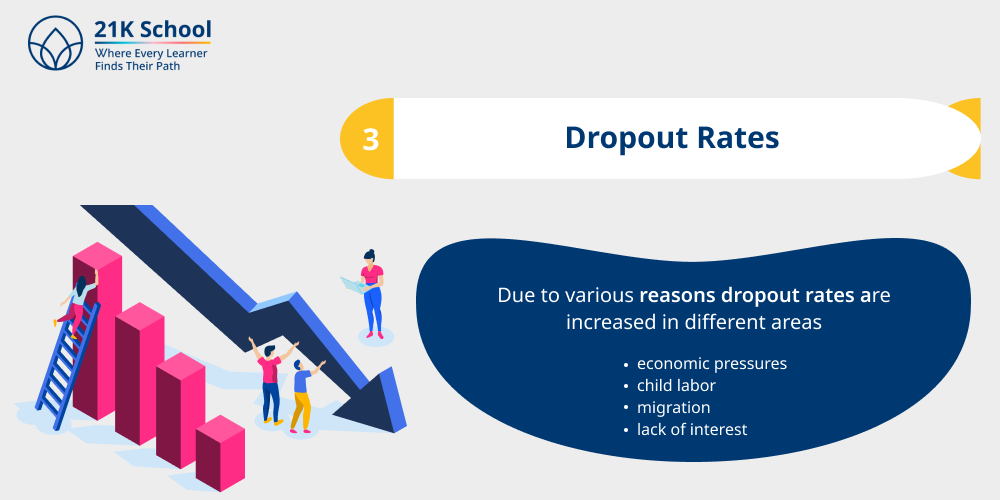
Due to various reasons dropout rates are increased in different areas. For example:
- economic pressures
- child labor
- migration
- lack of interest
4. Digital Divide
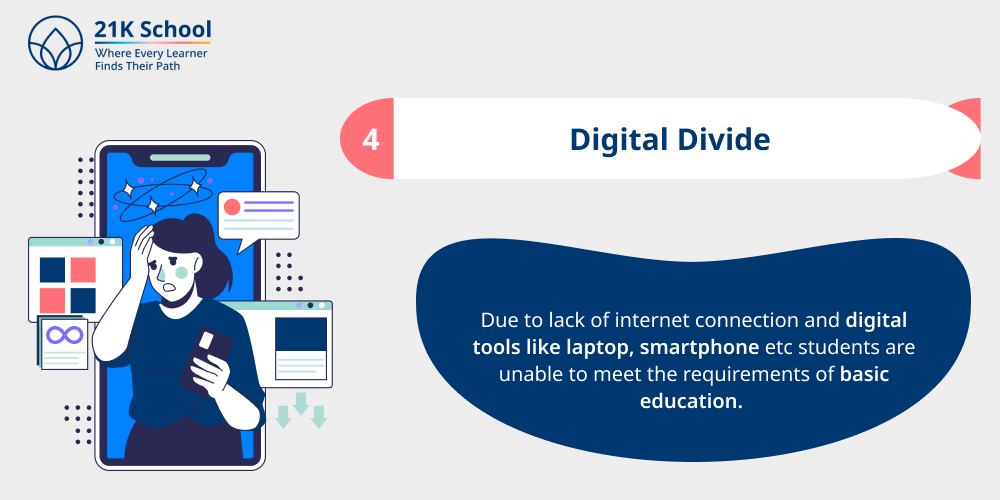
Due to lack of internet connection and digital tools like laptop, smartphone etc students are unable to meet the requirements of basic education.
5. Funding Gaps
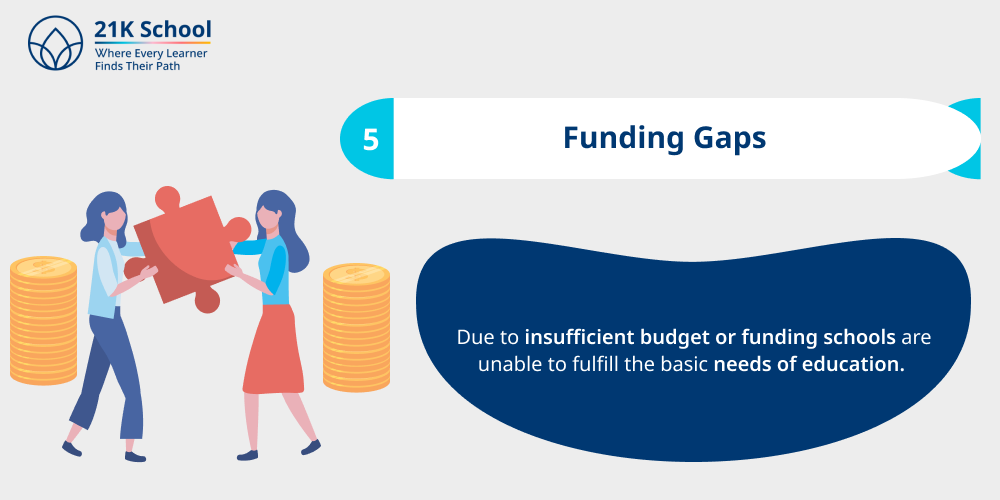
Due to insufficient budget or funding schools are unable to fulfill the basic needs of education.
Conclusion
Basic education is the right of every kid by which they understand the standard of living. It is the first stage of schooling in which kids learn simple learning skills.
It plays a key role to ensure a successful career with the foundation of learning. In simple words, investing in basic education is investing in the future.
Enroll kids for basic education to make educational journeys impactful.
