


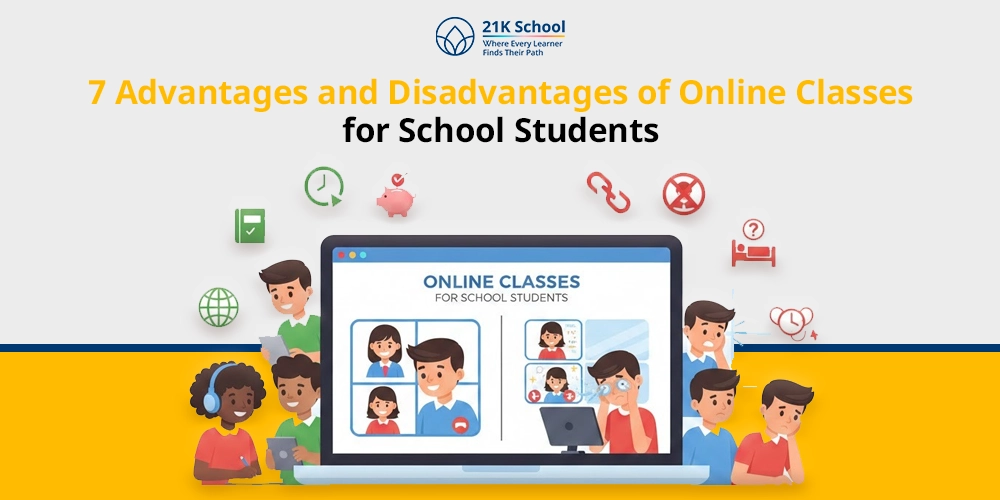
Since COVID-19 happened, everyone started viewing their jobs and careers differently. All of us switched to screens from traditional methods.
The same thing happened with the educational industry as well. Colleges and schools shifted to digital learning, online classes, virtual classrooms, and other stuff.
Here, in this article, we are going to showcase all advantages and disadvantages of online schools for school students.
This is merely to make parents and educators aware of the benefits of education through online modes while choosing strategies and options that would work best for their children.
Table of Contents
- 7 Advantages of Online Classes for School Students
- 7 Disadvantages of Online Classes for School Students
- 1. Lack of Social Skills Development and Isolation
- 2. Increased Screen Time and Health Issues
- 3. Limited Hands-On Learning/Practical Learning Experiences
- 4. Dependence on Technology and Internet Access
- 5. Reduced Teacher-Student Interaction
- 6. Challenges in Maintaining Discipline and Focus
- 7. Limited Effectiveness in Assessments
- Wrap It Up
7 Advantages of Online Classes for School Students
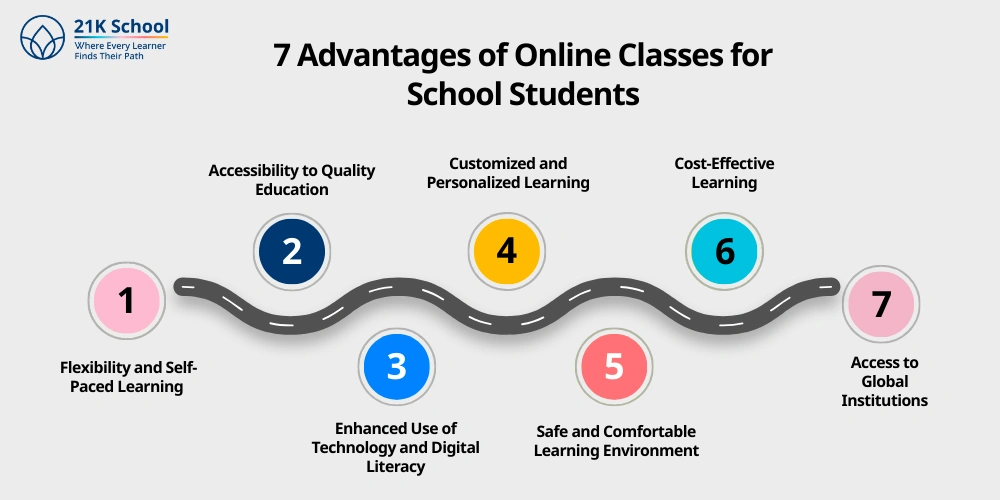
Online schools have benefitted school going students in many ways including flexibility and accessibility.
1. Flexibility and Self-Paced Learning
The flexibility of the online classes is one of the most appreciated benefits, making self-paced learning a key advantage.
As opposed to traditional classrooms where students have to operate on a strict schedule, online systems enable them to learn at their own pace and needs.
This comes in handy especially to the students who take longer to internalize concepts or those who want to revise lessons.
Students who are motivated to carry out the learning process at their own pace develop self-regulated learning habits and become more responsible.
They might develop some of the life skills including time-management skills and planning in scholarly matters.
2. Accessibility to Quality Education
Online courses can overcome geographic and socioeconomic barriers since one can have access to high-quality education irrespective of their location.
Learners living in isolated communities can now have access to classes provided by highly qualified teachers.
They can also learn courses which were otherwise inaccessible, including materials developed by the best education institutions.
Also, online learning materials, videos, simulations, e-books, and interactive tools make learning exciting.
3. Enhanced Use of Technology and Digital Literacy
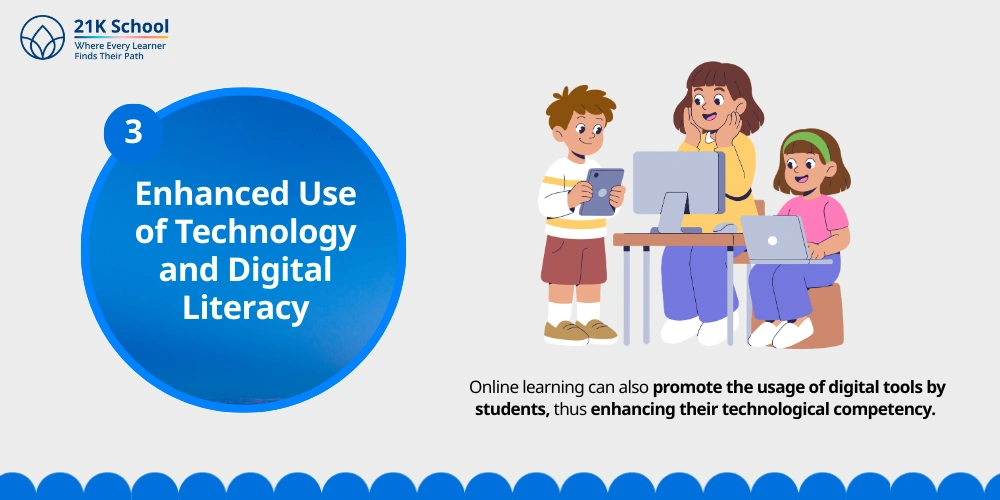
Online learning can also promote the usage of digital tools by students, thus enhancing their technological competency.
Online learners learn to navigate virtual classrooms, educational applications, online tests, and collaborative learning solutions.
These can be called as some key elements of digital literacy which students need in this world of modernity.
Such an early exposure can equip them with future academic work situations when technology would be under use.
4. Customized and Personalized Learning
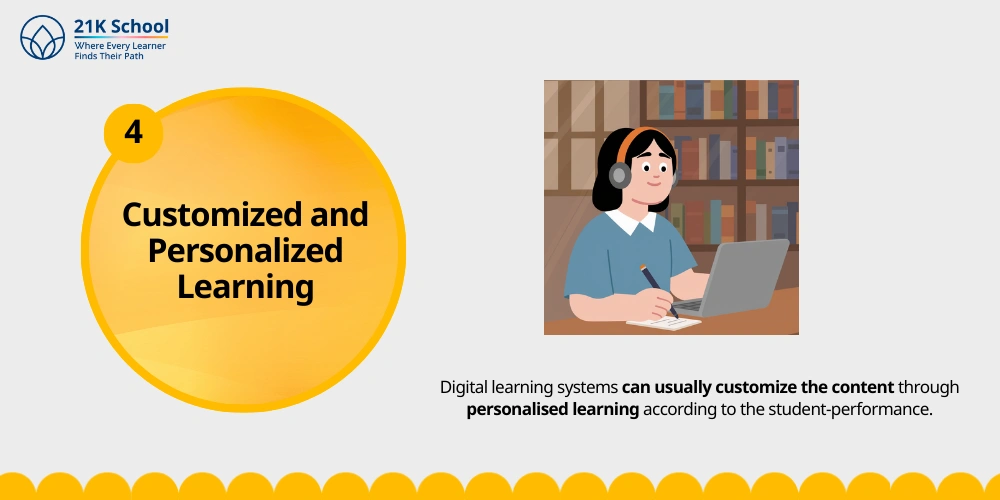
Digital learning systems can usually customize the content through personalised learning according to the student-performance.
Online learning tools help to track strengths and weaknesses, having exercises unique to the individual styles of learning.
Here’s why individual attention is important in online classes.
Those students requiring special assistance may obtain some extra resources, while even gifted students can go through the higher-level materials.
Such customization through differentiated learning is more efficient and it aids students to gain confidence.
5. Safe and Comfortable Learning Environment
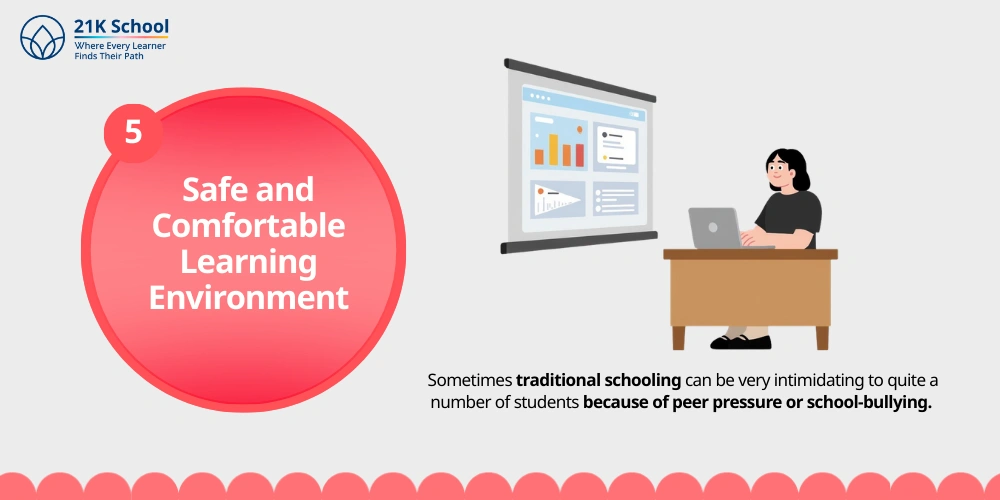
Sometimes traditional schooling can be very intimidating to quite a number of students because of peer pressure or school-bullying.
Have a look at these school bullying statistics so you can better decide for your child’s education medium.
Online courses can allow a comfortable experience and a positive learning environment without any distractions or stress to the students.
A proper study environment at home can ensure increased concentration and commitment to study in learners.
This could be a very convenient environment, making online learning ideal for special needs students, especially those with medical problems, learning disability, or anxiety challenges.
6. Cost-Effective Learning
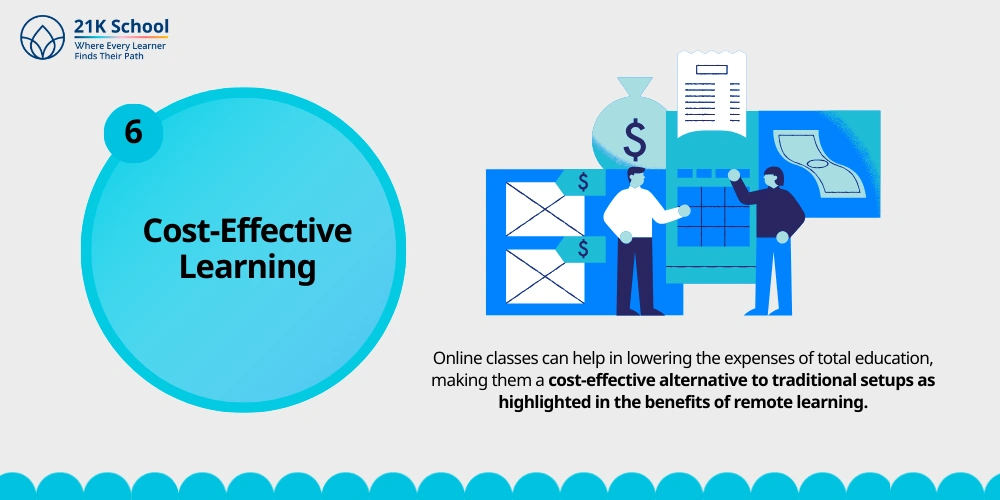
Online classes can help in lowering the expenses of total education, making them a cost-effective alternative to traditional setups as highlighted in the benefits of remote learning.
Families would be able to save on transportation, uniforms, stationeries, and even textbooks.
It can also allow students to access digital learning materials free of cost or at low prices.
These money resources can be utilized for something better in later periods of a child’s life to help him be successful as an entrepreneur.
7. Access to Global Institutions
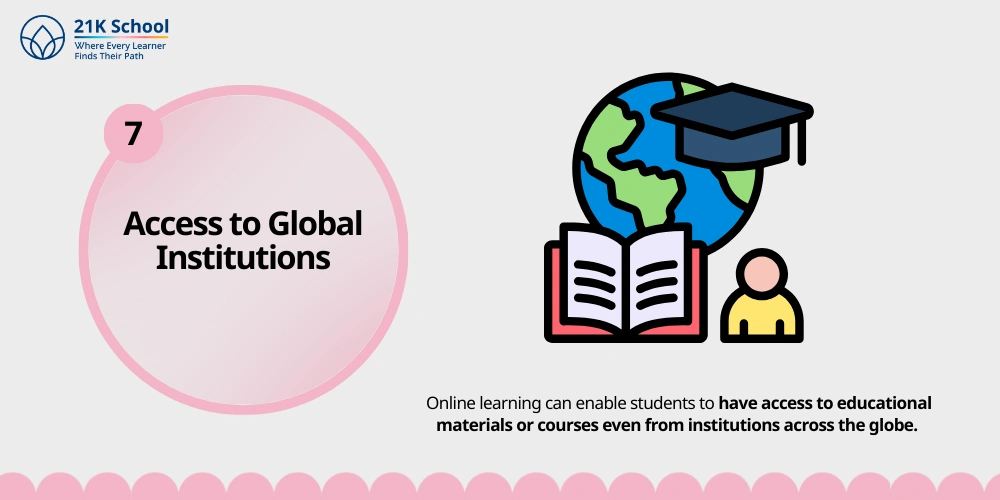
Online learning can enable students to have access to educational materials or courses even from institutions across the globe.
Students are able to take part in international competitions, online workshops, and engage with international experts just through their screens.
This international connectivity gives them a wider viewpoint and improves multicultural knowledge that prepares children for their future global world.
7 Disadvantages of Online Classes for School Students
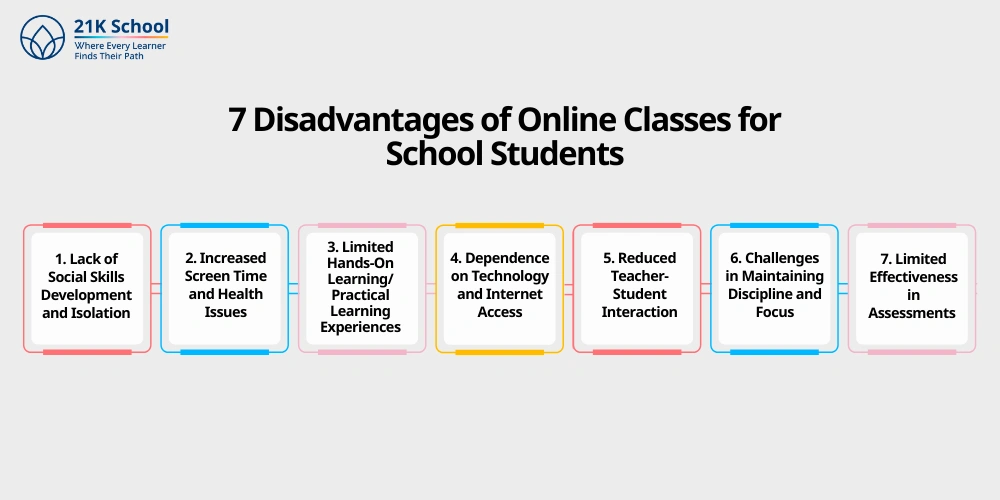
Some disadvantages that needs mention in this article for online classes for school students include:
1. Lack of Social Skills Development and Isolation
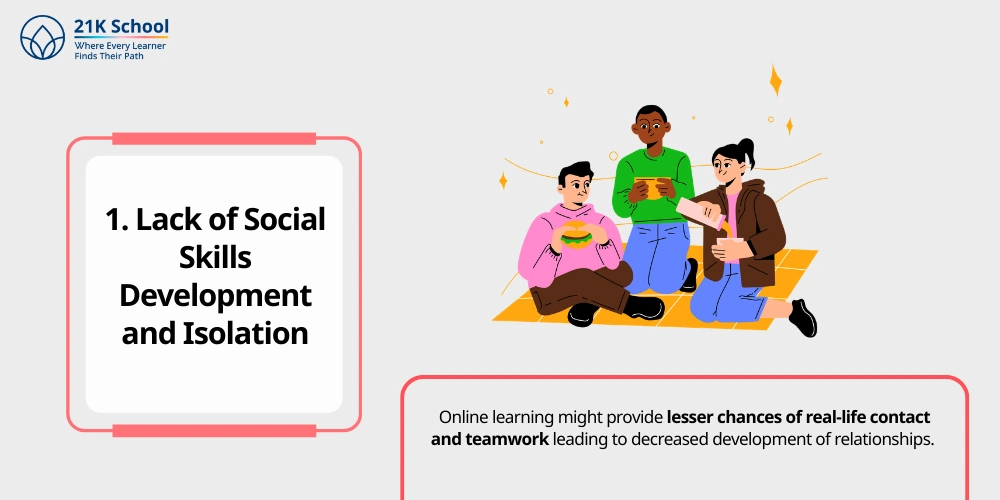
Modern-day classrooms are a vital part of social development.
Online learning might provide lesser chances of real-life contact and teamwork leading to decreased development of relationships.
In the long run, students can experience isolation from others, which is one of the common challenges of online education.
Such social deficiency may inhibit the acquisition of valuable emotional and social skills like teamwork, empathy, and interaction.
2. Increased Screen Time and Health Issues
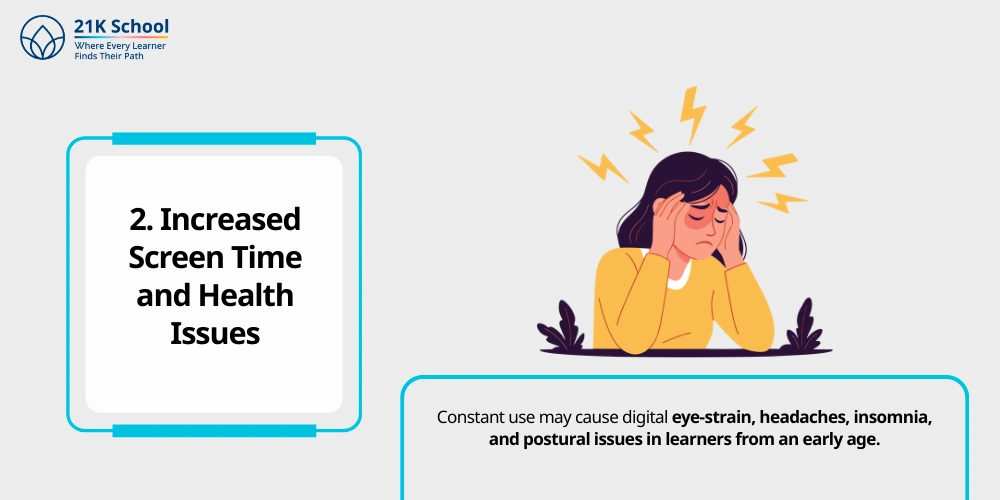
Learning online exposes the students to the screen more, making screen time for kids a growing concern.
Constant use may cause digital eye-strain, headaches, insomnia, and postural issues in learners from an early age.
Another cause is lack of physical activity since students spend more time sitting than in a physical school.
This can also affect a student’s mental health.
To avoid health issues, it would be necessary to balance academic screen time with offline activity.
3. Limited Hands-On Learning/Practical Learning Experiences
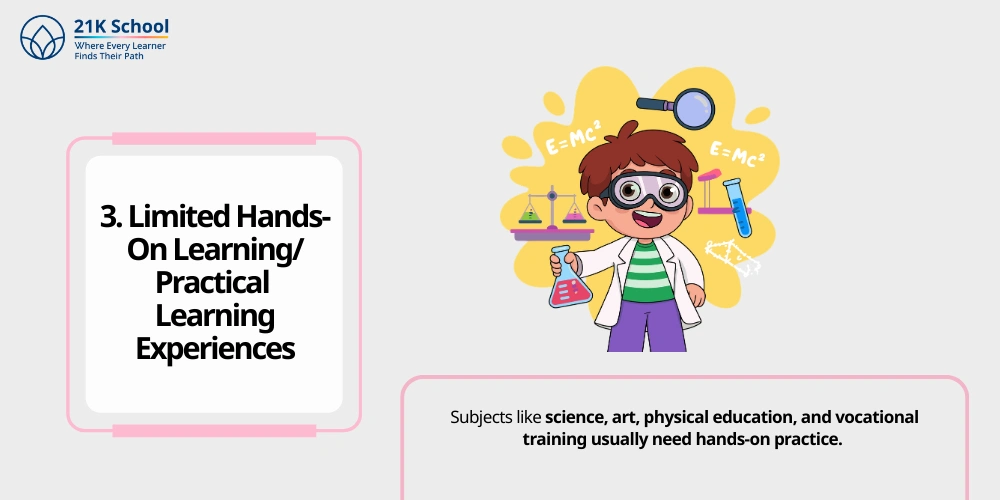
Subjects like science, art, physical education, and vocational training usually need hands-on practice.
The online classes might deny the possibility to perform experiments or to join group activities, depicting reduced hands-on learning.
Virtual labs cannot make you experience real-life learning. Although, they would be able to just substitute it at times.
4. Dependence on Technology and Internet Access
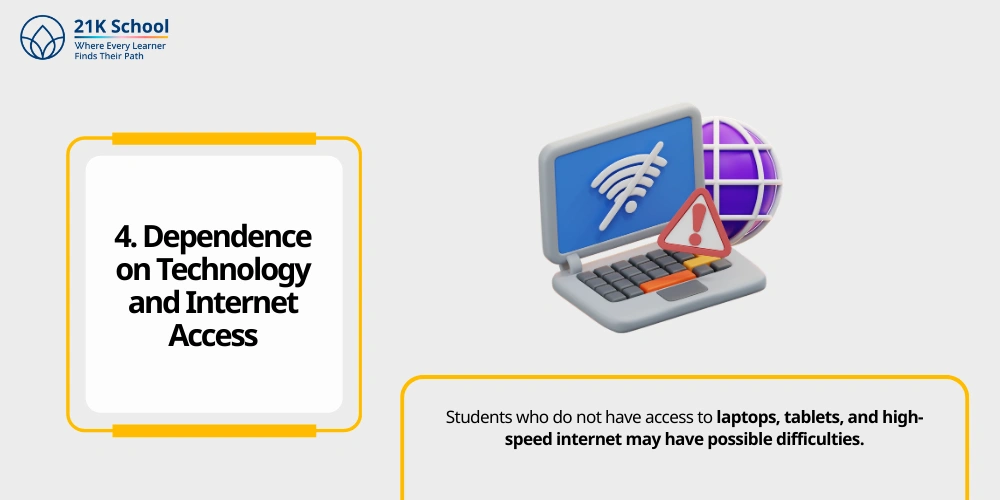
Online studies are completely dependent on digital devices and good internet access.
Students who do not have access to laptops, tablets, and high-speed internet may have possible difficulties.
Technological glitches or blackouts may disrupt the learning process which can be frustrating for learners.
5. Reduced Teacher-Student Interaction
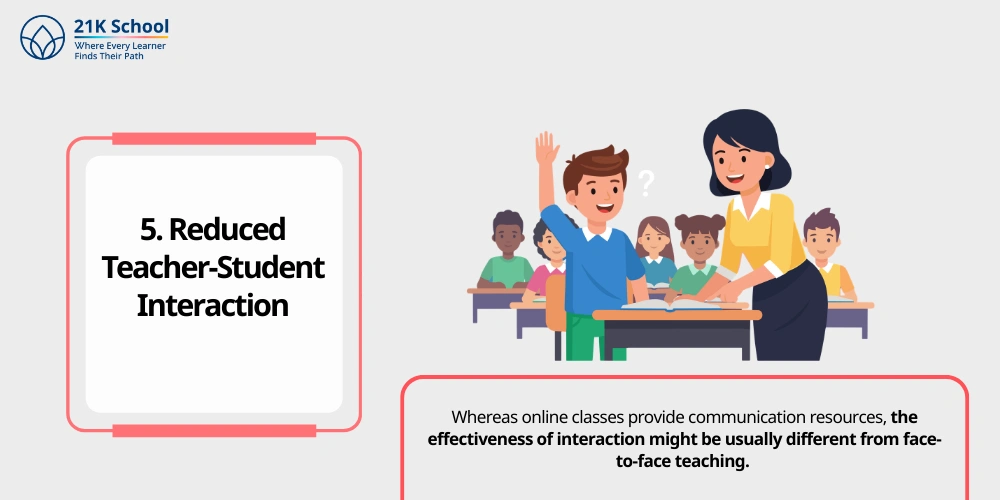
Whereas online classes provide communication resources, the effectiveness of interaction might be usually different from face-to-face teaching.
The teachers are faced with the dilemma of not being able to determine student knowledge, classroom management, as well as delivering personalized instructions.
On the other hand, students will be reluctant to ask questions during virtual learning, hence resulting in learning gaps.
6. Challenges in Maintaining Discipline and Focus
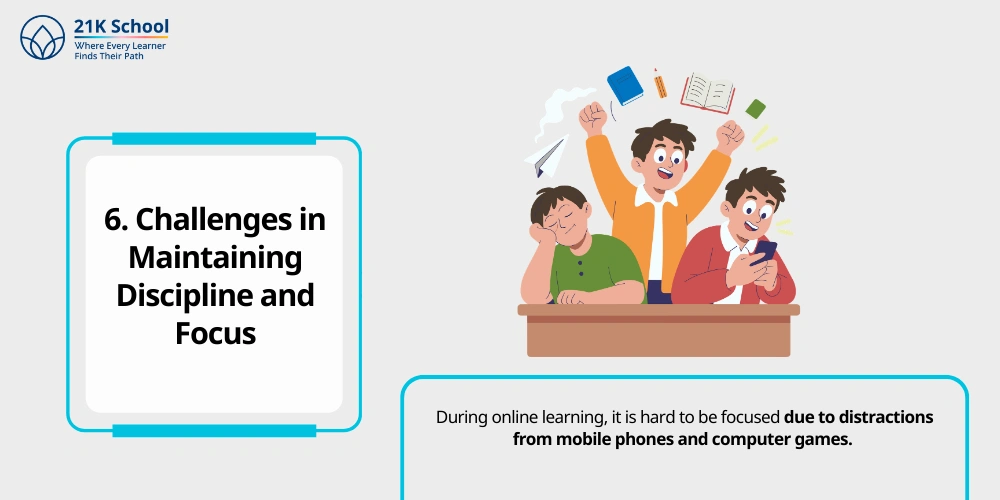
During online learning, it is hard to be focused due to distractions from mobile phones and computer games.
Maintaining motivation in education may become a challenge for students and teachers who can barely keep track of the student participation.
Online learning can also be a strain to parents since younger students require their supervision at all times. Understanding the role of parents in online education can help ease this burden.
7. Limited Effectiveness in Assessments
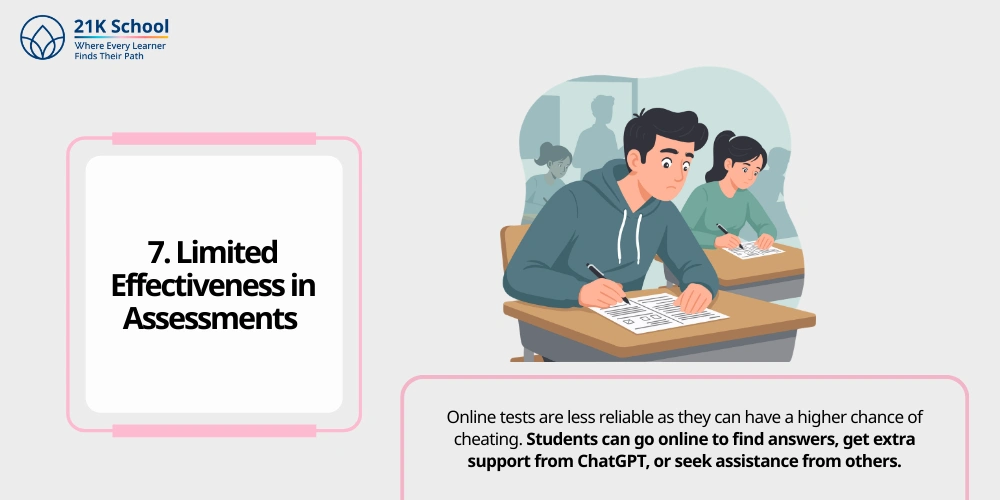
Online tests are less reliable as they can have a higher chance of cheating.
Students can go online to find answers, get extra support from ChatGPT, or seek assistance from others.
This complicates evaluation of actual performance and comprehension of learners, which can pose suspicions on the effectiveness of online examinations.
Wrap It Up
Times have changed. And in present times, people are moving towards online schools.
What started like a solution to maintain lesser physical contact to ensure that lesser people get affected by COVID, became an educational practice.
With this evolution, teachers and parents should also understand the advantages and disadvantages of online schools for school students.
From providing flexibility and accessibility to having less efficient assessments and too much screen time for kids, online schools offer all.
So, it is an individual choice to stay honest to oneself and leverage all the benefits of online schools while learning at home.
