


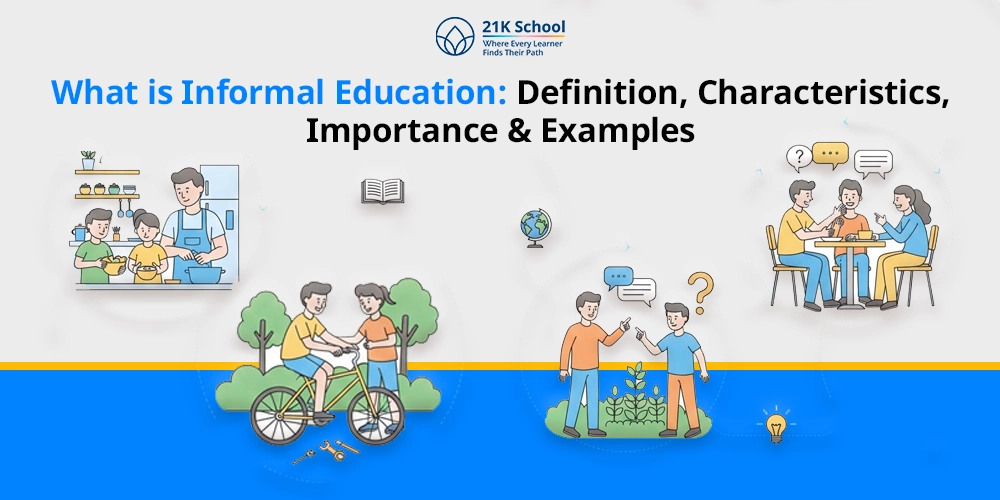
Do you also think that learning can only happen in formal education?
You would be surprised to know that according to a 2022 report of Organization for Economic Cooperation and Development (OECD), almost 70% of adult learning occurs informally.
So, how exactly does this type of education function and can be acquired, if not from schools.
This article will take you towards the deeper concepts of informal education and its importance.
Table of Contents
What is Informal Education?
The term informal education can be defined as the education that is provided without any structured or institutionalized forms of learning.
It is informal and unorganized and does not adhere to standard syllabus or curriculum .
Here, learning occurs through natural interaction with others including family members, peers, society, and through the real experiences.
Teachers, classrooms, examinations, and certificates are nonexistent in informal education.
Learning takes place without any pre-planned objective, as it takes place through observation, imitation, discussion, trial and error, and personal experience.
A child learning to speak through listening to the parent, someone learning social etiquette through socialization, or an employee learning through work experience are all informal learning.
Informal education is integrated into day-to-day life. It aids people to know social norms, cultural values, moral principles, and practical skills that are needed in our everyday lives.
Informal education is lifelong learning, unlike formal education that is only restricted to a specific age or level.
It is an important aspect that improves helps in personality development, social adaptation, and creation of responsible citizens.
Simply put, informal education may be defined as education without restrictions, where life itself is the school and experience is the instructor.
Characteristics of Informal Education
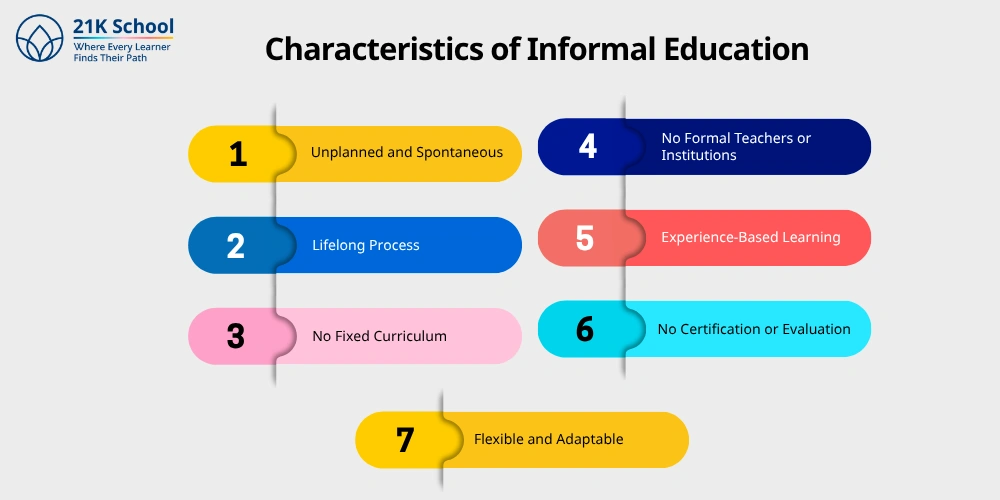
Informal education has the following features that make them stand-out:
1. Unplanned and Spontaneous
The informal education is unplanned and unorganized. The process of learning occurs naturally when circumstances occur in our daily life.
People tend to learn even though they have no intention of learning.
As an illustration, an individual can be taught patience, cooperation, empathy , or problem-solving when going through daily challenges.
2. Lifelong Process
Informal education is a lifelong process.
It is through this that an individual continues to learn from the beginning of their life to the end of their life.
Contrary to formal education which follows a given time frame, informal education has no limit to time.
3. No Fixed Curriculum
Informal education lacks an authorized curriculum or syllabus.
The things one learns are defined on the basis of individual interests, requirements, conditions, and circumstances in life.
The content that is learned is different in varied individuals as per circumstance.
4. No Formal Teachers or Institutions
Informal education does not require trained teachers or educational facilities.
Sources of learning can include parents, elders, friends, workmates, members of the community, or even strangers.
Informal education can occur anytime and anywhere.
5. Experience-Based Learning
Learning in informal education is built on experience as opposed to remembering theories.
People learn through observing and contemplating real life circumstances.
6. No Certification or Evaluation
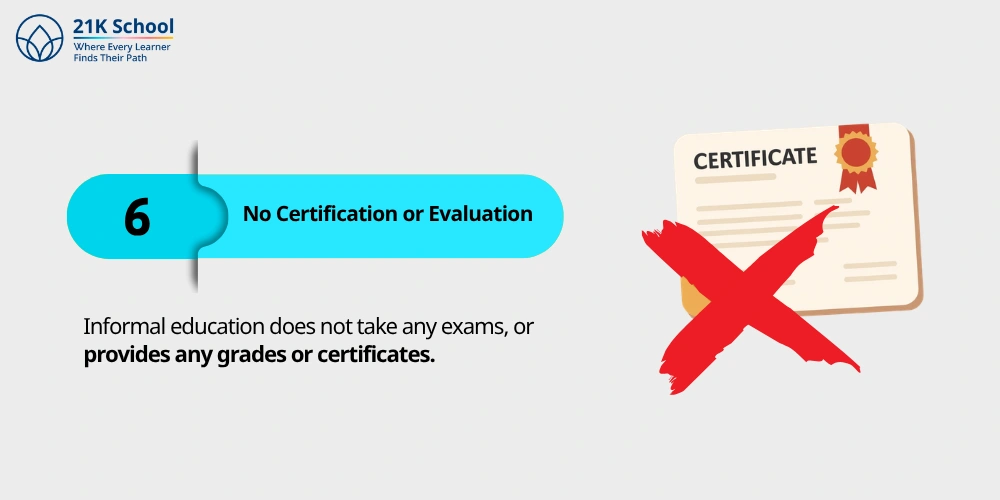
Informal education does not take any exams, or provides any grades or certificates.
Learning is reflected by changes in behavior and attitude, and a better understanding of this world.
7. Flexible and Adaptable
There is a lot of flexibility and adaptation in informal education.
It readily adapts to new conditions, environment, and personal learning requirements, and thus can be used in any situation.
Examples of Informal Education
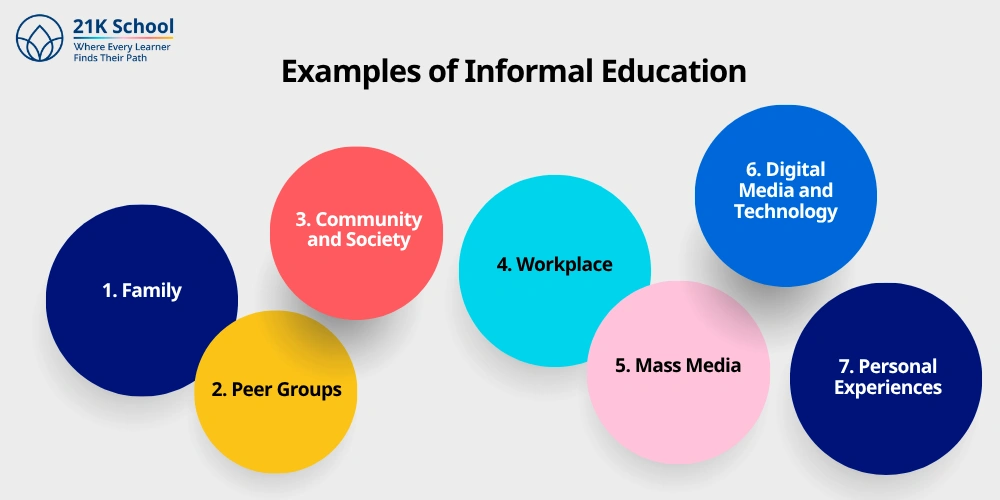
The following are examples of informal education:
1. Family
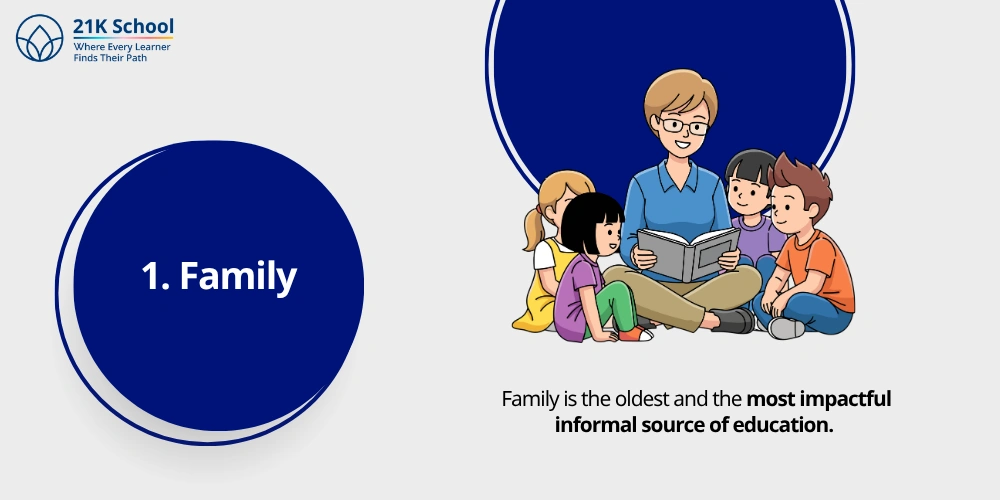
Family is the oldest and the most impactful informal source of education.
It is the parents and elders who teach children about language, manners, values, good habits, discipline, and social behavior.
The development of emotions and morals is also influenced by family relations.
2. Peer Groups
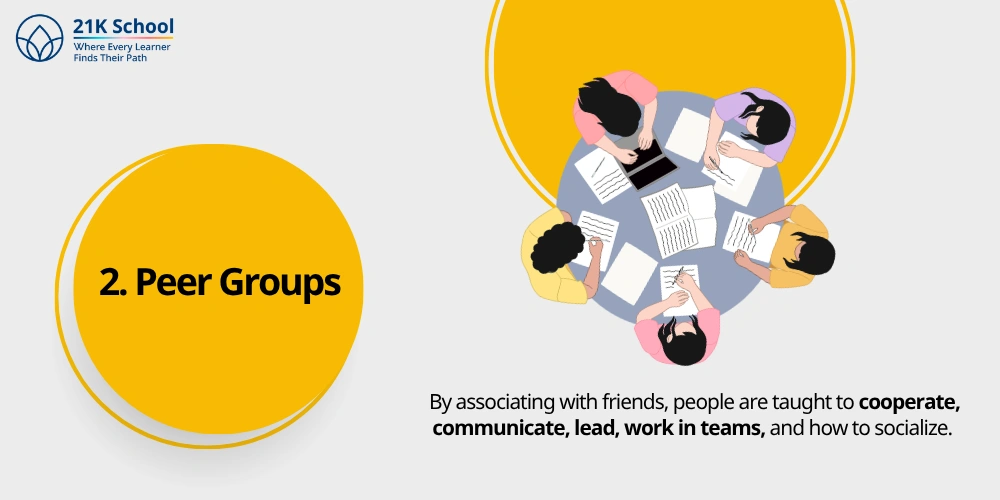
Informal education is highly dependent on peer groups.
By associating with friends, people are taught to cooperate, communicate, lead, work in teams, and how to socialize.
Attitudes and behavior are frequently influenced by peers.
3. Community and Society
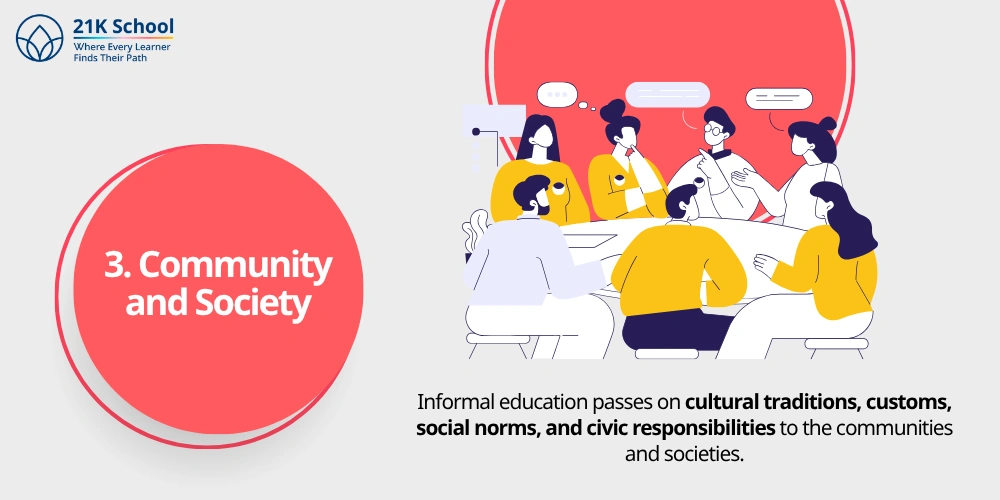
Informal education passes on cultural traditions, customs, social norms, and civic responsibilities to the communities and societies.
Cultural awareness is increased by attending festivals, social events, and community activities.
4. Workplace
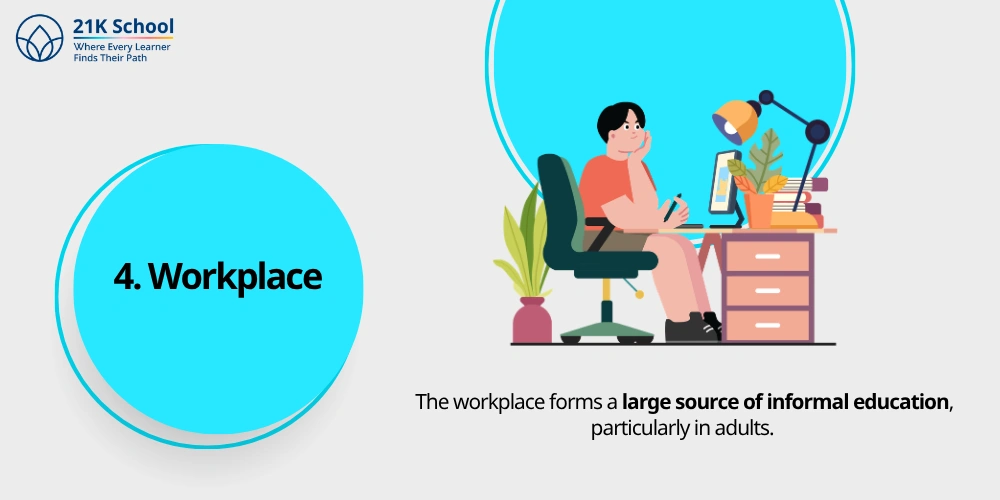
The workplace forms a large source of informal education, particularly in adults.
A lot of professional skills, work ethics, teamwork, and problem-solving abilities are acquired through observation and being exposed to or in contact with other workers.
5. Mass Media
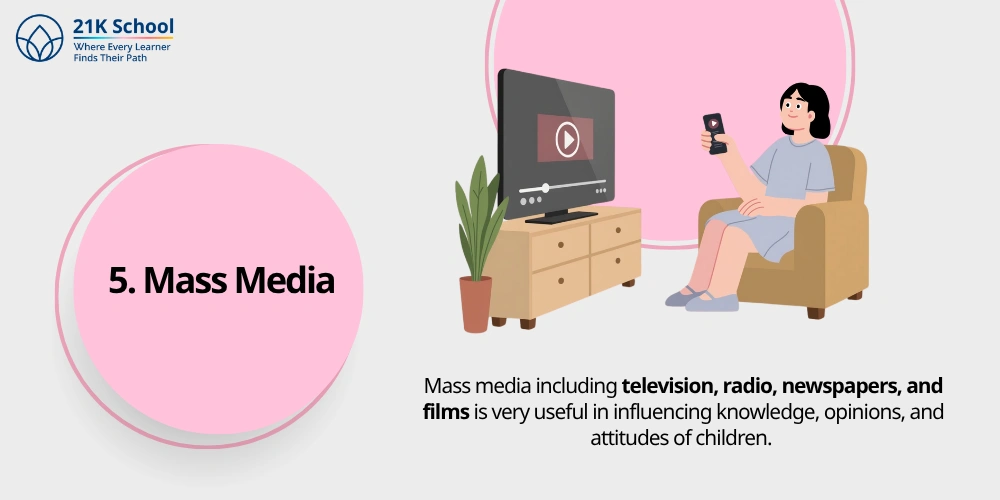
Mass media including television, radio, newspapers, and films is very useful in influencing knowledge , opinions, and attitudes of children.
They inform and provide cultural awareness about social, political, and cultural issues.
6. Digital Media and Technology
In present times, informal education has been facilitated by digital media and technology, which have turned out to be powerful means of education.
Independent learning is enabled through the internet, social media, online videos, blogs, and podcasts that allow people to acquire new skills and gain information.
7. Personal Experiences
Life experiences such as success, failure, struggles, and problematic situations can also result in valuable lessons.
Such experiences are useful in building resilience, confidence, and wisdom in individuals.
Importance of Informal Education
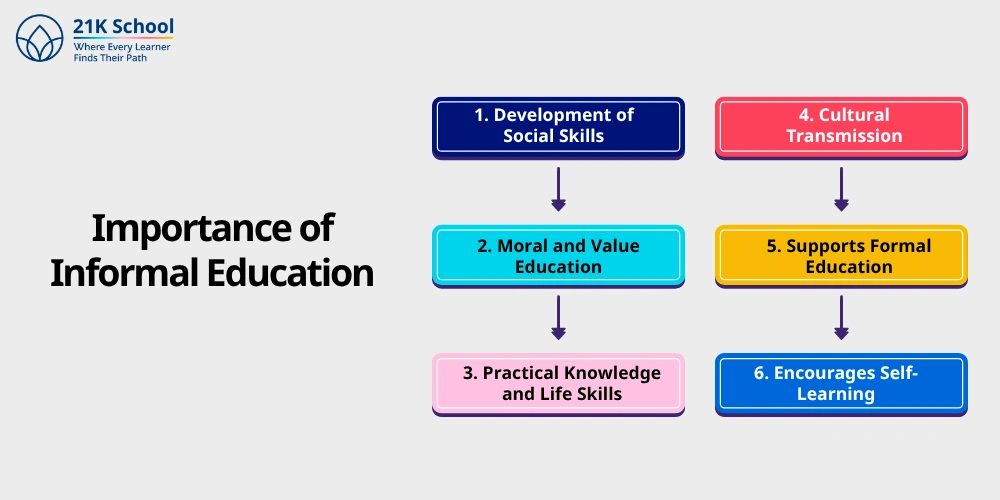
Informal education plays a vital role in the holistic development of a kid, thus improving traits beyond academics.
The following are other significance of informal education:
1. Development of Social Skills
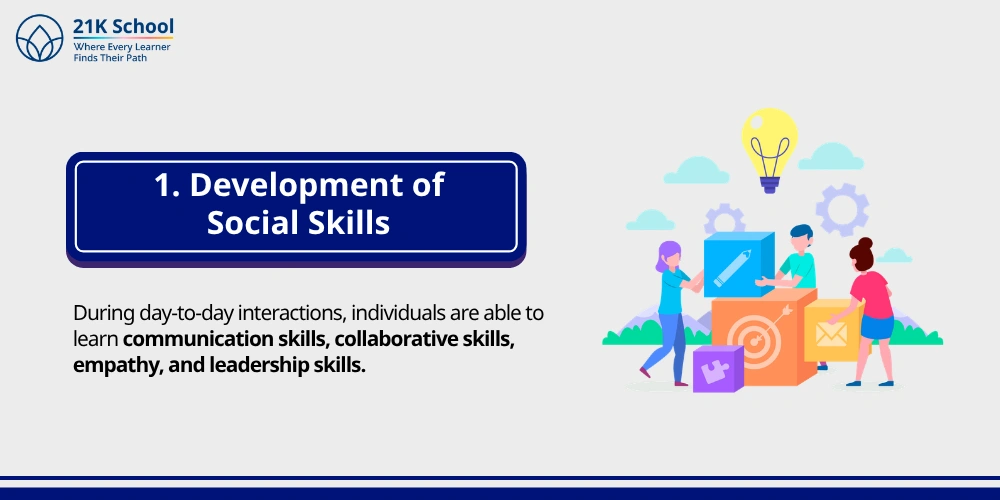
During day-to-day interactions, individuals are able to learn communication skills , collaborative skills , empathy, and leadership skills .
These are social skills that are vital in personal life as well as professional life.
2. Moral and Value Education
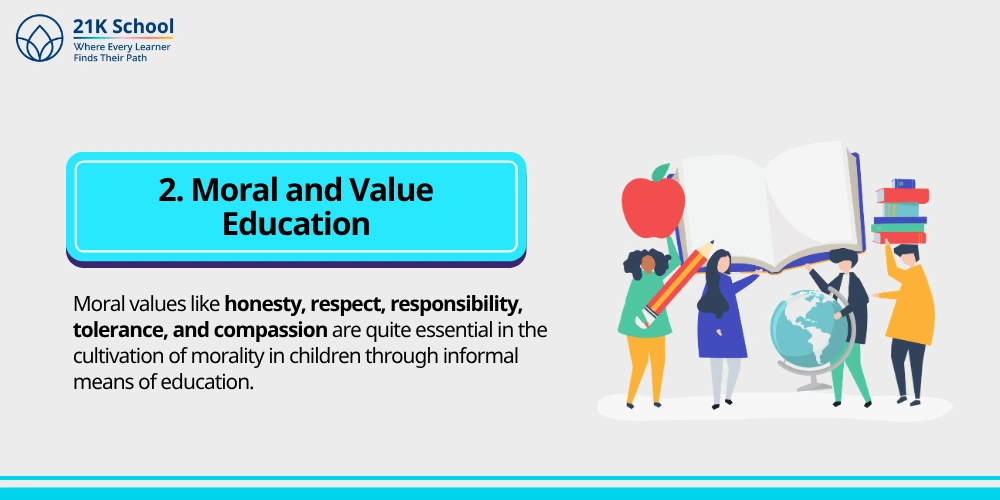
Moral values like honesty, respect, responsibility, tolerance, and compassion are quite essential in the cultivation of morality in children through informal means of education.
These are values that can be only acquired by self-learning and not by being taught with traditional means of learning
3. Practical Knowledge and Life Skills
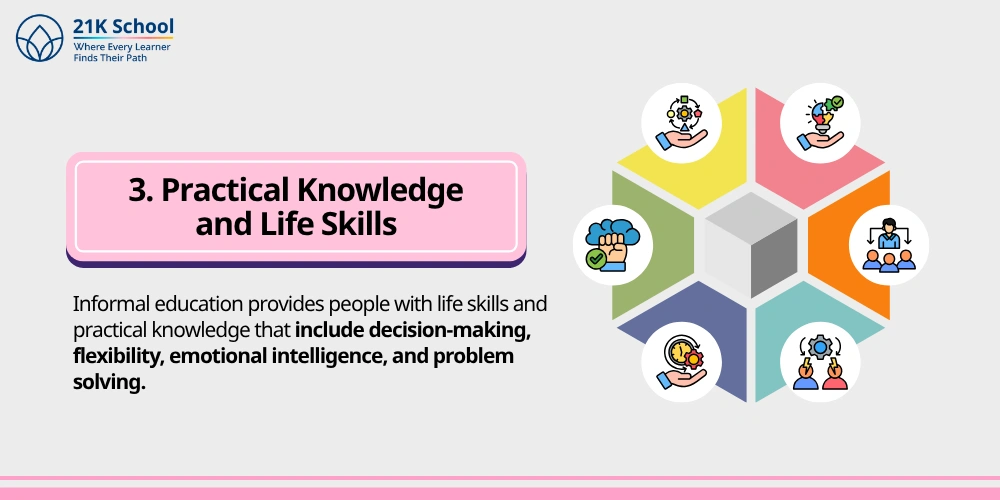
Practical knowledge and life skills are imperative in day-to-day life.
Informal education provides people with life skills and practical knowledge that include decision-making , flexibility, emotional intelligence , and problem solving.
4. Cultural Transmission
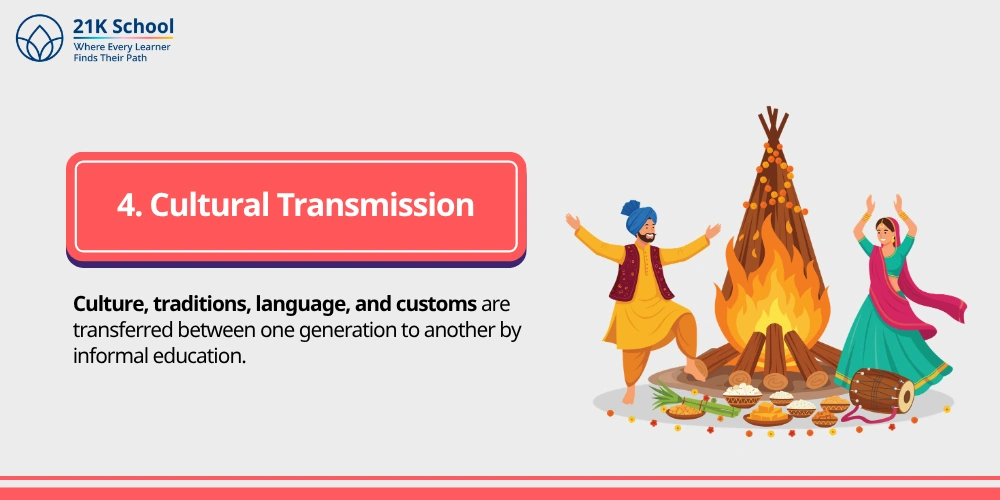
Culture, traditions, language, and customs are transferred between one generation to another by informal education.
This aids in continuation of culture and social continuity.
5. Supports Formal Education
Informal education helps in favouring formal education as it strengthens the academic learning process and offers the real world perspective.
It assists the learners to put theoretical knowledge to practical use and get real knowledge.
6. Encourages Self-Learning
Informal education encourages curiosity, creativity, and self directed learning.
It motivates people to be self-educators and to educate themselves throughout their lives.
Concluding Comments
Informal education is the education that makes you a good citizen and human being.
It happens outside schools in societal premises including community events, societal gatherings, family, friends, and cultural festivals.
To evaluate if someone has a good informal education, we need to evaluate their behavior and attitudes in different life situations.
This is why formal education alone shouldn’t be our only focus. Instead, informal education should also be emphasized by the society as they guide in a child’s overall growth.
