


Why don’t all students study as much but get better scores? What do they know that you don’t?
Learning does not require studying for long hours, wasting precious time, or resorting to last-minute cramming to achieve academic success. As a matter of fact, not all successful students study harder to improve their performance; A great number of successful learners discover their own way to learn faster by employing less popular but highly effective methods that help them absorb information quickly and retain it much longer.
Such techniques are not normally taught in classrooms, and which is why they feel like secrets. These techniques consist of Active Recall, Spaced Repetition, Pomodoro Technique, Mind Mapping, the SQ3R Method, the Feynman Technique, and Environment Optimisation.
Combined, they allow students to study smarter, stress less and have better results in a shorter time. Students who have a hard time focusing, forget information, or simply want to study more, better and faster without becoming exhausted, all these approaches will help them learn more effectively, confidently and efficiently.
Table of Contents
What are the 7 Secret Methods for Studying?
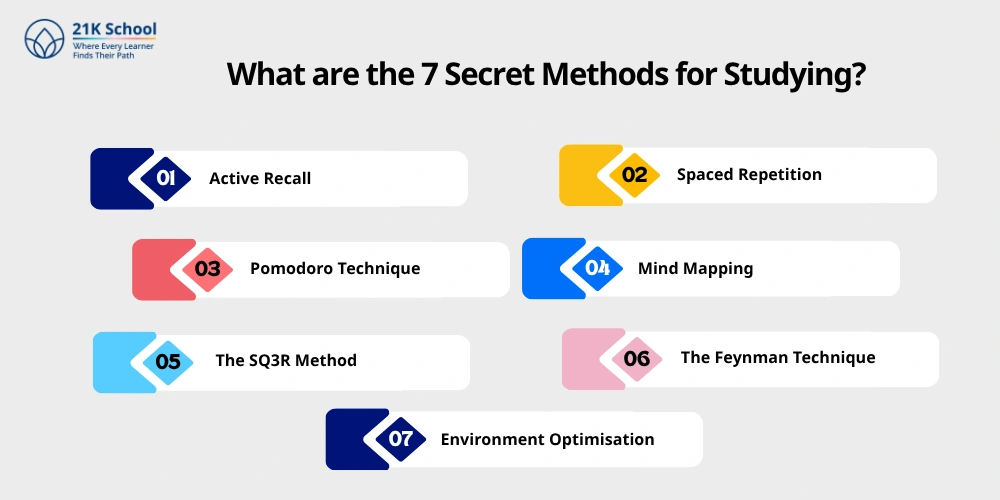
The 7 secret methods of study are useful techniques which assist students to study more quickly and recall more. These Techniques lay emphasis on intelligent studying, increased concentration and long-term comprehension so that learning becomes easy and effective. The 7 below-mentioned secret methods of studying are mentioned below.
1. Active Recall
Active recall is an effective study method whereby the emphasis is on the retrieval of information from memory as opposed to the rereading of notes. You self-test with questions, flashcards or by explaining a topic.
This enhances memory tracks in the brain, enhances long-term memory and makes the recall of information easier during examinations, and thus your study session becomes a lot more efficient.
2. Spaced Repetition
Spaced repetition is a method of studying in which the information is reviewed in a gradually increasing interval rather than studying all the information in one session. Reviewing material before you forget it, your brain strengthens its memory associations.
It is particularly applied in memorising formulae, definitions and vocabulary, which helps information to come out of the short-term memory into the long-term storage.
3. Pomodoro Technique
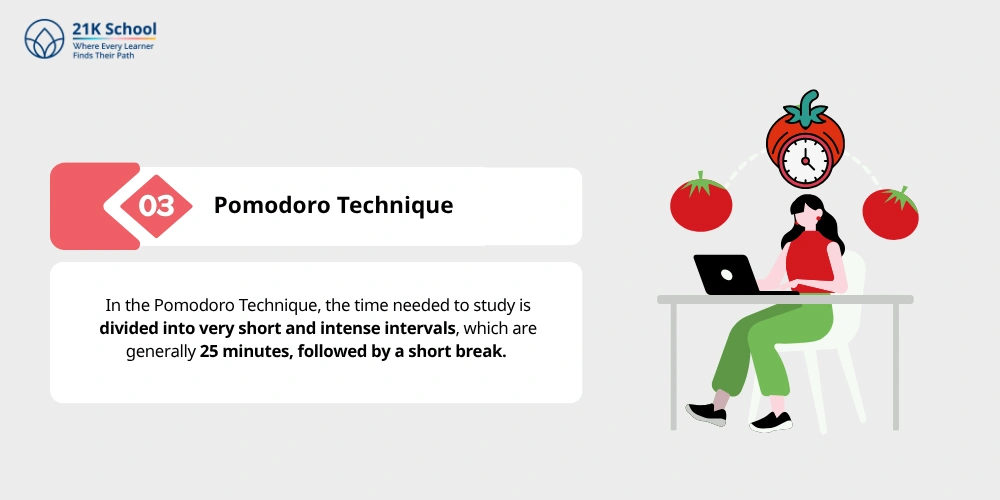
In the Pomodoro Technique, the time needed to study is divided into very short and intense intervals, which are generally 25 minutes, followed by a short break. These frequent breaks aid in preventing burnout and remaining focused.
This method increases productivity by reducing distractions; hence, one will be motivated, and long study times will not be very intimidating and manageable.
4. Mind Mapping
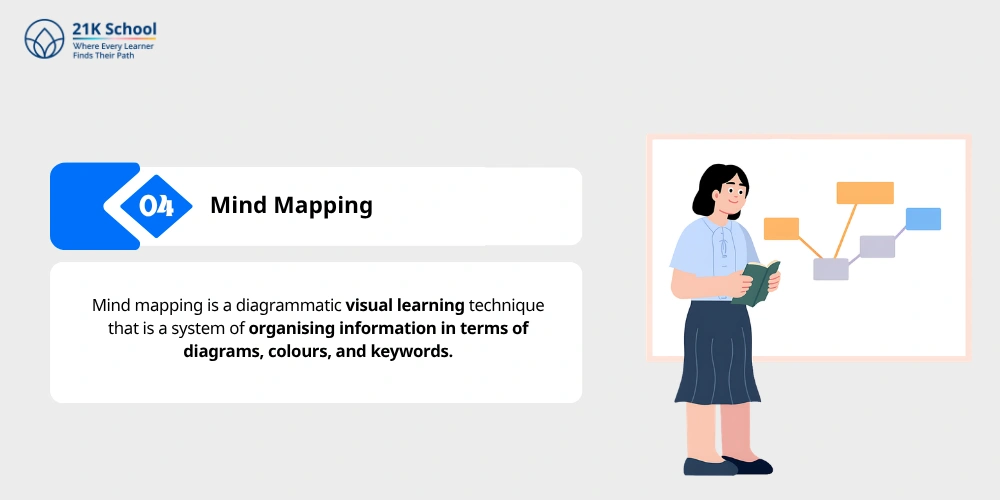
Mind mapping is a diagrammatic visual learning technique that is a system of organising information in terms of diagrams, colours, and keywords.
The issues related to ideas in the centre and spread away. It is more memorable because it shows the interrelations between concepts, improves creativity and eases the process of remembering complex information when it comes to revising.
5. The SQ3R Method
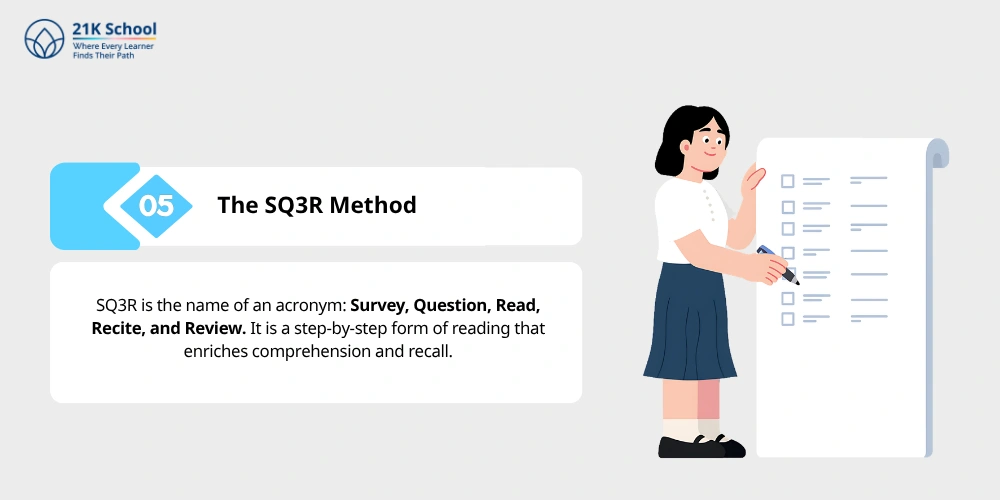
SQ3R is the name of an acronym: Survey, Question, Read, Recite, and Review. It is a step-by-step form of reading that enriches comprehension and recall.
Questioning and summarising are a more effective way of active participation in the text, as the students can understand it better, remain concentrated in the reading process, and keep in mind the main points more.
6. The Feynman Technique
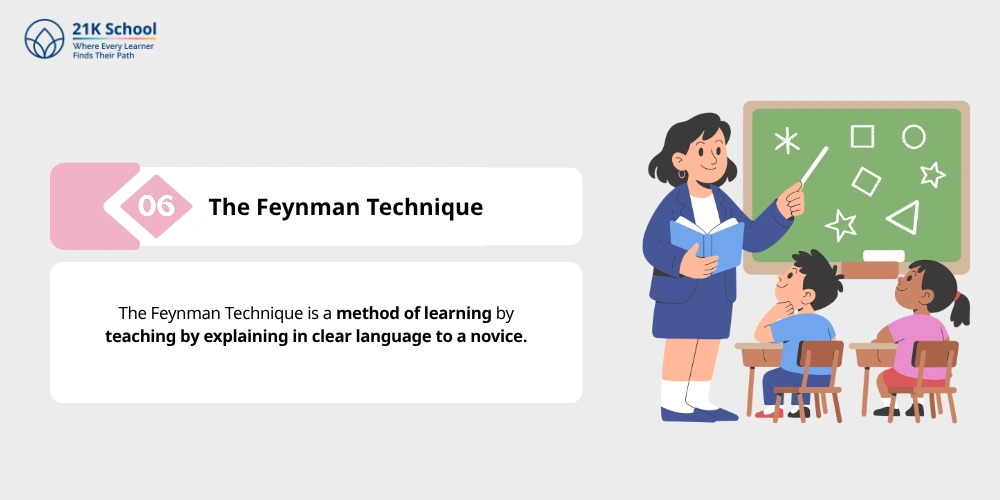
The Feynman Technique is a method of learning by teaching by explaining in clear language to a novice.
When you find it hard to put across something, there are holes in your knowledge. Revisiting and clarifying the content helps to create a clear understanding, enhance memory while studying, and create more profound and sure learning.
7. Environment Optimisation
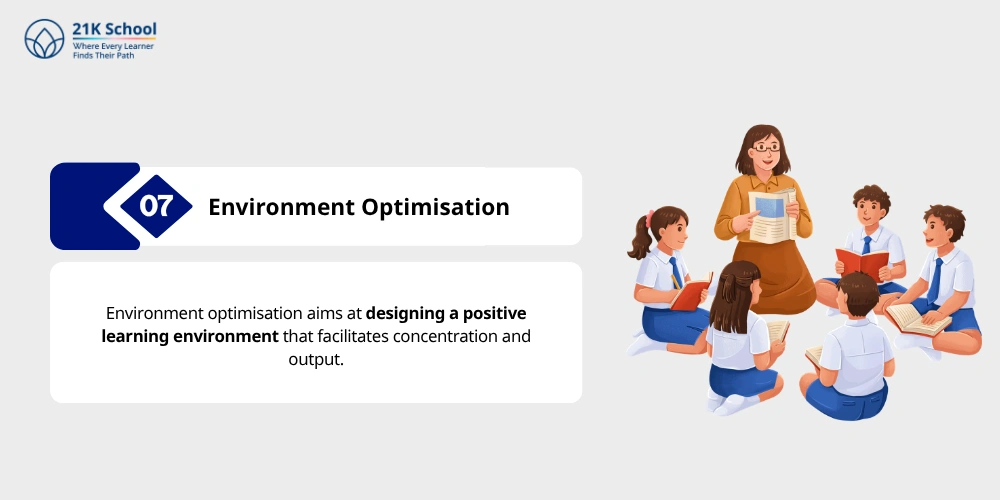
Environment optimisation aims at designing a positive learning environment that facilitates concentration and output. These encompass a good lighting, comfortable seats, minimal noise and minimal distractions such as phones.
It will reduce students stress, enhance concentration, improving attention span and also condition your brain to think of the place as a good and productive studying experience.
Conclusion
It is possible to study smarter, not longer, to achieve academic success. Such techniques as Active Recall, Spaced Repetition, Pomodoro, Mind Mapping, SQ3R, the Feynman Technique, and Environment Optimisation can be useful to focus the mind, memorise, and understand.
Such techniques lower stress levels and burnout and help to learn more effectively. Applying them regularly, students are able to memorise more information, become more motivated, and receive higher grades without spending their time on bad study habits.

You may also want to read
CBSE Passing Marks Out of 100: Theory, Practicals & Grading
- Last updated on: 23 Mar, 2026
- 6 min read