Cognitive and Non-Cognitive Skills Shaping the Future of Learners
 Written byAnshu KumariContent Specialist
Last modified: 26 Oct 2026 9 min read
In present times, employers want candidates with some real skills that drive imagination, leadership abilities, critical thinking, and creativity.
These abilities constitute both the cognitive and non-cognitive skills to ensure that individuals develop emotional intelligence and stability while attaining success.
For that, learners need to be trained likewise from the very beginning. Parents and facilitators should come along in preparing children for the future and make them capable of competing in the practical world.
In this piece, we shall look at cognitive skills and non-cognitive skills separately and compare them later in detail to understand their differences.
What are cognitive skills?
Cognitive skills are those skills that enable thinking, processing, perception, memory, attention, reasoning, observation, judgment, and learning in our everyday lives. Everything that involves cognition can be practised through cognitive skills.
The Latin word "cognoscere" denotes the word "cognition", which means "to know" or "to recognise" something. Cognitive skills also involve the ability of human minds to read, remember, solve problems, make decisions, and evaluate situations.
According to the American Psychological Association, cognition can be described as all forms of awareness and knowledge that give space to perceiving, conceiving, remembering, judging, imagining, problem-solving, and reasoning.
It is high time that we build these brain-based abilities in our children, whether at home or school.
Characteristics of cognitive skills
Some of the key features of cognitive skills can be mentioned as follows:
- Inter-connectedness: Cognitive skills are interconnected with each other, as one task, like reading, involves multiple cognitive abilities like observation, attention, perception, and imagination.
- Neuroplasticity: Cognitive skills can be reorganized and adopted throughout life through practice. The rewiring of neurons is called neuroplasticity and cognitive skills show neuroplasticity.
- Goal-oriented: Reading involves focus and thus, ignoring distractions. This shows how cognitive processes are focused on reaching a goal.
- Developmental Trajectory: The mastery of cognitive skills is also dependent on the genetics, developmental age, physical settings, and brain development of an individual. When we are small, our cognitive shifts show sensory inputs, but with age cognitive learning turns abstract and logical.
- Measurable: Cognitive skills can be measured in terms of their strength and the intense practice needed to excel in them. Cattell-Horn-Carroll theory and Bloom's taxonomy contributed towards this property of cognitive skills, as they could be evaluated precisely with the help of processing speed, working memory, attention, and fluid reasoning.
What are non-cognitive skills?
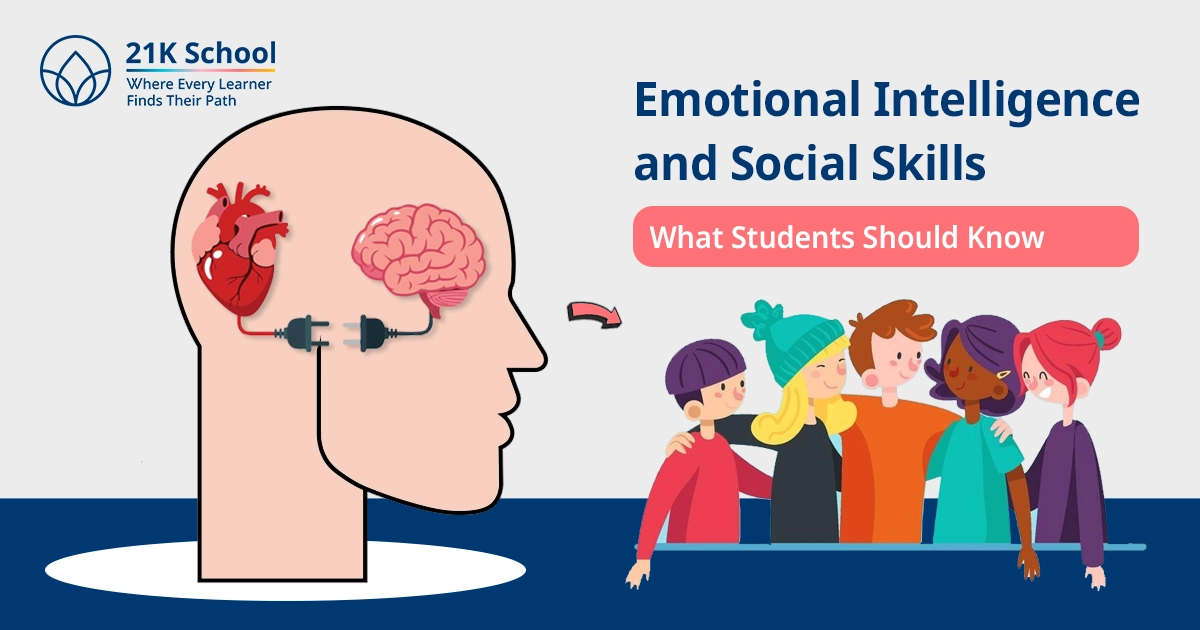
Non-cognitive skills are those skills that enable us to work better in social environments. This means they are the skills that revolve around character traits, attitudes, temperament, etc., constituting the soft skills of a person.
These skills greatly impact the level of success an individual experiences because they are based on all the human interactions that we have in our daily routine.
Non-cognitive skills are very prominent in social settings where you need to be diplomatic or street-smart. So, if you want your kids to have these skills from an early age, you will have to train them accordingly at home or at school.
Characteristics of non-cognitive skills
Non-cognitive skills have the following characteristics that make them unique:
- Affected by Personality: Character traits such as empathy, resilience, consistency, and self-regulation come through upbringing and non-cognitive skills are strongly affected by them. This is because these traits define how a person approaches life and upcoming challenges through social-emotional maturity.
- Improved through Experience: One way to enhance non-cognitive skills is through gaining experience: in personal life as well as career. By vocally speaking your thoughts out loud in a social setting frequently, you get to learn about people's psychology and how to maintain your emotional scale to achieve your goals.
- Can Predict Success: Non-cognitive skills are greatly responsible for achieving success, as they affect how you present yourself in social gatherings and maintain fruitful relationships with others to climb the ladder of development.
Difference between cognitive and non-cognitive skills
Cognitive and non-cognitive skills are different, as their names suggest. The detailed explanation and the table given below show a clear distinction in how both differ and in what aspects.
| Basis of Difference | Cognitive Skills | Non-Cognitive Skills |
|---|---|---|
| Meaning | Cognitive skills are mental abilities used to process information think learn remember solve problems | Non-cognitive skills are social emotional behavioural attitudes that shapes human relations and personality. |
| Nature | These skills are trainable and measurable. Mostly based on brain abilities and intellectual traits. | The nature of non-cognitive skills is that they are emotional, social, and behavioral abilities. |
| Focus | Put emphasis on learning, reasoning, thinking, and knowledge acquisition. | Focuses on: behavior, mindset, emotional intelligence, and interpersonal relationships. |
| Measurement | Measured through exams, IQ tests, quizzes, and academic assessments. | Measured through observation, behavior analysis, participation, and social interaction. |
| Examples | Memory, attention, logical reasoning, critical thinking, language processing, problem-solving, and decision-making. | Communication, teamwork, leadership, empathy, self-discipline, motivation, adaptability, and resilience. |
| Role | Play a vital role in academics and intellectual development | Non-cognitive skills play a crucial role in achieving career growth and forming healthy relationships with others. |
| Development | Developed through education, practice, reading, and mental exercises. | Developed through life experiences, social interaction, guidance, and emotional learning. |
| Types | Includes memory skills, processing skills, reasoning skills, perception skills, and language skills. | Includes social skills, emotional skills, interpersonal skills, self-management skills, and personality traits. |
| Importance | Important for academic achievements and in-general intelligence. | Essential for emotional well-being, communication, teamwork, leadership, and career success. |
1. Meaning
- Cognitive Skills: Cognitive skills are the abilities of an individual to think deeply, evaluate, focus, learn, adapt, reason, analyse, and solve problems in the real world.
- Non-Cognitive Skills: These are the skills that promote healthy human interactions in one's personal and professional lives through attitudes and behaviours.
2. Nature
- Cognitive Skills: They are based on brain functions like thinking, perceiving, analysing, and concluding.
- Non-Cognitive Skills: These are behavioural attributes of an individual shown in social settings. They are emotional in nature.
3. Focus
- Cognitive Skills: The main aim of cognitive skills is to think deeply and learn new things with great precision.
- Non-Cognitive Skills: Non-cognitive skills aim at improving the communication skills of an individual through body gestures, actions, and words.
4. Measurement
- Cognitive Skills: Measurement of cognitive skills is possible with some intelligence tests and assessments designed to do so.
- Non-Cognitive Skills: Non-cognitive skills can be measured in terms of emotional aspects through observation of social conversations.
5. Examples
- Cognitive Skills: Some cognitive skills that are applied in daily life include perception, problem-solving, memory, reasoning, and creativity.
- Non-Cognitive Skills: Motivation, adaptability, perseverance, emotional maturity, empathy, and communication skills are examples of non-cognitive skills seen in daily practice and human interactions.
6. Role
- Cognitive Skills: Cognitive skills foster the ability to learn something new and become career-smart through achievements in academics and mastering intellectual processes.
- Non-Cognitive Skills: Majorly contribute towards personal and professional achievements in life because every interaction leads to improved soft skills and the ability to lead a group.
7. Development
- Cognitive Skills: The development of cognitive skills is possible through repeated practice. Environmental aspects, nutritional factors, and genetic makeup affect cognitive skills as children grow into adults.
- Non-Cognitive Skills: The most generic way to exercise non-cognitive skills is to learn from each exposure and participation in group gatherings.
8. Types
- Cognitive Skills: Cognitive skills are divided into 5 central types involving memorisation abilities, reasoning skills, perceptual thinking, creative learning, and problem-solving.
- Non-Cognitive Skills: You can notice non-cognitive skills like self-management skills, emotional skills, social skills, interpersonal skills, and personality traits.
9. Importance
- Cognitive Skills: Cognitive skills are vital for adequate cognitive development of children so that they can be successful academically and become leaders in later periods of life.
- Non-Cognitive Skills: Non-cognitive skills enable a child to ace professional as well as personal life goals. Every relationship and interaction becomes healthy and fruitful with proper non-cognitive skills.
Relationship between cognitive and non-cognitive skills
We can say that to understand and experience the real essence of life, both cognitive and non-cognitive skills are vital. When both of them exist in balance within somebody, they can become successful ideals in their own fields.
A person can only lead a satisfactory life when they have a balance between emotional awareness and career advancements. The non-cognitive skills make sure that a person doesn't give up on their goals and reaches their goals with patience and grit.
These skills act as lifelong learnings for the optimal and holistic development of individuals. In real-life practice, it is necessary to inculcate both cognitive and non-cognitive skills in children through facing challenges and exposure.
What is cognitive vs non-cognitive ethics?
Cognitive and non-cognitive ethics are two perspectives of the same moral statement.
The former is cognitive (which means a moral statement is stated like a fact), while the latter (non-cognitive) states that a moral statement is influenced by emotions and can be true or false.
The key aspects utilised in cognitive ethics are moral realism and moral relativism. Moral realism says that some moral values are facts that still need to be discovered, while moral relativism portrays the subjectivity of moral values depending on the varying cultures and societies.
Non-cognitive ethics believes that moral statements are a depiction of emotions and can be prescribed or rejected based on them.
Conclusion
Cognitive and non-cognitive competencies are essential for the healthy regulation of life and overall development.
Cognitive skills are responsible for stimulating thinking abilities in a learner so that they can attain scholastic goals and become intellectual.
Non-cognitive skills let us comprehend the essence of human resources through building interpersonal skills. They also instil empathy and emotional awareness of oneself and others.
Frequently asked questions
5 questions
What are cognitive and non-cognitive skills?
Cognitive skills are mental functions such as memory, reasoning and problem-solving skills which are required for the acquisition and understanding of information. Non-cognitive skills include social and emotional skills, including communication, motivation, teamwork, and self-discipline.
Can cognitive skills be improved?
Yes, cognitive skills can be enhanced through continuous learning and daily practice. Reading, solving problems, practising brain exercises, and having a good sleep can speed up the process of cognitive learning.
What are cognitive skills?
Cognitive skills facilitate someone's ability to process information appropriately. These are the brain-based abilities that are required for thinking, learning, remembering, understanding, and decision-making.
What cognitive and non-cognitive skills are used in the teaching and learning process?
Cognitive skills involved in the process of teaching and learning include metacognition, focus, attention, and brain-based thinking. Some non-cognitive skills that are important for successful learning and teaching are interpersonal communication, perseverance, motivation, etc.
Do non-cognitive skills contribute to achievement more than cognitive skills?
Yes, non-cognitive skills foster the development of cognitive skills in human beings as they motivate learners to keep on trying and build brain-based abilities for attaining success in real life.
About the author
Anshu Kumari
Content Specialist
Anshu Kumari is an Education Content Specialist at 21K School- a fully accredited institute- Cambridge International (IA702) and Pearson Edexcel (94883). She focuses on the in-depth research and creation of the well-drafted guides on NIOS admission, Indian Education Policy, and competitive exam preparation. With around 2 years of experience at 21K School, her psychology background informs her approach to the education content and hence focuses on creating guides to address the real anxieties of the guardians. She writes well-researched articles on competitive exam timelines, stream selection, and board choices by referring to the official resources. All Anshu’s content pieces are fact-checked against the board and primary government official resources and is dedicatedly reviewed by the school’s academic team.
Every 21K School guide is written by our education team and reviewed by a subject facilitator before publishing.
Exploring a CBSE-pathway online school?
Talk to an advisor about 2026–27 admissions — no obligation.
Talk to an advisorComments
No comments yet — be the first to share your thoughts or ask a question.