


Are you a parent who wants the best for their kids’ early-childhood education and is confused to choose between Montessori and preschool?
We, at 21K School, believe that children’s early education benefits from parental involvement and decision-making.
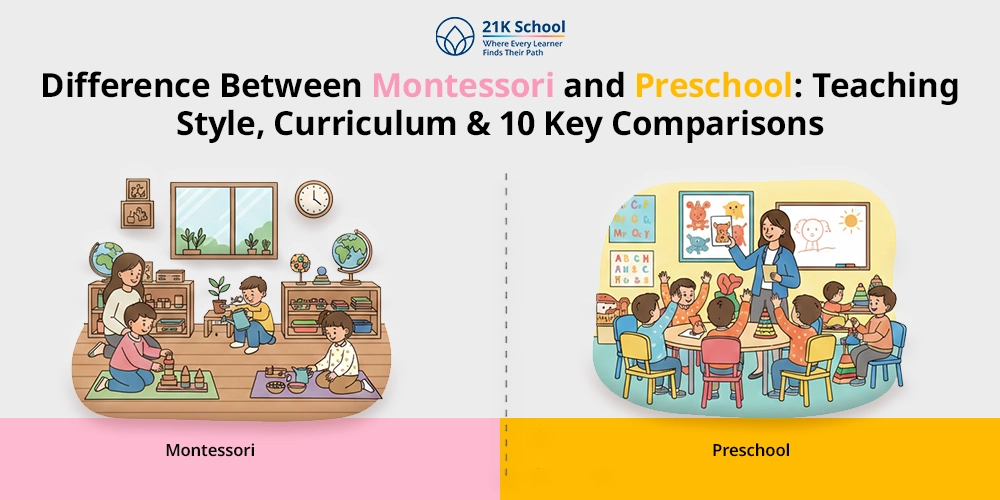
Though Montessori and Preschool are both focused on providing learners with the best mode of education, their class set-up, teaching methodologies, curriculum, and philosophies towards education differ greatly.
In this article, we will compare the difference between Montessori and Preschool. Read the comparative table and elaboration carefully for better comprehension.
Table of Contents
What is Montessori?
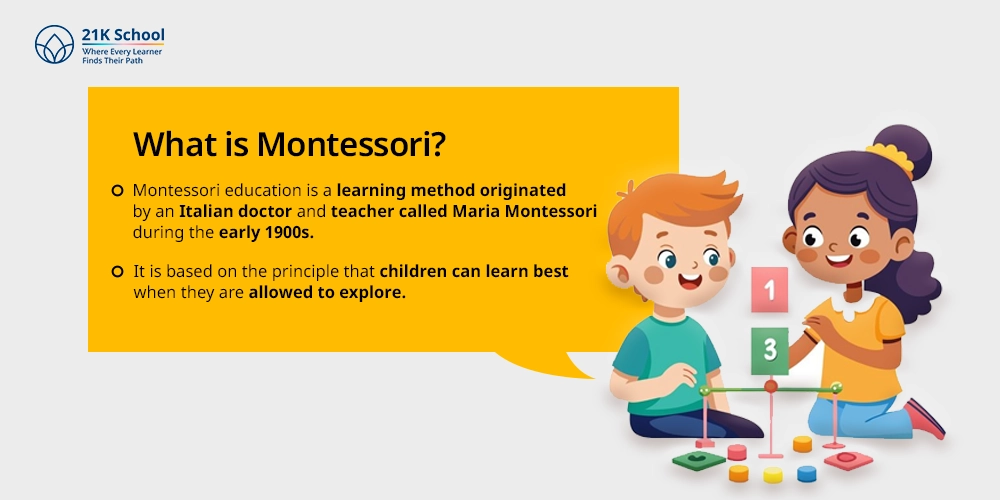
Montessori education is a learning method originated by an Italian doctor and teacher called Maria Montessori during the early 1900s.
It is based on the principle that children can learn best when they are allowed to explore.
In such well-prepared settings, kids can make their own choices and participate in activities at their own speed.
The Montessori classrooms promote independence and self-motivation to follow self-discipline, instead of following a strict study timetable developed by teachers.
This approach prioritizes hands-on, practical learning that is child-centered.
Key Features of Montessori Education
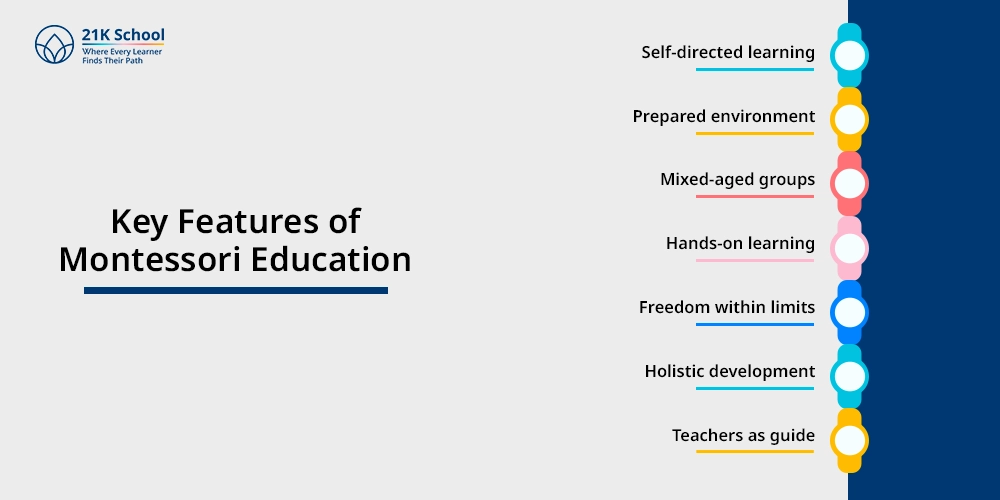
Among the main features of Montessori education are:
- Self-directed learning: Kids are free to decide what concepts they want to learn and how.
- Prepared environment: In the presence of easily accessible real-life resources, classrooms are set-up to encourage independence.
- Mixed-aged groups: Children between ages three to six learn in the same groups, which promote collaboration and peer support.
- Hands-on learning: Children investigate and learn in the actual world using tangible things to gain a better comprehension and practical application.
- Freedom within limits: Though kids are free to choose how and what they desire to learn, teachers are still in charge.
- Holistic development: Montessori classrooms commonly focus on all-round development of small learners involving their social, emotional, physical, and mental well-being.
- Teachers as guide: Instead of directing, teachers watch and mentor while also stepping in when needed.
What is Preschool?
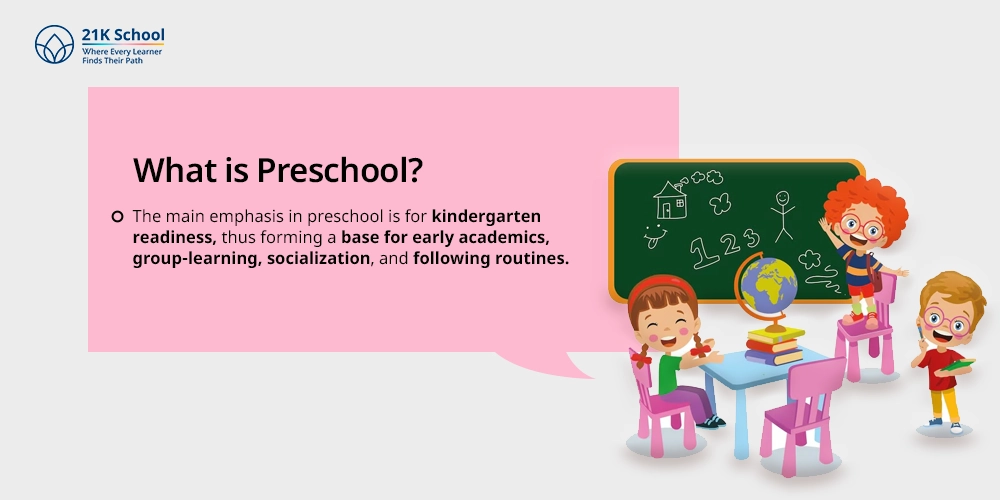
Children between the ages of two and six can benefit from traditional preschool, albeit it varies through different teacher-led programs.
The main emphasis in preschool is for kindergarten readiness, thus forming a base for early academics, group-learning, socialization, and following routines.
Most preschool programs are similar. However, they adhere to a curriculum based on the developmental standards.
Key Features of Traditional Preschool
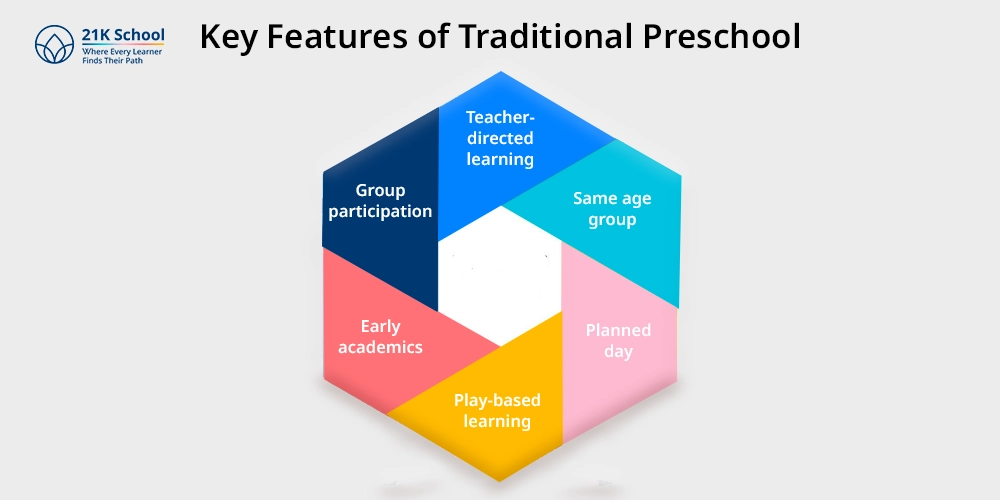
Some key characteristics for preschool include the following:
- Teacher-directed learning: The instructors design lessons on a daily basis and lead whole-group activities.
- Same age group: Children of the same age learn together.
- Planned day: Classrooms maintain a schedule and have regular times of learning, playing around, and doing things.
- Play-based learning: Play is applied as a basis in learning language, maths, and social skills.
- Early academics: To prepare kids for kindergarten, preschool teaches about alphabets, numbers, and basic skills.
- Group participation: Children learn to follow instructions and be involved in group activities.
10 Differences Between Montessori and Preschool
The difference between Montessori and Preschool can be defined on the basis of teaching philosophy, classroom curriculum, assessment process, and many more.
Let’s first understand these distinctions with a table and the bullet points.
| Aspect | Montessori | Preschool |
| Teaching Philosophy | Child-centered | Teacher-centered |
| Learning Style | Self-directed | Structured |
| Classroom Environment | Calm and organized | Colorful and activity-based |
| Role of the Teacher | Guide or facilitator | Instructor |
| Curriculum | Flexible and individualized | Standardized |
| Assessment Method | Observation-based | Worksheets and evaluations |
| Discipline | Self-discipline | Rules and consequences |
| Social Interaction | Natural and mixed-age | Group-based and same-age |
| Learning Pace | Individual pace | Group pace |
| Emphasis | Independence and lifelong learning | Kindergarten readiness |
1. Teaching Philosophy
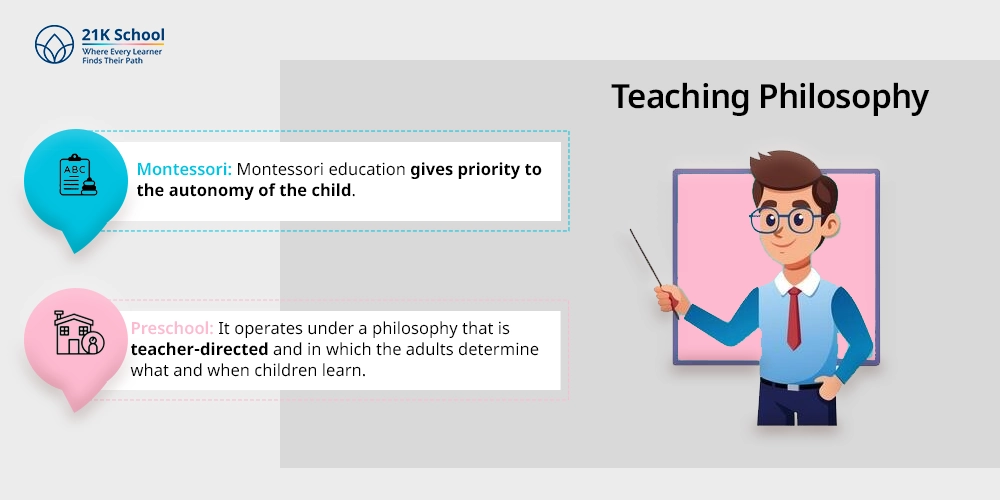
- Montessori: Montessori education gives priority to the autonomy of the child. It understands that children should be intrinsically motivated to learn and even plan their learning.
- Preschool: Preschool, in contrast, operates under a philosophy that is teacher-directed and in which the adults determine what and when children learn.
2. Learning Style
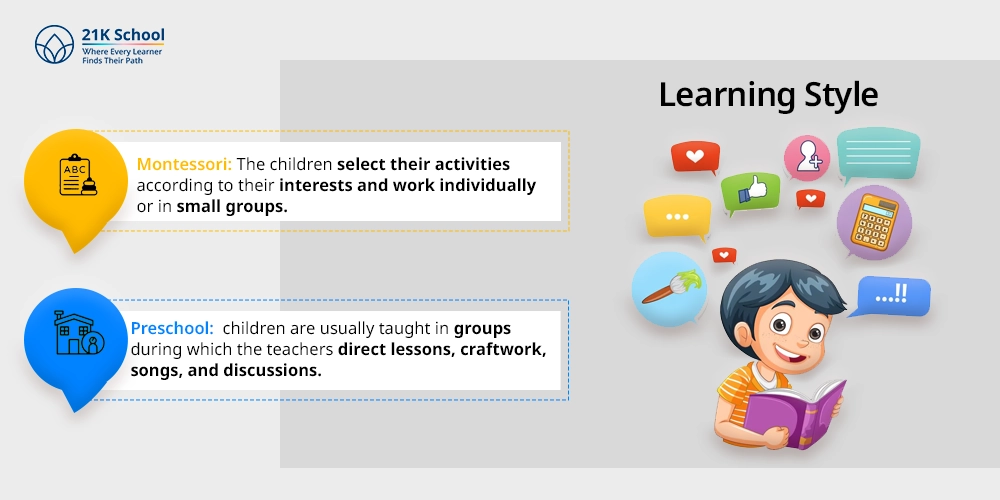
- Montessori: The children select their activities according to their interests and work individually or in small groups.
- Preschool: In preschool, children are usually taught in groups during which the teachers direct lessons, craftwork, songs, and discussions.
3. Classroom Environment
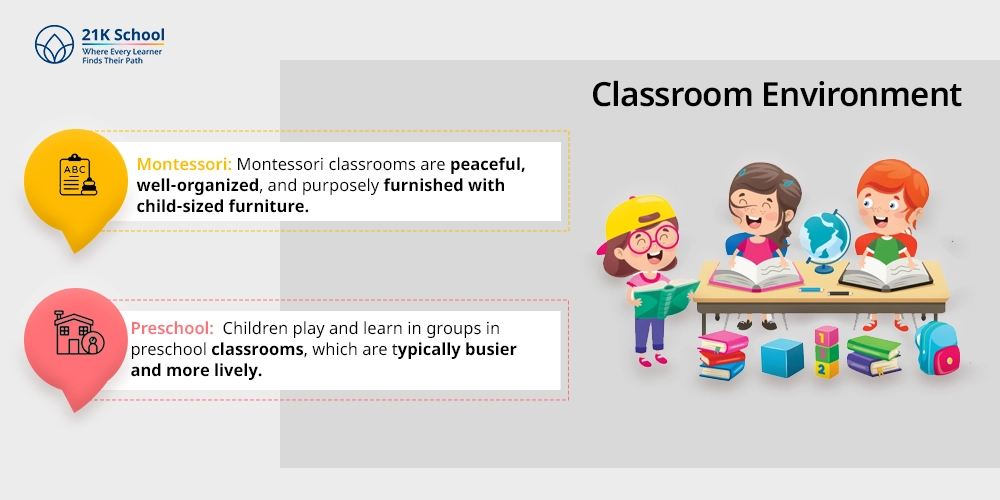
- Montessori: Montessori classrooms are peaceful, well-organized, and purposely furnished with child-sized furniture and materials put on open shelves.
- Preschool: Children play and learn in groups in preschool classrooms, which are typically busier and more lively.
4. Role of the Teacher
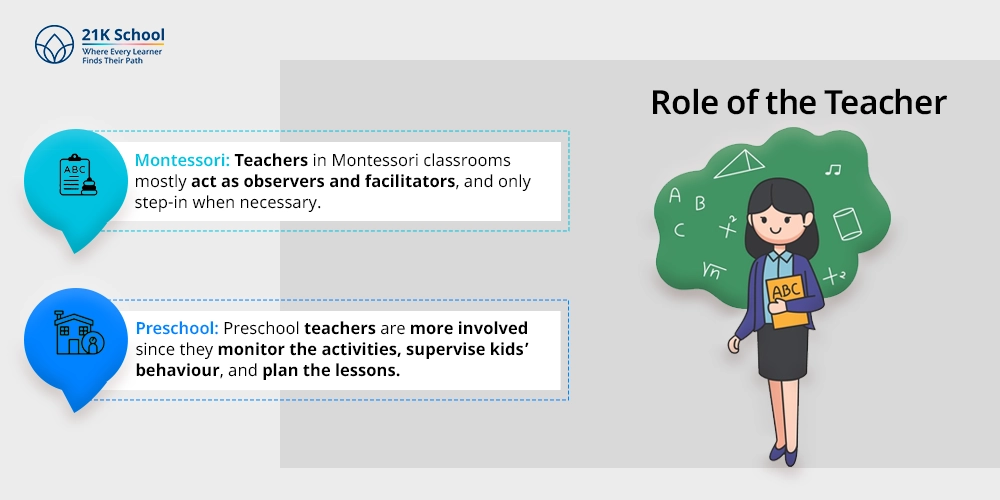
- Montessori: Teachers in Montessori classrooms mostly act as observers and facilitators, and only step-in when necessary.
- Preschool: Preschool teachers are more involved since they monitor the activities, supervise kids’ behaviour, and plan the lessons.
5. Curriculum
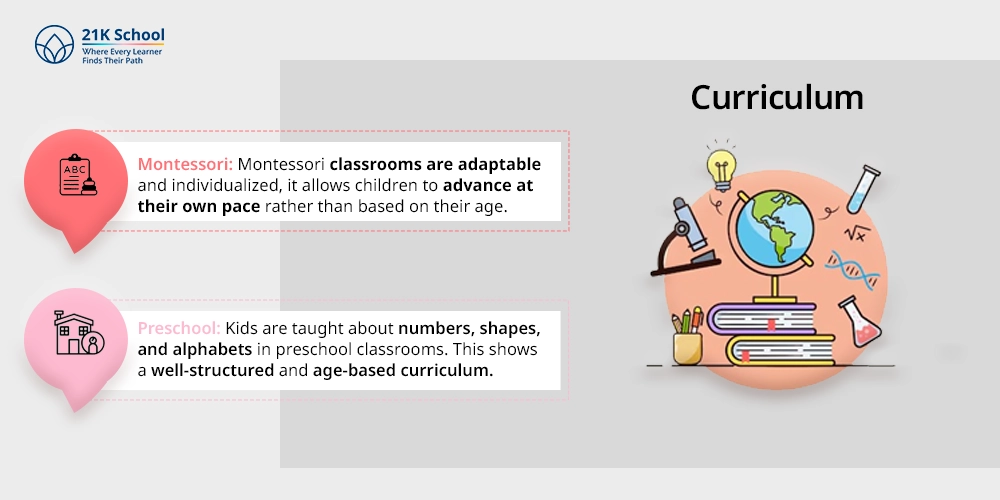
- Montessori: Because Montessori classrooms are adaptable and individualized, it allows children to advance at their own pace rather than based on their age.
- Preschool: Kids are taught about numbers, shapes, and alphabets in preschool classrooms. This shows a well-structured and age-based curriculum.
6. Assessment Method
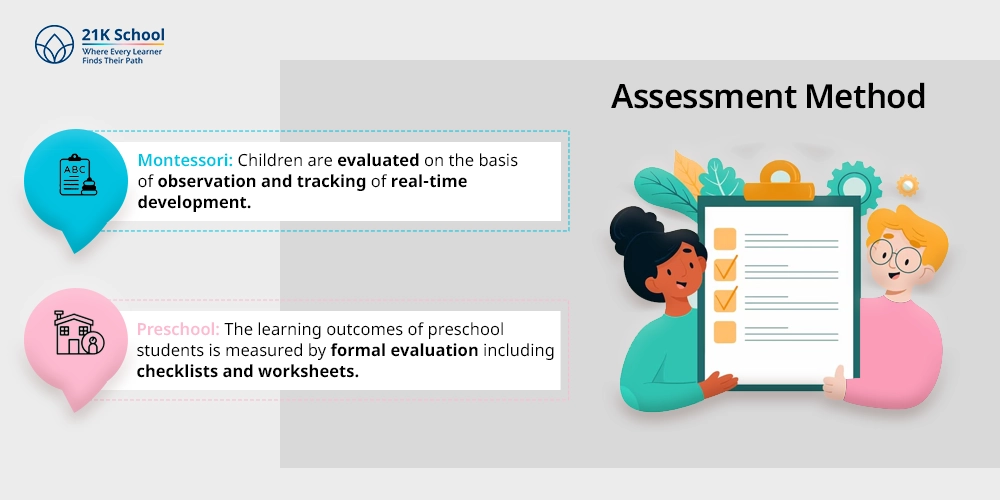
- Montessori: Children studying in Montessori are evaluated on the basis of observation and tracking of real-time development.
- Preschool: The learning outcomes of preschool students is measured by formal evaluation including checklists and worksheets.
7. Discipline and Behavior Management
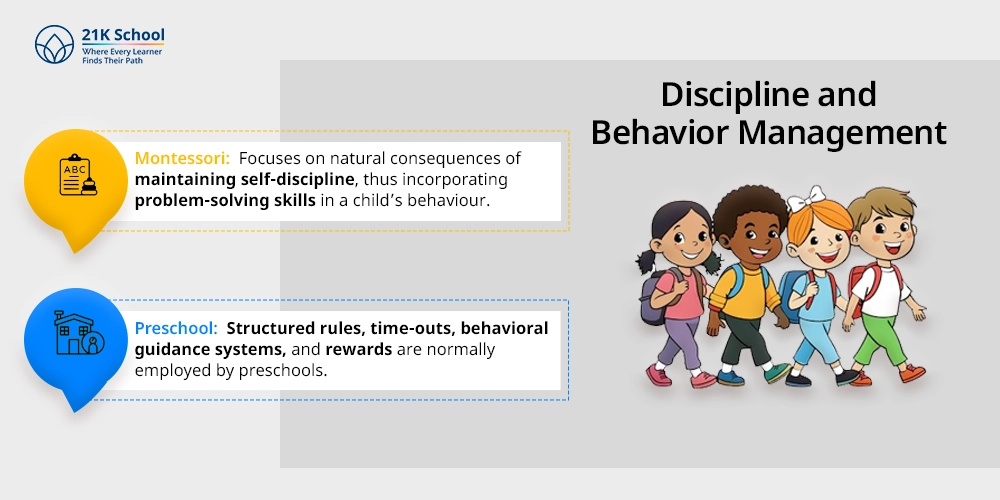
- Montessori: Montessori focuses on natural consequences of maintaining self-discipline, thus incorporating problem-solving skills in a child’s behaviour.
- Preschool: Structured rules, time-outs, behavioral guidance systems, and rewards are normally employed by preschools.
8. Social Interaction
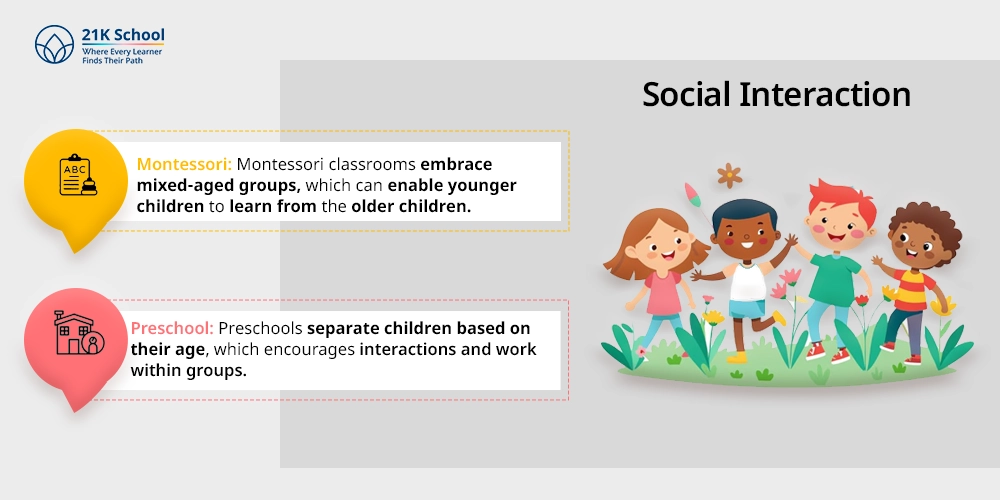
- Montessori: Montessori classrooms embrace mixed-aged groups, which can enable younger children to learn from the older children. The older ones are thus trained to acquire leadership skills.
- Preschool: Preschools separate children based on their age, which encourages interactions and work within groups.
9. Learning Pace
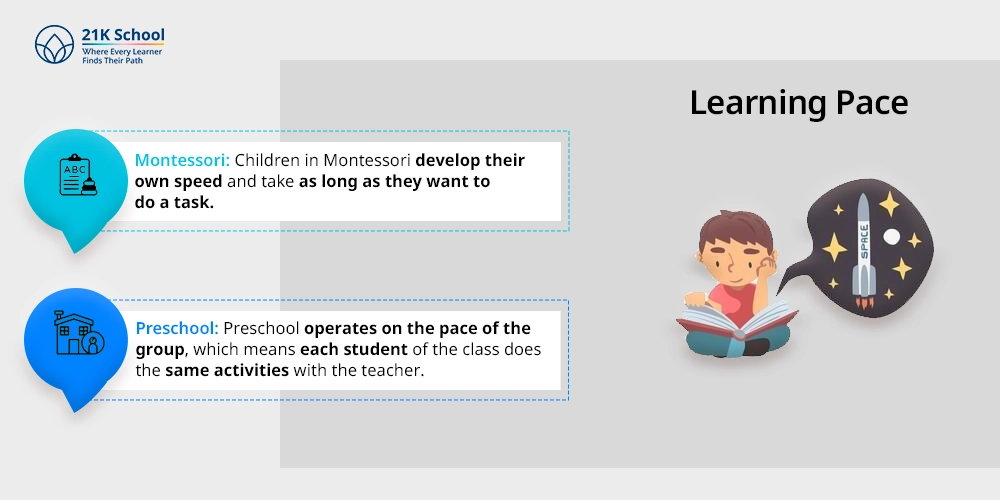
- Montessori: Children in Montessori develop their own speed and take as long as they want to do a task.
- Preschool: Preschool operates on the pace of the group, which means each student of the class does the same activities with the teacher.
10. Emphasis
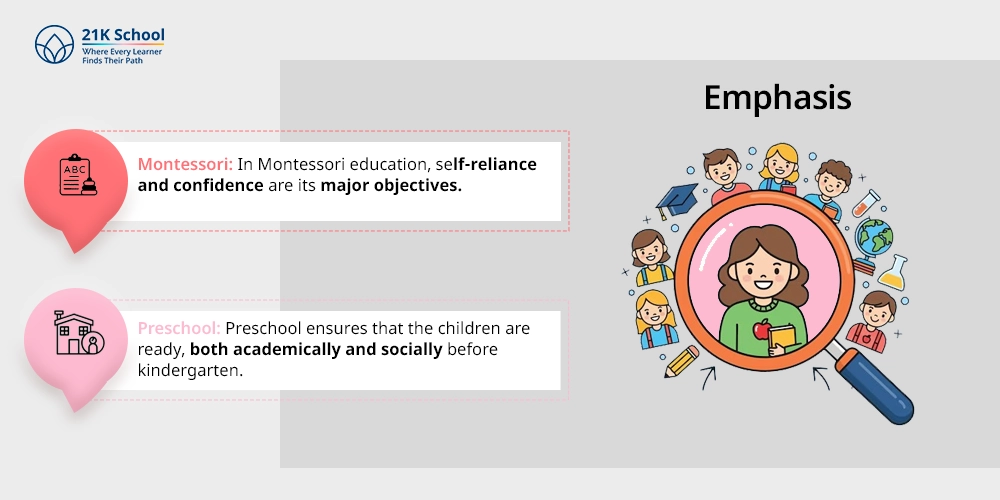
- Montessori: In Montessori education, self-reliance and confidence are its major objectives.
- Preschool: Preschool ensures that the children are ready, both academically and socially before kindergarten.
Advantages of Montessori Education
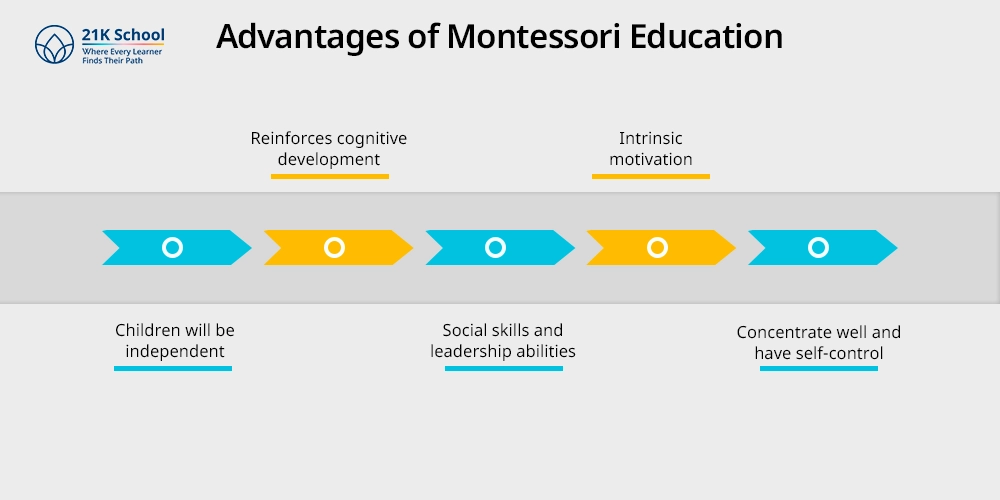
Here are some benefits of following Montessori education for your kids:
- Children will be independent, as they get to know how to pour, clean, dress, and do all sorts of activities without the supervision of an adult.
- Montessori materials enable children to acquire an insight into complex concepts by working on them, which reinforces cognitive development.
- Mixed-age groups are advantageous because kids learn social skills and leadership abilities from other kids.
- In Montessori classrooms, children want to learn something due to intrinsic motivation, instead of studying for rewards.
- The relaxed environment assists children to pay more attention, and therefore, they are able to concentrate well and have self-control.
In general, Montessori education creates students that are strong-willed, independent, and fond of trying out new things.
Advantages of Preschool Education
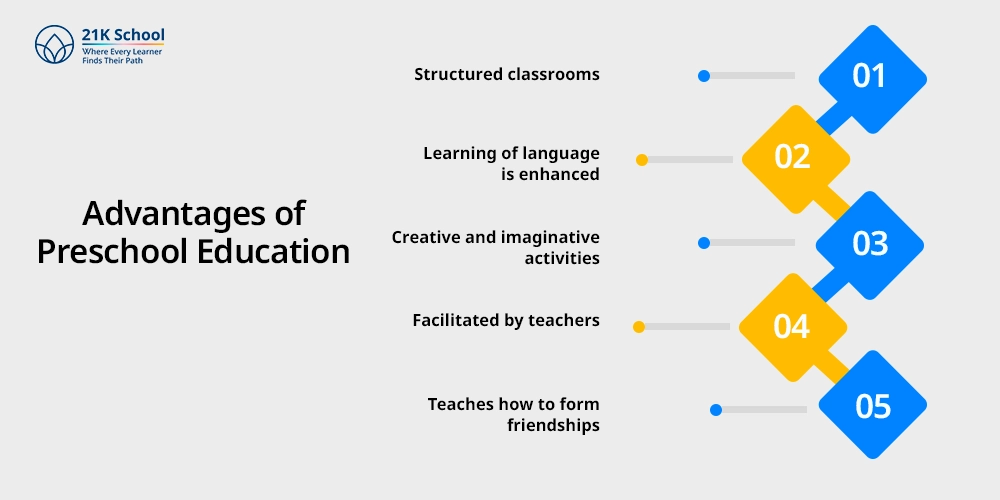
Preschool education serve children in the following ways:
- It exposes them to structured classrooms, leading to obeying instructions, group learning, and the development of early academic skills.
- The learning of language in preschool is enhanced by songs, stories, and talks, and this is particularly useful to children who are about to join kindergarten.
- Children do creative and imaginative activities that help in social and emotional growth.
- Learning is facilitated by teachers who make children familiar with numbers, letters, shapes, and patterns.
- Preschool also teaches the children how to form friendships with other children of the same age and socialise in general.
Concluding Thoughts
Montessori and preschool education differentiate mainly on the basis of offering learning.
Montessori is focused on student-directed learning that gives the learners the independence to learn and create.
While preschool education sees education as a structured way of delivering lessons, designed by teachers.
Once you understand your needs and interests around early education for your kids, it would become easy to decide which one you would like to go with.

You may also want to read
CBSE Passing Marks Out of 100: Theory, Practicals & Grading
- Last updated on: 19 Mar, 2026
- 6 min read