


How do you think all of the data from Indian education institutes including student admission, resources, teachers, etc. gets managed?
Education management information system is the key to managing all these resources, exam administrations, teacher training, and whatnot.
Without an EMIS, no school can operate in present days.
This article will introduce you to the depths of educational management information systems, its benefits, challenges and some incorporative strategies.
Table of Contents
- What is the Education Management Information System?
- Importance of Education Management Information System
- Components and Functions of Education Management Information System
- Benefits of Education Management Information System: What an Effective System Can Deliver?
- Challenges and Risks in Education Management Information System Implementation
- Strategies for Effective Education Management Information System Implementation
- 1. Establish an Effective Governance and Policy Structure
- 2. Begin with Needs Assessment and Roadmap
- 3. Build Capacity and Expertise
- 4. Provide Adequate Technology and Architecture
- 5. Enhance Data Utilization Across The Board
- 6. Focus on Data Quality and Routines
- 7. Sustainability and Constant Improvement
- Education Management Information System: Contextual Considerations for India
- Concluding Comments
What is the Education Management Information System?
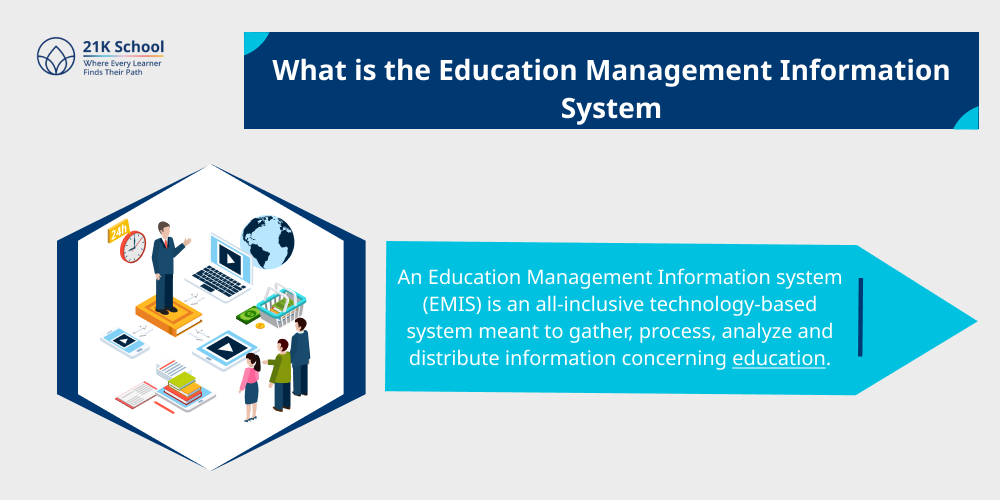
An Education Management Information system (EMIS) is an all-inclusive technology-based system meant to gather, process, analyze and distribute information concerning education.
It is a central database. It has the feature of real-time data-collection on students, teachers, curriculum, finances, and overall school performance.
EMIS is also helpful in policy-making and planning in the area of academic-management, which might help the promotion of educational equity.
The information is used by the stakeholders in ministries, administrators, research scholars, and teachers to ensure good institutional conduct.
It transforms unprocessed data in the classrooms and schools into action-oriented information.
Importance of Education Management Information System
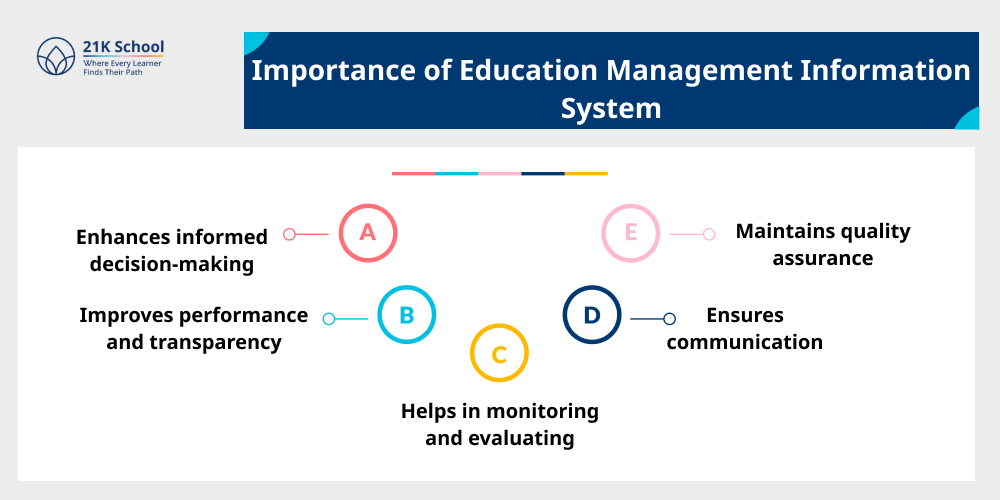
Some of the other importance of education management information system include the following:
- Enhances informed decision-making: Government authorities under action find it easier to make wise decisions based on reliable information they get from EMIS.
- Improves performance and transparency: Easily accessible digital reports of school performance and track records ease the process of research and planning for student-management.
- Ensures communication:.All stakeholders including teachers, administrators, students, and parents can communicate to bring desired changes with available online data.
- Helps in monitoring and evaluating: Every small and large shift in gender participation, admissions, teaching advancements, and dropouts can be assessed by the use of EMIS.
- Maintains quality assurance: When all these data are studied properly, quality assurance can be visible in local and private institutes of education.
Components and Functions of Education Management Information System
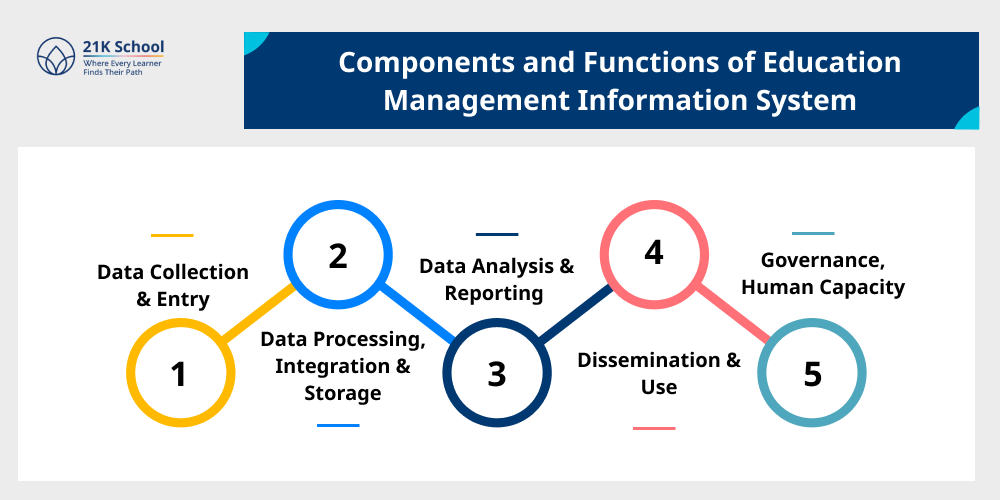
The following are the ways in which education management information system play its role:
1. Data Collection & Entry
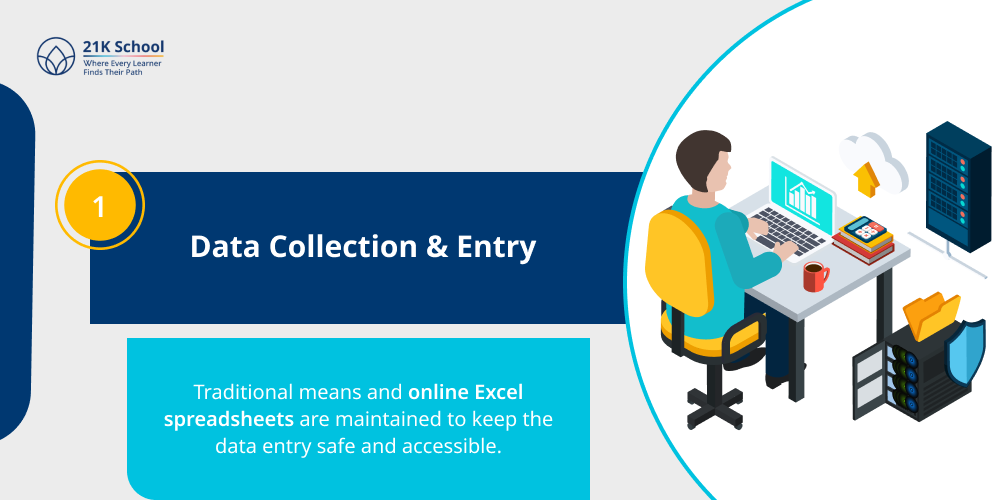
Traditional means and online Excel spreadsheets are maintained to keep the data entry safe and accessible.
EMIS gathers data regarding teachers (qualifications, training, attendance), resources (infrastructure, funding) and even students (attendance, performance, demographics).
2. Data Processing, Integration & Storage
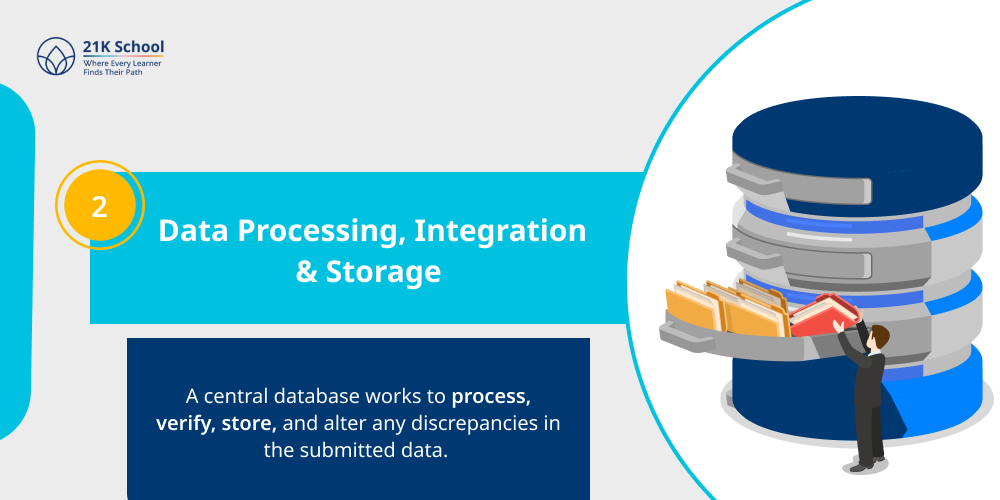
A central database works to process, verify, store, and alter any discrepancies in the submitted data.
The EMIS functions to draw major attention towards school census, admission rates, teacher training, and financial support.
EMIS depends on electronic machines, so that this work-consistency is maintained, which later consolidates them in a single repository to allow easy retrieval.
3. Data Analysis & Reporting
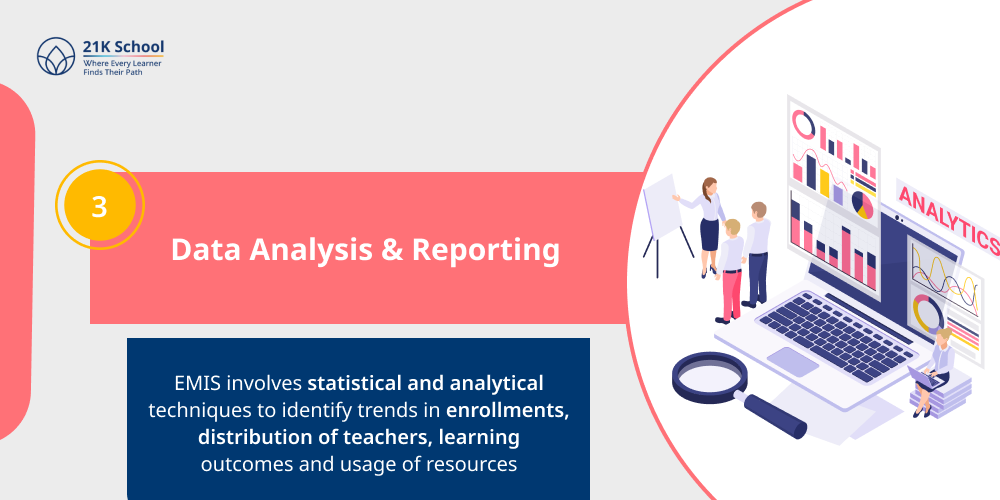
This part converts raw data to significant reports, charts and dashboards.
EMIS involves statistical and analytical techniques to identify trends in enrollments, distribution of teachers, learning outcomes and usage of resources.
The generated reports can be utilized in the planning, performance review, and policy making.
4. Dissemination & Use
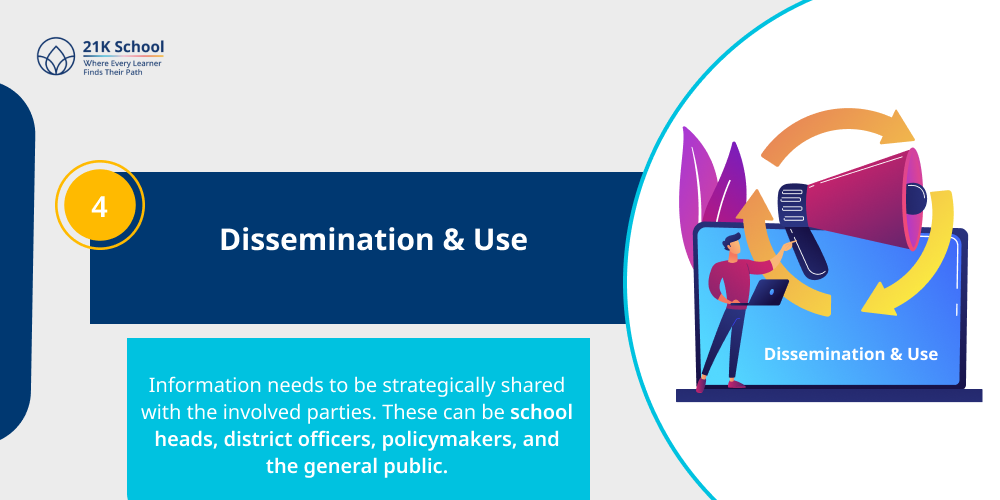
The EMIS can assist in the effective distribution as well as utilization of information.
Information needs to be strategically shared with the involved parties. These can be school heads, district officers, policymakers, and the general public.
These can be transmitted through policy briefs or publications on a yearly basis as an education report.
To help decisions made using EMIS data to be supported in facts as opposed to assumptions, active use should be encouraged.
5. Governance, Human Capacity & Technology Infrastructure
Good governance fosters data integrity, security and standardization.
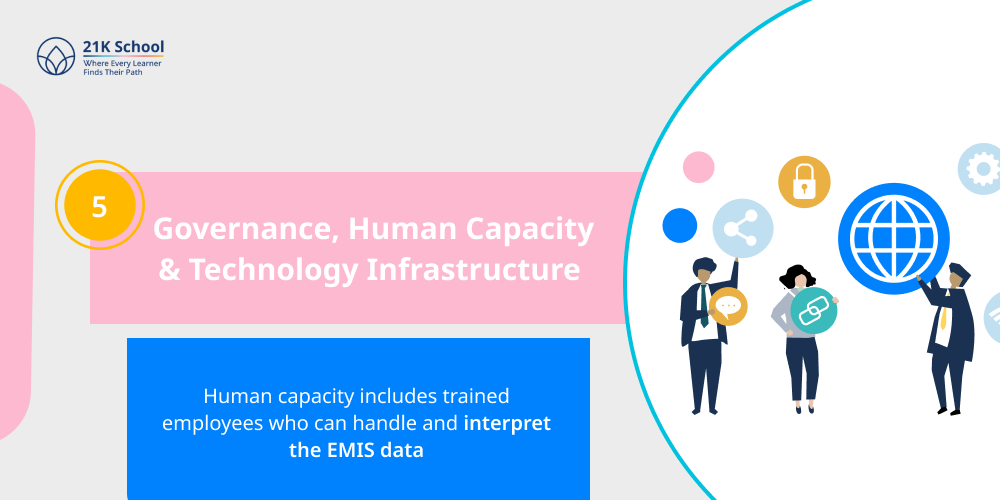
Human capacity includes trained employees who can handle and interpret the EMIS data.
EMIS operations are based on technology infrastructure, consisting of servers, software and internet connection.
A combination of these components will make the system sustainable and scalable.
Benefits of Education Management Information System: What an Effective System Can Deliver?
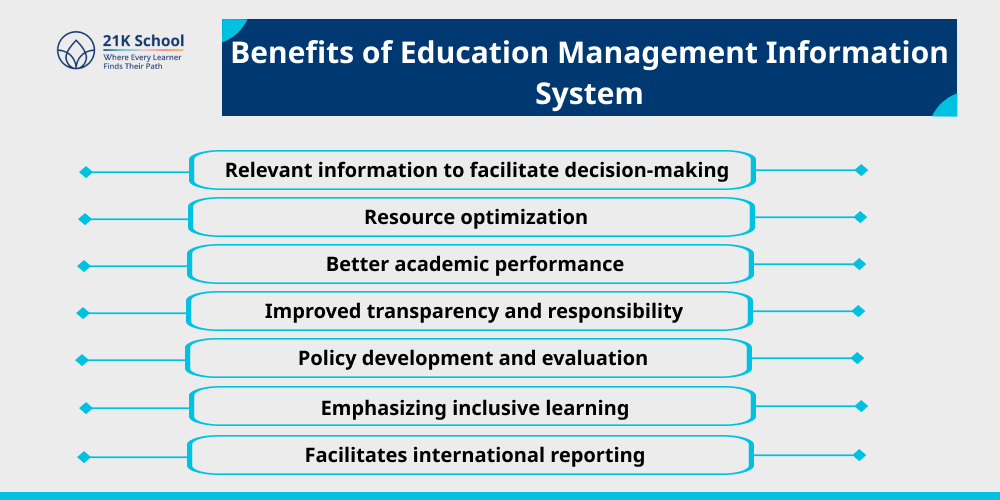
The following advantages including decision-making and resource optimization are benefits of education management information system:
- Relevant information to facilitate decision-making: The policymakers obtain preferred data to make the correct choice regarding the course of education and its delivery.
- Resource optimization: Data of all the resources is available to check with EMIS. Therefore, administrators can avail faculties, infrastructure and other services in the required amount.
- Better academic performance: A structured control over assets would lead to better academic achievement of students, with the assistance from EMIS.
- Improved transparency and responsibility: EMIS offers transparency in terms of student learning and expenditures. This makes the government, faculties, and parents more responsible towards their actions.
- Policy development and evaluation:The administrators can suggest the needed policies easily after analyzing the data on student-count and the educational programs that have to be offered.
- Emphasizing inclusive learning: EMIS contributes in consideration of differences in access or learning outcomes. It may also be utilized in conducting particular intervention to be applied to various populations.
- Facilitates international reporting: The data proposed by EMIS is also assessed by the international authorities to determine whether the global objectives such as Sustainable Development Goals(SDGs) are being fulfilled or not.
Challenges and Risks in Education Management Information System Implementation
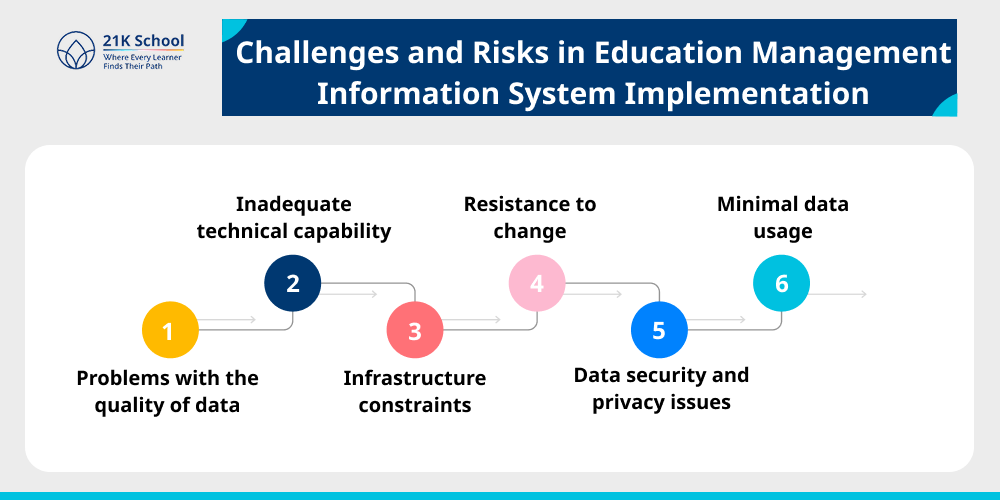
The obstacles involved in the implementation of the EMIS services in the country and abroad include:
- Problems with the quality of data: Incomplete or outdated data may negatively affect the functionality of the system.
- Inadequate technical capability: Majority of the institutions do not have professionals who can process and analyze complicated data.
- Infrastructure constraints: Lack of a good internet connection, failure of servers, and use of old software may hinder infrastructure, thereby crippling EMIS.
- Resistance to change: Some institutions and their committees may be resistant to move to new methods of upholding records and documents.
- Data security and privacy issues: Data breach and security accidents may be experienced in the field of education due to the easy access and lack of proper security.
- Minimal data usage: Since the entire data is readily accessible, still the ignorance of authorities culminates in poor data utilization, leading to hindered growth.
Strategies for Effective Education Management Information System Implementation
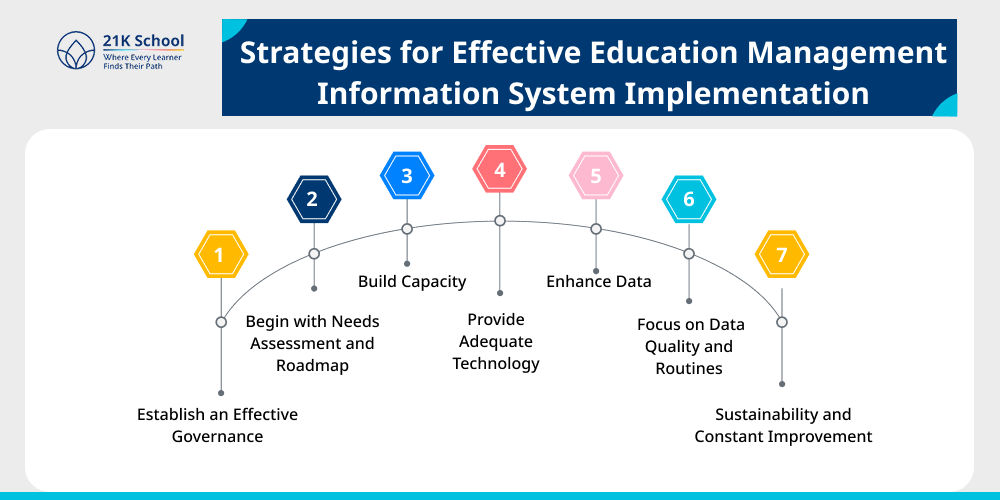
EMIS implementation is to be carried out through attention and a blueprint of strategies including:
1. Establish an Effective Governance and Policy Structure
Develop effective governance-policies specifying standards of data, privacy, and accountability.
This will also ensure consistency in terms of quality and reliability of data in all institutions.
2. Begin with Needs Assessment and Roadmap
Complete a review as a way of determining the data gaps, user needs and technical requirements.
The phases of system design, implementation, and scaling are well managed using a clear roadmap.
3. Build Capacity and Expertise
Train school staff, district education officers, and policymakers of EMIS operations, data analysis and interpretation.
When ownership is built it guarantees a commitment to the system in the long-term.
4. Provide Adequate Technology and Architecture
Implement scalable and easy-to-use technologies that can integrate with the existing systems.
Cloud infrastructure and mobile data collection, as well as interactive dashboards, can be used to develop functionality.
5. Enhance Data Utilization Across The Board
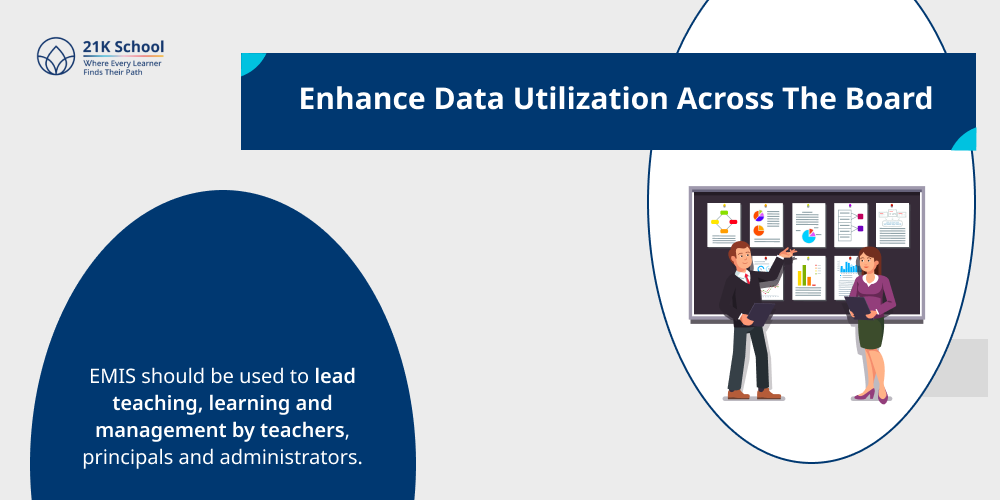
Promote the culture of data-based thinking to all the education stakeholders.
EMIS should be used to lead teaching, learning and management by teachers, principals and administrators.
6. Focus on Data Quality and Routines
It should be done through defining routine data control and data validation.
Standardized forms, coding and periodic audits to guarantee the data consistency.
7. Sustainability and Constant Improvement
EMIS requires the ability to develop with emerging educational needs.
Constant feedback, constant updating and investment in human and technical resources will make the system relevant and effective.
Education Management Information System: Contextual Considerations for India
EMIS is an important component of dealing with the huge and multifaceted Indian education environment.
There are systems, such as UDISE+ (Unified District Information System for Education Plus), which enable the collection and comparison of school-level data in all states.
UDISE+ collects data on the enrollment, infrastructure, teachers and the outcomes of more than 1.5 million schools.
It complements the National Education Policy (NEP) 2020 by allowing planning and monitoring which are based on data.
There are still difficulties in providing the real-time data entry, making the data more accurate at the grassroots and ensuring active use of data by the local administrators.
As educational systems increasingly embrace digital transformation for education, the more advanced approach of learning would be attained.
The use of artificial intelligence and predictive analytics is another way of improving future educational planning and policy formulation.
Concluding Comments
Institutions are aware that EMIS is a means to keep their data of learners and faculty members intact and guarded.
In real time, they can retrieve any data from the database confidently to make informed and better decisions on behalf of student learning and achievements.
Despite having all these benefits, EMIS can have outdated information when schools fail to adapt with the systems.
This is where stakeholder awareness about EMIS must be increased, so that our country excels as it grows.

You may also want to read
CBSE Passing Marks Out of 100: Theory, Practicals & Grading

- Last updated on: 27 Mar, 2026
- 6 min read