


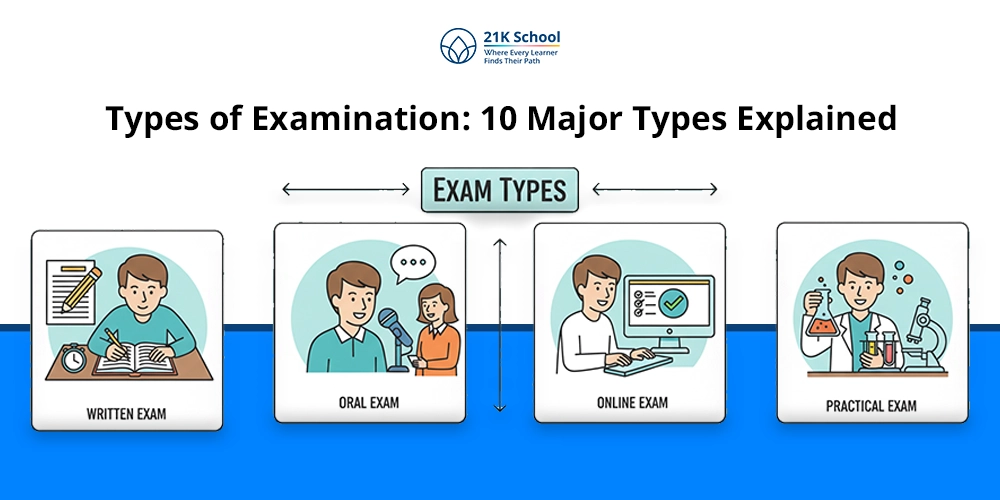
In the education system, examinations are an important part of students’ learning. It is an ideal way to determine whether students are meeting standards of learning or skills.
With time examinations have evolved and it is not limited to pen paper tests. Students now can adapt different styles to fulfill their needs.
But, do you know the different types of examinations there are? If not, don’t worry because now you are at the right place to know.
Here, we will go through a detailed analysis of 12 major types of examinations one must know. Let’s get started.
Table of Contents
What Are Examinations?
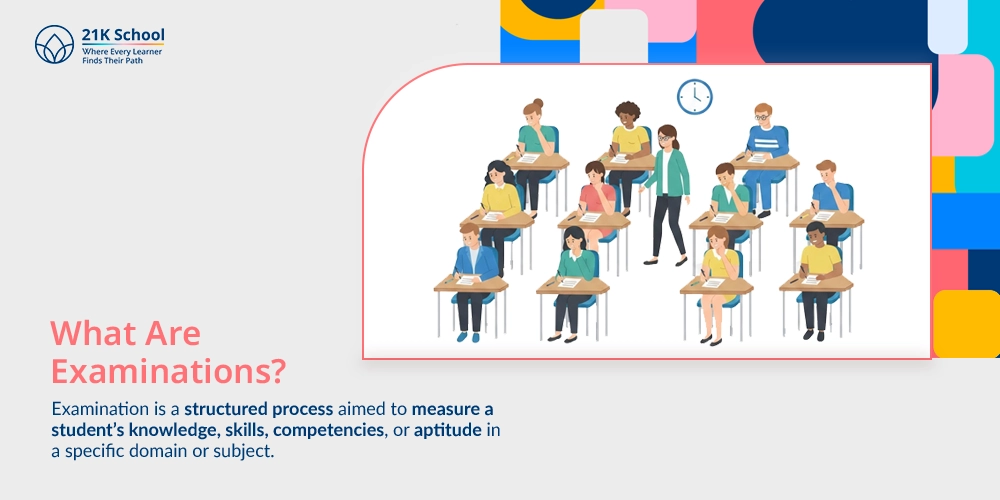
Examination is a structured process aimed to measure a student’s knowledge, skills, competencies, or aptitude in a specific domain or subject.
Exams are primarily conducted by schools, colleges, professional institutions, training centres, recruitment bodies etc to understand or measure the knowledge of individuals.
There are various types of examination available for different purposes essential for career growth.
12 Major Types of Examination
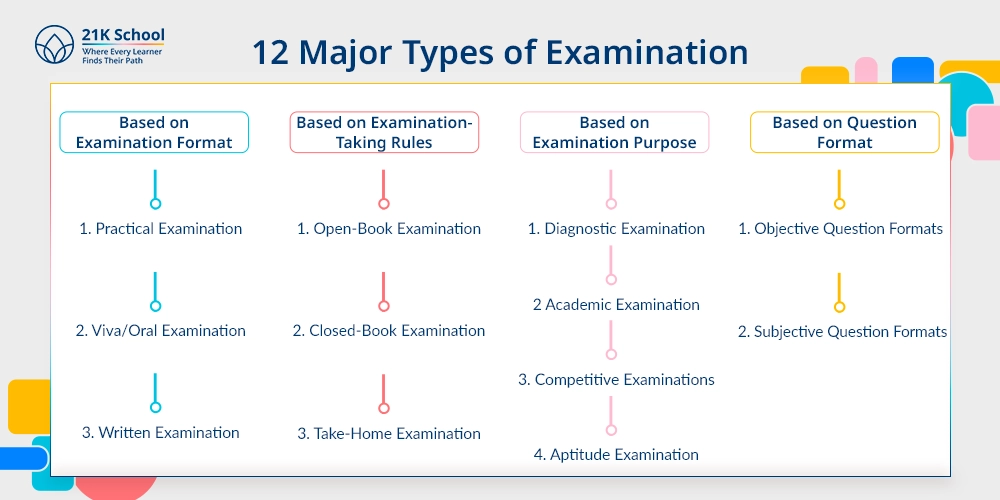
Given below are the 12 major types of examination and detail explanation:
1. Based on Examination Format:
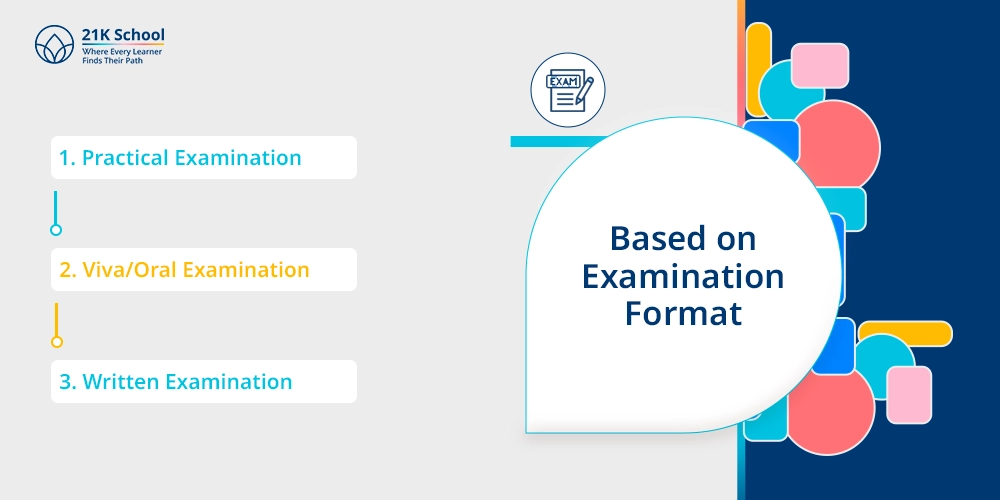
1. Practical Examination
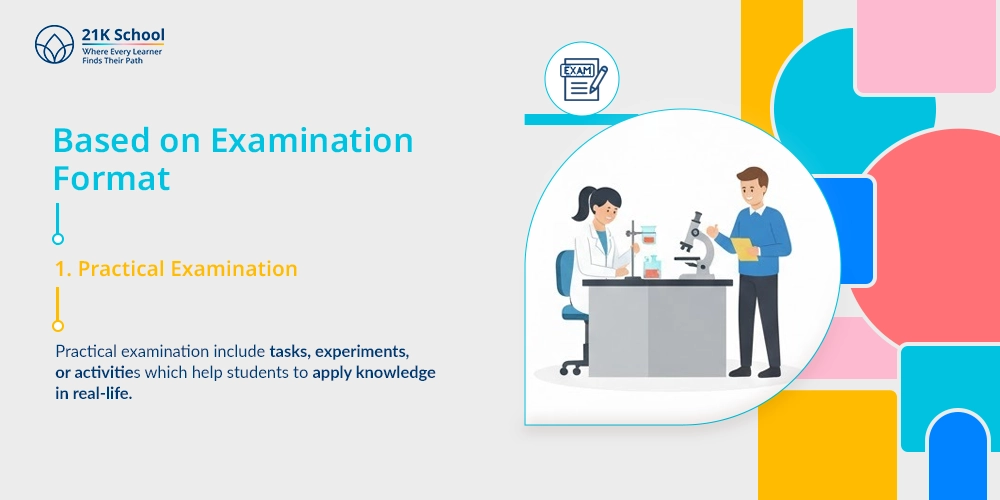
Practical examination include tasks, experiments, or activities which help students to apply knowledge in real-life.
Common fields are:
- Science (Physics, Chemistry, Biology)
- Computer science and IT
- Engineering workshops
- Medical and nursing programs
2. Viva/Oral Examination
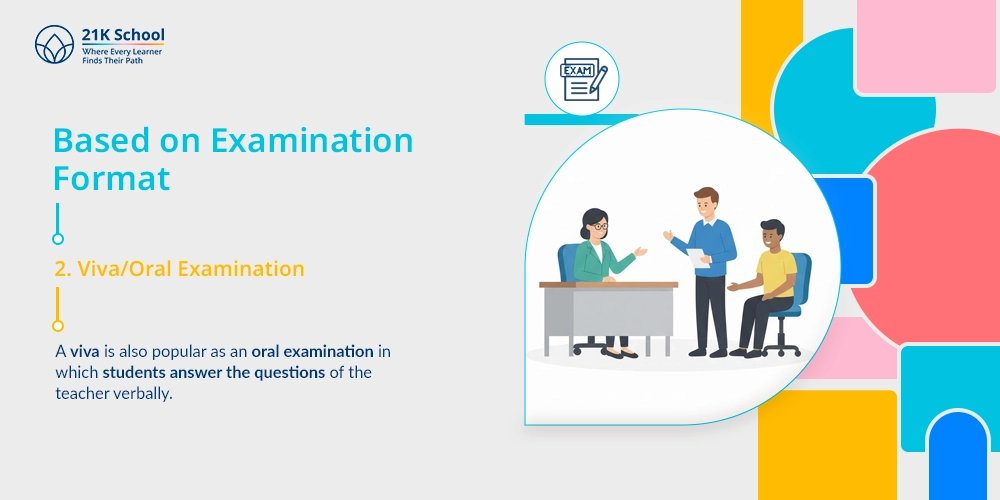
A viva is also popular as an oral examination in which students answer the questions of the teacher verbally.
It is conducted to understand the subject knowledge and communication skills.
Common in:
- Research presentations
- Project evaluations,
- Medical examinations,
3. Written Examination
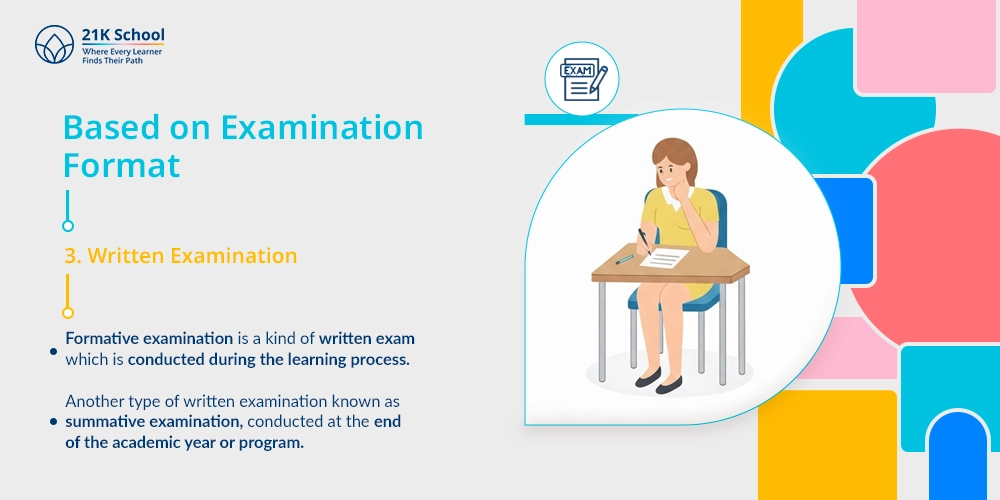
3.1 Formative Examination
Formative examination is a kind of written exam which is conducted during the learning process.
Some common examples of Formative examination are:
- Quizzes
- Assignments
- Class tests
- Unit tests
3.2 Summative Examination
Another type of written examination known as summative examination, conducted at the end of the academic year or program.
It is ideal to understand the progress of students at once and students get final marks and certificates.
Some common examples of summative examination are:
- Final exams
- Board exams
- Semester exams
2. Based on Examination-Taking Rules:
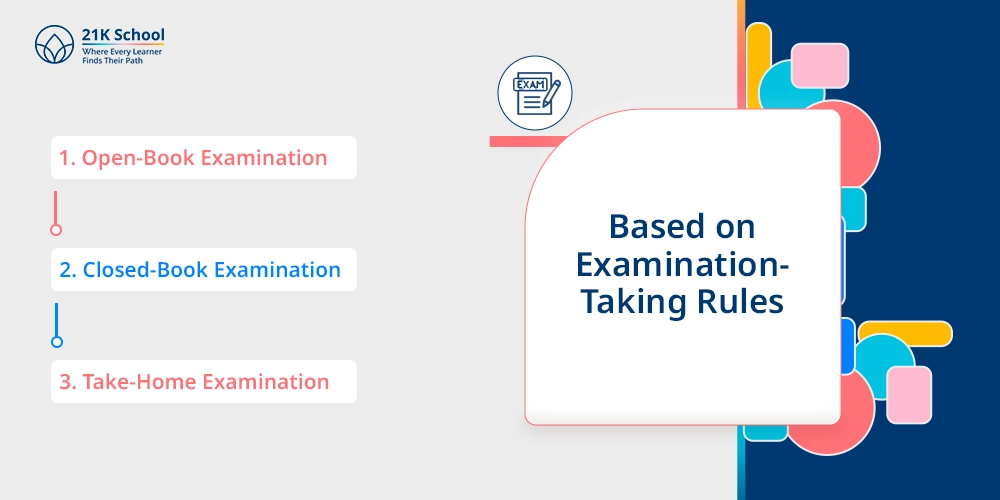
1. Open-Book Examination
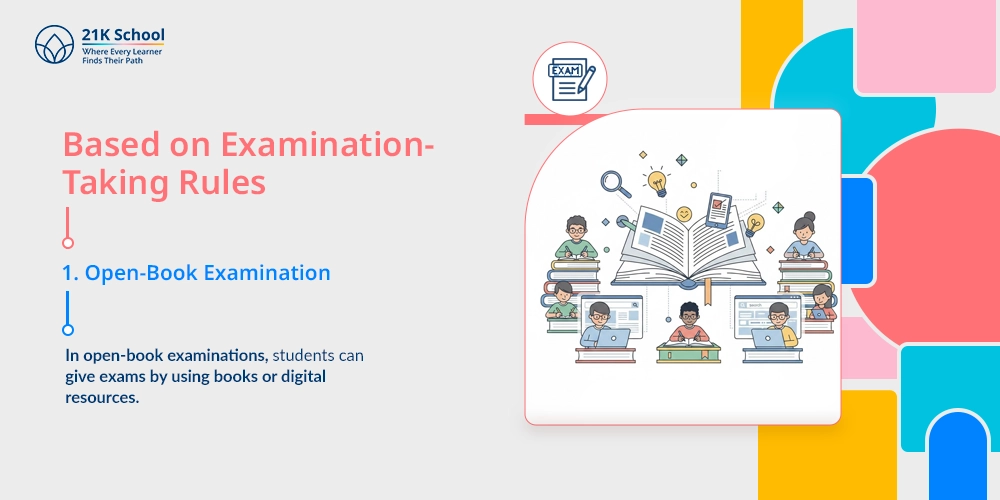
In open-book examinations, students can give exams by using books or digital resources.
The questions are conceptual, case-based, or analytical. The main objective is to enhance students’ critical thinking skills.
2. Closed-Book Examination
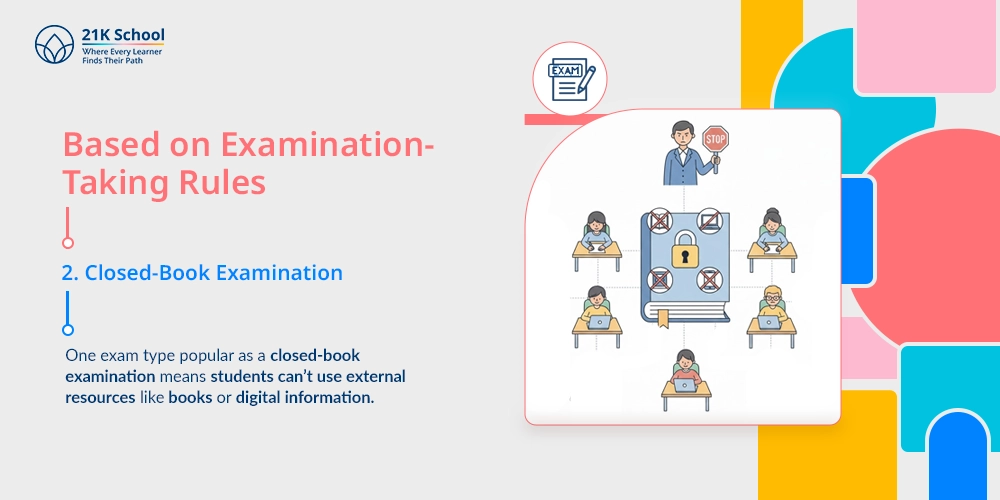
One exam type popular as a closed-book examination means students can’t use external resources like books or digital information.
It is a traditional learning approach used by most of these institutions.
3. Take-Home Examination
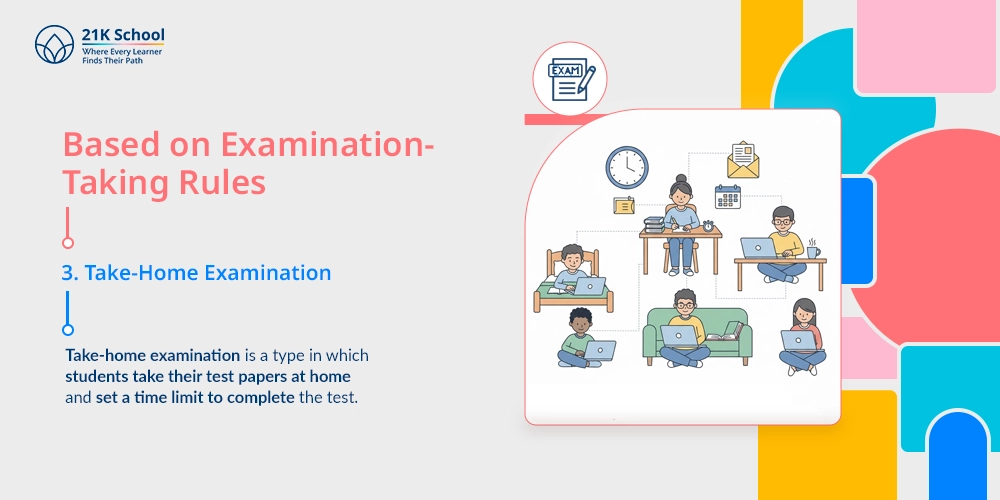
Take-home examination is a type in which students take their test papers at home and set a time limit to complete the test.
It is an ideal way of examination which offers flexibility and improves time-management skills.
3. Based on Examination Purpose:
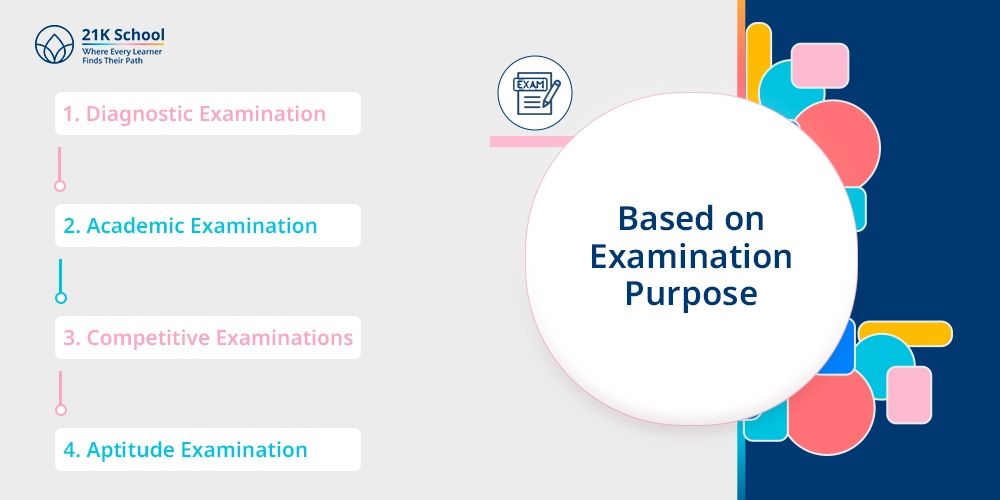
1. Diagnostic Examination
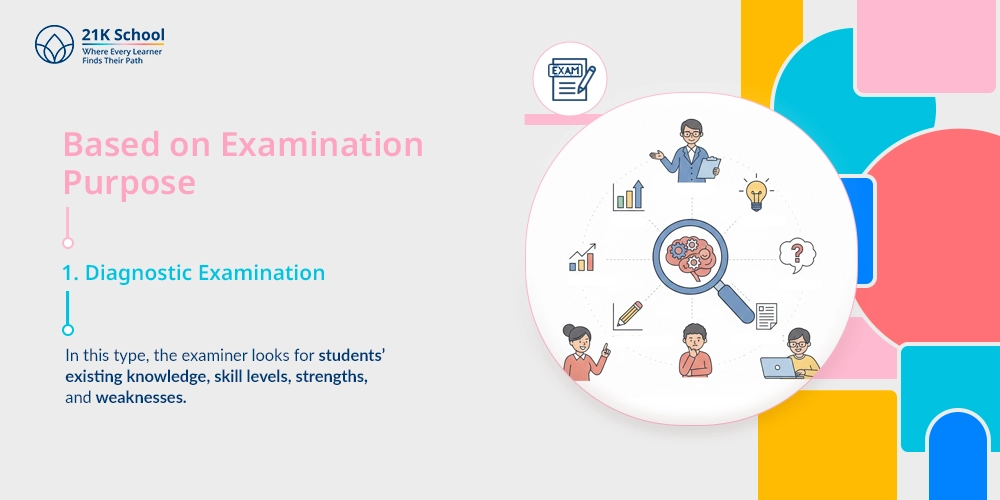
In this type, the examiner looks for students’ existing knowledge, skill levels, strengths, and weaknesses.
It is an effective approach mostly taken during admissions or enrollment.
2 Academic Examination
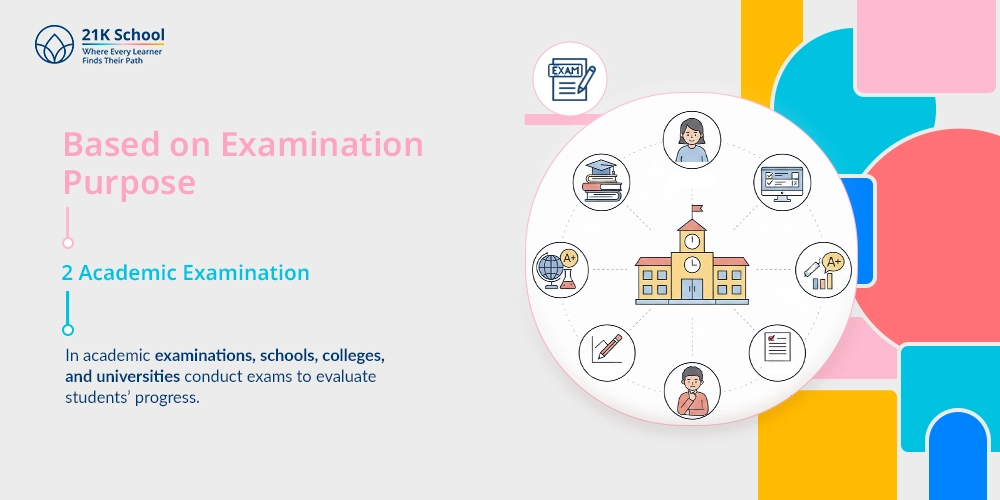
In academic examinations, schools, colleges, and universities conduct exams to evaluate students’ progress.
Some common examples are:
- Class tests
- Mid-term exams
- Semester assessments
- Internal assessments
3. Competitive Examinations
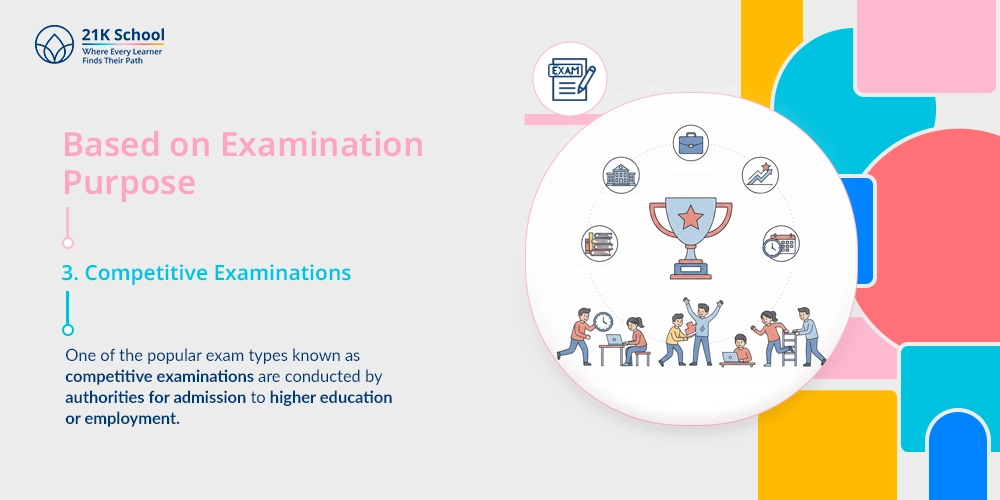
One of the popular exam types known as competitive examinations are conducted by authorities for admission to higher education or employment.
Some common examples are:
- UPSC, SSC, Bank exams
- NEET, JEE, CUET
4. Aptitude Examination
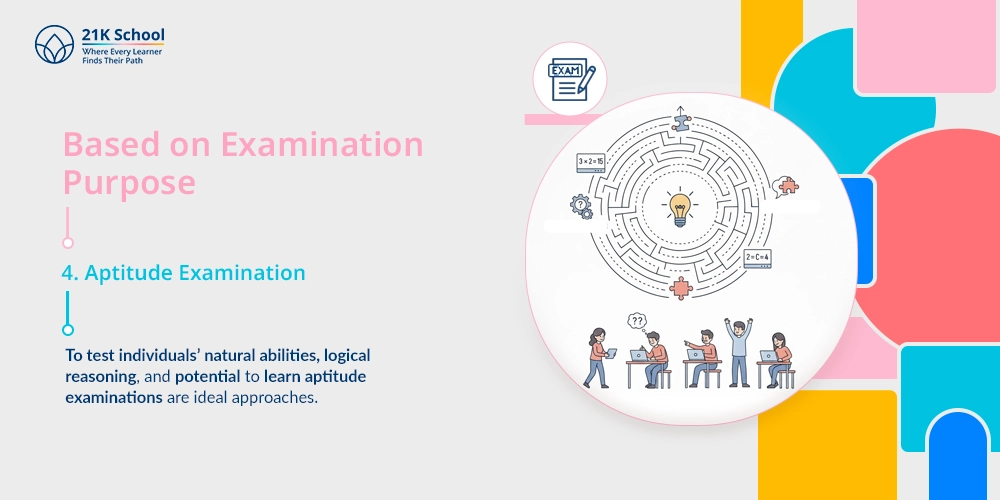
To test individuals’ natural abilities, logical reasoning, and potential to learn aptitude examinations are ideal approaches.
Some common examples are:
- IQ tests
- Career aptitude tests
- Corporate hiring assessments
4. Based on Question Format
Examinations are also categorised based on how questions are presented:
1. Objective Question Formats
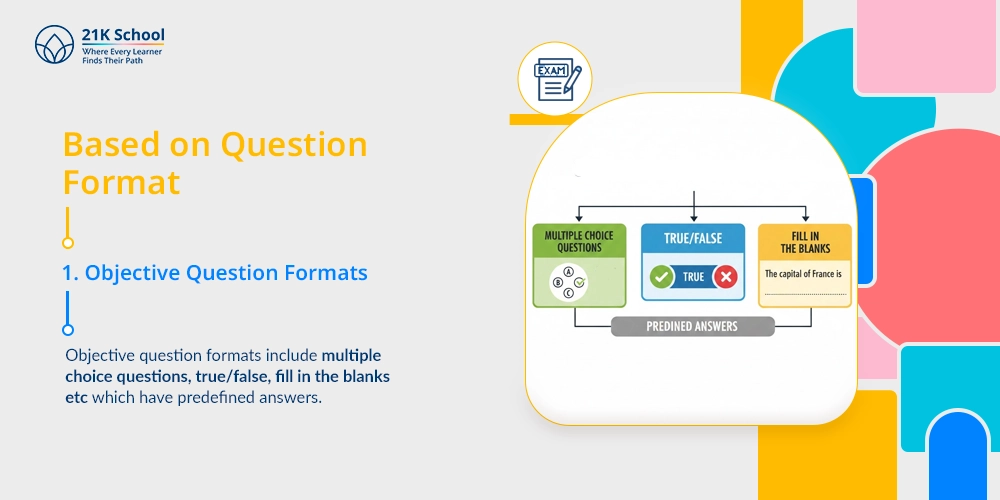
Objective question formats include multiple choice questions, true/false, fill in the blanks etc which have predefined answers.
It is an ideal examination type that takes less time, quick assessment, and covers a wide range of concepts.
2. Subjective Question Formats
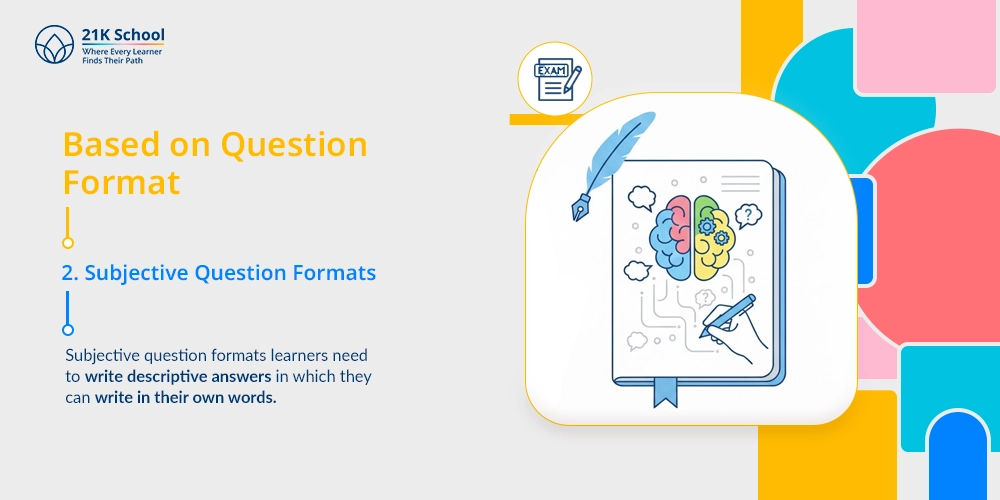
Subjective question formats learners need to write descriptive answers in which they can write in their own words.
The answers here can be long, short notes, essays or case studies. It is advantageous for learners who want to write in their own way.
Conclusion
In students’ lives, examinations are a positive step to understand progress and growth in an academic journey.
From personal development to professional achievement different kinds of examinations play different roles. Students learn time-bound writing, speaking and analytics skills etc.
As education evolves, new patterns of learning make sure students get the needful environment to gain knowledge and develop 21st century skills.

You may also want to read
CBSE Passing Marks Out of 100: Theory, Practicals & Grading
- Last updated on: 26 Feb, 2026
- 6 min read