JEE Main Age Limit 2026: Eligibility Criteria, Attempts & Rules
 Written byAnshu KumariContent Specialist
Last modified: Jul 20, 2026 9 min read
Are you preparing for the prestigious JEE Main examination ?
If yes, then understanding all the eligibility details before preparing becomes a mandatory step for all the JEE aspirants.
One of the crucial aspects is to understand the age limit for appearing in the JEE Mains.
As per official information, JEE Main 2026 will be taken between April 2nd and April 9th. Many students also wonder what the JEE Main age limit is, so this article will help you.
Is there an age limit for JEE Main?
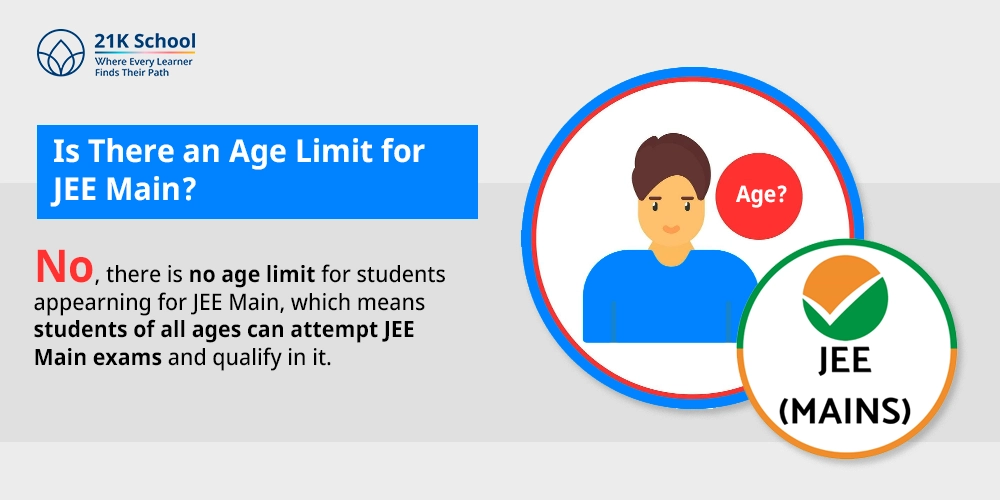
No, there is no age limit for students appearning for JEE Main, which means students of all ages can attempt JEE Main exams and qualify in it.
As per the National Testing Agency guidelines, learners are free to take the Joint Entrance Examination Main at any age.
The key eligibility factor is the year in which the learner passed or is appearing for Class 12 or equivalent.
For example: learners who have passed the Class 12 exam in 2024 or 2025, or are appearing in the 2026 examination are eligible to appear for the JEE Main exam.
However, the JEE Main itself has no age restriction. Some institutes that accept JEE Main scores may have their own criteria.
Why there is no age limit in JEE Main?
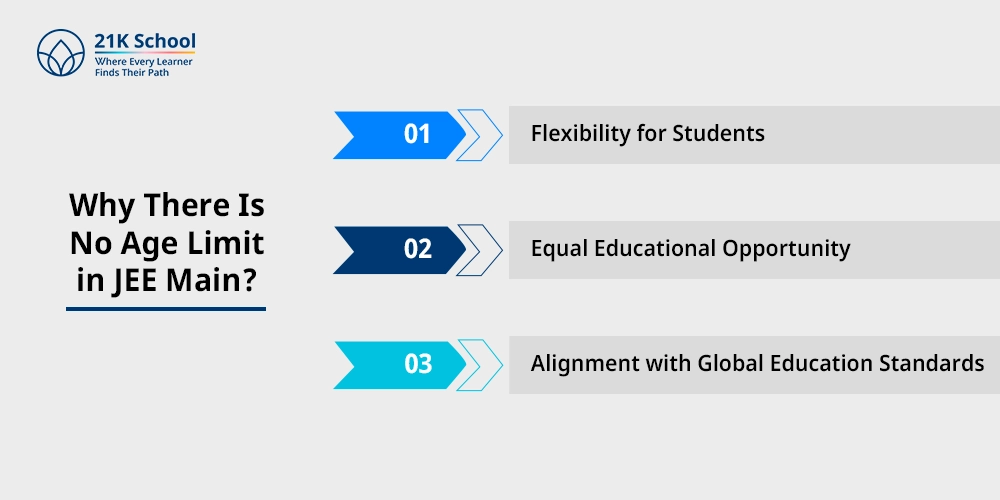
As per the latest data, there is no age limit for JEE Main. This is because of the following reasons:
1. Flexibility for students
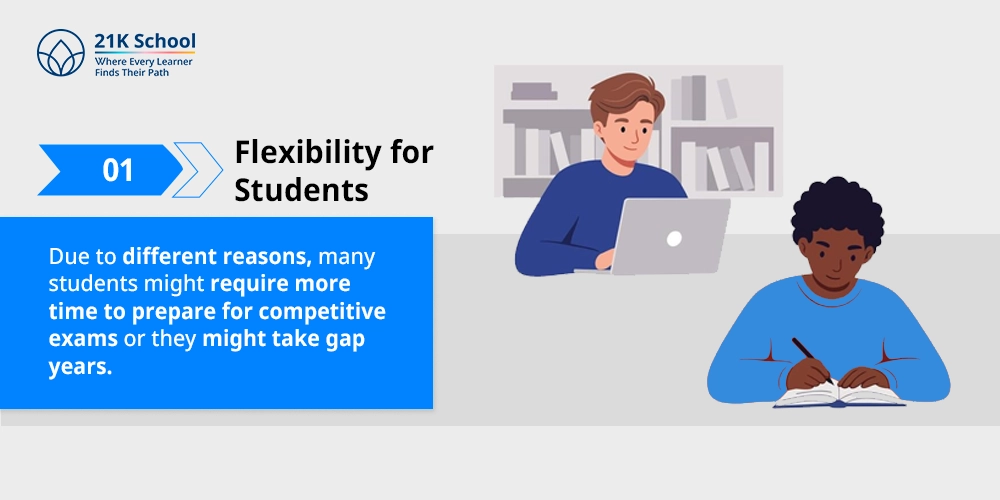
Due to different reasons, many students might require more time to prepare for competitive exams or they might take gap years.
Since Joint Entrance Examination Main does not have a specified age limit, it gives aspirants the opportunity to attempt the exam at their own pace.
This flexibility benefits students who take drop years, change streams, or prepare for other competitive exams.
2. Equal educational opportunity
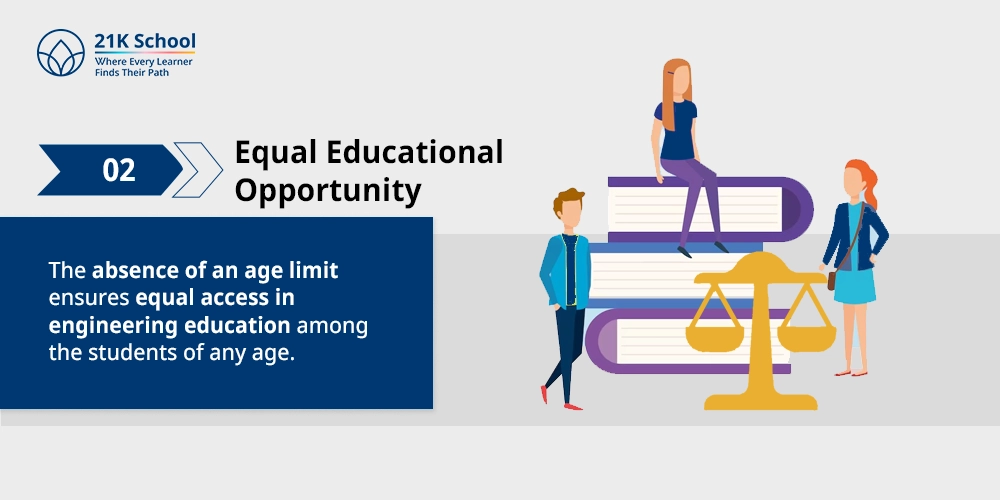
The absence of an age limit ensures equal access in engineering education among the students of any age.
It also assists students struggling with obstacles such as financial constraints, health issues, and family responsibilities.
Such candidates might get a chance to become engineers via Joint Entrance Examination Main.
3. Alignment with global education standards
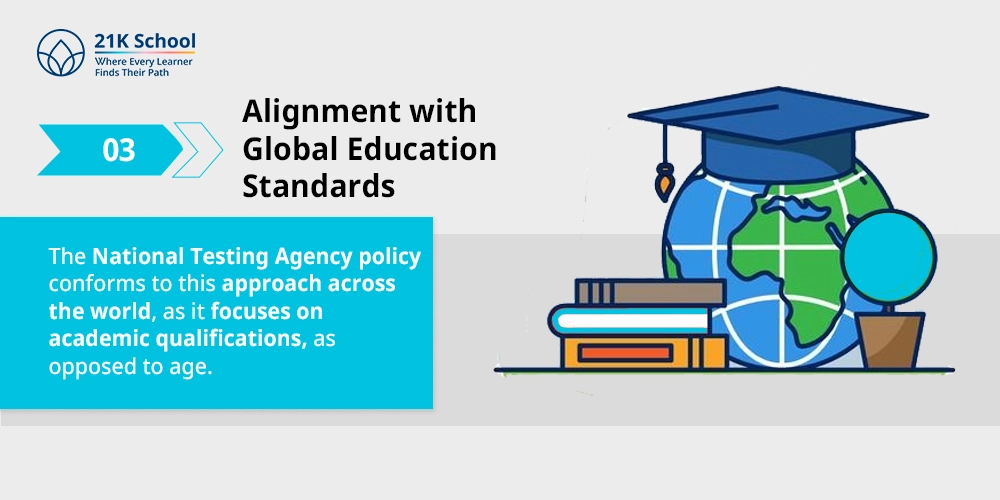
Several foreign entrance tests do not have strict age restrictions. The National Testing Agency policy conforms to this approach across the world, as it focuses on academic qualifications , as opposed to age.
Category-wise JEE Main age limit table
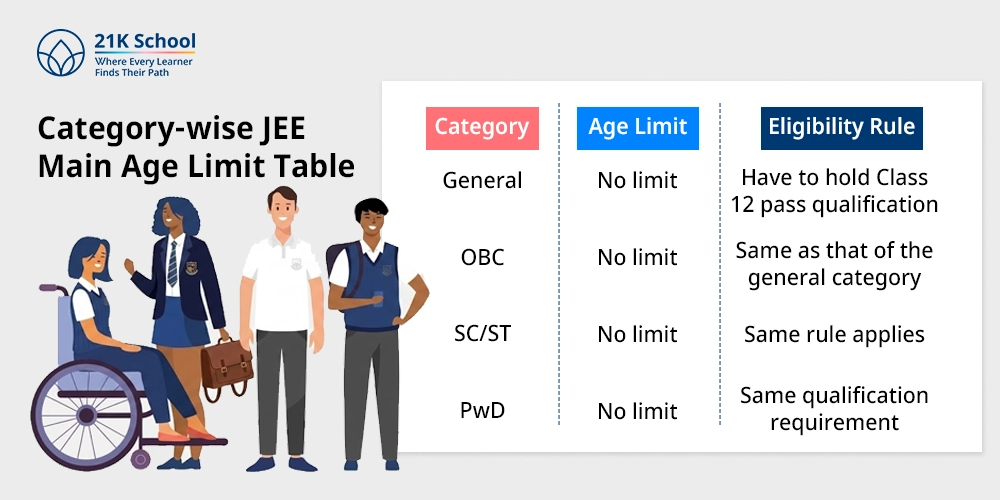
Explore category-wise JEE Main age limit table for quick understanding:
| Category | Age Limit | Eligibility Rule |
|---|---|---|
| General | No limit | Have to hold Class 12 pass qualification |
| OBC | No limit | Same as that of the general category |
| SC/ST | No limit | Same rule applies |
| PwD | No limit | Same qualification requirement |
1. Age limit for droppers & repeaters
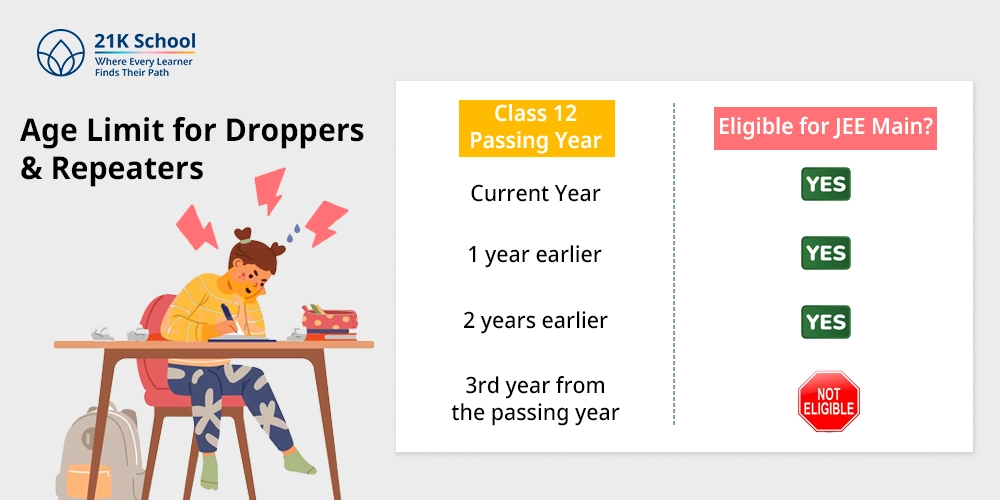
Learners who delay their college admission by a year to prepare for the Joint Entrance Examination (Main) and take some rest are often referred to as droppers or repeaters.
As there is no age limit restriction in JEE Mains examination droppers are also eligible to appear. They should fall within a 3 year eligibility period of the Class 12 passing year.
For example:
| Class 12 Passing Year | Eligible for JEE Main? |
|---|---|
| Current Year | Yes |
| 1 year earlier | Yes |
| 2 years earlier | Yes |
| 3rd year from the passing year | Not eligible |
This regulation gives a chance of fairness as well as allowing numerous attempts.
2. Age limit for JEE Advanced
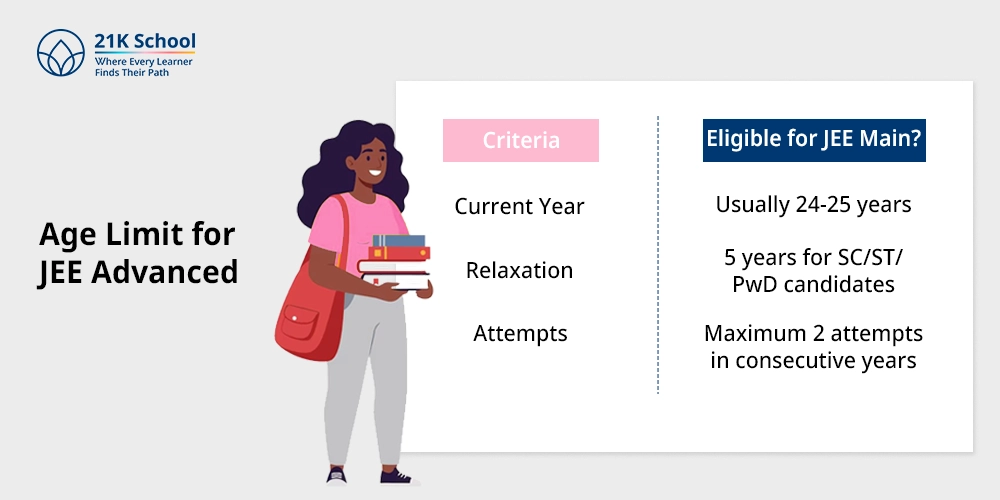
JEE Main does not have any age limit, but the rules are different in case of Joint Entrance Examination Advanced.
Exams taken to enter the Indian Institute of Technology are more rigid in the eligibility criteria.
Typical eligibility criteria include:
| Criteria | Requirement |
|---|---|
| Maximum Age | Usually 24-25 years |
| Relaxation | 5 years for SC/ST/PwD candidates |
| Attempts | Maximum 2 attempts in consecutive years |
Eligibility criteria for JEE Main
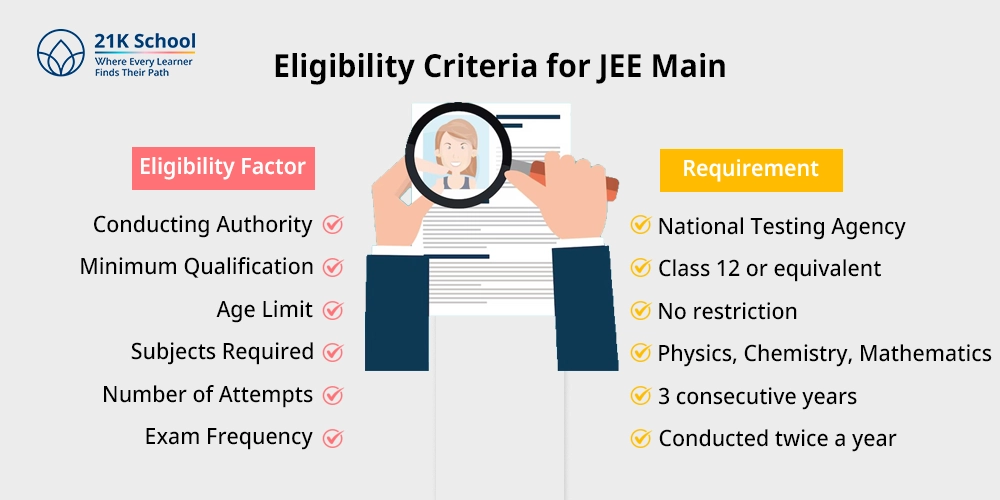
Two main eligibility criteria for JEE Main includes:
| Eligibility Factor | Requirement |
|---|---|
| Conducting Authority | National Testing Agency |
| Minimum Qualification | Class 12 or equivalent |
| Age Limit | No restriction |
| Subjects Required | Physics, Chemistry, Mathematics |
| Number of Attempts | 3 consecutive years |
| Exam Frequency | Conducted twice a year |
1. JEE Main eligibility marks in 12th
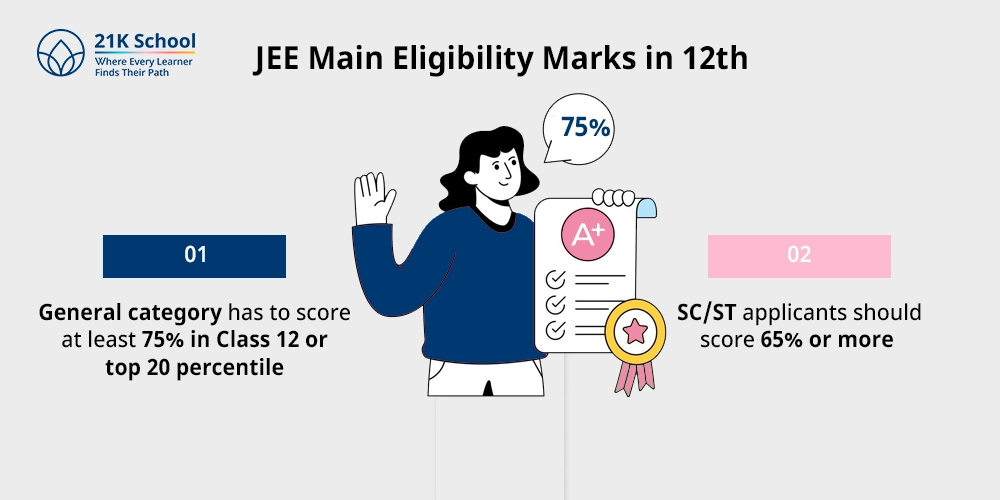
In previous years, learners need to achieve 75% marks in Class 12 for selection in the National Institutes of Technology and Indian Institutes of Information technology.
However, with time the criteria is updated by the authority for getting into government institutes:
- General category has to score at least 75% in Class 12 or top 20 percentile
- SC/ST applicants should score 65% or more
However, there is no minimum requirement of class 12th marks for appearing in JEE Main. The official information bulletin issued by the National Testing Agency should be revisited by learners at all times.
2. Number of attempts allowed in JEE Main
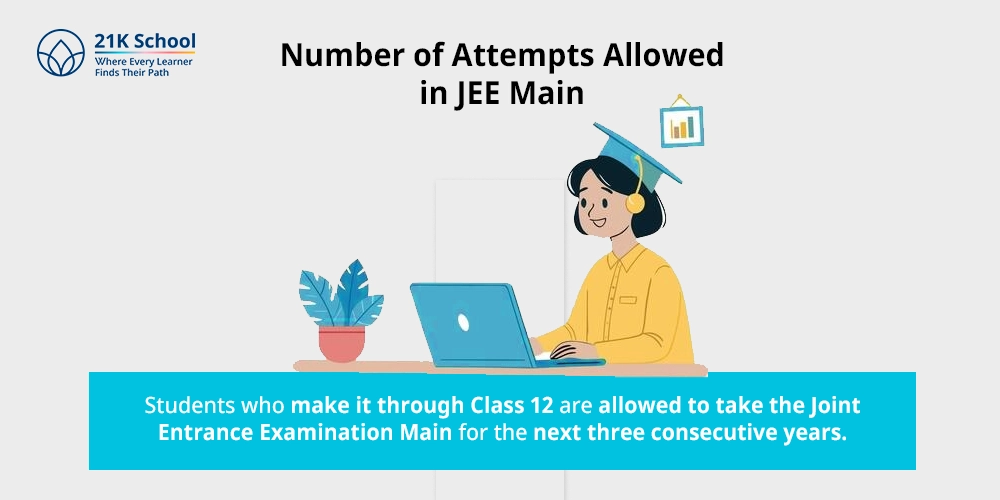
Students who make it through Class 12 are allowed to take the Joint Entrance Examination Main for the next three consecutive years.
This means they got up to 6 attempts in total as the exam is twice per year.
JEE Advanced age limit - how it differs from JEE Main

The Joint Entrance Examination Advanced rules are more specific and in depth as compared to JEE Main examination.
| Criteria | JEE Main | JEE Advanced |
|---|---|---|
| Age Limit | No limit | Usually 25 years |
| Attempts | Up to 6 attempts | Maximum 2 attempts |
| Eligibility | Based on Class 12 year | Top JEE Main qualifiers |
Candidates who have successfully cleared Joint Entrance Examination Main are the only ones who are eligible to sit for JEE Advanced.
Age limit for admission to NITs, IIITs, and IITs
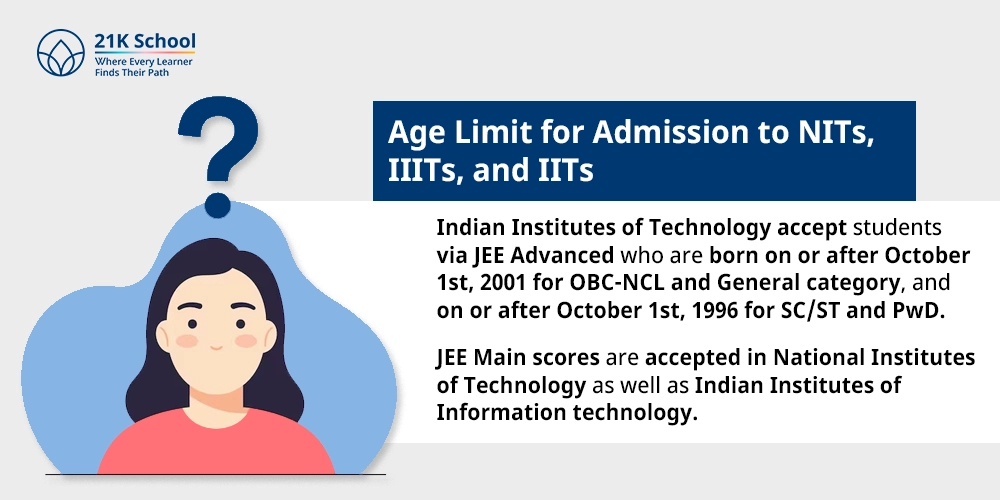
There can be institutes that have their own admission requirements, though common eligibility criteria remains passing class 12.
Indian Institutes of Technology accept students via JEE Advanced who are born on or after October 1st, 2001 for OBC-NCL and General category, and on or after October 1st, 1996 for SC/ST and PwD.
JEE Main scores are accepted in National Institutes of Technology as well as Indian Institutes of Information technology.
Documents needed to prove eligibility for JEE Main (Age related)
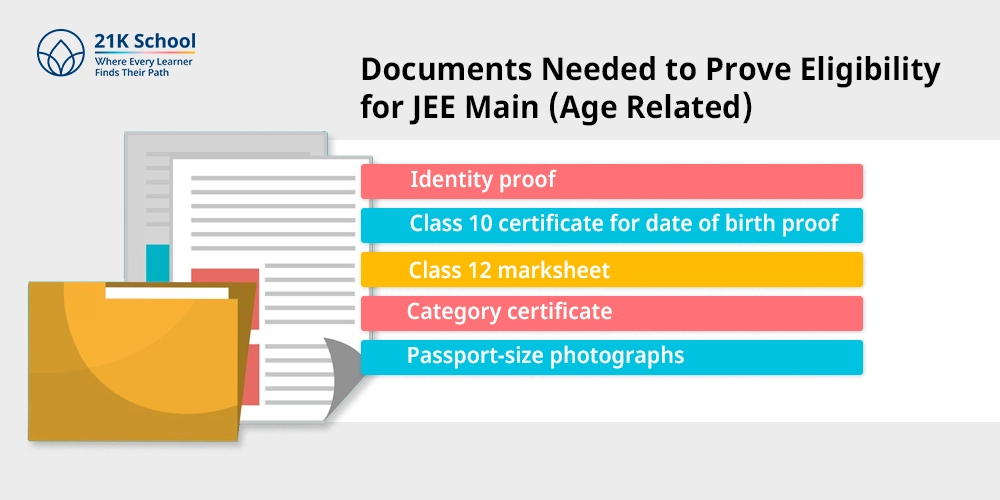
While registering and counseling learners need to share some important documents to make sure they are eligible.
Some common documents such as:
- Identity proof
- Class 10 certificate for date of birth proof
- Class 12 marksheet
- Category certificate (if necessary)
- Passport-size photographs
2 common misconceptions about JEE Main age limit
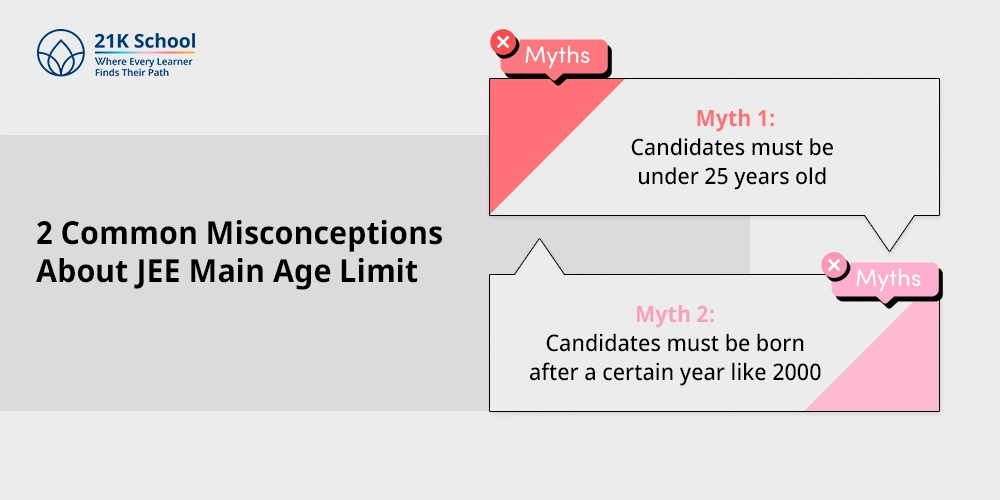
Some common mistakes or misconception learners should avoid while prepare for JEE Main exams:
1. Myth 1: Candidates must be under 25 years old
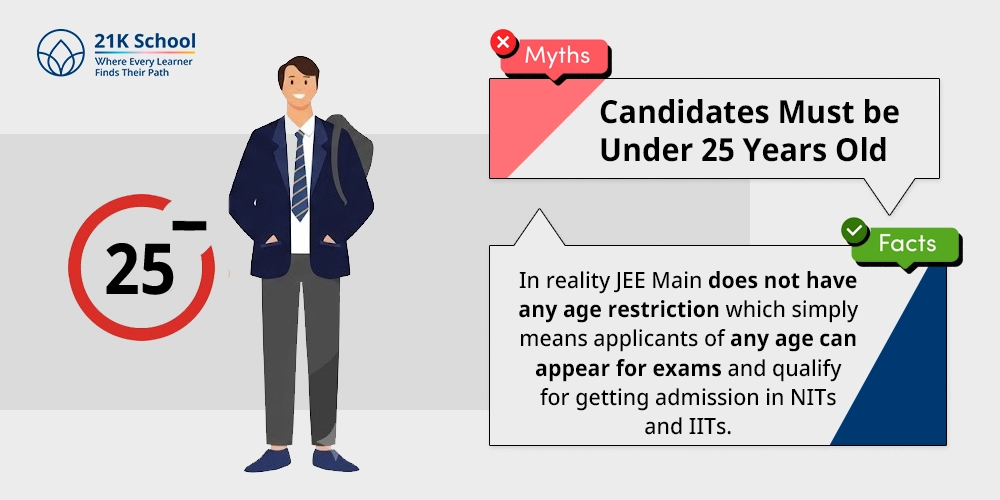
One of the misconceptions is believing that "candidates must be under 25 years old".
However, in reality JEE Main does not have any age restriction which simply means applicants of any age can appear for exams and qualify for getting admission in NITs and IITs.
2. Myth 2: Candidates must be born after a certain year like 2000
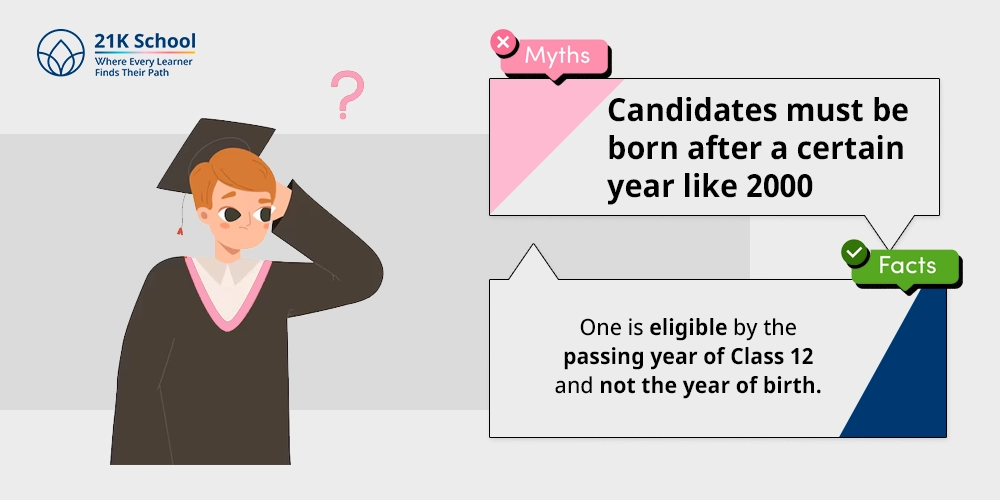
There are students who think that there is a cutoff for the birth year. Factually, one is eligible by the passing year of Class 12 and not the year of birth.
The 2000 year birth criteria is seen in JEE Advance.
Practical advice for aspirants of JEE Main
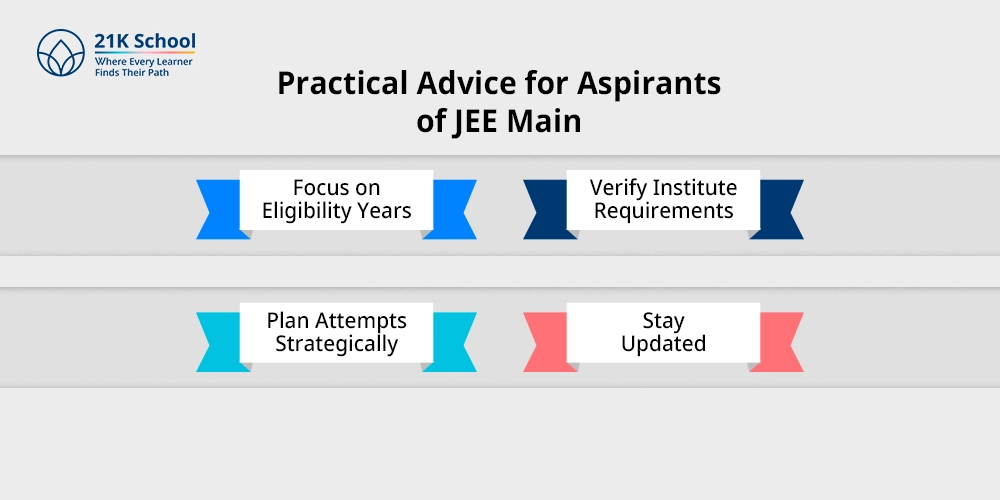
JEE Main is a competitive exam, and if students follow some tips they can easily score well in the exams:
1. Focus on eligibility years
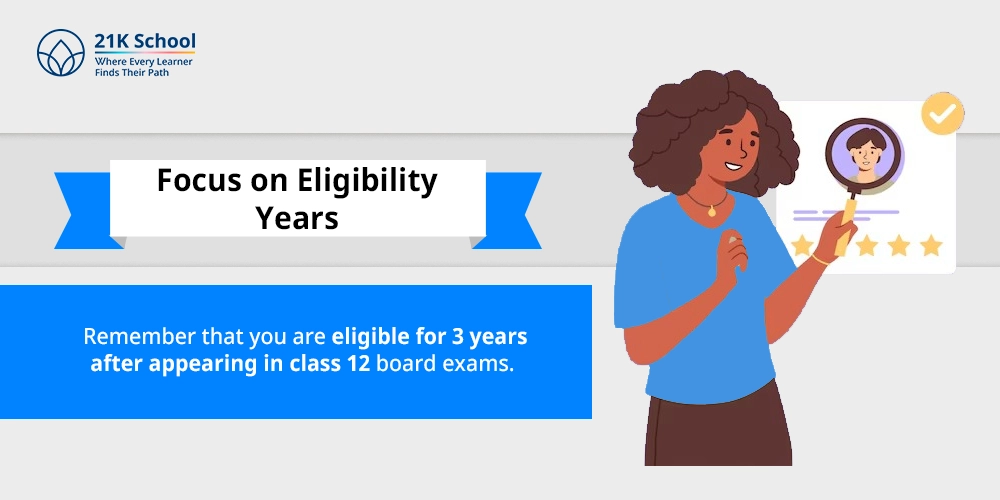
Remember that you are eligible for 3 years after appearing in class 12 board exams.
2. Verify institute requirements
Each institute has their own requirements other than exams. That’s why candidates must check the latest notifications on the official websites of different institutions.
3. Plan attempts strategically
Learners can plan strategically because the JEE examination is taken twice in a year.
Pay attention to the past mistakes and perform better in your exams .
4. Stay updated
The Joint Entrance Examination Main exam rules might change with time, therefore, it is important to always read the official information bulletin published by the National Testing Agency.
To conclude all
There is no age limit for students appearing for JEE Main. The only requirement is to give the exam within 3 years of passing class 12.
Learners must go through different eligibility criteria and rules specifically designed by the national engineering institutions for admission purposes.
Must visit the official websites of popular educational institutions like Indian Institute of Technology, Indian Institute of Information Technology, and National Institute of Technology for latest updates.
Frequently asked questions
6 questions
Is there an age limit for JEE Main?
No. There is no age limit for appearing in JEE Main examination.
What is the minimum age required to appear for JEE Main?
There is no minimum age required to appear for JEE Main. Students should have just qualified their class 12 exams.
What is the maximum age limit for JEE Main?
There is no maximum age limit for students appearing in the JEE Main examination.
How many times can a student attempt JEE Main?
A student can attempt JEE Main for six times after passing their class 12 board exams.
Can a 30 year old give JEE?
Yes, it is technically possible for a 30 year old to give JEE Main if they have passed class 12 within 3 years.
Can I give JEE at the age of 20?
Yes, you can give JEE at the age of 20 if you have completed your class 12. Many students appear for JEE in this age group.
About the author
Anshu Kumari
Content Specialist
Anshu Kumari is an Education Content Specialist at 21K School- a fully accredited institute- Cambridge International (IA702) and Pearson Edexcel (94883). She focuses on the in-depth research and creation of the well-drafted guides on NIOS admission, Indian Education Policy, and competitive exam preparation. With around 2 years of experience at 21K School, her psychology background informs her approach to the education content and hence focuses on creating guides to address the real anxieties of the guardians. She writes well-researched articles on competitive exam timelines, stream selection, and board choices by referring to the official resources. All Anshu’s content pieces are fact-checked against the board and primary government official resources and is dedicatedly reviewed by the school’s academic team.
Every 21K School guide is written by our education team and reviewed by a subject facilitator before publishing.
Exploring a CBSE-pathway online school?
Talk to an advisor about 2026–27 admissions — no obligation.
Talk to an advisorComments
No comments yet — be the first to share your thoughts or ask a question.