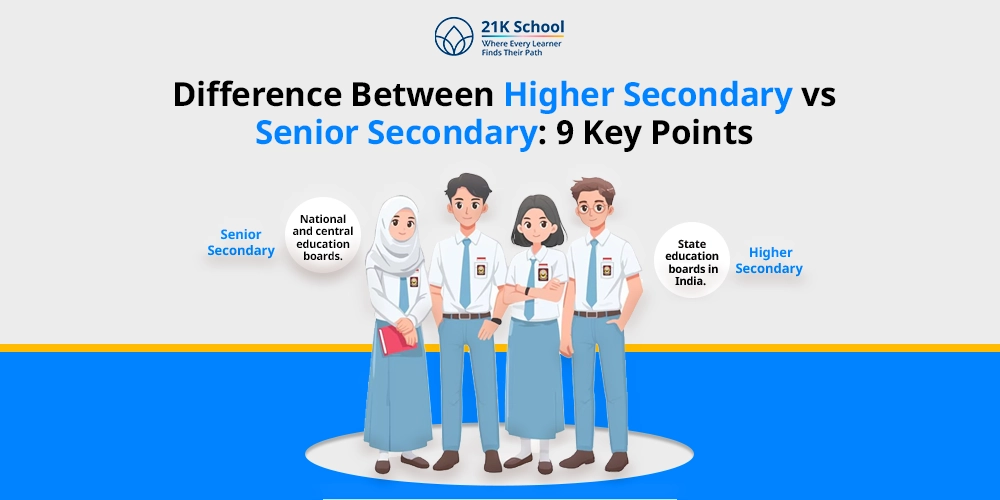
Top 9 Differences Between Higher Secondary vs Senior Secondary
 Written byAnkita SinghaContent Specialist
Last modified: Jul 24, 2026 6 min read
Every student comes to this phase of their life, where after completing class 10th they enter into the most important academic phase of their life which shapes their higher education and career paths.
During this stage there are two most commonly used Indian education systems one is higher secondary and another is senior secondary
Having confusion about these terms is quite common among students, parents and sometimes even teachers, which leads many students to believe that they represent different levels of education.
But in reality higher secondary and senior secondary both terms are used interchangeably across India. It refers to Classes 11-12, regardless of board.
Let’s explore the main difference between higher secondary vs senior secondary which help in the selection of school, boards, streams and preparing for competitive exams .
What is higher secondary?
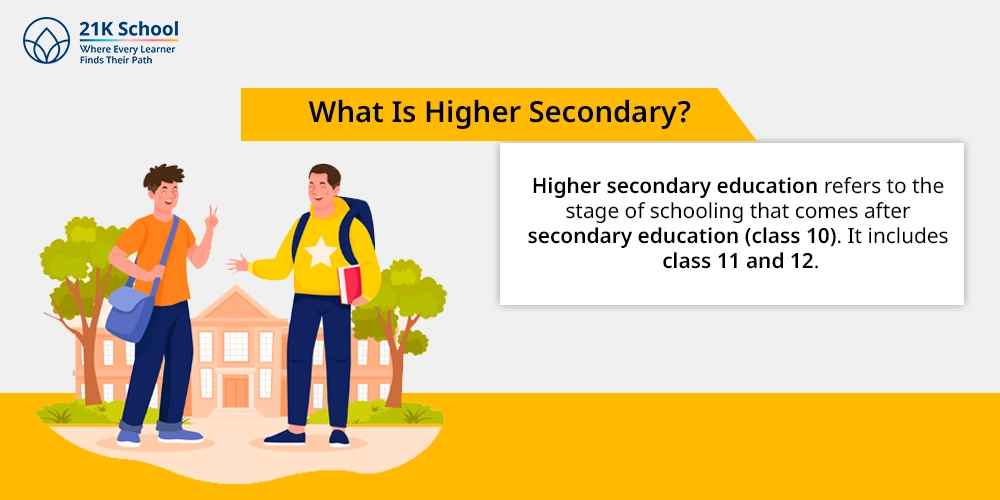
Higher secondary education refers to the stage of schooling that comes after secondary education (class 10). It includes class 11 and 12. This term higher secondary is often used by the state education boards in India .
Key features of higher secondary education:
- It includes grades 11 and 12.
- These schools are often known as Higher Secondary Schools.
- The curriculum can vary based on different states.
- It focuses on academic continuity and subject specialisation.
What is senior secondary?
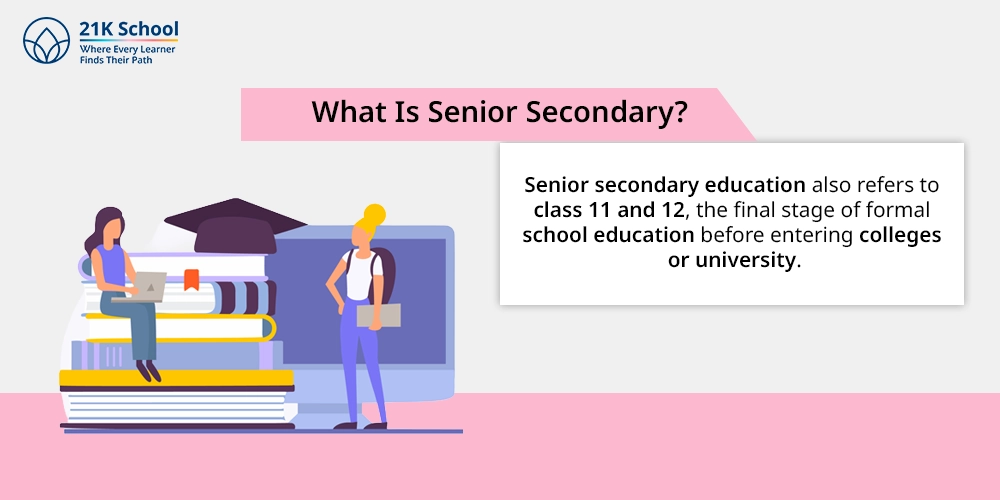
Senior secondary education also refers to class 11 and 12, the final stage of formal school education before entering colleges or university. This term is used majorly by national and central education boards, for example CBSE and ISC.
Key features of senior secondary education:
- It also covers both grade 11 and 12.
- Schools are known as senior secondary schools in India.
- The curriculum of senior secondary education focuses on standardised and centrally designed.
- The education program focuses on conceptual learning and preparation for entrance examinations
Difference between higher secondary vs senior secondary: 9 key differences
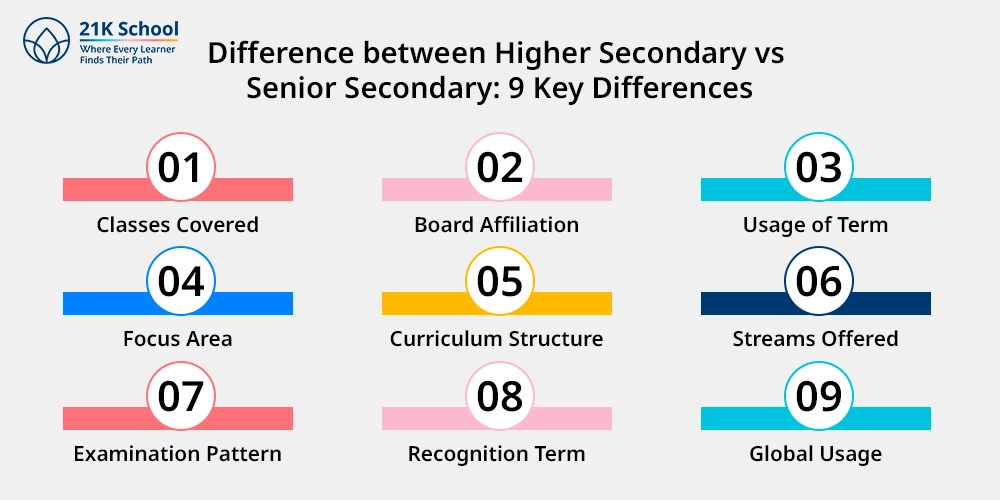
Check out a quick guide of difference between higher secondary vs senior secondary:
| Number | Particular | Higher Secondary | Senior Secondary |
|---|---|---|---|
| 1. | Classes Covered | Class 11 and Class 12. | Class 11 and Class 12. |
| 2. | Board Affiliation | State boards award the Higher Secondary Certificate (HSC). | CBSE awards the Senior School Certificate for Class 12. |
| 3. | Usage of Term | Commonly used in state boards. | More commonly used by CBSE, ISC, and national boards. |
| 4. | Focus Area | Focus on academic continuation after secondary education. | Focuses on preparation for higher education and competitive exams. |
| 5. | Curriculum Structure | The curriculum may vary from state to state. | The curriculum is more uniform and centrally designed. |
| 6. | Streams Offered | Streams offered in higher secondary are Science, Commerce, Arts. | Streams offered by senior secondary include Science, Commerce, Arts. |
| 7. | Examination Pattern | The examination pattern here is State-level examinations. | The examination pattern here is National-level standardised examinations. |
| 8. | Recognition Term | Certificate often called "Higher Secondary Certificate (HSC)" or "Class 12 Certificate" by almost all national and state boards. | CBSE specifically calls it "Senior School Certificate".However, this doesn’t create two different educational categories. |
| 9. | Global Usage | The term is mainly used in India and a few other countries. | The term is more widely recognised nationally and internationally. |
1. Classes covered
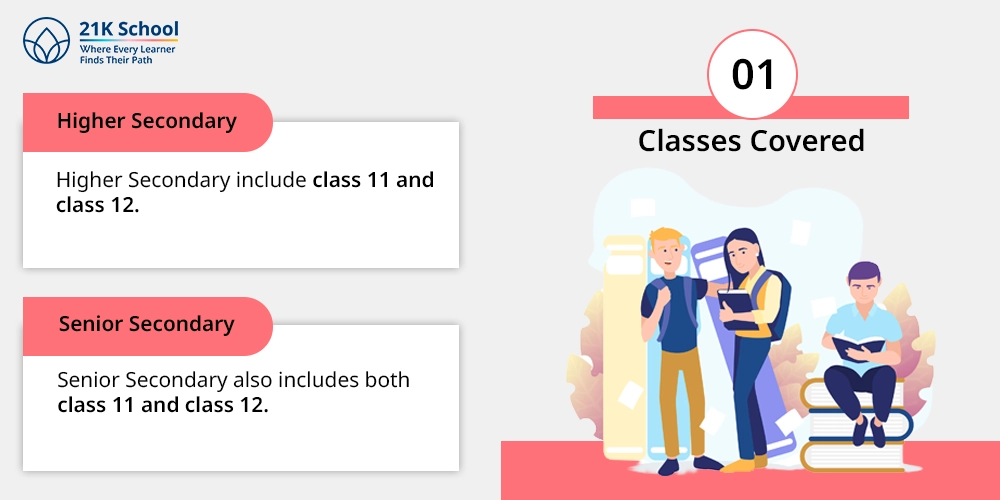
Higher Secondary: The higher secondary classes include 11 and class 12. It follows the completion of secondary education (class 10).
Senior Secondary: Senior secondary also includes both class 11 and class 12.
2. Board affiliation
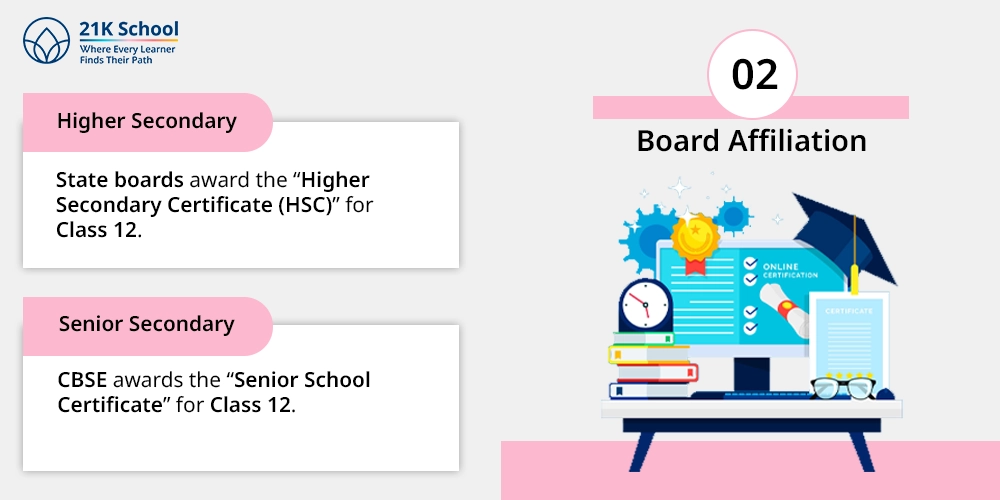
Higher Secondary: In higher secondary, State boards award the "Higher Secondary Certificate (HSC)" for Class 12.
Senior Secondary: In senior secondary, CBSE awards the "Senior School Certificate" for Class 12.
3. Usage of term
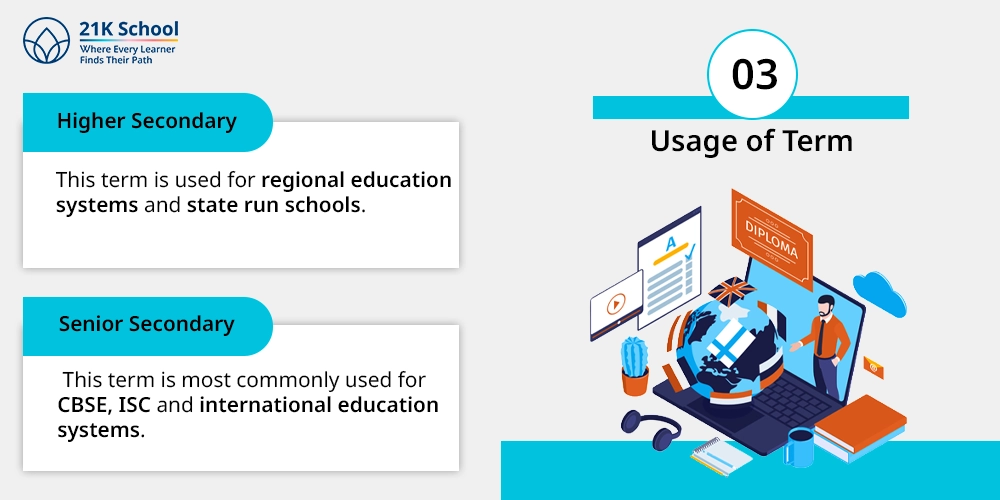
Higher Secondary: This term is used for regional education systems and state run schools.
Senior Secondary: This term is most commonly used for CBSE, ISC and international education systems.
4. Focus area
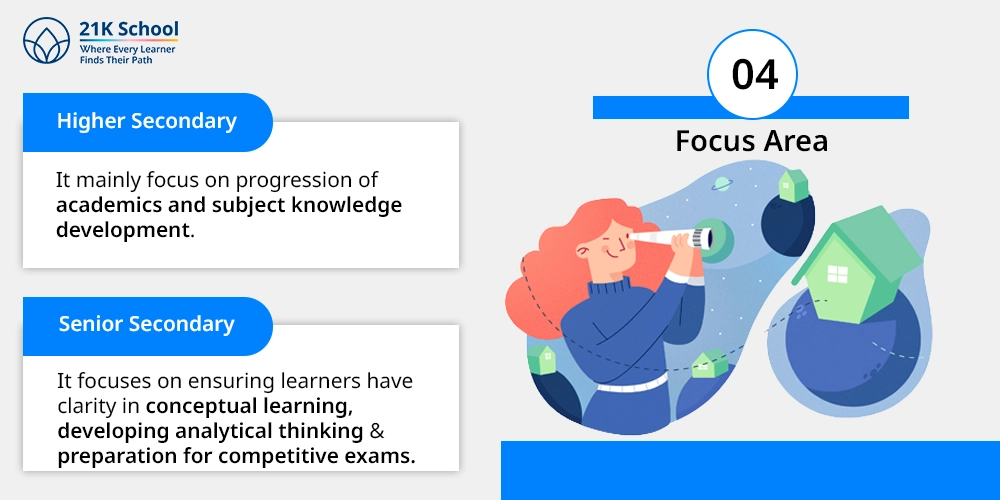
Higher Secondary: Higher secondary mainly focus on progression of academics and subject knowledge development.
It is aligned with state level education goals.
Senior Secondary: Senior secondary focuses on ensuring learners have clarity in:
- conceptual learning
- developing analytical thinking
- preparation for competitive entrance exams
5. Curriculum structure
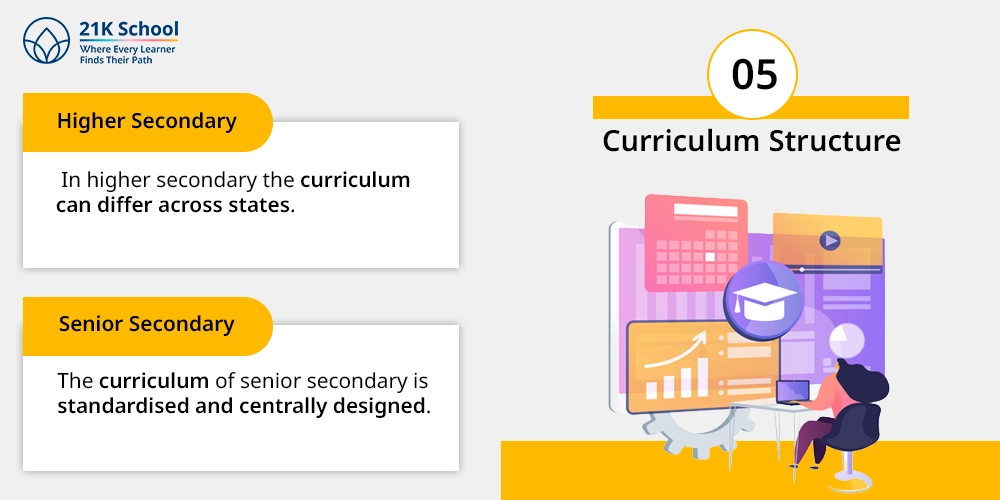
Higher Secondary: In higher secondary the curriculum can differ across states.
This is because each state board designs their own syllabus and the assessment methods.
Senior Secondary: The curriculum of senior secondary is standardised and centrally designed.
This ensures that they get uniformity across schools nationwide.
6. Streams offered

Higher Secondary: It provides various streams such as:
- Science
- Commerce
- Arts / Humanities
However, the availability of the subjects can vary according to which state board is chosen and the school’s infrastructure you are in.
Senior Secondary: It also offers you streams like:
- Science
- Commerce
- Arts / Humanities
The combination of subjects are more standardised and they are more aligned with the national entrance examination.
7. Examination pattern
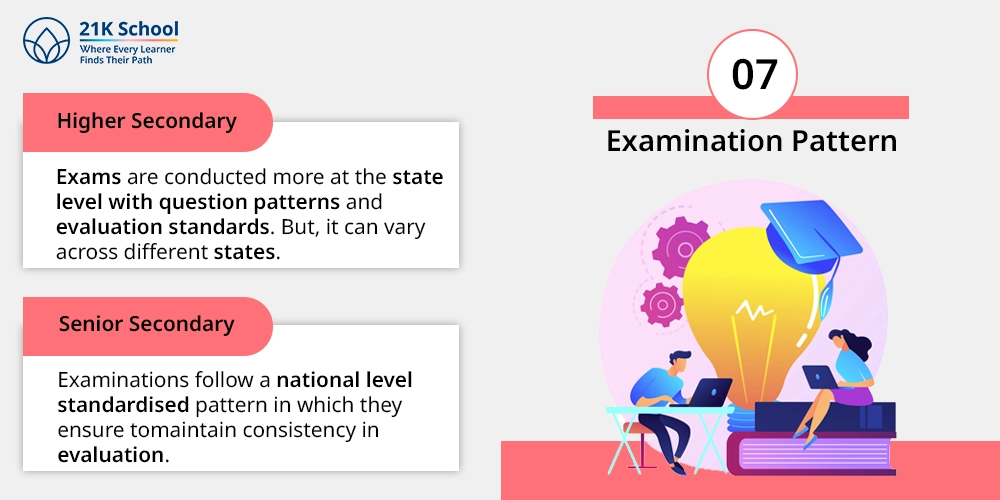
Higher Secondary: Exams are conducted more at the state level with question patterns and evaluation standards. But, it can vary across different states.
Senior Secondary: In the senior secondary, examinations follow a national level standardised pattern in which they ensure to maintain consistency in evaluation .
8. Recognition term
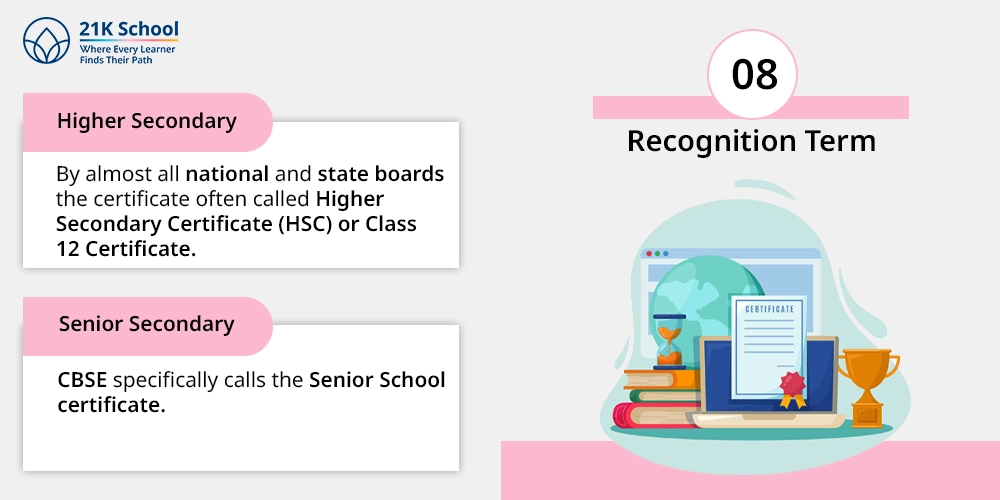
Higher Secondary: By almost all national and state boards the certificate often called:
- Higher Secondary Certificate (HSC) or
- Class 12 Certificate
Senior Secondary: CBSE specifically calls the certificate:
- Senior School Certificate
However, this doesn’t create two different educational categories.
9. Global usage
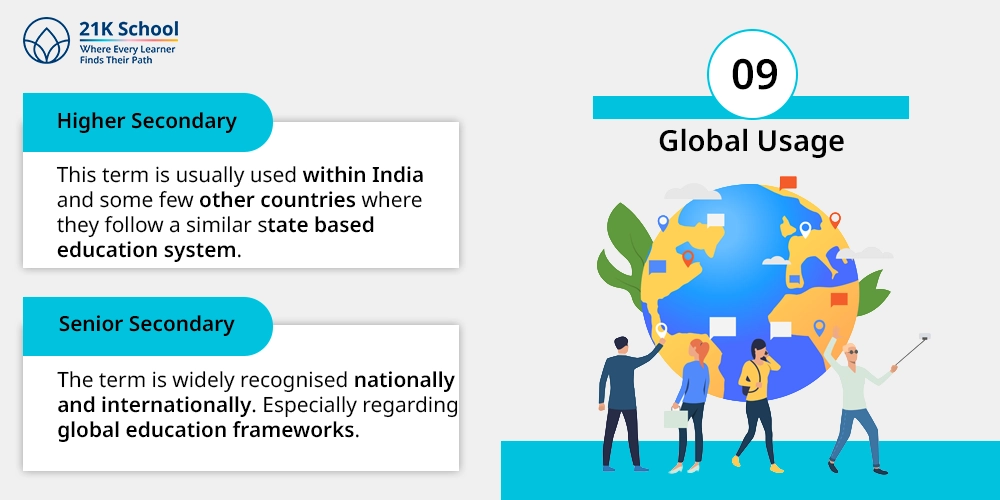
Higher Secondary: This term is usually used within India and some few other countries where they follow a similar state based education system.
Senior Secondary: The term is widely recognised nationally and internationally. Especially regarding global education frameworks.
Ending note
In students’ educational journey, class 11 and 12 help in transforming steps towards higher education and successful careers.
The above-mentioned information is all about the key difference between higher secondary and senior secondary education.
Hopefully, understanding the difference between higher secondary vs senior secondary helps in avoiding confusion or obstacles.
Frequently asked questions
6 questions
Is higher secondary and senior secondary the same?
Both terms are used interchangeably across India. However, it refers to Classes 11-12, regardless of board. The terminology varies between states such as "senior secondary education" in some states, "higher secondary education" in others.
What are the levels of higher secondary?
Higher secondary education includes two levels: Class 11th (first year) Class 12th (final year)
How to check higher secondary results?
Go through the official website online to seek the "Results" section and then enter roll number and school code/date of birth to log in and view the marksheet.
Is higher secondary 10th or 12?
The higher secondary examination is the class 12.
Is the senior secondary 10th or 12?
Senior secondary refers to Class 12 grade.
What is a senior secondary subject?
A senior secondary includes grades 11 and 12 which is focused on specialised, in-depth knowledge in areas like Science, Commerce, Arts.
About the author
Ankita Singha
Content Specialist
Ankita Singha is an Education Content Specialist at 21K School, India’s first accredited fully online K-12 School. She focuses on the in-depth research and creation of the well-drafted guides on early childhood education, school admission processes, and CBSE/ICSE curriculum guidance. With more than 2 years of experience at 21K School, a fully accredited institute- Cambridge International (IA702) and Pearson Edexcel (94883), Ankita works closely with the school’s curriculum heads and academic coordinators. Ankita’s every article reflects on the official board guidelines, practical realities, and current policies of online education in 78+ countries. Ankita’s content has helped thousands of parents in understanding the topics like RTE eligibility, NIOS pathways, and age-appropriate admission criteria.
Every 21K School guide is written by our education team and reviewed by a subject facilitator before publishing.
Exploring a CBSE-pathway online school?
Talk to an advisor about 2026–27 admissions — no obligation.
Talk to an advisorComments
No comments yet — be the first to share your thoughts or ask a question.