
A Learning Culture Built Around Curiosity, Agency and Growth
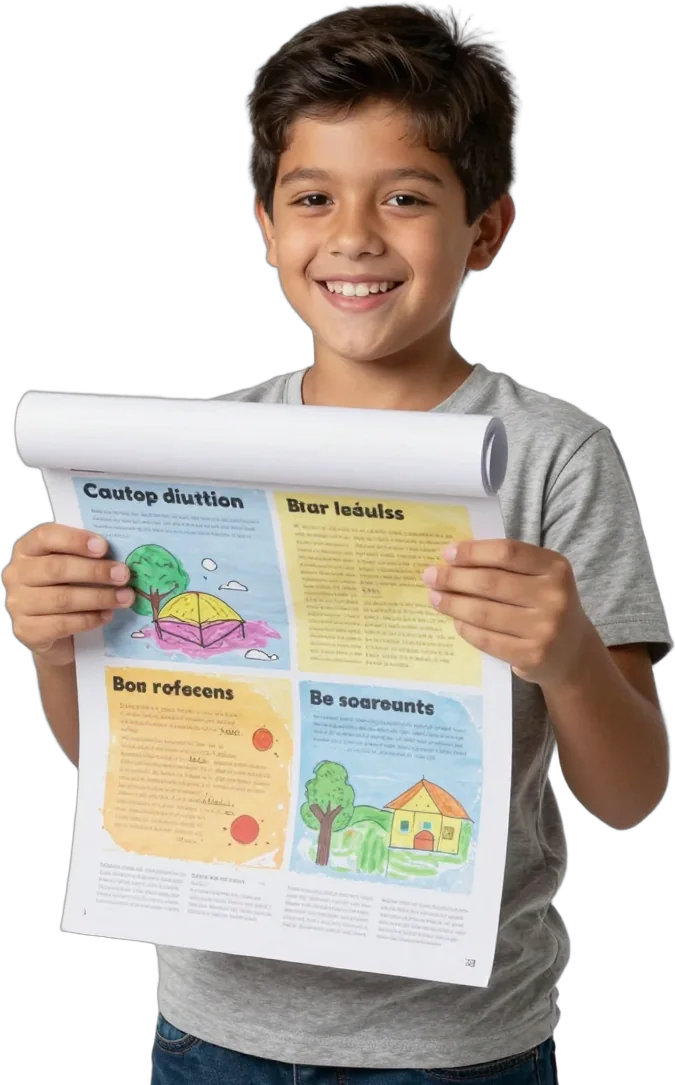



Culture is what your child experiences repeatedly: whether questions are welcomed, whether mistakes can be examined without shame, whether effort leads to better strategies and whether their voice has a place in the school. 21K School is Awarded for Excellence and Innovation in Online Teaching (K12) at Entrepreneur's Indian Education Awards.
At 21K School, this culture is intentionally designed. The 16 Habits of Mind, principles of Learning Science and Approaches to Learning skills run through lessons, projects, assessments, feedback and relationships. Our Personalised, Flexible and Accelerated approach helps the experience respond to the learner, while clear expectations protect progress.
This environment offers a modern, thoughtful way to learn, helping your child understand deeply, think independently, work with others, and become increasingly capable of directing their own learning.
The culture is built into the system
Pedagogy, technology and people work together so culture doesn't depend on one teacher
A strong learning culture cannot depend on the personality of one teacher or an occasional school initiative. It needs a system. At 21K, three foundations work together: thoughtful pedagogy, technology and AI that improve access and insight, and human connections from our teachers, whom we call facilitators, that create trust, motivation, and belonging. With over 137,200 hours of live online teaching delivered in the 2025–26 academic year, this culture operates at global scale.
Across these foundations, learning is personalised, flexible and accelerated. Personalisation recognises your child’s starting point, strengths and aspirations. Flexibility allows learning to work with real lives and varied pathways. Acceleration ensures that a learner receives support where foundations need strengthening and greater challenge where they are ready to move beyond expectations.

This is the environment within which culture grows. Curiosity has space because lessons invite inquiry. Agency grows because learners make age-appropriate choices. Reflection matters because feedback leads to the next step. Belonging becomes possible because facilitators and peers know how to listen, collaborate and respond.
The 16 Habits of Mind, used in every class
A shared language for what to do when the answer isn't obvious
A language for intelligent action
Children will not always know the answer. What matters is how they respond when an answer is not immediately apparent. The Habits of Mind, developed by educators Dr Arthur Costa and Dr Bena Kallick, give learners a shared language for responding thoughtfully to challenge, uncertainty and unfamiliar situations.
They move learning beyond “What do you know?” towards “What do you do when you do not yet know?” That shift matters in school, university, work and life.
The sixteen habits
How the habits show up in learning
The habits are not taught as definitions for children to memorise. Facilitators model and name them while learners use them. A learner may persist through a difficult mathematical problem, listen with empathy during a disagreement, revise a presentation for greater accuracy or reflect on the strategy that helped them learn.
They appear in lesson planning, classroom dialogue, projects, assessment, learner-led conferences, leadership opportunities and everyday interactions. Over time, the language helps learners recognise their own thinking and choose a more effective response.
An international Habits of Mind learning community of excellence
21K School is the first school in Asia recognised as an International Habits of Mind Learning Community of Excellence. Certification renewed at Milestone 3 as of 1 September 2026. This recognition reflects the depth of implementation across curriculum, pedagogy, assessment, and school culture, rather than the use of Habits of Mind as an occasional activity.
For a parent, the value is practical. Your child learns more than a list of concepts; they develop repeatable ways to approach complexity, feedback, relationships and change.

Questions are part of the lesson
Facilitators use questions to see how your child is thinking
Facilitators use questions to reveal thinking
In a 21K classroom, a question is not a disruption to the lesson. It is often where the lesson begins. Facilitators ask learners to explain, compare, predict, justify and reconsider. They use questioning to see how a child is thinking—not only whether the final answer is correct.
Learners are encouraged to ask why, form hypotheses, seek evidence and challenge an assumption respectfully. This makes understanding visible and allows a facilitator to notice misconceptions or opportunities for deeper exploration.
Inquiry in practice
Consider Kavish, who challenged a visiting nanotechnology expert during an interactive session. Rather than simply absorbing facts, he prepared targeted questions to examine real-world applications and test hypotheses.
Through this process, the learner actively practices Questioning and Posing Problems, Thinking Flexibly, and Applying Past Knowledge to New Situations. Knowledge gains meaning because it is being used in real time.
Mistakes become information
Feedback turns a wrong answer into the next step
Feedback provides a route forward
A wrong answer can reveal an unfinished foundation, a misconception or an alternative line of reasoning. Treating that information thoughtfully helps a facilitator decide whether a learner needs another explanation, more practice, a different representation or a greater challenge.
Useful feedback does more than label work right or wrong. It helps a learner understand what is already working, what needs attention and what to try next. Learners may revise work, reconsider a strategy, practise a skill or explain their thinking again.
High standards without the fear of trying
This approach does not make learning easier by lowering standards. It creates a healthier and more effective route towards meeting them. Children need to attempt unfamiliar work, take responsible risks and learn from feedback if they are to become resilient thinkers.
We want learners to associate challenges with growth, not with a judgement about their ability. Progress comes from effort combined with better strategies, timely support and reflection.
Learners grow into ownership
Choices and responsibility grow with age, from early years to senior school
Agency is developed gradually. It is not the absence of structure. Children need appropriate choices, clear expectations and increasing responsibility as their capacity grows.
Early years and primary school
Younger learners begin with small choices and strong adult guidance. They may choose how to represent an idea, contribute during show and tell, select a project context or reflect on what they enjoyed and found difficult. Facilitators and Learning Coaches—a parent or another responsible adult at home—help them establish routines, complete activities, and express what they need.
Middle school
Learners begin to manage deadlines, organise work, set goals and participate more actively in decisions about projects and enrichment. Reflection becomes more deliberate: What strategy worked? Where did I struggle? What will I do differently next time?
They are expected to seek help, respond to feedback and contribute reliably when working with others. Freedom grows alongside accountability.
Senior school
Older learners take greater responsibility for subject choices, study patterns, assessment preparation and future plans. Guidance remains available, but the learner becomes an active participant in decisions rather than a passive recipient of them.
This progressive transfer of responsibility prepares learners for university and adult life, where success depends on judgement, self-management and the ability to ask for the right support.
| Stage | What Your Child Decides | What Adults Still Guide |
|---|---|---|
| Preschool & Primary | Expression of ideas, project contexts, show-and-tell topics, self-reflection on difficulties. | Establishing routines, completing foundational activities, guiding emotional expression. |
| Middle School | Managing deadlines, organizing assignments, goal-setting, project execution strategies. | Structuring academic benchmarks, holding accountability, offering targeted feedback. |
| High School | Subject pathways, study schedules, exam preparation methods, post-secondary choices. | Mentorship, university shortlisting, providing subject specialization boundaries. |
- Stage
- Preschool & Primary
- What Your Child Decides
- Expression of ideas, project contexts, show-and-tell topics, self-reflection on difficulties.
- What Adults Still Guide
- Establishing routines, completing foundational activities, guiding emotional expression.
- Stage
- Middle School
- What Your Child Decides
- Managing deadlines, organizing assignments, goal-setting, project execution strategies.
- What Adults Still Guide
- Structuring academic benchmarks, holding accountability, offering targeted feedback.
- Stage
- High School
- What Your Child Decides
- Subject pathways, study schedules, exam preparation methods, post-secondary choices.
- What Adults Still Guide
- Mentorship, university shortlisting, providing subject specialization boundaries.
How much independence suits your child’s age? Talk it through with us.
Small classes where teachers know your child
Class size shapes how often your child speaks, questions and gets feedback
Being known changes how a child participates
Class size is not only an operational decision; it shapes the learning culture. Live classes are designed so facilitators can invite participation, notice patterns, ask follow-up questions and make space for different voices. The applicable class cap varies by age, grade and programme, and parents can review the relevant programme page for the current structure.
A smaller, interactive setting does not mean every child is speaking at every moment. It means participation can be purposeful: responding, questioning, discussing, presenting, collaborating and receiving feedback.
Facilitators do more than deliver content
A teacher, whom we call a facilitator, helps learners connect ideas, articulate thinking and move from dependence towards greater ownership. This requires strong subject understanding as well as the ability to question, observe, listen and respond.
With 551 hours of facilitator professional development completed in the 2025–26 academic year, 21K invests heavily in continuous training. Technology can surface patterns and organise evidence; our certified facilitators bring judgement, context, and human connection.
“We are very happy with our two‑year journey with 21K School. In terms of teaching and discipline, we are truly satisfied, and my children have enjoyed their time here. The teachers have been very cooperative and kind, especially Ms. Krithika and Ms. Karen.”
Learning together across cities and countries
Group projects, debates, and peer feedback build real online teamwork
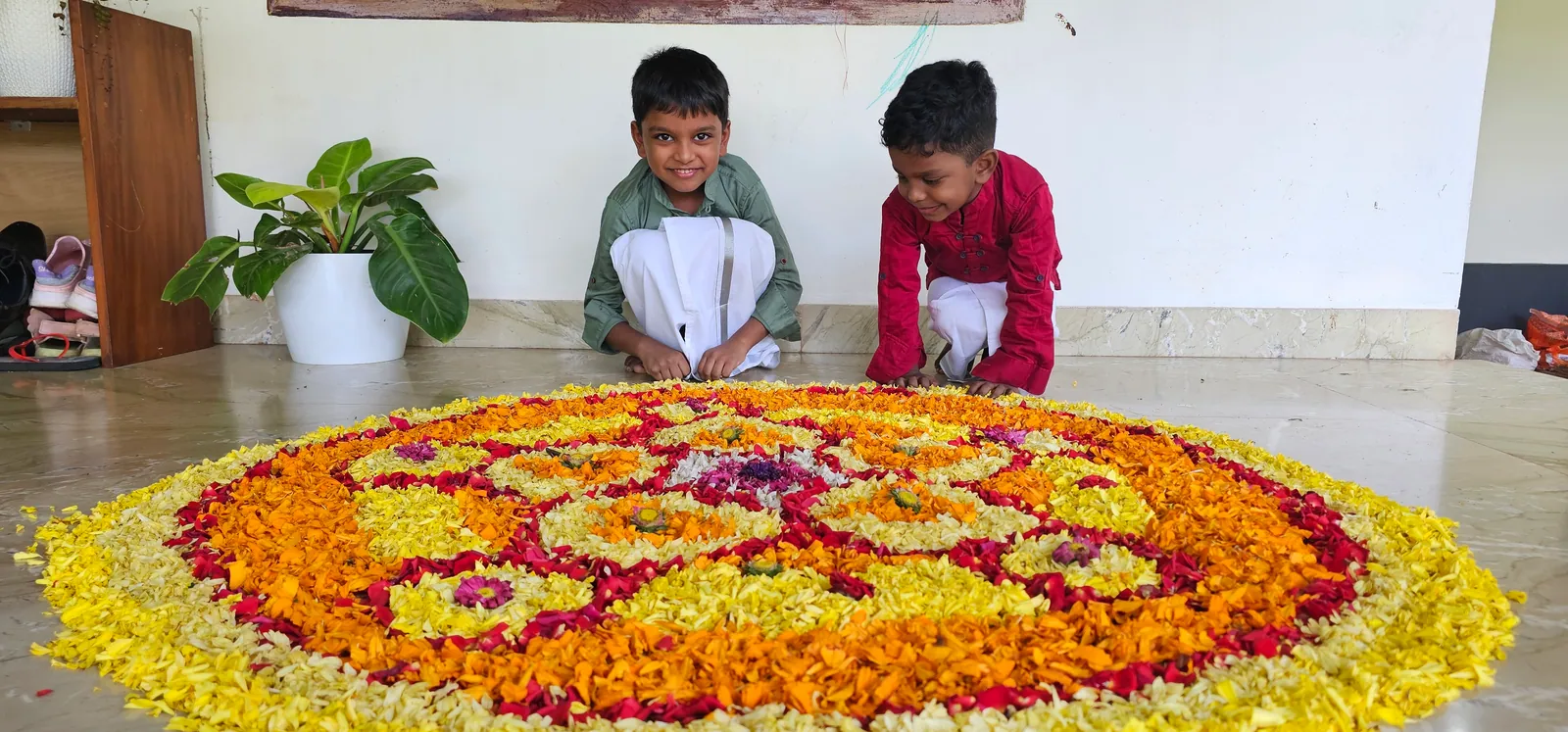
Learning remains social online
Online learning does not have to mean learning alone. With learners from 78 countries and 46 nationalities as of 1 September 2026, that diversity creates opportunities to encounter global perspectives every day.
Discussion, debates, peer feedback, collaborative investigations and group projects ask learners to listen carefully, communicate clearly and contribute to a shared outcome. Working online also develops practical habits: arriving prepared, taking turns, resolving disagreement constructively and following through on a responsibility.
Community beyond one lesson
Assemblies, houses, celebrations, clubs, student leadership opportunities, events, and informal peer interaction help learners experience school as a true community. Families can also connect in person at our physical Learning Garages located in Bangalore, Hyderabad, Pune, and New Delhi, as well as through selected In-Person Events.
Belonging is built through repeated interactions. A learner knows that they have a place to contribute, people who will notice their effort, and a community in which differences are approached with curiosity and respect.
Learning connects across subjects and the real world
Projects that pull subjects together around real questions
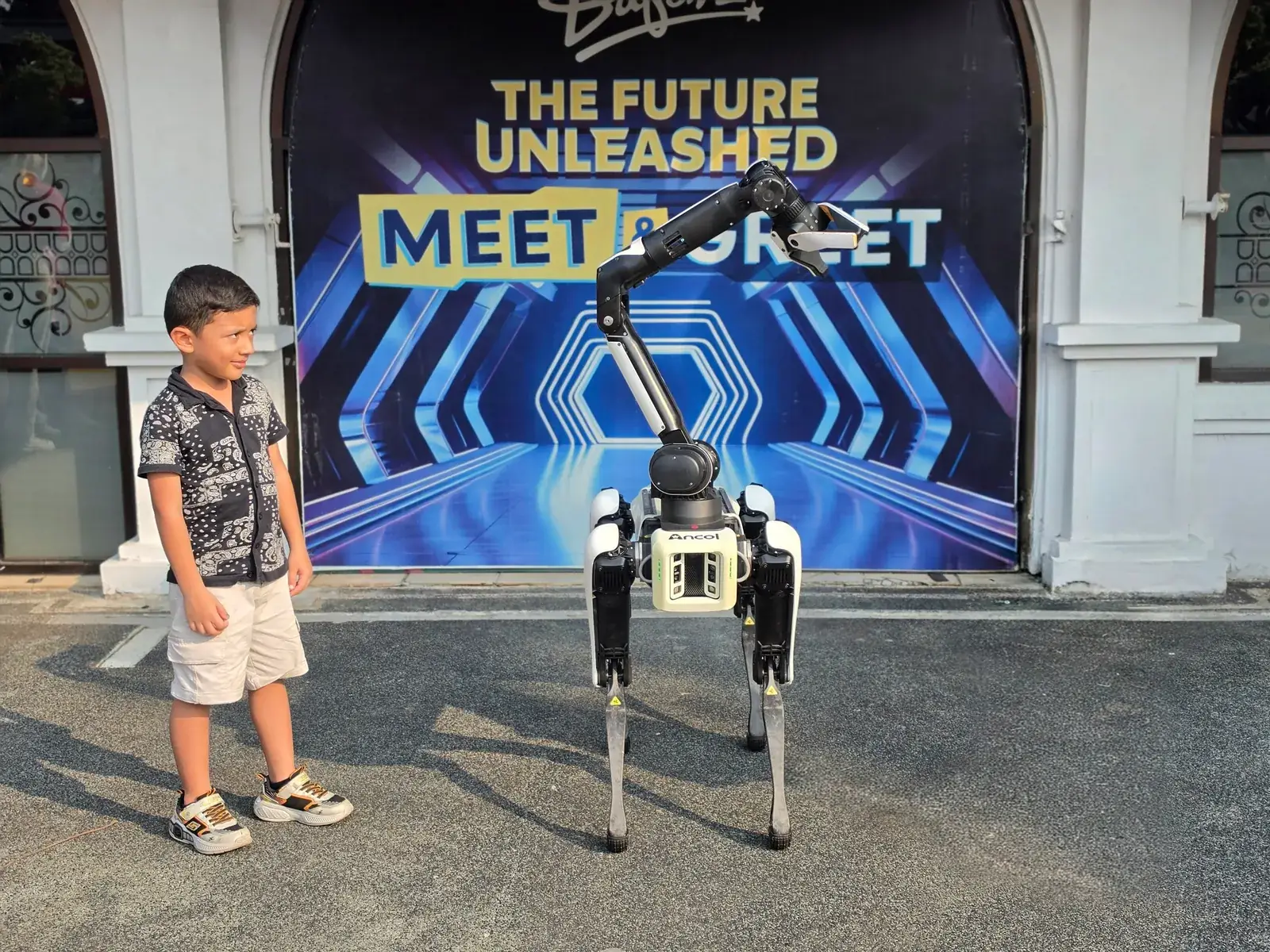
Interdisciplinary projects
Life does not present problems in separate subject periods. Interdisciplinary projects help learners bring together knowledge from science, mathematics, language, humanities, design and technology to investigate meaningful questions.
For example, designing an eco-friendly city requires learners to research renewable energy, calculate costs, and consider human needs. They collaborate on a design, revise it after feedback, and present the final proposal. The project develops knowledge while calling for Persisting, Thinking Interdependently, and Creating, Imagining and Innovating.
Passion, application and contribution
Learners may extend classroom learning through science investigations, sustainability initiatives, entrepreneurship, public speaking, Model United Nations, TED-Ed Student Talks Program, arts, technology, community action and Capstone programmes.
We celebrate achievements like Sanskriti, who was shortlisted for the prestigious John Locke Prize, and Madina Behbod for her impactful work with the UDA initiative.
These are not valuable merely because they keep children busy. They give learners an authentic reason to research, create, communicate, lead and improve. A child can discover an interest, develop competence and see that knowledge can produce something useful beyond an examination.
Clear expectations, and room for every learner
Discipline and inclusion, side by side
Clear expectations create a safe learning space
Flexibility does not remove discipline. Learners are expected to attend, participate appropriately, respect others, meet applicable deadlines and use the online environment responsibly. Voice comes with the responsibility to listen, use evidence and contribute constructively.
When conduct affects learning or wellbeing, our academic coordinators and student support teams intervene promptly. Facilitators communicate clear expectations, address concerns directly, and involve families whenever partnership is needed.
Difference is part of the community
A global online school brings together learners with different abilities, languages, cultures, interests and ways of participating. Inclusion is visible when facilitators create more than one way to engage, peers learn to disagree respectfully. A child does not need to erase their individuality to belong.
Every learner’s participation will not look identical. The shared standard is respectful, safe and purposeful engagement.
Achievement has more than one form
Marks matter; the Seven Dimensions of Success show the rest
Academic achievement matters. We build conceptual understanding, use formative assessment and feedback, and expect learners to make meaningful progress. Our commitment to academic excellence is reflected in our outcomes: 21K School achieved 100% pass results in NIOS Grade 10 and Grade 12 Board examinations for the past two academic years (from 2024 onward). Furthermore, more than 350 learners have sat Cambridge IGCSE, AS, and A Level examinations through 21K School, maintaining near-100% IGCSE pass rates since May 2022.
However, marks alone cannot describe whether a young person can think, communicate, collaborate, lead, care, create, or respond to uncertainty. 21K’s Seven Dimensions of Success broaden the evidence we value:
- Purpose & Values
- Health and Wellbeing
- Relationships
- Career and Passion
- Financial Understanding
- Impact and Community Contribution
- Academic Achievements
A learner presenting a TED-Ed Student Talk, leading a sustainability campaign, conducting a scientific investigation, collaborating on an interdisciplinary project, or reflecting during a learner-led conference develops several dimensions at once. Parents gain a fuller picture of growth, celebrating strong academic results while noticing the capabilities that help a child use those results well.
Leadership and active participation
Councils, conferences and journals give your child a voice
Leadership and participation
Student councils, assemblies, leadership roles, school forums, and collaborative initiatives create structured ways for learners to express ideas and influence their community. Leadership is understood as service and contribution—not simply holding a title.
Learners practise presenting a position, listening to other perspectives, making decisions and accepting responsibility for what follows.
Reflection and learner-led conferences
Learning journals, self-assessment and learner-led conferences help children speak about their own progress. Instead of adults discussing the learner while the child remains outside the conversation, the learner develops the language to explain strengths, challenges, goals and next steps.
What this culture can create for your child
What you'll see in your child over time
A learning culture ultimately changes what a child is capable of doing. Over time, we want your child to become more willing to ask a thoughtful question, more able to explain an idea, more resilient when the first attempt fails and more responsible for the choices they make.
“It is a matter of fact that I have seen a huge improvement and development in both my wards. It was a tremendous idea to admit both of the sons. There is a drastic change to be seen in speaking skills and logical analysis. In 21k I felt they give importance to knowledge rather than emphasis on good grades.”
You'll see a learner who can connect knowledge across contexts, collaborate with people who think differently, use feedback without losing confidence, and pursue an interest with discipline. These qualities grow through the way a school teaches, responds, and relates day after day.
That is the distinctive value of the 21K culture: a connected system designed so every learner finds their path to success without separating academic excellence from childhood, purpose, or life beyond school.
Questions parents ask about learning culture
Does flexibility reduce discipline?
No. Flexibility removes unnecessary constraints. It does not remove expectations. Learners follow the relevant class schedule, participate responsibly, complete applicable work and meet deadlines. The purpose is to make the structure fit the learner’s life while preserving progress and accountability.
How does 21K motivate learners?
Motivation grows when learners experience clear goals, meaningful challenges, appropriate choice, useful feedback, supportive relationships and opportunities to apply what they learn. External encouragement has a place, but lasting motivation also requires the learner to see purpose and progress.
Are the Habits of Mind another subject?
No. They are dispositions used across subjects and experiences. A facilitator may name a habit during a lesson, project, discussion or reflection so that learners become more conscious of how they are thinking and responding.
How do you build values online?
Values develop through choices and relationships: how learners listen, disagree, collaborate, respond to setbacks, take responsibility and contribute. Stories, discussion, reflection, leadership and community action provide additional contexts, but the everyday culture makes the message credible.
How large is a class?
Class caps vary by age, grade and programme. Each programme page states the applicable structure. Across the school, live classes are designed for interaction, purposeful participation and facilitator feedback rather than one-way broadcasting.
What happens if my child disengages?
Disengagement is information. The facilitator and relevant team seek to understand whether the cause relates to readiness, confidence, routine, wellbeing, challenge, technology or another circumstance. The response can then be more precise, with the family involved where appropriate.
Will my child receive individual attention in a group class?
Individual attention does not require every lesson to become a one-to-one class. It means the facilitator uses participation, work, assessment evidence and conversation to understand progress, provide relevant feedback and identify when additional support or challenge is needed.
How can children belong if most learning is online?
Belonging develops through consistent relationships and shared experiences. Live classes, peer interaction, houses, assemblies, celebrations, projects, clubs, leadership opportunities and selected in-person events give learners different ways to connect and contribute.
How 21K helps your child learn for life
Curiosity, agency, reflection and belonging, built in on purpose
The purpose of school is not only to complete lessons. It is to help a young person become capable of learning, adapting and contributing long after school ends.
At 21K School, curiosity, agency, reflection and belonging are not left to chance. They are built into the learning culture so your child can pursue academic excellence while becoming confident in how they think, learn and engage with the world.