


Have you ever asked yourself why virtual classrooms are becoming more and more popular among children?
Online classroom or online learning is a virtual classroom where students take classes despite the fact that they are not enrolled in a physical school. The main factors that justify why virtual classes are becoming popular among students are flexibility, personalisation and easy access to educational material.
A virtual classroom is supported by virtual learning platforms and software. Students can learn in the comfort of their own homes without any limitations or stereotypes through virtual classrooms.
An online classroom is one which involves videoconferencing, chat mechanisms and interactive whiteboards to facilitate live lectures, discussions and group work remotely. These can either be synchronous, so that all the people are present and online together at the same time or asynchronous, so that the students learn at their own pace.
Table of Contents
What is a Virtual Classroom?
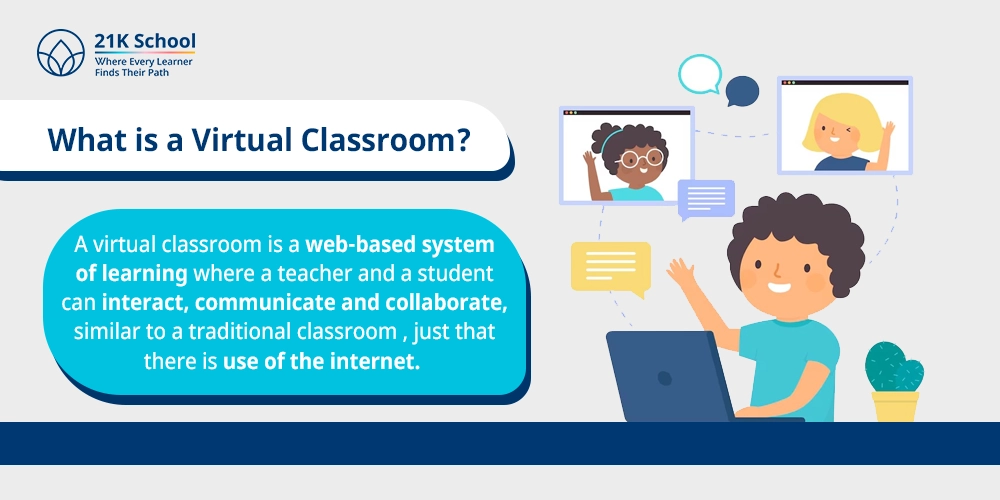
A virtual classroom is a web-based system of learning where a teacher and a student can interact, communicate and collaborate, similar to a traditional classroom , just that there is use of the internet.
It entails the use of digital programmes such as video conferencing, chat, whiteboards and collaborative screens that are utilised to provide live or recorded lessons.
In a virtual classroom, the students can take lectures, participate in discussions, submit assignments, and take exams anywhere in the world, provided that they have a computer or a mobile phone.
This is more adaptable and widespread, and education can be made available to people regardless of distance and time constraints. It facilitates self-regulated learning since those people who have different time schedules or geographical limitations can attain quality education .
Features of Virtual Classroom
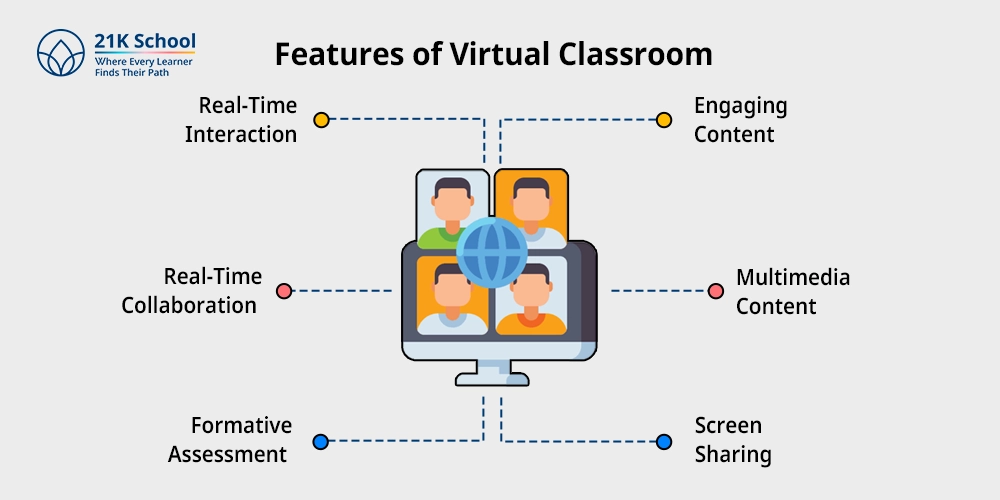
The virtual classes are also very effective in achieving the target needs of the students. The virtual classrooms may be utilised to allow students to learn anywhere with the help of mobile phones or computers. These are the features of online classes.
1. Real-Time Interaction
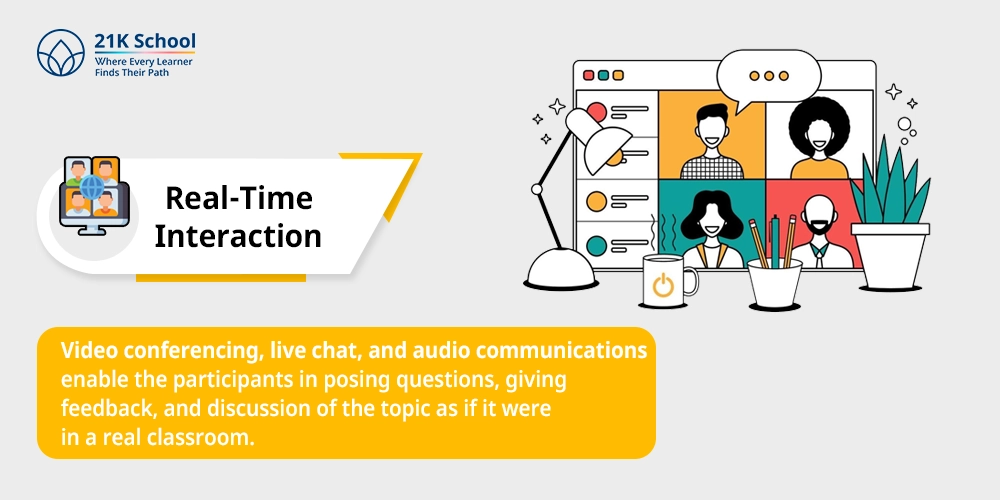
One of the best things about a virtual classroom is the real-time communication between the instructors and the learners. Video conferencing, live chat, and audio communications enable the participants in posing questions, giving feedback, and discussion of the topic as if it were in a real classroom.
This real-time communication produces a sense of belonging, the building of knowledge and the eradication of doubts instantly. It also encourages the participative aspect, and hence promotes dynamic education and interaction.
2. Engaging Content
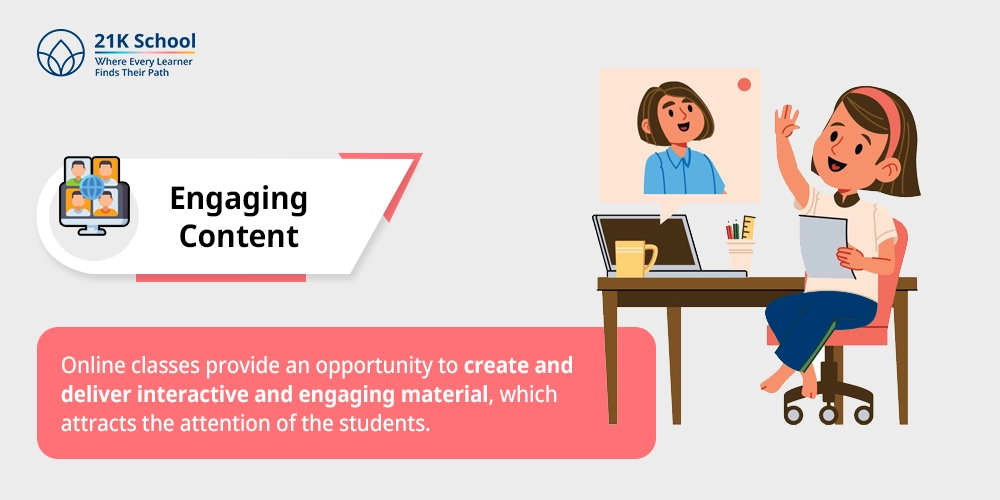
Online classes provide an opportunity to create and deliver interactive and engaging material, which attracts the attention of the students. The educators will be capable of including animations, tests, surveys, games, and narrative approaches to make the lessons interesting.
The interesting information helps in keeping the students motivated, and information retention is increased. It can also help educators to accommodate the different forms of learning, be it visual, auditory, or kinesthetic learning .
3. Real-Time Collaboration
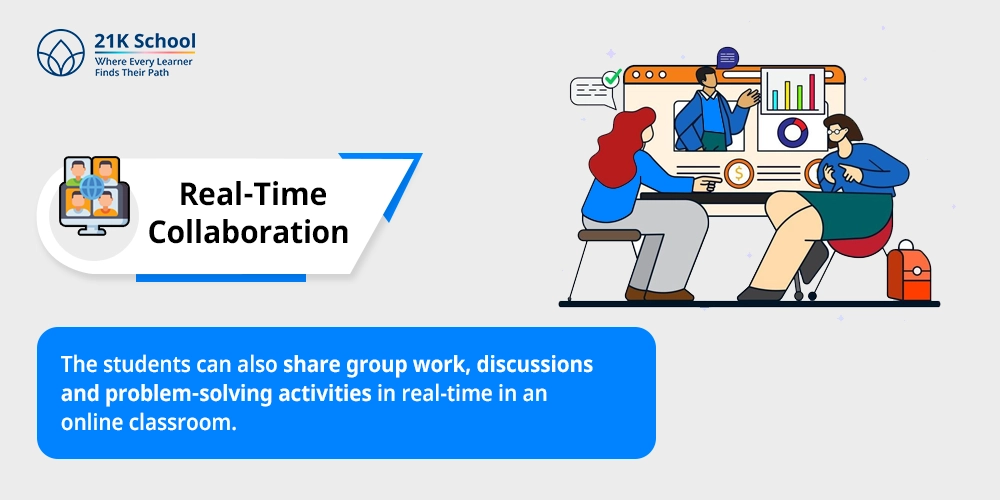
The students can also share group work, discussions and problem-solving activities in real-time in an online classroom.
Online whiteboards, breakout rooms, shared documents, and other tools that allow collaborating with other learners allow them to brainstorm when not together and complete tasks in groups.
This promotes teamwork, inter-peer socialisation and develops collaboration skills , which play a central role in the overall academic development.
4. Multimedia Content
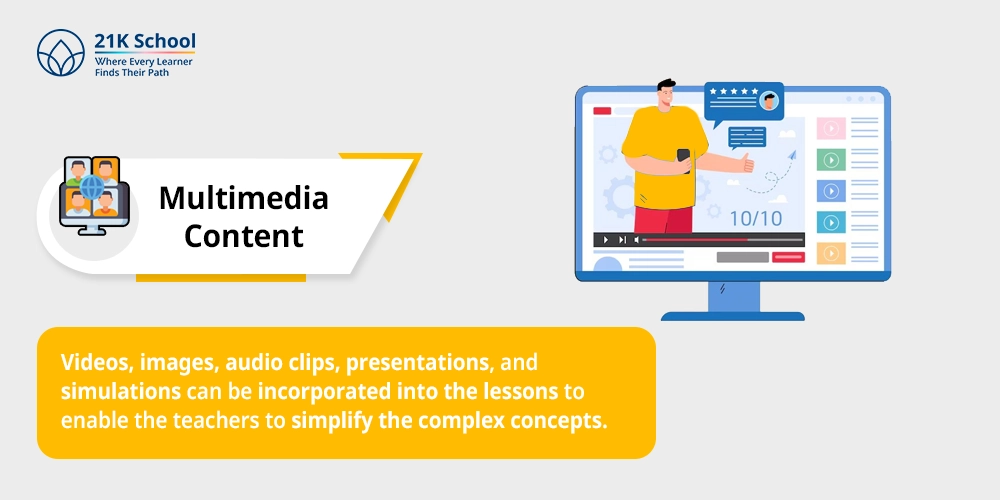
Virtual classrooms have another significant strength: the use of multimedia. Videos, images, audio clips, presentations, and simulations can be incorporated into the lessons to enable the teachers to simplify the complex concepts.
Multimedia messages will improve the understanding and make the learners remember concepts for longer. It also aids visualisation of abstract ideas, and the learning process becomes more interactive and effective.
5. Formative Assessment
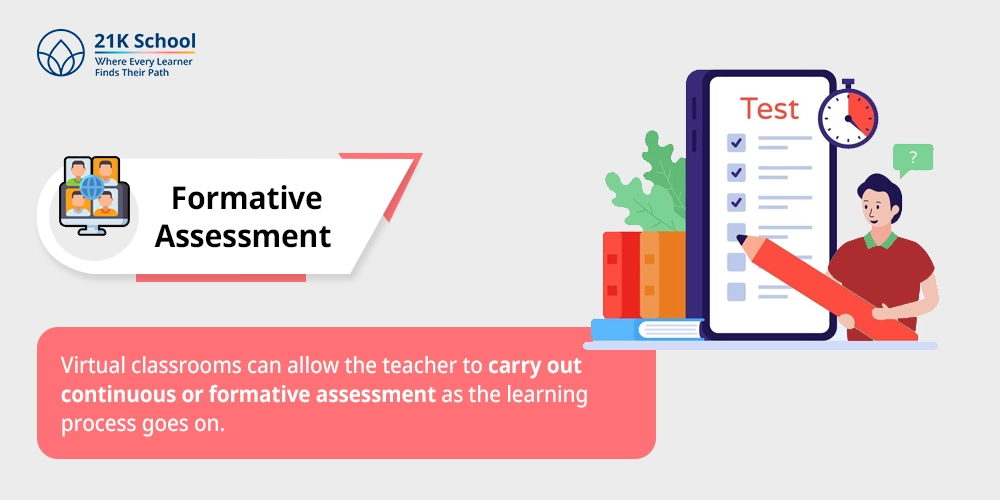
Virtual classrooms can allow the teacher to carry out continuous or formative assessment as the learning process goes on. These exams involve online quizzes and polls, short tests and assignments, which assist in determining the understanding of students in real-time.
The instructors are able to provide instant feedback, and they are able to identify points in which the students need to improve. Such continual review not only makes learning easy for a person, but it also makes learning objectives easier to achieve effectively.
6. Screen Sharing
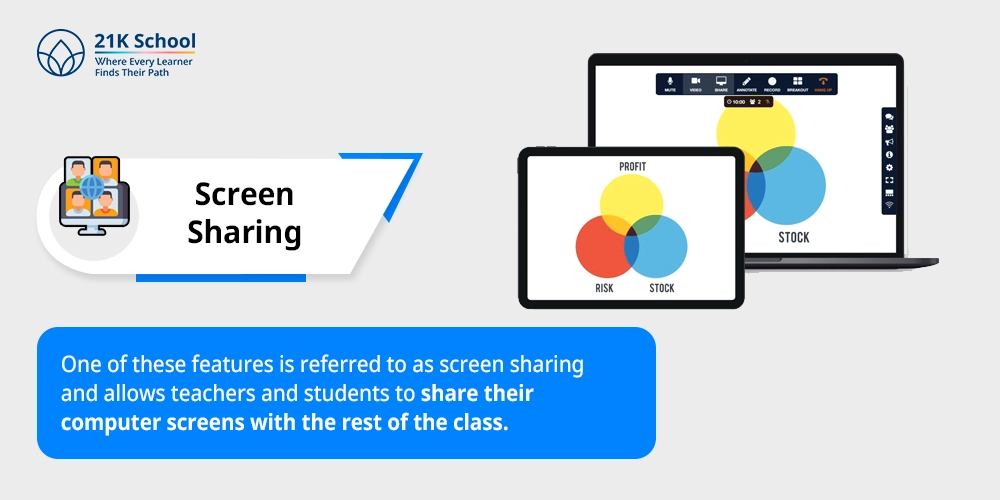
One of these features is referred to as screen sharing and allows teachers and students to share their computer screens with the rest of the class. It is particularly useful in cases of the necessity to show programmes, make presentations, comment on practical activities, or look through the work of students.
Screen sharing allows making lessons more visible and interactive since all participants are able to see what is happening and learn processes step-by-step. It also improves teamwork and interactions in online classes.
Types of Virtual Classroom
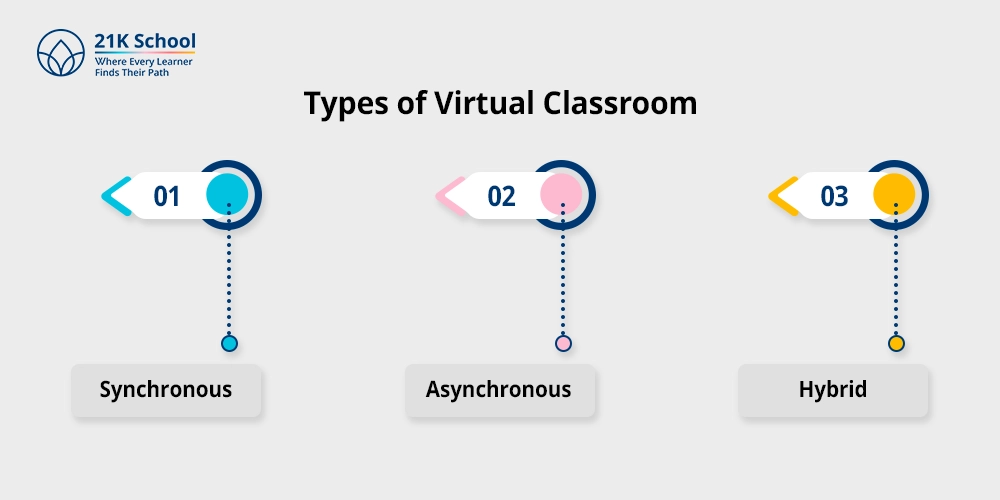
The virtual classroom may be divided into various types depending on the way teaching and learning processes are performed. There are three major categories: Synchronous, Asynchronous, and Hybrid virtual classrooms. The following are the mentioned types of virtual classrooms.
1. Synchronous
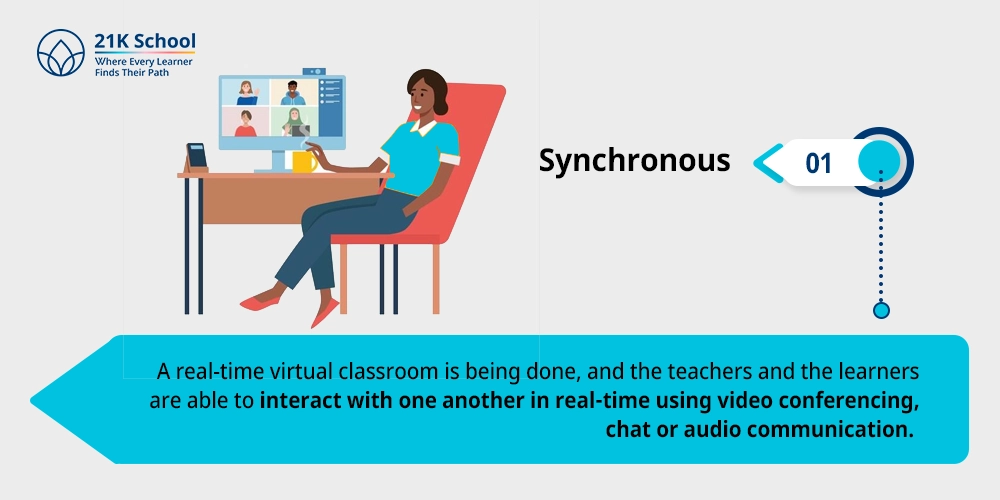
A real-time virtual classroom is being done, and the teachers and the learners are able to interact with one another in real-time using video conferencing, chat or audio communication. Through this, the learners and the teachers will be online simultaneously, as in a normal classroom.
The classes will be scheduled at a particular time when the feedback will be introduced, and active participation and discussion can be conducted. The key benefit of the synchronous learning approach is that it facilitates interactive and immediate interaction and collaboration, and students will be active and connected.
2. Asynchronous
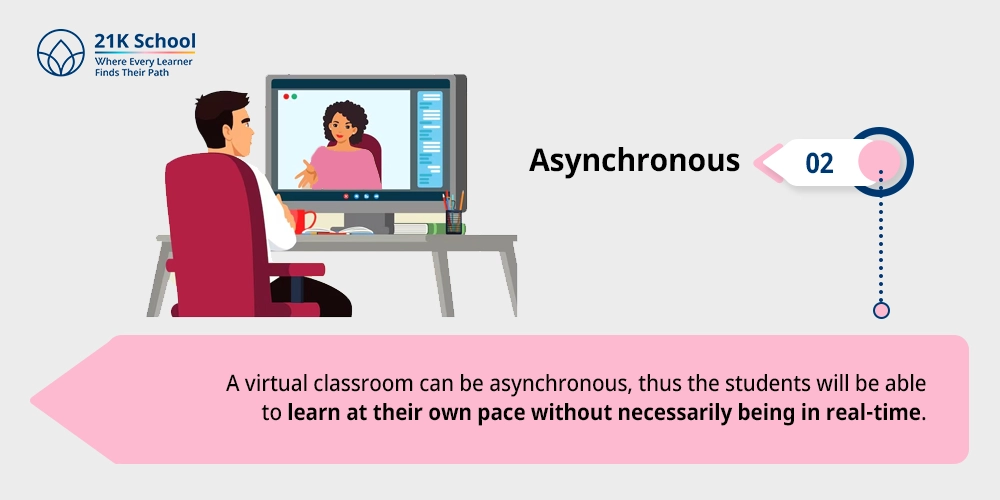
A virtual classroom can be asynchronous, thus the students will be able to learn at their own pace without necessarily being in real-time.
In this format, the learning resources like the recorded lectures, presentations, discussion boards and assignments, among others, are made accessible online so that the students can access them at any time.
The teacher-student communication occurs either by email, in a forum or by message, but not immediately. This model is more flexible and thus it can be used by learners with tight study schedules or those who are in various time zones.
It also encourages self-directed learning and enables students to go over the materials at their own pace.
3. Hybrid
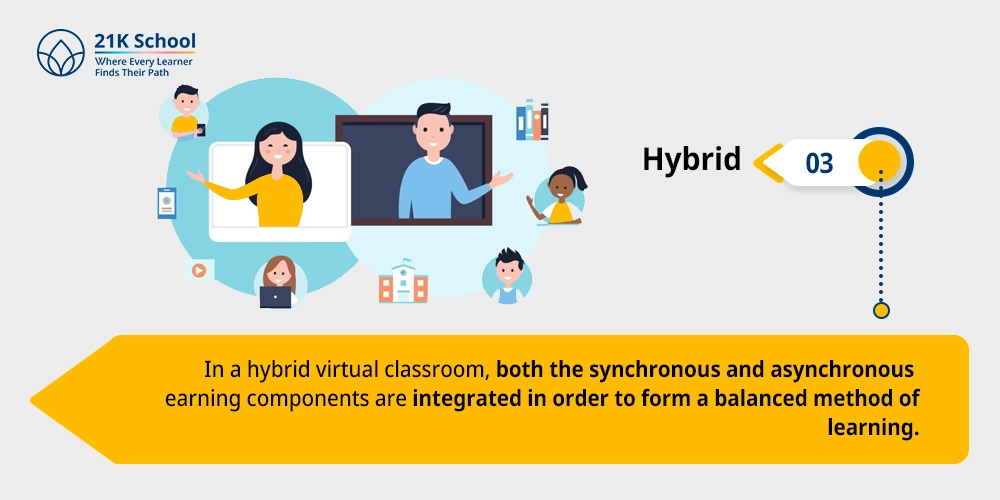
In a hybrid virtual classroom, both the synchronous and asynchronous learning components are integrated in order to form a balanced method of learning .
Under this model, certain sessions are provided in real-time, so that there is an opportunity to discuss and interact, whereas certain tasks, including recorded lectures, assignments, and independent modules, can be done asynchronously.
This combination provides the ability of self-paced learning and, at the same time, the advantages of real-time communication.
Benefits of Virtual Classroom
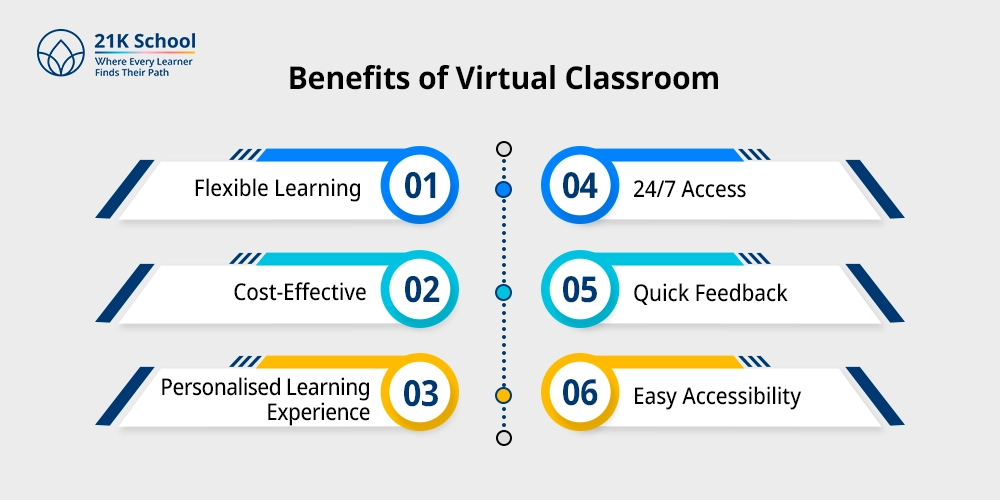
There are various merits related to virtual classes. It has its benefits, such as flexibility and accessibility, where students can study from any place and at any time, which saves time and money as they do not have to travel. The advantages of virtual classrooms include the following.
1. Flexible Learning
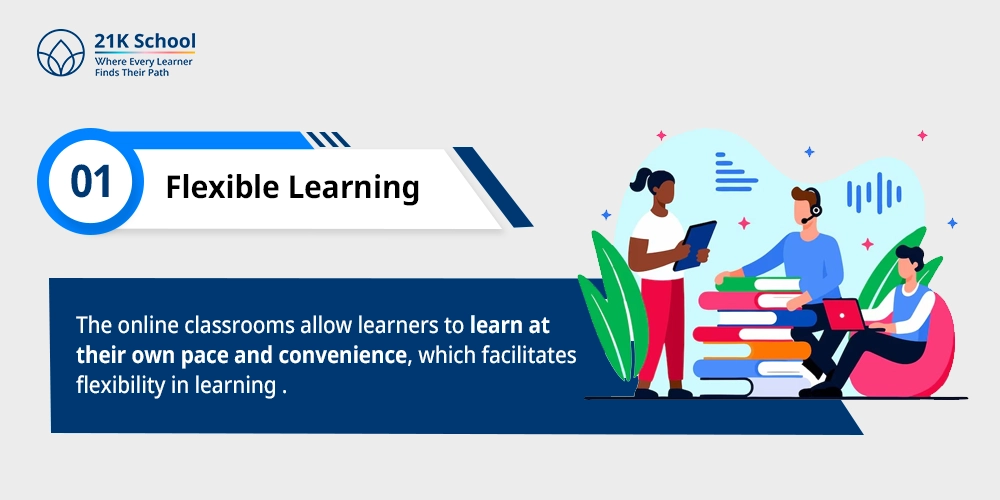
The online classrooms allow learners to learn at their own pace and convenience, which facilitates flexibility in learning . Contrary to traditional classrooms, there is no fixed schedule that is to be followed by everyone. The students can attend live classes or record lectures at their own time.
This would be of great help to the working people, learners who have different time zones or to the individuals who have other commitments. It helps to organise a schedule of a correct work-study-life balance.
2. Cost-Effective
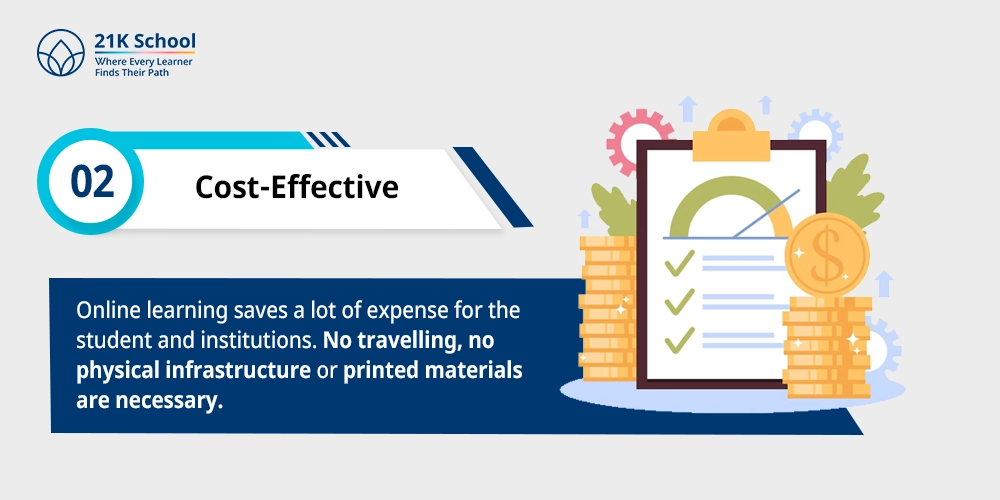
Online learning saves a lot of expense for the student and institutions. No travelling, no physical infrastructure or printed materials are necessary. Students reduce the cost of commuting, accommodation and food costs of attending physical classes.
Schools and colleges also save money by reducing the physical classrooms and utilities, as well as maintenance. In general, it offers superior education at a reduced price.
3. Personalised Learning Experience
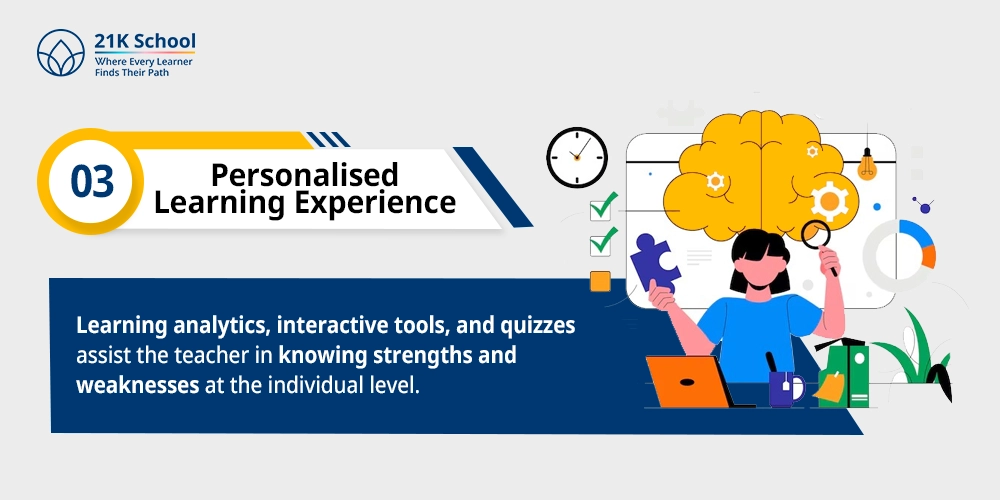
Virtual classrooms serve the interests of the students by offering them personalised learning . Technology is likely to be utilised in virtual classrooms to accommodate the learning styles and pace of every student. Learning analytics, interactive tools, and quizzes assist the teacher in knowing strengths and weaknesses at the individual level.
Students will be able to read the problematic material again, jump over the parts which they have already learned, and access other resources that meet their requirements. This individual work enhances interaction, cognition and performance.
4. 24/7 Access
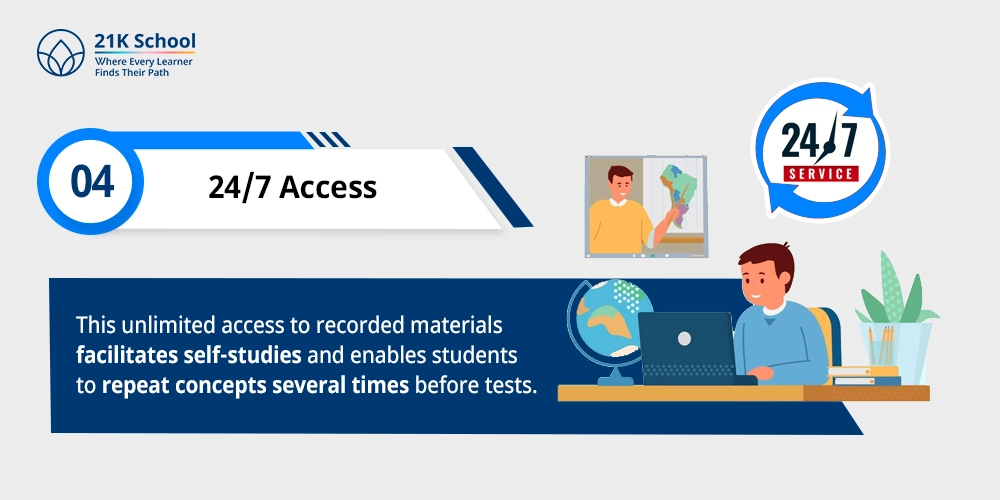
This unlimited access to recorded materials facilitates self-studies and enables students to repeat concepts several times before tests. While live sessions may have scheduled times, asynchronous resources remain available 24/7.
Students have time to study at their own convenience, either in the early morning or at the end of the day. This also aids in the encouragement of lifelong learning for the students.
5. Quick Feedback
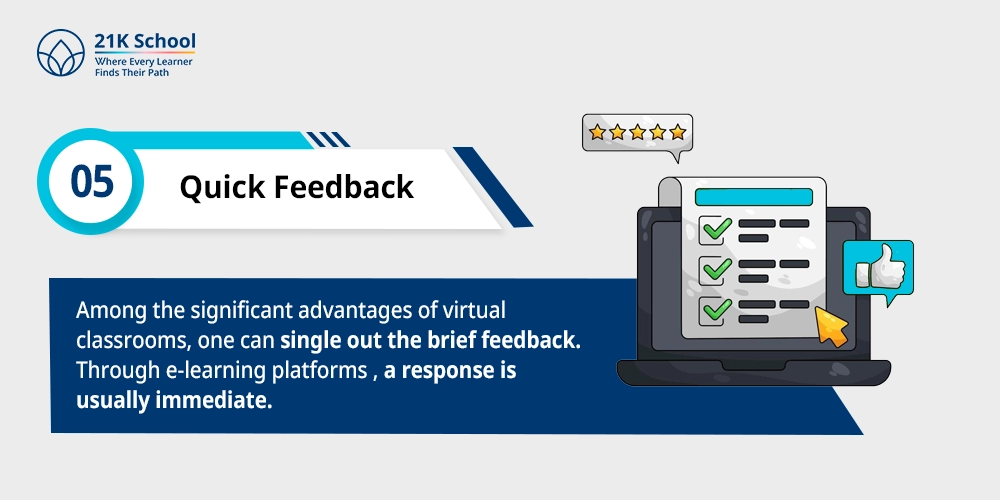
Among the significant advantages of virtual classrooms, one can single out the brief feedback. Through e-learning platforms , a response is usually immediate. It is also possible to autograde online quizzes and assessments , and teachers can make comments and suggestions using digital tools in a relatively short period of time.
This is good feedback that assists the student to recognise areas they need improvement and rectify errors at the time, and hence understand and improve academically .
6. Easy Accessibility
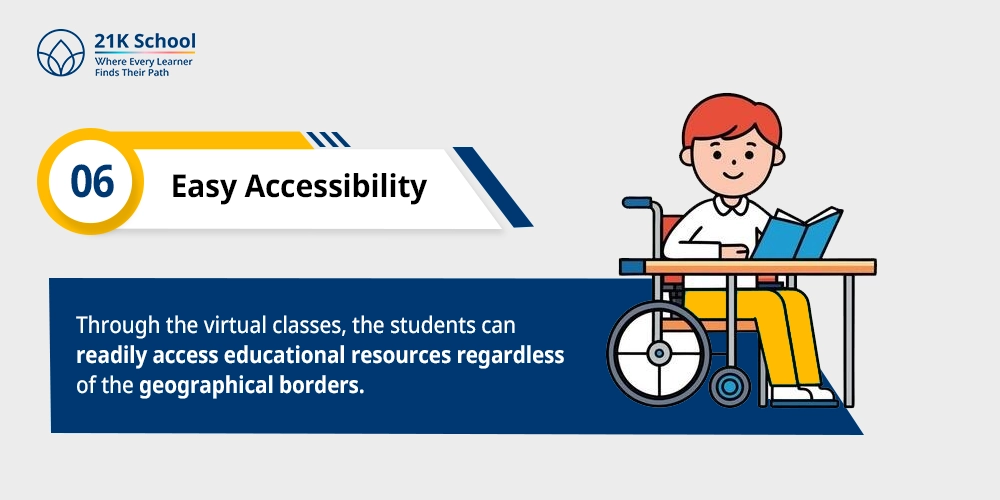
Through the virtual classes, the students can readily access educational resources regardless of the geographical borders. The virtual classrooms eliminate the geographical and physical barriers. Any student all over the world can attend the same classroom as long as they have an internet connection.
Explore how the internet is beneficial for students
It is also useful in case learners are disabled because most websites are accessible. The inclusion makes education accessible to all people, irrespective of their location or capacity.
Examples of Virtual Classroom
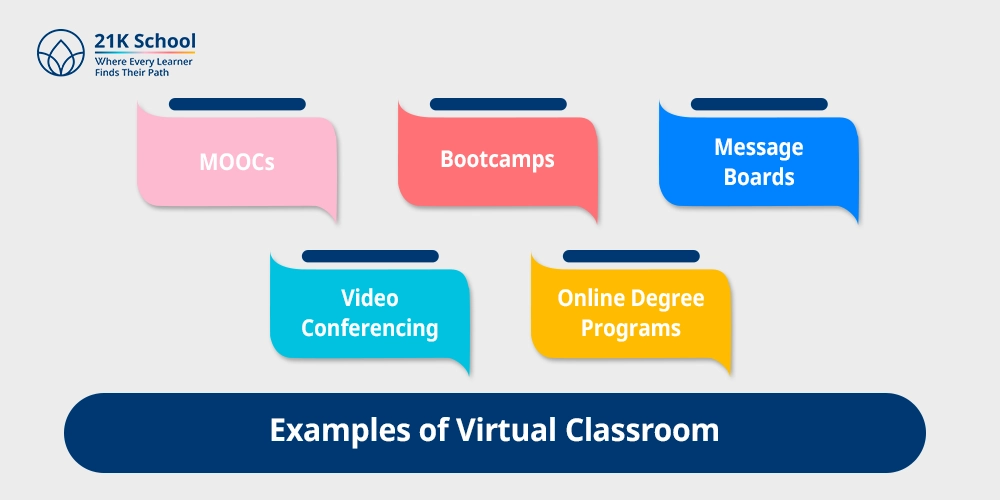
The platforms and programmes used in online learning platforms that enable students to study are predominantly contained in the examples of virtual classrooms. Virtual classes enable students to learn without any interference and enhance their learning capabilities.
The examples comprise primarily bootcamps, message boards, video conferencing and so forth. Examples of virtual classrooms include the following.
1. MOOCs
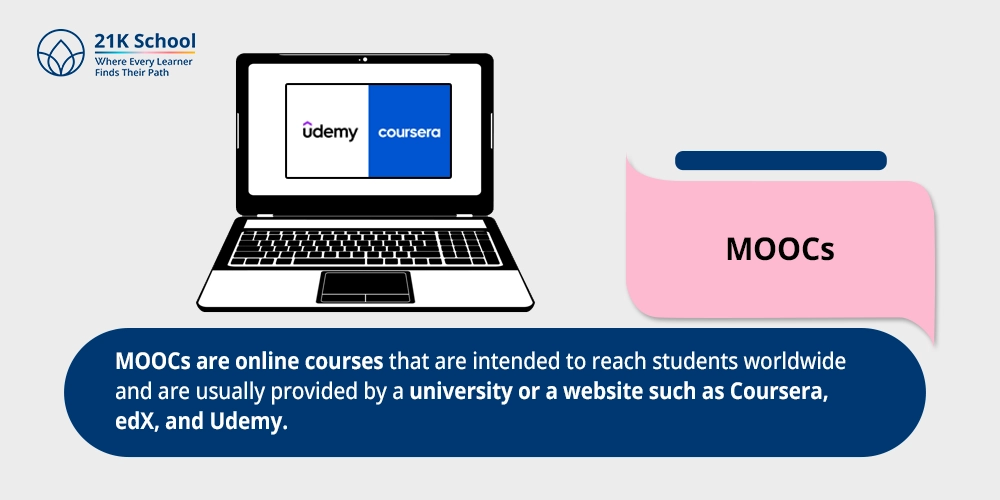
MOOCs are online courses that are intended to reach students worldwide and are usually provided by a university or a website such as Coursera, edX, and Udemy. Students can learn at their own pace since they get to watch video lectures, quizzes, assignments, and forums for discussion.
These courses take an extensive variety of topics, such as programming and business, as well as arts and humanities and are well-suited to students who would like to acquire knowledge or skills without the need to pursue a full-time degree.
2. Bootcamps
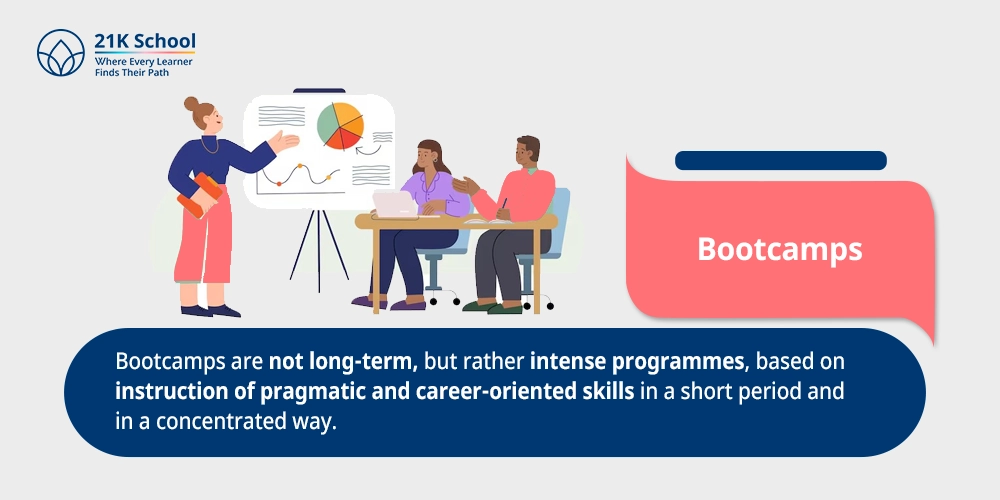
Bootcamps are not long-term, but rather intense programmes, based on instruction of pragmatic and career-oriented skills in a short period and in a concentrated way. Most boot camps provide mentorship, career advice and networking to assist the participants to get into professional life.
The periods are normally a few weeks to months, and therefore they are appropriate to people who would wish to upgrade or switch careers in a short time. Boot camps emphasise practical knowledge and not theory.
3. Message Boards
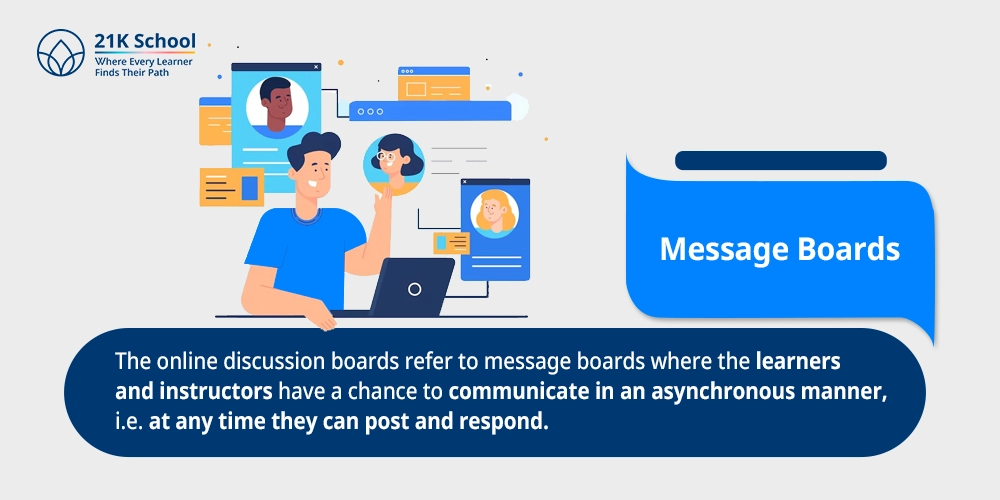
The online discussion boards refer to message boards where the learners and instructors have a chance to communicate in an asynchronous manner, i.e. at any time they can post and respond.
They are also popular in online classes and learning management systems that promote peer-to-peer education and teamwork, along with problem-solving skills .
Students can ask questions, give insights, give feedback and discuss course topics in either a structured or an open form. The message boards provide a feeling of solidarity and camaraderie amongst the geographically distributed learners.
4. Video Conferencing
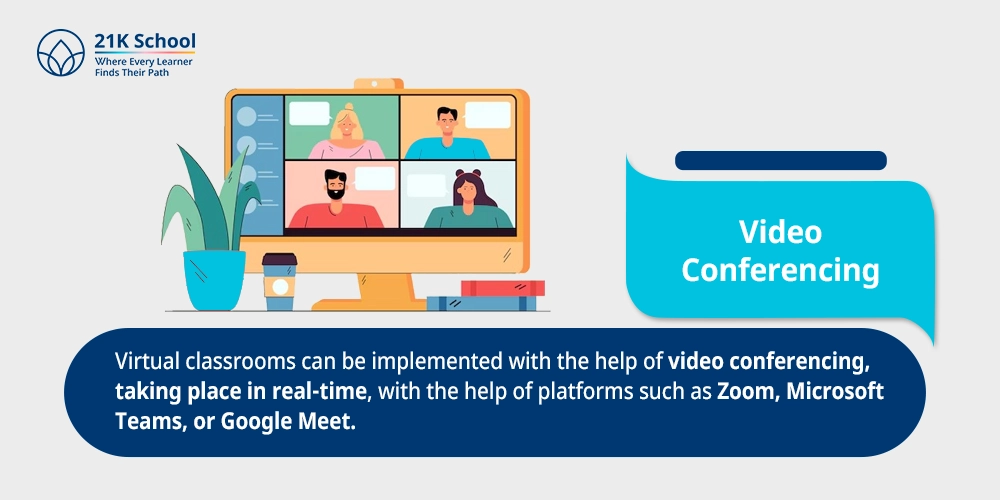
Virtual classrooms can be implemented with the help of video conferencing, taking place in real-time, with the help of platforms such as Zoom, Microsoft Teams, or Google Meet. Over the internet, teachers and students are able to communicate in real-time, lecture, conduct a discussion and presentation or screen, and this replicates a classroom-like intercourse.
The breakout rooms, polls and chat features make the learning process interactive and engaging because the features allow the learners to utilise the course and interact with one another, even though the geographical distance separates the learners.
5. Online Degree Programs
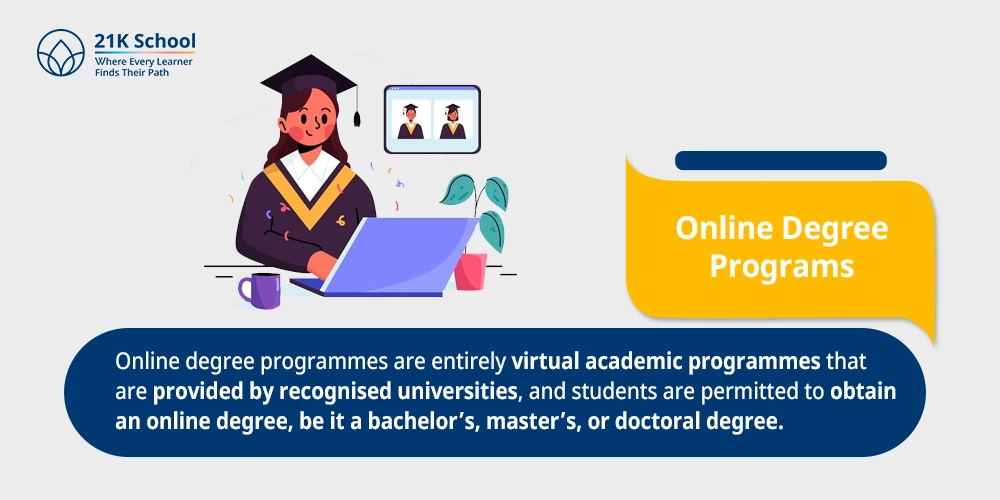
Online degree programmes are entirely virtual academic programmes that are provided by recognised universities, and students are permitted to obtain an online degree, be it a bachelor’s, master’s, or doctoral degree.
They give organised coursework, such as lectures, assignment work, projects, examinations, and in some cases an internship. Such programmes are made in a way that they are flexible, and a student can pursue education and work or other things at the same time.
Challenges of Virtual Classroom
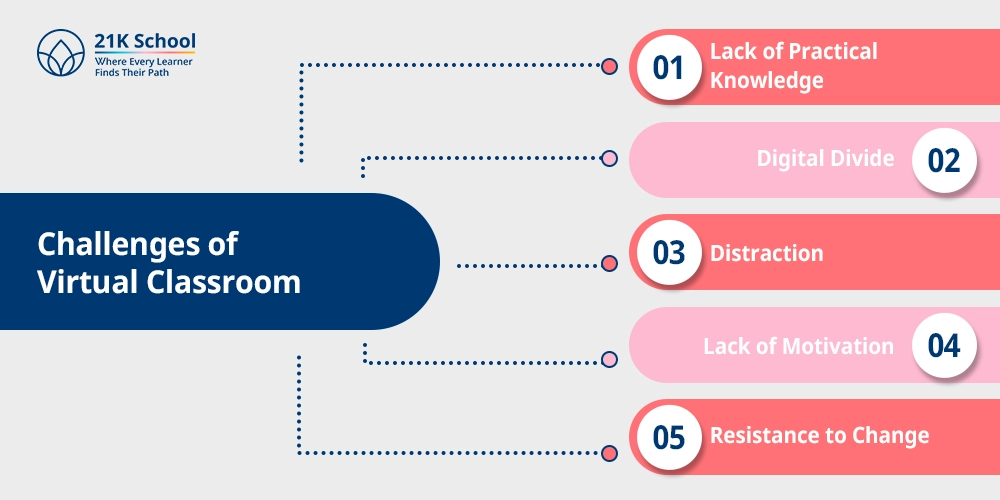
Although there is no denying the fact that the virtual classroom has numerous advantages, it has numerous challenges.
The virtual classroom presents a great challenge in terms of technology, student interaction, evaluation and social interaction. Some of the challenges of virtual classrooms and their effective solutions are the following.
1. Lack of Practical Knowledge
Among the key issues of virtual classes, one can distinguish the fact that these lessons are usually concerned with theoretical training but not with real practice. Learners might find it challenging to implement ideas in real life since it is hard to carry out real-world experiments, laboratory, or fieldwork via the internet.
Simulations or virtual labs still do not provide the possibility to be as close as possible to the experience of working with the real equipment and being exposed to the real environments, which can lead to a decreased level of understanding and preparedness for working in the professional setting.
Solution to the Problem of Lack of Practical Knowledge
The virtual classroom issue can be minimised through the application of blended learning methods and the incorporation of online theory with periodic practical lessons. The students can also acquire the concepts practically using project-based learning , case studies and real-world assignments.
2. Digital Divide
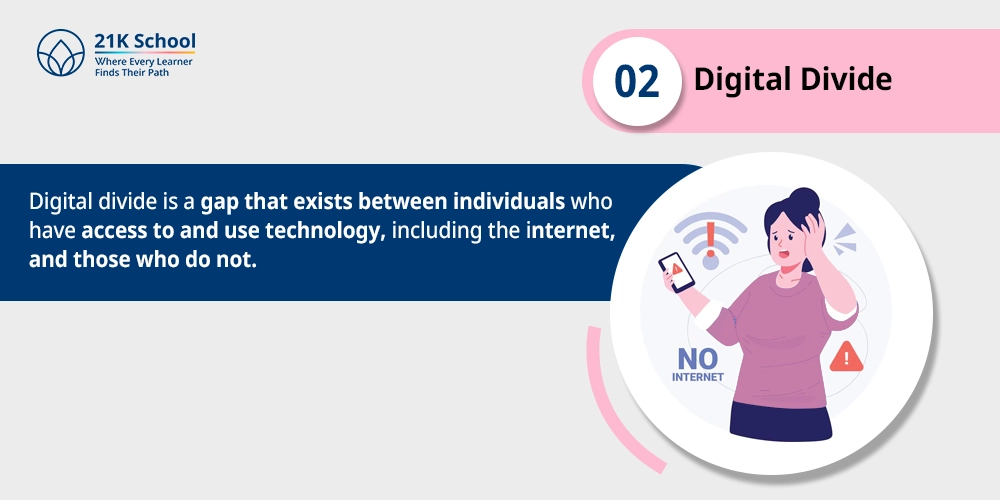
Digital divide is a gap that exists between individuals who have access to and use technology, including the internet, and those who do not. The poor families, rural students, or students in developing countries are struggling with the lack of internet connection, the absence of devices, and digital literacy.
The digital divide could affect attendance, students engagement , and performance, and it might become a serious hindrance to successful online education .
Solution to the Problem of Digital Divide
The government or institutional assistance programme can be used to neutralise the digital divide problem by providing access to the internet as well as devices at cheap rates to all students.
Also, the digital literacy training of students and teachers is effective in the manner in which they use online platforms.
3. Distraction
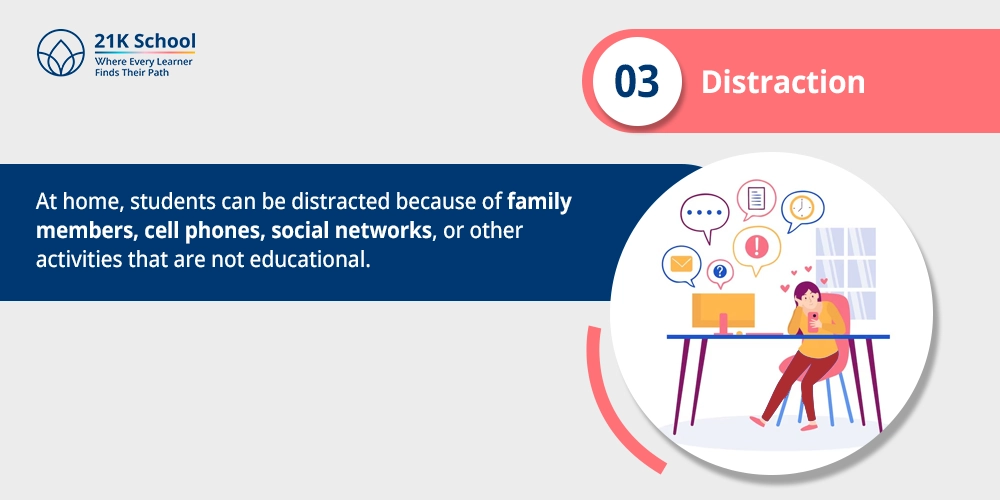
Virtual classes will demand the learner to be in a non-controlled environment that might be distracting. At home, students can be distracted because of family members, cell phones, social networks, or other activities that are not educational.
Such distractions may lower the level of concentration, efficiency in learning, as well as information retention, thus making it more difficult to stay focused and pass courses effectively.
Solution to the Problem of Distraction
Teachers can use interactive and engaging teaching methods like polls, quizzes, and breakout activities to keep the minds of learners. Moreover, a quiet study area should be promoted among students who are online so that they can have a special quiet place during their studies.
4. Lack of Motivation
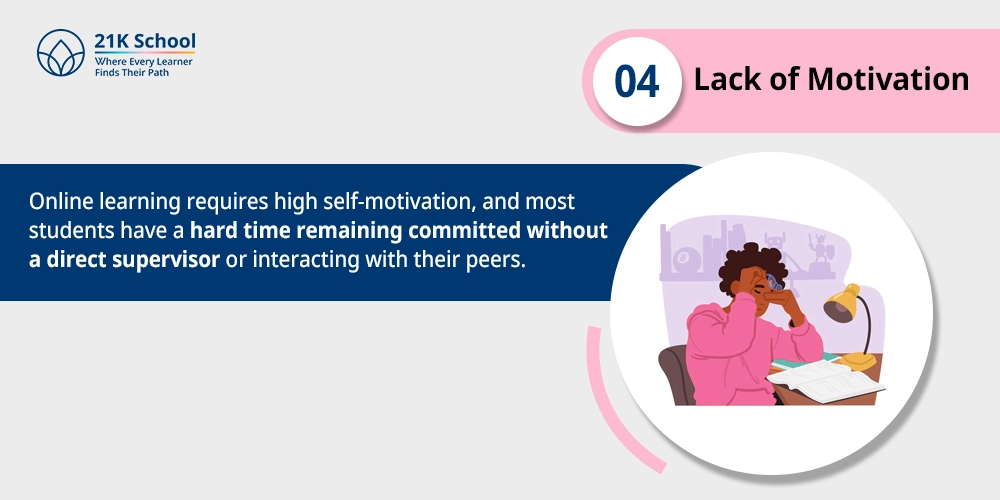
Online learning requires high self-motivation, and most students have a hard time remaining committed without a direct supervisor or interacting with their peers. Students can also get isolated or denied belonging to the learning community, and this also may lead to a decrease in motivation.
Solution for the Problem of Lack of Motivation
Regular interaction and feedback between students and teachers can be used to keep the interaction engaged. It is also important to set clear objectives and deadlines, and milestones that will serve to motivate the students.
5. Resistance to Change
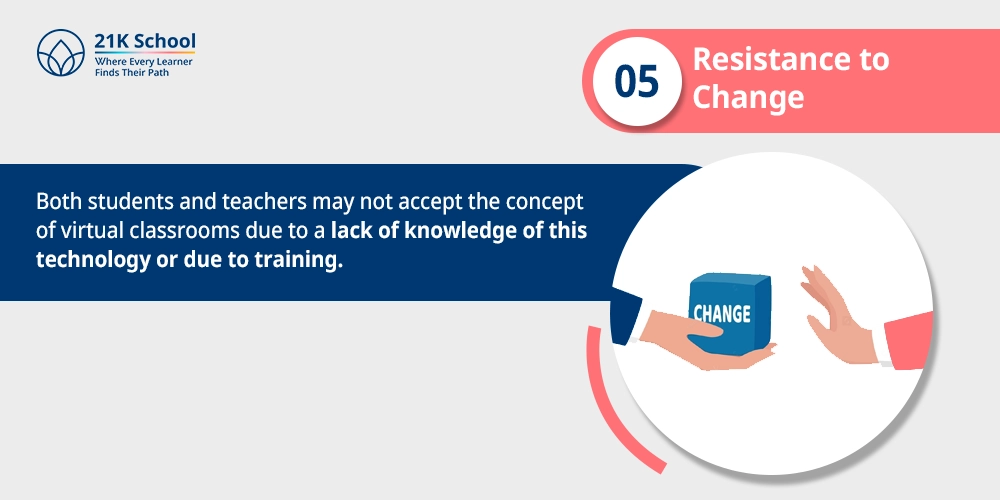
Both students and teachers may not accept the concept of virtual classrooms due to a lack of knowledge of this technology or due to training. Educators may not be able to build engaging online classes, apply digital technologies, or change teaching styles.
Such resistance can delay the application of the online education system, reduce active participation, and reduce the applicability of the virtual classrooms, especially in institutions or regions where the traditional education system is predominant.
Solution to the Problem of Resistance to Change
Training teachers and students to improve their digital learning and teaching approaches and their confidence can be used to adapt to the new forms of learning.
Conclusion
The virtual classrooms have allowed flexibility, accessibility and personalisation of education in the delivery process. Despite all these benefits, which include affordability, 24/7 learning, and interactive learning, among others.
Other problems that are related to them include lack of real-life experience, digital divide, distraction and resistance to change. The difficulties can be addressed by using solutions such as blended learning, digital literacy programmes, interactive teaching, and proper training.
All in all, the virtual classrooms are an integrative and advanced learning platform that equips students with the challenges of contemporary learning and the digital environment.
