


Exams are an integral part of students’ lives. From schools, colleges, to professional courses, exams are crucial for understanding students’ knowledge and progress.
Beyond the academic assessments, examinations sometimes help the students to be prepared for real-life challenges. It develops their life skills such as time management, confidence and critical thinking skills.
But, students often feel exam stress and pressure in their educational journey which limits them to get new opportunities. By understanding the importance learners can gain various benefits.
Further, we will explore the advantages of exams in students’ lives and how it guides them to be strong enough to reach their desired target.
Table of Contents
What are Exams?
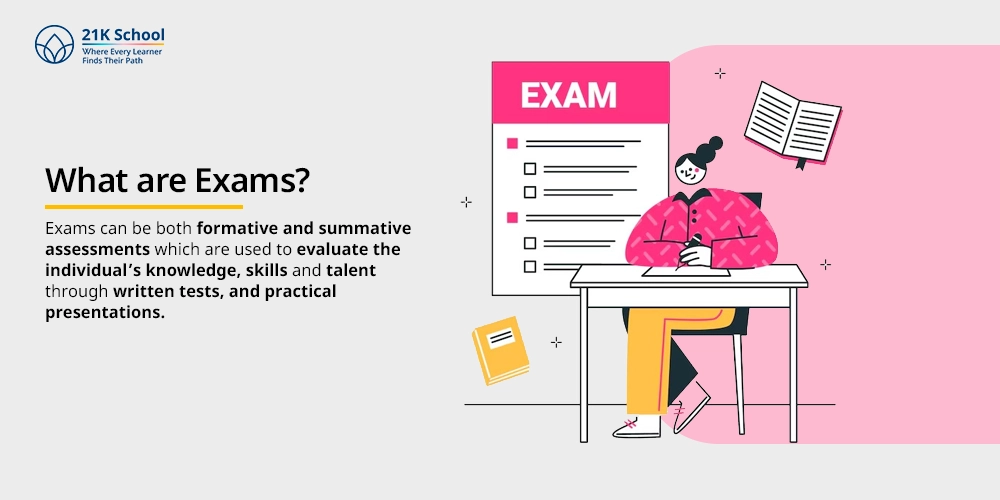
Exams can be both formative and summative assessments which are used to evaluate the individual’s knowledge, skills and talent through written tests, and practical presentations.
These are not only beneficial for students’ knowledge retention, but it is also important to examine the understanding, cognitive learning and their ability to apply them in different real-life situations or concepts.
In simple terms, exams are an effective way of identifying what an individual knows, what needs improvement, and how far one has come in their educational journey.
Why are Exams Conducted?
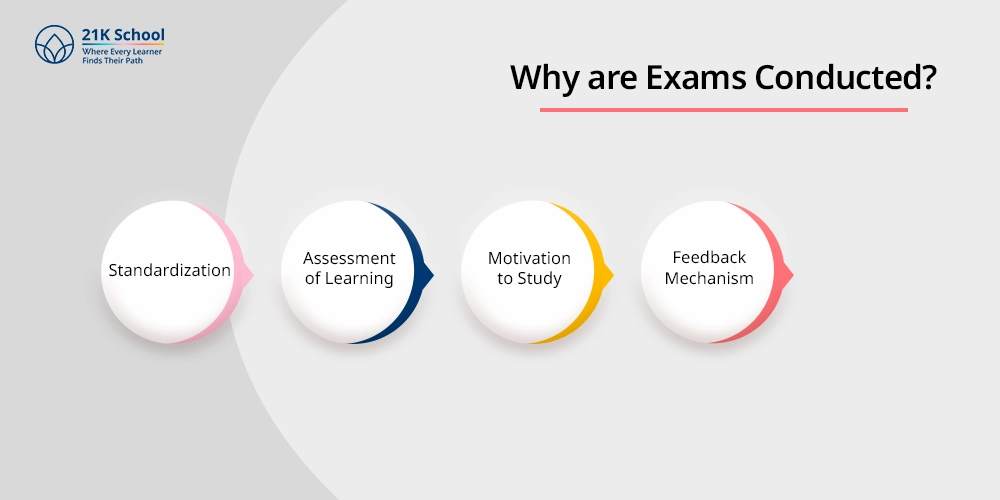
There are many important reasons to conduct exams. Some of the key reasons include:
1. Standardization
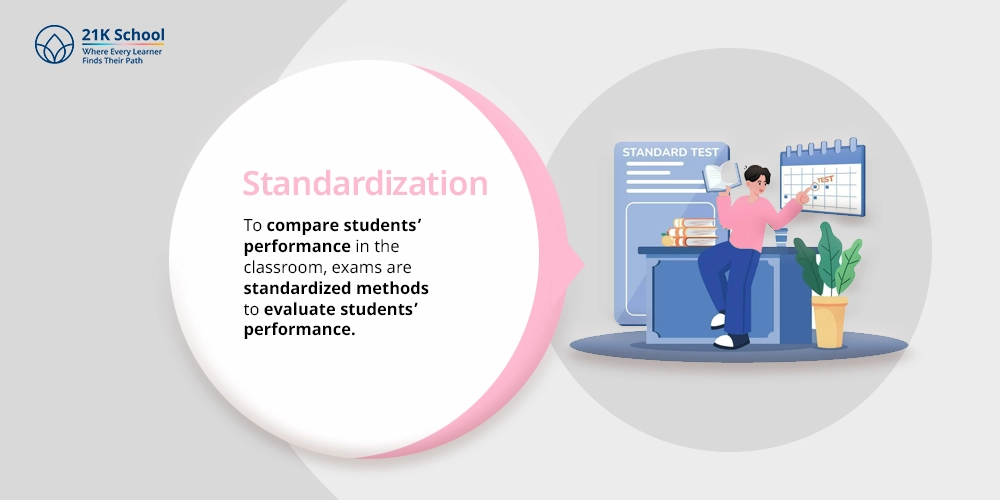
To compare students’ performance in the classroom, exams are standardized methods to evaluate students’ performance.
It is an important part of the education system that maintains equality and confidence in fair learning.
2. Assessment of Learning
Continuous learning is not the only motive of education. Exams help teachers and institutions evaluate the performance by taking assessment tests after studying.
3. Motivation to Study
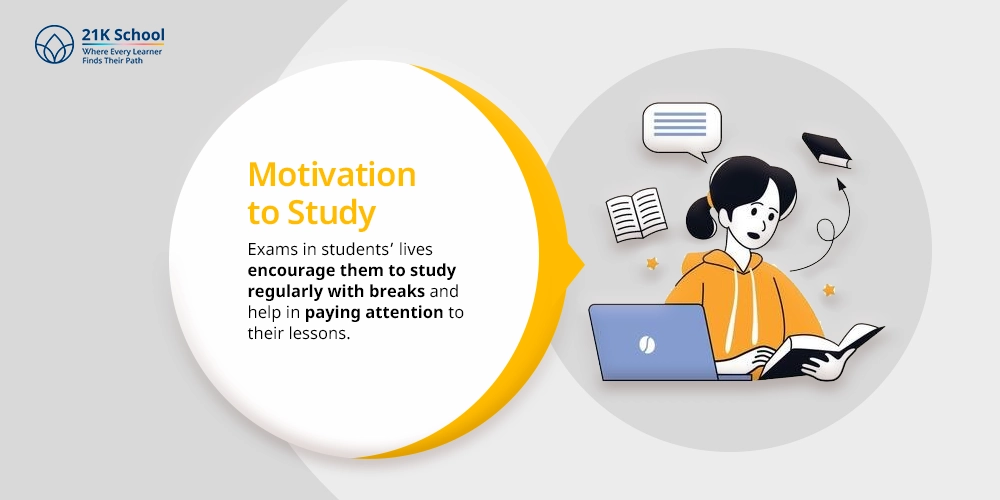
Exams in students’ lives encourage them to study regularly with breaks and help in paying attention to their lessons.
It motivates them to gain good marks and more knowledge in each grade. In this way, students learn how to deal with real-life challenges.
4. Feedback Mechanism
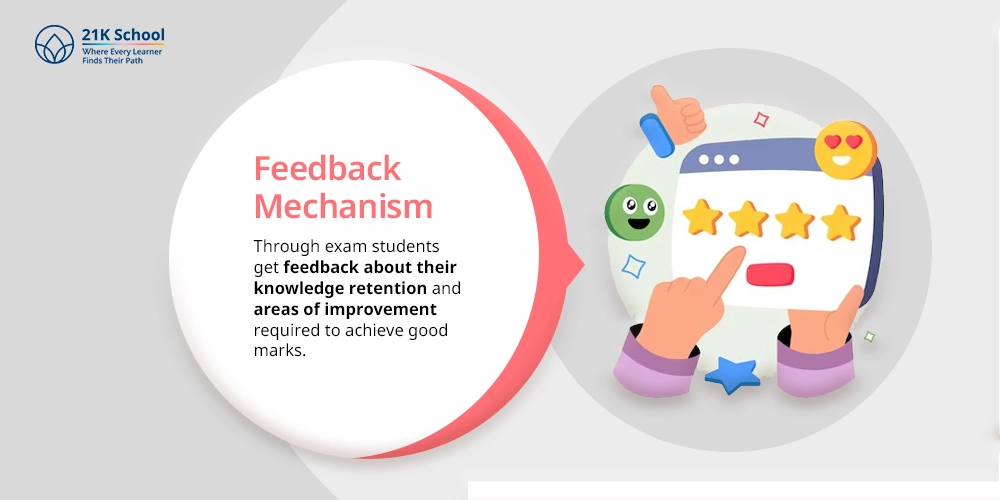
Through exam students get feedback about their knowledge retention and areas of improvement required to achieve good marks.
This builds a habit of learning, solving problems, and performing better for higher studies.
7 Key Advantages of Exams in Students’ Life
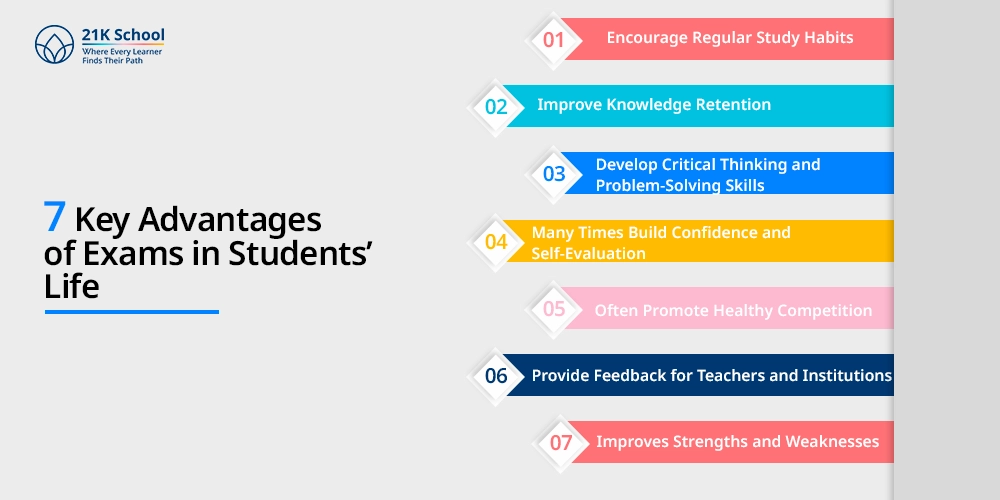
Mentioned-below details include seven key advantages of exams in students’ life that help in shaping academic and personal development.
1. Encourage Regular Study Habits

Encourages students to regularize their study habits by providing them an effective learning environment, clear objective for consistency, and disciplined effort.
Without exams students forget or distract from the objective of gaining knowledge. It is an ideal way to push students to revise regularly, manage their time efficiently, and stay organized.
2. Improve Knowledge Retention
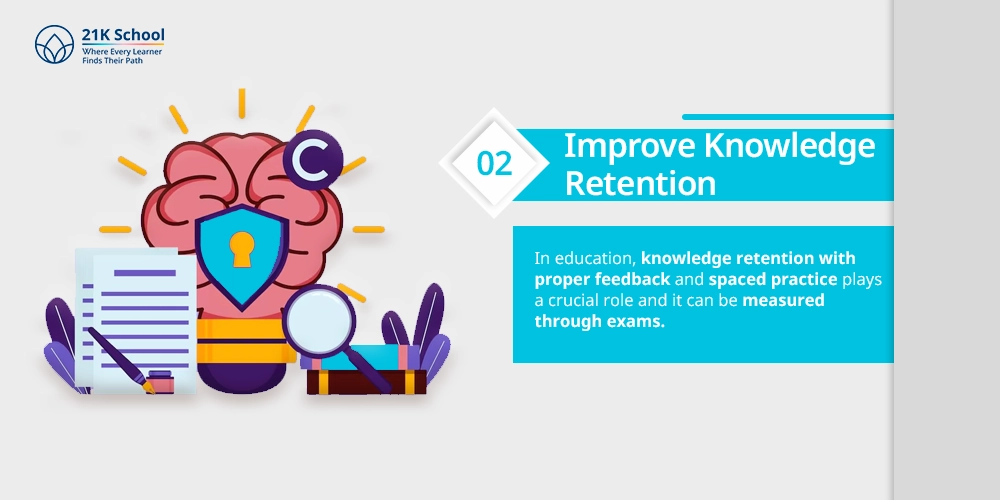
In education, knowledge retention with proper feedback and spaced practice plays a crucial role and it can be measured through exams.
School teachers and parents can give assessment tests to evaluate the knowledge of each learner.
In this way students use various methods to retain maximum information and use them whenever required.
3. Develop Critical Thinking and Problem-Solving Skills

Exams are not limited to students’ knowledge retention and professional development. It also includes critical thinking skills and problem-solving skills.
Remember in modern education, both traditional exam methods like recall and skills play a vital role in students’ development. Through exams learners can analyze questions creatively and come up with accurate solutions.
4. Many Times Build Confidence and Self-Evaluation

To build confidence and self-evaluation, exams are an effective approach. It boosts self-esteem and motivates learners for future challenges.
Students gain confidence by performing better in exams which motivates them to learn effectively with a positive mindset.
5. Often Promote Healthy Competition

One of the advantages of conducting exams is it often creates a healthy competition between students.
Seeing peers perform well encourages others to work hard with smart strategies to improve academic performance.
However, sometimes failure also encourages them to learn from mistakes and retry.
6. Provide Feedback for Teachers and Institutions

Exams are beneficial because it provides essential feedback for teachers, schools, and educational boards.
By understanding students’ performance and progress teachers understand and come up with new teaching techniques to improve their learning.
They guide students by sharing the areas that need more attention and effective teaching methods.
7. Improves Strengths and Weaknesses
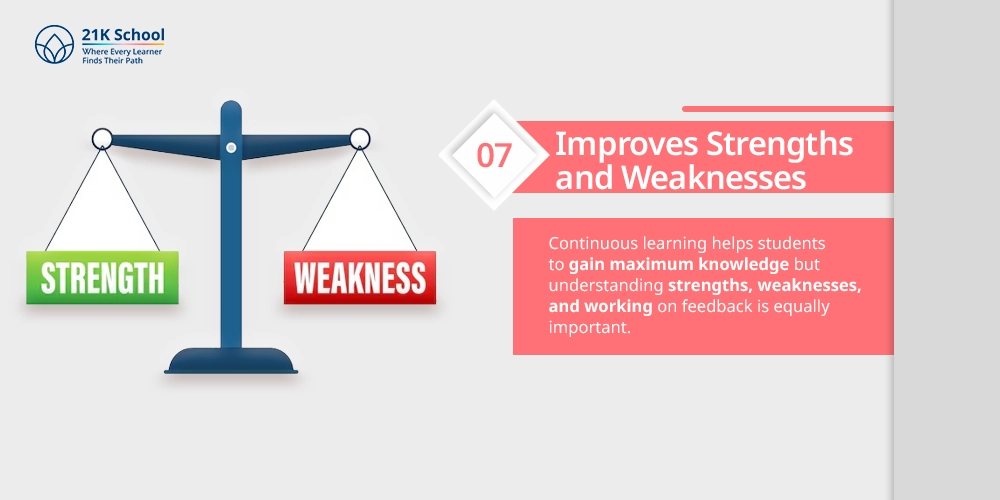
Continuous learning helps students to gain maximum knowledge but understanding strengths, weaknesses, and working on feedback is equally important.
Exams are one of the most useful and outcome-based solutions which help in analysing results to work on feedback.
Participating in exams supports learners to focus on long-term goals and different techniques to achieve them.
Conclusion
Exams are a vital part of the education system that is not only advantageous for students but also parents, teachers and schools.
By participating in exams students can analyse their knowledge, academic progress and personal development. In this way, parents ensure their children are on the right pathway.
Instead of taking stress, students can understand the importance of examinations and learn smartly to score better. It helps in their exam stress management through strategies like practice with past papers, and stay positive.
Some common advantages of exams are strengthening memory, enhancing analytical skills, and gaining confidence.
In short, exams in students’ lives are a stepping stone to achieve desired goals and unlock potential.

You may also want to read