


Whether it is online lectures, physical classroom or self-studying, taking notes is a necessity of learning. Students record information to retain for the long-term.
To do so, one of the best ways is applying note-taking methods in learning. Making good notes can improve learners’ concentration, boost memory, and simplify revision.
It is also an effective technique to reduce exam stress . However, not all methods are equally effective.
That’s why exploring different types of note-taking methods and choosing the ideal one is important.
Table of Contents
What Are Note-Taking Methods?
Note-taking methods include different structure techniques used for recording, organising, and reviewing information or data.
This method is helpful for learners to summarise key points, concepts, and supporting details in a meaningful manner.
However, different methods are effective for different purposes so choose accordingly.
12 Note-Taking Methods
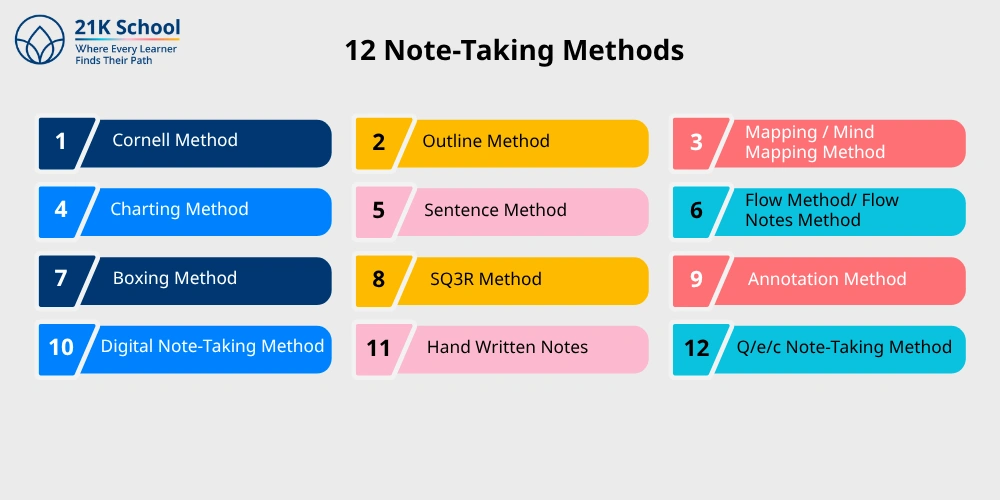
Given below are the top 12 note-taking methods one must consider:
1. Cornell Method
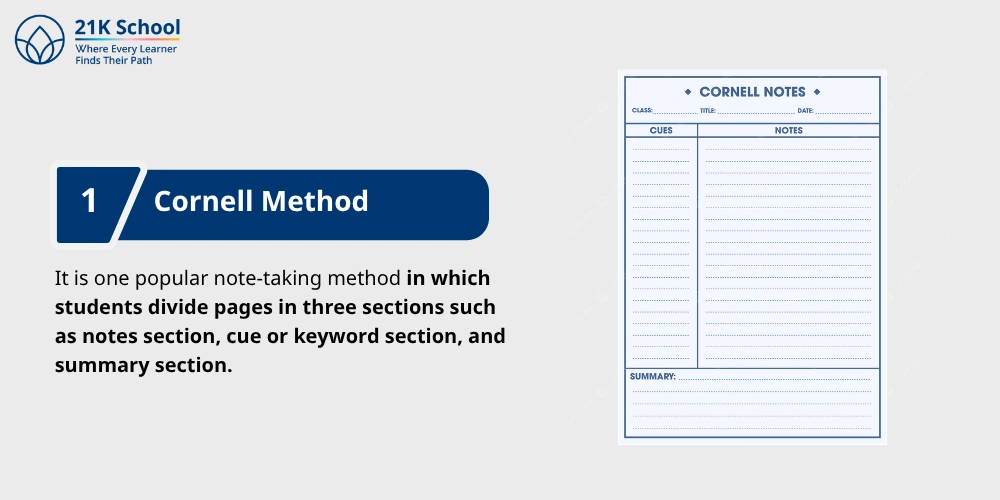
It is one popular note-taking method in which students divide pages in three sections such as notes section, cue or keyword section, and summary section.
It is an ideal approach for revisions and self-testing of subjects like history, biology, psychology etc.
Cornell method encourages active learning and organising information systematically.
2. Outline Method
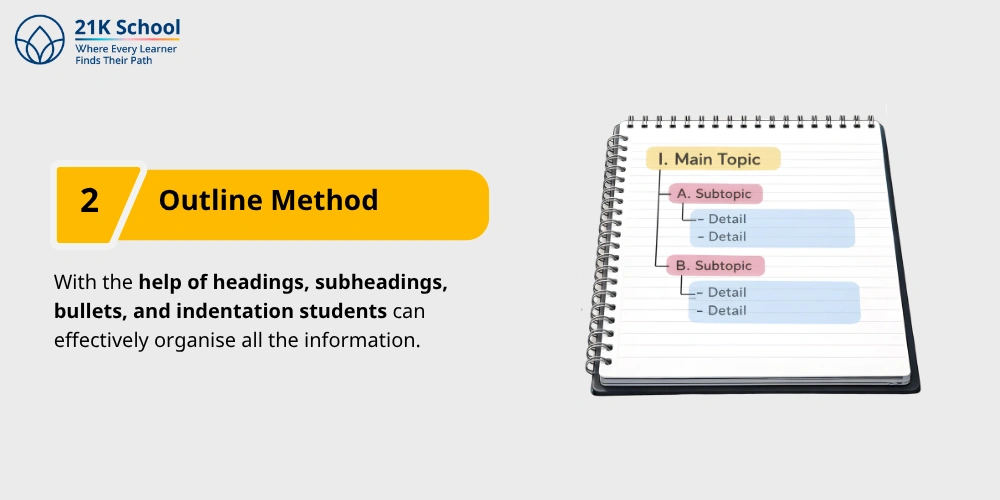
With the help of headings, subheadings, bullets, and indentation students can effectively organise all the information.
This method is known as the outline method. It is ideal for subjects like science, humanities, and business studies.
Students often prefer it to simplify dense topics and follow a logical sequence.
3. Mapping / Mind Mapping Method
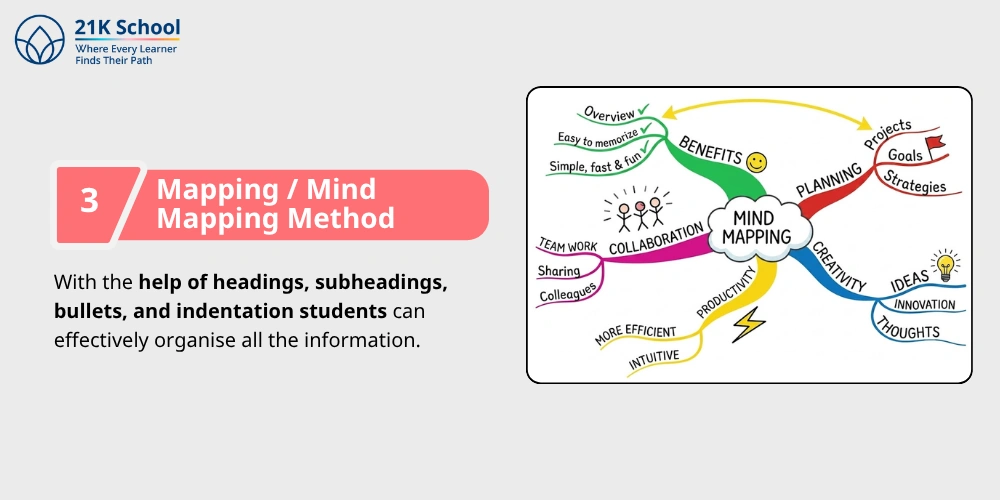
A visual note-taking method known as mind mapping is one of the effective note-taking methods in which diagrams are used to connect ideas.
It starts with the center topic and continues by creating clusters or branching out into subtopics. Students can make it in a creative way for long-term retention.
4. Charting Method
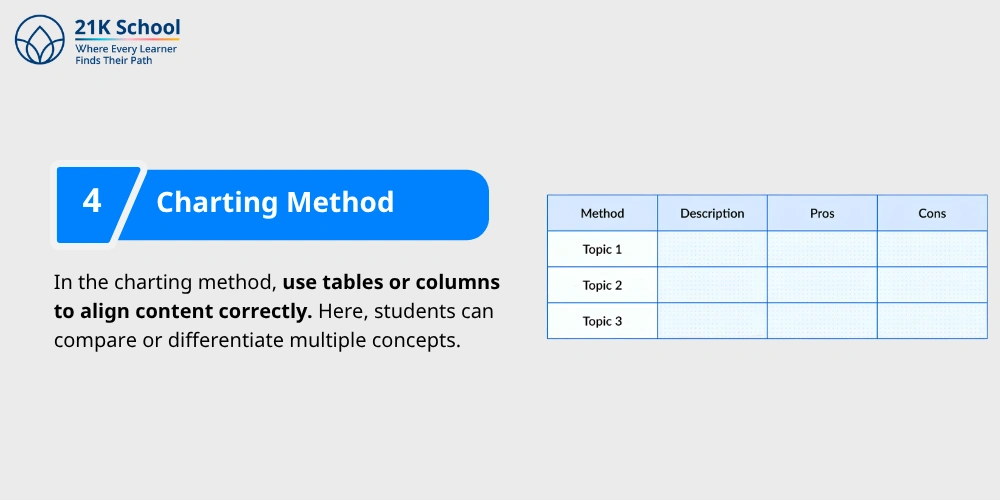
In the charting method, use tables or columns to align content correctly. Here, students can compare or differentiate multiple concepts.
It is ideal for learners who are working on comparisons, classification, case studies or chronological events. Students can save time during revision.
5. Sentence Method
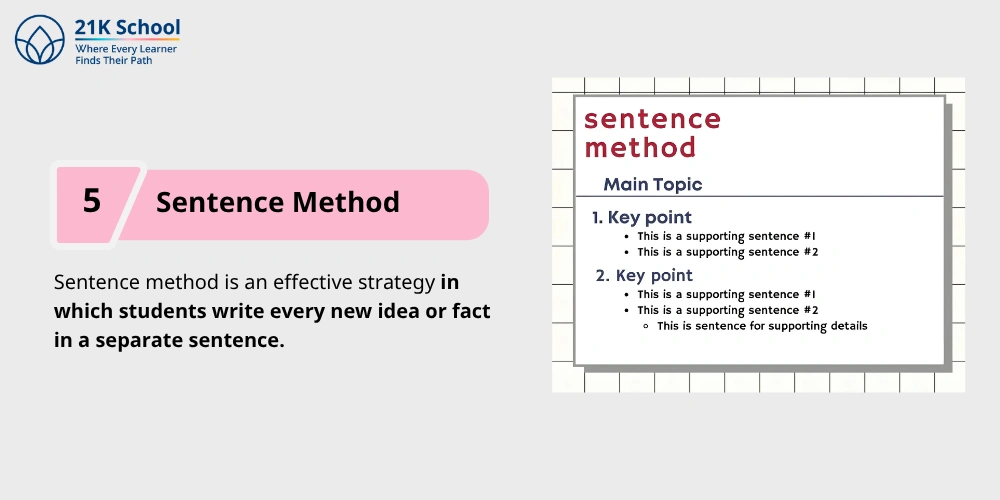
Sentence method is an effective strategy in which students write every new idea or fact in a separate sentence.
It is ideal for subjects like biology and economics. Sentence method is highly recommended when there is no clear structure in the lecture.
6. Flow Method/ Flow Notes Method
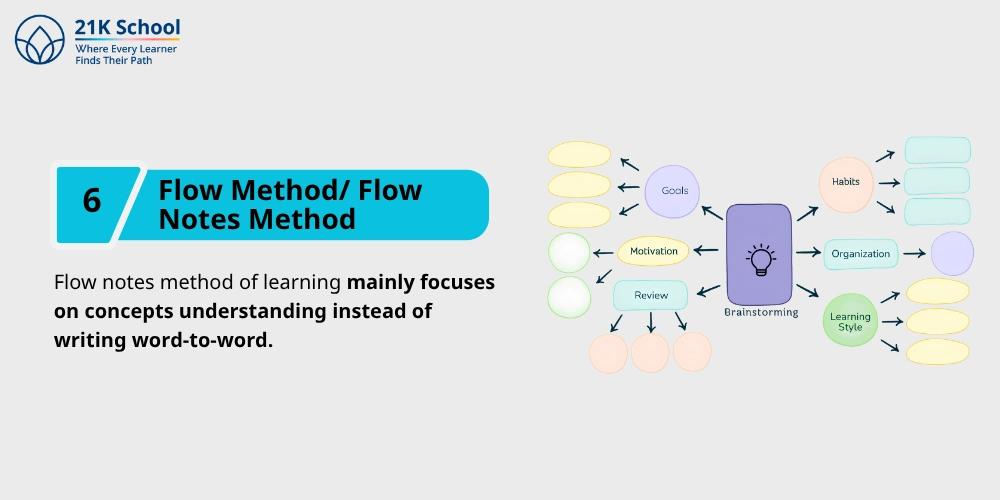
Flow notes method of learning mainly focuses on concepts understanding instead of writing word-to-word.
It is beneficial because students can retain information for a longer time and engage in deep learning.
7. Boxing Method
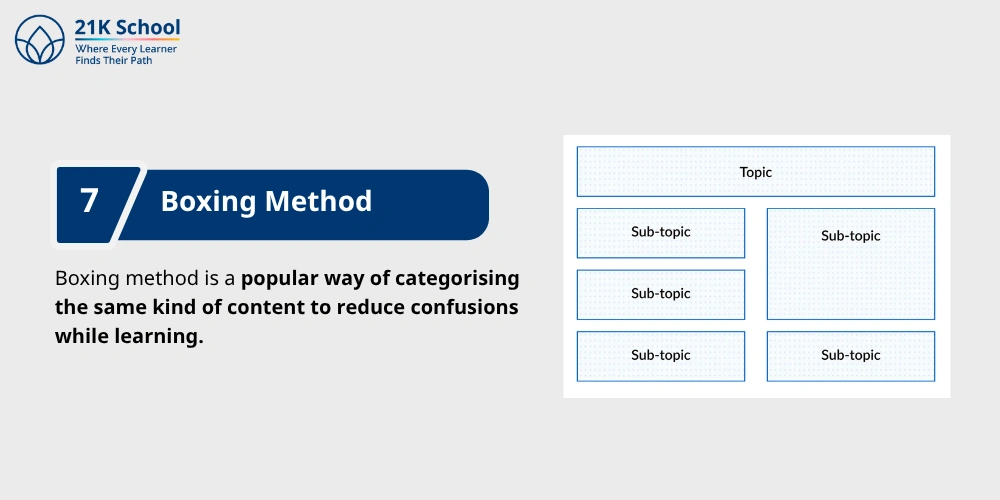
Boxing method is a popular way of categorising the same kind of content to reduce confusions while learning.
It is an effective method for mathematics, chemistry, or grammar rules due to its highly organised feature.
Students who are looking for a digital note-taking technique boxing method is a popular option.
8. SQ3R Method
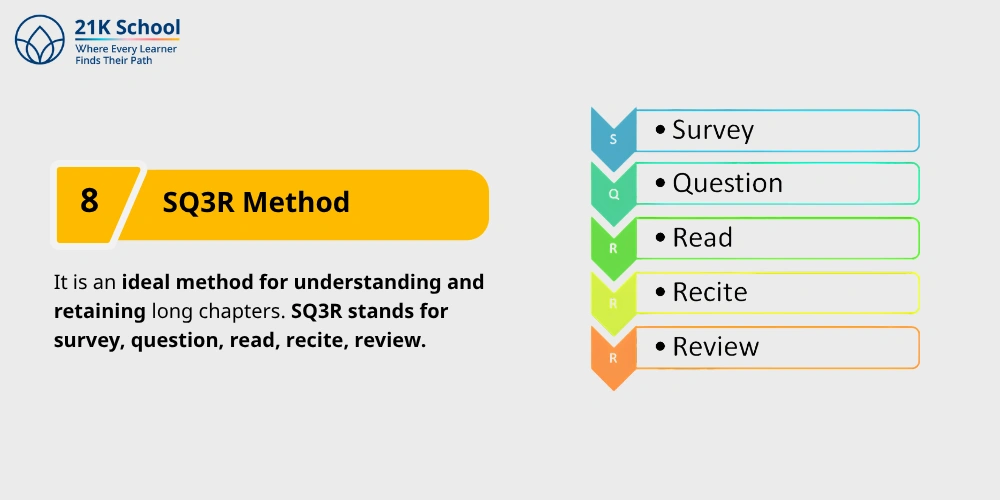
It is an ideal method for understanding and retaining long chapters. SQ3R stands for survey, question, read, recite, review.
While it is basically a reading comprehension method, it offers a less passive approach to reading textbook material.
9. Annotation Method
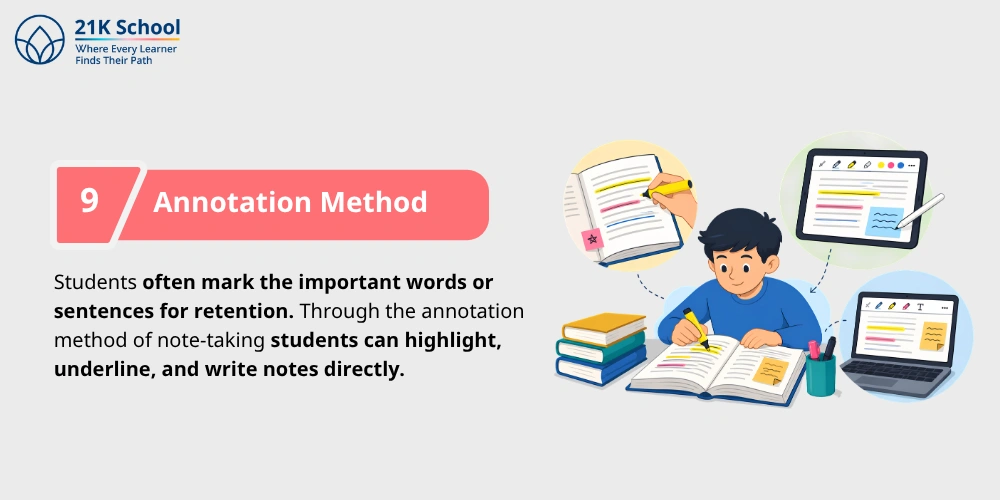
Students often mark the important words or sentences for retention. Through the annotation method of note-taking students can highlight, underline, and write notes directly.
Whether it is a physical textbook, digital textbook or PDF annotation methods can be used without obstacles.
10. Digital Note-Taking Method
Technology in education has become an essential part of learning that’s why students often look for digital options.
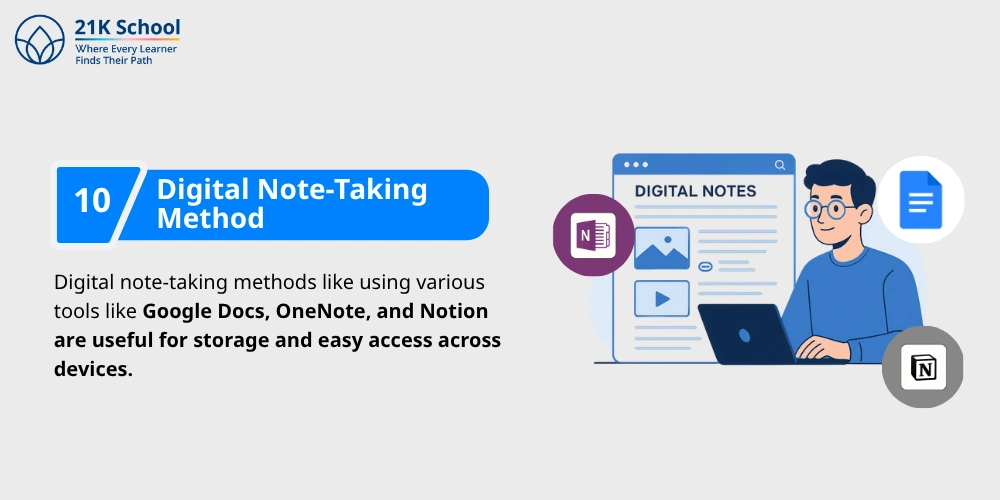
Digital note-taking methods like using various tools like Google Docs, OneNote, and Notion are useful for storage and easy access across devices.
Digital note-taking also supports creativity by offering unique designing options for student engagement .
11. Hand Written Notes
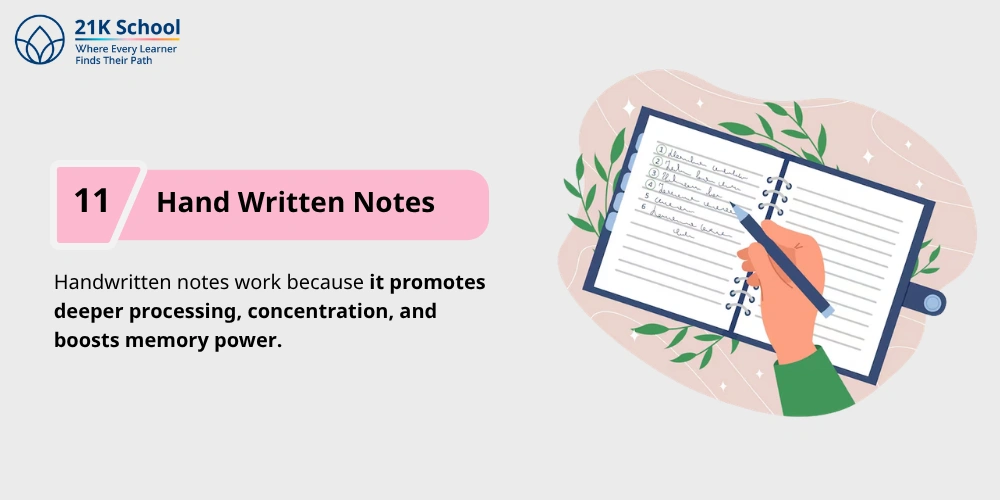
Traditional approaches like hand written notes have various benefits for students. Handwritten notes work because it promotes deeper processing, concentration, and boosts memory power.
A combination of self-writing and effective use of digital tools offer advantages while learning.
12. Q/e/c Note-Taking Method
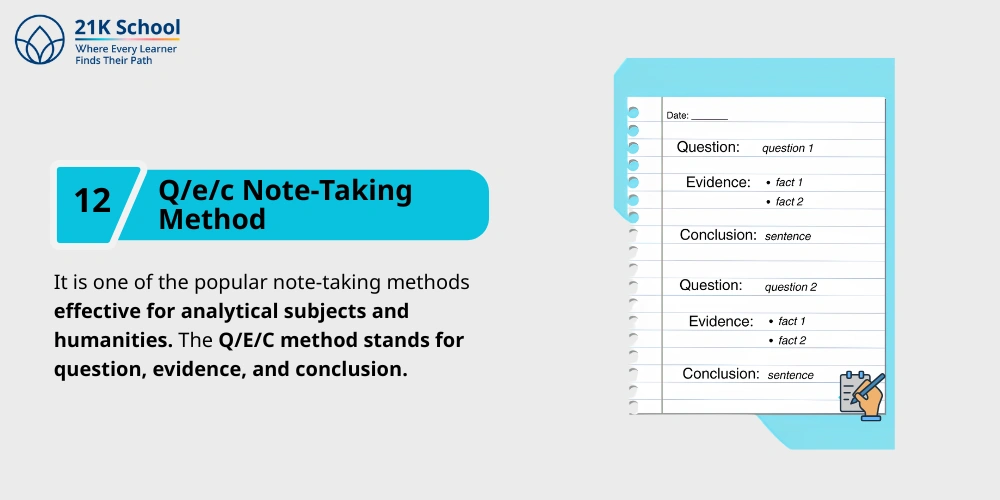
It is one of the popular note-taking methods effective for analytical subjects and humanities. The Q/E/C method stands for question, evidence, and conclusion.
Students who are involved in essay writing, literature analysis, and research-based subjects can opt this technique.
It is ideal to convert notes into well-structured arguments.
Conclusion
Hopefully, the above-mentioned 12 popular note-taking methods are helpful for your understanding.
Implementation of different note-taking methods from Cornell method to Q/e/c note-taking method each has its own purpose to help students to retain information.
Enhance active learning by understanding the 12 best note-taking methods for students’ success.
It’s time to try and test each note-taking method to understand the best one that suits individual learning.
