

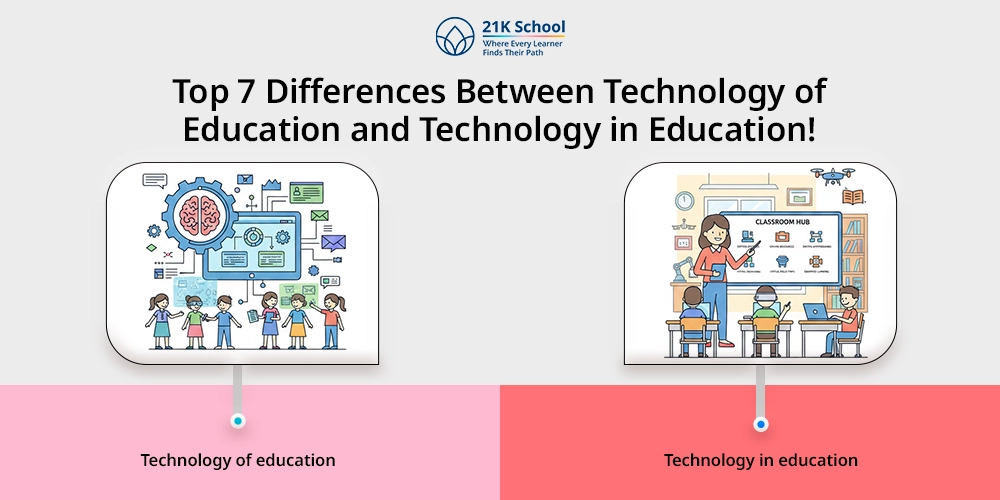
Technology in education and technology of education might confuse many of you. And it is fine because they both appear so much similar.
For your basic clarification, technology of education supports what digital tools should be incorporated and needed in present scenarios of learning.
While technology in education clarifies what technological equipment is already being used for educational practices.
For a more clear comprehension, we will dig deeper into the concepts of difference between technology of education and technology in education.
Table of Contents
What is Technology of Education?
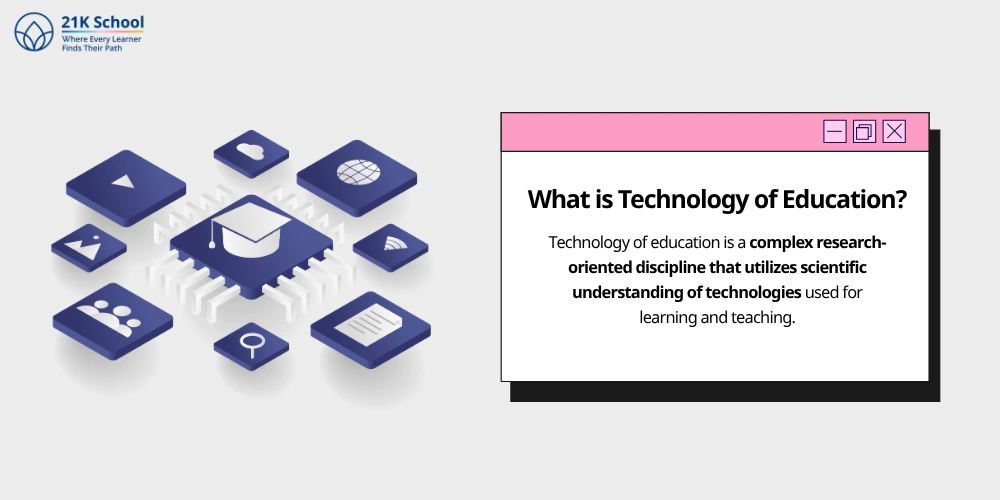
Technology of education is a complex research-oriented discipline that utilizes scientific understanding of technologies used for learning and teaching.
This focuses on instructional psychology, theories of learning, management principles, and evaluation methods to ensure the role of technology in education.
It deals with technological designing, assessing, curriculum planning, developing and implementing educational processes in a structured and systematic manner.
This methodology focuses on practices and techniques that enhance learning performance by depending on gadgets.
Technology of education incorporates scientifically proven, time-tested, and modern approaches to teaching as long as they are beneficial in education.
It is making teaching systematic, learner-centered, adaptive, and result-based instead of being random or intuitively oriented.
What is Technology in Education?
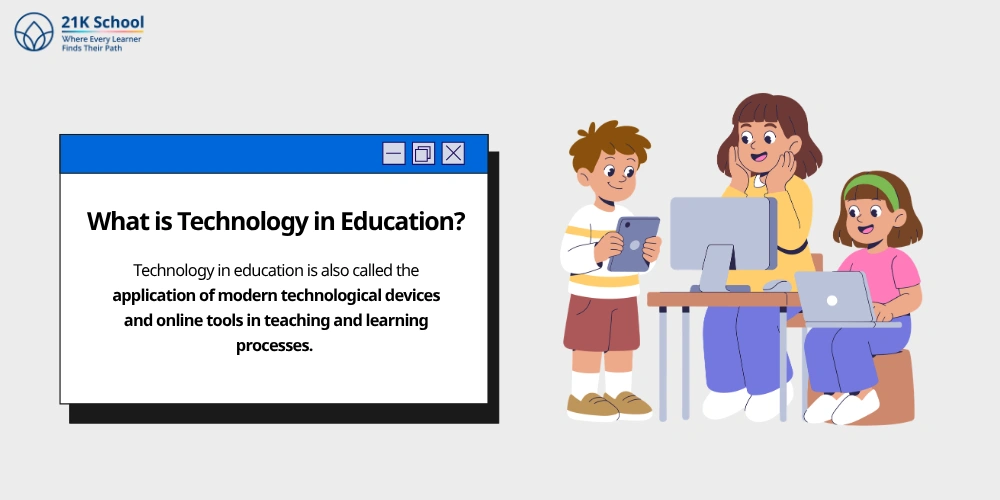
Technology in education is also called the application of modern technological devices and online tools in teaching and learning processes.
It is concerned with incorporating the software and virtual inputs into the classroom to improve the content presentation and the interaction between learners.
Examples include:
- Mobile-based educational applications
- Smart boards and projectors
- Online books and online libraries
- Videos and animations
Technology in education is mainly aimed at enabling the process of learning to be interactive, accessible, flexible, and interesting through approaches like blended learning.
Students are able to study in distance learning, work on online group projects, while having access to multimedia information that helps them better understand the material.
These tools enable teachers to deliver lessons more interactively or monitor students more effectively.
7 Key Differences Between Technology of Education and Technology in Education
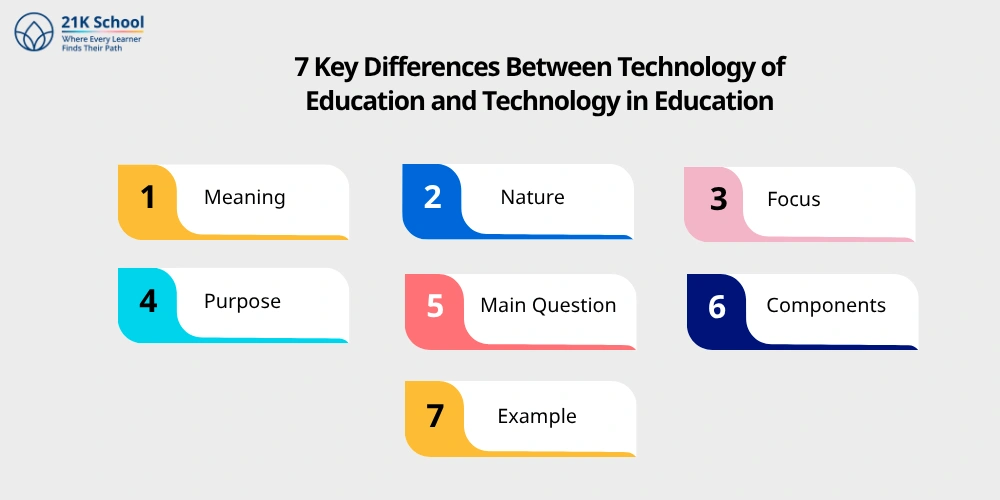
The major differences that makes technology of education and technology in education two different concepts include:
| Basis | Technology of Education | Technology in Education |
| Meaning | Scientific research and application of technological gadgets to enhance education | Use of technological devices in instruction |
| Nature | Broad, systematic, conceptual | Narrow, practical, tool-based |
| Emphasis | Didactic learning process | Teaching and digital aids |
| Purpose | To lay out effective instruction | To augment provision of instruction |
| Primary Question | What is the most effective way to utilize technology in teaching? | What are the tools that we are supposed to use while teaching? |
| Components | Scientific research and curriculum planning with technological dependence | Computers, smart boards, apps, online platforms |
| Example | Technological learning models and instruction designs | On-line classes, PPT presentations, and mobile apps |
1. Meaning
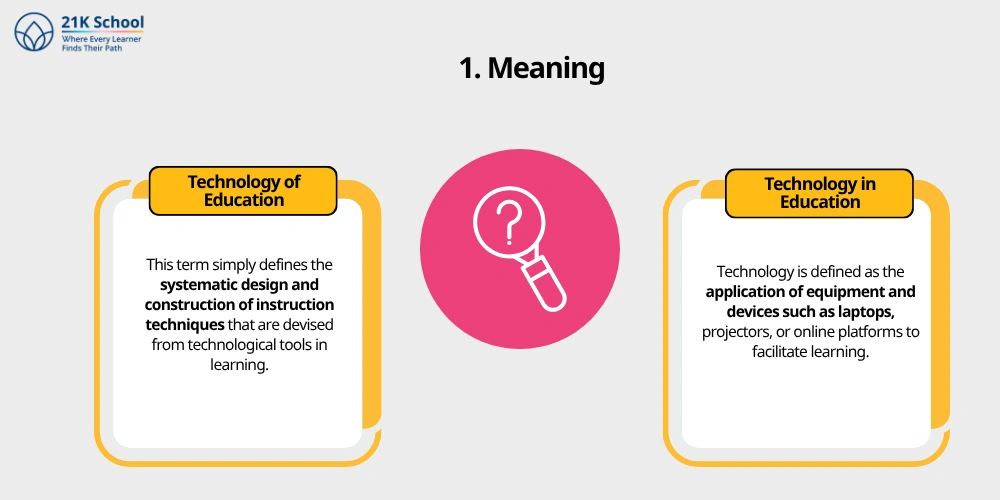
- Technology of Education: This term simply defines the systematic design and construction of instruction techniques that are devised from technological tools in learning.
- Technology in Education: Technology is defined as the application of equipment and devices such as laptops, projectors, or online platforms to facilitate learning.
2. Nature
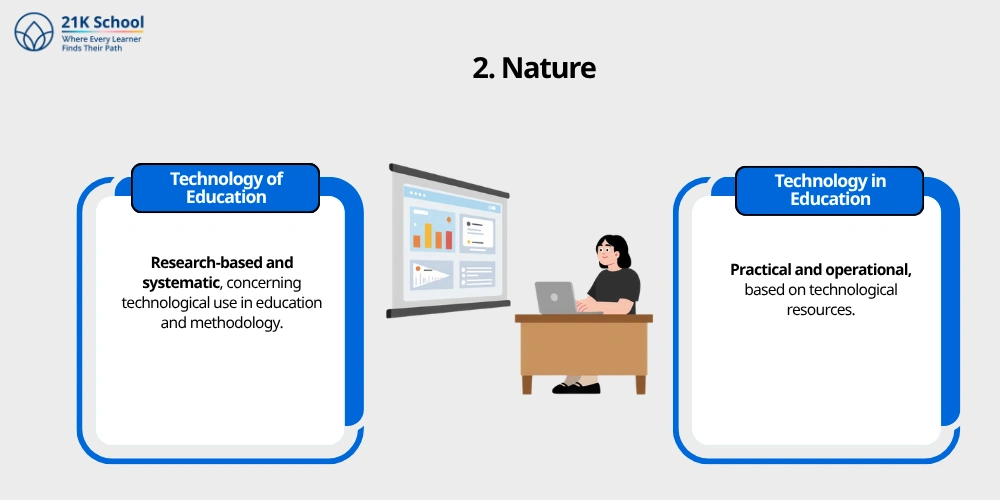
- Technology of Education: Research-based and systematic, concerning technological use in education and methodology.
- Technology in Education: Practical and operational, based on technological resources.
3. Focus
- Technology of Education: Focuses on improvement of the manner in which learning takes place.
- Technology in Education: It is aimed at enhancing delivery of content and student-engagement.
4. Purpose
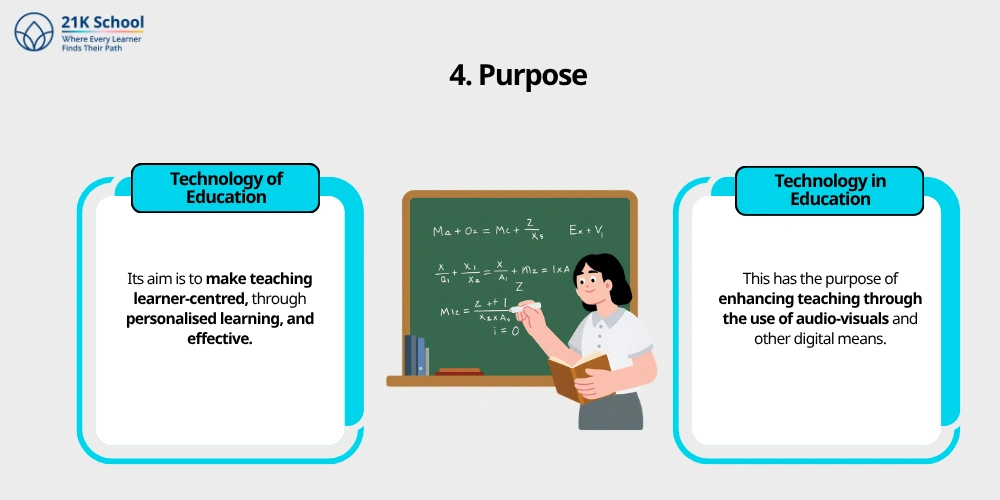
- Technology of Education: Its aim is to make teaching learner-centred, through personalised learning, and effective.
- Technology in Education: This has the purpose of enhancing teaching through the use of audio-visuals and other digital means.
5. Main Question
- Technology of Education: What technological tools are the most appropriate for teaching and how?
- Technology in Education: What devices or platforms can be used to make the process of learning more interactive?
6. Components
- Technology of Education: Assessment models and feedback systems of technological assistance.
- Technology in Education: Virtual labs, learning software, mobile applications, multi media projector, computers, tablets.
7. Example
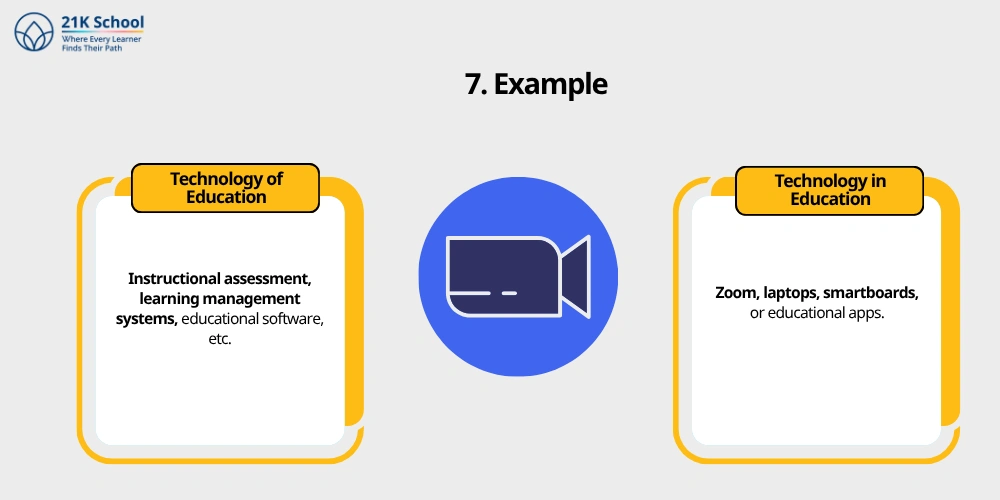
- Technology of Education: Instructional assessment, learning management systems, educational software, etc.
- Technology in Education: Zoom, laptops, smartboards, or educational apps.
Concluding Comments
To keep pace with the modern education system, we need to have insights on the difference between technology of education and technology in education.
While technology in education says what and when to utilize the technology for learning assistance, technology of education answers the why and how of it.
All the digital tools usage comes under technology in education, and technology of education fosters what other advancements are needed to improve these processes.
A balanced integration ensures that technology positively impacts how education is delivered and also how knowledge is understood and retained.
It is essential to note here that whether it is technology of education or technology in education, multiple frameworks exist. Hence, it depends on the best use of technology for achieving mutual benefits.

You may also want to read