

Reflective learning is an effective method which can stimulate people to think about their experience, actions and choices. Learners become more self-aware and are able to make productive development by examining what they have learned and how they can do it better.
This approach allows the students to relate theory and practice, define their strengths and weaknesses, and get a better perspective on their learning methods.
Reflective learning will eventually foster lifelong improvement, critical thinking, and personal growth both in educational and real life.
Table of Contents
What is Reflective Learning?
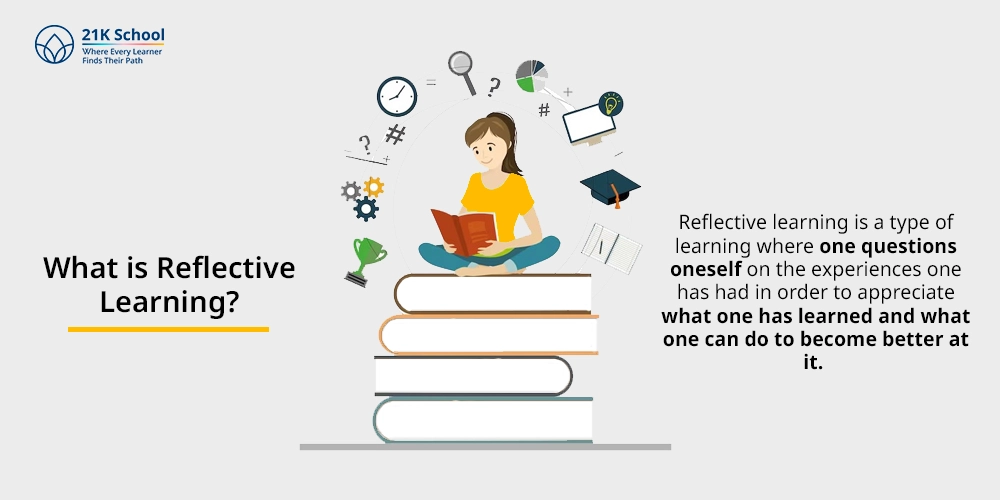
Reflective learning is a type of learning where one questions oneself on the experiences one has had in order to appreciate what one has learned and what one can do to become better at it.
It requires analysing behaviours, thoughts and results so as to understand more and make superior decisions in future.
By reflecting, learners learn to be self-aware, build their problem-solving techniques, and draw valuable conclusions about the knowledge and the real-life scenarios, resulting in their personal and academic lifelong development.
6 Prominent Characteristics of Reflective Learning
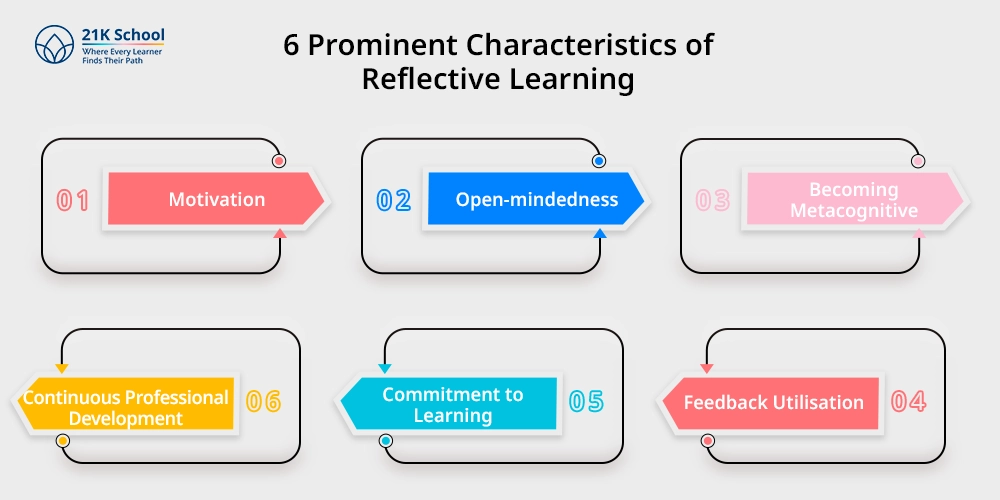
Reflective learning does not entail mere thinking over experiences, but has some important qualities. Knowing the salient features of reflective learners enables one to know how they go about learning, how they analyse situations and how they continuously better themselves. Reflective learning is characterised by the following.
1. Motivation
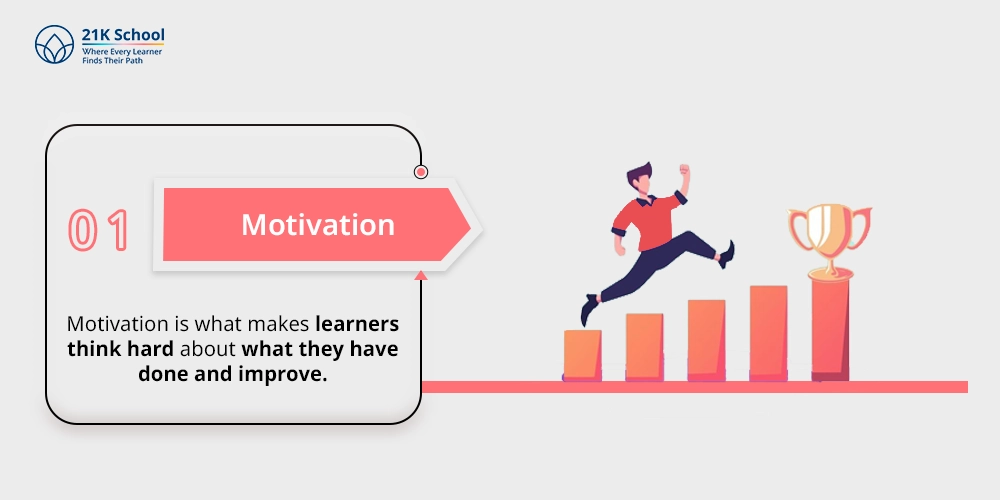
Motivation is what makes learners think hard about what they have done and improve. Motivated people in reflective learning have taken their own responsibility towards their development, seek solutions and remain dedicated to learning their strong and weak points.
This personal motivation promotes lifelong learning, improved performance, and readiness to accept positive changes that will promote personal and academic growth.
2. Open-mindedness
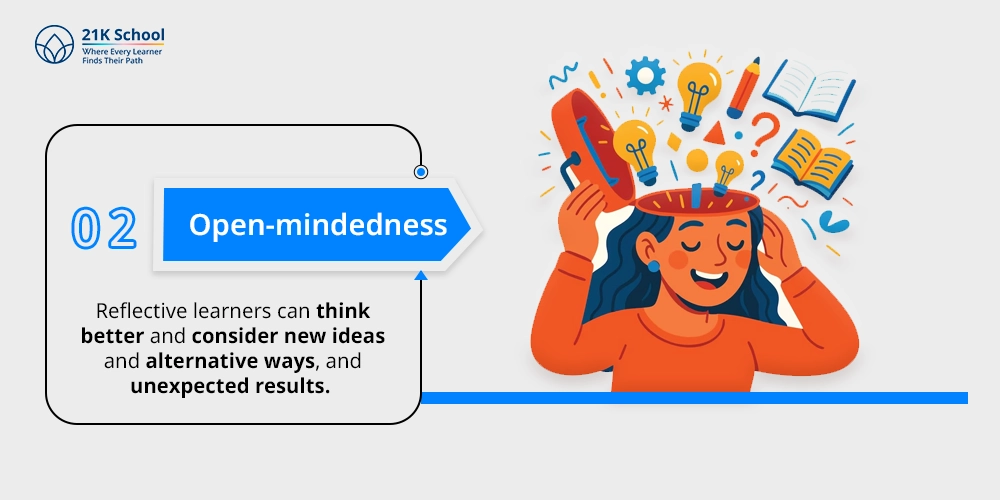
Open-mindedness enables the learners to listen to other points of view, to take constructive criticism, and to evaluate their actions appropriately. Reflective learners can think better and consider new ideas and alternative ways, and unexpected results.
This attribute assists them in making more effective decisions, better understanding, and realising that there are opportunities to grow which they would not have realised otherwise, considering the fact that they are either rigid or fixed mindset.
3. Becoming Metacognitive
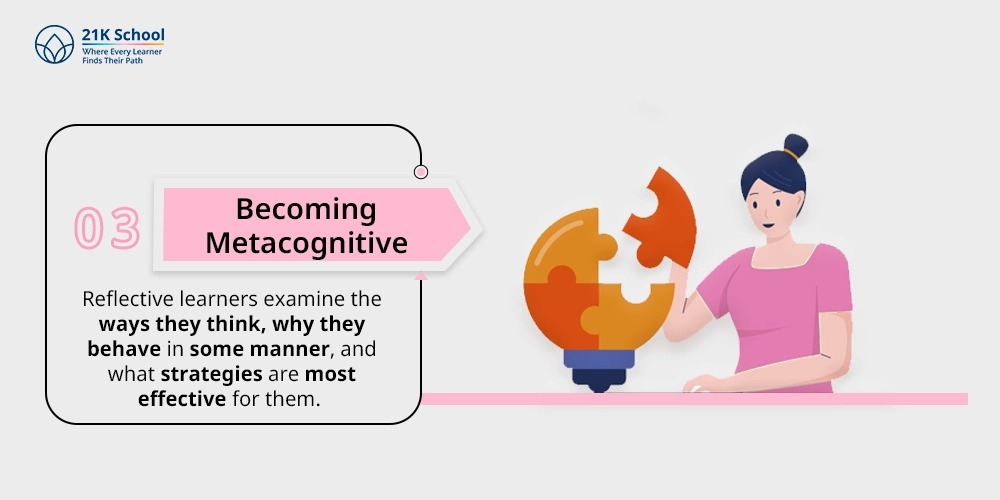
The act of becoming metacognitive is the ability to understand what one is thinking, feeling, and learning. Reflective learners examine the ways they think, why they behave in some manner, and what strategies are most effective for them.
This introspection enables them to schedule, track and modify their education in a more appropriate manner. Metacognition enhances critical thinking, enhances problem solving as well and enables learners to be in control of their individual growth.
4. Feedback Utilisation
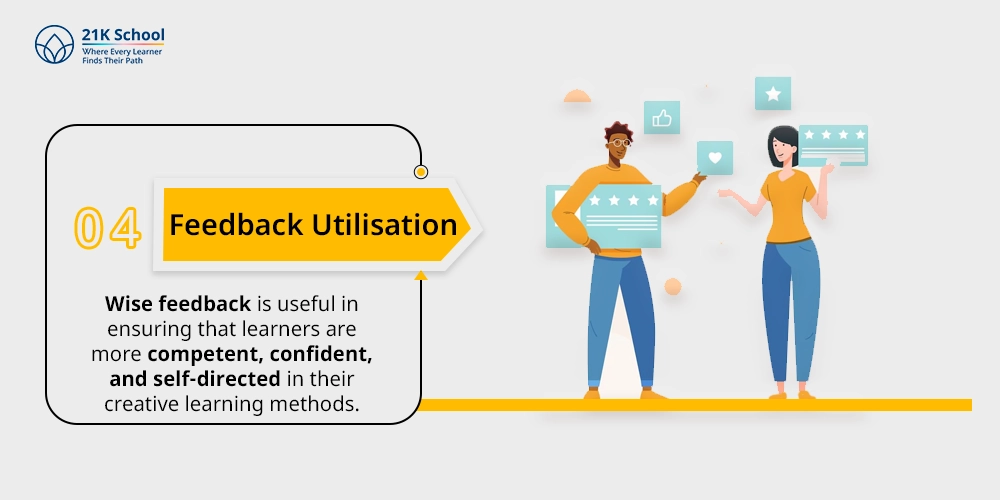
Reflective learners make good use of the feedback they receive by critically examining some of the comments, finding areas to improve and putting the recommendations into action in new assignments. They do not consider feedback as a discouraging aspect, but as a resource for growth.
This skill increases efficiency, fosters strength and promotes the constant improvement of abilities. Wise feedback is useful in ensuring that learners are more competent, confident, and self-directed in their creative learning methods.
5. Commitment to Learning
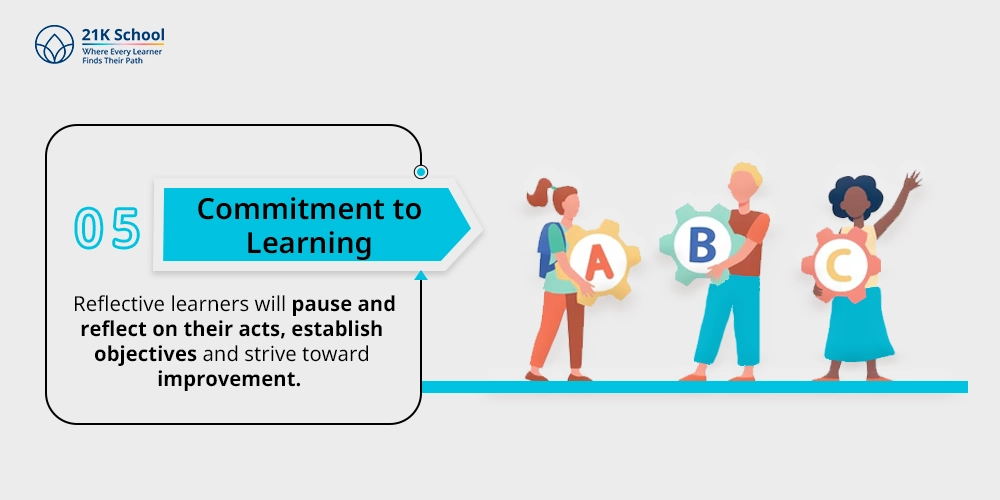
Learning commitment refers to a habit of working hard to gain knowledge of experiences and to enrich skills. Reflective learners will pause and reflect on their acts, establish objectives and strive toward improvement.
This commitment guarantees a stable growth and long-term development. The commitment assists them to remain concentrated, cope with difficulties and constantly improve their skills during academic and personal circumstances.
6. Continuous Professional Development
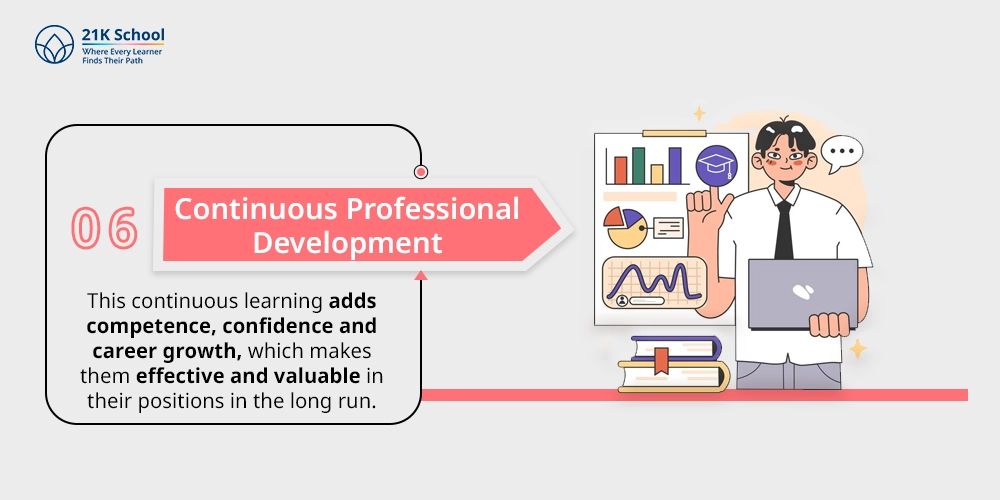
Reflective learning helps in the continuous development of the profession through influencing an individual to analyse their performance and find ways of improvement. Reflecting, professionals sharpen their skills and adjust to emerging challenges and remain abreast of changing practices.
This continuous learning adds competence, confidence and career growth, which makes them effective and valuable in their positions in the long run.
7 Best Benefits of Reflective Learning
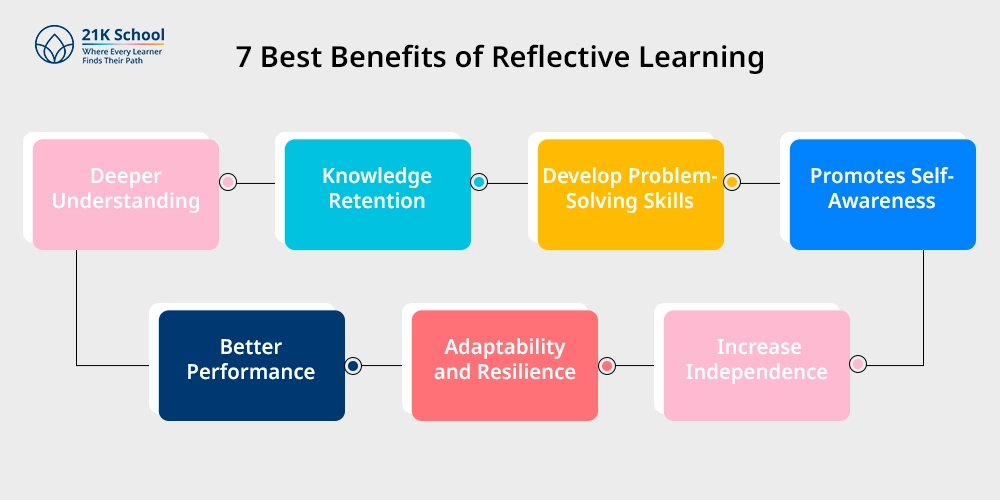
The benefits of reflective learning on both students and professionals are many because they provide students with an opportunity to think more deeply and understand themselves better.
It assists individuals in knowing what they go through, enhancing their problem-solving skills and increasing their general performance. The advantages of reflective learning are the following.
1. Deeper Understanding
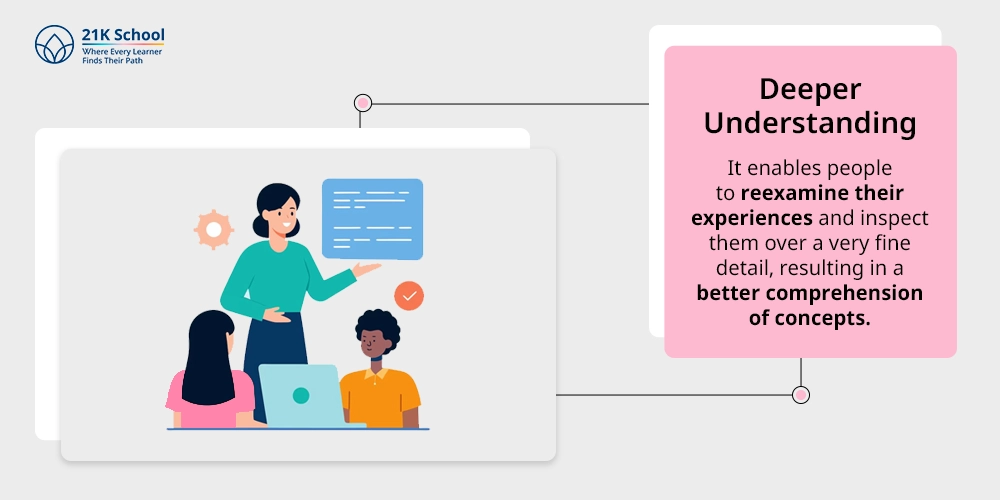
Reflective learning enables people to reexamine their experiences and inspect them over a very fine detail, resulting in a better comprehension of concepts. Relating theory to real-life scenarios, the learners are able to get a deeper understanding of concepts.
This better understanding makes them recall lessons more, learn to recognise patterns, and utilise knowledge more efficiently in future scenarios, which enhances academic and practical knowledge.
2. Knowledge Retention
Reflecting on learning enhances knowledge retention. The reflection contributes to structuring thoughts, supporting valuable ideas, and explaining misunderstandings.
By being able to reflect upon the reason as to why something did or did not work, the information will be more easily remembered in the future. This process is of significant benefit in improving long-term learning and general school performance.
3. Develop Problem-Solving Skills
Reflective learning enhances problem-solving capabilities since it makes the learner think critically about the problems they have encountered. They examine their effectiveness, failures and causes.
Such prudent reflection allows them to solve future issues at a higher level of judgment and creativity. The ability to determine the rationale behind the decisions will allow learners to find the solution to a problem and make the proper choice in new cases.
4. Promotes Self-Awareness
Reflective learning enhances self-understanding as it aids individuals to analyse their thoughts, feelings and behaviours. The learners are able to realise their learning styles, preferences, and areas requiring improvement by determining their strengths and weaknesses.
This consciousness will result in improved decision-making and self-development. It also makes the learners responsible for their actions and work continually to become more mindful and effective individuals.
5. Better Performance
By reflecting on their work, the learners identify errors and rectify them and also become better in their performance in future. Reflection will assist them to perfect strategies, aim at realistic goals and concentrate on what is really important.
They can work better and perform more efficiently because they know their progress and difficulties. This constant development results in improved academic achievements, quality of work and increased performance in various tasks.
6. Adaptability and Resilience
The development of adaptability and resilience through reflective learning can teach learners to analyse failures and learn from them rather than being discouraged. They embrace challenges in a bid to learn and change their strategies.
This attitude allows them to react well to change, transcend barriers and be inspired even in challenging moments. With time as a reflective learner, they will be more adaptable, self-assured and emotionally resilient.
7. Increase Independence
Reflection promotes self learning as it makes one realise the way they learn and what strategies suit them. They no longer need to have people provide solutions, and thus they get the confidence to assess their progress and do something up to their own standards.
The result of this independence is a greater self-discipline, improved decision-making and task management-all-important factors to academic and work success.
5 Common Disadvantages of Reflective Learning
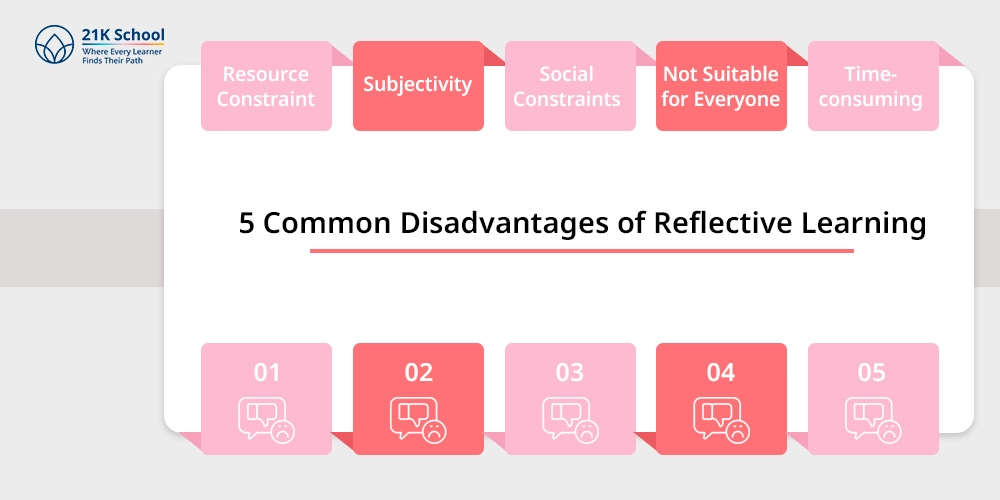
Although there are numerous advantages of reflective learning, it is accompanied by its own obstacles. It might be time-consuming, subjective, or otherwise hard to practise effectively by some learners.
Being aware of these typical drawbacks will assist teachers and students to work out possible challenges so that reflective learning will turn out to be efficient and beneficial to self-development and academic achievement. The following are the drawbacks of reflective learning.
1. Resource Constraint
Some reflective learning might need the provision of guidance, structured tools, time, and supportive environments, which are not necessarily available. Learners may not be able to reflect effectively without having the right resources like mentorship, journals or training.
The scarcity of such resources may affect the quality of reflection and slow down personal development, so the process will not be productive or meaningful.
2. Subjectivity
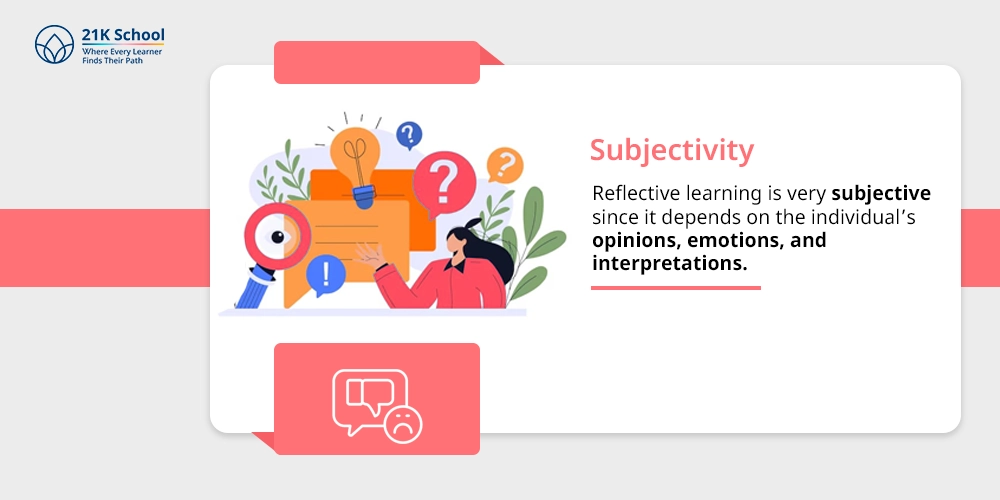
Reflective learning is very subjective since it depends on the individual’s opinions, emotions, and interpretations. This subjectivity may at times make one come up with biased conclusions or make faulty judgments concerning their performance.
Students can miss out on useful information or fail to interpret experiences, even using their emotions. Lack of guidance can make the process of reflection emotional and not analytical, thus eliminating its effectiveness and objectively improving it.
3. Social Constraints
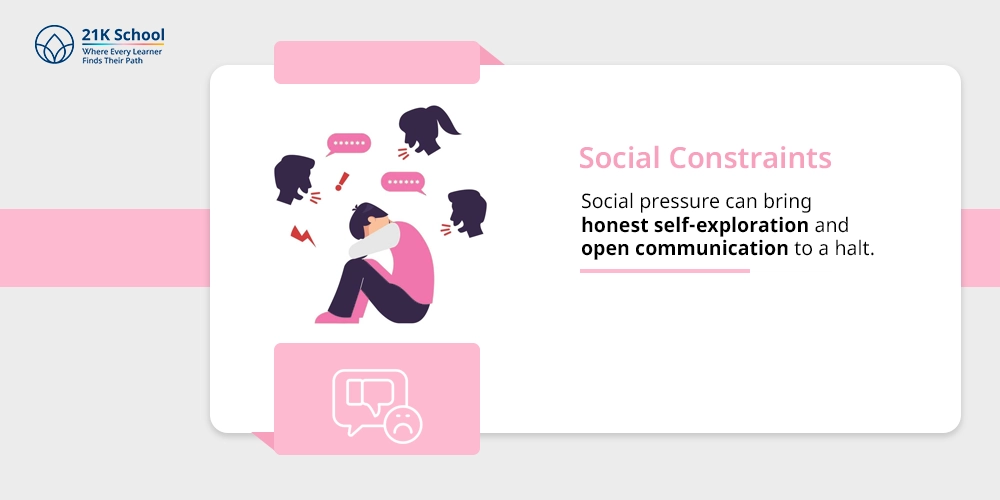
Other learners may either fail to share reflections with other learners or teachers due to the fear of being judged or criticised. Social pressure can bring honest self-exploration and open communication to a halt.
When an individual is engaging in group discussions, he or she might not clarify his weaknesses and errors. These restrictions do not permit a proper reflection and reduce the prospects of feedback, assistance and collaborative learning, making the procedure less efficient.
4. Not Suitable for Everyone
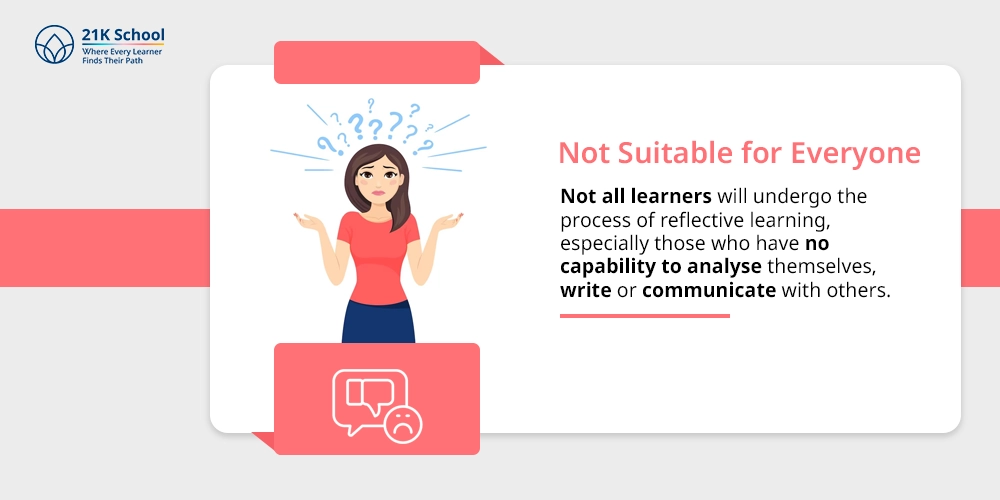
Not all learners will undergo the process of reflective learning, especially those who have no capability to analyse themselves, write or communicate with others. Instead of reflecting, other people would prefer to learn practically and in a hands-on way or be taught.
Such learners are either confused or uncouth with reflection. The learning styles may differ, and this means that reflective practices do not always have a great effect on everyone.
5. Time-consuming
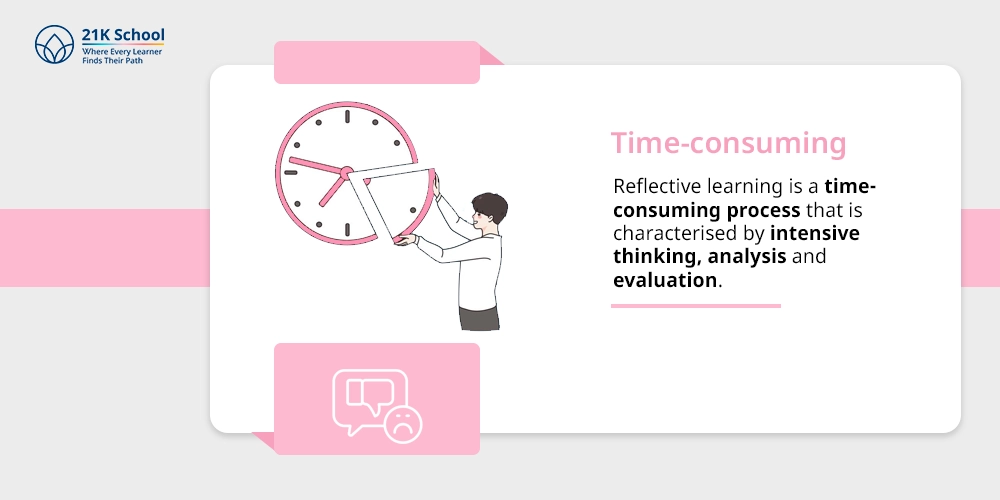
Reflective learning is a time-consuming process that is characterised by intensive thinking, analysis and evaluation. The learners are compelled to replicate the experiences, think and plan on how to make it better and this wastes time in other activities.
When you are in a fast-paced environment, people may not be able to reflect on a regular basis. Reflection is not very deep, and it does not have the purpose when one is in a hurry; therefore, it is not as effective in promoting growth.
How to Practice Reflective Learning- 5 Easy Steps
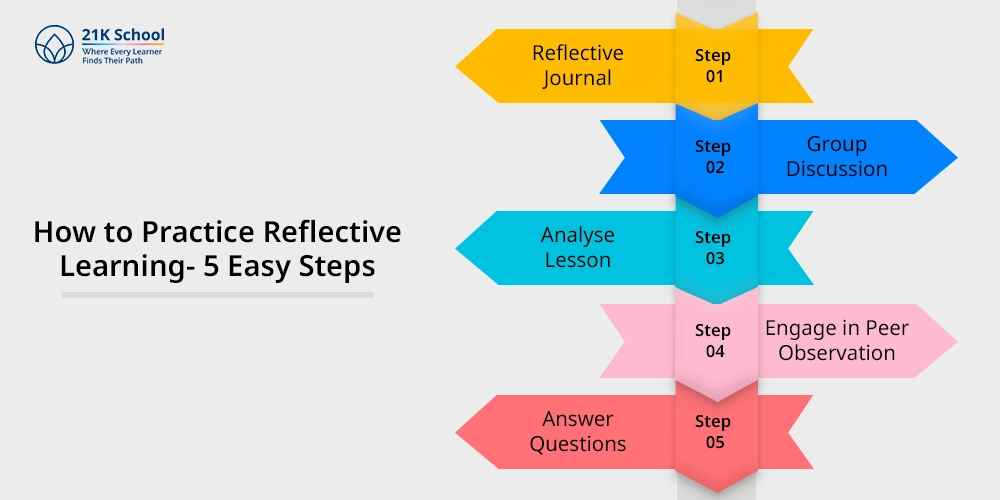
Reflective learning is an activity that enables an individual to perceive their experiences and become proficient.
Using a set of simple steps, learners are able to critically reflect on what they have learned, recognise the strengths and weaknesses and make useful enhancements. This is what students can do to engage in reflective learning.
1. Reflective Journal
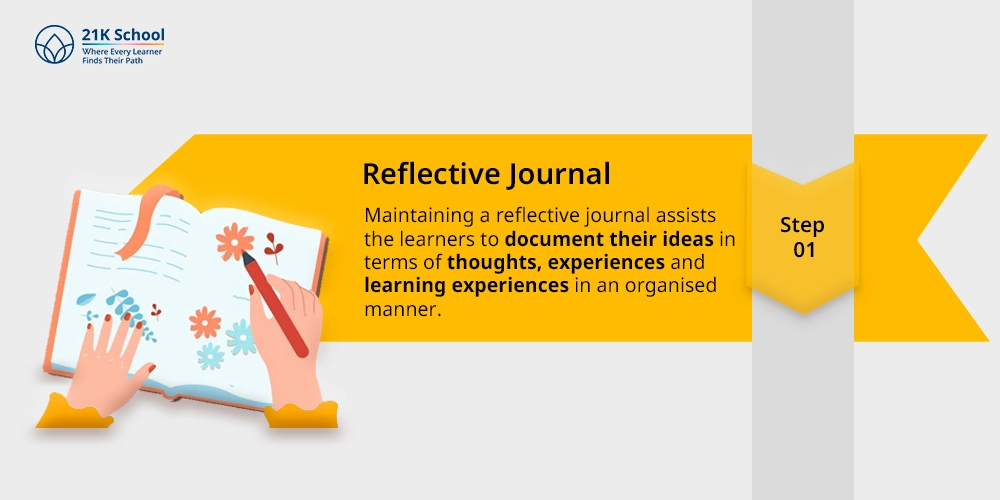
Maintaining a reflective journal assists the learners to document their ideas in terms of thoughts, experiences and learning experiences in an organised manner. Regular writing is a form of thought, and people can examine what they did right, what they did wrong, and what they can do to improve.
With time, patterns are identified in behaviour and habits of mind, and it becomes easier to know progress and become self-aware.
2. Group Discussion
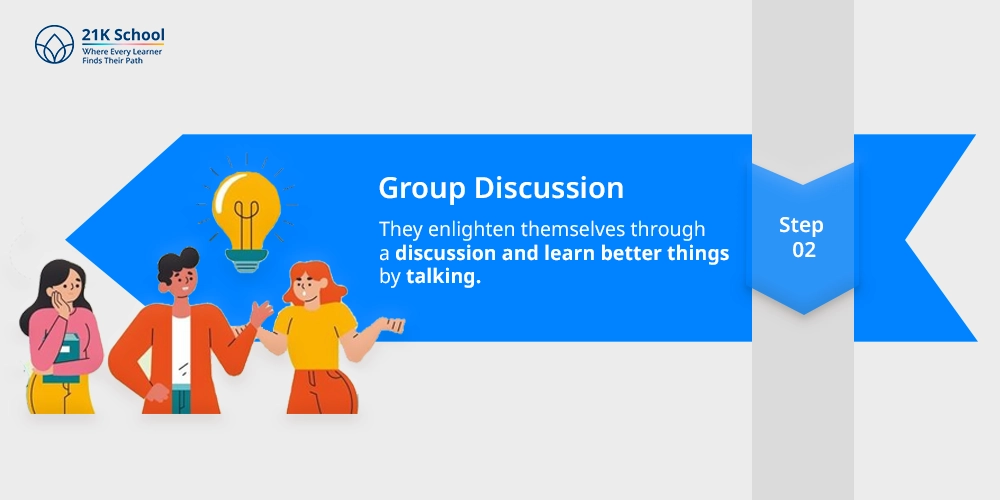
Group discussion helps the learners to share experiences, listen to other viewpoints, and reflect on ideas in a conducive environment. They enlighten themselves through a discussion and learn better things by talking.
Sharing challenges and successes with peers encourages critical thinking skills and assists an individual in assessing their own performance. Such cooperative thinking improves the skills of communication and overall learning.
3. Analyse Lesson
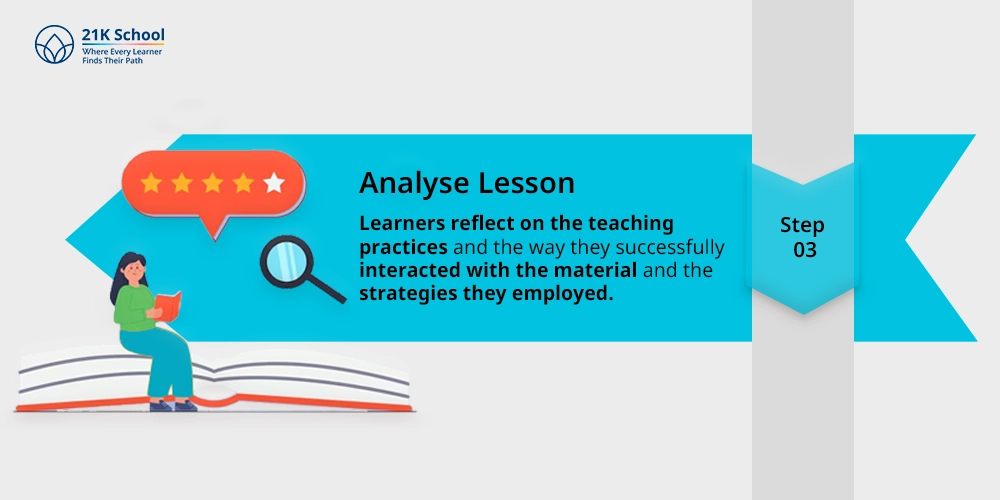
The task of lesson analysis implies evaluating what was learned, how it was perceived, and what ideas should be paid more attention to. Learners reflect on the teaching practices and the way they successfully interacted with the material and the strategies they employed.
This process assists them in determining the areas of improvement and strengths, and thus, future learning is more effective. Lesson analysis improves knowledge and promotes improvement.
4. Engage in Peer Observation
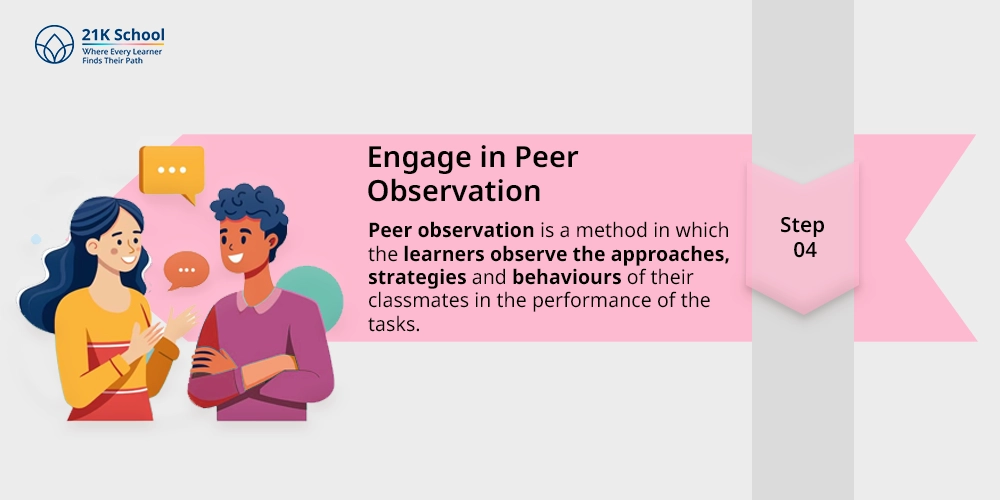
Peer observation is a method in which the learners observe the approaches, strategies and behaviours of their classmates in the performance of the tasks. Watching others makes them think about what they are doing right and what they may change to suit themselves.
It also gives an insight into the various learning styles and problem-solving methods. This will allow the learners to compare their performance with that of other learners, thus to get feedback that is valuable and understand their learning habits better.
5. Answer Questions
A reflective question will provoke thinking by the learner. The practice improves critical thinking, enhances comprehension and promotes self-directed learning.
Reflective questioning will assist the learners to make more accurate goals and significant steps to continued growth.
Reflective Learning Examples
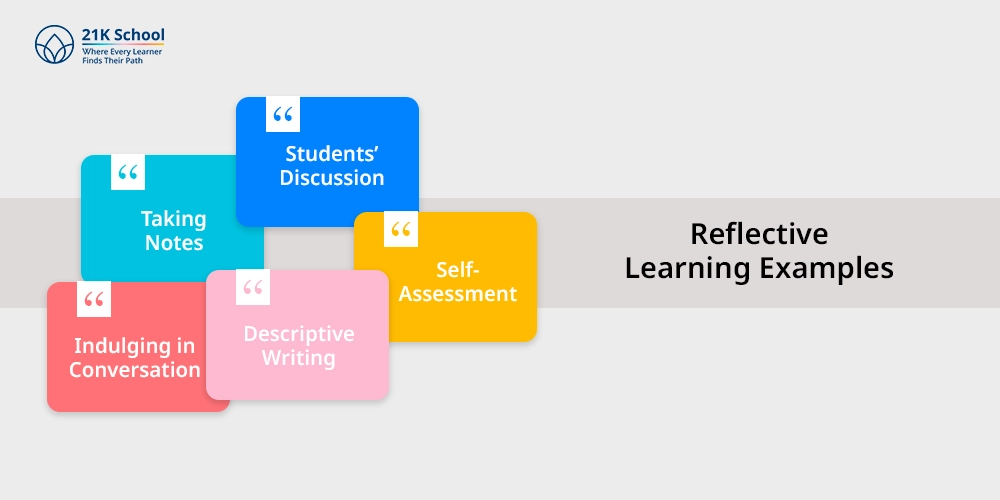
There are numerous practical applications of reflective learning that can be used to assist learners in critical thinking about experiences.
Through activities such as discussions, self-assessment, writing and taking notes, the students are able to provide an analysis of what they have learned and the areas where improvement is needed and relate what they learned to real-life experiences. Some examples of reflective learning are the following.
1. Students’ Discussion
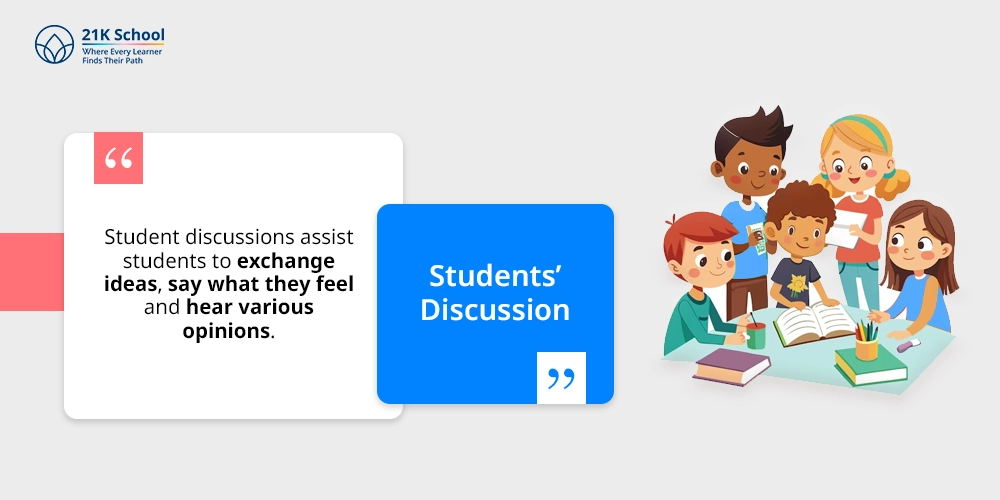
Student discussions assist students to exchange ideas, say what they feel and hear various opinions. By talking, they are able to reflect on what they know as well as how other people perceive the same subject.
Such interaction can be used to clarify the questions, enhance understanding, and critical thinking. The ability to reflect on discussions also enhances communication skills and prompts the learners to analyse their personal input and what they could do better.
2. Self-Assessment
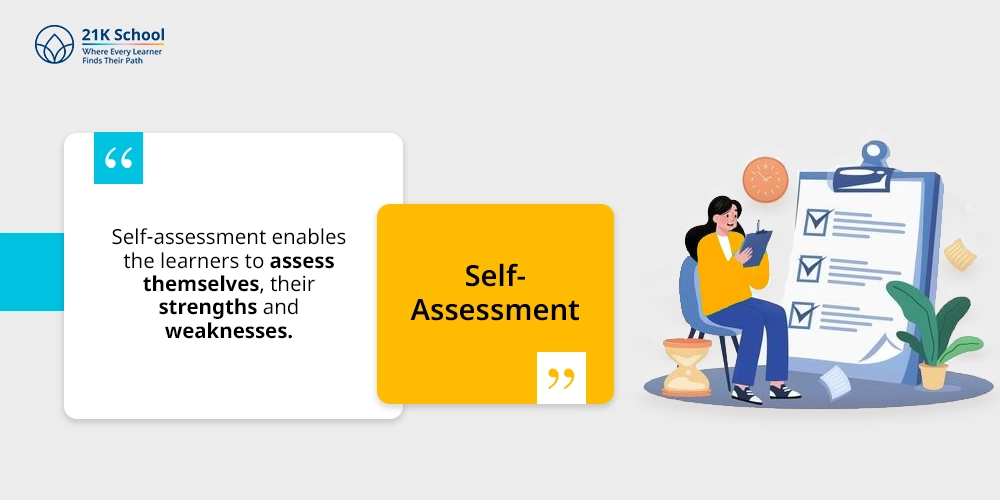
Self-assessment enables the learners to assess themselves, their strengths and weaknesses. They evaluate their performance, which makes them take a reflection on the strategies, efforts, and outcomes of their learning.
This is a procedure that encourages integrity, accountability, and self-realisation. It makes learners realise what was good, what was not, and how they can change their way to achieve better results in future.
3. Descriptive Writing
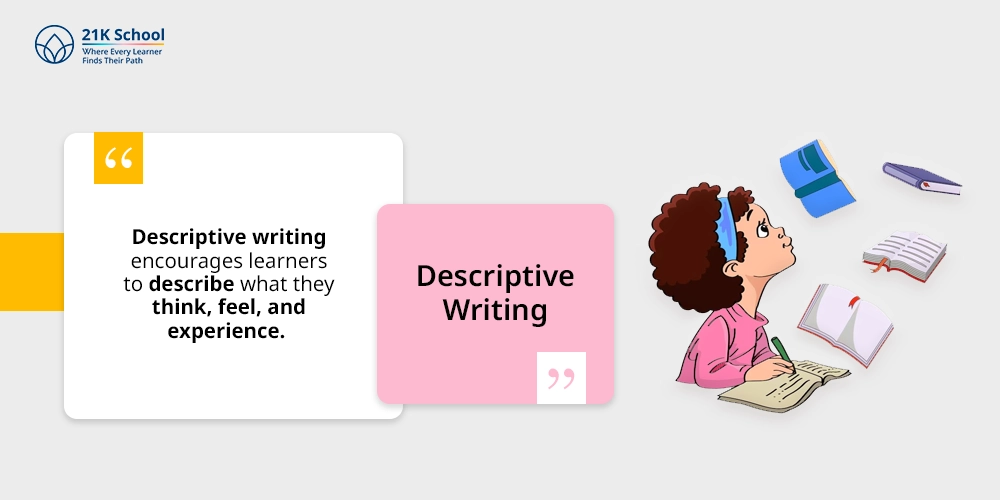
Descriptive writing encourages learners to describe what they think, feel, and experience. They deconstruct what took place and what its impact was on their comprehension by narrating the events or learning experiences.
This is a form of reflection that can assist them to relate the emotional intelligence with the knowledge and some of the lessons learnt, and develop greater self-awareness. Descriptive writing aids people in critical thinking and enhances their interpretation skills of their personal experiences.
4. Indulging in Conversation
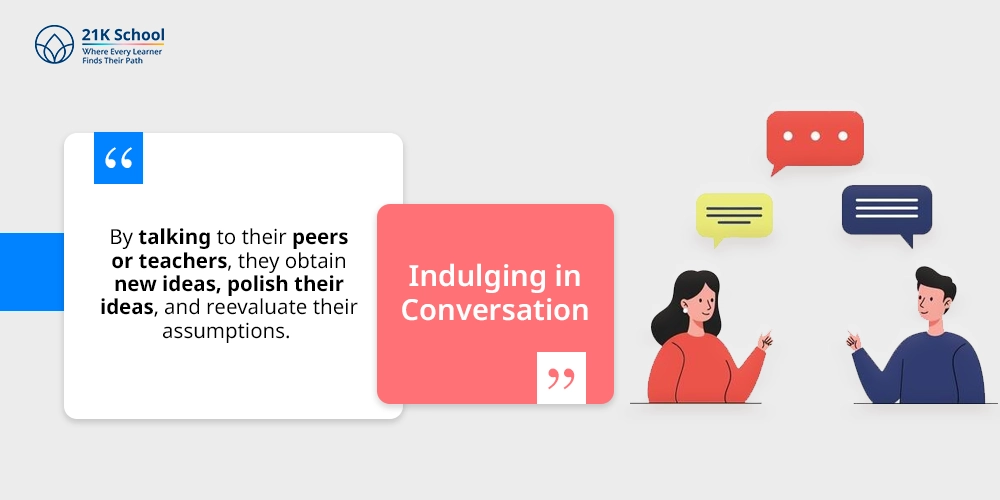
Having meaningful conversations also makes the learners reflect on their ideas and perspectives. By talking to their peers or teachers, they obtain new ideas, polish their ideas, and reevaluate their assumptions.
Discussions allow one to challenge, explain and examine ideas further. Cogitating about these interactions allows the learners to improve their communicative skills, learn about various opinions, and enhance their argumentative power.
5. Taking Notes
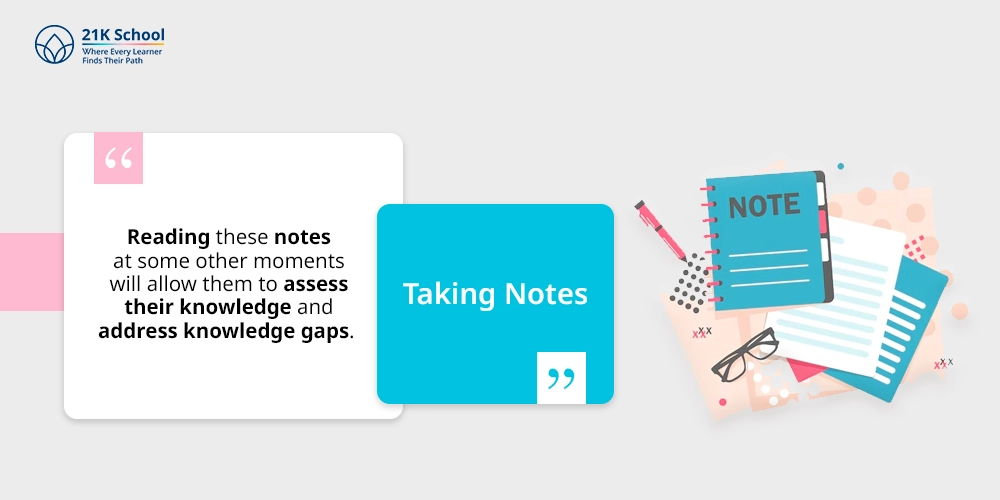
Noting things during the lesson or activity stimulates the thought processes of the learners to analyse what matters the most and how the information is interrelated. Reading these notes at some other moments will allow them to assess their knowledge and address knowledge gaps.
This reflective practice enhances memory, educates for better organisation and better understanding. It is also important to note that note-taking enables learners to follow their progress with time and, as a result, makes their learning process more deliberate and efficient.
Conclusion
Reflective learning is a revolutionary style that helps one to think critically, interpret their experiences and keep on improving.
Learners acquire a higher level of problem-solving, self-awareness, and flexibility by cultivating the main features of motivation, open-mindedness, and metacognition.
Although it might be faced with some challenges, including time-consuming, subjective, practising reflection using journals, discussions and self-assessment would guarantee meaningful personal, academic and professional development.

You may also want to read