


A computer is a versatile tool in present times that can manage multiple tasks by processing raw data and interpreting instructions given by us.
But, did you know that computers are of different types and uses?
We know that computers are being utilized in almost every sector of growth and development . So, it becomes important that we also dig into its different classifications.
In this article, we will be talking about classification of computers, on what basis they are classified, and what is the significance of these computers.
Table of Contents
- What is Classification of Computers?
- Classification of Computers Based on Size and Performance
- Classification of Computers Based on Purpose
- Classification of Computers Based on Data Handling
- Classification of Computers Based on Generation
- Classification of Computers Based on Portability
- Classification of Computers Based on Architecture
- 5 Importance of Classification of Computers
- Wrap It Up
What is Classification of Computers?
Computer classification is considered to be the systematic grouping of computers according to their features, size, functionality, performance, data processing, or technological generation.
Computers are built to suit various functions hence each type of computer is ideal in carrying out different activities.
The classification is used to distinguish computers based on their functions and abilities.
As an example, a supercomputer used in weather prediction is extremely different to a personal computer used in the home for browsing the internet.
On the same note, the computers in hospitals which are applied in keeping the patients are not the same as the computers in the banks that are applied in the processing of transactions.
Through computer classification, the appropriate system is easily selected to carry out a particular task.
Generally there are important factors on which computers are categorized and some include:
- Size and performance
- Purpose
- Data handling capability
- Generation (technology used)
- Portability
- Architecture
All these classifications are discussed in detail in the following sections.
Classification of Computers Based on Size and Performance
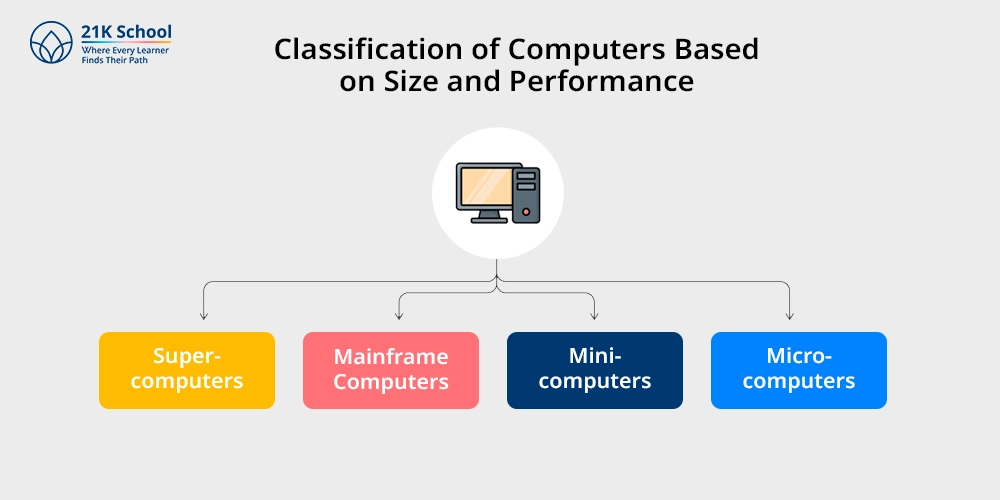
The size, processing power, storage capacity, and performance of computers are one of the most frequent methods of classifying computers.
This is divided into supercomputers, mainframe computers, minicomputers, and microcomputers.
1. Supercomputers
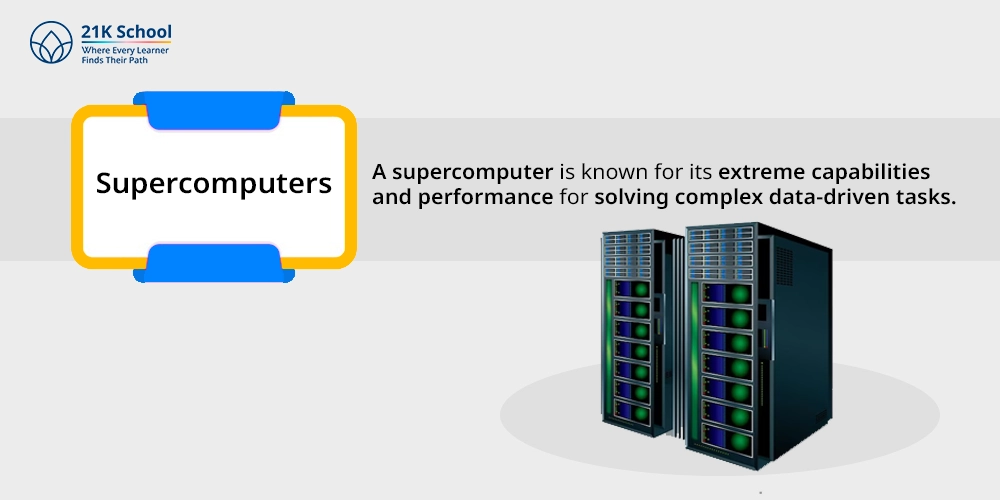
A supercomputer is known for its extreme capabilities and performance for solving complex data-driven tasks.
These are made to carry out very complicated computations at a very fast speed due to the property of parallel processing.
Supercomputers are able to compute billions of instructions per second and they can calculate very large volumes of data at a go.
These are mostly applied in scientific and research areas which demand enormous computing power.
The most powerful and huge computers are Supercomputers. It includes large installations of 10, 100, 1000, or more computers to function effectively.
Supercomputer applications are in weather forecasting, climate modeling, nuclear studies, space research, molecular research, and artificial intelligence research.
Supercomputers are also very costly, and they need special conditions such as high-level cooling facilities and massive physical accommodations.
Some popular supercomputers are Cray systems, Fugaku, and Sierra. They have special hardwares like GPUs (Graphics Processing Units) and TPUs (Tensor Processing Units).
2. Mainframe Computers
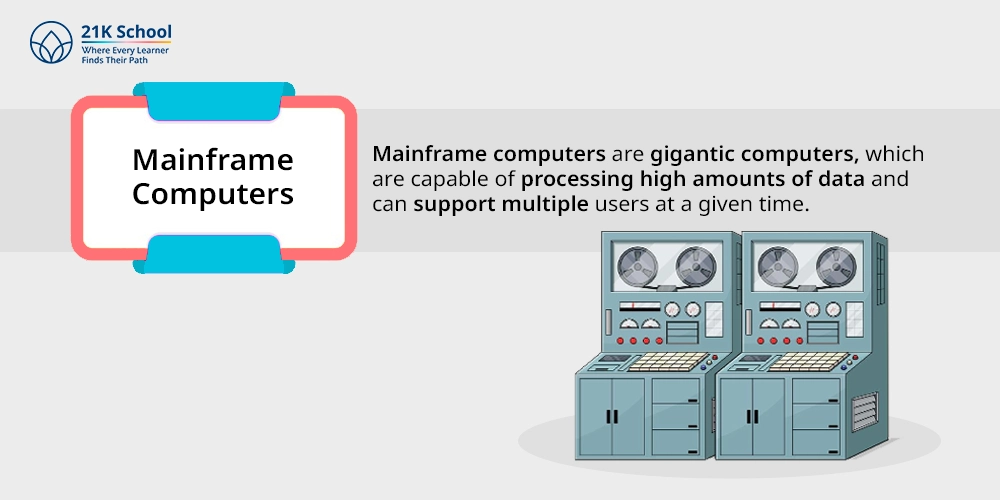
Mainframe computers are gigantic computers, which are capable of processing high amounts of data and can support multiple users at a given time.
These are usually applied in large organizations like banks, insurance companies, government agencies, and airlines.
Mainframe computers are associated with reliability, stability, and data processing capacity unlike the supercomputers which are designed for speed and complexity.
They are able to serve thousands of users simultaneously and millions of transactions per day.
Some of the roles that use a mainframe include payroll processing, census data processing, processing online transactions, and enterprise resource planning.
The examples of mainframe computers might include the IBM Z series, Unisys ClearPath, and CDC Cyber Series.
Mainframes are large and expensive systems although they are smaller than supercomputers.
3. Minicomputers
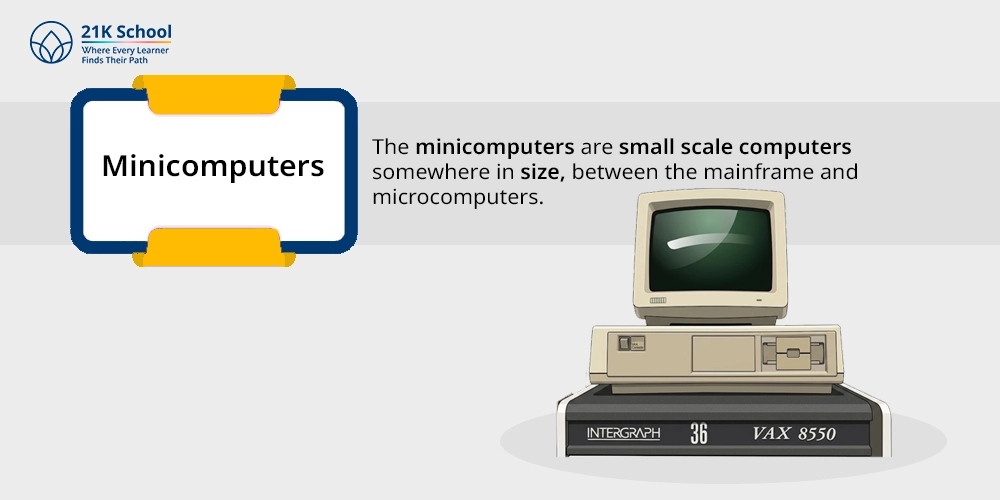
The minicomputers are small scale computers somewhere in size, between the mainframe and microcomputers.
They are less strong than the mainframes, yet the stronger ones in comparison with the personal computers.
Small and medium sized organizations used minicomputers in large numbers in the past.
These are computers that can accommodate almost 250 users at a time and are usually used in laboratories, factories, and small businesses.
Minicomputers are applicable in controlling processes, data management, and scientific studies.
The minicomputers are no longer in use particularly due to the development of microcomputers and servers.
Some of the examples of minicomputers might include IBM AS/400e, Honeywell 200, DEC VAX, and PDP 11.
4. Microcomputers
The most widespread computers of today’s time are known as microcomputers.
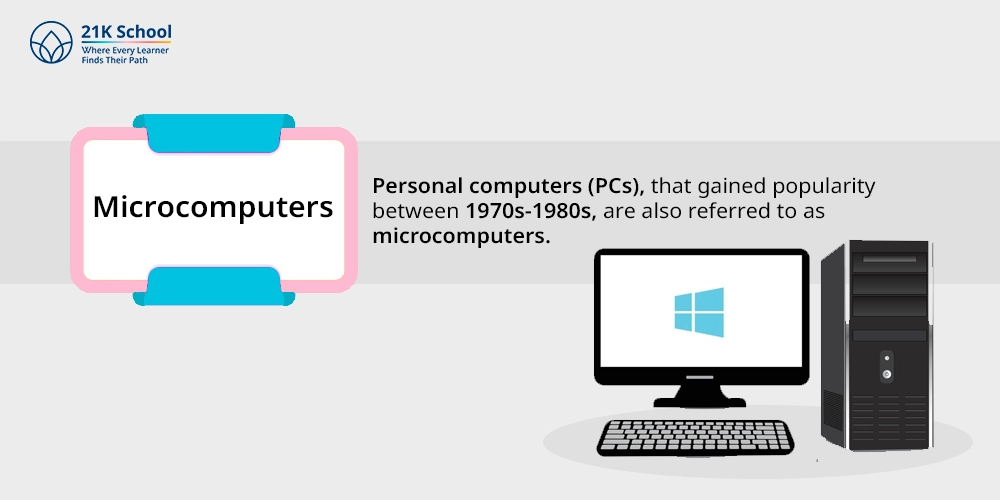
They are cheaper, small, and are meant to be used by individuals. Personal computers (PCs), that gained popularity between 1970s-1980s, are also referred to as microcomputers.
Examples of microcomputers are desktop computers, laptops, tablets, notebooks, and smartphones.
The activities done on them include a wide variety of word processing, browsing the internet, games, education , communication, and multimedia use.
Microcomputers are convenient to control. They need fewer power units and come in many varieties based on the requirements.
Classification of Computers Based on Purpose
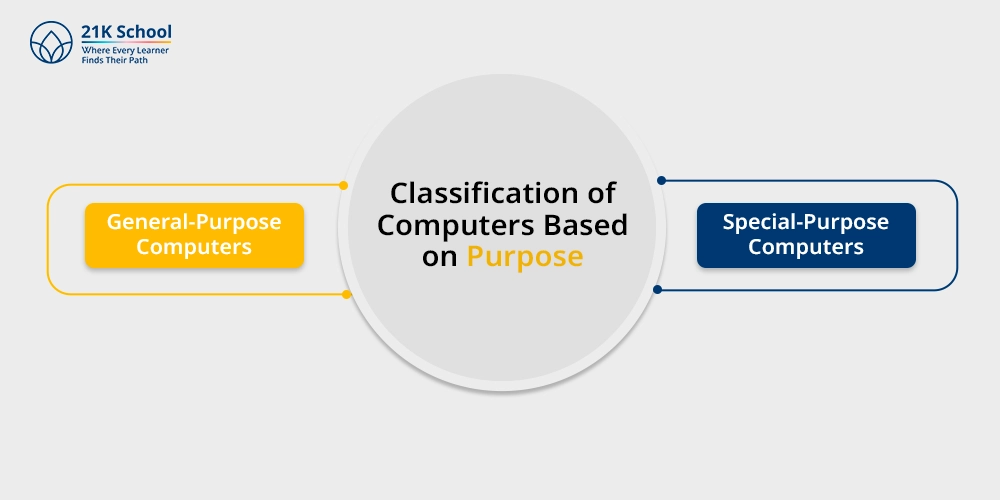
Another classification of computers is based on the purpose they are meant to serve.
The computers that fall under this category are special-purpose computers and general-purpose computers.
1. General-Purpose Computers
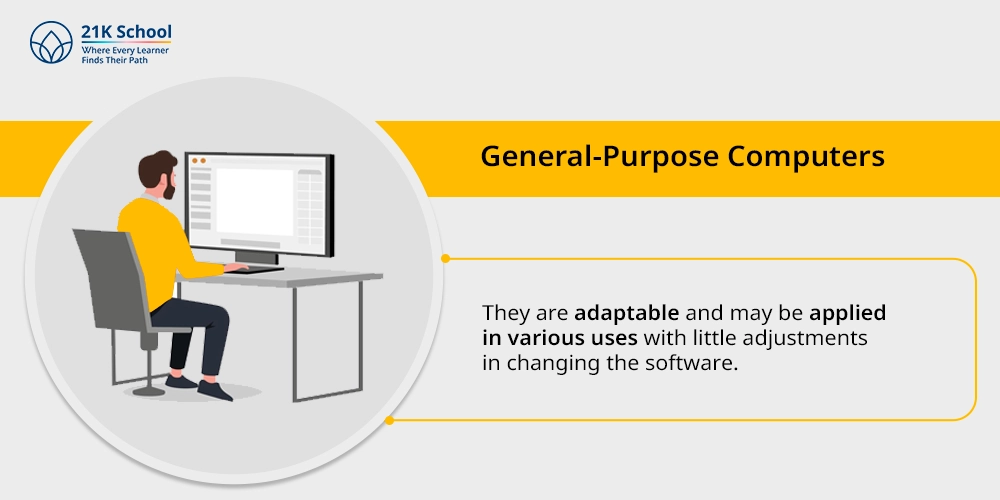
General-purpose computers are set to do any job.
They are adaptable and may be applied in various uses with little adjustments in changing the software.
Personal computers, laptops, and workstations from Linux and macOS are examples of general-purpose computers.
Documents, accounting, programming, graphic designing, communication and entertainment are some of the activities which can be done using these computers.
The primary benefit of general purpose computers is that they are versatile.
They might, however, not be as effective as special-purpose computers for executing certain tasks.
2. Special-Purpose Computers
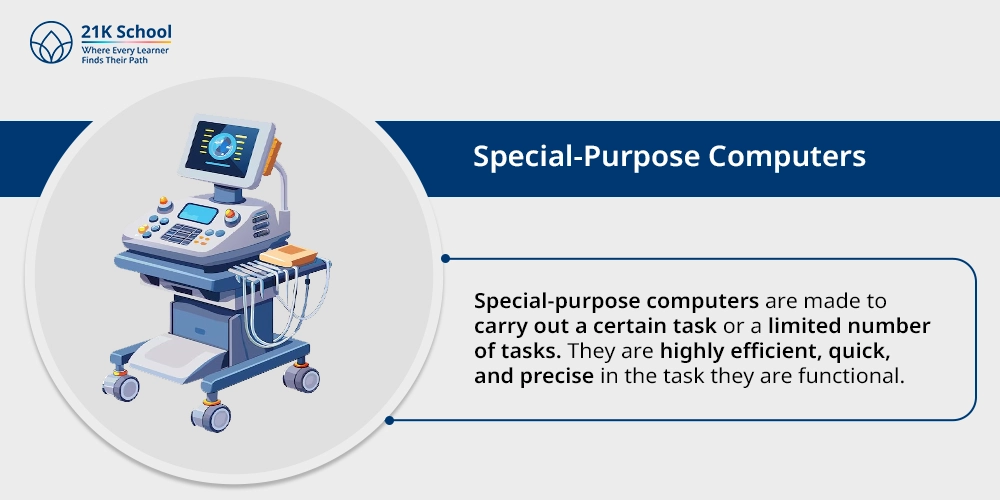
Special-purpose computers are made to carry out a certain task or a limited number of tasks.
They are highly efficient, quick, and precise in the task they are functional.
These are computers in washing machines, in traffic control, medical equipment, digital watches, and machines in industries.
These computers are commonly incorporated into machines and they are referred to as embedded systems.
Special computers are not flexible, but are quite reliable and efficient. They cannot be readily reconfigured to do other functions.
Classification of Computers Based on Data Handling
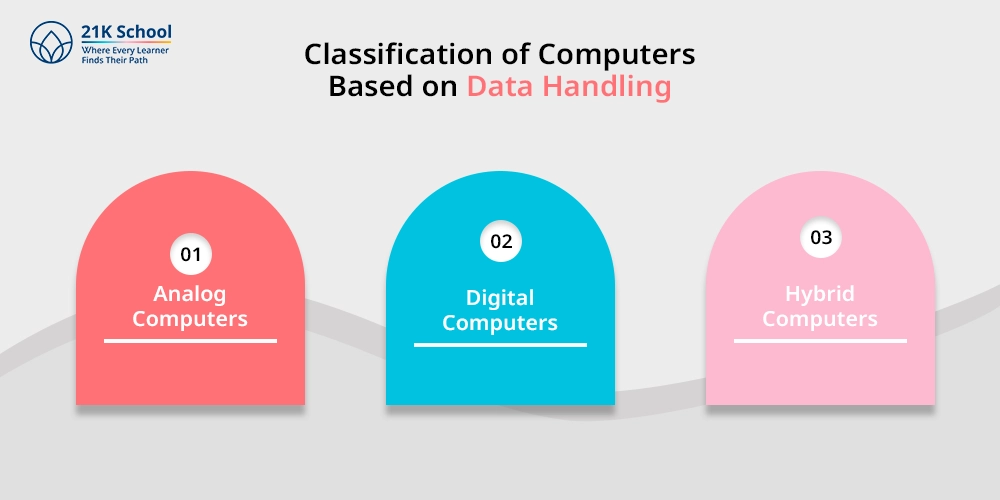
Computers can also be classified based on the manner in which they process and deal with data. These are analog computers, digital computers, and hybrid computers.
1. Analog Computers
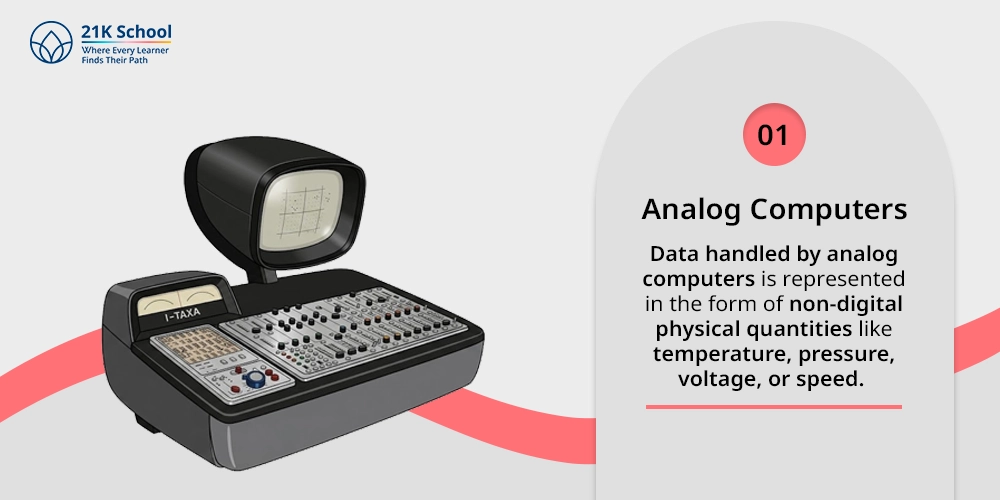
Data handled by analog computers is represented in the form of non-digital physical quantities like temperature, pressure, voltage, or speed.
Analog computers operate on continuous signals (as opposed to discrete signals), and utilize electric circuits to do the computations, which can be seen as smooth graphs formed by Cathode Ray Tube.
They are frequently deployed in scientific and engineering processes to which continuous data is related.
The examples are speedometers, thermometers, and analog flight simulators.
The analog computer is fast and suitable in real-time application.
2. Digital Computers
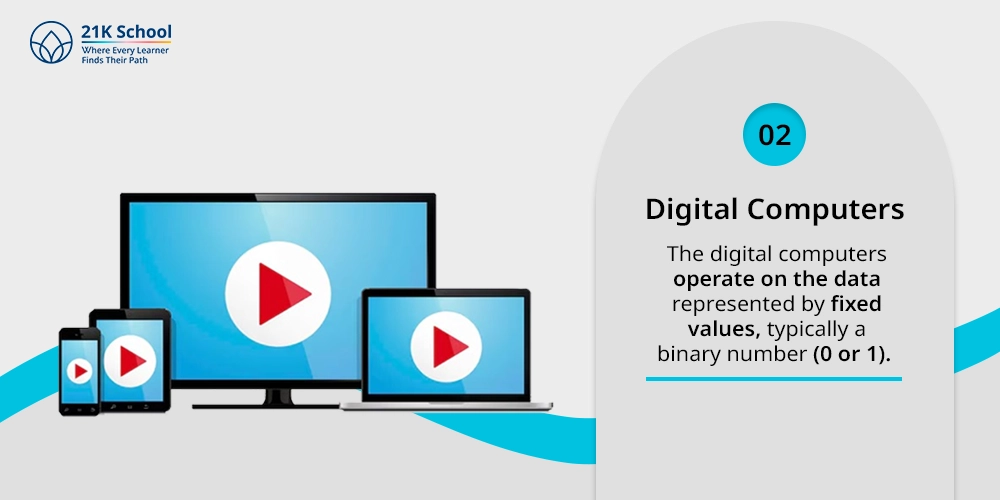
The digital computers operate on the data represented by fixed values, typically a binary number (0 or 1).
Digital computers make up most of the modern computers such as personal computers, smartphones, television, calculators, etc.
Digital computers are very precise, reliable, and can retain a lot of data.
They are able to do complex computations and can execute a broad spectrum of uses.
Analog computers are hence replaced by digital computers due to their accuracy and versatility.
3. Hybrid Computers
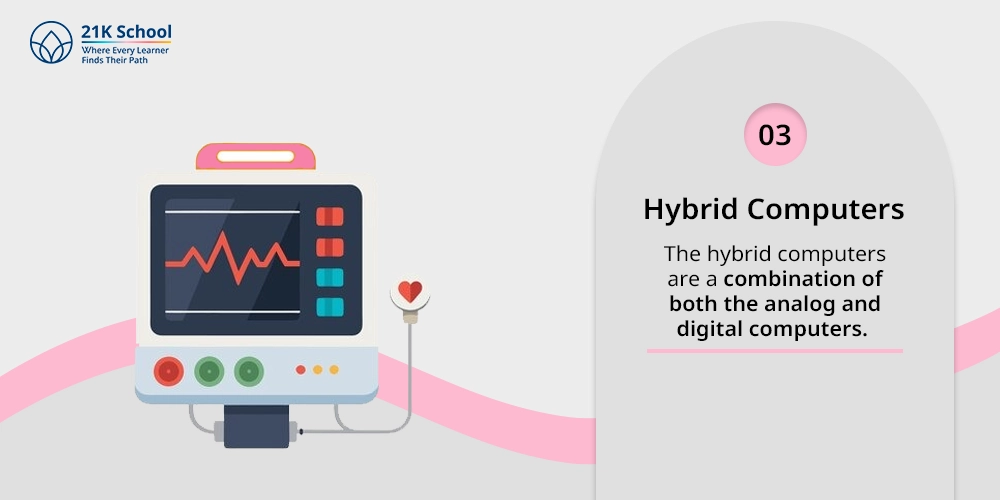
The hybrid computers are a combination of both the analog and digital computers.
They work with continuous data with the help of analog components and transform it into digital representation to make accurate computations.
Hybrid computers are generally applied in medicine and science like ECG machines, weather forecasting systems, and in industrial process control.
They are able to offer the speed of analog and the accuracy of digital systems, which makes them suitable in specialized applications.
Classification of Computers Based on Generation
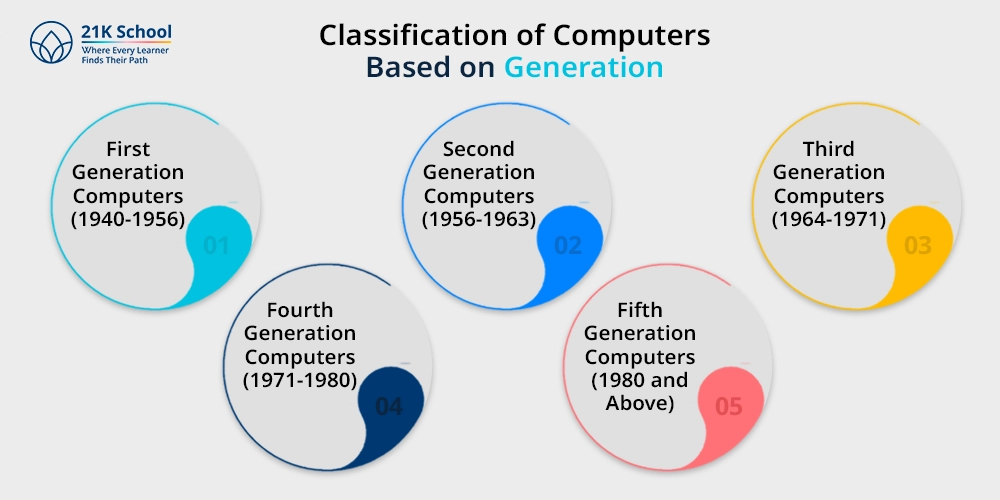
There are also several generations of computers which are identified by the technology that was employed in constructing the computer.
The successive generation is an enormous development of the computers.
1. First Generation Computers (1940-1956)
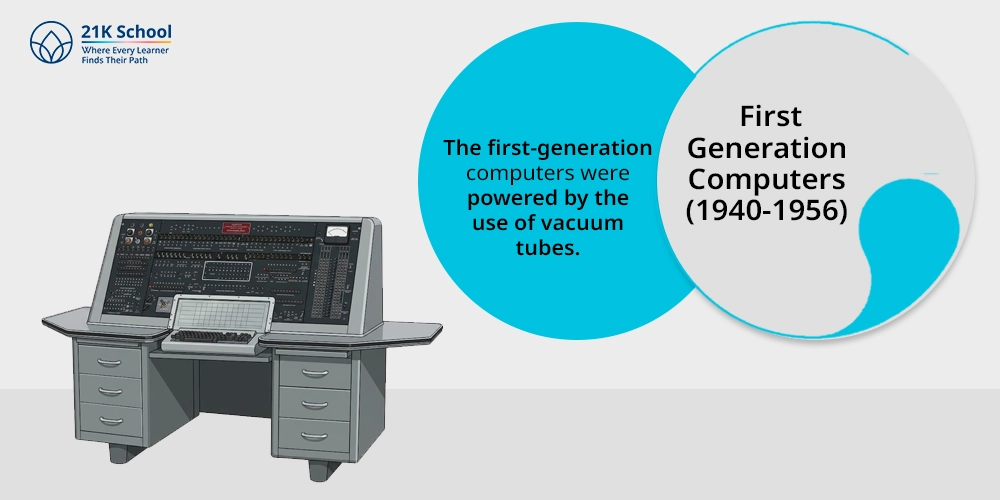
The first-generation computers were powered by the use of vacuum tubes.
They were quite huge, consumed a lot of power, and generated too much heat.
These were slow, costly, and unreliable computers. Machine language was used as a programming language. The examples are ENIAC and UNIVAC.
Though limited, first generation computers still formed the basis of the current day computers.
2. Second Generation Computers (1956-1963)
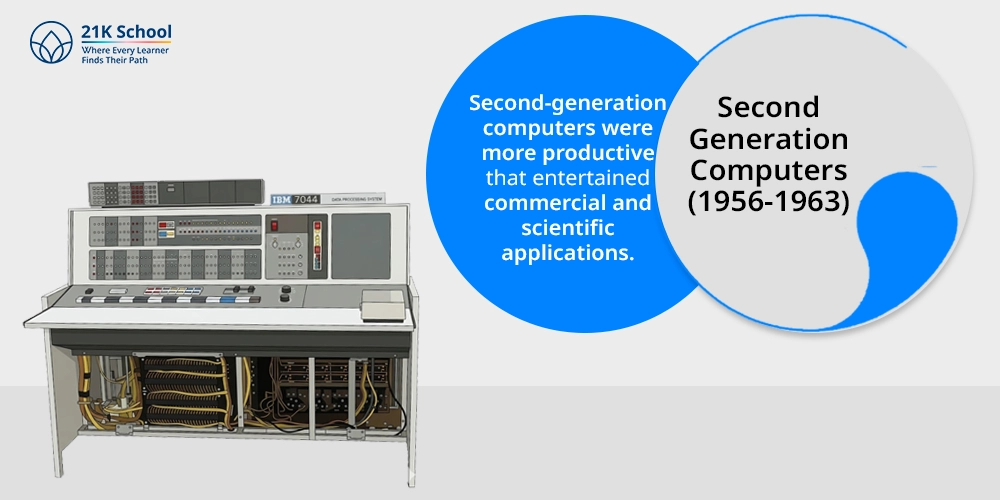
This category encompasses the Second Generation family of computers manufactured after 1956.
Smaller and slower vacuum tubes with less reliability were replaced by smaller, faster and more reliable transistors in second generation computers.
Less power was required for these computers and less heat was produced.
Other programming language systems, like COBOL and FORTRAN, were developed at high levels.
Second-generation computers were more productive that entertained commercial and scientific applications.
3. Third Generation Computers (1964-1971)
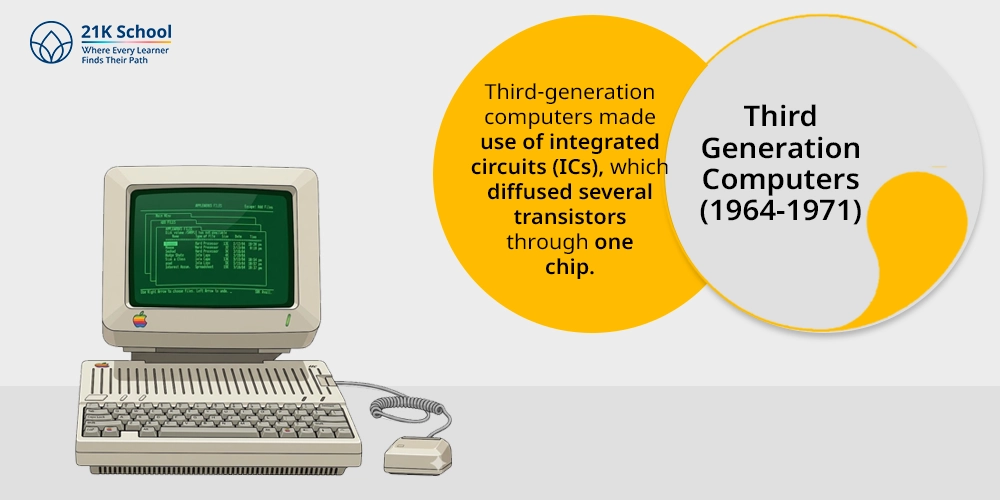
Third-generation computers made use of integrated circuits (ICs), which diffused several transistors through one chip.
This development made such computers very small and cheap, besides becoming faster and more reliable.
During this generation, operating systems and concepts of multiprogramming were enhanced.
They include IBM System or 360 computers.
4. Fourth Generation Computers (1971-1980)
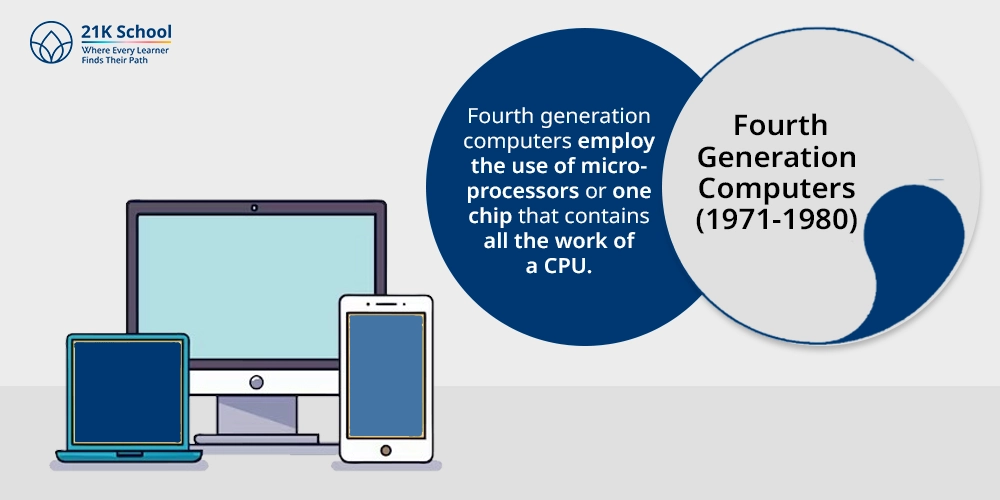
The fourth generation computers (1971-1980) are the new generation computers whose effectiveness is still in progress.
Fourth generation computers employ the use of microprocessors or one chip that contains all the work of a CPU.
The result of this generation is the introduction of personal computers, laptops, and mobile devices.
Computers became smaller, more powerful, and cheaper.
This generation came up with modern operating systems, graphical user interfaces, and networking technologies.
5. Fifth Generation Computers (1980 and Above)
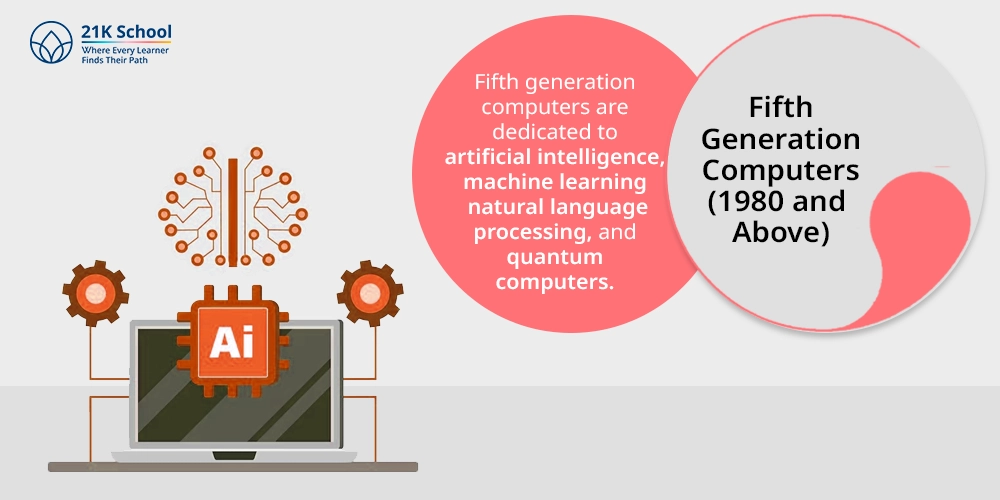
Fifth generation computers are dedicated to artificial intelligence, machine learning , natural language processing, and quantum computers.
The purpose of these computers is to imitate human intelligence and enhance the possibilities of decision-making.
This generation includes strengths like robotics, expert systems, as well as neural networks.
Despite the fact that they are still in their development stage, fifth-generation computers are actually the future of computing and will bring revolution.
Classification of Computers Based on Portability
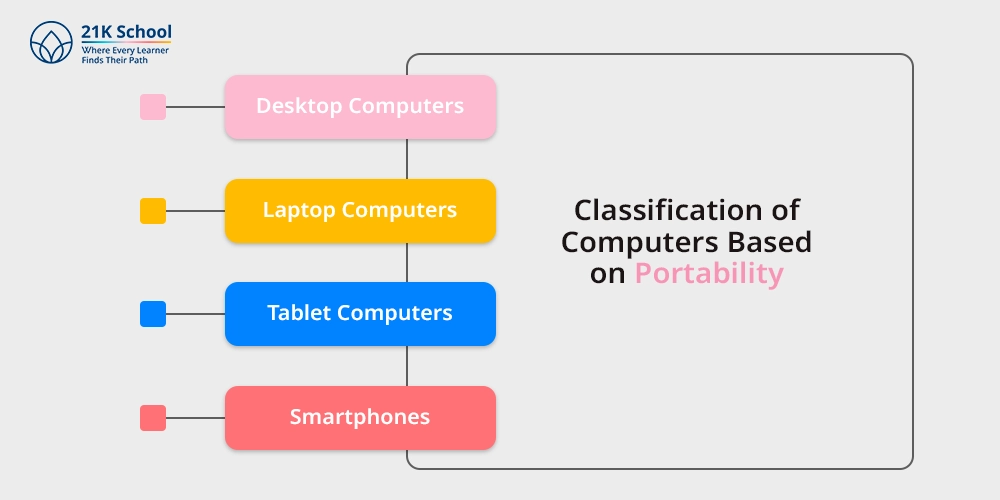
Portability is the classification of computers with regards to the ease of movement of a computer from one location to another.
Embracing technological changes, computers have become smaller, portable and lighter hence convenient to use in personal and professional engagements.
1. Desktop Computers
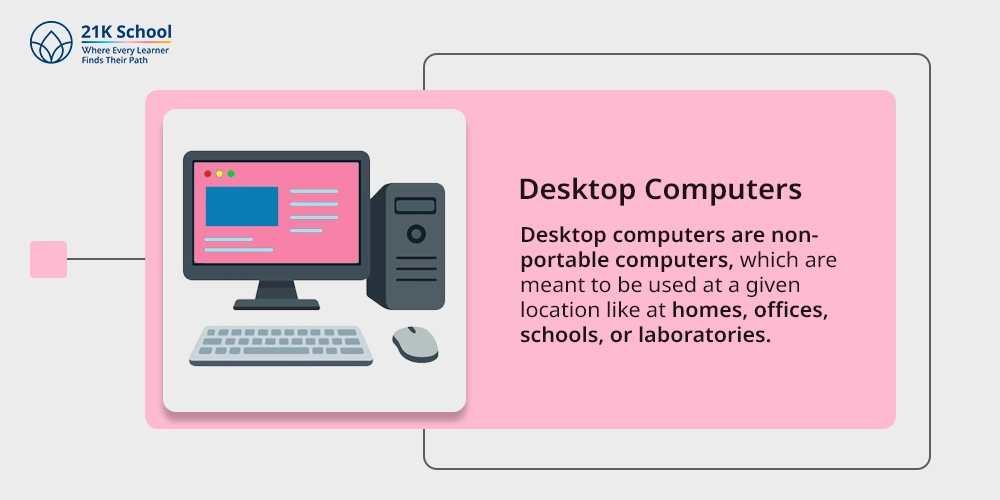
Desktop computers are non-portable computers, which are meant to be used at a given location like at homes, offices, schools, or laboratories.
They are divided into individual parts such as a monitor, CPU, keyboard, and a mouse.
Desktop computers are fast, economical, and can easily be upgraded.
2. Laptop Computers
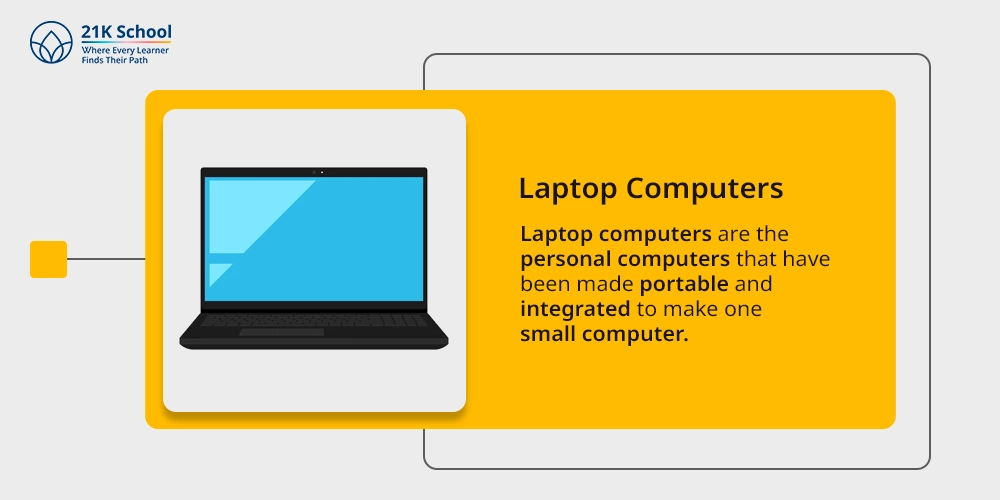
Laptop computers are the personal computers that have been made portable and integrated to make one small computer.
They are battery operated and can be brought everywhere.
Students, professionals, and travelers are purchasing laptops in large numbers.
They can be used in activities like online education, online presentation, software production, and multimedia.
Being a bit costlier than desktops, they are very popular due to their portability.
3. Tablet Computers
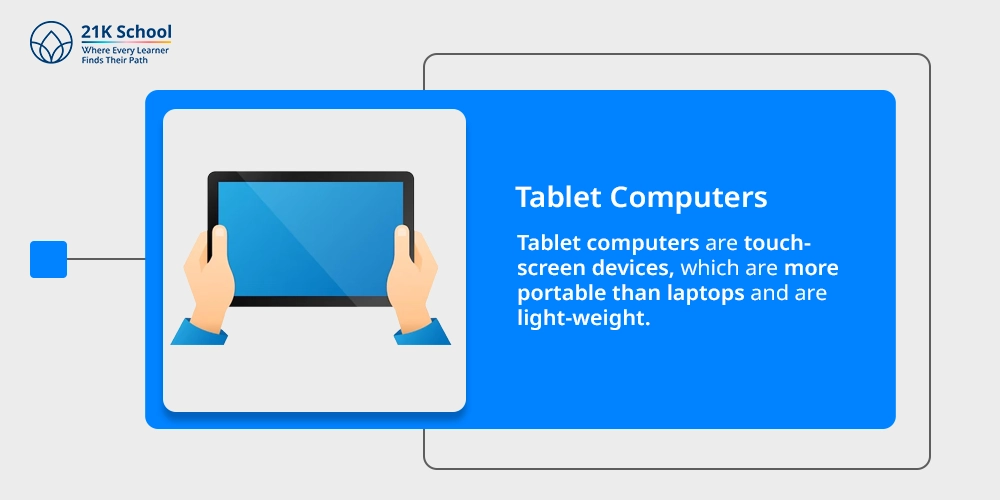
Tablet computers are touch-screen devices, which are more portable than laptops and are light-weight.
They employ virtual keyboards and can be mostly used by touch or a stylus.
Tablets are widely applied in reading, internet accessibility, watching videos, and in education.
They do not have much processing power and storage, hence they cannot be used in a complex task such as programming and heavy data processing.
4. Smartphones
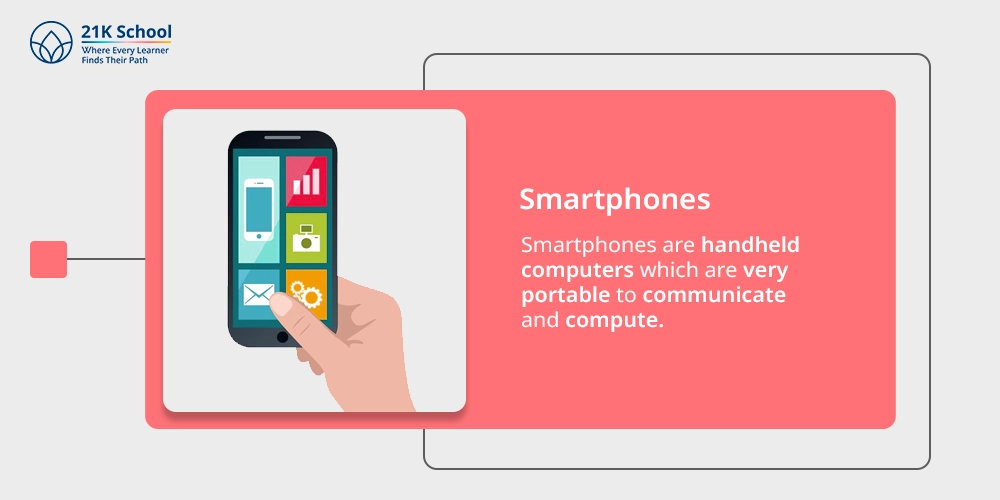
Smartphones are handheld computers which are very portable to communicate and compute.
They also have the ability to use the internet browsing, messaging, playing games, taking pictures, and utilize other mobile applications.
Smartphones are powerful and in very small sizes.
But, they have small screens and limited hardware that are not practical in complex computing activities.
Classification of Computers Based on Architecture
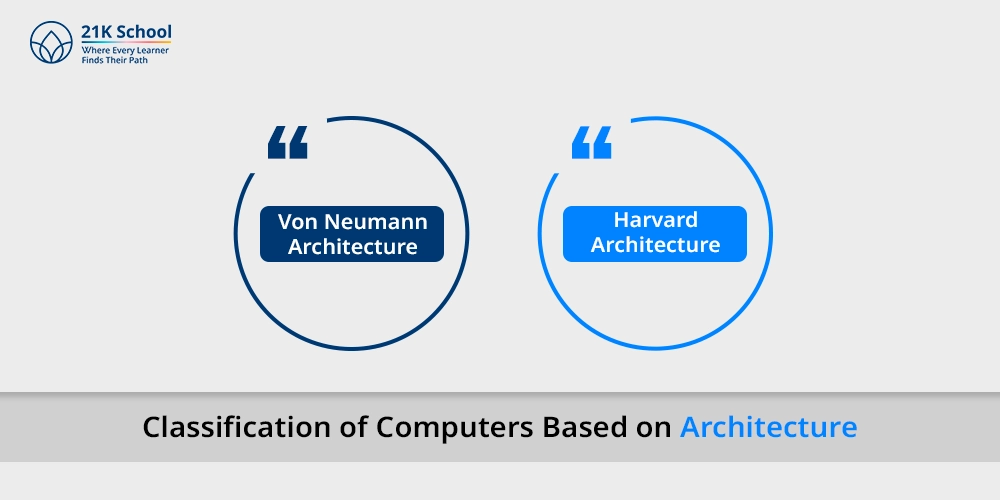
Computer architecture is the structure of the design of a computer system.
The categorization based on the computer’s structure include the following variations in computers:
1. Von Neumann Architecture
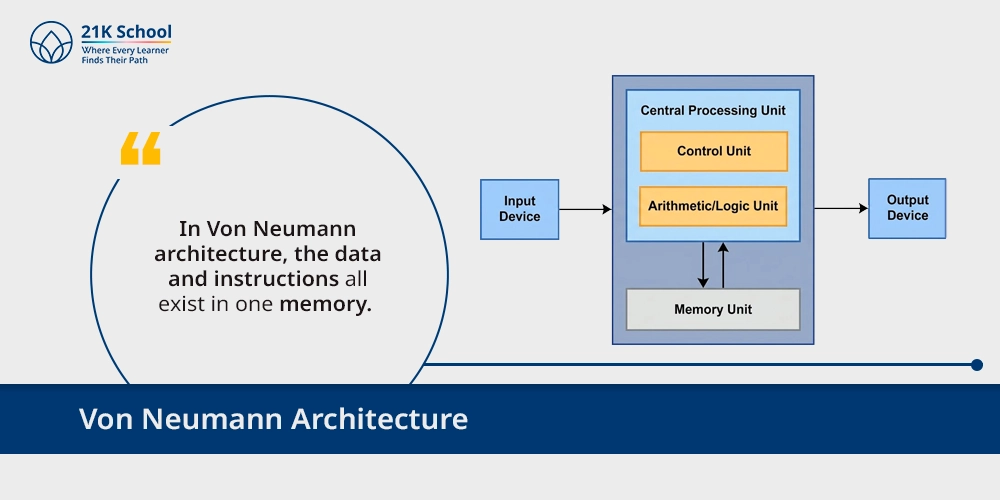
In Von Neumann architecture, the data and instructions all exist in one memory.
This is a basic design that is affordable.
A majority of the general-purpose computers follow Von Neumann architecture. The shared data and instructional path may however limit performance.
2. Harvard Architecture
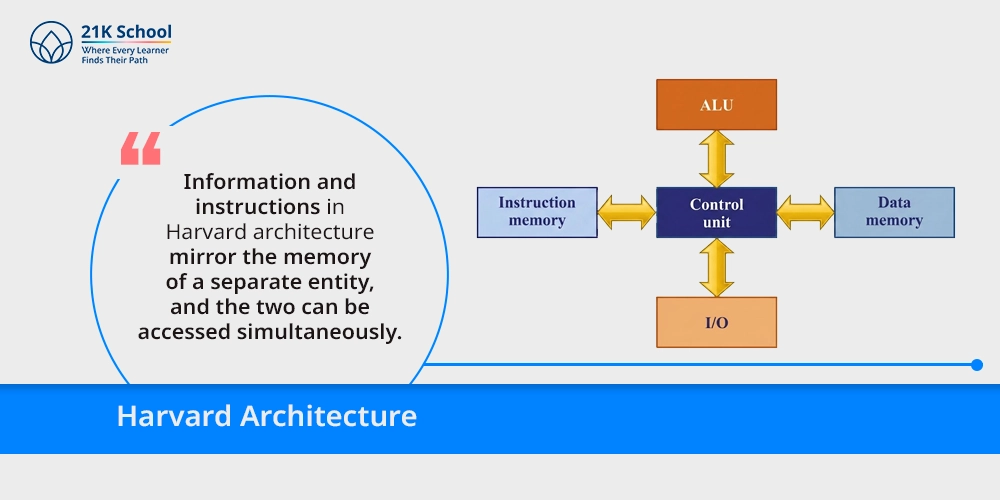
Information and instructions in Harvard architecture mirror the memory of a separate entity, and the two can be accessed simultaneously.
This architecture is more efficient and faster. It is usually applied in embedded systems and microcontrollers.
5 Importance of Classification of Computers
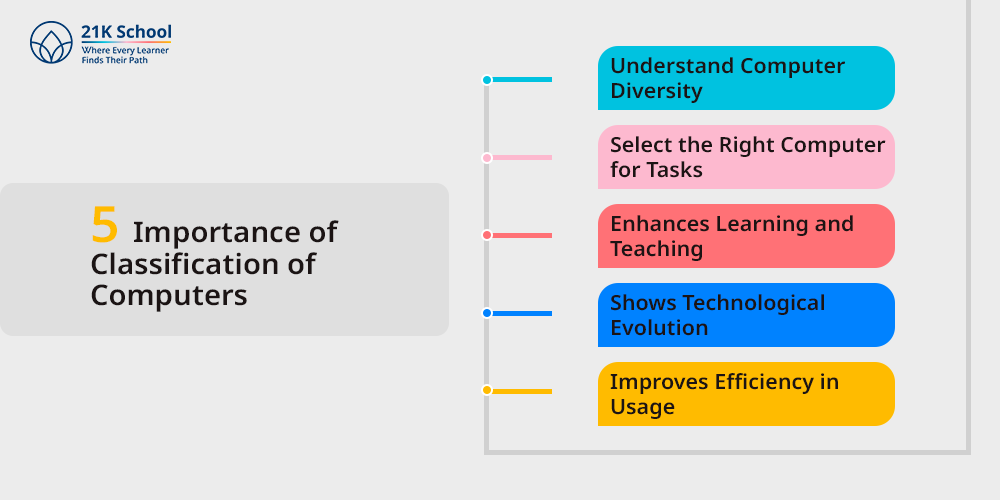
Classification of computers is essential in day-to-day practice too. It lets us:
1. Understand Computer Diversity
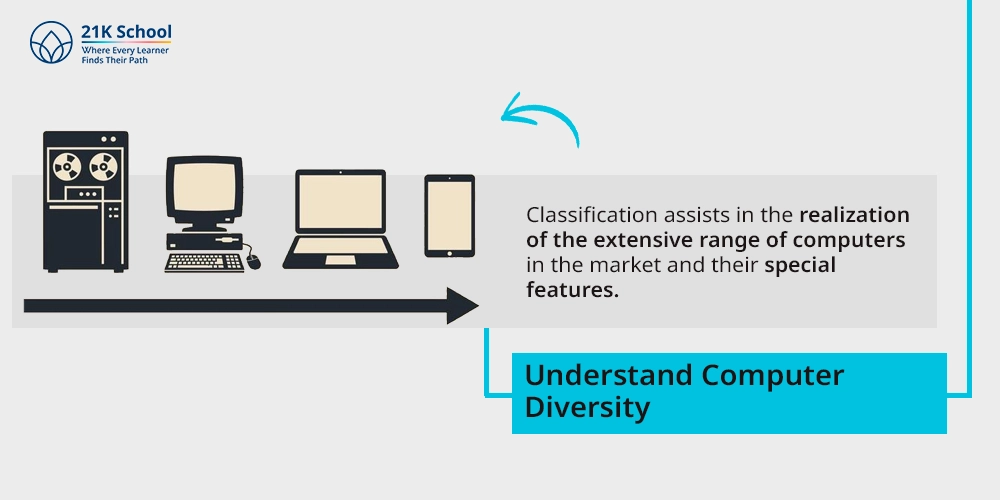
Classification assists in the realization of the extensive range of computers in the market and their special features.
2. Select the Right Computer for Tasks

It assists to select the most appropriate computer depending on the needs of the individual, which may be education, business, or scientific research.
3. Enhances Learning and Teaching
Classification helps in simplifying the complexities experienced during learning or teaching. This is where students and teachers will be able to study computer systems with clarity.
4. Shows Technological Evolution
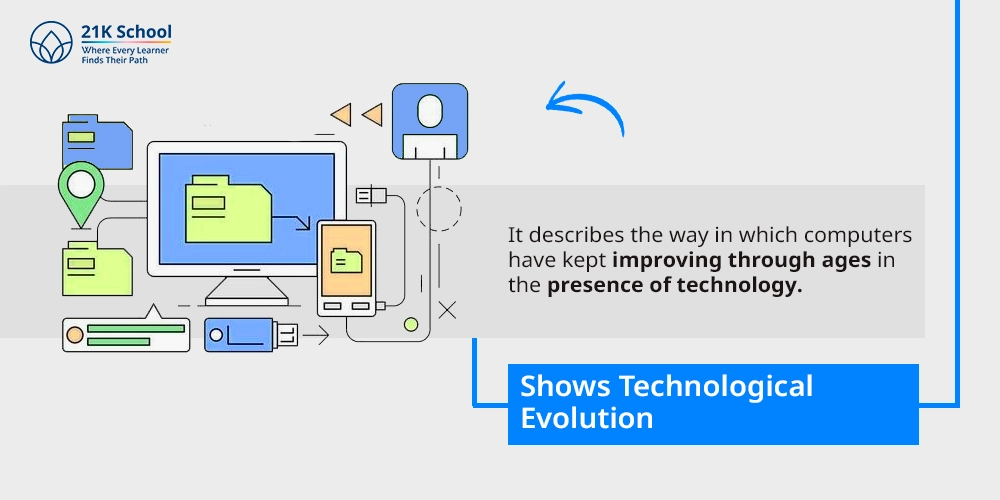
It describes the way in which computers have kept improving through ages in the presence of technology.
5. Improves Efficiency in Usage
Adequate classification facilitates proper use of the computers by appropriately executing the tasks with proper systems.
Wrap It Up
Computers were made for the betterment of humans, to ease our tasks, and to be faster.
These computers are classified based on multiple criteria to suit human use and to understand which computers should be used where.
This categorization was based on capacity, architecture, generations, size, purpose, data handling, and portability.
When we understand these categories and their uses in the respective fields, we can easily choose what type of computer we need for which task.
It also brings clarity for comprehending computer diversity and how computers have evolved through ages.
