


In students’ lives, academic success is a primary objective which needs proper planning, consistency, and focused mindset to gain desired results.
Students who learn without any goals often deal with various consequences such as unable to meet desired results, wrong educational pathway etc.
Let’s explore what academic goals really are. And top goals to meet students educational needs.
Table of Contents
- What are Academic Goals?
- 2 Types of Academic Goals
- 19 Academic Goals for Students
- 1. Time management
- 2. Build good study habits
- 3. Prioritise your goals
- 4. Encourages practical problem-solving
- 5. Patience
- 6. Raise overall GPA
- 7. Build a strong network
- 8. Create an environment conducive to studying
- 9. Critical thinking
- 10. Find time to relax
- 11. Stay resilient
- 12. Think positive
- 13. Create a consistent, daily study routine
- 14. Develop a study plan
- 15. Identify the educational goals
- 16. SMART goals framework
- 17. Stay organised
- 18. Practice reading
- 19. Professional development
- 4 Benefits of Setting Academic Goals
- Examples of Academic Goals
- Conclusion
What are Academic Goals?
Academic goals are preplanned targets which are measured objectives set by students to guide their educational journey.
They mainly focus on students’ academic performance, skill development, and knowledge acquisition or habits.
2 Types of Academic Goals
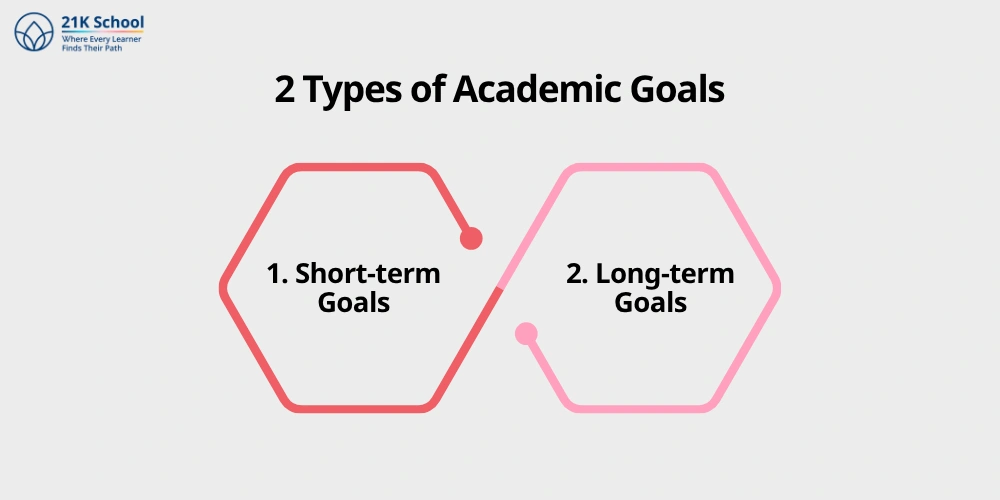
1. Short-term Goals
Students or peers often set specific goals for a few days or weeks to achieve growth known as short-term goals . It can be personal or academic goals.
It is attainable, relevant and time bound which helps them to achieve long-term goals and objectives.
2. Long-term Goals
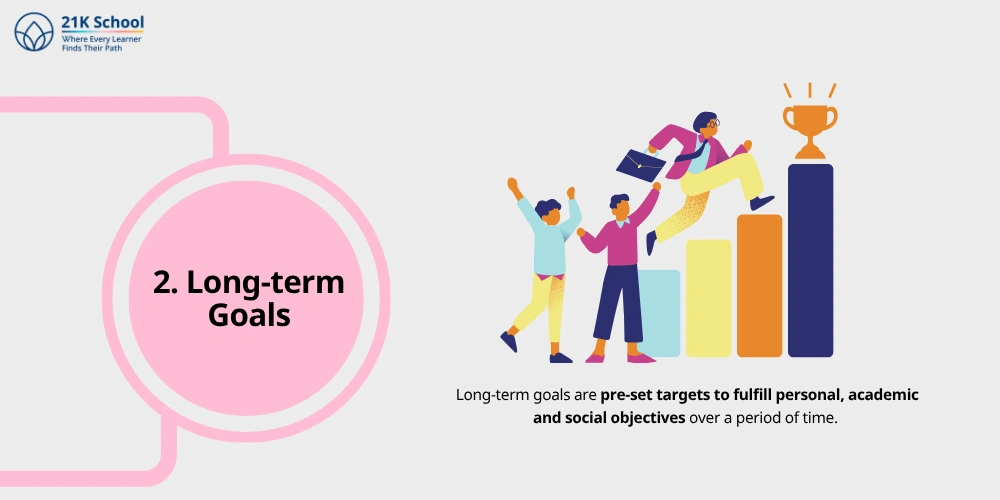
Long-term goals are pre-set targets to fulfill personal, academic and social objectives over a period of time.
It is different from short-term goals because it is usually months, years, or even a decade. Long-term goals require extra efforts, time, and patience to achieve success.
19 Academic Goals for Students
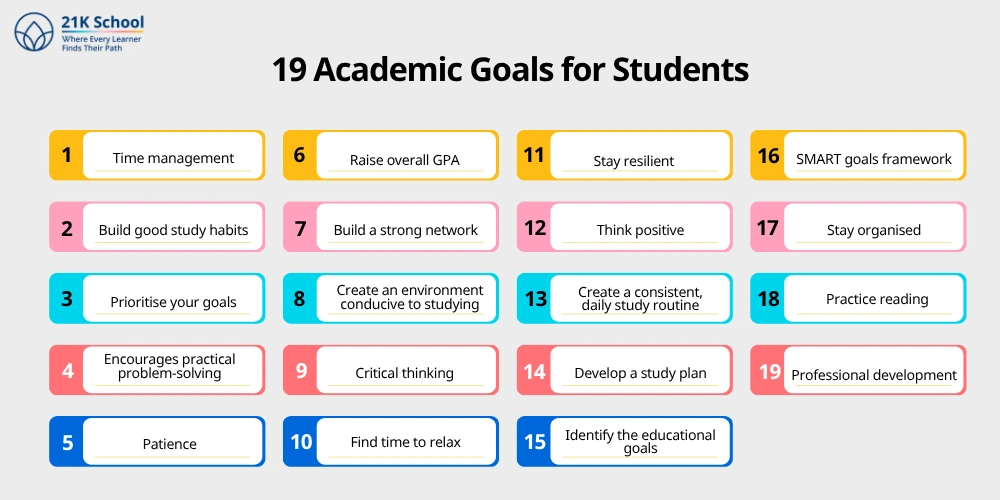
Go through some of the powerful academic goals for students personal and professional growth:
1. Time management

One of the most important academic goals is time management which is essential to manage both personal and academic objectives.
Proper time management leads to high productivity, balanced studies, assignments, extracurricular activities etc.
One can start by creating a study routine , follow, and work on feedback.
2. Build good study habits
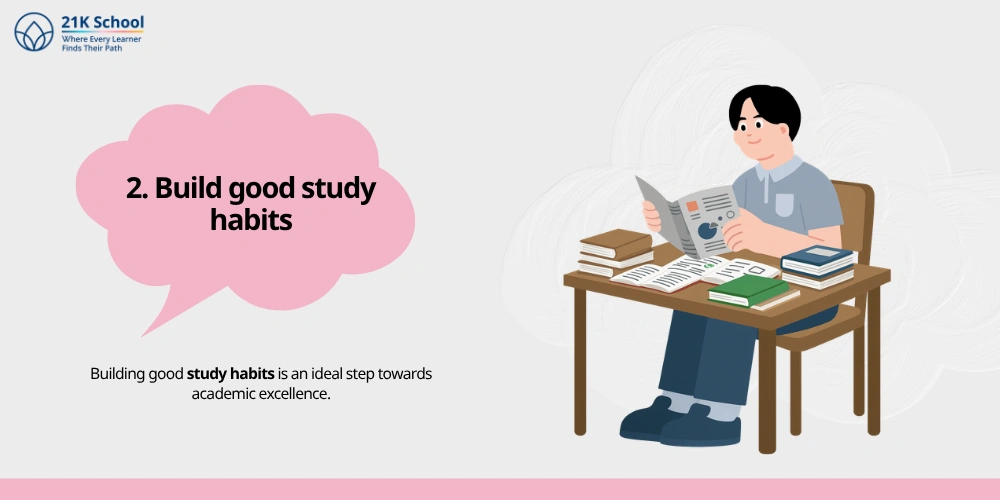
Building good study habits is an ideal step towards academic excellence. Some common good study habits are:
- listening in class
- taking clear notes
- revising consistently
- avoiding distractions
These good habits make sure students gain knowledge and retain it for a longer time.
3. Prioritise your goals
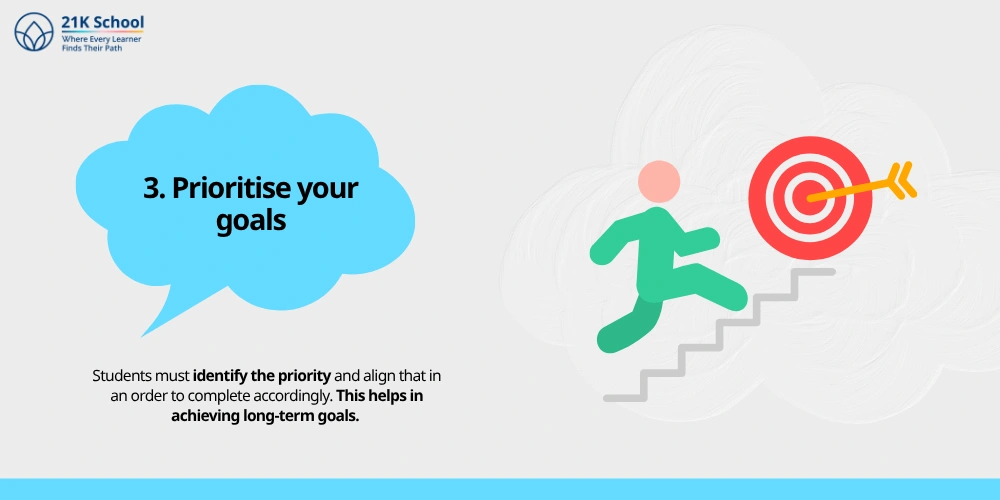
Setting multiple goals without aligning them accurately with time leads to confusion.
Students must identify the priority and align that in an order to complete accordingly. This helps in achieving long-term goals .
4. Encourages practical problem-solving
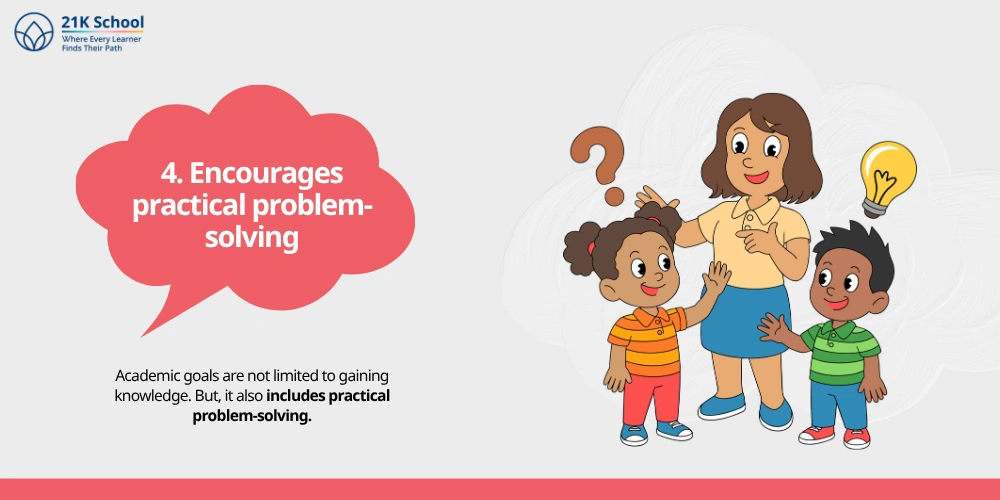
Academic goals are not limited to gaining knowledge. But, it also includes practical problem-solving .
This can be done by engaging in group discussions , case studies, project-based learning etc.
In this way, students can learn beyond textbooks and apply the concepts learnt in real-life situations.
5. Patience
Improvement in academic performance takes time which needs patience and consistency.
From learning a new topic in a few hours to gaining good marks in tests, patience is a key to focused learning.
Instead of rushing, accomplish small milestones and celebrate to motivate for the future.
6. Raise overall GPA

One of the powerful academic goals is to raise overall GPA which is essential to get scholarships, competitive programs etc opportunities.
To do so, students need to create short-term goals like practice each subject daily to enhance overall grade.
7. Build a strong network
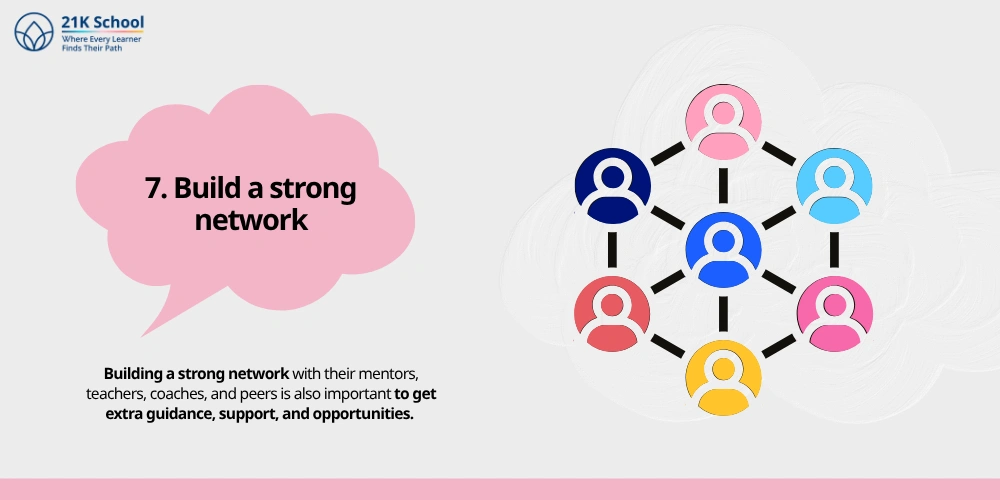
Building a strong network with their mentors, teachers, coaches, and peers is also important to get extra guidance, support, and opportunities.
Student with strong network can access:
- Academic resources
- Receive career mentorship
- Solve doubts quickly
- Form study groups
8. Create an environment conducive to studying
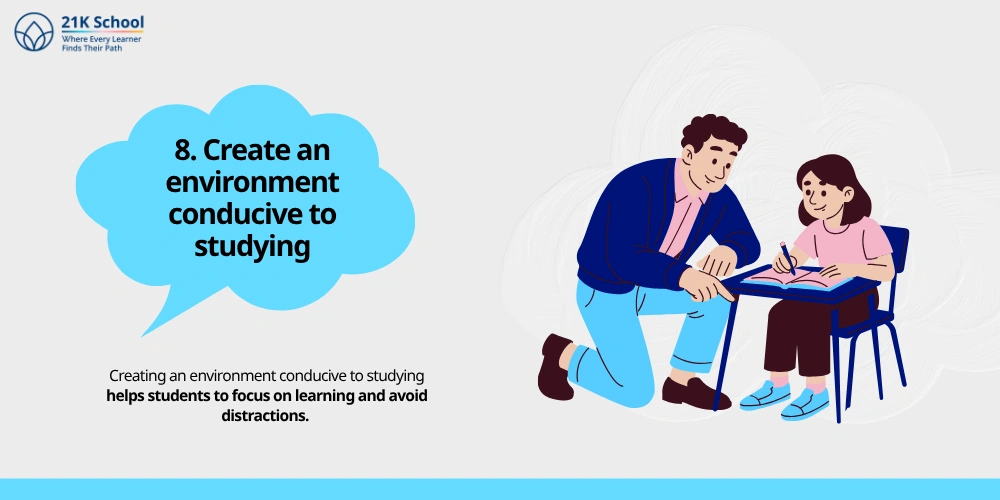
Creating an environment conducive to studying helps students to focus on learning and avoid distractions.
To do so, one can:
- organise study desk
- maintain proper lighting
- keep distance from social media
9. Critical thinking
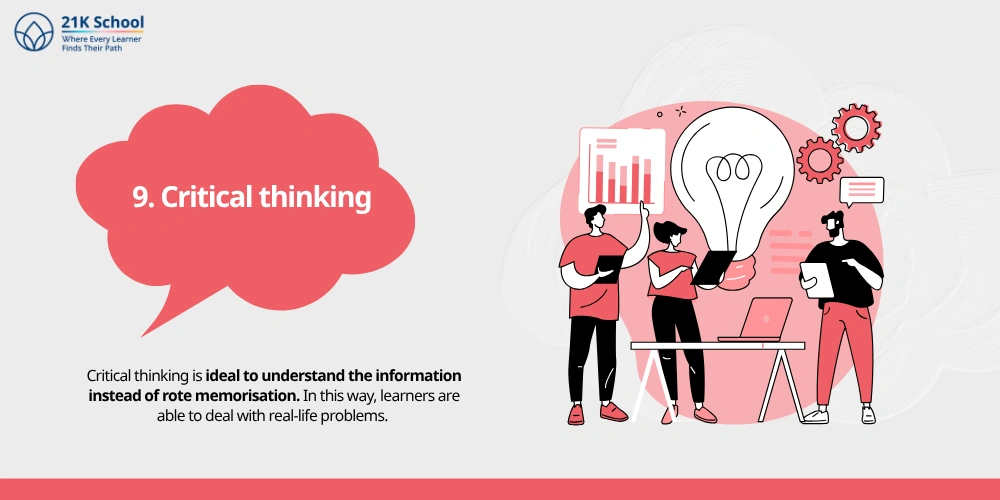
Critical thinking is ideal to understand the information instead of rote memorisation. In this way, learners are able to deal with real-life problems.
The process includes gathering information, analysing the required content, and participating in debates to enhance critical thinking skills .
10. Find time to relax
Restless learning often leads to burnout and anxiety which directly impacts productivity.
That’s why students must take breaks in between and find time to relax. It boosts the energy through which they can aim to balance their study routine .
11. Stay resilient

Failure and low grades are the part of academic journey but students must stay resilient to bounce back from setbacks and keep moving forward to achieve success.
Make it a goal to stay focused, work on feedback, and stay motivated.
12. Think positive
To fulfill short term and long term goals students must think positive while learning. So instead of saying “I can’t” replace it with positive thoughts like “I will practice and make it happen”.
One can start with setting small objectives to generate positive thoughts.
13. Create a consistent, daily study routine
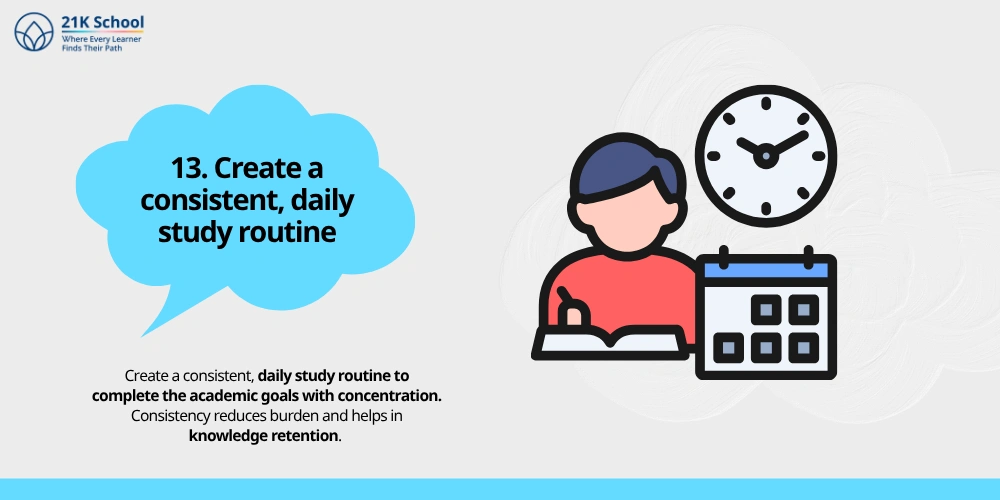
Create a consistent, daily study routine to complete the academic goals with concentration. Consistency reduces burden and helps in knowledge retention .
This is an ideal way to achieve targets and maintain academic discipline .
14. Develop a study plan
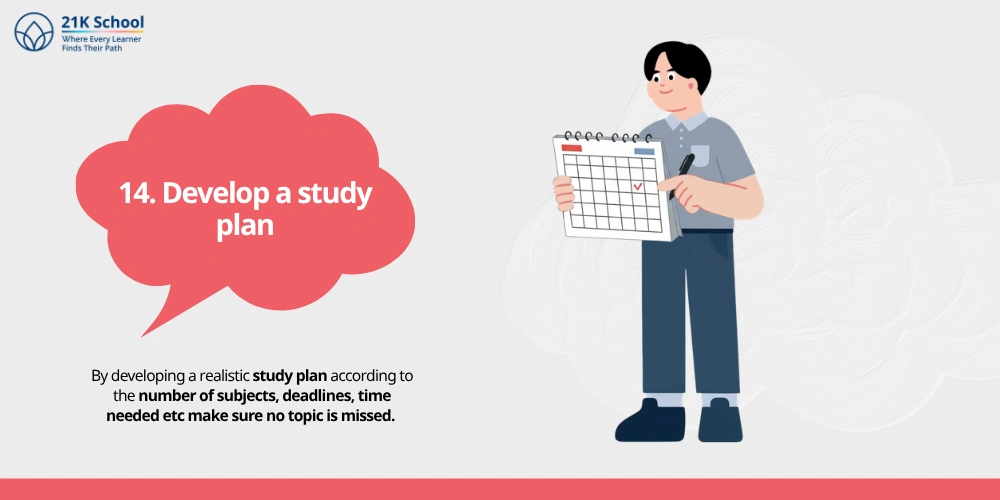
By developing a realistic study plan according to the number of subjects, deadlines, time needed etc make sure no topic is missed.
It also helps in aligning the priority to focus on a particular subject or chapter.
15. Identify the educational goals
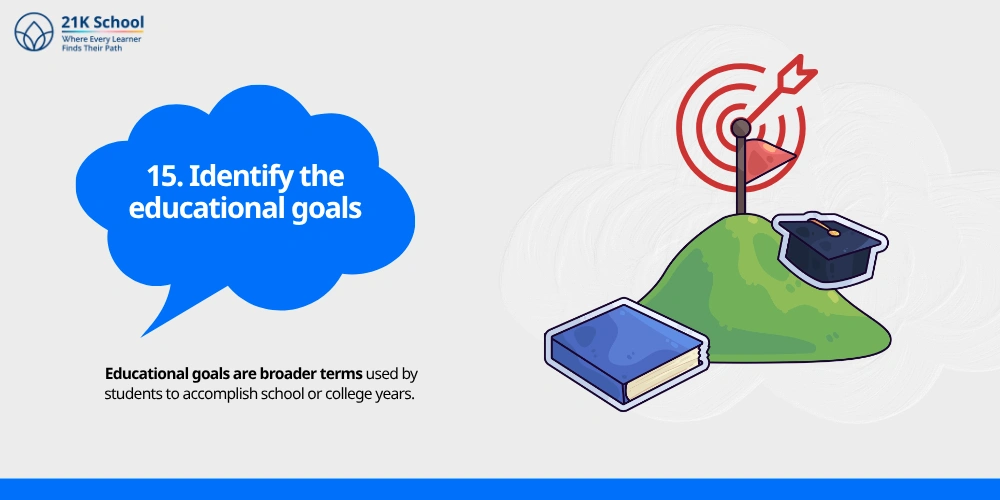
Educational goals are broader terms used by students to accomplish school or college years.
These goals are set at different levels and ideal to achieve the desired educational journey with confidence .
16. SMART goals framework
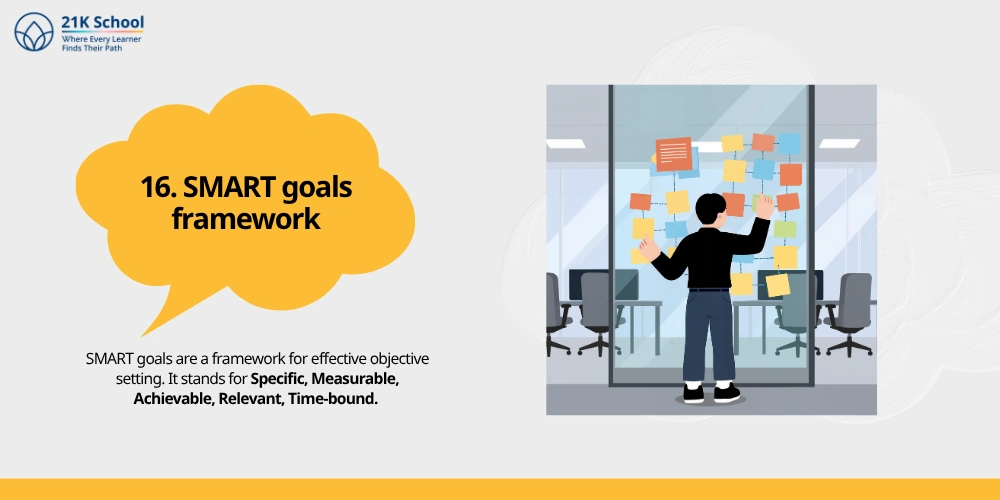
SMART goals are a framework for effective objective setting. It stands for Specific, Measurable, Achievable, Relevant, Time-bound.
Using the SMART goals framework is one of the effective ways through which students can be clear, trackable, and achievable within a deadline.
17. Stay organised
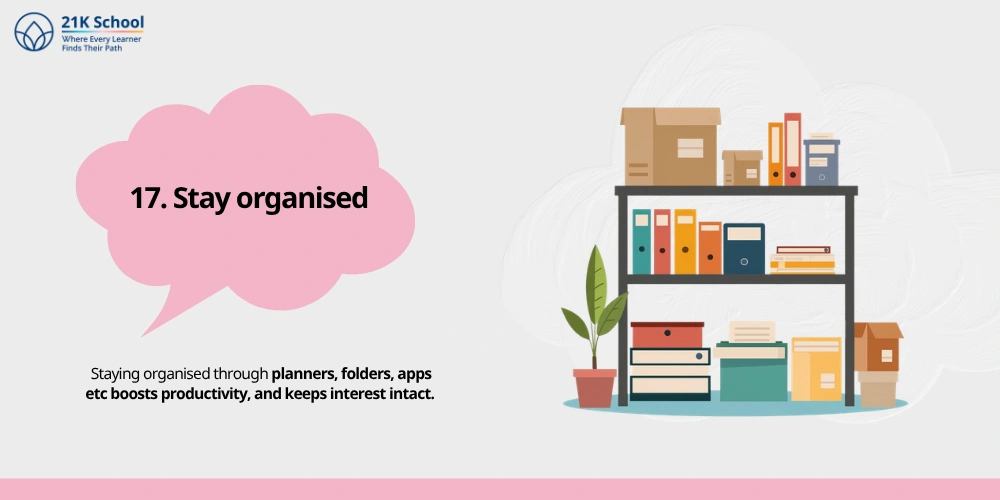
Students often get confused and stressed when they waste time searching for important things.
Staying organised through planners, folders, apps etc boosts productivity, and keeps interest intact.
18. Practice reading
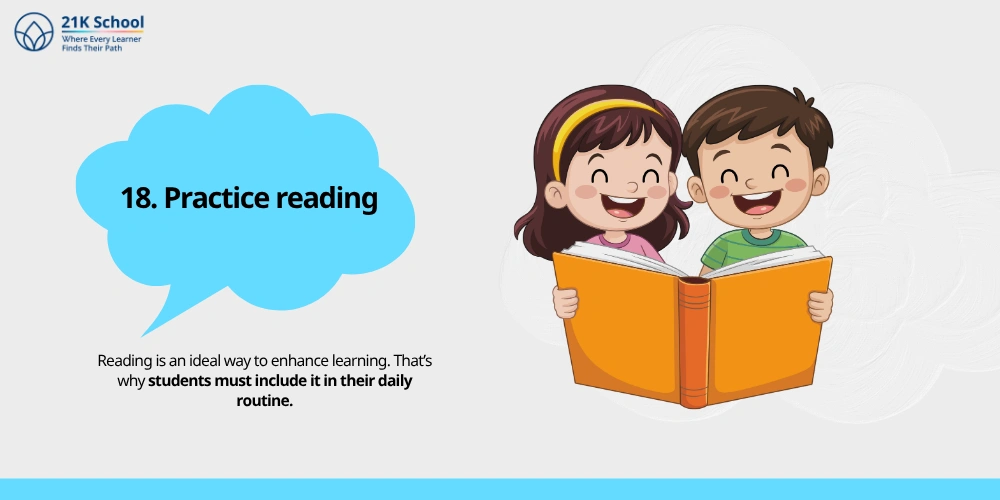
Reading is an ideal way to enhance learning. That’s why students must include it in their daily routine.
This helps them to engage in good habits and activates brain stimulation.
19. Professional development
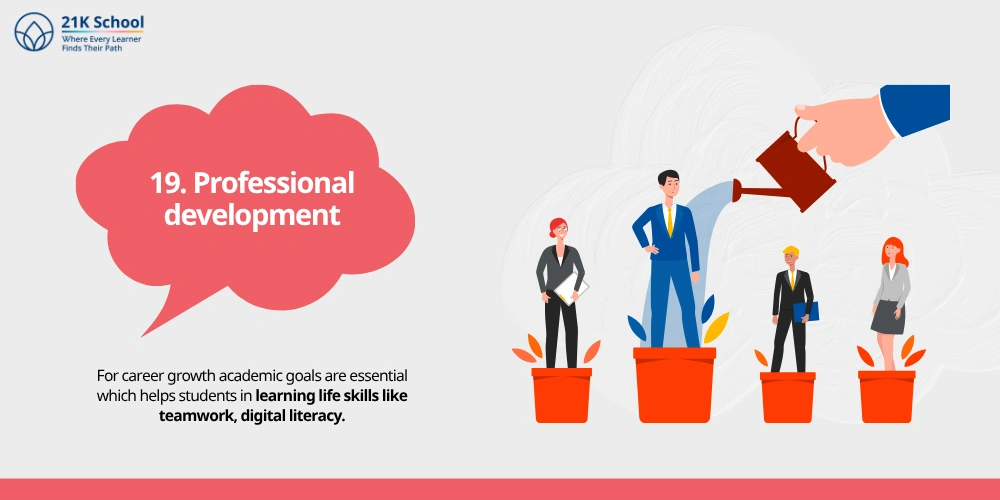
For career growth academic goals are essential which helps students in learning life skills like teamwork, digital literacy .
Set goals like participating in:
- internships
- seminars
- workshops
4 Benefits of Setting Academic Goals
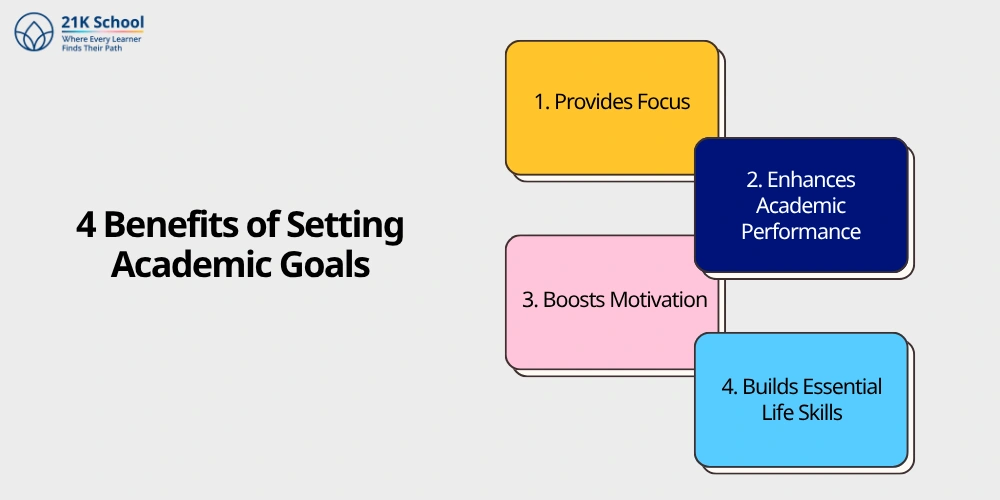
Setting academic goals offers various benefits to students. Some common benefits include:
1. Provides Focus
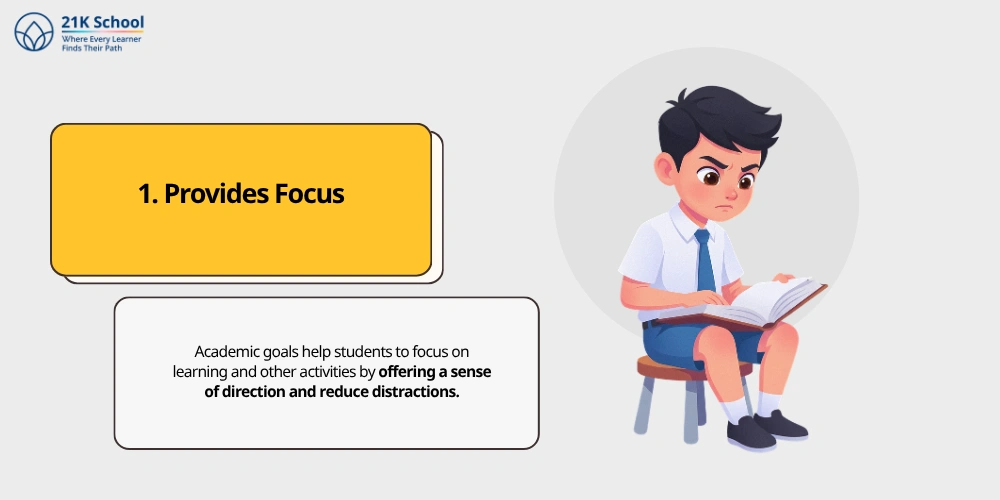
Academic goals help students to focus on learning and other activities by offering a sense of direction and reduce distractions.
It directly increases productivity, interest, and builds time management skills .
2. Enhances Academic Performance
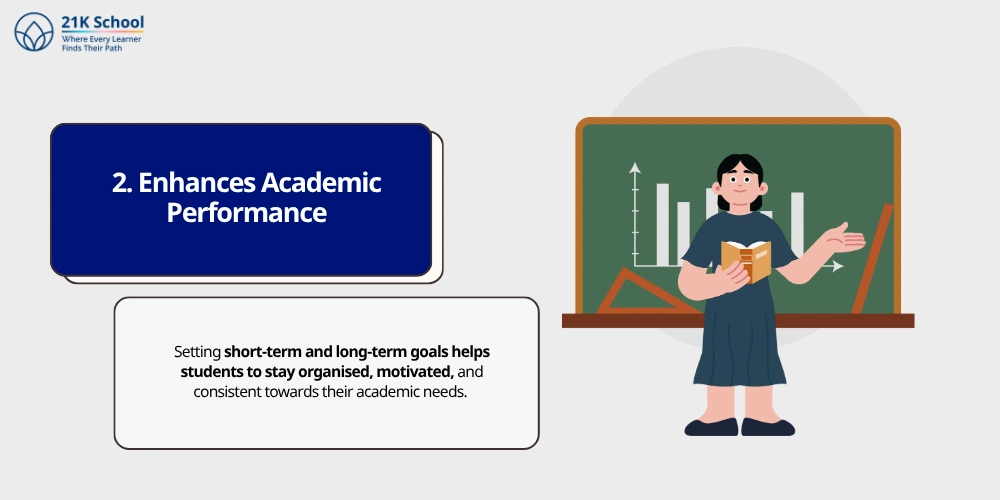
Setting short-term and long-term goals helps students to stay organised, motivated, and consistent towards their academic needs.
This ensures good marks, appreciation, and professional development.
3. Boosts Motivation

By achieving short and long academic goals students feel motivated. This feeling of accomplishment inspires them to become consistent and aim high in future.
4. Builds Essential Life Skills
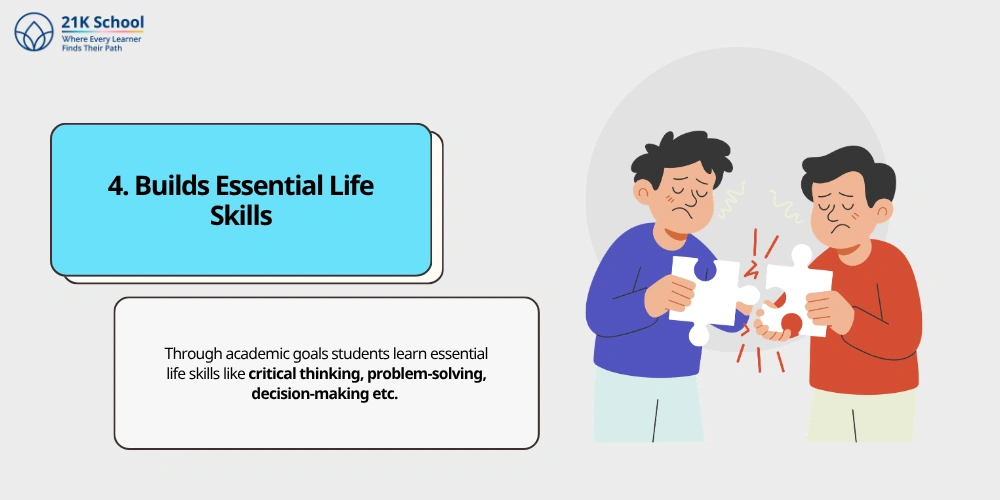
Through academic goals students learn essential life skills like critical thinking, problem-solving, decision-making etc.
It makes students better by enhancing thinking skills, personal skills, and social skills .
Examples of Academic Goals

Some simple examples of academic goals includes:
- Rima creates an academic goal daily, practises and attends extra classes to get good marks in maths class test.
- Nancy set a goal to complete the assignment within a week.
- Romy aims for a short-term goal to complete a chapter in 2 hours.
Conclusion
To get clarity in personal and professional journeys, academic goals are ideal which provide clarity, consistency, and growth.
As a student one must set academic goals to achieve desired results, build a strong academic foundation, and a bright future. Focus on the above mentioned academic goals and transform the learning journey.
