


Another milestone in the academic career of a student is the General Certificate of Secondary Education (GCSE).
One of these important academic qualifications is the General Certificate of Secondary Education (GCSE) , which is pursued by students in the United Kingdom as well as by students in a few other countries.
Such tests are not only important in evaluating the knowledge of the students, but are also important in evaluating the critical and practical skills of the students, as well as preparing them to continue learning , training or employment.
Table of Contents
- What is the General Certificate of Secondary Education (GCSE)?
- Who is Eligible for GCSE?
- How to Apply for GCSE?
- When Are GCSE Exams Held?
- Importance of GCSE
- Exam Boards and Assessment Bodies for GCSE
- GCSE Syllabus (Compulsory and Optional Subjects)
- GCSE Grading Systems
- What are GCSE Grade Boundaries?
- How to Prepare for GCSE Exams?
- Conclusion
What is the General Certificate of Secondary Education (GCSE)?
The General Certificate of Secondary Education (GCSE) is a form of education qualification that is taken in the United Kingdom and a handful of other nations by learners, usually between the ages of 14 and 16.
It is studied in the final years of compulsory secondary education, and the curriculum is quite wide, as it covers English, mathematics and sciences, humanities and creative subjects/vocational subjects.
The qualification will also be aimed at stipulating what the students know, learn, and the amount of experience they have had and the qualification will play a big role in preparing the students for the next level of their education, be it A-levels, vocational education or any other level of training or employment.
Who is Eligible for GCSE?
The GCSE was going to be a qualification that would be taken by a great number of learners.
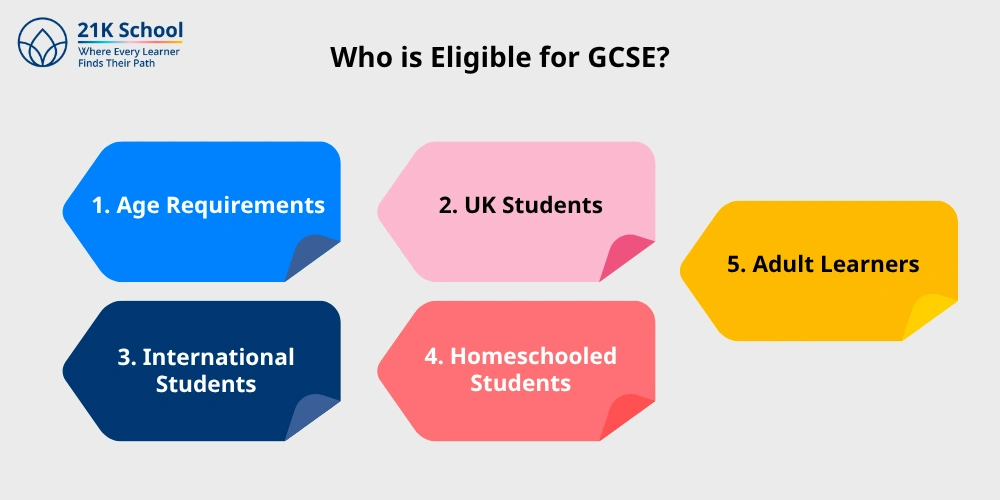
The reality that other students have different educational backgrounds and ages, who can also sit GCSE examinations, is what supports the fact that there is no particular group of individuals who can sit GCSE examinations. Below, one can check who is eligible to take GCSE.
1. Age Requirements
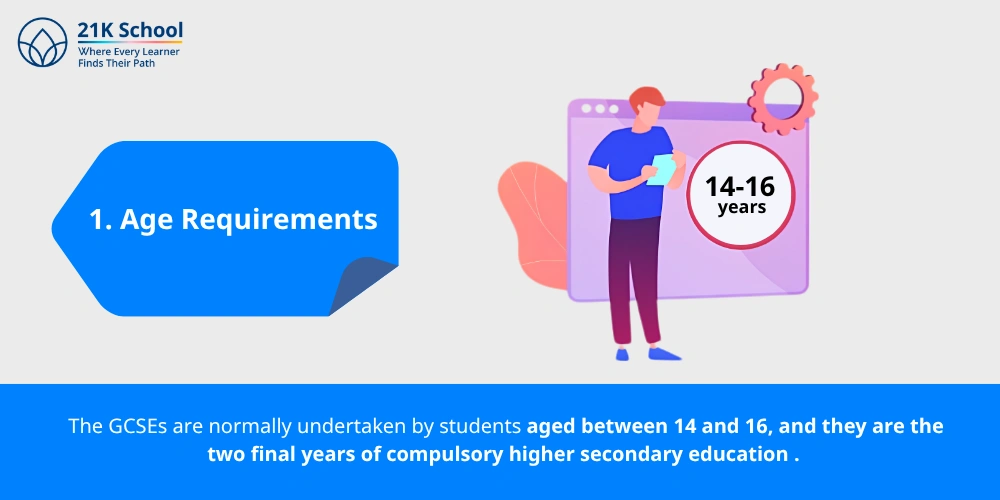
The GCSEs are normally undertaken by students aged between 14 and 16, and they are the two final years of compulsory higher secondary education .
It is the age where the students are able to use their already acquired education and be receptive to their studies or their career. Those students who are not within this age bracket are not allowed to take GCSE exams.
2. UK Students
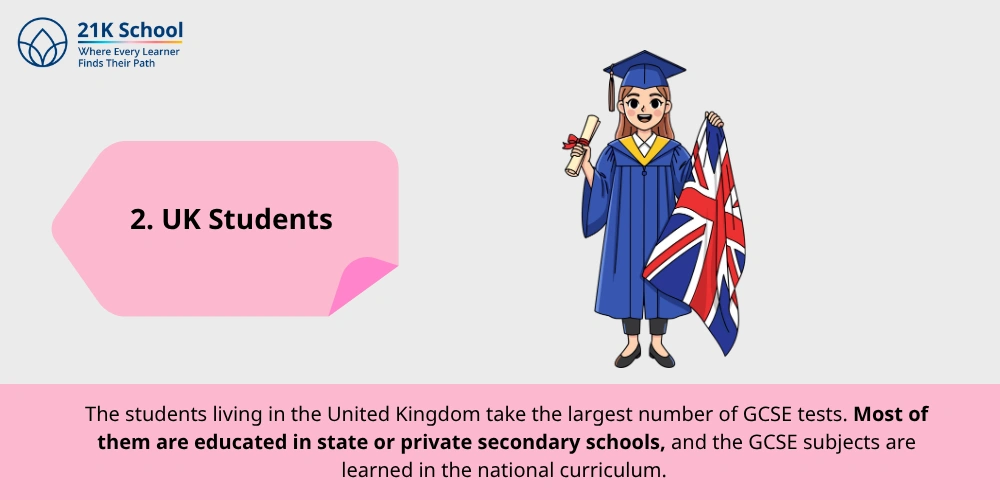
The students living in the United Kingdom take the largest number of GCSE tests. Most of them are educated in state or private secondary schools, and the GCSE subjects are learned in the national curriculum.
These students typically take their exams in the final year, and the result is used to proceed to higher education/training.
3. International Students
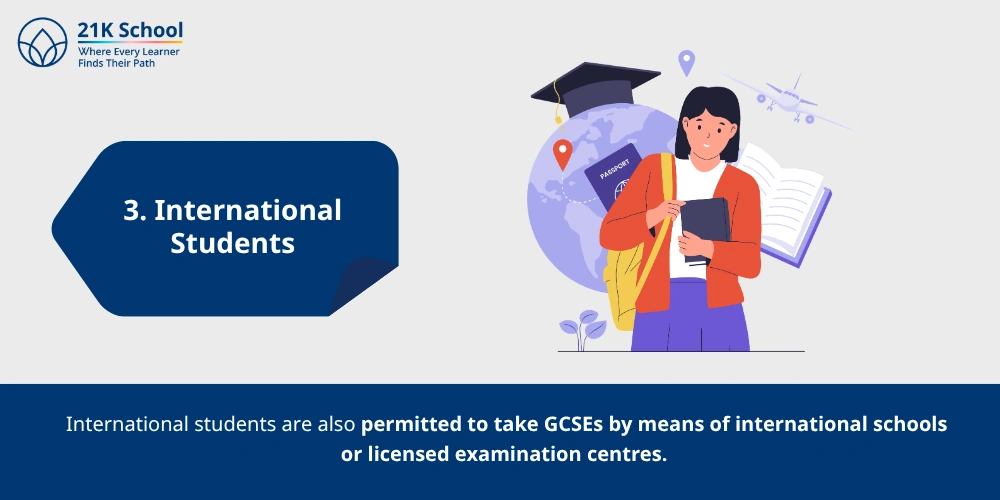
International students are also permitted to take GCSEs by means of international schools or licensed examination centres. The popularity of taking GCSEs by many people can be explained by the fact that they are famous and reputable.
It is possible to use these qualifications to prepare the international learners in order to be prepared to undertake further studies in the UK or any other country that values the GCSE curriculum and method of assessment .
4. Homeschooled Students
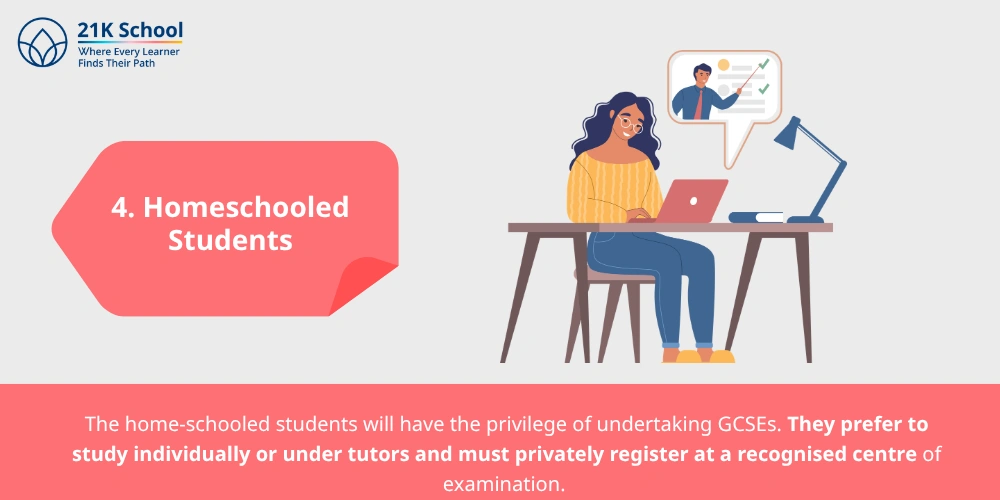
The home-schooled students will have the privilege of undertaking GCSEs. They prefer to study individually or under tutors and must privately register at a recognised centre of examination.
This is another alternative that allows the homeschooling students to be not only capable of obtaining formal qualifications, but also capable of demonstrating their academic capabilities as students of the school.
5. Adult Learners
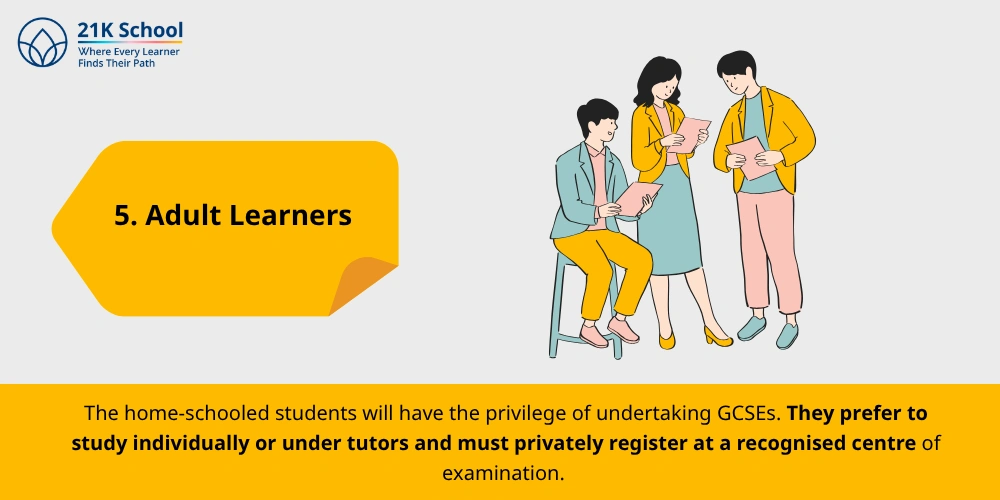
The adult learners also have permission to take GCSEs regardless of their age. Many adults also take the GCSEs as a means of bettering their qualifications, changing their career lines or learning skills required in some subjects like English and Mathematics.
They are free to pursue their studies in evening classes, online learning
, or even in self-studies and write exams as an independent candidate.
How to Apply for GCSE?
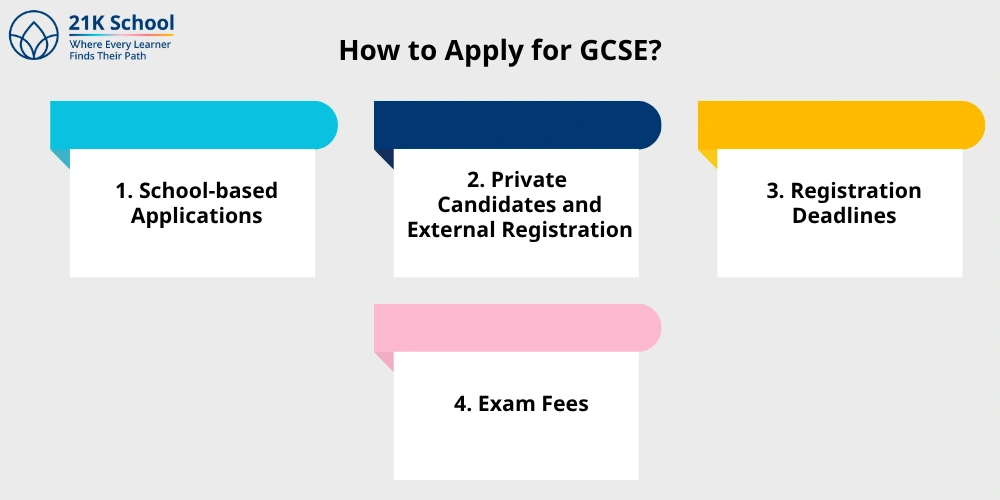
It is possible to apply to GCSEs through different paths based on the educational conditions of a certain learner. Whether the student is in a school or is self-employed, the process entails registering with an exam board, a due date and awareness of any payment or not.
The right mode of application can be familiar, and therefore, one will be assured of a successful entry into the exam.
1. School-based Applications
Students who are in their secondary school are likely to apply for GCSEs through their school. The school also manages the entries of subjects, exam boards and the arrangement of examinations.
The students are also directed by the teachers on the right selection of subjects. This is not a complicated procedure, as all the forms are duly filled out and they are all submitted within the required time scales.
2. Private Candidates and External Registration
Students who are not members of an institution and are either homeschooled or adults must apply under their personal expression and through examination centres that are approved.
The registration process is done by them as they choose their subjects and exam boards. It is a course that one should think over since candidates are left to do this by themselves.
3. Registration Deadlines
Registration deadlines are put in place by exam boards, which are expected to be followed. Schools have deadlines to submit, which are usually submitted on behalf of their students and in the case of their own personal applicants, they must follow up on them.
Failure to meet a deadline will lead to either late entry fees or even the rejection of registration, and thus, early preparation and submission would be very crucial.
4. Exam Fees
The fees are different according to the subject, exam board and the type of candidate. Discounts or full payments of fees are allowed in schools to enrolled students, and full payment is usually made by the individual candidates who apply privately.
When Are GCSE Exams Held?
GCSE exams are examined once annually in England, Wales and Northern Ireland. These are conducted typically in the first half of May to the end of June, with the exam period running from the week beginning Monday 4 May to Friday 26 June 2026. Also, a few subject-specific and some exam board-specific dates (AQA, Edexcel, OCR, etc.).
This is administered in Non-examination Assessments ( NEAs) and on real-life tests, earlier in the month of April or May, typically in May and June the core subject paper.
The GCSE series of examinations in 2026 will be identical; the main papers will usually start during the first week of May (around 4th May) and finish during mid June (around 26th June).
Importance of GCSE
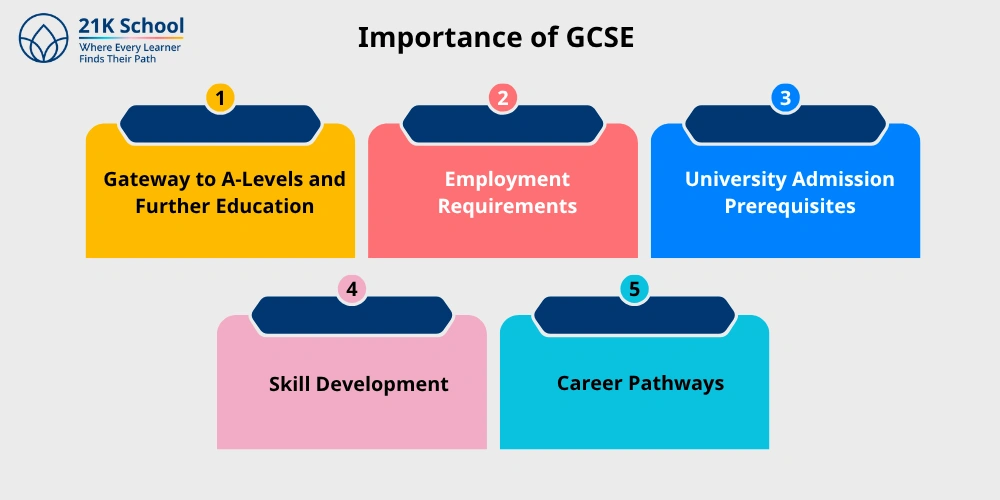
The achievement of GCSEs in the education of a student is the central one because it provides a student with the necessary knowledge and skills .
They make future research choices, job prospects and self-development processes, and consequently, contribute significantly to academic and professional achievement.
1. Gateway to A-Levels and Further Education
It is the GCSEs that one can base on and proceed with the next education, A-Levels , career studies and college work. To continue, one should be highly proficient in their major subjects like English, Mathematics and Sciences.
They help the students to acquire academic knowledge and other studying skills that will see them excel in higher-order courses.
2. Employment Requirements
The majority of employers consider GCSE as the minimum entry level qualification in the employment industry. The core subjects are English and Mathematics, which are especially welcomed since they are a manifestation of literacy, numeracy, and reliability.
The achievement of GCSEs can lead to better rates of employment, showing the willingness to study and may be a condition of an apprenticeship or other training programmes.
3. University Admission Prerequisites
As much as universities are laying more emphasis on A-levels, the GCSEs have not been neglected during the admission process. They indicate the excellent performance of a student in their academic life and the context of their knowledge.
There are other courses, such as medicine or engineering, that normally require high grades in GCSE in the relevant subjects, such as Sciences and Mathematics. They can influence the eligibility of competitive programmes and scholarships.
4. Skill Development
GCSEs assist the students in acquiring the essential skills, except for theoretical skills. They are problem solving , critical thinking, time management , research and communication.
Inquiry, argument, and self-work are part of the things students are conditioned to do in exams and homework. These skills are not only beneficial in academics but also in our daily lives and in our working lives.
5. Career Pathways
The outcome of GCSE is important regarding career choice. They define the eligibility for tertiary education, profession and training.
An outstanding GCSE in some subjects could lead to the possibility of entering the field of science, technology, business or arts. It also provides a qualification standardisation where potential and potential can be assessed by the employers and institutions.
Exam Boards and Assessment Bodies for GCSE
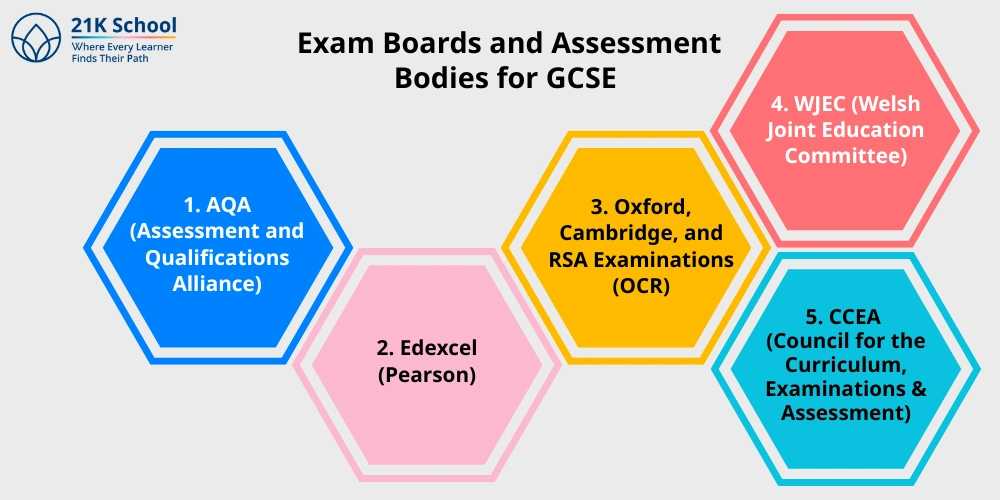
There are formal exam boards in GCSE, which also prescribe syllabi and exams. They advocate uniformity and restraint in schools. This is also due to the fact that the familiarity of the students with the boards assists the students in studying the same and also in taking their exams.
1. AQA (Assessment and Qualifications Alliance)
AQA is an examination board based in the UK that is one of the largest boards that offer GCSEs in a majority of subjects. It offers the examination papers, examinations and standards.
AQA has been quite popular in England, and it has taken over the old academic programmes along with the new ones, with clear definition and direction being given to both the teachers and the students.
2. Edexcel (Pearson)
Pearson Education Group is a company that offers vocational and academic GCSEs, and its subsidiary is Edexcel. It constructs tests, educational evaluations and quality regulation.
Pearson Edexcel is common in English schools, and its procedures are incredibly flexible in the assessment process of both linear and modular examinations. It provides students and teachers with adequate resources, previous documents and guidelines of procedures.
3. Oxford, Cambridge, and RSA Examinations (OCR)
It conducts tests, analyses them and achieves quality. OCR also offers academic rigour and practical/applied learning. The OCR facilitates schools to have good teaching facilities and a syllabus .
It administers exams, grades them and issues quality certifications. Academic rigour and applied/practical learning are also appreciated by OCR. With the OCR, the schools will be well-equipped with syllabi and teaching facilities.
4. WJEC (Welsh Joint Education Committee)
WJEC also extends its qualifications in England, but in the majority of Wales. It also formulates curricula, exams and standards of assessment. WJEC encourages working with two languages (bilingual education), and examinations are taken in English and Welsh.
It has instructional guides, step-by-step and past papers and advice of the examiner to establish that the assessment is fair and equal.
5. CCEA (Council for the Curriculum, Examinations & Assessment)
The exam board is CCEA, which provides locally based GCSEs in Northern Ireland. It establishes examinations, marks manuals and manages quality.
CCEA is a learning centre that engages in assignments of studies and professional courses, which offers information, counsel, and assistance to students and instructors. Its qualifications are also highly qualitative in the UK, which is ranked in the world too.
GCSE Syllabus (Compulsory and Optional Subjects)
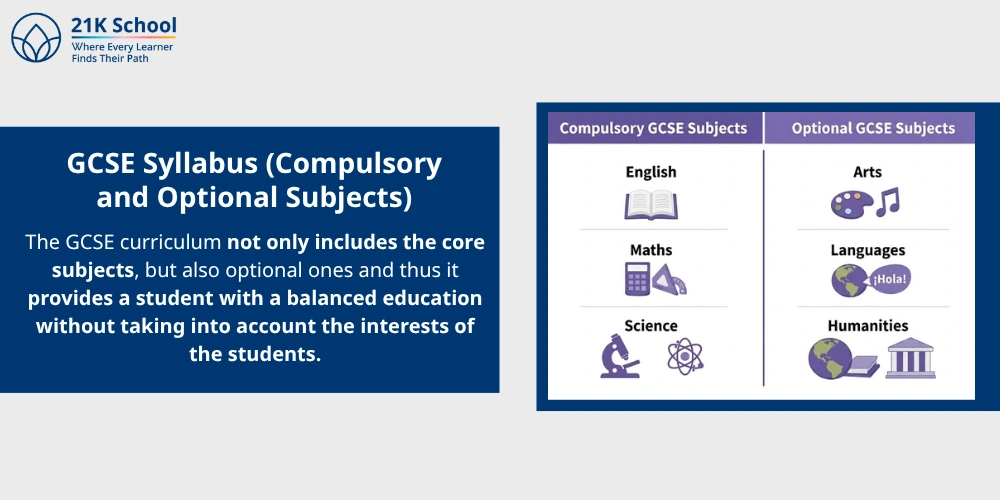
The GCSE curriculum not only includes the core subjects, but also optional ones and thus it provides a student with a balanced education without taking into account the interests of the students.
Basic knowledge features are the compulsory ones, and the optional ones allow the learners to master the skills in other fields such as languages, arts or technologies, and that would influence their future career and educational opportunities in the future.
Compulsory Subjects
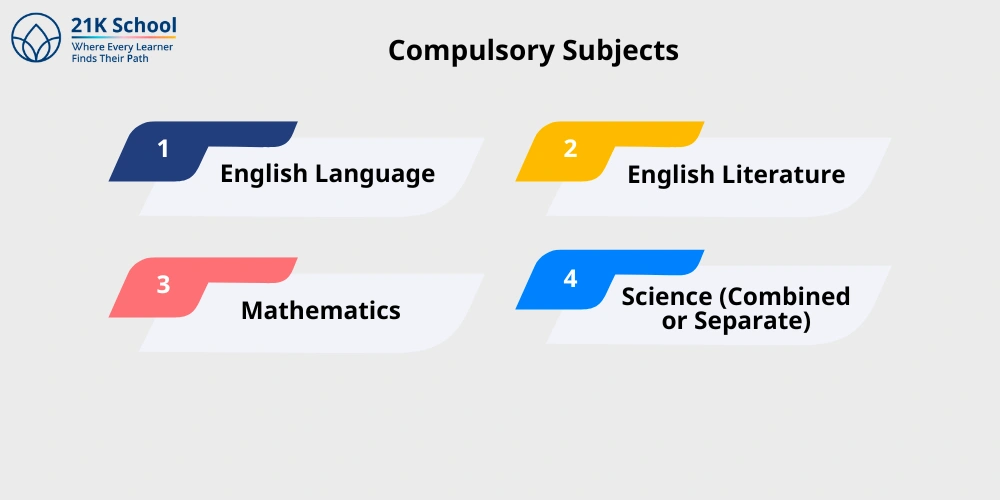
English Language
Know how to write, read and communicate. It is vital to the subsequent stage of education, employment, and everyday life, and it is the foundation of academic achievement, as analysed by means of written examinations and homework.
English Literature
Major in literature, poetry and plays. The learners are taught how to think critically and read and write an essay. It advances the examination of culture, subject, and language to a superior level.
Mathematics
It consists of geometry, problem-solving, statistics, and algebra. Mathematics builds skills in analysis, logic, and numeracy around which will be the fundamental requirement in subsequent education, occupation, and applications in real life.
Science (Combined or Separate)
Covers the sciences of biology, chemistry and physics, as a combination, or as a single science of either. The students are also exposed to scientific knowledge, practical knowledge and analysis, hence are appropriately prepared to continue with their education and laboratories.
Optional Subjects
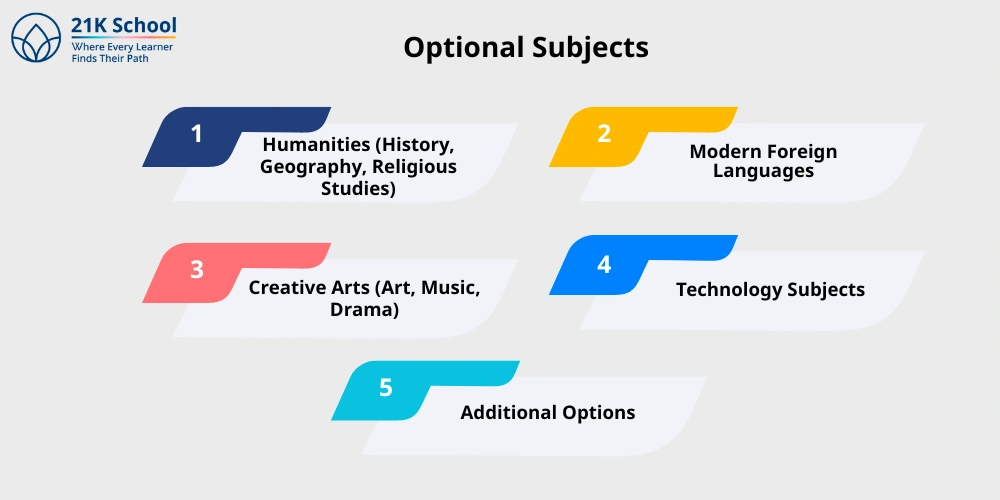
Humanities (History, Geography, Religious Studies)
The students can observe things, trends, and beliefs and learn research, analysis, and critical thinking, which they will apply in their studies and careers.
Modern Foreign Languages
One of the languages the speaker reads, writes, and speaks is French, Spanish or German. Enhances international communication skills , intercultural knowledge and overseas career.
Creative Arts (Art, Music, Drama)
Supports invention, personalism and true talent. The students are also introduced to artistic tools, acting and criticism, and they become creative and will in other proceedings or careers in the arts.
Technology Subjects
Design and technology, computer science and engineering. Practical and analytical problem-solving skills learned by students are a combination of creativity and technical skills that are utilised in vocational and STEM careers.
Additional Options
Others, which are optional, can be the study of business, psychology or physical education. They will enable the students to learn what they enjoy, gain a little bit of skills and personalise their experience on GCSE to later learning or a career.
GCSE Grading Systems
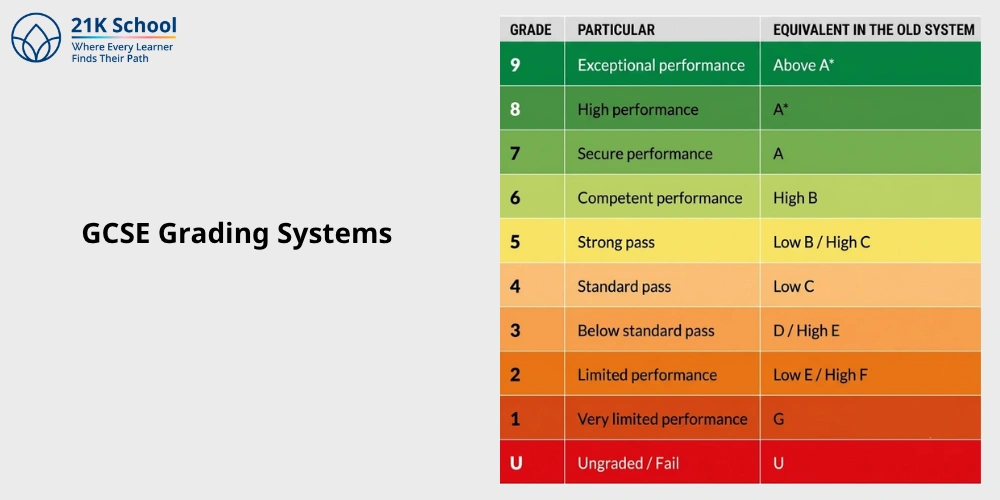
The grading system of GCSE considers the performance of the students in all the subjects, and this factor enables the universities, employers and schools to gauge the performance. The one used in England is 9-1, and the highest grade is 9.
Letter grades between A and G* are very common in Wales and Northern Ireland.However, Northern Ireland introduced a C* grade in 2019 and now has a nine-point grading system, with some schools using the English 9-1 system. The new grading system introduced by the government in England was graded 9 (high) to 1 (lowest), in which Grade 4 was a normal pass, whereas Grade 5 was a high pass.
| Grade | Particular | Equivalent in the Old System |
| 9 | Exceptional performance | Above A* |
| 8 | High performance | A* |
| 7 | Secure performance | A |
| 6 | Competent performance | High B |
| 5 | Strong pass | Low B / High C |
| 4 | Standard pass | Low C |
| 3 | Below standard pass | D / High E |
| 2 | Limited performance | Low E / High F |
| 1 | Very limited performance | G |
| U | Ungraded / Fail | U |
What are GCSE Grade Boundaries?
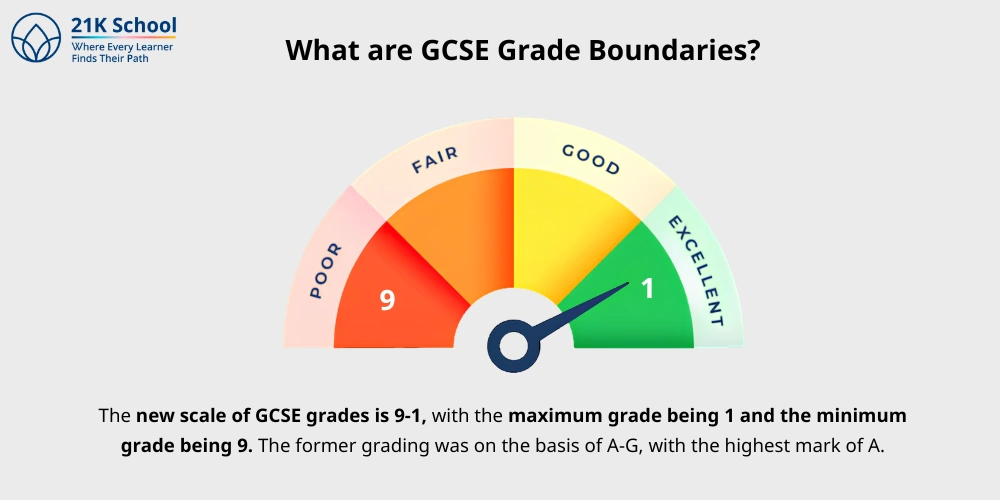
The GCSE grade boundaries are the minimum marks to be met to achieve each grade (9-1), as provided by exam boards in marking exams to introduce fairness.
These are based on the matter being discussed, the year of the paper and the writing, which are the bases of creating the challenge as well as the ultimate outcomes of creating the advancement. The new grading system was put into practice in 2017.
The new scale of GCSE grades is 9-1, with the maximum grade being 1 and the minimum grade being 9. The former grading was on the basis of A-G, with the highest mark of A.
Maths, English language and English literature were the first subjects to be graded under this new system. From 2020, all subjects will use the new grading system. The new system of numbers is more capable of distinguishing the higher grades as compared to the old system.
The higher grades of A and A* in the old system are incorporated in Grades 4-6 and Grades 7-9, respectively. Grade 9 is considered to be superior to A.
How to Prepare for GCSE Exams?
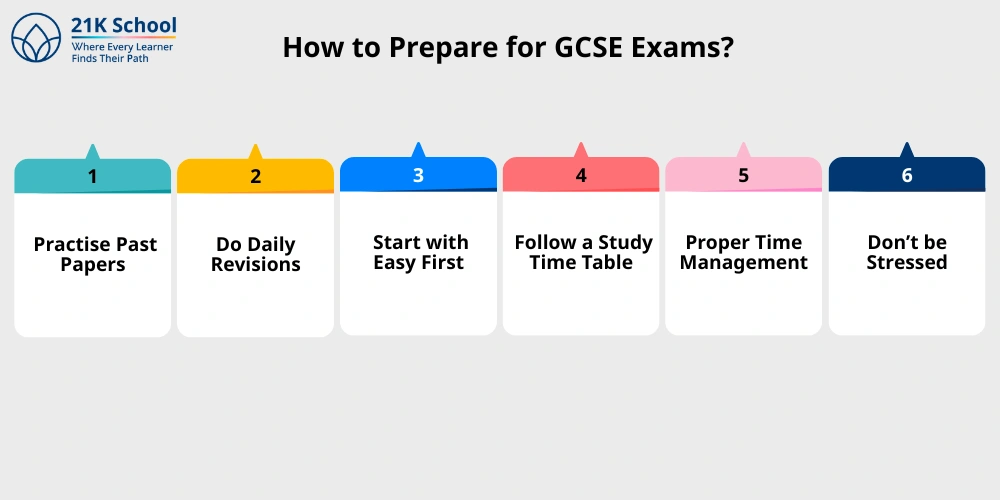
In order to perform well in GCSE exams, the studying strategies should not be overlooked; a person must plan, study and plan.
The confidence will be issued to the students via revision, and the past papers will give the students time to study and guarantee that they give their best during the exams. The strategies for preparing for the GCSE exams consist of the following.
1. Practise Past Papers
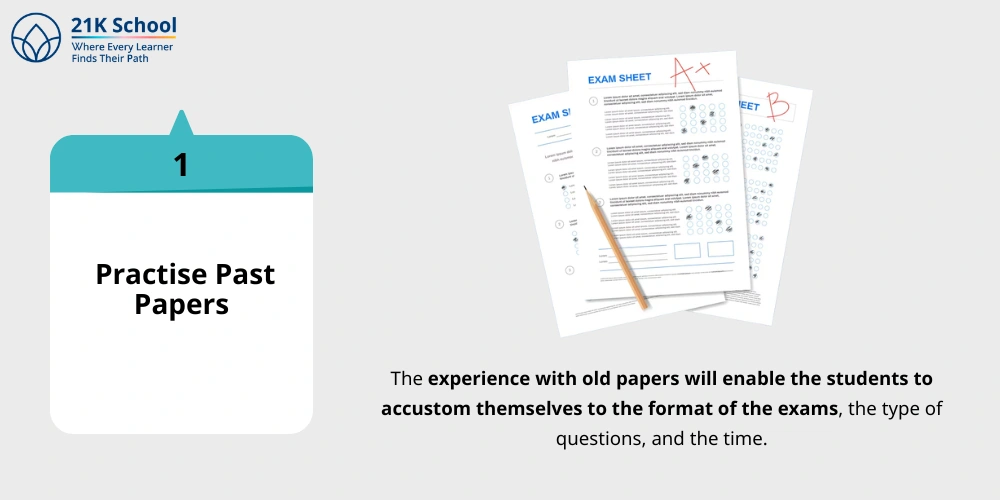
The experience with old papers will enable the students to accustom themselves to the format of the exams, the type of questions, and the time.
Confidence is also acquired through practice, learning to take an exam and also reducing students’ stress , as it gives one an idea of what the actual picture will be like on the day at hand.
2. Do Daily Revisions
The way to improve knowledge and long-term memorisation is to revise every day. The learning process can be attained through splitting up the study processes into brief and focused sessions.
It is also practised to ensure that the topics are taught frequently as opposed to cramming in the past minute to reinforce all the subject knowledge.
3. Start with Easy First
It is always good to begin with the simplest things in revision to get confidence and motivate oneself, and then move to the more challenging ones.
The reason why this is true is that by doing already known areas, an individual would feel that they are making progress and would thus be willing to do the more difficult areas in the future.
4. Follow a Study Time Table
The revision is organised and conducted in a study plan. It does not pursue any biased learning methods on all the topics and subjects discussed, and it does not create last-minute pressure.
Planning makes the study routine give more concern to the weaker areas, space adequate time to practise, and a balance between learning and rest.
5. Proper Time Management
One should know how to spend time during revision and exams. Mark time on every subject or subject depending on the importance and difficulty.
The person is not to be distracted, should take breaks, and formulate realistic goals. The time management skills would assist in preparation, reduce panic, and enable finishing all the questions in the exam within the stipulated time.
6. Don’t be Stressed
One should feel relaxed to focus on studying and working. Take a break, think and do not overwork to reduce study stress .
Stress could be a hindering factor to memory and concentration, thus, a break, sleep and routine will enable one to keep the anxiety levels within check, thus leading to confidence and mental clarity during revision and on the exam day.
Conclusion
The General Certificate of Secondary Education (GCSE) is one of the major stages in the studies of a student.
It does not just test the knowledge of a wide range of subjects, but also develops the most basic of the skills, which include critical thinking skills , problem-solving skills and effective communication. The GCSEs bring about education, professional training and work.
By proper preparation, time management, and hard work, students can deliver good results that can serve as a good basis through which they will achieve success in future.
