


Student learning in the classroom or in a group study often requires a positive learning environment that helps them to understand and retain knowledge.
A positive and comfortable learning environment often created by people. Do you know people with good personalities create a better supportive environment?
This is because they understand how to speak well, listen patiently, and handle pressure calmly. But, personality development is not a one day task. It requires time, patience, and effort.
To improve personality here we will go through some best examples of personality development. Let’s begin.
Table of Contents
- What is Personality Development?
- Top 18 Examples of Personality Development
- 1. Improves Communication
- 2. Implement Good Habits
- 3. Encourage Personal Growth
- 4. Adaptability
- 5. Taking Responsibility
- 6. Professional Behavior and Ethics
- 7. Active Listening
- 8. Conflict Management
- 9. Collaboration
- 10. Enhance Social Skills
- 11. Learning Manners and Etiquette
- 12. Develop Emotional Intelligence (EQ)
- 13. Time Management Skills
- 14. Build Resilience
- 15. Leadership
- 16. Practice Public Speaking
- 17. Improve Decision-Making
- 18. Boost Confidence
- Conclusion
What is Personality Development?
Personality development simply means developing your own habits of thinking, feeling, and acting that represent individual character in front of others.
A personality includes a combination of natural things from birth with things learned in the world. With time individuals work on their personality to become more flexible and comfortable.
Personality development is not only helpful for self-growth but also ensures people around you are free to express themselves without limitations.
Top 18 Examples of Personality Development
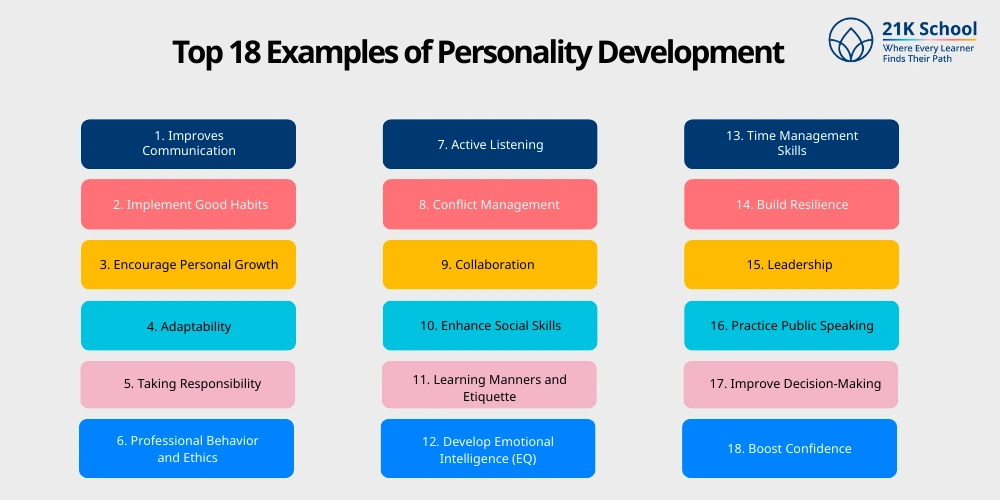
There are different kinds of personality development examples. Check out the best examples of personality development for students.
1. Improves Communication
Communication skills play a major role in personality development and a student who has it speaking in front of peer and teacher can involved in various activities such as:
- practicing conversations at home
- involve in meetings
- participating in group discussions
Students can become confident and clear towards others which leads to personal growth.
2. Implement Good Habits
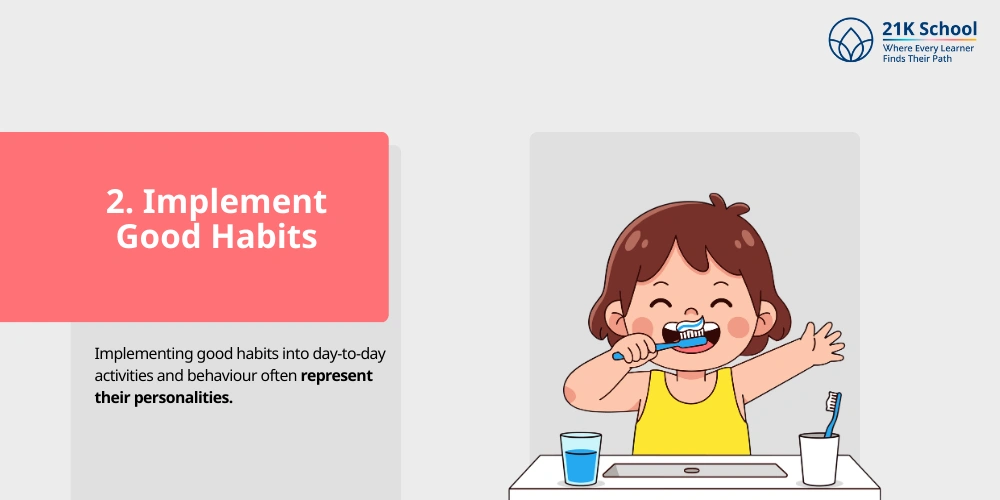
Implementing good habits into day-to-day activities and behaviour often represent their personalities.
Good habits are the important part of personality development in students life in which they can maintain:
- study routine
- reading daily
- limiting phone usage
- discipline and self-control
It directly improves students’ personality with time.
3. Encourage Personal Growth
A student always looks for personal development with academic growth. To create a balance one must:
- learning new skills
- taking online courses
- exploring hobbies
The desire of achieving something helps students to grow and develop in their best versions of their personalities.
4. Adaptability
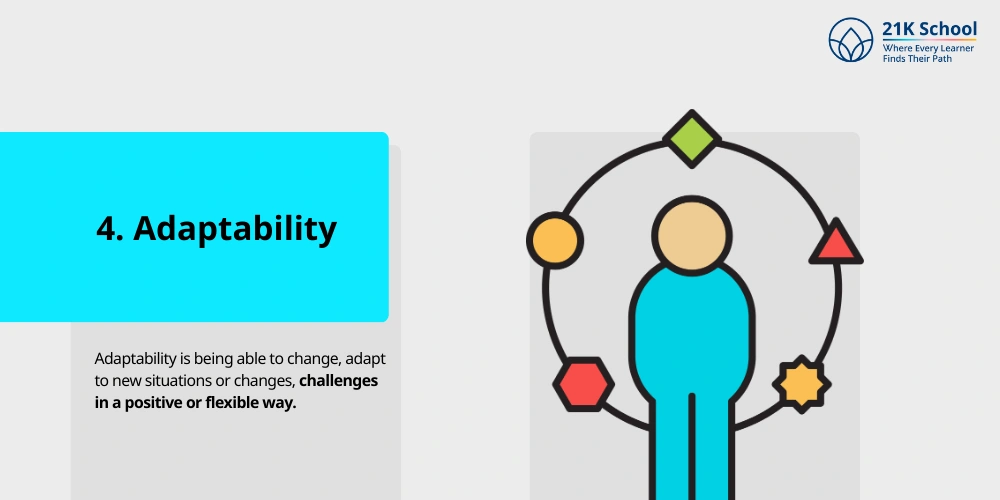
Adaptability is being able to change, adapt to new situations or changes, challenges in a positive or flexible way.
In an evolving world, personality development is essential. Being adaptable ensures emotional strength and open-mindedness.
It means an individual wants to learn faster , hear feedback, and want to find solutions even in difficult or uncomfortable situations.
It can be changing to another job, going to an unexpected event or meeting new people – adaptability helps people be calm, confident and productive.
5. Taking Responsibility
One of the examples of good personality development is students taking responsibility for a particular task or activity.
In this way, students work on their self-development, reduce mistakes, avoid distraction while studying , and find a better solution to make life easy.
For example, a student taking responsibility for monitoring class while the teacher is busy in a meeting.
6. Professional Behavior and Ethics
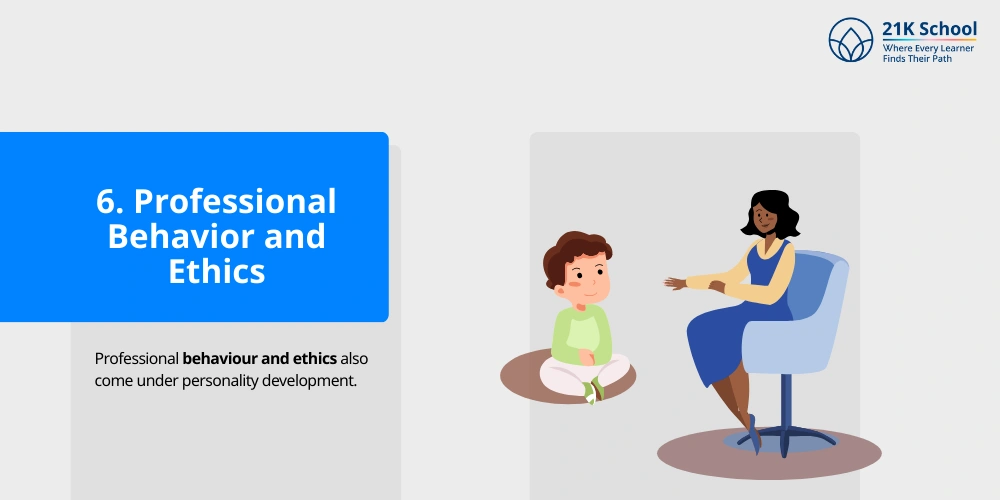
Professional behaviour and educational ethics also come under personality development. A student becomes professionally effective when he/she:
- Followed deadlines
- treat others respectfully
- maintain honesty and integrity
For example, a student who joined an internship completed table tasks and followed the manager’s instructions.
7. Active Listening
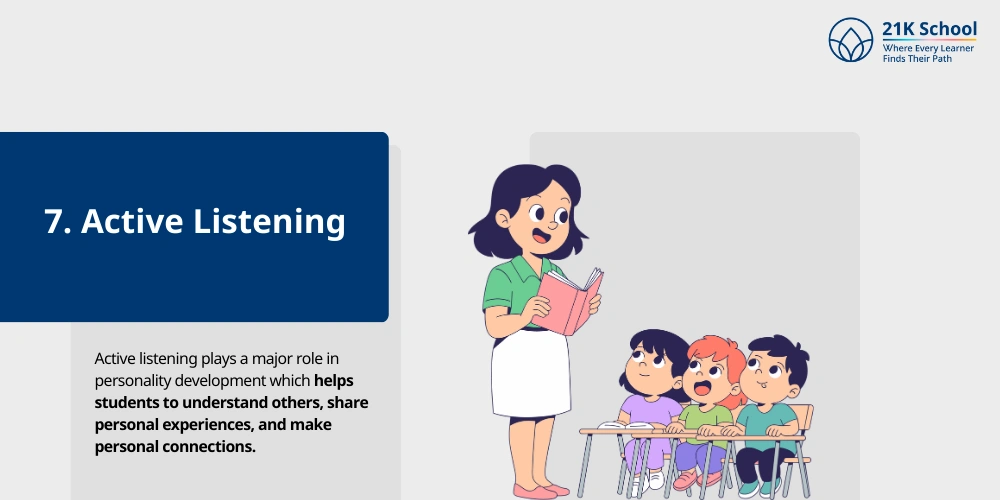
Active listening plays a major role in personality development which helps students to understand others, share personal experiences, and make personal connections.
Students actively listen in the classroom for deep understanding of concepts for the long run.
8. Conflict Management
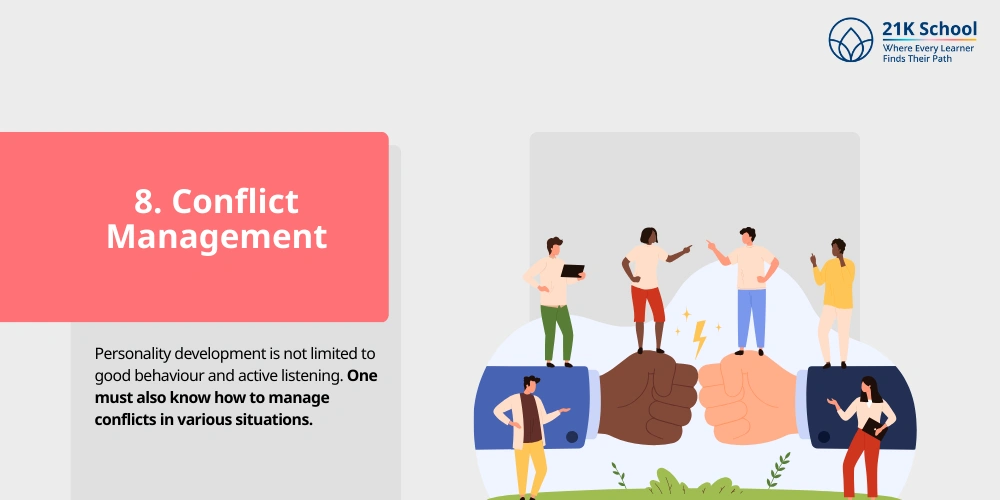
Personality development is not limited to good behaviour and active listening. One must also know how to manage conflicts in various situations.
Whether it is a peer debate or professional disagreements handling things which maturity and patience reflects individual personality in front of others.
Individuals with good personalities always seek conflict resolution.
9. Collaboration
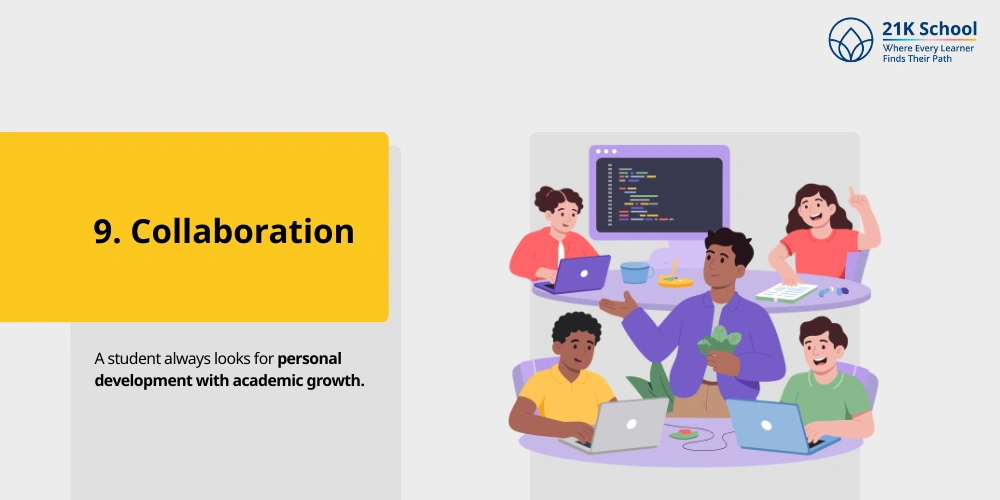
Working together to gain something is called collaboration skills . It requires communication, respect, patience and often compromise.
Having this trait as a part of personality encourages individuals to make friends, understand other thoughts and work in groups.
And in schools, jobs and family life collaboration is the key to progress in academic and personal life. Through collaboration most things can be achieved working in teams.
10. Enhance Social Skills
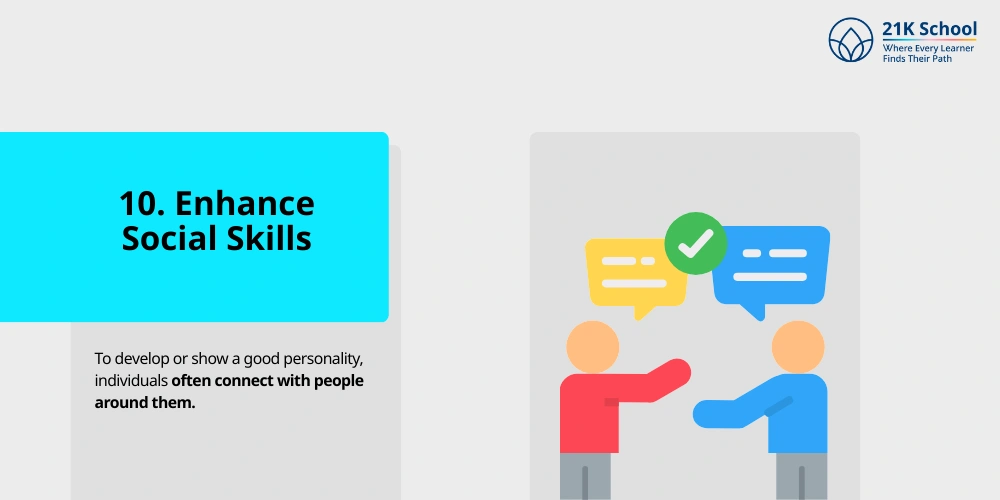
To develop social skills or show a good personality, individuals often connect with people around them. From a morning greeting to resolve others conflicts, individuals can practice and evolve their personalities.
For example, students greet teachers while entering and exiting the classroom.
11. Learning Manners and Etiquette
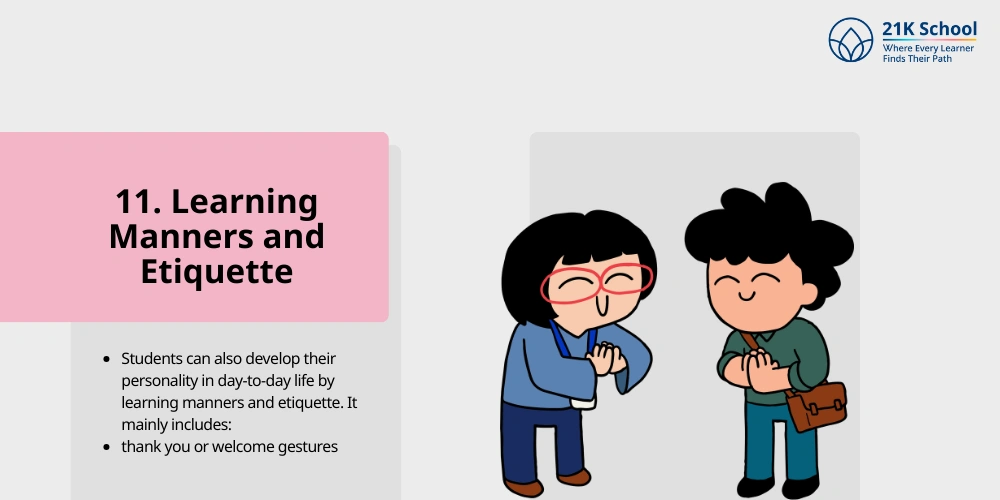
Students can also develop their personality in day-to-day life by learning manners and etiquette. It mainly includes:
- thank you or welcome gestures
- respecting elders
- practicing table manners
It is an ideal way to showcase a strong personality in real life situations.
12. Develop Emotional Intelligence (EQ)
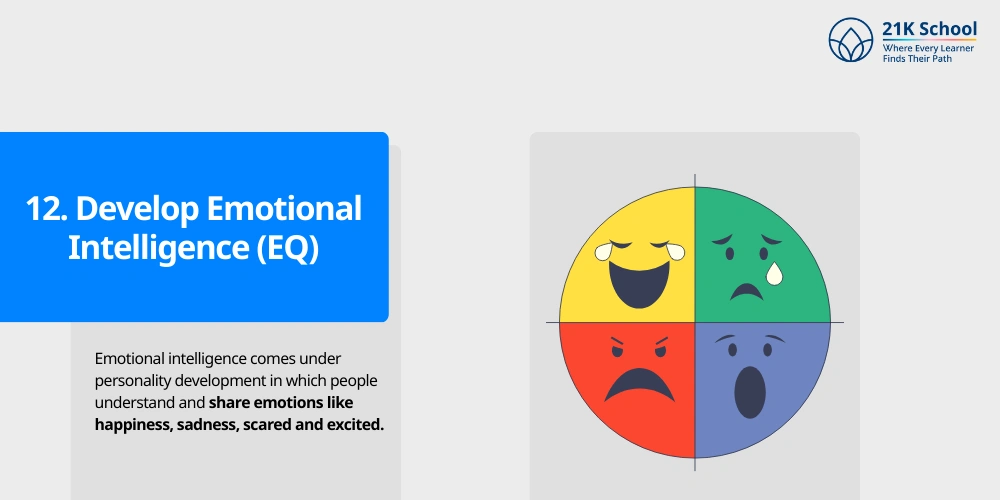
Emotional intelligence comes under personality development in which people understand and share emotions like happiness, sadness, scared and excited.
For example, a student offers support to a classmate who got a low grade in a class test.
13. Time Management Skills
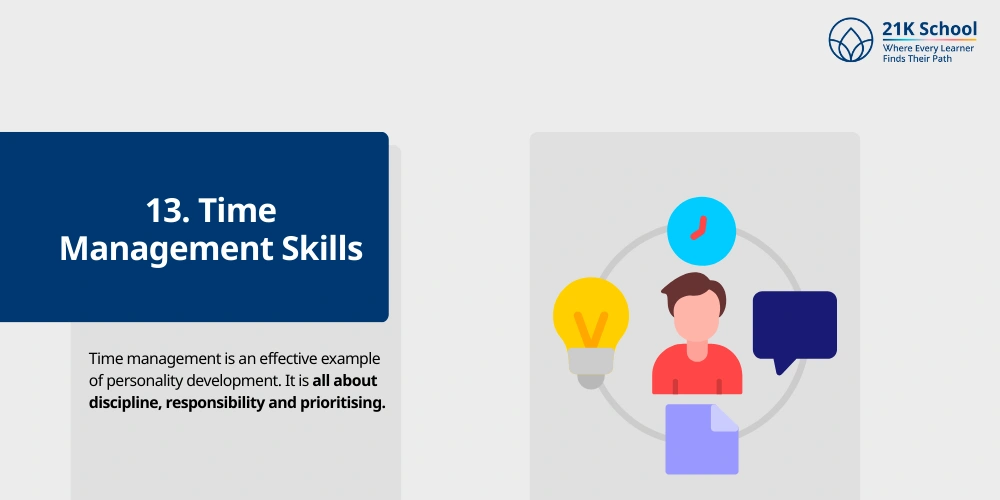
Time management is an effective example of personality development. It is all about discipline, responsibility and prioritising.
This means a good time manager can do work, study for long hours , personal relationships and self-care without being exhausted.
Developing time management skills helps individuals to become more productive, manage stress effectively , and achieve better results.
It is also helpful to build accountability and reliability – all good qualities for personal and professional success.
14. Build Resilience
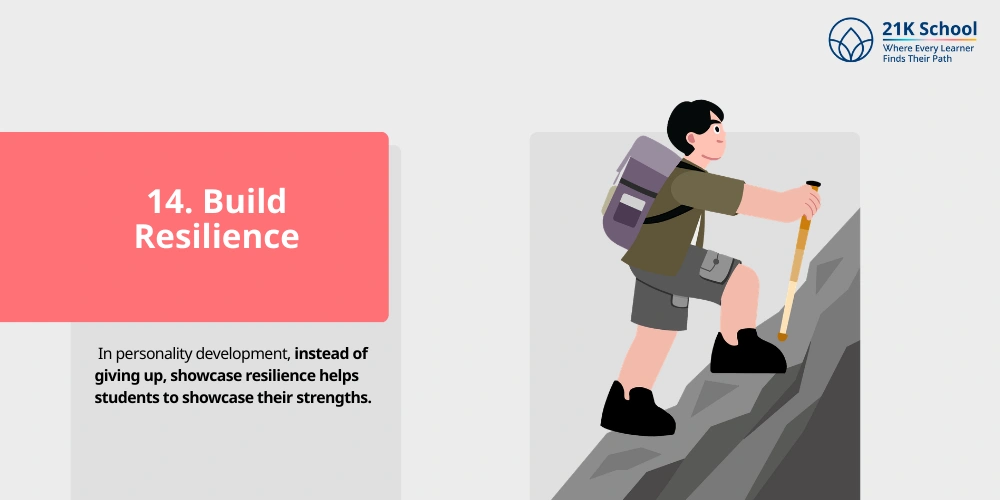
Resilience simply means bouncing back from setbacks. In personality development, instead of giving up, showcase resilience helps students to showcase their strengths.
A simple example includes a student who fails a class test, but works hard to get good marks in final exams.
15. Leadership
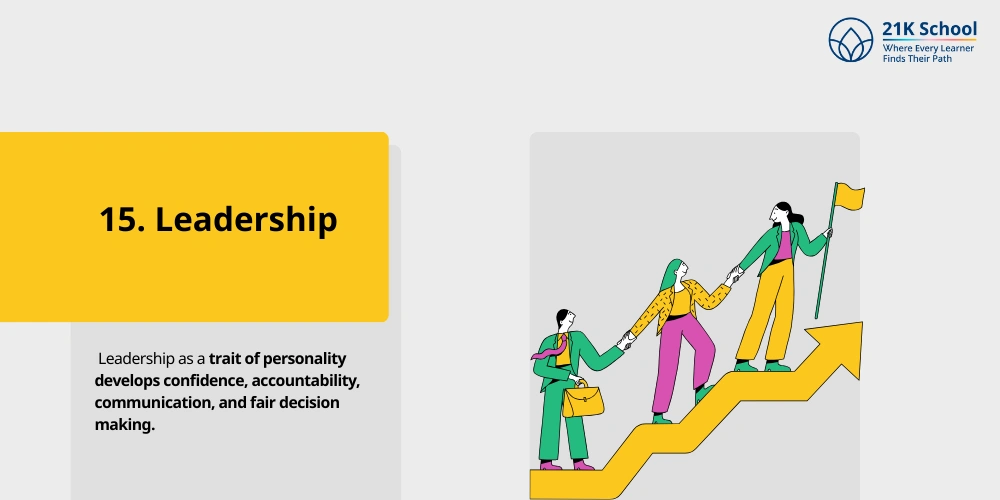
Leadership means leading others in the right direction. Leadership as a trait of personality develops confidence , accountability, communication, and fair decision making.
A good leader motivates others, takes initiative and leads by example.
So, whether it is school projects, workplace teams or community efforts, leadership makes people look like trustworthy and useful contributors.
16. Practice Public Speaking
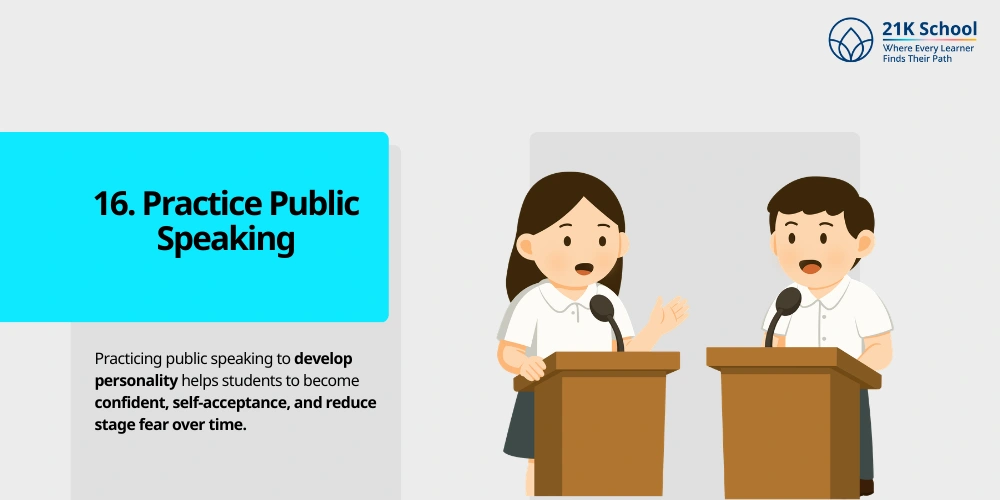
Practicing public speaking to develop personality helps students to become confident, self-acceptance, and reduce stage fear over time.
A student participating in a singing competition on Republic Day to become confident in front of school.
17. Improve Decision-Making
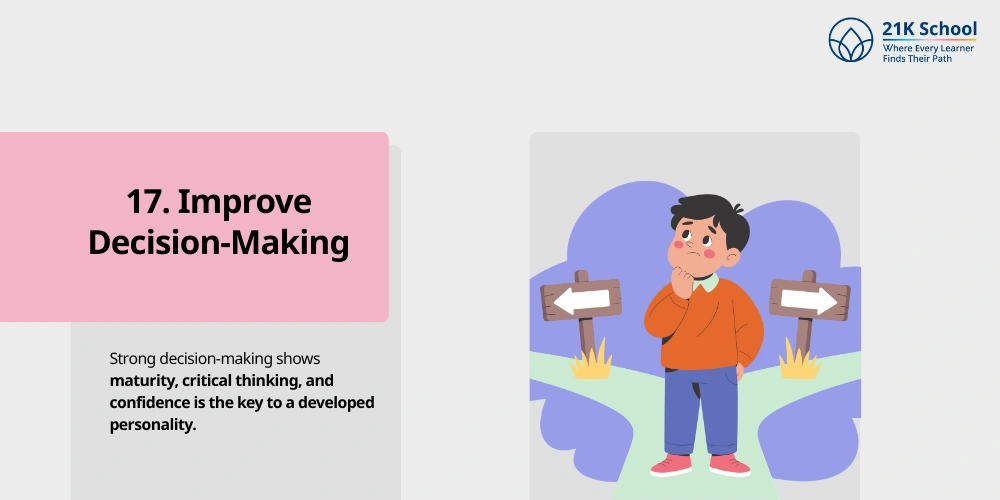
Strong decision-making shows maturity, critical thinking , and confidence is the key to a developed personality.
A good decision-maker evaluates situations, consequences, and actions based on their moral values and goals.
This lets them take charge of their lives, solve problems and react with patience especially under pressure. It also builds trust – people who are thoughtful are seen as reliable and responsible.
18. Boost Confidence
A person becomes confident when he or she believes in themselves and their abilities to conquer academic and personal goals.
Some common ways to boost confidence are:
- learning new skills
- setting and achieving small goals,
- practicing mindfulness activities
Sharing opinions in front of the classroom or peers to express thoughts boost student’s confidence.
Conclusion
Personality development has a special place in student life through which they represent themselves in front of the whole world.
It helps students to focus on diverse areas like physical, mental, emotional and social growth. In this way students become confident and motivated to perform well.
It’s time to become the best version of yourself through personality development. Also, explore the personality development tips for students .
