

Have you ever wondered how school life differs from college life?
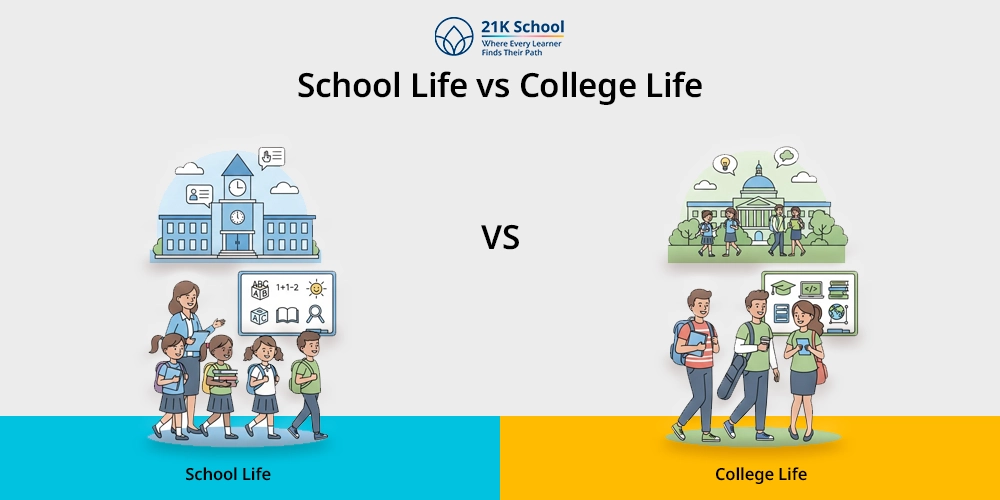
College life and school life are two important levels that define the personality of an individual, his or her values, and future expectations.
As compared to school life, where discipline is more organised, the basic learning and moral development,, college life offers an individual more freedom, responsibility and self-discovery. Each of the stages contributes to individual development, social development, and learning.
Learning to distinguish between college life and school life would allow the students to be thankful for the experiences, challenges, and lessons that each of these stages can bring to them in order to enjoy life and train them to be adults and professionals.
Table of Contents
What is School Life?
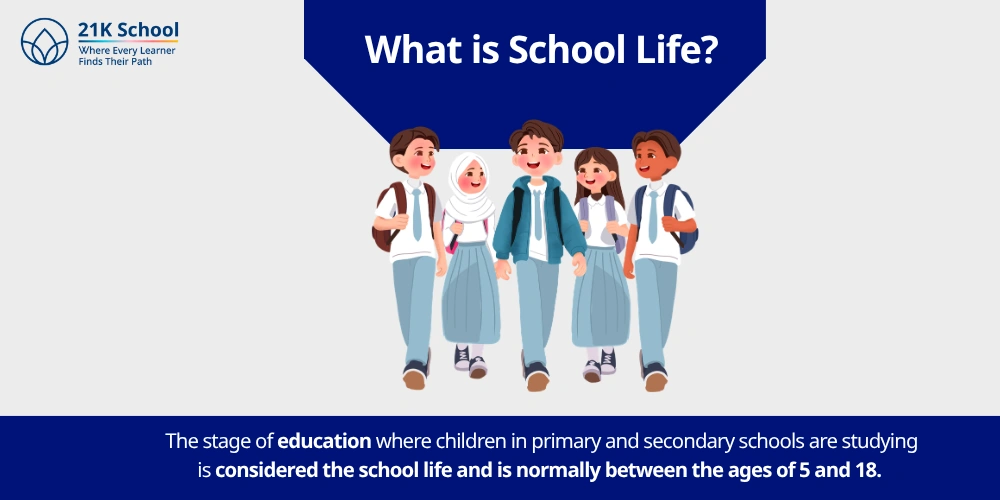
The stage of education where children in primary and secondary schools are studying is considered the school life and is normally between the ages of 5 and 18. It is an orderly institution that is geared towards learning the fundamental academic subjects, achieving social behaviour, and instilling discipline and morals.
This is a level where students are forming the foundation of their further studies, where they begin to show interest, collaboration and problem-solving skills and participate in extracurricular activities.
School life plays a very crucial role in the growth of personality, character and preparation for higher education and adult life.
What is College Life?
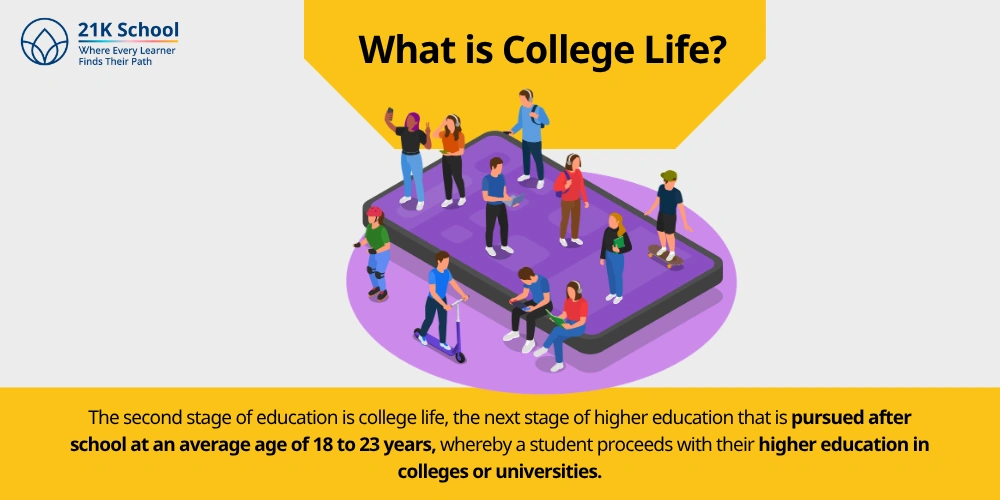
The second stage of education is college life, the next stage of higher education that is pursued after school at an average age of 18 to 23 years, whereby a student proceeds with their higher education in colleges or universities.
It is more autonomous, self-responsible, and provides an individual with an opportunity to self-explore in comparison with school. Skill-based learning and career preparation, along with academic learning, are specialised academic learning which are focused on college life.
It can help students become critical thinkers, time managers and decision makers, besides personality development and experience; it influences future and personal life.
Difference Between School Life and College Life
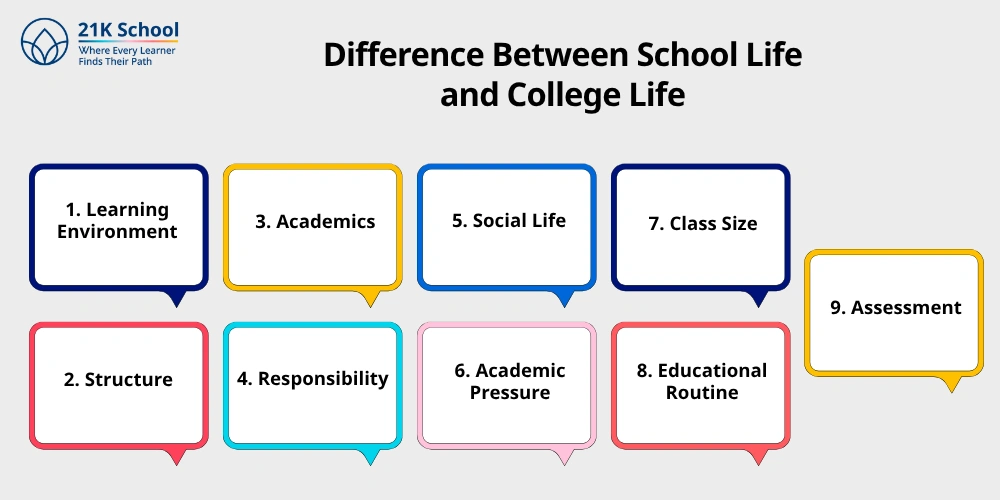
College and school life vary, in terms of liberty and responsibility. School is systematic and routine-based, and college offers freedom, self-discovery and social and academic experiences. The following are the differences between school life and college life.
| Aspect | School Life | College Life |
| Learning Environment | Very well-structured and monitored, emphasising basic learning, discipline and simple socialisation with the help of the teacher. | Independent, loose and adaptable with promotion of self-directed learning, critical thinking, exploration and intellectual development with the least supervision. |
| Structure | School follows a strict schedule involving set classes, breaks and rules. Students also do not have many options to choose from in terms of subjects or activities. | The flexibility of the schedules allows the students to select the courses, time management and also balance between the study and personal and extracurricular activities. |
| Academics | Basic knowledge in general education across various subjects. Teachers guide students, and instruction is aimed at memorisation and comprehension of the basics. | Professional research and investigation in specific areas and focus, with emphasis on research, analysis and practice. Learners must have a comprehensive independent study. |
| Responsibility | It is closely monitored by teachers and parents. The level of accountability amongst the students is minimal because they are merely performing tasks and instructions. | Full personal responsibility for work, projects, deadlines, and self-discipline, and development of self-determination and self-control. |
| Social Life | Relationships primarily with peers at school or with local friends. The social activities are controlled and restricted. | Greater social interactions with other people of different backgrounds. Students work in clubs, events and networking opportunities. |
| Academic Pressure | Regular assignments and moderate pressure tests with the assistance and support of teachers. | Stress due to complex issues, exams, projects, and career preparation, where one needs to be self-disciplined and manage their time. |
| Class Size | The smaller classes make it easier to provide individual care, teacher mentoring and instruction. | Larger classes, especially lecture classes, where student must participate in the learning process and be self-directed. |
| Educational Routine | A stable daily routine, with set times for classes, breaks, and extracurricular activities will take place. | A flexible schedule in which students organise their study time, social life, and personal responsibilities, which requires organisation and self-discipline. |
| Assessment | Regular assessment by the use of quizzes, homework and teacher feedback to check the progress. | Evaluations through major tests, projects, presentations and practical works, where self-study and critical thinking skills are evaluated. |
1. Learning Environment
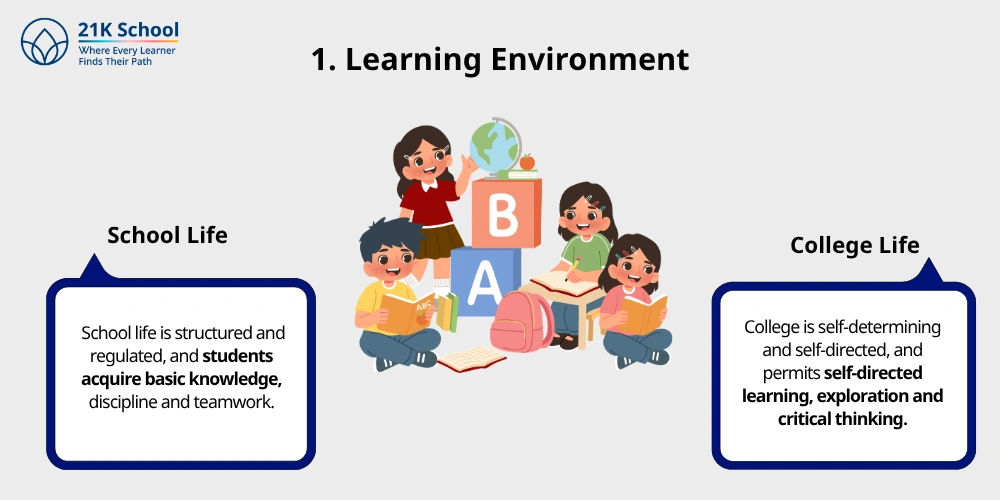
School Life: School life is structured and regulated, and students acquire basic knowledge, discipline and teamwork. The educators provide a structured setting for the children and help them to gain some background knowledge and basic social skills.
College Life: College is self-determining and self-directed, and permits self-directed learning, exploration and critical thinking. They are also granted the liberty of determining how they will learn, engage in discussions, and the capability to adapt the learning environment to their own benefits, which encourages the personal and intellectual growth of the students.
2. Structure
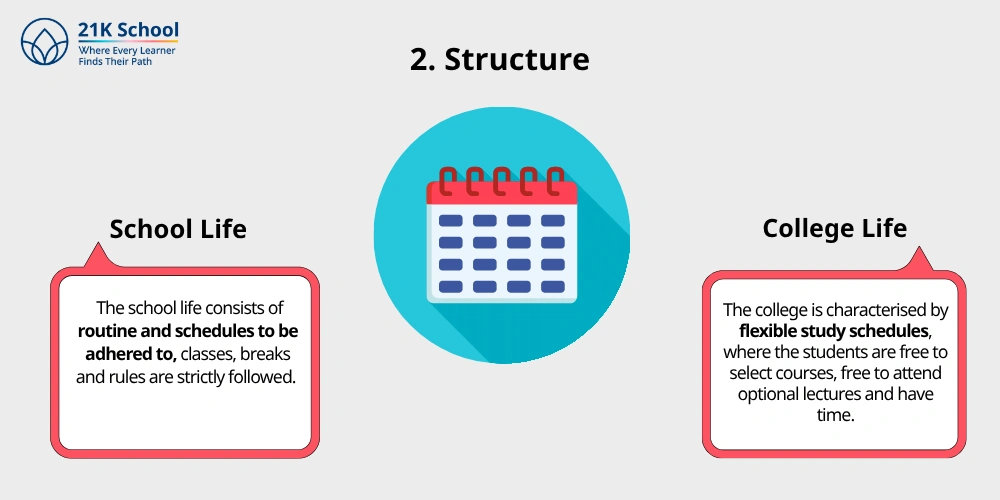
School Life: The school life consists of routine and schedules to be adhered to, classes, breaks and rules are strictly followed. The students have few choices regarding the subjects and activities that they are supposed to engage in, but rather follow to the systematic method of learning, and academic growth is an ongoing process.
College Life: The college is characterised by flexible study schedules, where the students are free to select courses, free to attend optional lectures and have time. This structure fosters responsibility, freedom and flexibility to establish the balance between work, school and personal life.
3. Academics
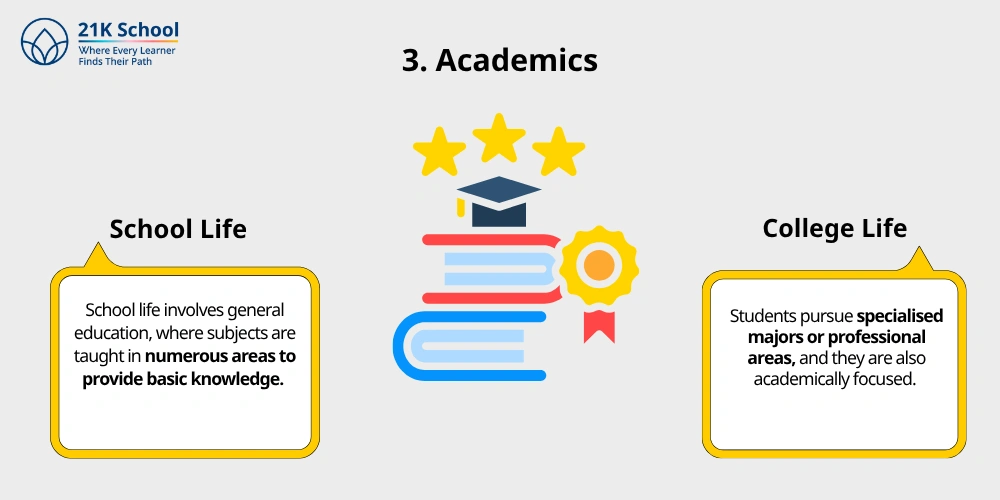
School Life: School life involves general education, where subjects are taught in numerous areas to provide basic knowledge. The learning process is controlled by teachers who pay attention to memorisation, learning the basics and attaining the required level of skills in problem-solving.
College Life: Students pursue specialised majors or professional areas, and they are also academically focused. Research, critical thinking, and practice are all those activities which demand the student to become an independent learner, who develops their mind and prepares their career in the future.
4. Responsibility
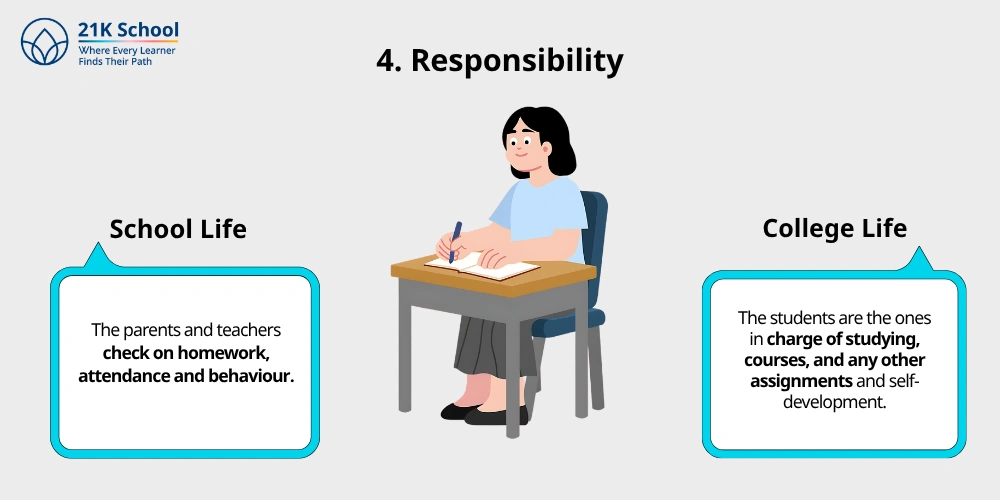
School Life: The parents and teachers check on homework, attendance and behaviour. Minimal responsibility is bestowed on students whose prime role is work under guidance, relying on discipline and directions in an attempt to instil some form of responsibility.
College Life: The students are the ones in charge of studying, courses, and any other assignments and self-development. Students need to be ready to live in the adult world and have a profession in their work, and self-management skills, decisions, and responsibility play an important role.
5. Social Life
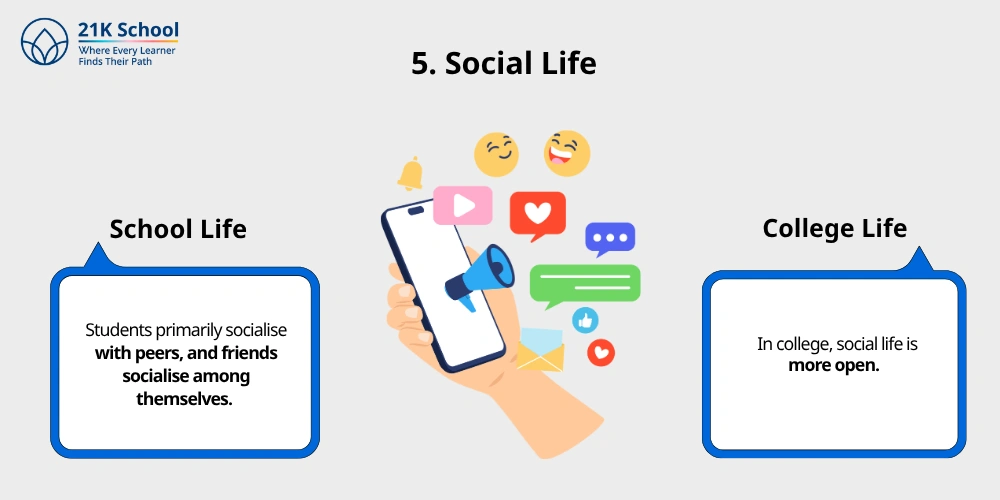
School Life: Students primarily socialise with peers, and friends socialise among themselves. Activities and events are subject to control by teachers, and this can only be limited to exposure, planned communication and collaboration.
College Life: In college, social life is more open. They join clubs, societies, cultural activities and networking, and in the process, students acquire interpersonal skills, relationships and confidence and learn how to interact with other people having a different background.
6. Academic Pressure
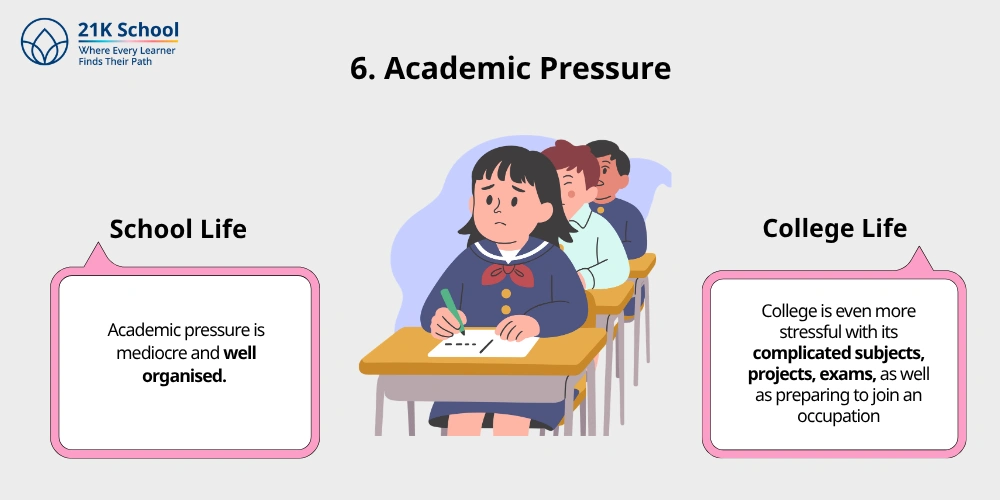
School Life: Academic pressure is mediocre and well organised. In order to avoid study stress for students, teachers give directions and regular tasks and tests to check the progress.
College Life: College is even more stressful with its complicated subjects, projects, exams, as well as preparing to join an occupation. The students are given the freedom to utilise time, assignments, and expectations.
7. Class Size
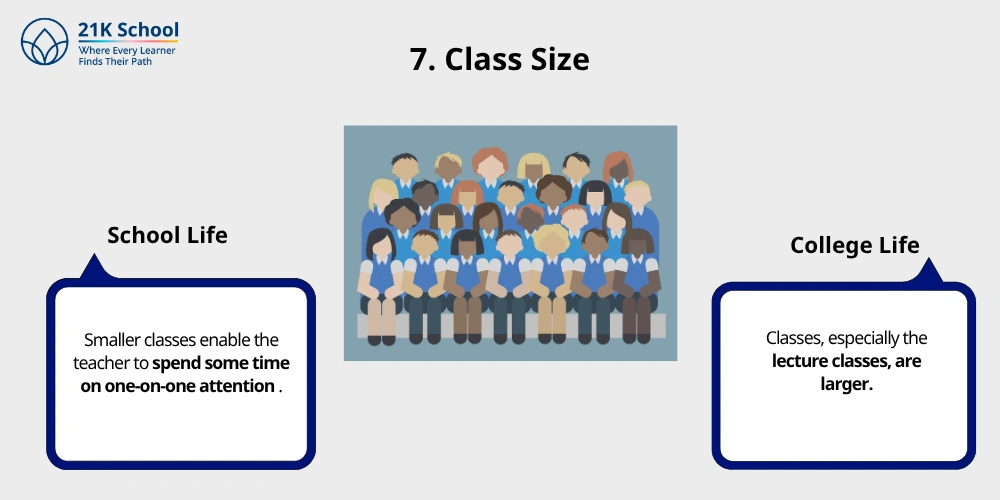
School Life: Smaller classes enable the teacher to spend some time on one-on-one attention and observe the way they learn and provide advice to the students, and this makes the school conducive to learning and academic growth.
College Life: Classes, especially the lecture classes, are larger. The students will be asked to learn individually, share and consult, which will make it easy to learn independently and become self-dependent.
8. Educational Routine
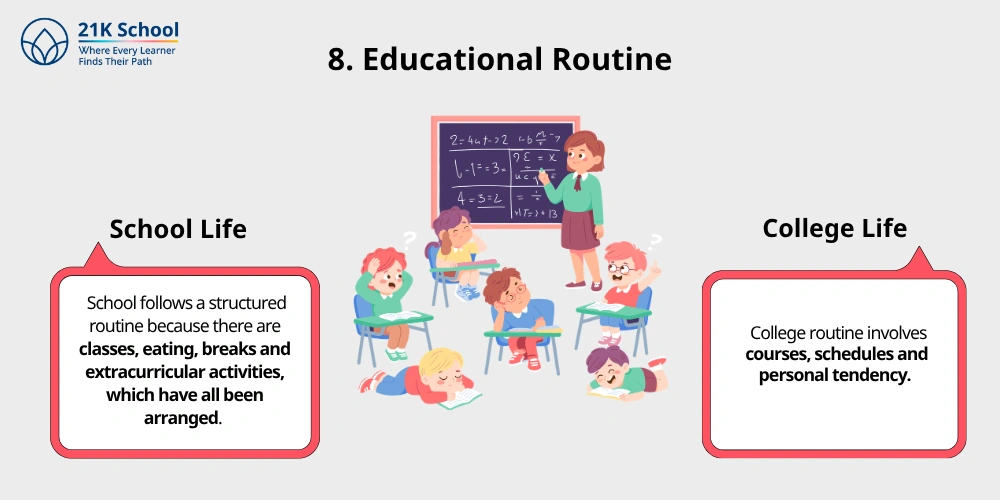
School Life: School follows a structured routine because there are classes, eating, breaks and extracurricular activities, which have all been arranged. With such an order, discipline and routine of day-to-day habits of the students.
College Life: College routine involves courses, schedules and personal tendency. The students are planning out study schedules, socialisation, and working part-time and to help in balancing out the roles, they must have time management and flexibility.
9. Assessment
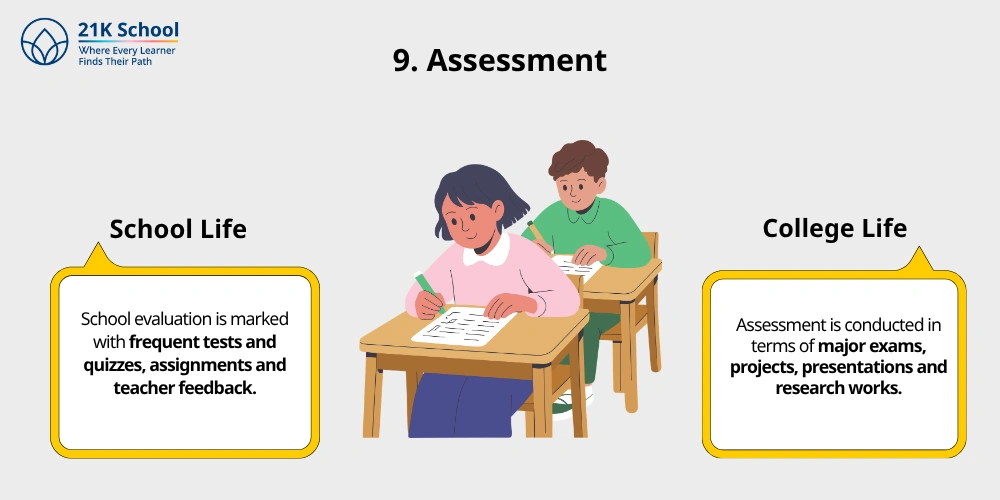
School Life: School evaluation is marked with frequent tests and quizzes, assignments and teacher feedback. Assessment is a continuous process and is directed towards the comprehension, retention and gradual advancement by systematic instructions.
College Life: Assessment is conducted in terms of major exams, projects, presentations and research works. Students will have to study on their own, demonstrate analytical skills, apply the knowledge to practice, and meet higher academic standards.
Conclusion
School life and college life are both significant periods of life for an individual, which are different but equally important. Order, direction and preliminary learning are encouraged in school, whereas independence, critical thinking skills and self-development are encouraged in college.
The two stages affect academic skills, interpersonal skills, and character, which give individuals the future duties, career concerns, and life.
By understanding the differences between the two, it will be guaranteed that students will get the most out of each of the stages and will benefit from the lessons they offer.

You may also want to read