

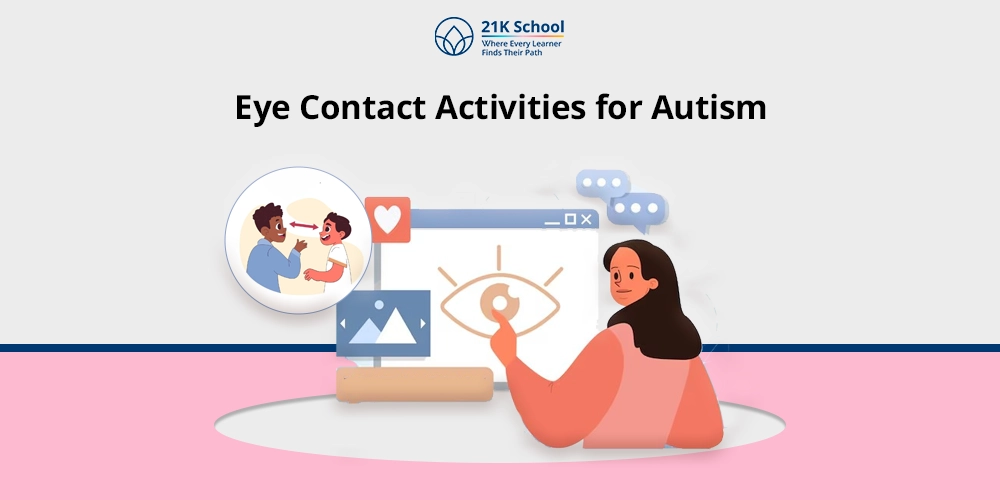
Ever wondered how eye contact activities could be useful for autism?
Autism activities involving eye contact are designed to promote social communication to a small degree and interaction skills. Such attempts are useful in helping those with autism spectrum feel more comfortable, whereby a general focus, facial expression, and engagement tend to prevail.
Eye contact exercises through organisation, fun in learning, worry-free mechanisms will help to bond without pressure, without neglecting personal diversities, thereby promoting tremendous growth in society at any given time.
Table of Contents
What are Eye Contact Activities for Autism
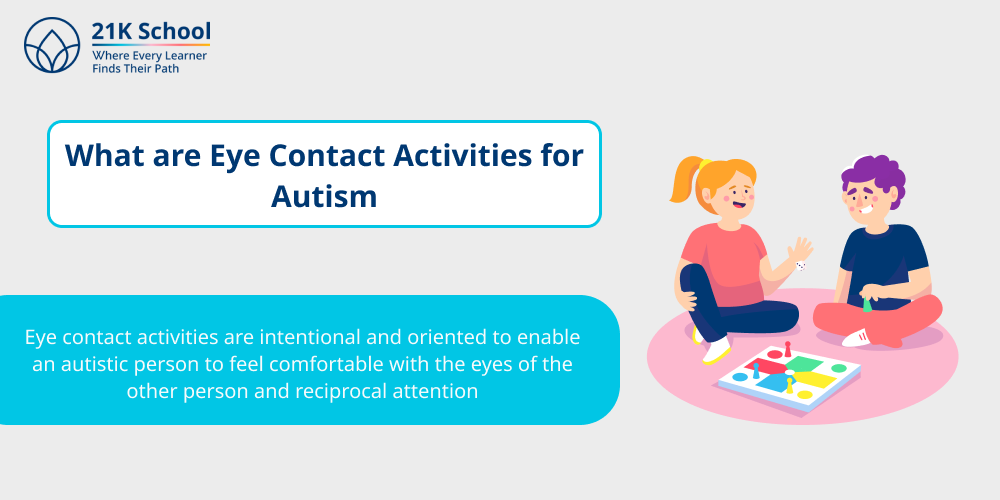
Eye contact activities are intentional and oriented to enable an autistic person to feel comfortable with the eyes of the other person and reciprocal attention. These activities would be participatory, non-conventional, and sensorial.
The activities using eye contact can enhance social interaction, communication skills and emotional connection using visual cues, positive reinforcement and eye contact in ensuring that every individual has an opportunity to work at their own pace and capacity.
Top 13 Eye Contact Activities for Autism
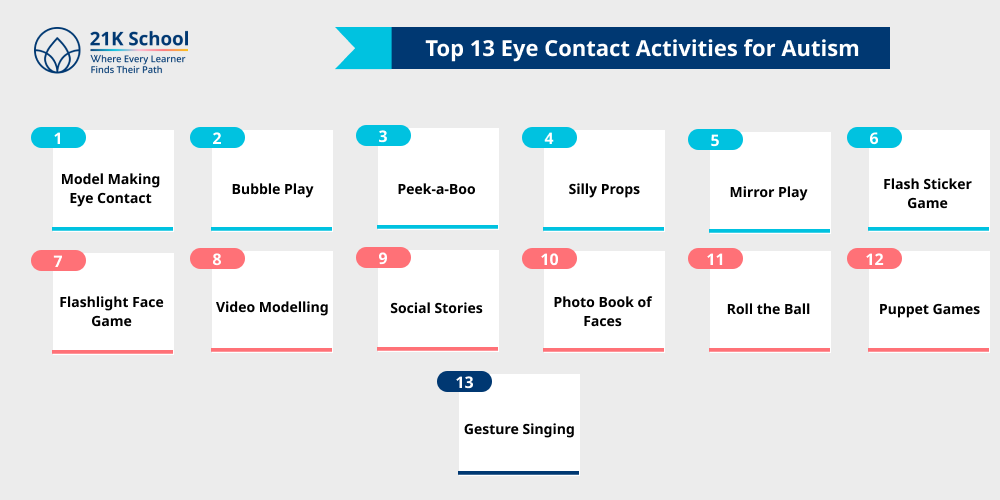
Find 13 useful eye-contact activities to improve social interaction, share attention, and communication skills in autism by using simple, low-pressure, and fun learning activities based on the comfort and learning pace of an individual.
1. Model Making Eye Contact
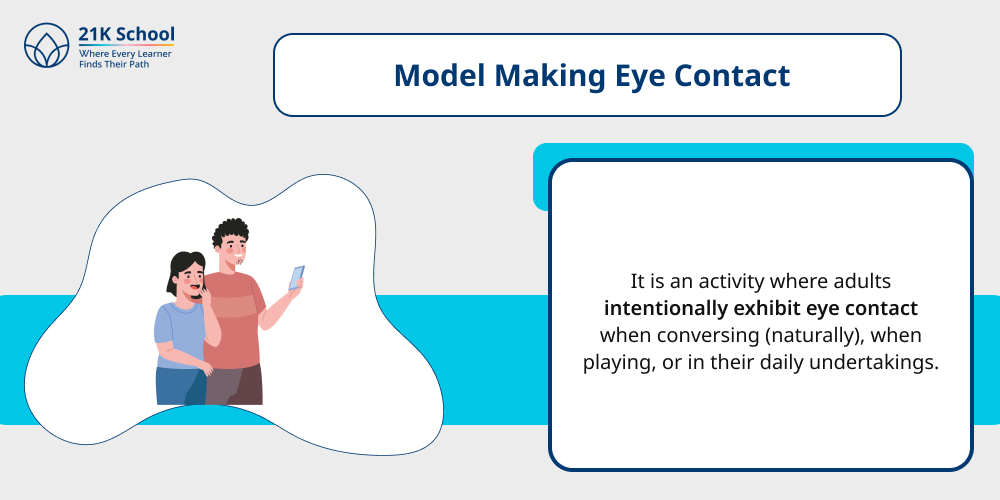
It is an activity where adults intentionally exhibit eye contact when conversing (naturally), when playing, or in their daily undertakings. Autistic individuals do not have to be forced to learn their interactions by simply watching.
Over time, upon recurrent exposure, they get to learn to know when looked at and become at ease, trustful and socially conscious in a stress-free and positive learning environment.
2. Bubble Play
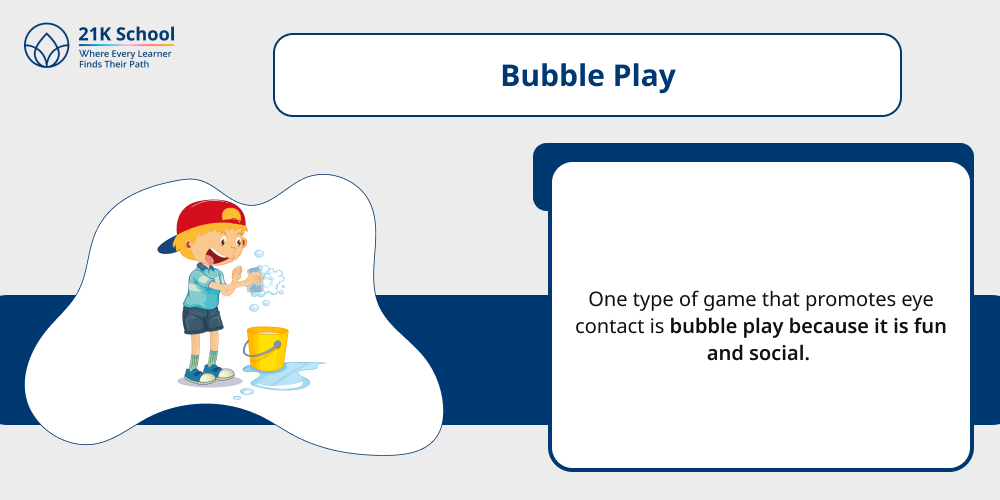
One type of game that promotes eye contact is bubble play because it is fun and social. Then the adult waits till the child turns his or her eyes to him or her and then blows the bubbles.
This facilitates mutual focus and communication. Bubbles are fascinating and attractive to view, and thus the child gets to know that seeing other people can lead to enjoyable, rewarding experiences.
3. Peek-a-Boo
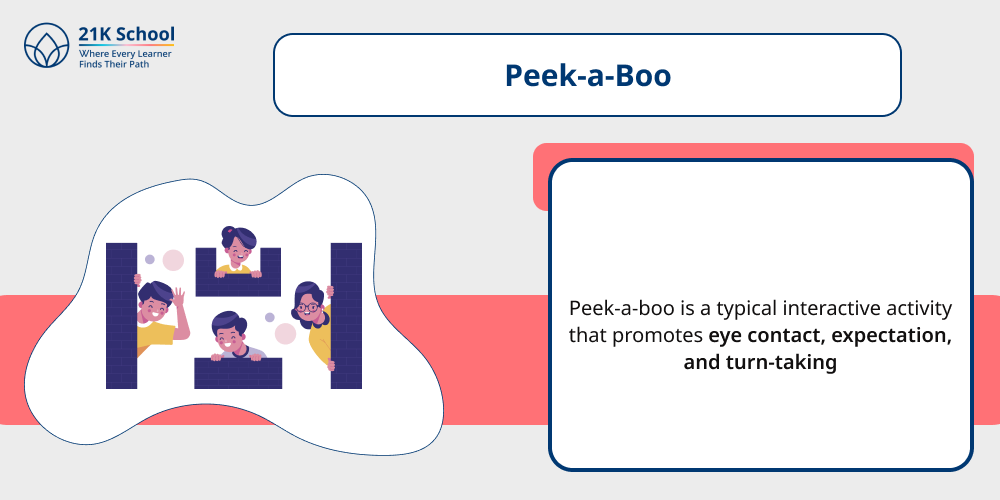
Peek-a-boo is a typical interactive activity that promotes eye contact, expectation, and turn-taking. The child will be tempted to look at the adult during the waiting time because he or she is waiting to see it again.
This repetition helps to form attention to the facial expression, emotional bonding. social emotional learning and initial communication skills in a familiar, cosy and friendly way.
4. Silly Props
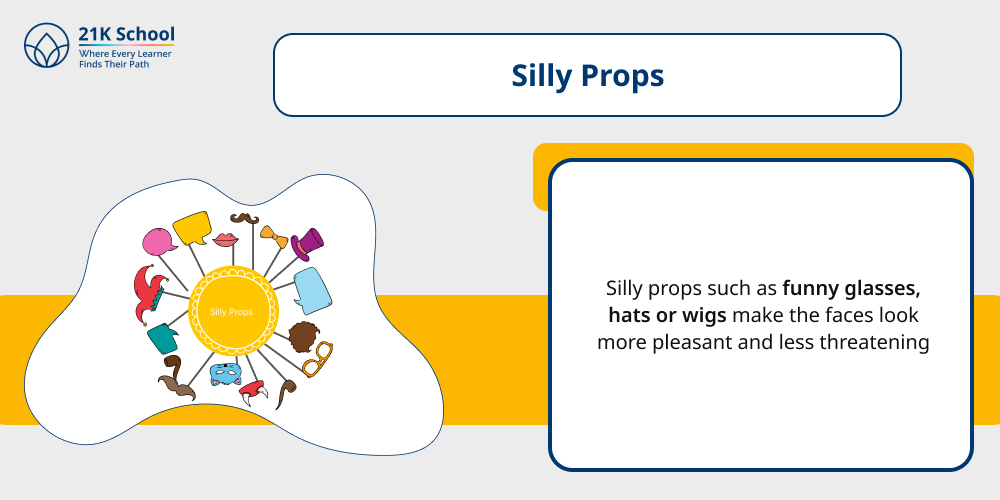
Silly props such as funny glasses, hats or wigs make the faces look more pleasant and less threatening. These props are very appealing, and the children tend to view faces in a natural manner.
Fear is reduced, but curiosity shouldn’t be reduced, and hence, eye contact is entertaining. It will encourage activities, creativity and social interaction without being imposed.
5. Mirror Play
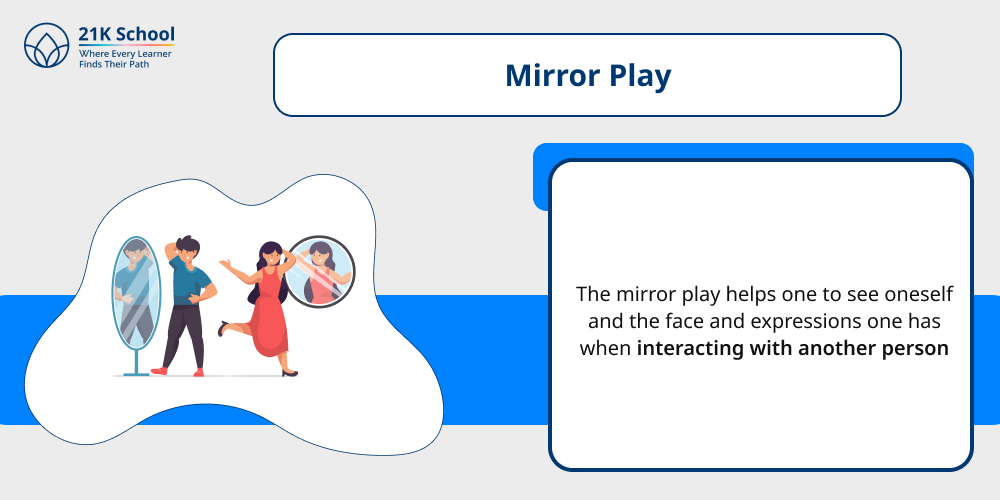
The mirror play helps one to see oneself and the face and expressions one has when interacting with another person. This brings self-awareness and realisation of facial expressions and emotions.
Reflection provides the use of eye and face visual attention in a non-threatening way, and this is linked to the development of social awareness, cultural awareness and emotional recognition.
6. Flash Sticker Game
Small stickers are briefly stuck on the face or eyes of the adult in the flash sticker game. The child looks at the sticker, gazing, and it makes him/her look closely at the eye.
It is a fun method to ensure that people stay focused on faces, encourage attention span and keep short-term eye contact without the explicit learning and inconvenience of verbal learning.
7. Flashlight Face Game
It is a game that is played in the context of interaction by pointing at faces using a flashlight to ensure that they are soft. The dynamic light changes the attention to the face and eyes and makes people more attentive to the images.
The sensory element makes the activity interesting and enjoyable because it enables the autistic persons to be free to stare at the faces, as well as fostering mutual attention and interaction.
8. Video Modelling
Video modelling is the presentation of short video clips of people looking at each other during social interaction in an adequate manner. Autistic persons can watch, stop and re-watch these examples so that they get to have an opportunity to learn visually what is required of them in the social world.
This method removes students’ stress, offers a certain degree of predictability, and makes it easier and faster to learn, unlike social pressure caused by observation in real-time.
9. Social Stories
Social stories are narrated in a straightforward language and pictures of what eye contact is, why one uses it and when.
They prepare one with the social situation by clarifying expectations. The social stories help in simplification, the establishment of trust, and the familiarisation of social rules to people in a systematic and encouraging way.
10. Photo Book of Faces
The presence of a photo book of well-known faces will encourage people to have a practice of looking at eyes, expressions, and emotions at their own pace.
The exposure to the pictures in a serene atmosphere helps to make the social cues aware and appreciated. This game will encourage the visualisation of the face and also reduce the anxiety of face-to-face communication.
11. Roll the Ball
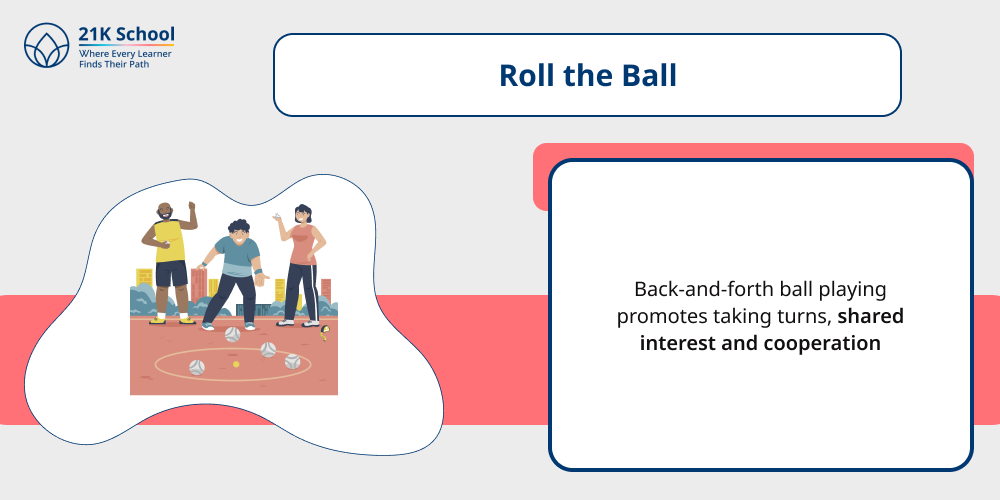
Back-and-forth ball playing promotes taking turns, shared interest and cooperation. Eye contact can be considered a natural behaviour when waiting to get the ball or waiting.
It is an elementary kind of activity, which will foster collaboration skills and communication, and will guarantee that the formation of eye contact will be natural due to playing and not due to teaching.
12. Puppet Games
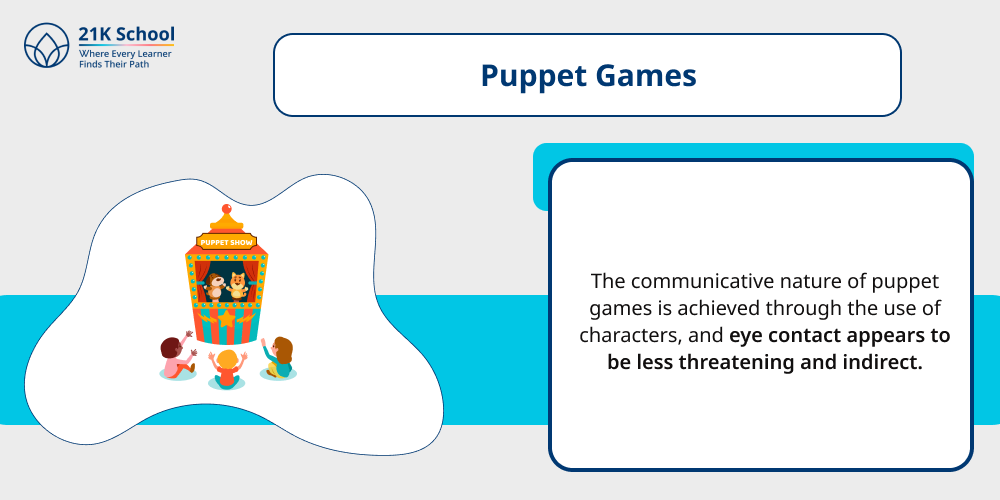
The communicative nature of puppet games is achieved through the use of characters, and eye contact appears to be less threatening and indirect. The kids will be drawn to the faces of the puppet; therefore, faces are given attention.
Puppets develop imagination, communication, and emotional reaction, assist in creating eye contact and social interaction in an entertaining, interesting way.
13. Gesture Singing
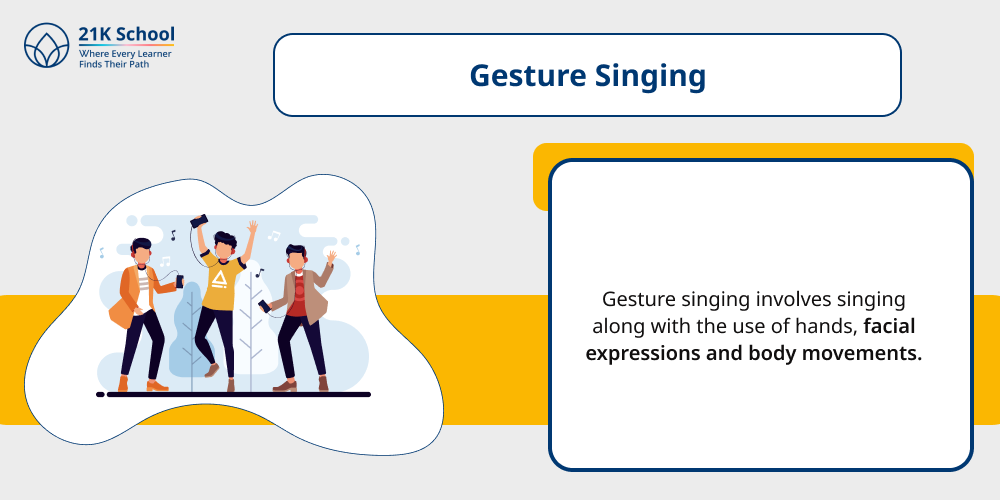
Gesture singing involves singing along with the use of hands, facial expressions and body movements.
The beat and the presentation make children follow their faces and movements. The activity promotes eye contact, imitation, and communication skills, as well as making the learning method enjoyable, interactive, and emotionally involved, using music and movement.
Conclusion
Eye-contact activities are an easy, interactive way of enhancing social skills, emotional attachment and joint attention in autism.
It is possible through low-pressure, playful methods, including games, mirrors, videos, and music when individuals with the autism spectrum could learn to be confident, comfortable, and socialise at their pace.
Eye contact is a good activity that, through practise and reinforcement, grows to be an enjoyable natural interaction of daily life.

You may also want to read