


Do you know structured learning is highly beneficial as compared to unstructured learning?
If yes, you might also know creating a study plan is an effective way of structured learning to get desired academic results.
Whether preparing for school exams, competitive tests, or wanting to manage a daily homework schedule, one must know how to create a study plan.
A study plan solves various problems such as help in time management, improve consistency, guide towards academic and personal goals.
So, let’s understand the best way to create a study plan in a few steps.
Table of Contents
- What Is a Study Plan?
- How to Create a Study Plan: Easy and Effective 9 Step-by-Step Guide
- 1. Step 1: Analyse the Current Schedule
- 2. Step 2: Set Clear Academic Goals
- 3. Step 3: Identify Subjects and Topics to Study
- 4. Step 4: Calculate How Much Time Each Subject Needs
- 5. Step 5: Create a Weekly Study Schedule
- 6. Step 6: Set Study Sessions and Break Intervals
- 7. Step 7: Add Revision Time
- 8. Step 8: Keep Time for Practice Tests
- 9. Step 9: Stay Flexible and Adjust Your Plan
- How to Create A Study Plan: Common Mistakes to Avoid
- Conclusion
What Is a Study Plan?
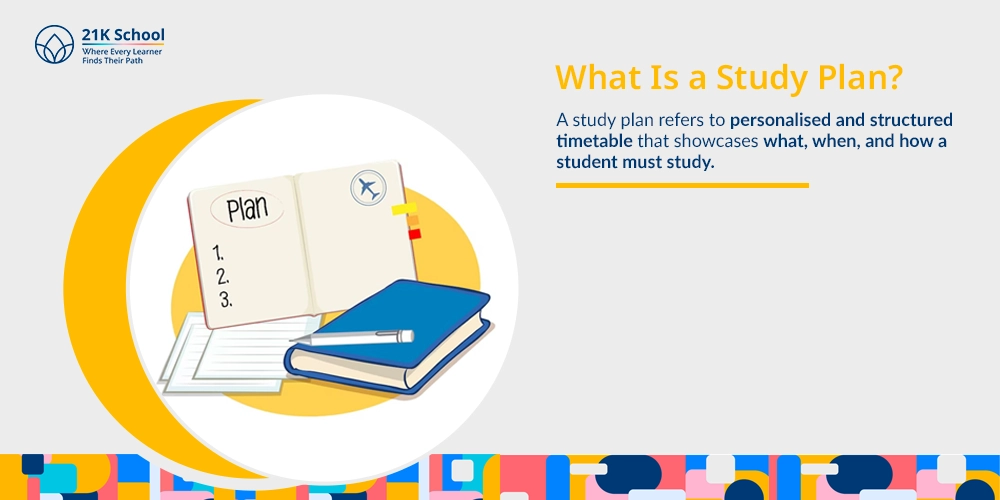
A study plan refers to personalised and structured timetable that showcases what, when, and how a student must study.
Through an effective study plan students can organise learning by covering all subjects and concepts.
A good study plan includes:
- A clear daily and weekly schedule
- Time allocated for each subject
- Regular revision sessions
- Practice tests or assessments
- Breaks and rest periods
- Flexibility for adjustments
How to Create a Study Plan: Easy and Effective 9 Step-by-Step Guide
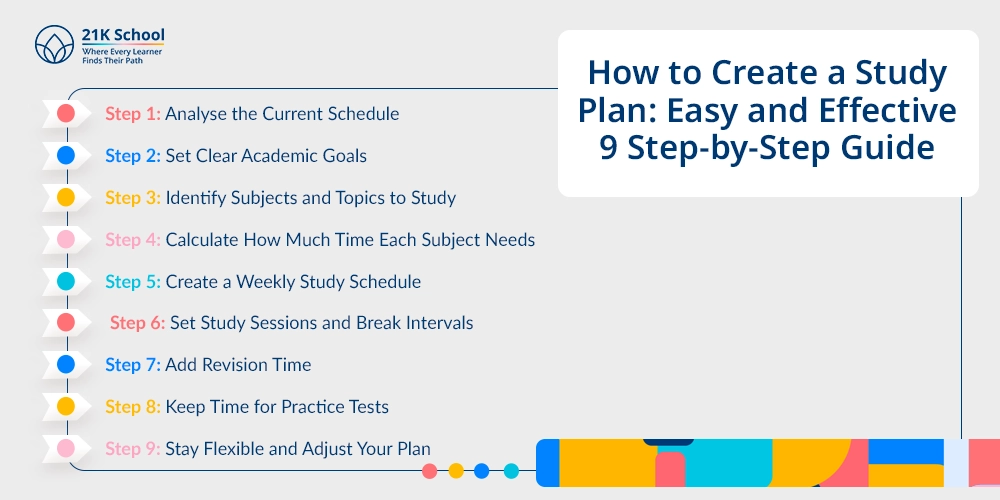
Given below is a step-by-step guide on how to create a study plan for structured learning:
1. Step 1: Analyse the Current Schedule
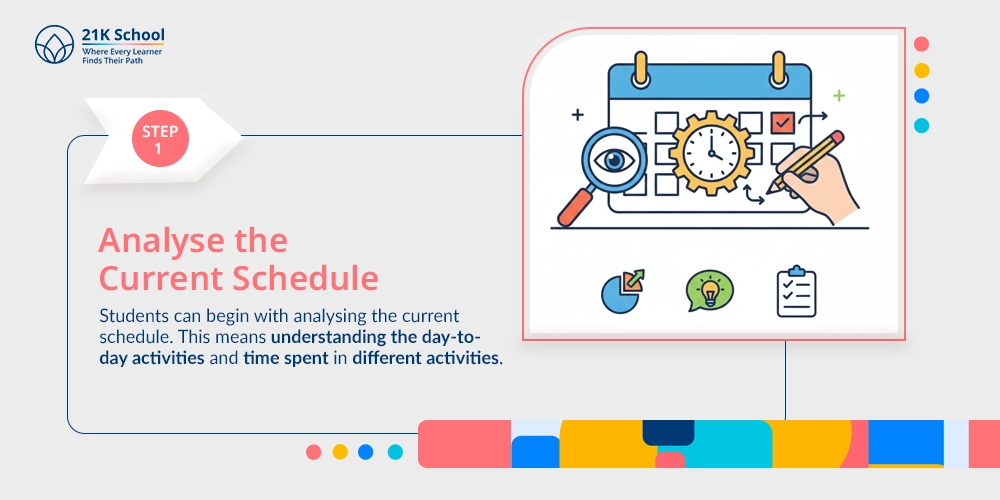
Students can begin with analysing the current schedule. This means understanding the day-to-day activities and time spent in different activities.
Students can ask questions like:
- How many free hours do I have in a week?
- How can I learn and participate in co-curricular activities?
This helps students to identify areas they need to improve for gaining good marks.
2. Step 2: Set Clear Academic Goals

The primary objective of creating an effective study plan is to achieve academic goals.
Students must set clear academic goals while making study plans which help them to understand the progress.
Individuals must differentiate types of academic goals such as short-term and long-term goals.
3. Step 3: Identify Subjects and Topics to Study
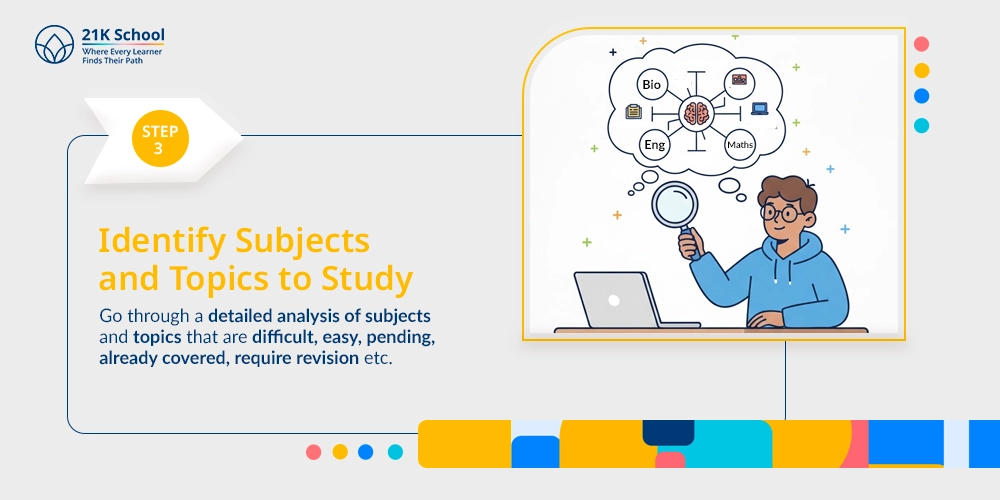
The third step includes identifying subjects and topics to study. By making a complete list of subjects and topics students can avoid missing.
Go through a detailed analysis of subjects and topics that are difficult, easy, pending, already covered, require revision etc.
4. Step 4: Calculate How Much Time Each Subject Needs
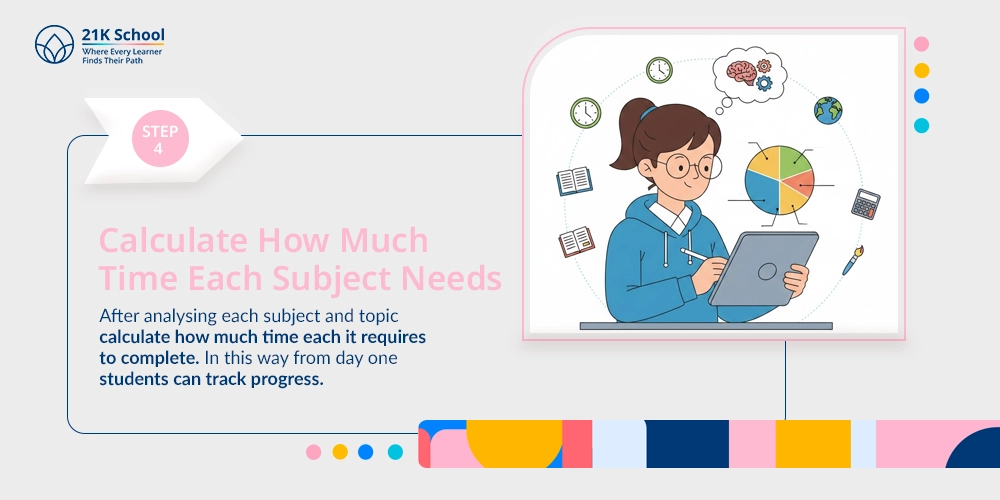
After analysing each subject and topic calculate how much time each it requires to complete. In this way from day one students can track progress.
Students can divide their time by:
- Scheduling more hours to difficult subjects.
- Less time to already learned topics.
- Manage hours to revise and other activities.
5. Step 5: Create a Weekly Study Schedule

Creating a weekly study schedule is more effective for students which offers flexible learning time.
While creating a study schedule must consider:
- Spread subjects evenly
- Avoid continuous studying
- Combine theory and practical
- Customise tasks on weekends
6. Step 6: Set Study Sessions and Break Intervals
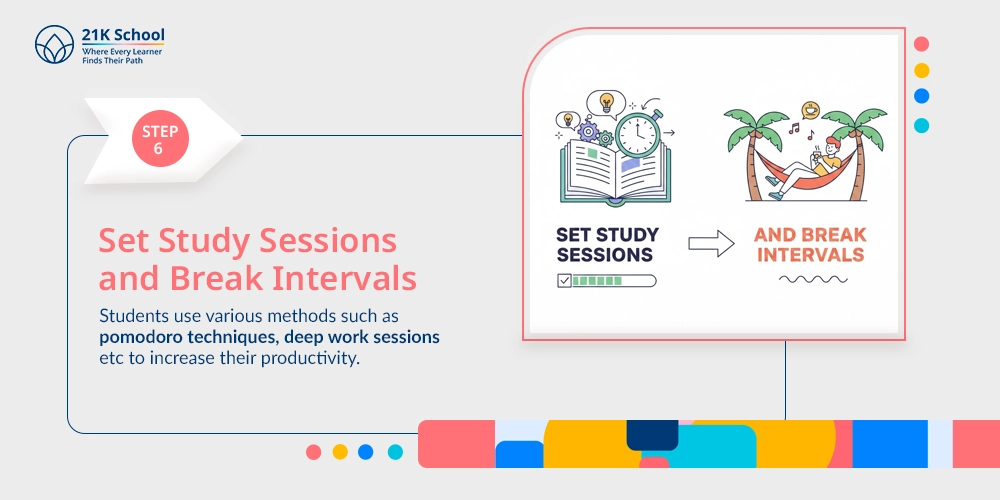
The next step is to set study sessions and break intervals in plan to make it more effective. Remember, continuous learning for long hours can focus and burnout.
Students use various methods such as pomodoro techniques, deep work sessions etc to increase their productivity.
7. Step 7: Add Revision Time
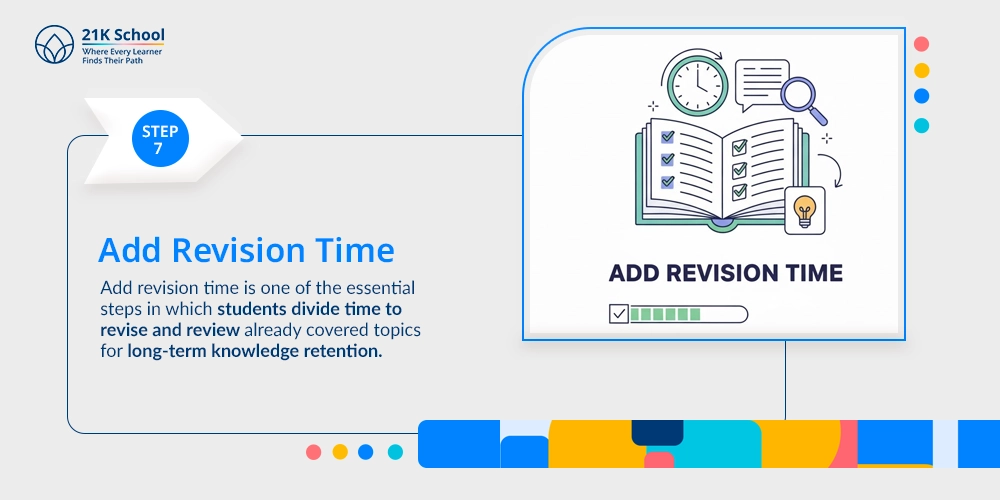
Add revision time is one of the essential steps in which students divide time to revise and review already covered topics for long-term knowledge retention.
Remember, most of the students lack to achieve good marks because they forget. But, one can use revision techniques like:
- Active Recall
- Spaced Repetition
- Testing Yourself
8. Step 8: Keep Time for Practice Tests
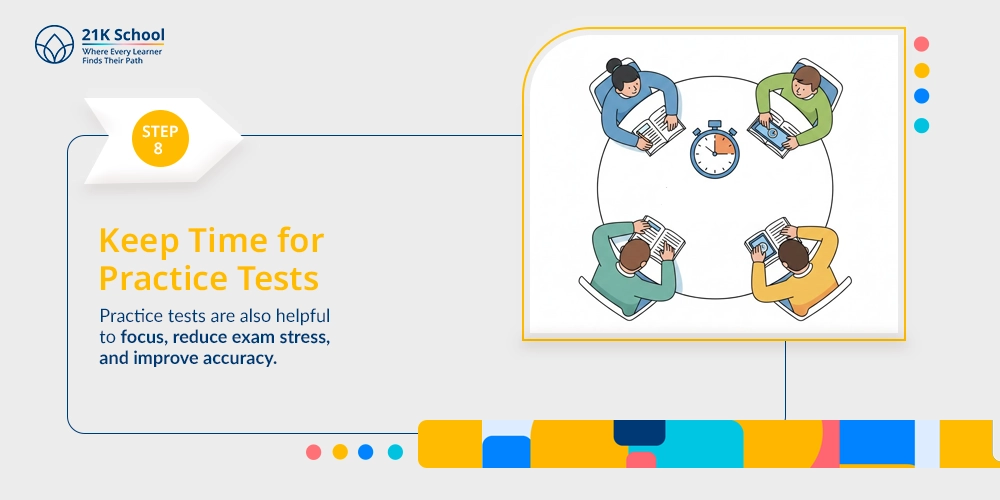
Students should manage their time to plan for practice tests. This gives them strength to score good marks in exams.
Practice tests are also helpful to focus, reduce exam stress, and improve accuracy. Students can take:
- Chapter-wise tests
- Mock tests every two weeks
- Previous year’s question papers
9. Step 9: Stay Flexible and Adjust Your Plan
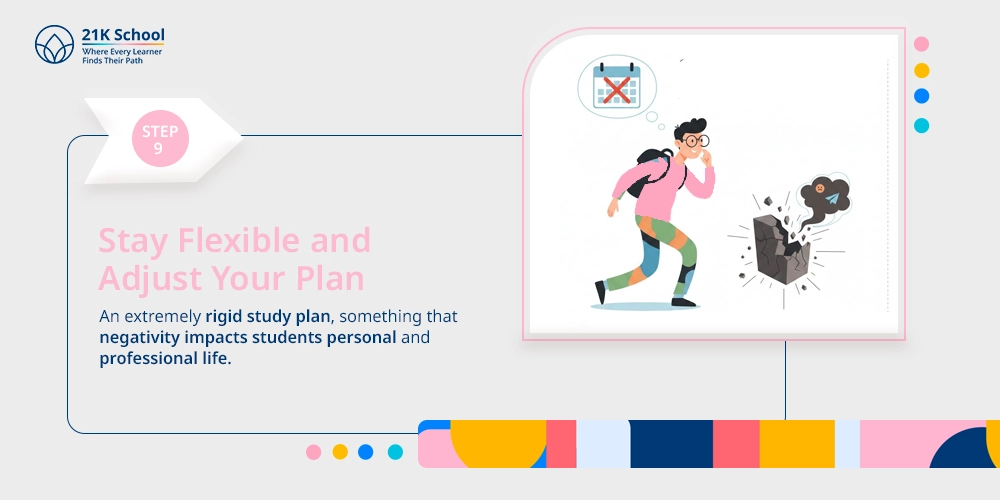
An extremely rigid study plan, something that negativity impacts students personal and professional life.
It should be flexible to deal with upcoming problems like unexpected events, school activities, or illness.
The solution is to try to complete tasks and customise on weekends to maintain lifelong learning.
How to Create A Study Plan: Common Mistakes to Avoid
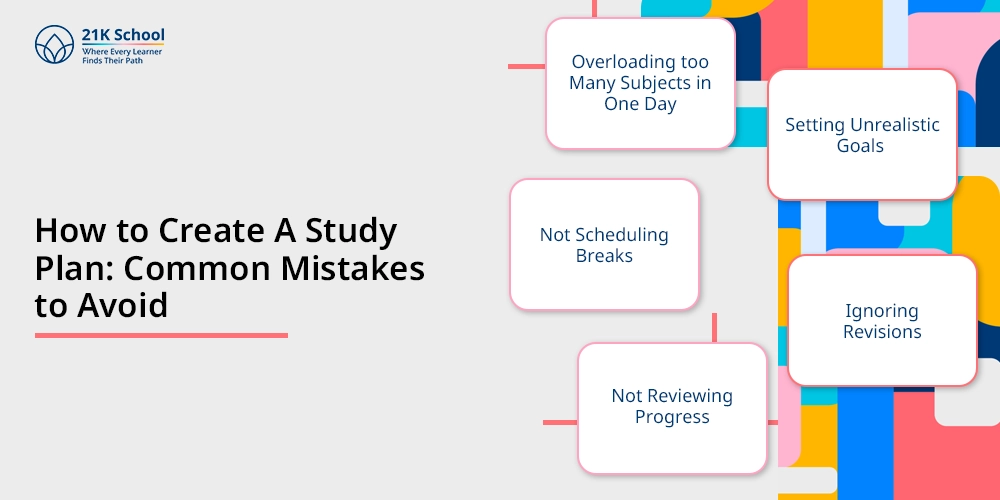
Sometimes students make mistakes that impact their study plan. Some common mistakes to avoid are:
1. Overloading too Many Subjects in One Day
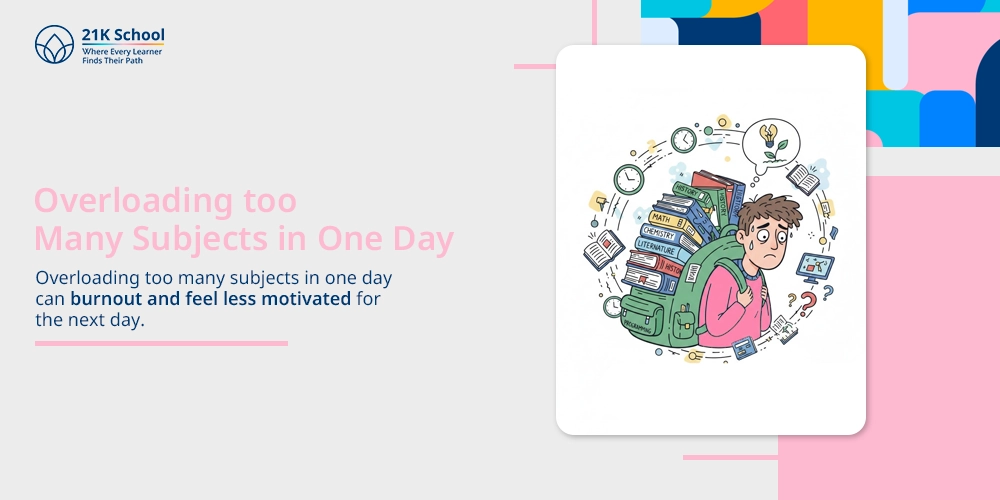
Overloading too many subjects in one day can burnout and feel less motivated for the next day.
Remember, always plan for realistic goals. This means not to less or overload, limit the schedule by planning a few subjects a day.
2. Setting Unrealistic Goals
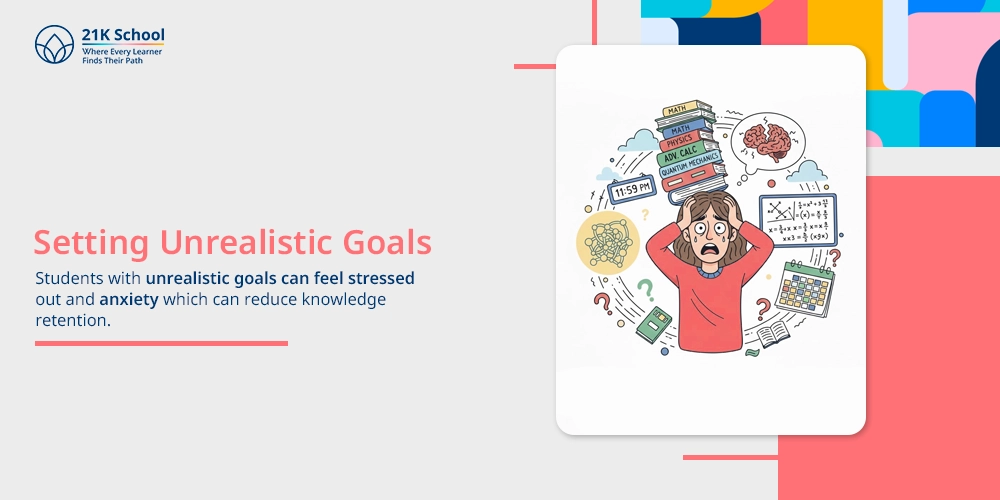
Students with unrealistic goals can feel stressed out and anxiety which can reduce knowledge retention.
It is important to avoid long study plans. Instead students can break the task into smaller ones to learn smartly without distractions.
3. Not Scheduling Breaks
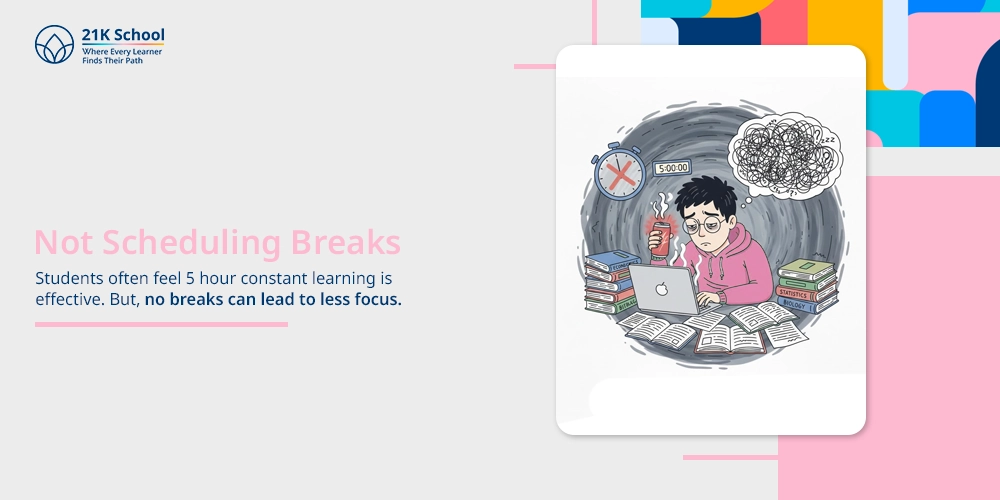
Students often feel 5 hour constant learning is effective. But, no breaks can lead to less focus.
Breaks are essential to regain concentration and freshness. Remember, a successful study plan always includes breaks/intervals.
4. Ignoring Revisions
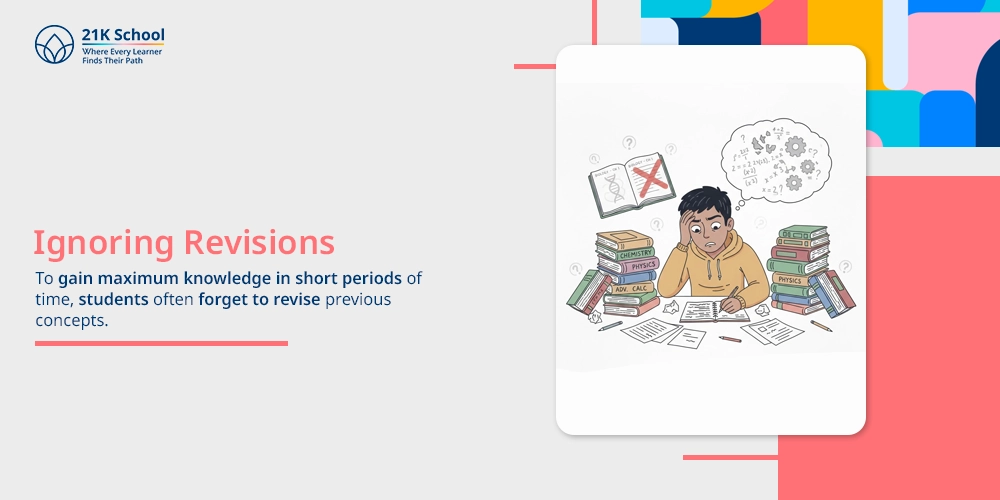
To gain maximum knowledge in short periods of time, students often forget to revise previous concepts.
Regular revision is important to retain maximum information. Students must plan accordingly.
5. Not Reviewing Progress
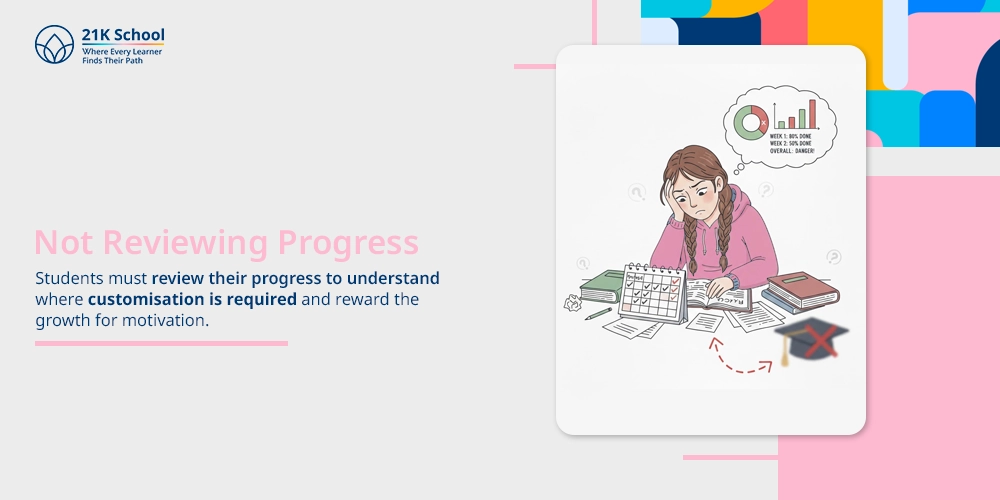
Creating a study plan is not enough to get desired results.
Students must review their progress to understand where customisation is required and reward the growth for motivation.
Conclusion
Hope you have reached the right place to get a detailed guide on how to create a study plan. For students it is an ideal way to conquer both short-term and long-term academic goals.
By creating a well planned schedule students are able to focus on their study, participate in other activities, and gain success.
Remember, the goal is to become progressive start by starting with small steps to big to achieve long-term goals with the right strategy.

You may also want to read

What is CBSE? Full Form, History, Structure & Key Benefits

- Last updated on: 28 Feb, 2026
- 12 min read