

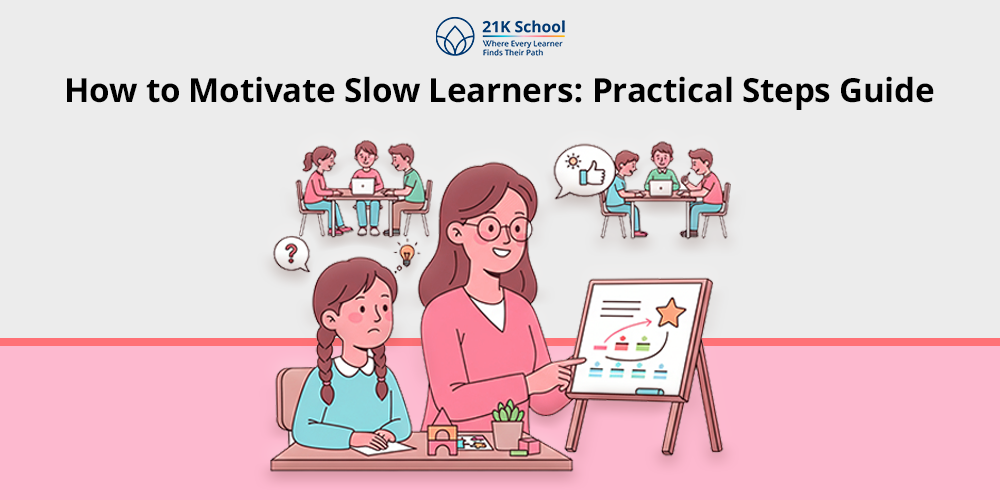
Are your slow learner students feeling demotivated in the class lessons?
If the answer is yes, you need to plan something that would be effective for your learners and motivate them to learn and be attentive.
Slow learners do need extra support and care when it comes to maintaining pace of learning. Due to their less confidence, you need to plan how to build confidence in such children.
Let’s get started with the following article and see in detail who these slow learners are and how they can be motivated with practical solutions.
Table of Contents
- Who are Slow Learners?
- How to Motivate Slow Learners: 15 Effective Ways
- 1. Create a Safe and Encouraging Environment
- 2. Use Multi-Sensory Teaching Methods
- 3. Break Learning into Small, Manageable Steps
- 4. Build Confidence and Engagement
- 5. Provide Consistent Feedback and Encouragement
- 6. Allow More Time and Flexibility
- 7. Acknowledge Small Accomplishments
- 8. Set Achievable, Clear Goals
- 9. Explain as Directly as Possible
- 10. Individualized Instruction
- 11. Avoid Labels and Maintain High Expectations
- 12. Parent-Teacher Partnership
- 13. Encourage Peer Support
- 14. Ensure That The Learning is Fun
- 15. Be Supportive
- Conclusion
Who are Slow Learners?
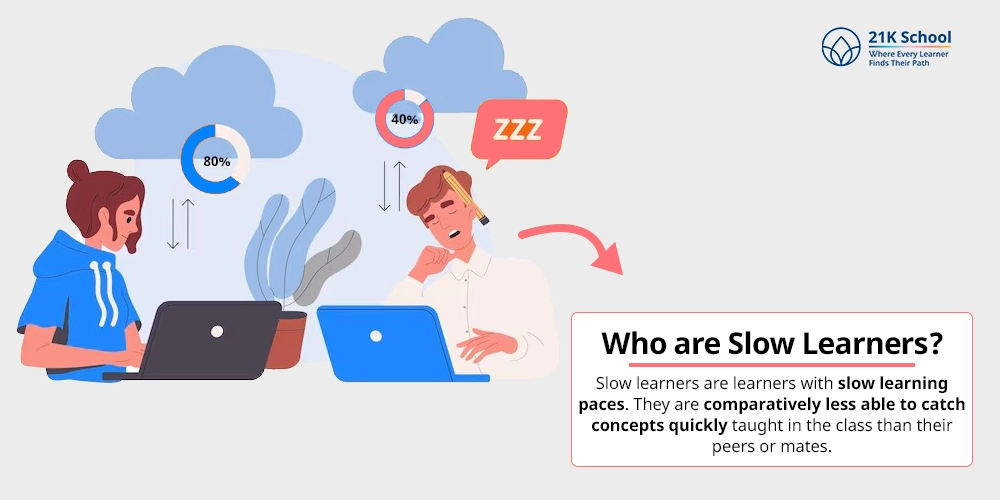
Slow learners are learners with slow learning paces. They are comparatively less able to catch concepts quickly taught in the class than their peers or mates.
While it might seem like, despite having learning struggles they do not have any categorisation under DSM-5 as a disorder. They just have below-average intelligence when compared to the main population of students.
Such students face issues with higher-order thinking skills that make them feel less confident in themselves and also while making friends in educational settings.
These things collectively make them disinterested in studies in the classroom and thus you need to work on how to motivate slow learners.
How to Motivate Slow Learners: 15 Effective Ways
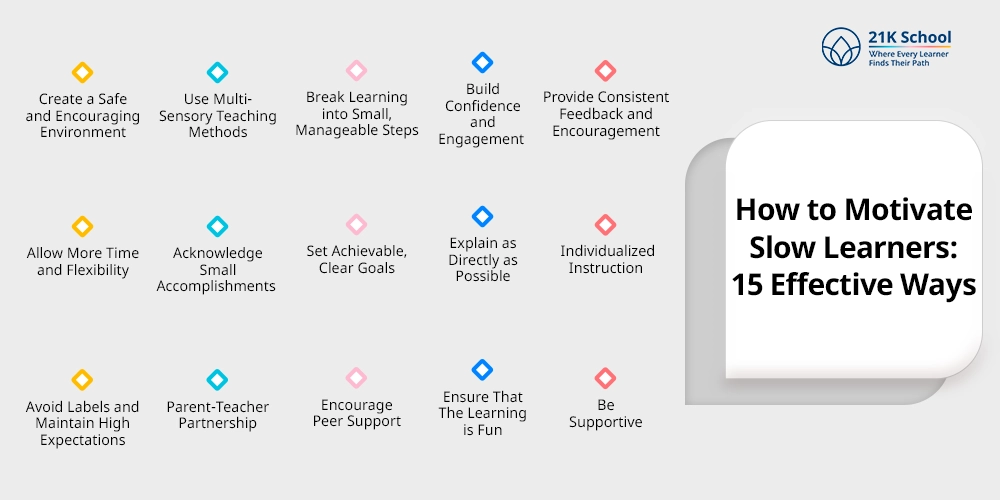
Learners with slow learning paces need motivation to study actively and show best performance in their classes. For that purpose you should follow and remind yourself of certain steps that are as follows:
1. Create a Safe and Encouraging Environment
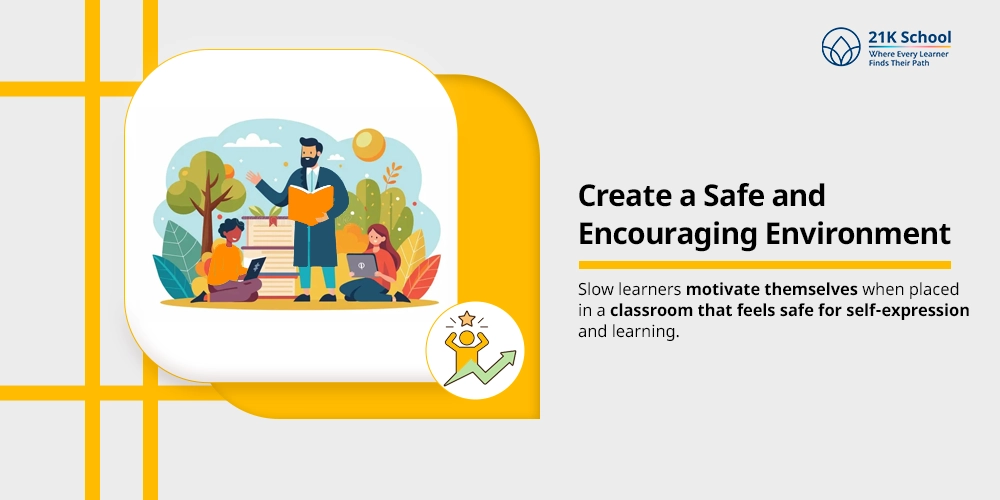
Slow learners motivate themselves when placed in a classroom that feels safe for self-expression and learning.
Being a teacher, you can create an environment that supports their abilities and encourages them to achieve more and feel appreciated even on small successes.
2. Use Multi-Sensory Teaching Methods
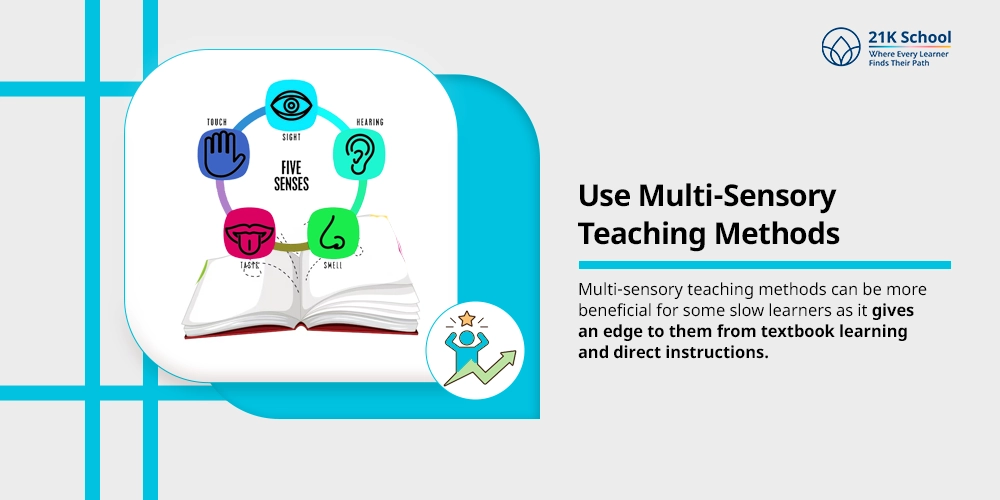
Multi-sensory teaching methods can be more beneficial for some slow learners as it gives an edge to them from textbook learning and direct instructions.
Their multiple senses work together at a time with multi-sensory techniques of visual learning and audio.
3. Break Learning into Small, Manageable Steps
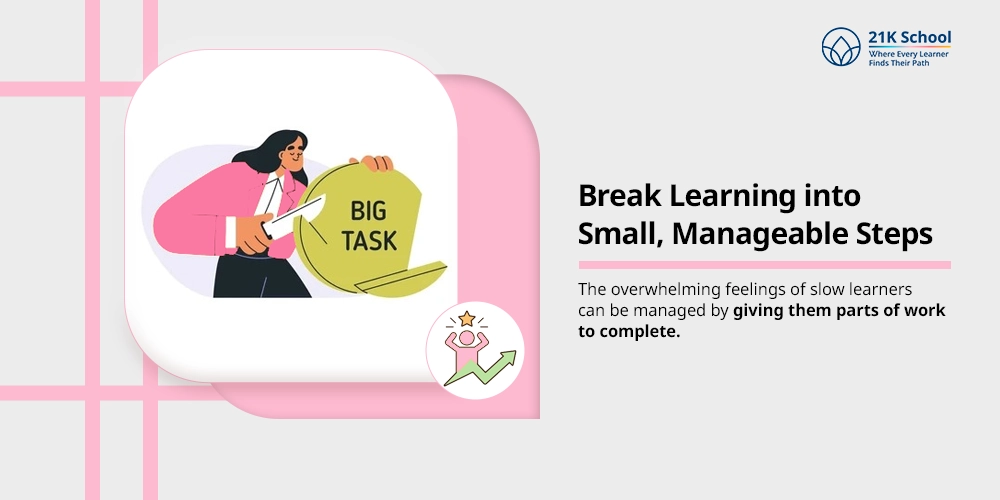
The overwhelming feelings of slow learners can be managed by giving them parts of work to complete.
This could reduce the student stress that occurs when you give them multi-step tasks.
When each step of the task is instructed directly to them, they feel relieved and increase their efficiency in performance.
4. Build Confidence and Engagement
Engage slow students in learning activities that might develop confidence in them through bringing fun in learning and increase student engagement.
Ask students what type of activities they like. Either group or individual activities will be chosen by them. You can then plan and execute tasks in accordance with their interest.
5. Provide Consistent Feedback and Encouragement
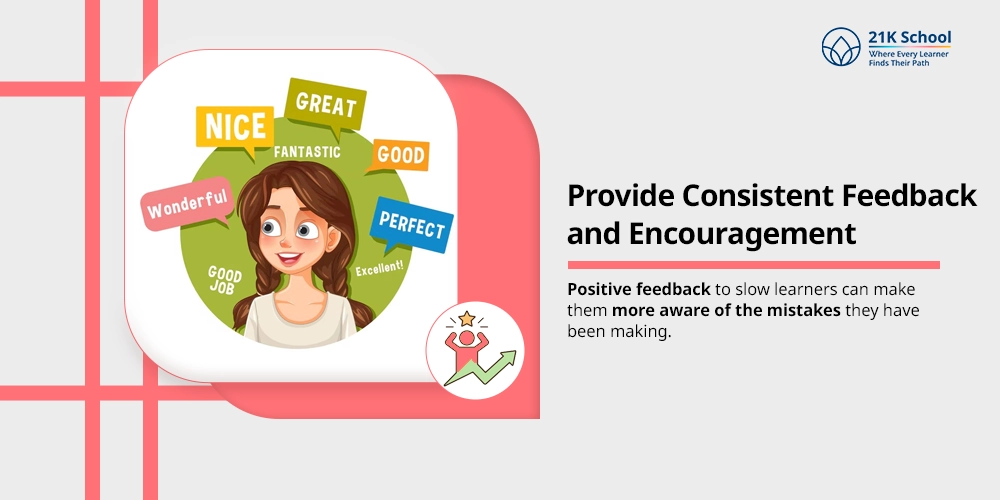
Positive feedback to slow learners can make them more aware of the mistakes they have been making.
They might learn how to avoid the same mistakes the next time, while learning something new.
You can also encourage them with repeated appreciation and small rewards.
6. Allow More Time and Flexibility
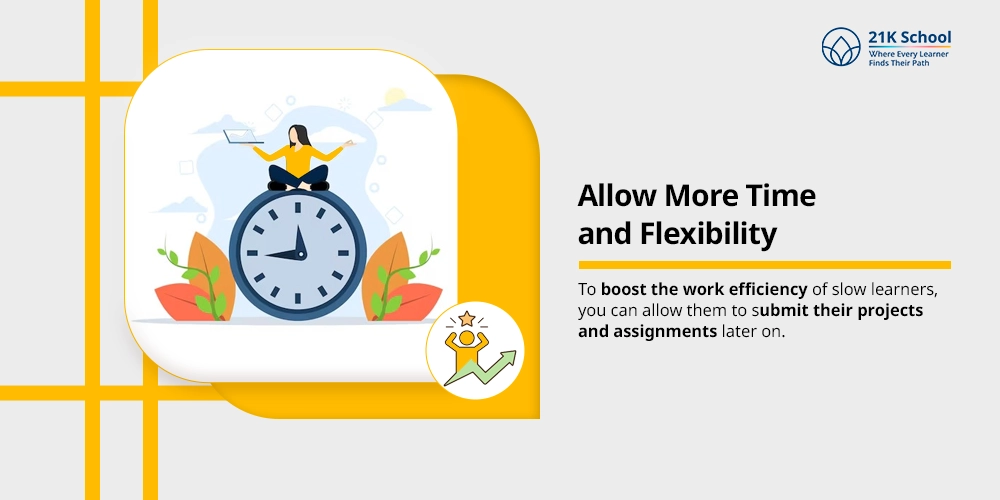
To boost the work efficiency of slow learners, you can allow them to submit their projects and assignments later on.
This way even if they feel underconfident and that they are any less, they won’t feel left behind.
Flexibility with deadlines and extra time can be a great support for the slow students’ learning.
7. Acknowledge Small Accomplishments
Here less is more. So you should deliver small acknowledgement gestures towards slow learners on their small achievements.
Positive reinforcement from teachers can motivate them to participate and perform better whenever the chance is there.
8. Set Achievable, Clear Goals
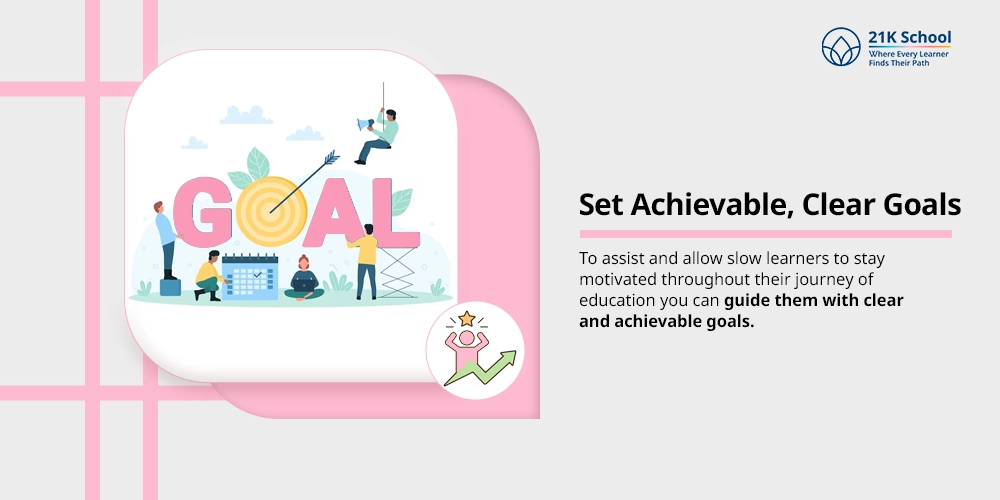
To assist and allow slow learners to stay motivated throughout their journey of education you can guide them with clear and achievable goals.
Once they get a vision towards their action, they can achieve more in a lesser period of time. Students should be monitored through regular check-ins for progress and tracking the next step towards completion of the tasks.
9. Explain as Directly as Possible
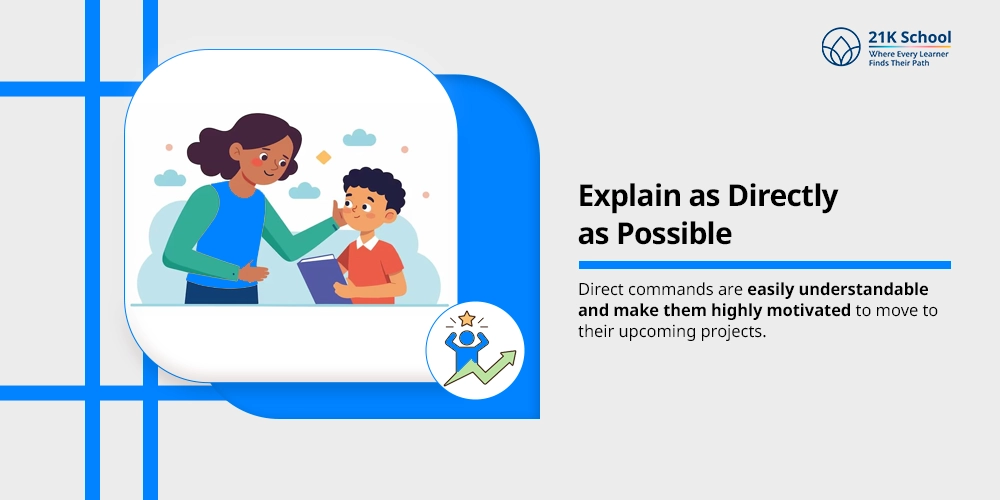
We very well know that the slow learners have a low level of understanding because of low IQ. This creates the need for why the instructions given to them should be directly delivered as neutrally as possible.
Direct commands are easily understandable and make them highly motivated to move to their upcoming projects.
10. Individualized Instruction
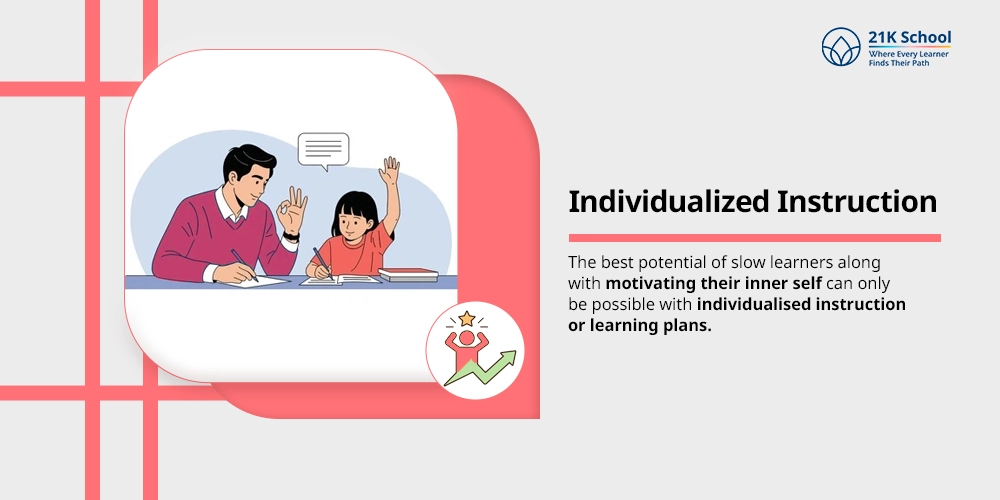
The best potential of slow learners along with motivating their inner self can only be possible with individualised instruction or learning plans.
Each slow learner has their different ways and levels of grasping lessons, so they should be taught as per their wants and needs.
For example, you can use peer-to-peer education for those who hesitate to ask questions, or may have varied reading levels for different intellectuals.
11. Avoid Labels and Maintain High Expectations
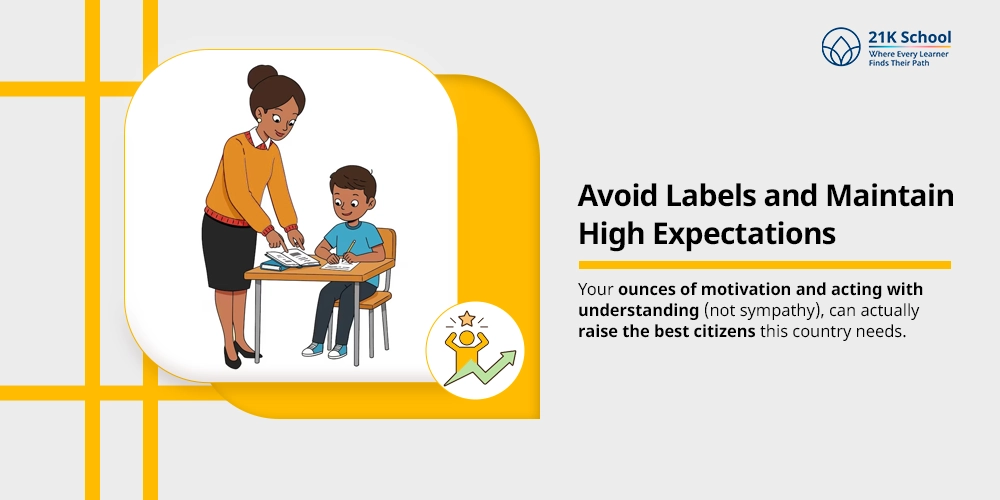
Slow learners are more than these labels, that is why maintain your high expectations from them.
If you can do more, motivate them to function with consistency and without feeling discouraged with the labels people put on them.
Your ounces of motivation and acting with understanding (not sympathy), can actually raise the best citizens this country needs.
12. Parent-Teacher Partnership
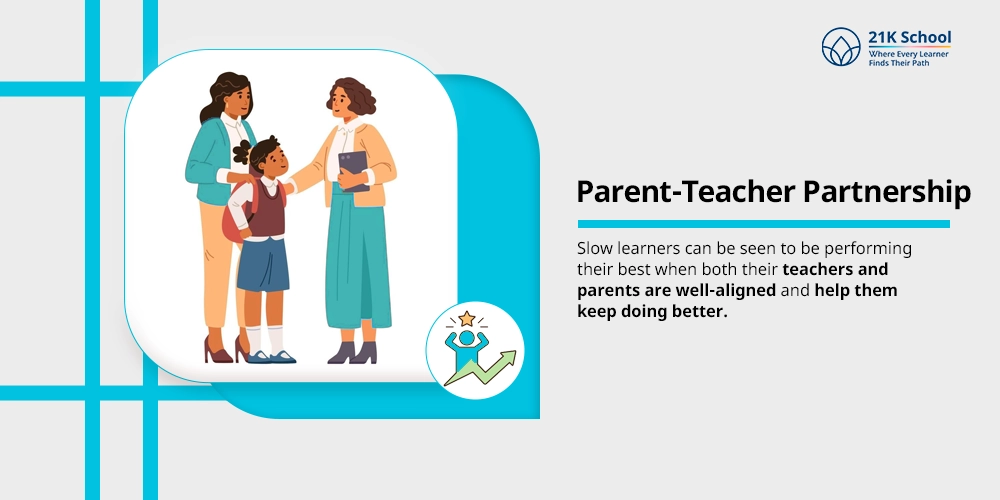
Slow learners can be seen to be performing their best when both their teachers and parents are well-aligned and help them keep doing better.
This kind of environment boosts the parent-child relationship when support comes from home too. Teachers can let the parents know of the feedback of their children on their performance progress.
13. Encourage Peer Support
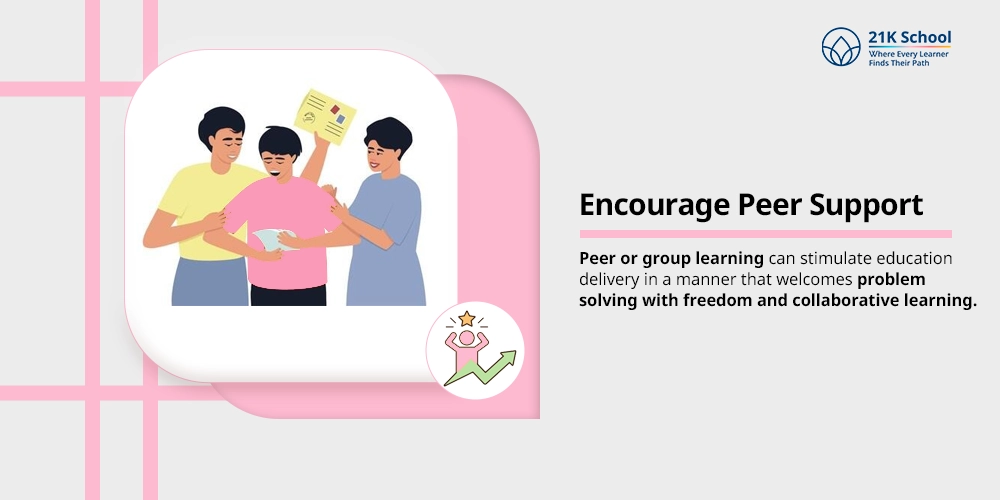
Peer or group learning can stimulate education delivery in a manner that welcomes problem solving with freedom and collaborative learning.
Chosen teams should learn teamwork and be supportive towards each other. Their prime focus should be to instill zeal and confidence in slow learners and complete the tasks as a team.
14. Ensure That The Learning is Fun
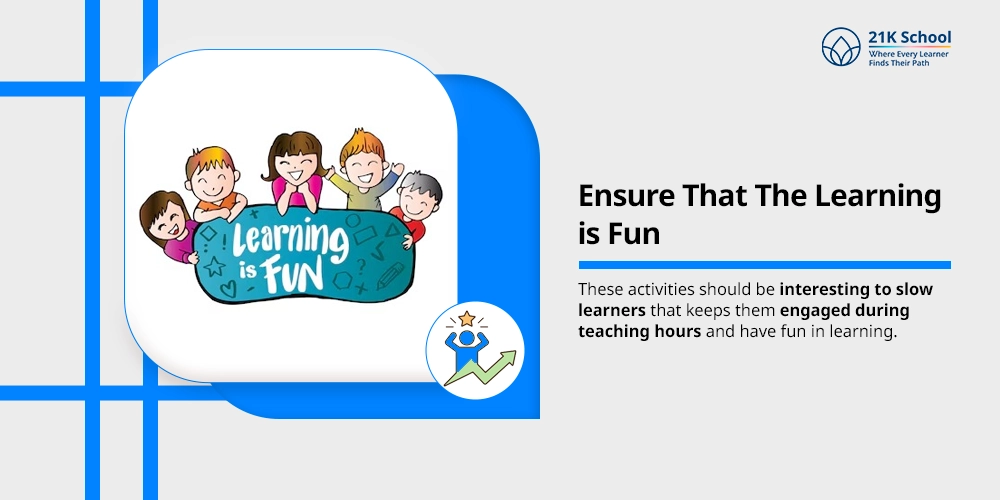
You might have seen that the slow learners, as they find it hard to get the concepts in one go, get easily distracted and bored in their classroom period.
One solution that can be reliable here is adding fun learning activities in your teaching methods. These activities should be interesting to slow learners that keeps them engaged during teaching hours and have fun in learning.
15. Be Supportive
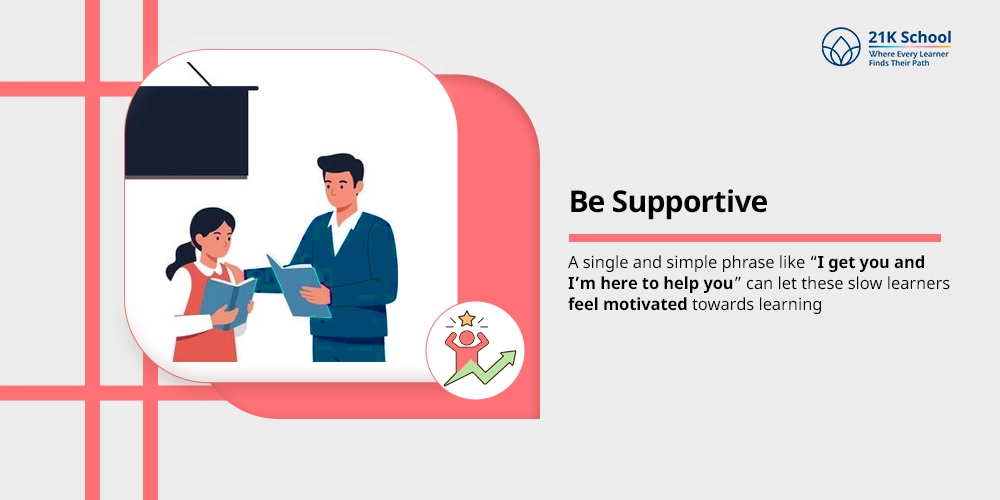
Slow learners already face a lot of non-deserving criticisms and scolding from people around them. Teachers of 21K School should be supportive given the advanced training they get for providing inclusive education in their class.
A single and simple phrase like “I get you and I’m here to help you” can let these slow learners feel motivated towards learning and have 21st century future skills for students.
Conclusion
Motivation is the key factor to continue any possible task in the world. And slow learners due to their inefficiencies often feel lost and stuck as if they cannot ever be enough.
So with an assisted plan of action and following steps written above, teachers or parents or both can make their journey memorable when learning new things by being at their slow learners’ side.
Peer education, small chunk learning, direct and differentiated instruction all can collaborate and it is possible for slow learners to stay motivated and achieve their best potential.

You may also want to read