

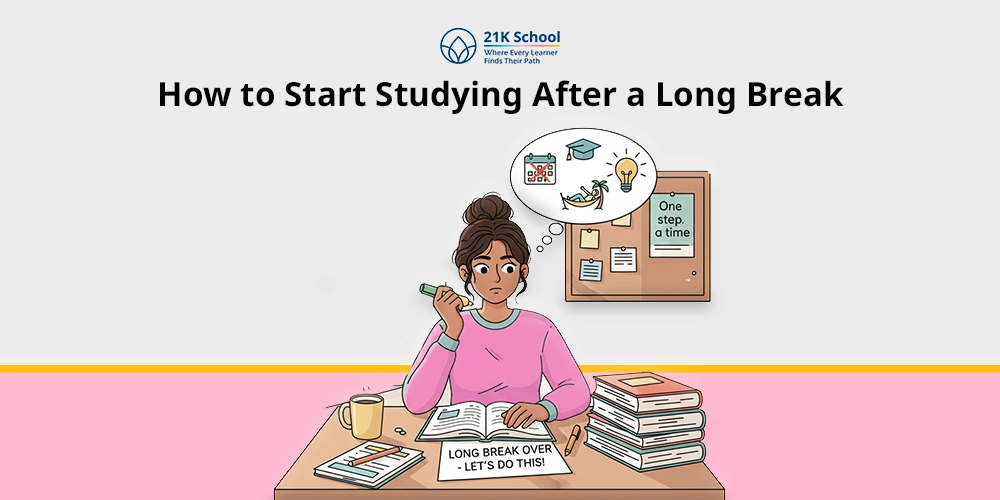
Are you starting your studies after a long break, but are unable to focus? Here is what you can do.
It might be an overbearing and stressful thought after spending some time out of the study. It can damage attention, lead to a low level of motivation, and even familiar things can be difficult. A lot of individuals are unable to know what to start with and where to go back to the old way of studying.
To hurry and start will not assist in the task; however, a slow and gradual pace of taking the task would be a sign of a successful restart. One has the opportunity to regain trust and build a sense of longevity through making some goals, establishing a systematic learning plan, and assuming the role of the learner.
Productivity and retention are also encouraged by the methods of minimising distractions, time management and active learning methods. Additionally, good rest and proper care of students ought to be provided to ensure mental sanity and productivity in learning.
Students can resume studying or their goals in education or personal life without any difficulties, only when patient, repetitive, and possessing the appropriate strategies.
Table of Contents
Top 12 Ways to Start Studying After a Long Break
After a long break, children must begin with a light routine to build momentum, set small, achievable goals and avoid distractions to maintain focus.
Make sure that you are progressively increasing the amount of time you spend studying, have a study place and employ the active learning measures such as summarising as a means of knowledge retention. Here you can find out how you can get started studying after taking a long break.
1. Start Small
The best way to start small is after a long break, since one can rebuild his or her focus and concentration over time. Small and controllable study sessions reduce the burden on the mind and eliminate the sense of being overwhelmed.
As the concentration level is enhanced, the period of study can be extended at a slow pace. This creates discipline that would be here to stay and lifelong learning.
2. Create a Study Routine
Study routine brings order, consistency and predictability to the learning process. Habits can be formed through studying on a regular basis and minimising decision fatigue. Routine helps the brain to concentrate on a given time, hence productive and focused.
The time and pressure are minimised over time, and the examination becomes a habit. The structured sessions are also effective in their time management, to have a continuous flow, to gain momentum, and this way, the study habits will not be very demanding to maintain in the long term.
3. Create a Positive Mindset
Positive attitude increases motivation, focus and resilience. Having faith in what you can achieve is a way of keeping on track with your goal and getting rid of self-doubt. The ability to view challenges as opportunities rather than discouragement can make students grow personally and academically without much stress.
Through a growth mindset, it will ensure that the process of studying is not only effective but also interesting and empowering and, therefore, active interaction and learning activities will lead to significant progress.
4. Set Clear Goals
Learning sessions are guided and focused through specific and achievable objectives. They help the individual to focus on some of the activities and be able to gauge progress. Goals enhance motivation since they are specific objectives to be realised.
Organic accomplishment of goals also enhances the slow acquisition and enhancement of skills.
The clear goals will help to avoid the habit of studying in general and reduce the degree of stress, make the learning process purposeful, systematic, and coherent with greater academic or personal objectives, keep focused, and progress.
5. Start with Easier Subjects
When someone is regaining confidence and interest in doing a certain task, it is always better to begin with easy topics or activities. This enables students to fit in the learning schedules without being stressed. Accomplishing a form of easy tasks creates the impression of success and motivates one to proceed.
The perseverance and cognitive preparedness are accumulated with progressively greater difficulty. This will form a balance between going back to normal study habits and alleviating stress.
6. Use the 5-Minute Rule
The 5-minute technique is a productive way of getting rid of procrastination and beginning learning sessions. In most instances, after an individual starts, it is easier to get some form of momentum, which translates to long working hours.
The methodology renders the process less intimidating, and devotion is nurtured by the methodology, contributing to rebuilding the usual study routine.
7. Limit Distractions
Distractions should be minimised as a way of studying effectively. The concentration of the environment enables the brain to dedicate the greatest concentration to work and improve comprehension and memory.
No interruptions and a positive learning environment will enhance efficiency, decrease mental stress and make the learning sessions more tedious and productive.
It will also help in time management through minimising distractions, and learning objectives will be achieved in a uniform manner, which will result in a more coordinated and efficient learning process.
8. Use Active Learning Methods
Active learning enhances understanding, memory, and critical thinking skills. It entails questioning, summarising, analysing or explaining things aloud and taking part in material.
Active learning would encourage the student to be active and improve their memory for studying, thereby finding the information easier to remember. This not only makes the process of studying interactive, but it also brings in more attention, better retention and long-term learning outcomes, and it also makes the process itself more meaningful and productive.
9. Practice Time Management Skills
Time management enhances productivity and gets rid of study stress. Establishing a schedule, prioritising, and allocating time to tasks makes the subjects balanced. Time management is a good way of getting rid of last-minute cramming and having a regular method of studying.
The training of these skills also improves organisation and discipline allows learning to be well-organised and goal-oriented. Good time management skills would lead to long-term productivity and achievement in education.
10. Utilise Online Resources
Various online resources provide interactive and flexible learning materials. Learning resources are no longer isolated in terms of traditional learning and are now complemented by online lessons and videos.
Online learning resources help to increase the level of knowledge, learning and motivation. The integration of these tools into a study timetable makes this process even more enriching, and the introduction of additional support, as well as the sustainability of the education following a break.
11. Stay Motivated
Motivation leads to hard work and persistence. Self-motivation maintains attention, endurance and perseverance in hardships. Determination is enhanced by positive reinforcement and awareness of progress.
Constant motivation helps the individual to stick to the habit of studying regularly, reaching the goals and going over the hurdles that may occur in the process of learning.
12. Get Enough Sleep
Sleep improves cognitive function and the consolidation of memory. Well-rested individuals are more focused, attentive and clear-headed.
Sleep is effective to enhance learning, vitality and good health. The brain will retain information better and process it well, which will make it work best during the study sessions due to regular sleeping habits.
Learn how many hours of sleep is enough for a student.
Final Thought
Returning to studying after a very long break can be very challenging, but with the right approach, it can be accomplished.
Learners can get back on track and gain confidence and consistency by starting small, being organised, having a positive attitude and using good techniques.
Explore how to build confidence in children.
Motivation, rest and routine work hand in hand as a sure way of gradual progress and success in the long run.
It takes patience and perseverance to allow any individual to overcome setbacks, overcome obstacles and continue to pursue his or her academic or personal learning goals.

You may also want to read