


In this digital world, classrooms are filled with tools that enhance today’s learning.
One of the ideal approaches like information and communication technology in education plays a crucial role.
Integration of various ICT tools in education is the modern solution of learning where education is more interactive, engaging, accessible, and efficient.
That’s why ICT tools in education have become an essential part of students’ lives. Below we will discover what ICT tools are and useful examples.
Table of Contents
What are ICT Tools in Education?
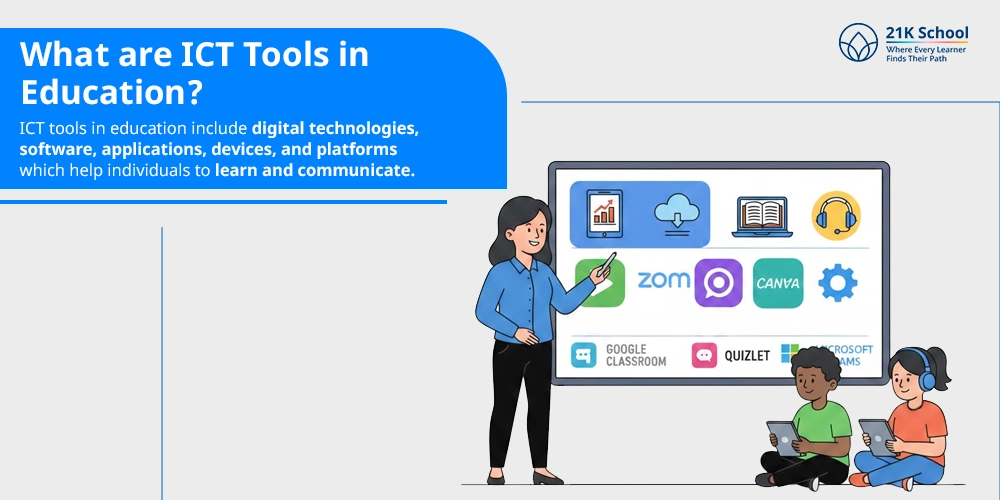
ICT tools in education include digital technologies, software, applications, devices, and platforms which help individuals to learn and communicate.
These tools are effective to make students learning interactive, student-centred, flexible, and accessible to everyone. To know more go through advantages of ICT in education in detail.
15 Popular ICT Tools in Education
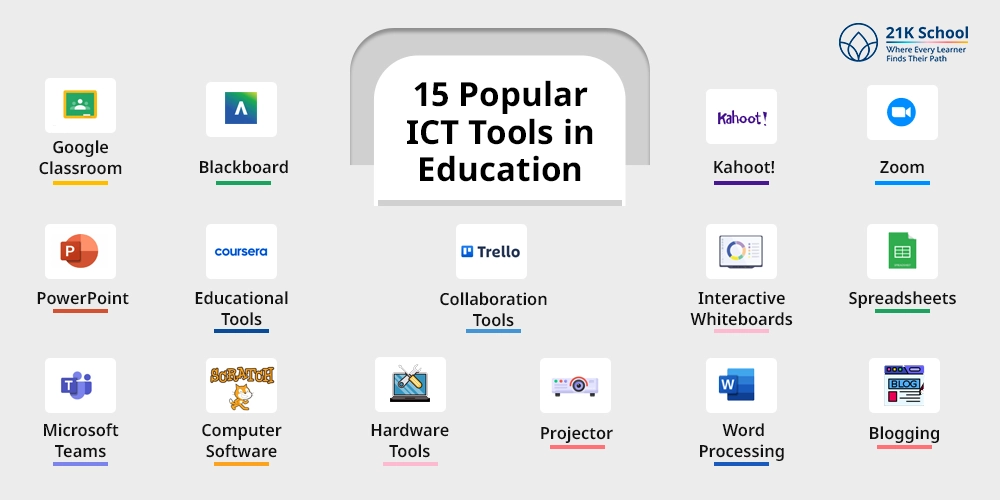
There are different types of ICT Tools available to make learning effective and flexible. Go through top 15 ICT tools in education:
1. Google Classroom
Google classrooms are popular tools often used in school to create classes, distribute assignments, and share learning materials.
In this way, teachers can share tasks easily and students can submit work online and stay organised.
2. Blackboard
Blackboard is commonly used by universities and higher education which is helpful to create courses, upload content, conduct quizzes etc.
Through this tool teachers can track student progress and offer customised learning to gain maximum knowledge.
3. Kahoot!
A game-based platform ideal for students’ fun learning activities such as MCQs and quizzes is known as “Kahoot!”.
In this tool teachers or students can create educational games that engage to improve individual participation, motivation, and make learning enjoyable.
4. Zoom
One of the popular ICT tools in education is Zoom. The platform is popular for video-conferencing especially during virtual classes.
The benefits of zoom is not limited to communications but also offers features like share screens, use breakout rooms, record sessions etc.
Now, students can learn from anywhere without taking long routes or getting late.
5. PowerPoint
One of the valuable ICT tools individuals must be aware of is PowerPoint. It is an effective way for creating visual presentations.
Teachers and students use this tool to explain concepts clearly, display images etc.
6. Educational Tools
These are many ICT educational tools designed to make learning easy and impactful. Some common examples include:
- Edmodo
- Coursera
- Khan Academy
7. Collaboration Tools
Different ICT collaborative tools such as Google Docs, Padlet, and Trello are used to promote teamwork, peer feedback, and project-based learning.
It is an ideal way to learn leadership skills, make real connections, and improve communication skills.
8. Interactive Whiteboards
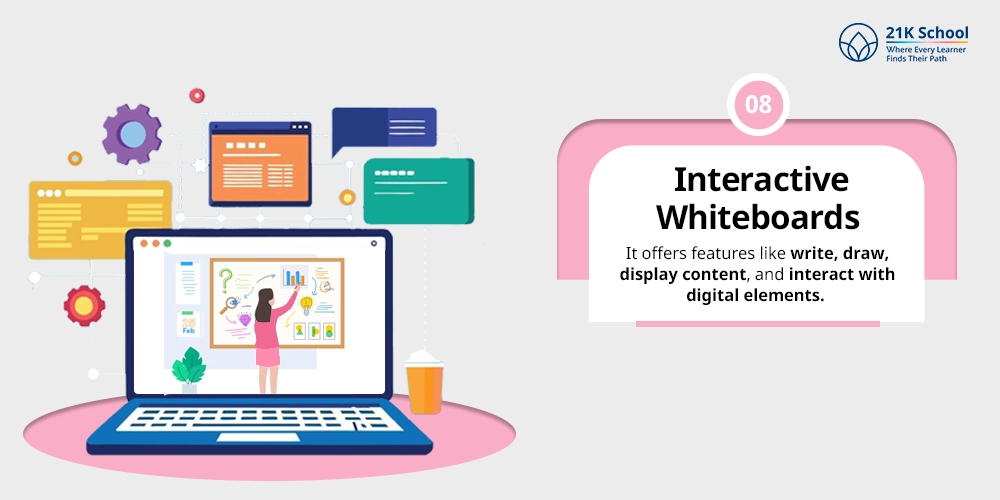
By introducing interactive whiteboards for example, SMART boards teachers can engage students in learning.
It offers features like write, draw, display content, and interact with digital elements.
9. Spreadsheets
Spreadsheets is a tool used by individuals to analyse data, organising information, and performing calculations.
Some common examples of spreadsheets are Google Sheets and Microsoft Excel.
10. Microsoft Teams
Microsoft Teams is a popular ICT tool mainly used for communication, file sharing, assignments, and online meetings.
It offers space to make groups to share resources, information, and reminders for the future.
11. Computer Software
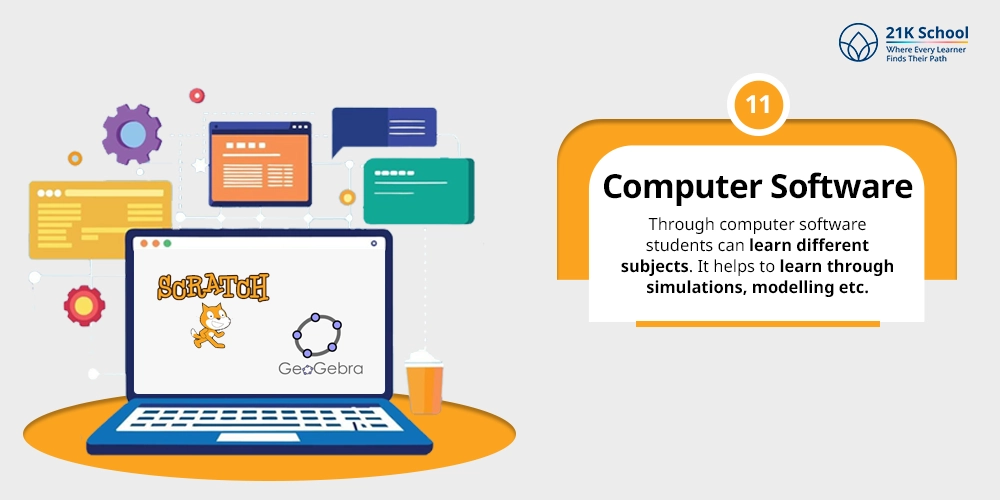
Through computer software students can learn different subjects. It helps to learn through simulations, modelling etc.
Scratch is used for kids coding and GeoGebra for learning Maths.
12. Hardware Tools
Hardware tools are important for students through which they become digital literacy and learn with physical devices.
In this way, students can access digital textbooks, collaborate online, research, and analyse.
13. Projector
Through projector teachers showcase videos, presentations, and interactive content in classroom learning.
This audio-visual learning makes students curious to understand different concepts in modern ways.
14. Word Processing
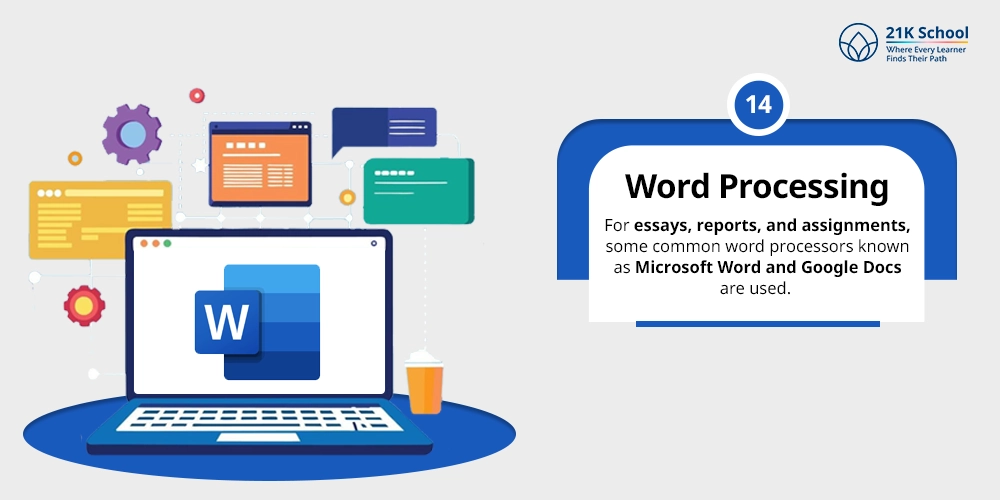
For essays, reports, and assignments, some common word processors known as Microsoft Word and Google Docs are used.
It makes students’ writing efficient and error-free.
15. Blogging
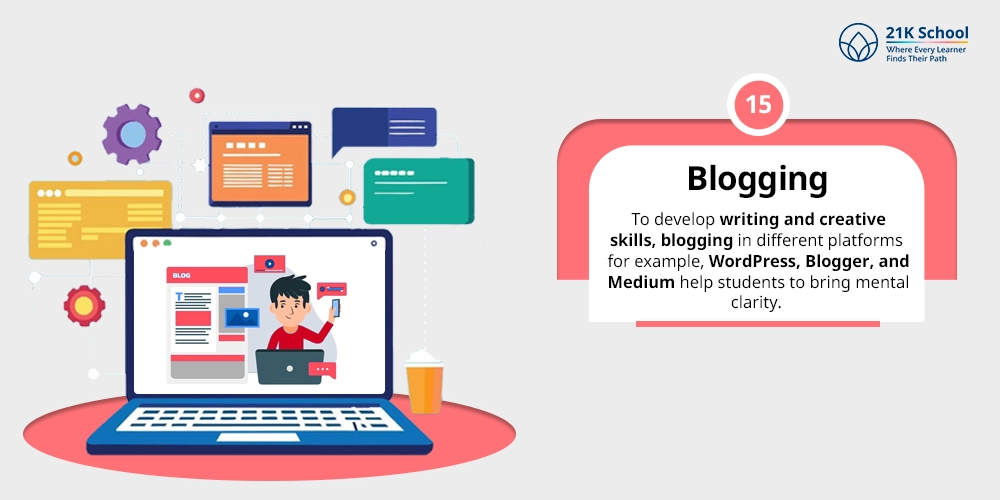
To develop writing and creative skills, blogging in different platforms for example, WordPress, Blogger, and Medium help students to bring mental clarity.
Students often write blogs as a hobby or to enhance their creative thinking abilities.
Subject-Specific ICT Tools in Education
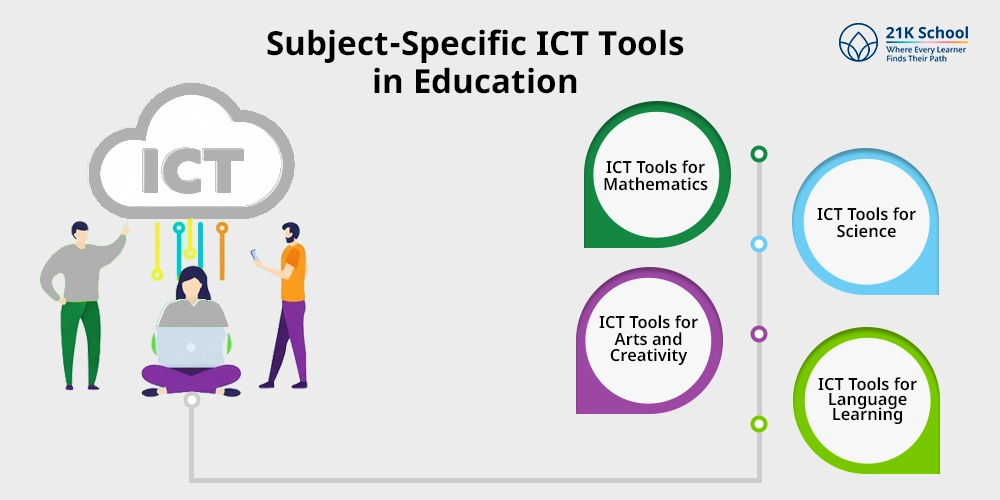
There are different kinds of ICT tools in education used for different purposes. Here are some subject-specific ICT tools for learners:
1. ICT Tools for Mathematics
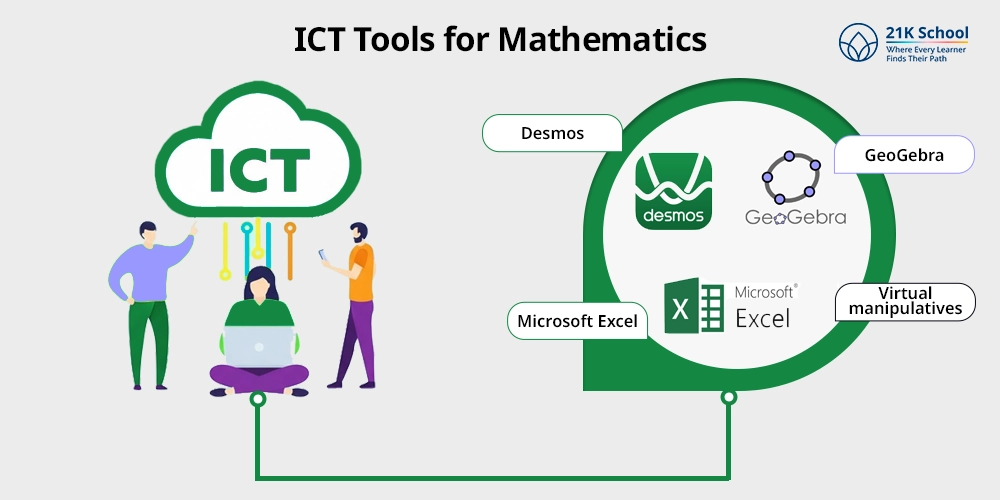
These tools help in clear understanding of equations, graphs, and geometric shapes.
- GeoGebra
- Desmos
- Microsoft Excel
- Virtual manipulatives
2. ICT Tools for Science
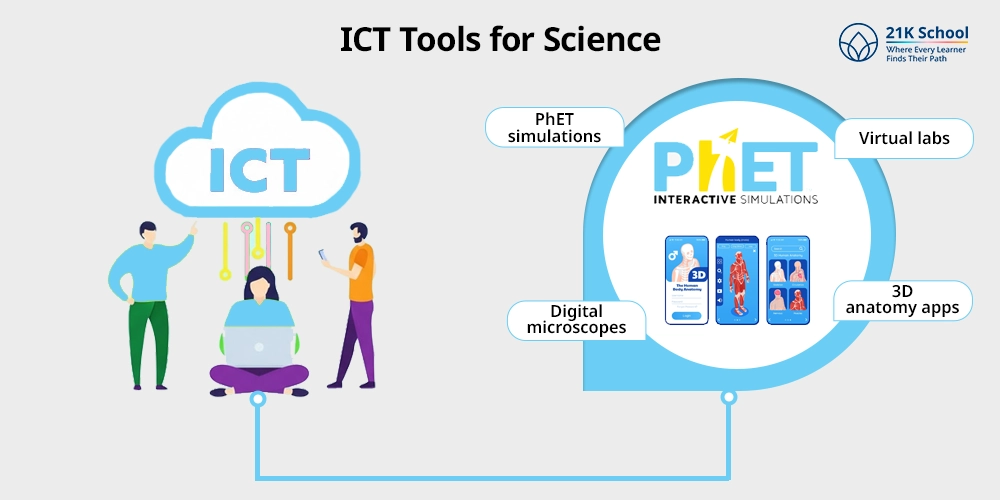
In Science, mentioned tools help in learning experiments and results.
- PhET simulations
- Virtual labs
- Digital microscopes
- 3D anatomy apps
3. ICT Tools for Arts and Creativity
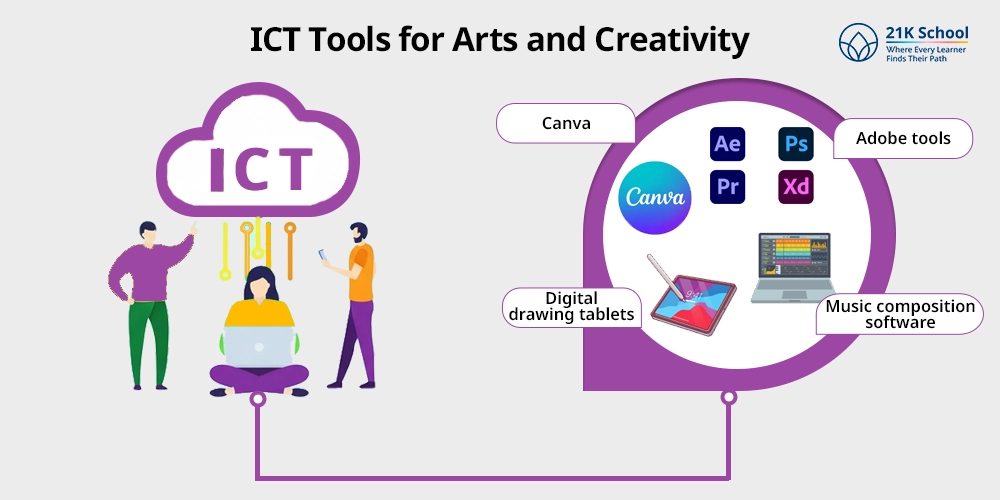
To enhance artistic and creative thinking skills students can use below ICT tools.
- Canva
- Adobe tools
- Digital drawing tablets
- Music composition software
4. ICT Tools for Language Learning
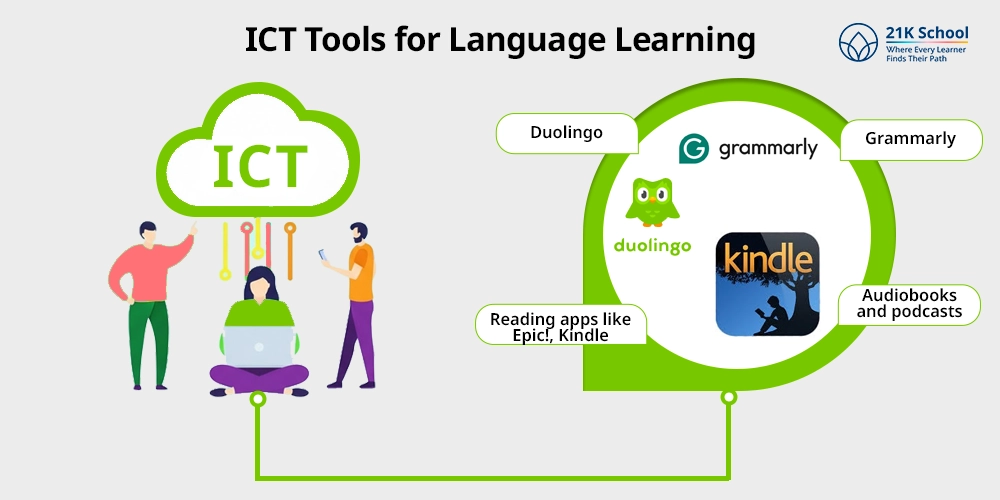
To learn desired language some common ICT tools includes:
- Duolingo
- Grammarly
- Reading apps like Epic!, Kindle
- Audiobooks and podcasts
Examples of ICT Tools in Education
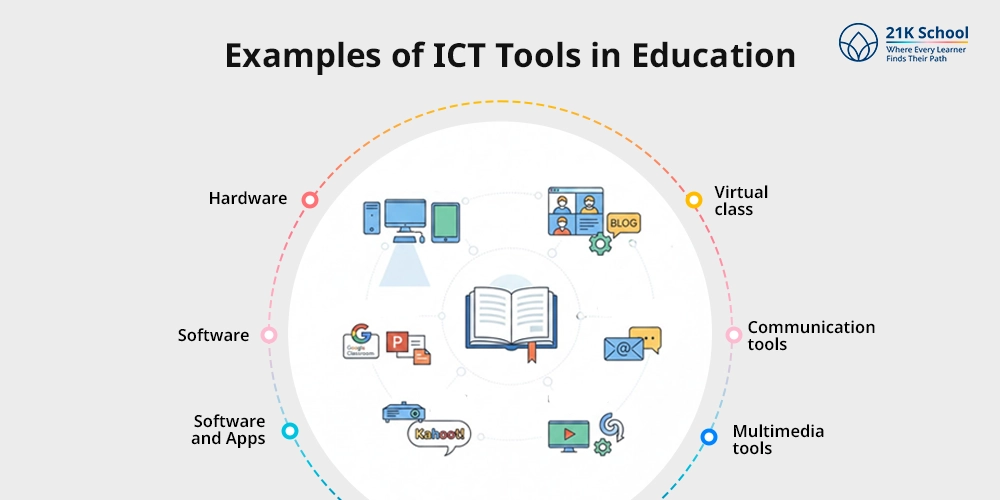
Some popular examples of ICT tools in education are:
- Using hardware in the classroom (like computers, tablets, projectors).
- Teachers use various software and apps (like Google Classroom, PowerPoint, and Kahoot!).
- Hosting virtual classes through e-learning platforms (like Zoom, blogs, learning management systems).
- Teachers and students using communication tools (like email, discussion forums).
- Multimedia tools for better learning (like videos, animations, simulations).
Conclusion
In modern education, learning focuses on smart work through various ICT tools and techniques.
Students and teachers now connect through digital platforms and use engaging methods of learning. The above mentioned top 15 ICT tools are ideal to achieve desired learning goals.
From interactive whiteboards for daily learning to zoom for important meetings, the wide range of tools ensures academic and personal growth of students.
As a student one must understand the importance of ICT in education to make learning meaningful.
