

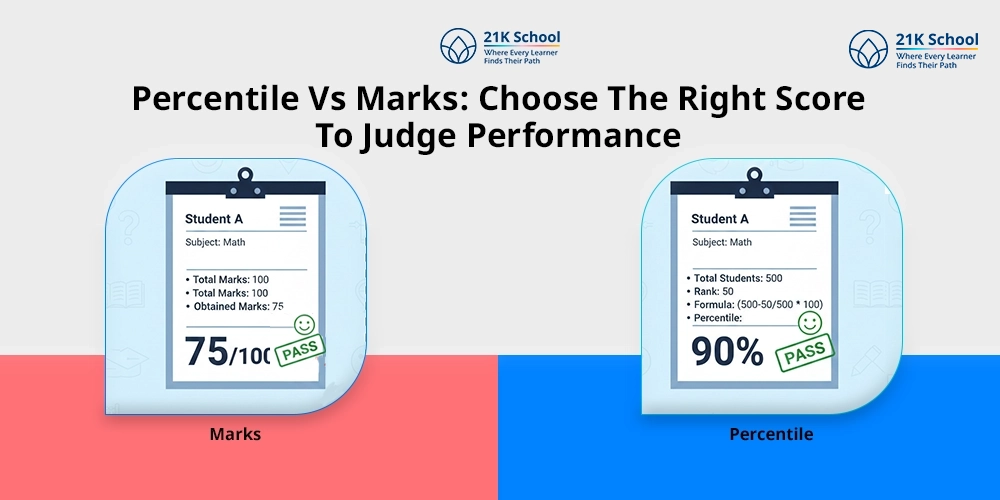
Students in their educational journey go through a lot of exams and wait for results. And this waiting ends with two types of scores called marks and percentile.
Two most important parts of results showcase the achievement of students. But, people often get confused whether marks and percentile are the same or different.
To understand the real meaning, one can go through a detailed comparison between percentile vs marks in this blog.
Table of Contents
What Is a Percentile?
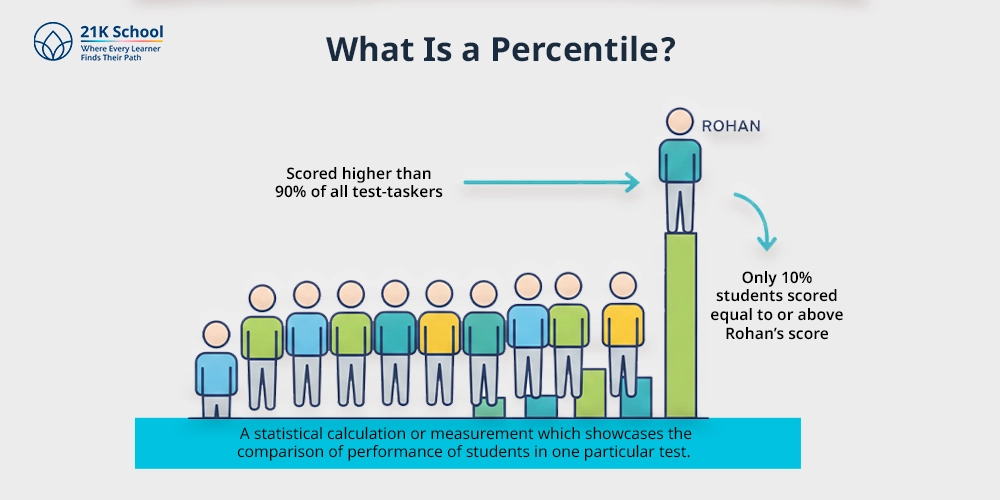
A statistical calculation or measurement which showcases the comparison of performance of students in one particular test.
For example, if Rohan scored 90 percentile this means:
- Rohan scored higher than 90% of all test-takers.
- Only 10% students scored equal to or above Rohan’s score
What Are Marks?
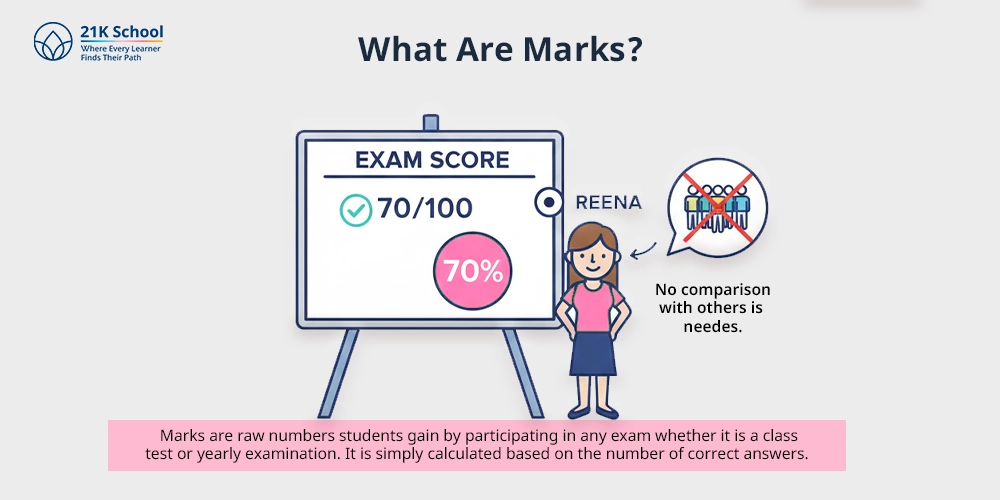
Marks are raw numbers students gain by participating in any exam whether it is a class test or yearly examination. It is simply calculated based on the number of correct answers.
For example, if an exam has a total of 100 marks, and Reena has scored 70, then:
- Her marks = 70/100
- Her percentage = 70%
- No comparison with others is needed.
Percentile vs Marks: 8 Differences
Understand through a quick comparison table between percentile vs marks:
| S.No. | Particular | Percentile | Marks |
| 1. | Meaning | It shows the percentage of students scoring at or below you. | It shows the actual score earned in the exam |
| 2. | Basis of calculation | Based on rank and total number of candidates | Based on correct answers/assigned points |
| 3. | What it measures | Relative performance compared to others | Absolute performance in the exam |
| 4. | Relative vs absolute performance | Relative | Absolute |
| 5. | Usage in exams | Used for competitive exams and ranking | Used in school exams and raw score evaluation |
| 6. | Impact on ranking | Directly determines rank | Marks influence rank only when percentile is not used |
| 7. | Consistency across exam papers | Eliminates variation through normalisation | Marks differ based on difficulty level |
| 8. | Example values | 95 percentile, 70 percentile | 65 marks, 92 marks |
One can also go through a detailed explanation between percentile vs marks for better understanding:
1. Meaning
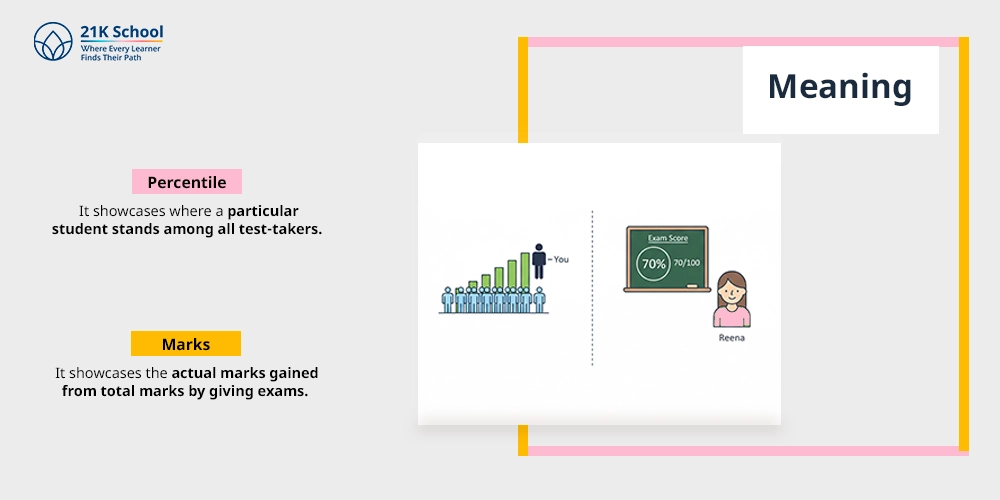
- Percentile: It showcases where a particular student stands among all test-takers.
- Marks: It showcases the actual marks gained from total marks by giving exams.
2. Basis of Calculation
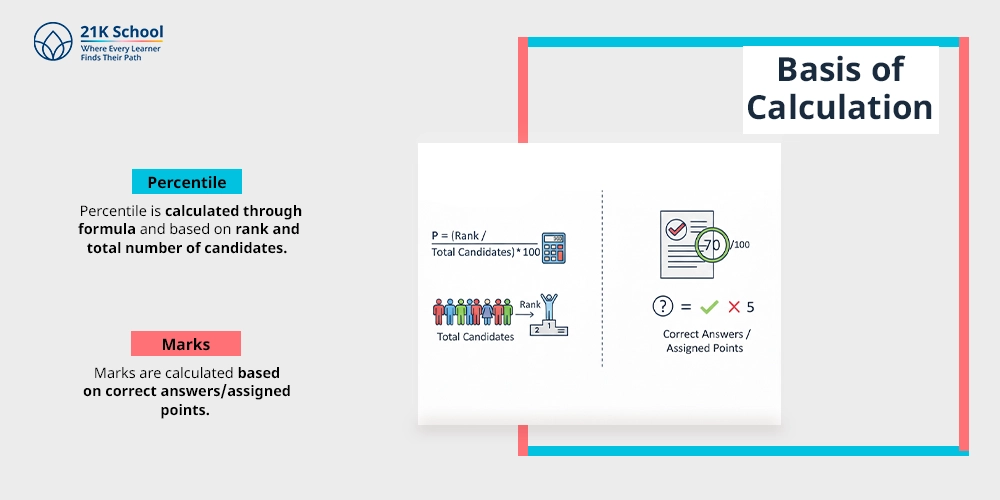
- Percentile: Percentile is calculated through formula and based on rank and total number of candidates.
- Marks: Marks are calculated based on correct answers/assigned points.
3. What it Measures
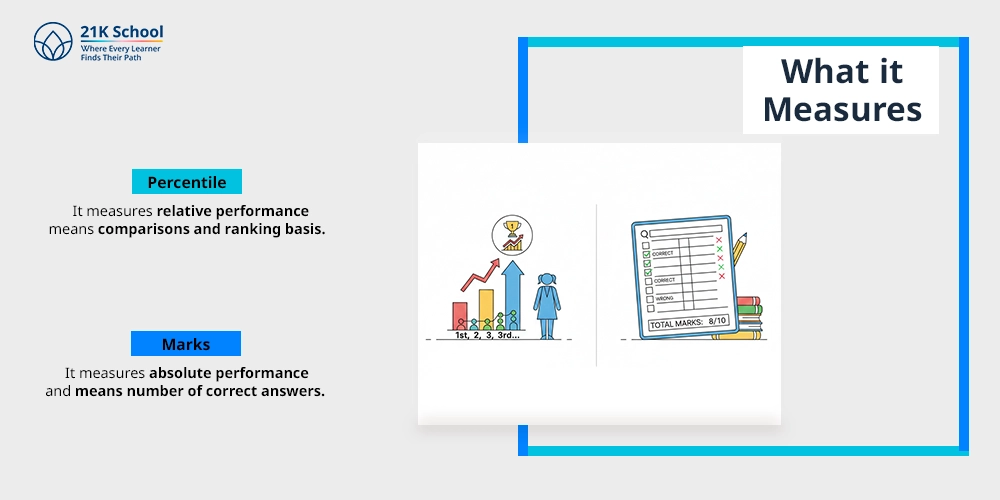
- Percentile: It measures relative performance means comparisons and ranking basis.
- Marks: It measures absolute performance and means number of correct answers.
4. Relative vs Absolute Performance
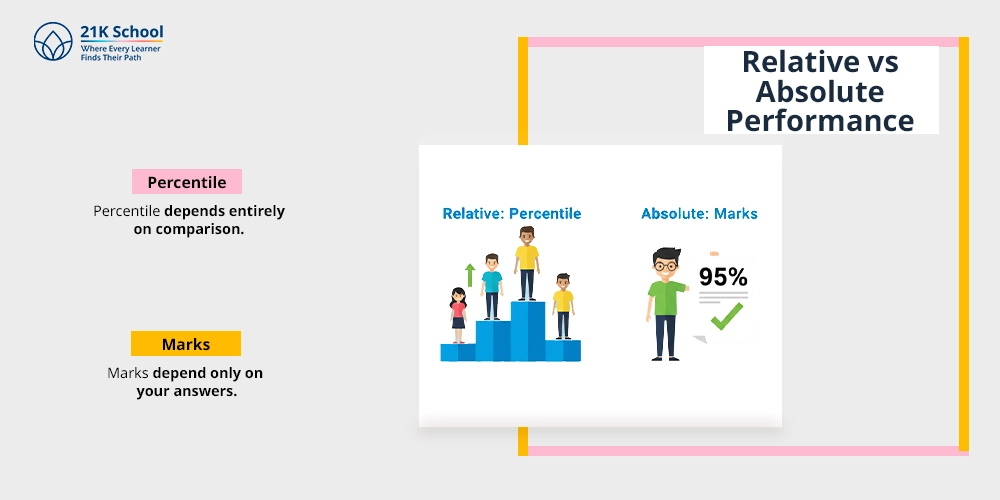
- Percentile: Percentile depends entirely on comparison.
- Marks: Marks depend only on your answers.
5. Usage in Exams
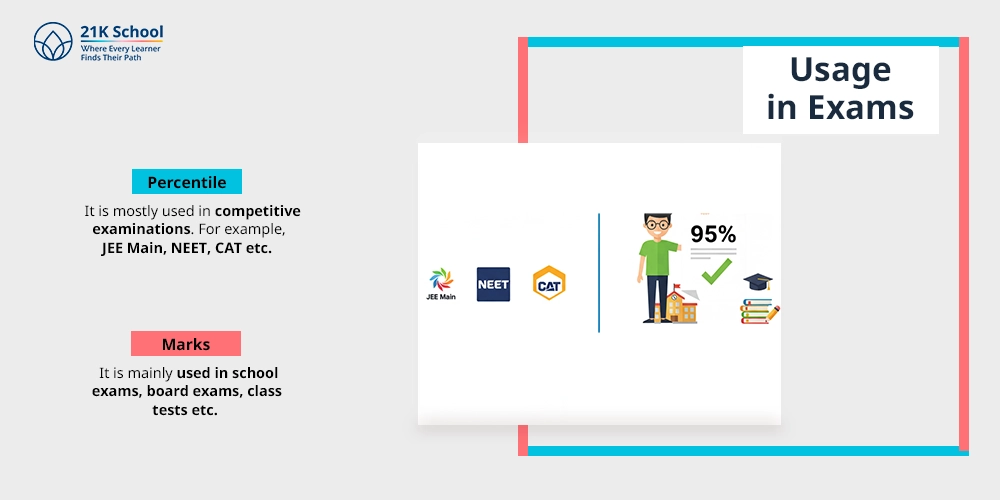
- Percentile: It is mostly used in competitive examinations. For example, JEE Main, NEET, CAT etc.
- Marks: It is mainly used in school exams, board exams, class tests etc.
6. Impact on Ranking

- Percentile: It directly determines students rank. High percentile equal to better rank leads to better chances of admission.
- Marks: Marks influence rank only when percentile is not used.
7. Consistency Across Exam Papers
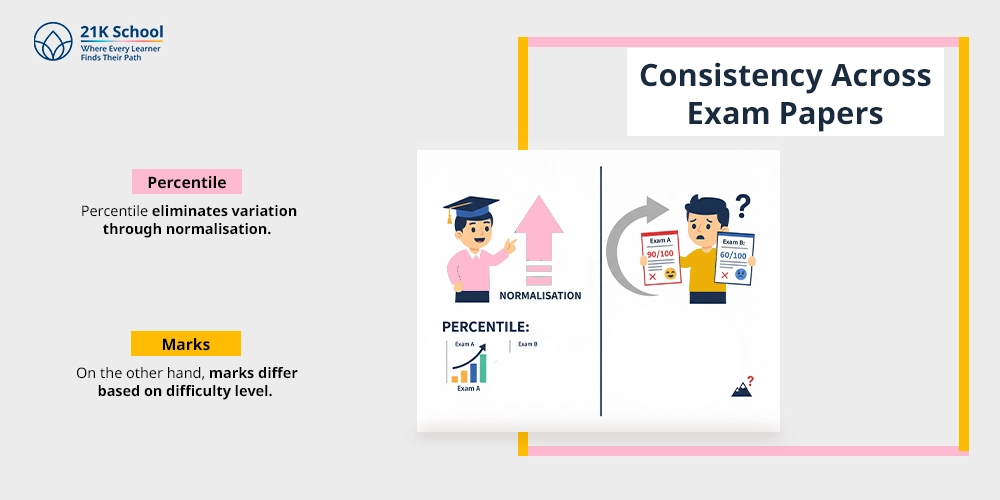
- Percentile: Percentile eliminates variation through normalisation.
- Marks: On the other hand, marks differ based on difficulty level.
8. Example Values
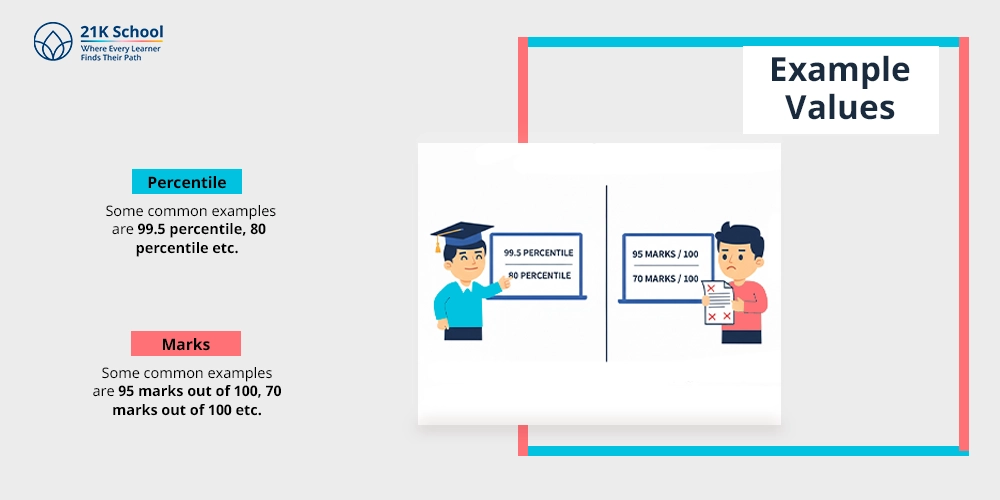
- Percentile: Some common examples are 99.5 percentile, 80 percentile etc.
- Marks: Some common examples are 95 marks out of 100, 70 marks out of 100 etc.
Conclusion
Students, teachers, parents often interact with the terms like percentile, percentage, marks etc. And to understand them effectively, exploring the difference between them is important.
Percentile is used in competitive exams for fairness and marks are used normally everywhere to understand the absolute score.
Hopefully, the above-mentioned comparison helped you to understand the differences of percentile vs marks to know how it affects the academic journey.
One must explore how to get good marks in exams.

You may also want to read