


Education is changing and adapting new methods to become effective and flexible for learners. Integration of technology is a transforming step that promotes modern education .
There are various tools and techniques for 21st-century learners. Social media in education is another effective way learners can engage.
Through social media, learners can access content instantly, discuss several topics, and draw solutions without communication barriers.
To understand everything about social media in education, let’s go through a detailed guide.
Contents
- What is Social Media in Education?
- 5 Importance of Social Media in Education
- Role of Social Media in Education
- 5 Common Tools for Social Media in Education
- 5 Disadvantages of Social Media in Education
- Use of Social Media in Education
- 5 Tips for Using Social Media in Education
- Benefits of Social Media in Education
- Conclusion
What is Social Media in Education?
Social media is a combination of platforms, apps, and websites. It is often used to create and share interactive posts in the visual community.
It is a learning approach that promotes the transformation of traditional learning into modern education for learners.
In this way, one can access
- Share resources
- Boost engagement
- Build interactive communities
5 Importance of Social Media in Education
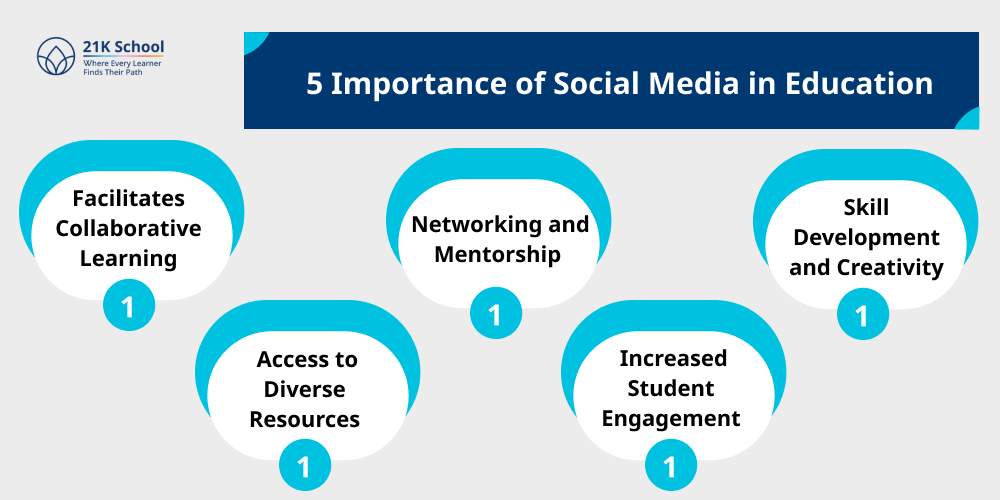
Social media has become a part of learners’ day-to-day activities. In education, social media is important to make learning impactful.
Let’s understand the key importance of social media in education:
1. Facilitates Collaborative Learning
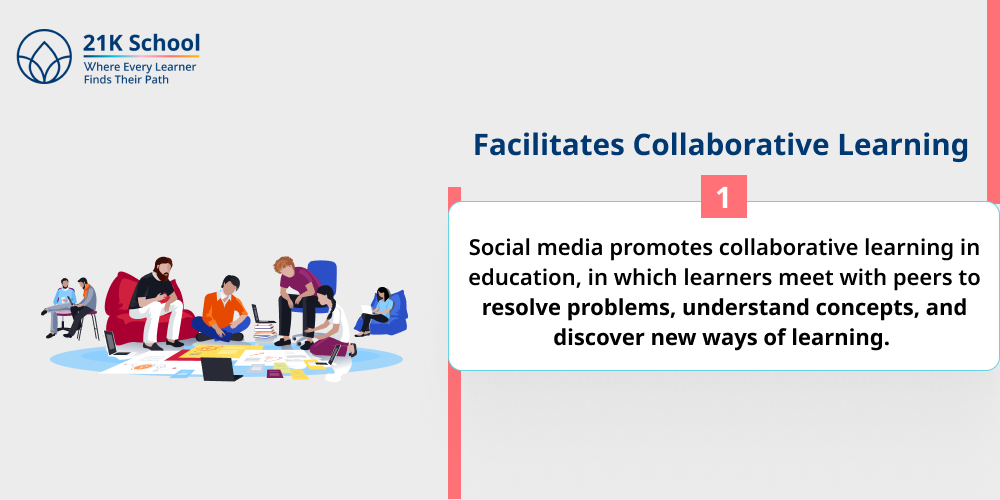
Social media promotes collaborative learning in education, in which learners meet with peers to resolve problems, understand concepts, and discover new ways of learning.
It is not only helpful for their academic growth but also effective for their personal development. Facilitators should include several activities which peers can enjoy while interacting.
2. Access to Diverse Educational Resources
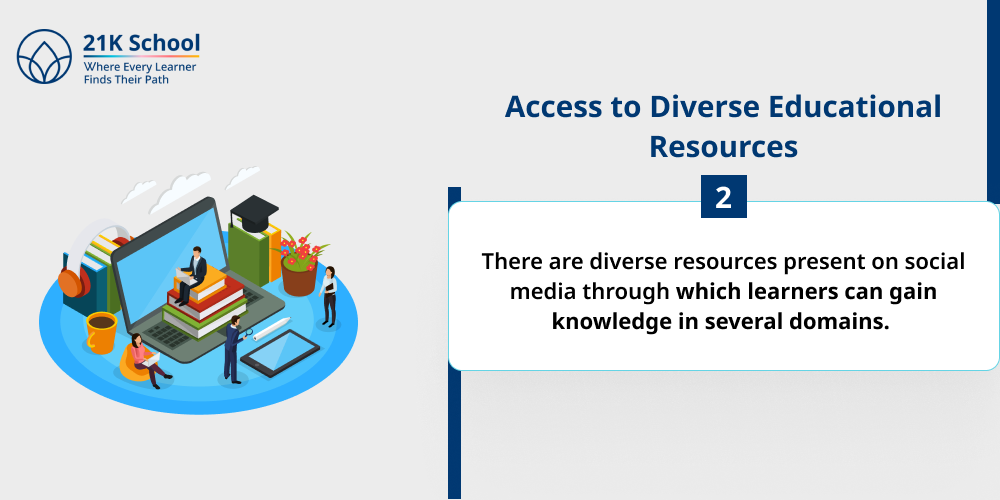
There are diverse resources present on social media through which learners can gain knowledge in several domains.
For example, if a child loves to know about space and planets, they can use social media platforms like Instagram to explore several unique facts.
3. Networking and Mentorship
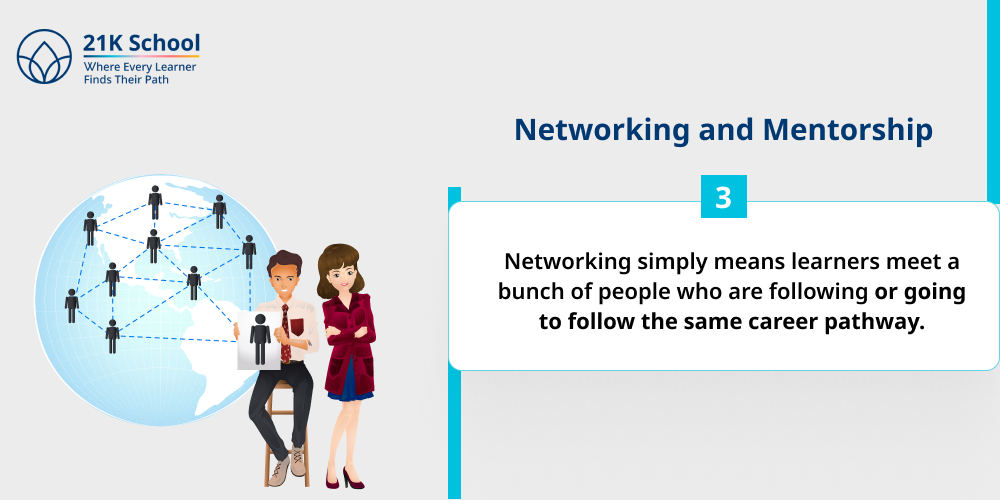
Another important aspect of using social media is networking and boundaries.
Networking simply means learners meet a bunch of people who are following or going to follow the same career pathway. This networking can help career growth in future.
While mentorship on social media is meeting people who can give guidance on how to follow your dream and gain maximum knowledge and experience in a particular domain.
4. Increased Student Engagement
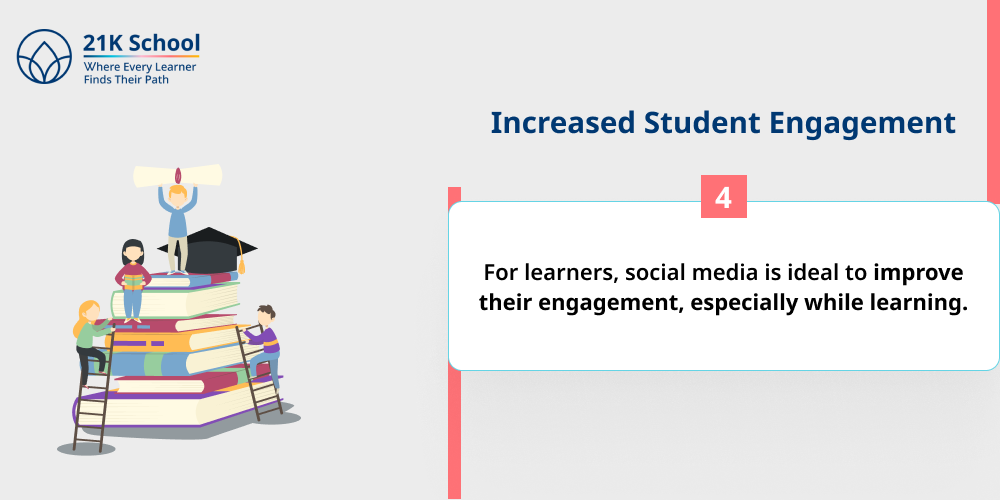
For learners, social media is ideal to improve their engagement, especially while learning. It is seen that individuals who connect their studies with social media can access endless opportunities.
Educational videos, live discussions, and other visual content help create an effective learning environment as compared to traditional classrooms . In this way, facilities can promote continuous learning.
5. Skill Development and Creativity
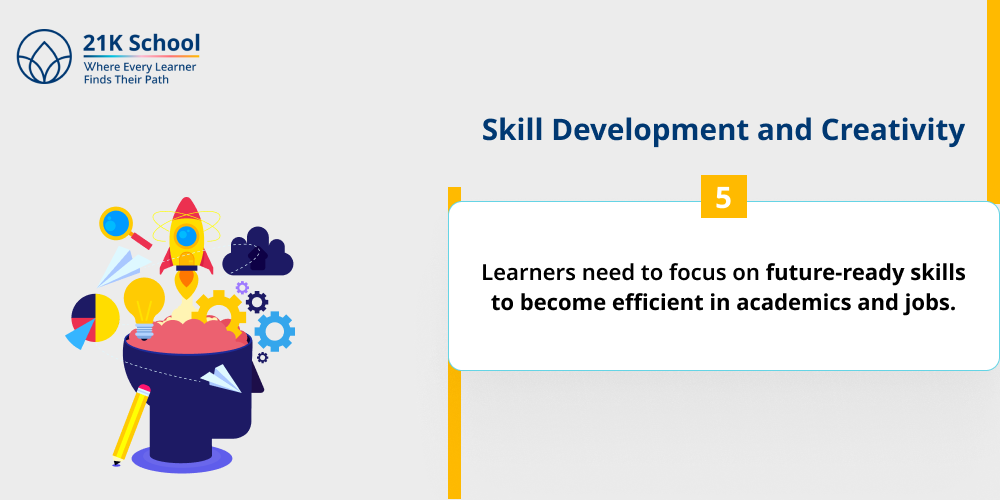
Learners need to focus on future-ready skills to become efficient in academics and jobs. Skills require consistency and structured training by professionals to become a master of a particular skill.
Remember, a skilled learner always becomes more successful in life.
Skill development and creativity are an important part of education through which learners showcase their unique abilities, and social media is a platform to develop several skills.
Role of Social Media in Education
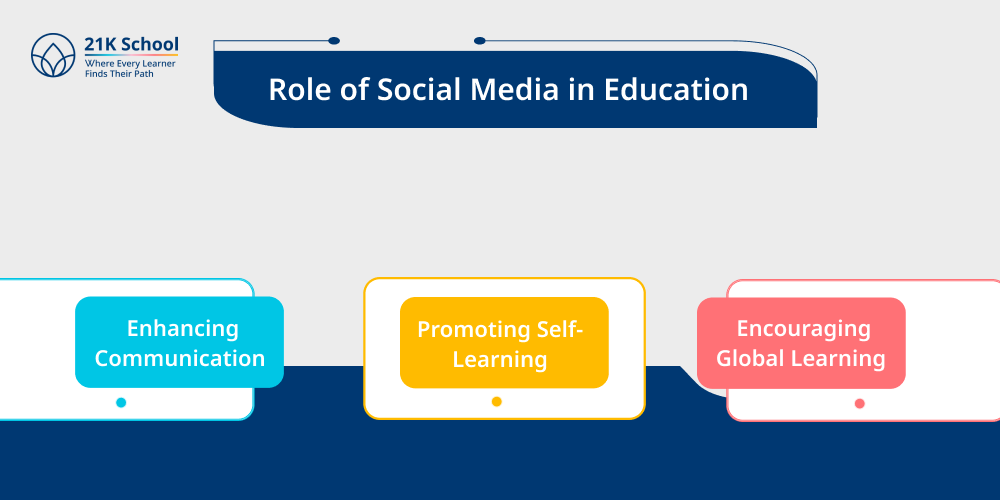
Every learner goes through several stages while learning and adapting to something new; social media in education can support learning. Some key roles to consider are:
1. Enhancing Communication
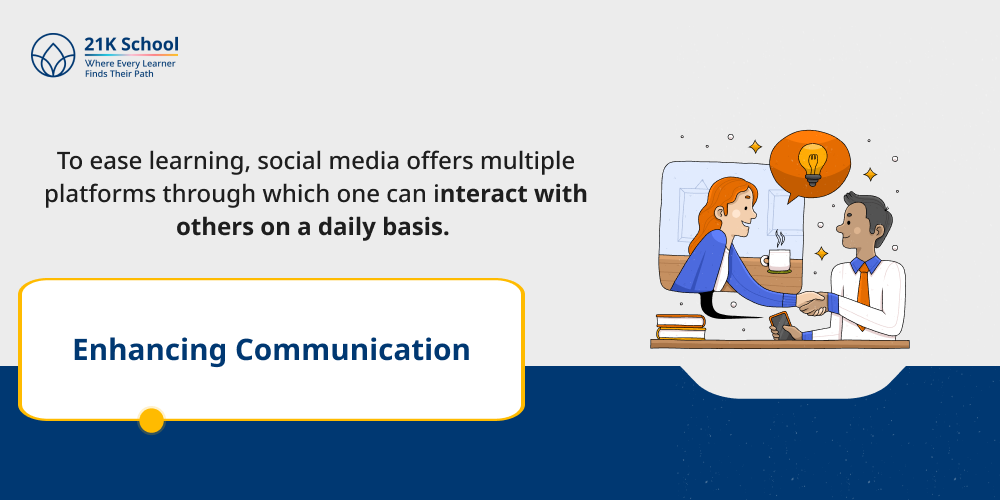
To ease learning, social media offers multiple platforms through which one can interact with others on a daily basis.
Now people don’t need to visit to discuss a particular maths problem. They can connect anytime via Telegram groups or WhatsApp.
Individuals can also share:
- Project ideas
- Recorded lectures
- Suggest educational channels
- Assignments or announcements
2. Promoting Self-Learning
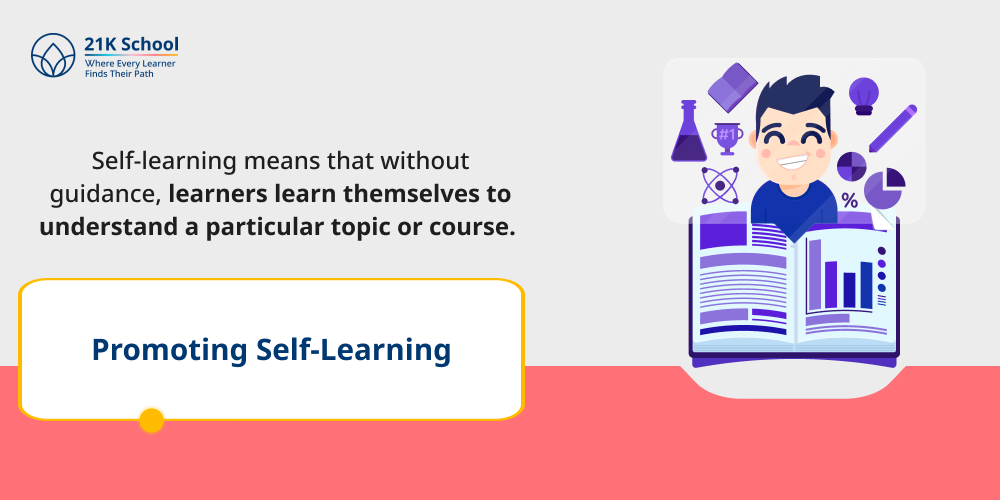
Another role of social media in education is that it promotes self-learning in learners.
Self-learning means that without guidance, learners learn themselves to understand a particular topic or course. Social media encourages self-learning in students to fulfil future goals.
3. Encouraging Global Learning
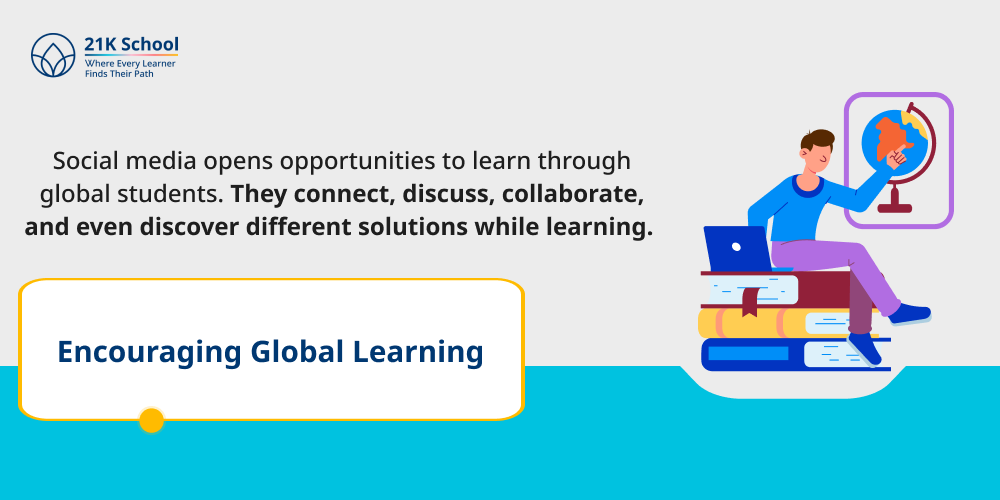
Social media opens opportunities to learn through global students. They connect, discuss, collaborate, and even discover different solutions while learning.
This global exposure helps learners to grab new opportunities and share innovative ideas.
5 Common Tools for Social Media in Education
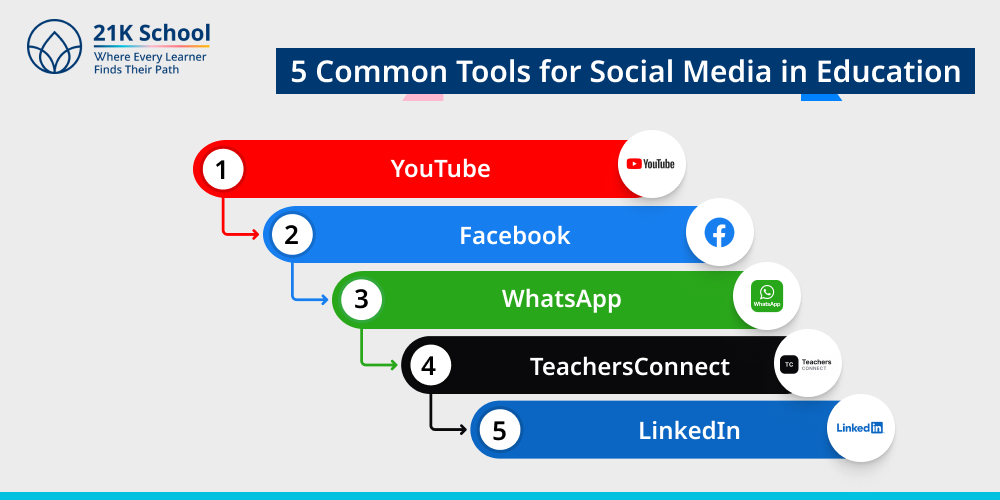
There are various social media tools available for facilitators and learners to improve learning outcomes. For example:
1. YouTube
One of the most used social media platforms is YouTube. YouTube consists of several educational channels effective for different age groups.
Learners can choose the best educational YouTube channels to improve their knowledge and understanding.
For example, learners can look for the best YouTube channel to learn English or YouTube channels for coding .
2. Facebook
Facebook is a popular social media application used by most people. An application which shares the latest info to keep you updated and connect with unlimited people at once.
Share thoughts, opinions, information, and announcements for future benefits.
3. WhatsApp
It is a free platform especially used to share or receive personal messages, audios, videos, and virtual meetings.
It is another trusted platform easily accessible to everyone. Learners and facilitators can create groups to discuss topics, share files, and clear doubts.
4. TeachersConnect
TeachersConnect is an effective platform designed for facilitators in which they can share teaching methods , educational strategies, modern teaching benefits, and materials to create better assessments .
In this way, facilitators stay updated and work effectively to provide quality education to learners.
5. LinkedIn
These days, LinkedIn has become a popular social media platform, especially for facilitators and high school learners.
It is especially used for career growth and finding the ideal job. People make professional connections to stay active in the job market and grab better opportunities.
5 Disadvantages of Social Media in Education
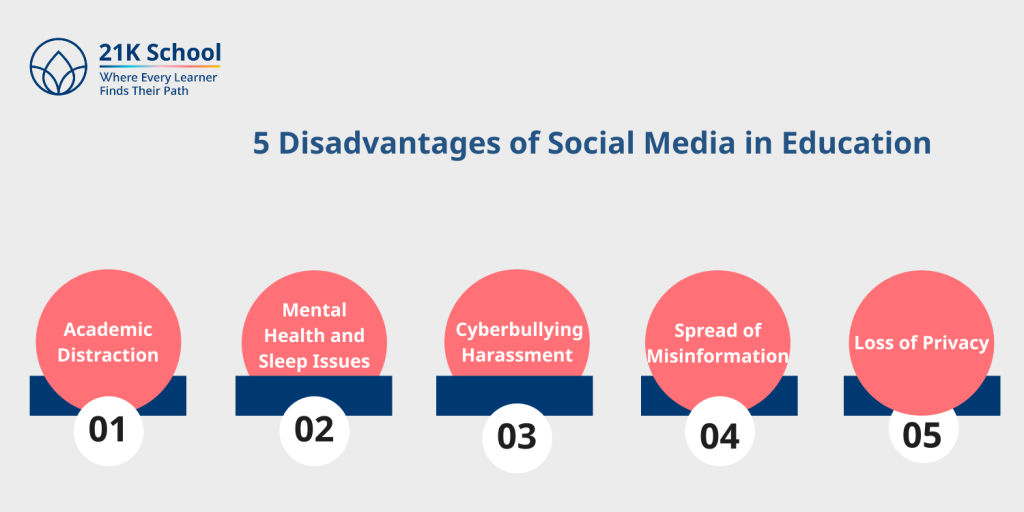
Given below are some primary disadvantages of social media in education; you must go through them:
1. Academic Distraction
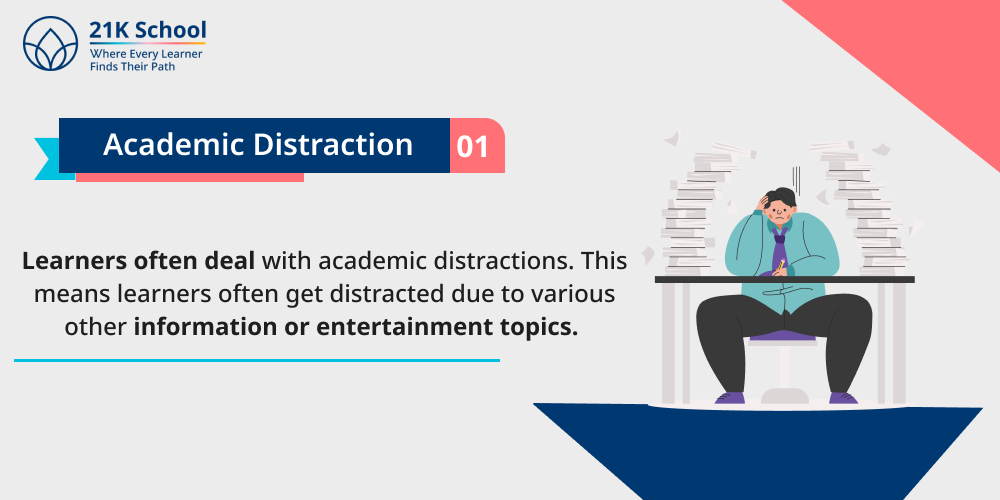
Learners often deal with academic distractions. This means learners often get distracted due to various other information or entertainment topics.
They also get multiple notifications, which can reduce concentration and impact academic performance.
To avoid this problem, learners can set reminders or distribute time to watch educational videos and entertainment content.
2. Mental Health and Sleep Issues
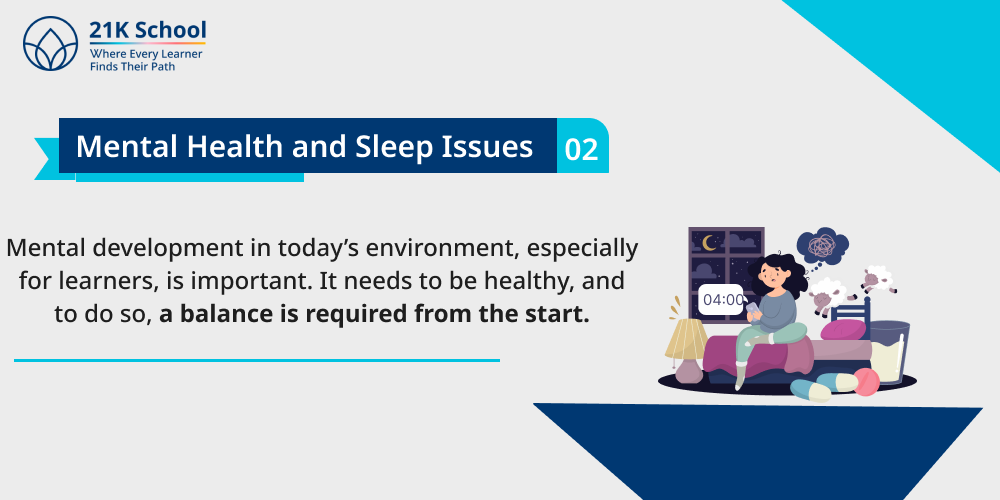
Mental development in today’s environment, especially for learners, is important. It needs to be healthy, and to do so, a balance is required from the start.
Continuous use of social media can promote negative energy of stress and anxiety, which directly impacts mental health.
Explore various signs that show bullying in children.
3. Cyberbullying and Harassment
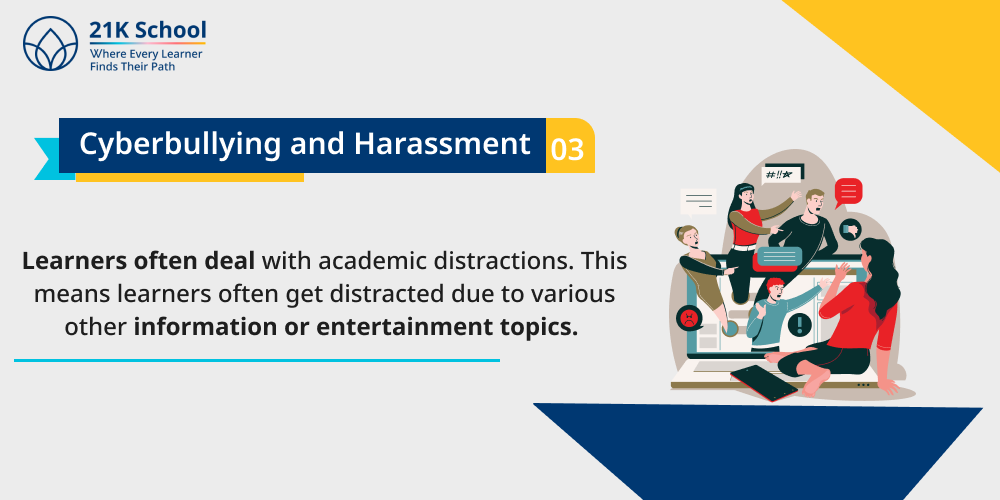
A very concerning and protection-related disadvantage is cyberbullying and harassment. On social media, posts that often go viral can reach the wrong hands, which can become the reason for harassment in future.
Safe platforms and healthy collaboration can give maximum benefits to learners.
4. Spread of Misinformation
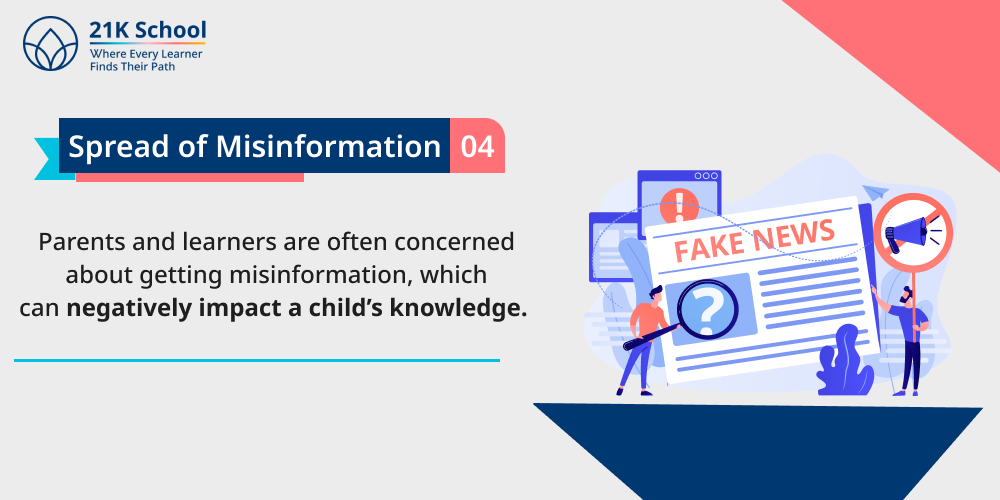
Parents and learners are often concerned about getting misinformation, which can negatively impact a child’s knowledge. Avoiding the wrong information and trusting official websites is essential while scrolling.
5. Loss of Privacy
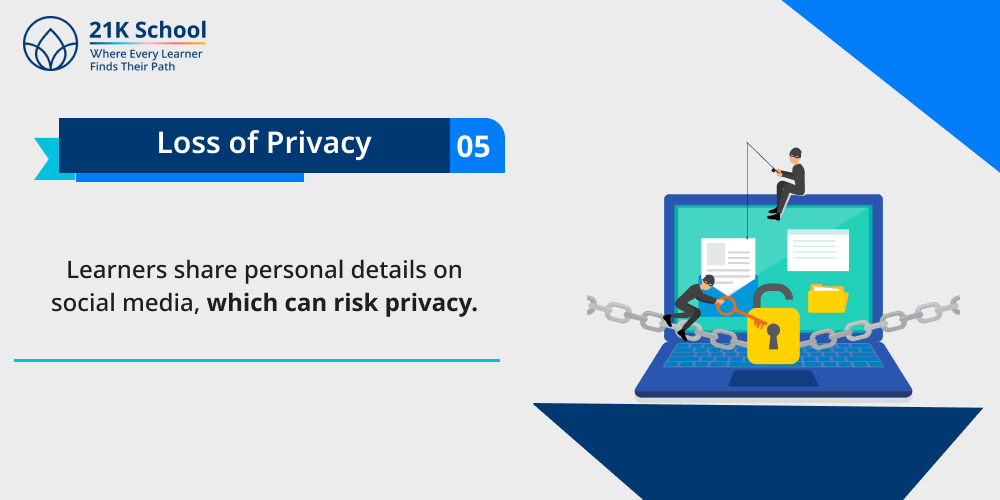
Learners share personal details on social media, which can risk privacy. Some key things to avoid:
- Sensitive data
- Photos
- Documents
It’s important to learn the best way to protect all the data/information.
Use of Social Media in Education
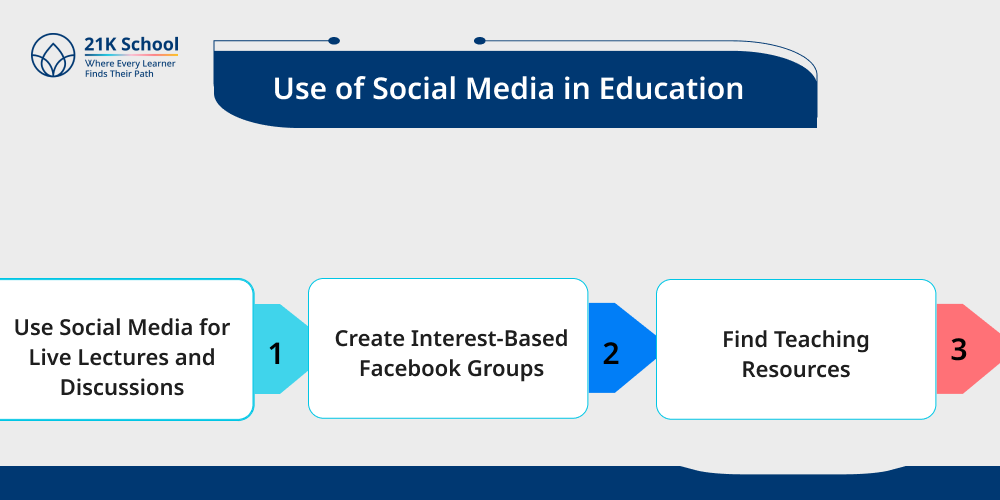
To understand the right use of social media in education, we need to go through some key points in detail:
1. Use Social Media for Live Lectures and Discussions
Learners can use various paid and free social media platforms to learn through live lectures and discussions.
Some common platforms you can choose to use:
2. Create Interest-Based Facebook Groups
By creating interest-based Facebook groups, learners can stay updated about various pieces of information. They can easily:
- Share information
- Discuss topics
- Educational updates
3. Find Teaching Resources
Social media is an ocean of information and content. Both facilitators and learners can look for the needed data.
They can easily discover:
- Lesson plans
- Study notes
- Tutorials
- Presentations
- Research articles
5 Tips for Using Social Media in Education
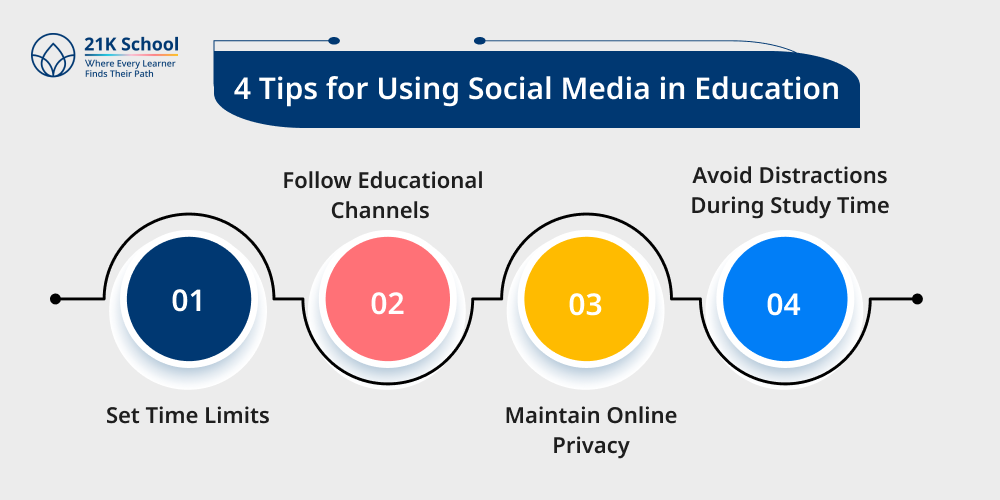
Go through some key tips to avoid challenges in education:
1. Set Time Limits
Learners need to set screen time limits to reduce various problems like eye-related issues, negative impact on mental health, and sleeping issues.
Tip: Set a limit, balance physical and mental exercise, choose the right applications.
2. Follow Educational Channels
Must follow educational channels to improve knowledge, which directly impacts the results. Creating the right balance between studying and enjoyment helps to use social media effectively.
A learner who creates a schedule for studying and enjoying the maximum benefit of social media.
3. Maintain Online Privacy
Students need to understand what information should be shared and what should not be shared in public domains like social media platforms. Don’t forget to verify before believing on social media.
Maintaining privacy from the very start may help in avoiding challenges, including mocking or harassment.
4. Avoid Distractions During Study Time
Learners need to avoid distractions during study time. In this way, one can focus on knowledge retention, concentration, and collaboration to improve academic performance.
Schedule a specific time to study and other activities.
Benefits of Social Media in Education
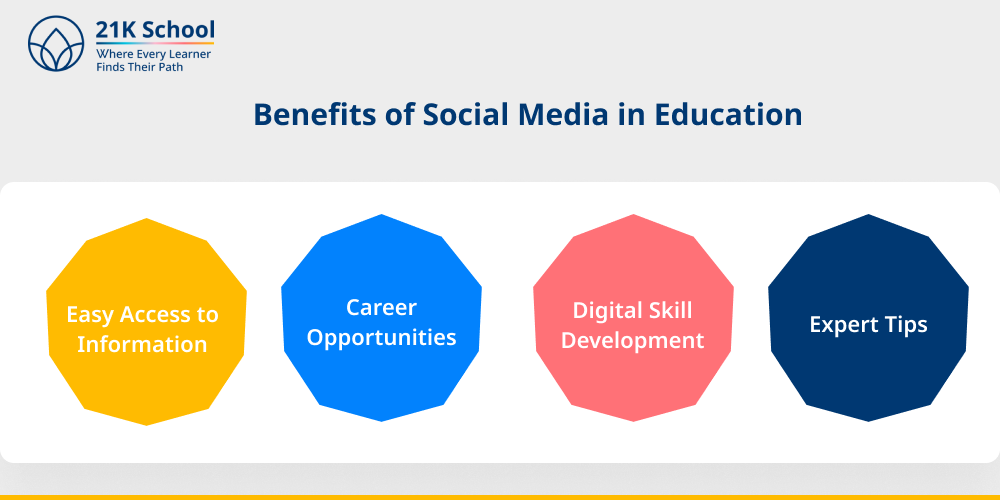
Social media offers wide opportunities to learners. To understand in depth, the following are some of the key benefits of social media in education:
1. Easy Access to Information
Social media is highly beneficial for learners. They can easily access multiple pieces of information without any limitations.
For example, learners can freely access educational content anytime, anywhere.
2. Career Opportunities
Through social media, learners can work on career growth and personal development.
For example:
- Networking with peers
- Conversation facilitators
- Connecting with educational experts
3. Digital Skill Development
One of the key benefits of social media is digital skill development for learners. They get familiar with technology.
For example:
- Communication tools
- Online research methods
4. Expert Tips
Through various platforms like LinkedIn, learners can create official profiles and connect with specific domain experts.
They can connect with both national and international experts to take tips. Through global interaction, one can understand international standards.
Conclusion
With time, social media has become an integral part of today’s education system. Through social media, learners can easily understand, communicate, collaborate, and gain knowledge through information.
Through various tools like WhatsApp, LinkedIn, Facebook, etc it offers new opportunities and positive learning environments to learners and facilitators.
Social media provides benefits like interactive education, skill development, and professional networking. In this way, learners become future-ready and confident in life.
