
Artificial Intelligence: Understand It, Question It and Create with It
Age-banded learning moves from recognising intelligent systems to building and evaluating purposeful AI applications.




One pathway, three grade bands
The programme serves Grades 1–12 through developmentally appropriate cohorts.
- Grades 1–5
Primary learners
Primary learners in Grades 1–5 explore AI literacy, patterns, perception, simple model training, digital citizenship and creative applications.
- Grades 6–8
Middle-school learners
Middle-school learners in Grades 6–8 can progress into Python, data, machine learning, computer vision and language models.
- Grades 9–12
High-school learners
High-school learners in Grades 9–12 may engage with deeper AI systems, generative AI, model evaluation, safety and applied engineering.
The three-month FLOWW programme curates age-appropriate outcomes from the wider 21K AI curriculum. It does not promise completion of the complete long-form framework.
Three levels
Level 1: Understand
Learners build the foundations required for their grade band.
Younger learners distinguish AI-enabled systems, explore patterns and discuss how data affects results. Older learners build the programming, data or mathematical foundations appropriate to applied machine learning.
Level 2: Build
Learners use suitable tools to train, code or integrate models.
Projects may involve image, sound or text recognition, recommendations, computer vision, Python-based machine learning or other age-appropriate applications. Tools are selected according to learner readiness and platform policies.
Level 3: Apply and evaluate
Learners combine technical creation with ethical and user-centred thinking.
Projects may include generative media, language applications, computer-vision experiences, data-driven tools or an AI-for-social-good prototype. Advanced learners may examine bias, privacy, copyright, governance and system limitations.
Responsible AI
AI outputs are not automatically accurate, fair or safe.
Learners are expected to test results, question data quality, identify limitations and consider consent. Activities involving images, voice or personal data must follow programme privacy and safeguarding rules. Medical, legal or financial diagnostic tools may be explored only as simulations and must not be presented as real advice.
Live project-based learning
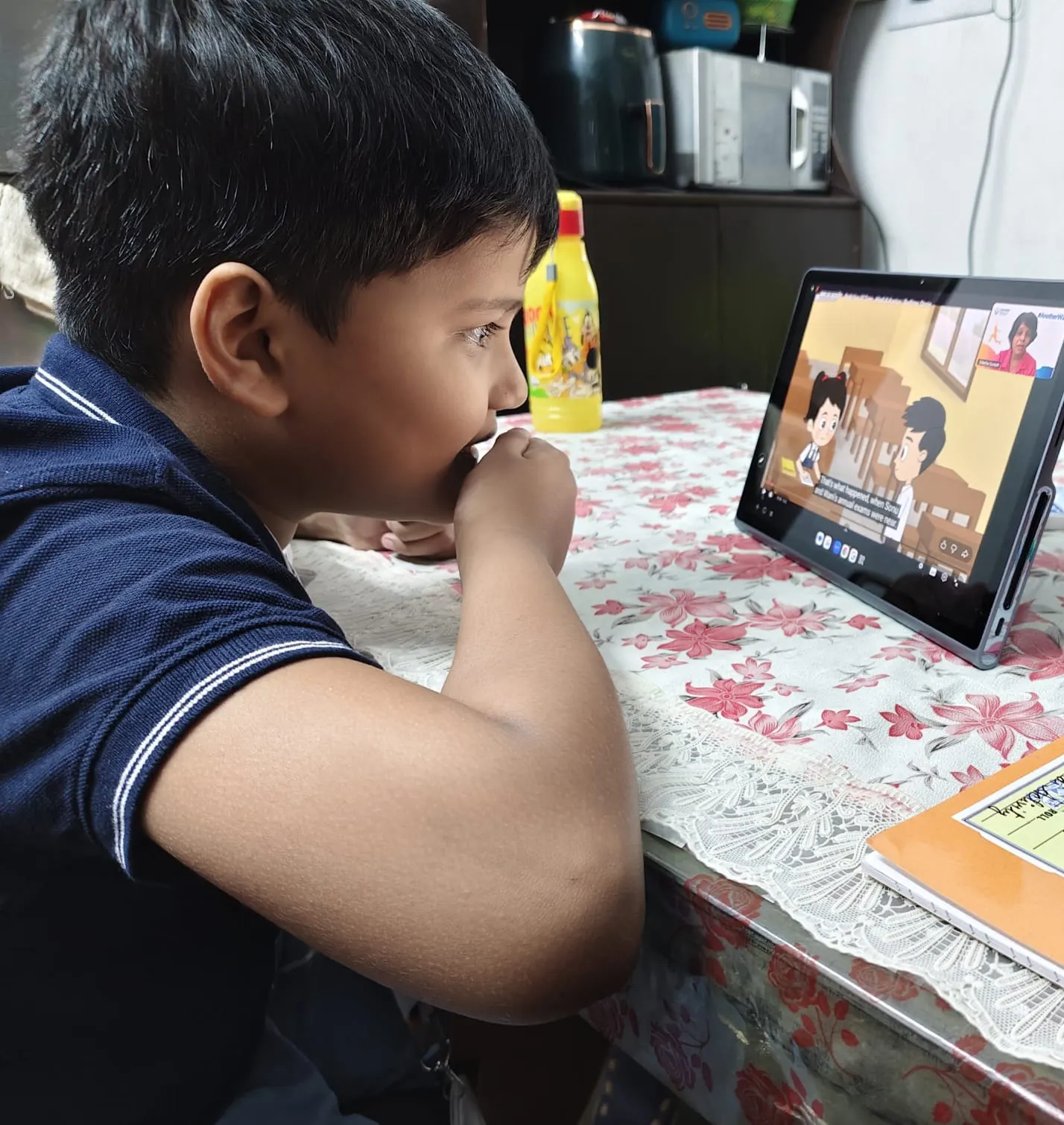
Core instruction happens in live online sessions.
Facilitators introduce concepts, guide experimentation and help learners explain what their systems do. Digital resources may reinforce learning. Tools can change as technology and safety requirements evolve, so software names should be illustrative rather than guaranteed.
Programme structure and fee
Each AI level runs for three months through 24 live sessions of 40 minutes.
The fee is ₹9,000 plus GST for Grades 1–6, ₹11,000 plus GST for Grades 7–8 and ₹12,000 plus GST for Grades 9–12.
Questions parents ask
Responsible participation in an AI programme.
Does my child need coding experience?
Not for every Level 1 cohort. Entry requirements vary by grade band and level.
Will learners use generative AI?
It may be included in suitable age-banded levels with facilitator guidance, approved tools and responsible-use expectations.
Which tools are used?
Tools may include block-based AI environments, Python libraries, computer-vision platforms and approved generative tools. The current cohort list will be confirmed before enrolment.
Will AI replace the facilitator?
No. Facilitators guide learning, feedback, safety and progression.
Will external certificates be provided?
The programme offers a 21K completion certificate to eligible learners. No external certification is implied.