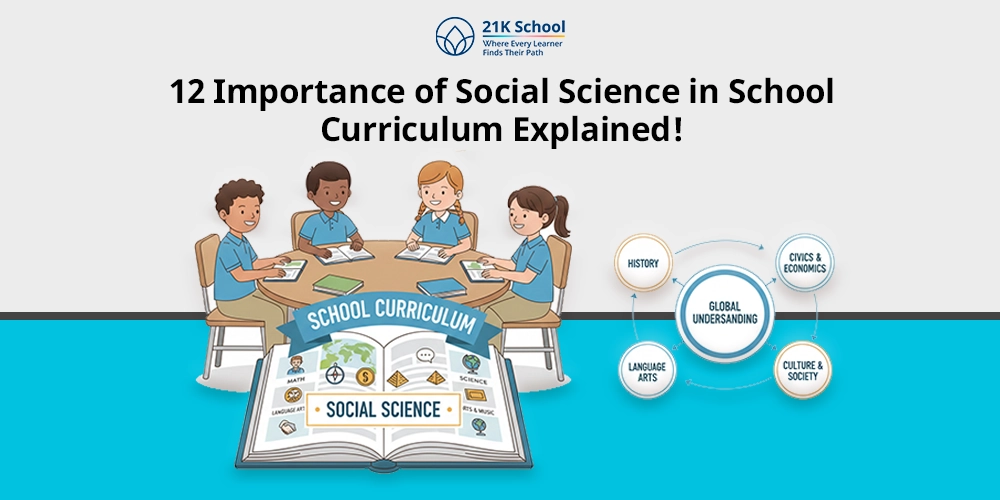
12 Importance of Social Science in School Curriculum Explained!
 Written byAnkita SinghaContent Specialist
Last modified: Jul 23, 2026 5 min read
People explore various subjects in their academic journey and subjects such as social science is an effective one to understand the real world around students.
Social science is the ideal subject that provides both national and international knowledge to enhance students’ skills.
To know more about how social science in students’ school curriculum is important let’s begin with what social science is.
What is social science?
Social science is one of the popular subjects in school which involves a broad understanding of human society, its structures, and relationships.
It mainly includes subjects like:
- History
- Geography
- Civics
- Economics
- Political Science
- Environmental Studies etc
12 key importance of social science in school curriculum
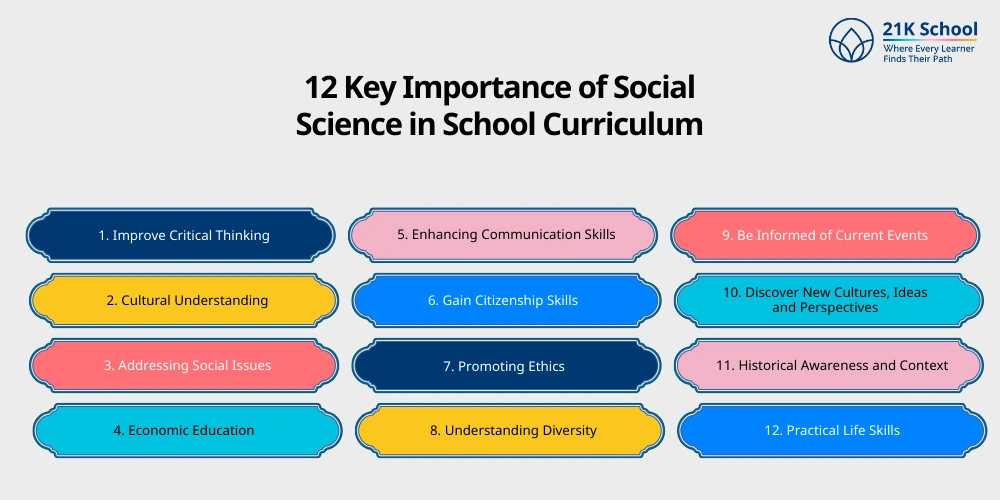
To more about social science go through top 12 key points why it is important:
1. Improve critical thinking
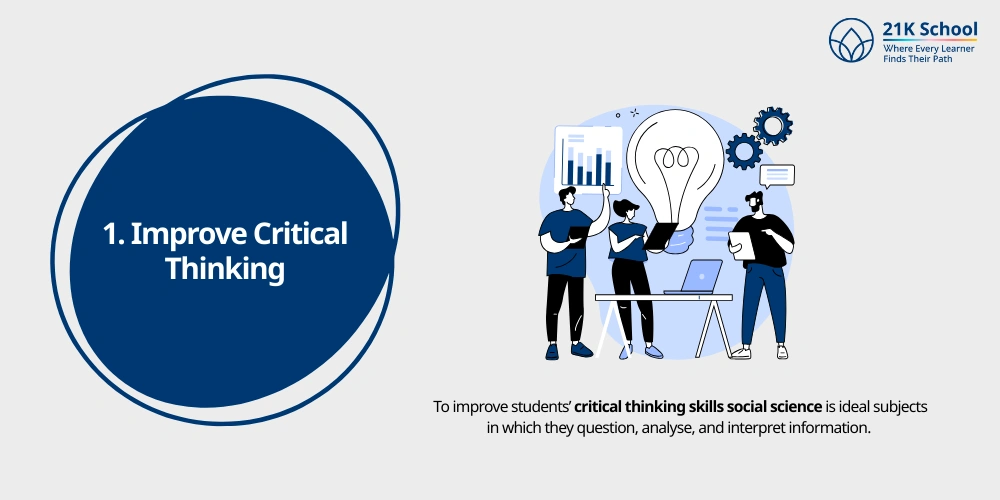
To improve students’ critical thinking skills social science is ideal subjects in which they question, analyse, and interpret information.
It helps to explore various areas like:
- Past and present market trends
- Identify social issues
- Historical events etc
2. Cultural understanding
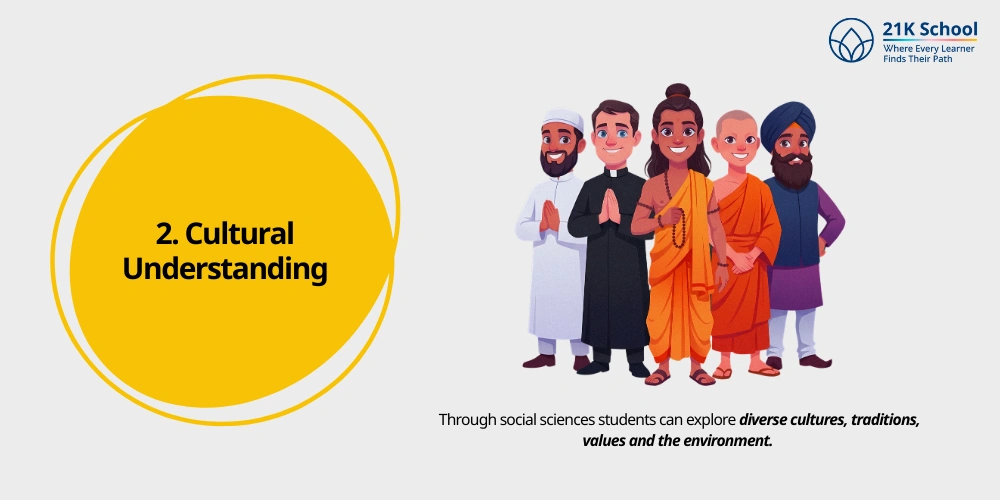
Through social sciences students can explore diverse cultures, traditions, values and the environment.
Learning about different cultures and communities students can build positive and respectful relationships. In this way, students can appreciate global acceptance.
3. Addressing social issues
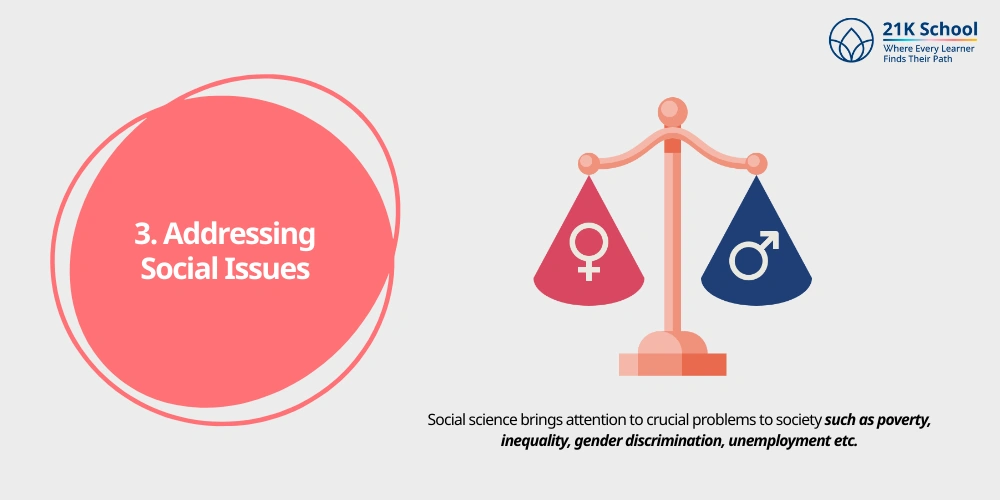
Social science brings attention to crucial problems to society such as poverty, inequality, gender discrimination, unemployment etc.
Students address issues, feel responsible, and identify the possible solutions to make society better for future generations.
4. Economic education
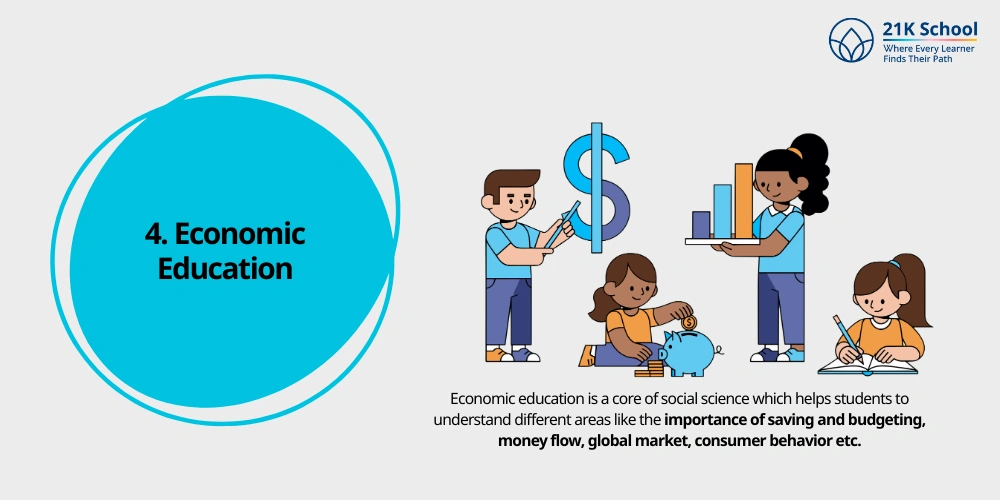
Economic education is a core of social science which helps students to understand different areas like the importance of saving and budgeting, money flow, global market, consumer behavior etc.
There are some important areas students should know to live in a society and become responsible.
5. Enhancing communication skills
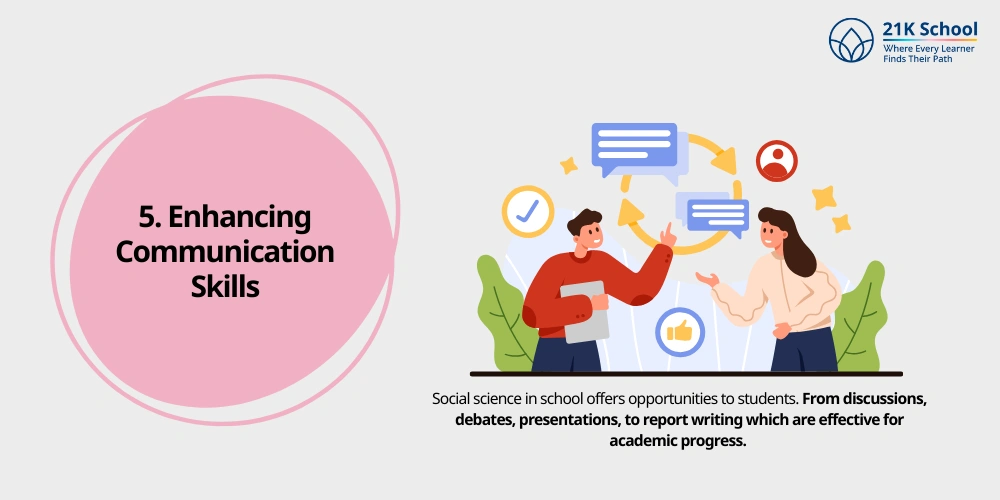
Social science in school offers opportunities to students. From discussions, debates, presentations, to report writing which are effective for academic progress.
Communication skills help students everywhere from school to the professional environment.
6. Gain citizenship skills
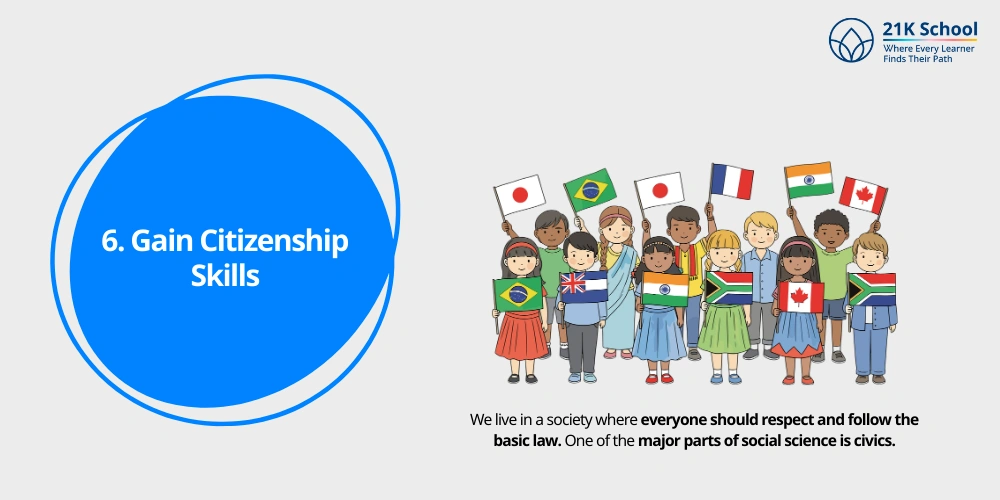
We live in a society where everyone should respect and follow the basic law. One of the major parts of social science is civics.
In civics, students become familiar about:
- Constitution and laws
- Rights and responsibilities
- Government structure
- Elections and democracy etc
7. Promoting ethics
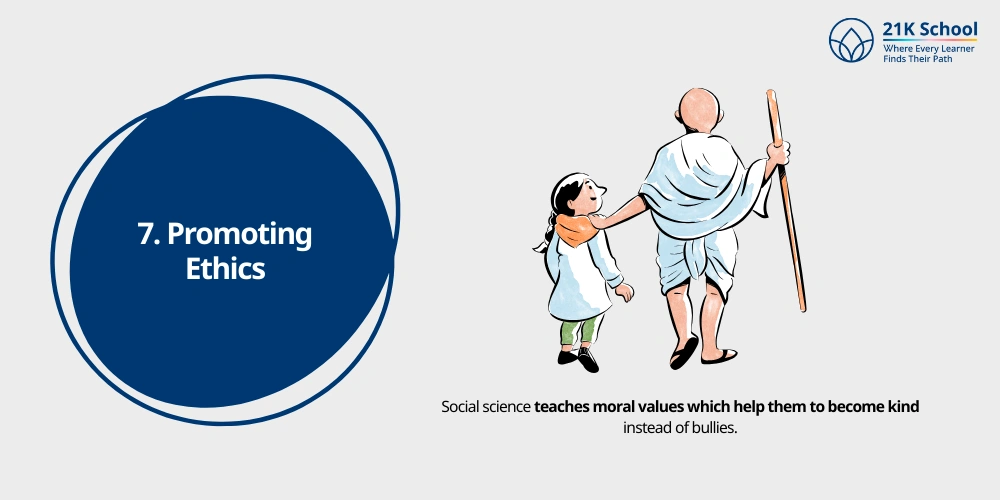
Social science teaches moral values which help them to become kind instead of bullies. For example:
- Honesty
- Equality
- Justice
- Cooperation
- Respect
- Responsibility
8. Understanding diversity
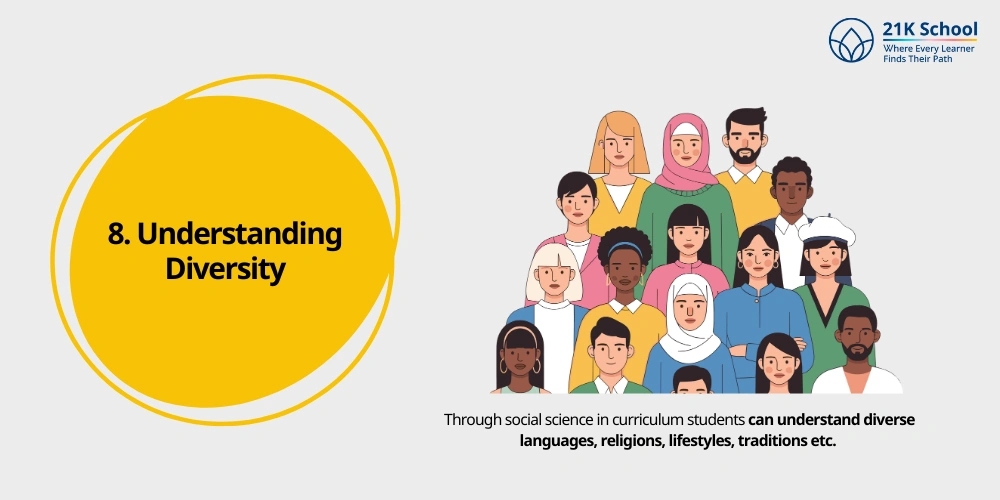
Through social science in curriculum students can understand diverse languages, religions, lifestyles, traditions etc.
This exposure gives the opportunity to strengthen knowledge and experience.
9. Be informed of current events

Students should be informed of current events and social science encourages them to do so through:
- News
- Social media
- Social movements
- Environmental changes etc.
It is also ideal to crack quizzes,interviews or any other school competition.
10. Discover new cultures, ideas and perspectives
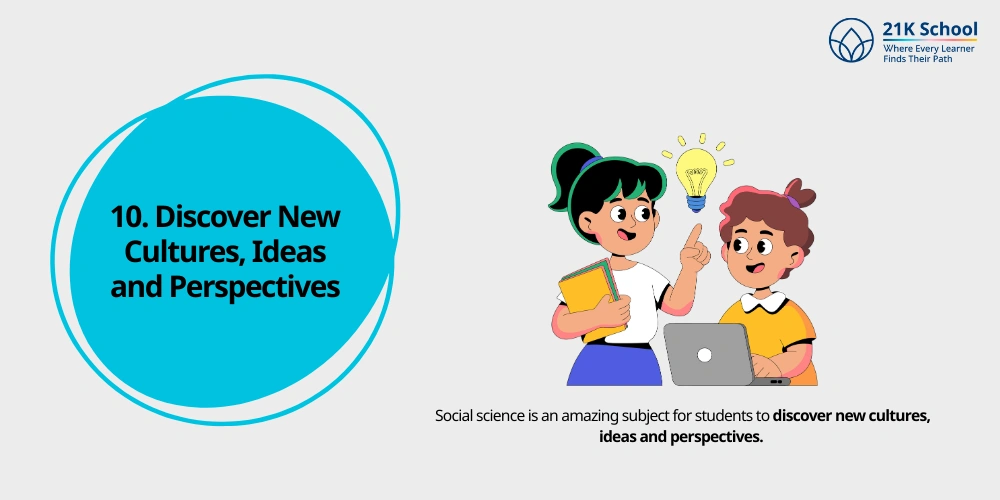
Social science is an amazing subject for students to discover new cultures, ideas and perspectives.
It offers a chance to explore ancient civilizations, modern societies, global cultures, artistic traditions etc.
11. Historical awareness and context
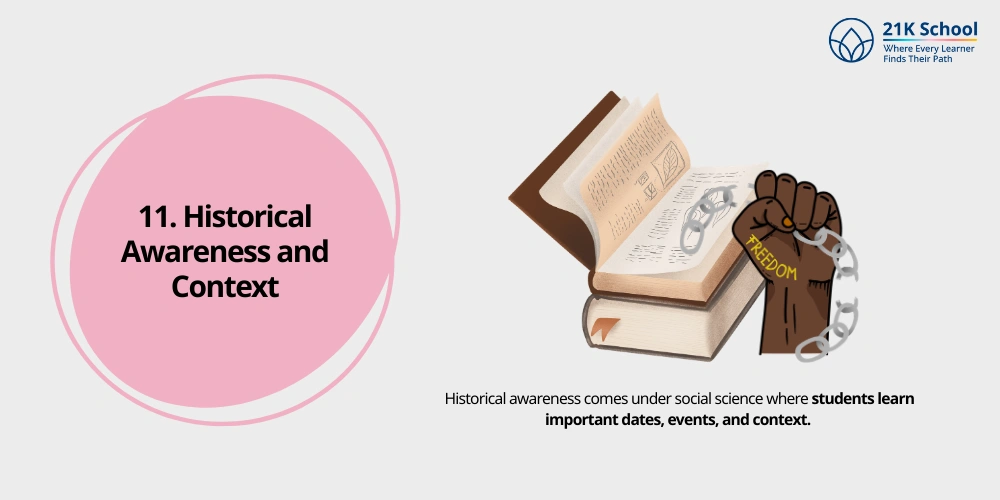
Historical awareness comes under social science where students learn important dates, events, and context.
It helps to build perspective and resolve present issues through mistakes from past events.
12. Practical life skills
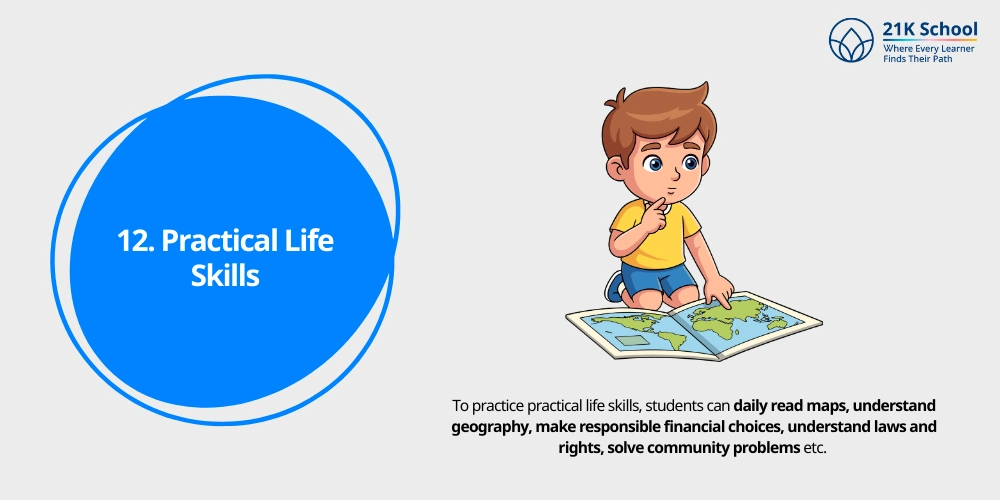
To practice practical life skills, students can daily read maps, understand geography, make responsible financial choices, understand laws and rights, solve community problems etc.
In this way students can navigate the real-world with confidence and responsibility.
Conclusion
To understand how society works, environment issues, world perspectives, etc can be learned through including social science in school curriculum.
It includes everything about the real world from politics to nature and environment. Hope including social science enhances students personal and professional life.
Frequently asked questions
8 questions
Who is the father of social science?
Auguste Comte is widely recognized as the "father of sociology" and "father of social science" (coined the term "sociology" in the 1830s).
Why do we study social science?
We study social science to understand and informed: About societies Human behavior Cultures function Become responsible citizens
Is sociology a social science?
Yes. Sociology is a social science. It is one of the disciplines within the broader field of social sciences.
What are the benefits of taking social studies courses in class 9?
There are various benefits of taking social studies courses in class 9th such as developing critical thinking, cognitive skills, national and international awareness, geographic skills etc.
What is the role of social science in personality development?
Social science plays a major role in personality development because it helps in: Understanding the self and others Building empathy and cultural competence Enhancing communication and interpersonal skills
How does social science support other subjects?
Social science supports other subjects by helping students to focus on behavior, culture, and societal structures on subjects like arts, language, health etc.
How can schools make social science more effective?
Schools can make social science more effective by: Shift rote learning to interactive Use skills-based education Include physical activities Integrating technology like virtual discussions and debates etc.
How to teach social science in primary school?
To teach social science in primary school, teachers and parents should use engaging methods and activities such as: Storytelling and visual aids Role-playing and group activity Debates and discussions etc.
About the author
Ankita Singha
Content Specialist
Ankita Singha is an Education Content Specialist at 21K School, India’s first accredited fully online K-12 School. She focuses on the in-depth research and creation of the well-drafted guides on early childhood education, school admission processes, and CBSE/ICSE curriculum guidance. With more than 2 years of experience at 21K School, a fully accredited institute- Cambridge International (IA702) and Pearson Edexcel (94883), Ankita works closely with the school’s curriculum heads and academic coordinators. Ankita’s every article reflects on the official board guidelines, practical realities, and current policies of online education in 78+ countries. Ankita’s content has helped thousands of parents in understanding the topics like RTE eligibility, NIOS pathways, and age-appropriate admission criteria.
Every 21K School guide is written by our education team and reviewed by a subject facilitator before publishing.
Exploring a CBSE-pathway online school?
Talk to an advisor about 2026–27 admissions — no obligation.
Talk to an advisorComments
No comments yet — be the first to share your thoughts or ask a question.