
Online Primary School for Grades 1 to 5
Choose an Indian or British pathway, with around three hours of live, interactive classes each school day—from home.
- 25,000+Learners
- 98%Parent satisfaction
- 78+Countries served
- 1 M+Hours of teaching




Quick enquiry
Primary school is where children begin to see what they can do. The right environment does more than cover a curriculum. It strengthens foundations, builds confidence and keeps curiosity alive.
At 21K School, your child learns live from home through the Indian or British pathway.
21K School is a registered online Cambridge International School (centre number IA702). 21K School is not affiliated with CBSE. Your child learns live from home through the Indian or British pathway. Small interactive classes, trained teachers—whom we call facilitators—structured learning, regular feedback, and flexible class timings create a complete school experience. This environment takes learning seriously without asking your child to give up childhood, personal interests, or balance.
Why parents choose 21K for Grades 1–5
A structured, live school experience where your child can be known, supported and encouraged to participate.
Parents choose 21K School because it provides a complete online schooling structure tailored to their child's needs. Some families seek stronger academic outcomes, while others want a classroom where their child receives individual attention. Many need quality education without long commutes or relocating, allowing their child to pursue sports, arts, or health priorities alongside school.

“Our daughter joined 21k School from grade 2 onwards. Now she is in grade 6. We never had any issues. Facilitators are excellent. They don’t rely on books to make them study. Through experiments, flip classes study became so much fun and exciting. Interaction between students are really good. Best online school. No regrets.”
21K School offers another credible way. Your child follows a structured curriculum, attends live weekday classes, learns with peers, completes assignments and assessments, and receives feedback from facilitators who can see how they are progressing. At the same time, the school adapts more thoughtfully to the child’s pace, interests and circumstances.
Personalised, Flexible and Accelerated (PFA) learning forms the three cornerstone pillars of the academic approach:
Personalised
Facilitators use assessments, observation, learner submissions, and direct feedback to identify strengths and learning gaps. Children who need reinforcement receive targeted support; those ready for greater challenge extend their learning.
Flexible
Multiple class timing options allow families to select a schedule that fits their daily routine, subject to seat availability. Recorded sessions, digital resources, and dedicated school support maintain continuity when schedules shift.
Accelerated
Acceleration builds deep mastery rather than rushing through grade levels. It ensures every learner grows continuously by building foundational skills, deepening conceptual understanding, and exploring advanced topics beyond the core curriculum.
Indian or British primary: How to choose
Both pathways offer the same live, structured learning experience, with different curriculum frameworks and progression as your child moves through school.
21K School offers two primary pathways, Indian and British. Both provide live classes, trained facilitators, structured progression, learning resources, assessment, parent access and opportunities beyond academics. The difference is the curriculum framework and the progression it leads to.
- Pathway Factor
- Equivalent Stage
- Indian Primary Pathway
- Grades 1 to 5
- British Primary Pathway
- Years 2 to 6 (Corresponding to Grades 1 to 5)
- Pathway Factor
- Curriculum Framework
- Indian Primary Pathway
- Aligned with India's National Curriculum Framework (NCF)
- British Primary Pathway
- Cambridge Primary Curriculum Framework
- Pathway Factor
- Courseware & Books
- Indian Primary Pathway
- NCF-aligned textbooks and physical learning kits
- British Primary Pathway
- Cambridge University Press coursebooks and workbooks
- Pathway Factor
- Board Affiliation / Centre
- Indian Primary Pathway
- Independent online school (Not affiliated with CBSE)
- British Primary Pathway
- Registered Cambridge International School (Centre IA702)
- Pathway Factor
- Future Progression
- Indian Primary Pathway
- Progresses into Indian Middle School (Grades 6 to 8)
- British Primary Pathway
- Progresses into Cambridge Lower Secondary
Select a pathway based on your child's current study background, target long-term academic route, learning preferences, and family plans.
Grades 1 to 5: How learning grows each year
From building strong foundations in Grade 1 to becoming a more independent, thoughtful learner by Grade 5.
Primary school is a five-year journey. Each grade strengthens academic foundations while gradually developing independence, responsibility and the ability to think across subjects.
- Grade
- Grade 1
- Learning Focus
- Building foundations
- What Changes for Your Child
- Children settle into primary-school routines while developing communication, foundational literacy, number sense and learning confidence. Stories, conversation, visual experiences and activities remain important, with learning becoming more structured.
- Grade
- Grade 2
- Learning Focus
- Building fluency and independence
- What Changes for Your Child
- Reading, writing and mathematical fluency develop further. Learners begin working more independently, explaining their thinking and using digital learning tools with guidance. In the Indian pathway, access to the personalised learning platform begins from Grade 2.
- Grade
- Grade 3
- Learning Focus
- Expanding knowledge and application
- What Changes for Your Child
- Learners engage with richer texts, multi-step problems, projects and internationally benchmarked assessment opportunities. In the Indian pathway, learning expands from Environmental Studies into more distinct Science and Social Studies experiences.
- Grade
- Grade 4
- Learning Focus
- Connecting and applying ideas
- What Changes for Your Child
- Children deepen conceptual understanding while strengthening research, collaboration and communication. They make stronger connections between subjects and apply ideas through projects and real-world contexts.
- Grade
- Grade 5
- Learning Focus
- Preparing for greater independence
- What Changes for Your Child
- Learners strengthen subject knowledge, organise their learning, reflect on their progress and communicate ideas with greater confidence—preparing for the increased independence and academic depth of Middle School.
Indian or British pathway? Find the right fit for your child’s grade.
What your child studies
Subjects develop by grade and pathway, with language choices alongside a strong foundation in literacy, mathematics, science and the wider curriculum.
The primary curriculum develops strong academic foundations while giving children repeated opportunities to question, create, collaborate and apply what they know.
- Indian Primary (Grades 1 & 2)
- English (First Language)
- Indian Primary (Grades 3 to 5)
- English (First Language)
- British Primary (Years 2 to 6)
- Cambridge Primary English
- Indian Primary (Grades 1 & 2)
- Compulsory Second Language
- Indian Primary (Grades 3 to 5)
- Compulsory Second Language
- British Primary (Years 2 to 6)
- Cambridge Primary Mathematics
- Indian Primary (Grades 1 & 2)
- Optional Third Language
- Indian Primary (Grades 3 to 5)
- Optional Third Language
- British Primary (Years 2 to 6)
- Cambridge Primary Science
- Indian Primary (Grades 1 & 2)
- Mathematics
- Indian Primary (Grades 3 to 5)
- Mathematics
- British Primary (Years 2 to 6)
- Cambridge Primary Global Perspectives
- Indian Primary (Grades 1 & 2)
- Environmental Studies
- Indian Primary (Grades 3 to 5)
- Science
- British Primary (Years 2 to 6)
- Cambridge Primary Computing
- Indian Primary (Grades 1 & 2)
- Physical Fitness & Mindfulness
- Indian Primary (Grades 3 to 5)
- Social Studies
- British Primary (Years 2 to 6)
- Compulsory Second Language
- Indian Primary (Grades 1 & 2)
- Computational Thinking & Coding
- Indian Primary (Grades 3 to 5)
- Physical Fitness & Mindfulness
- British Primary (Years 2 to 6)
- Optional Third Language
- Indian Primary (Grades 1 & 2)
- —
- Indian Primary (Grades 3 to 5)
- Computational Thinking & Coding
- British Primary (Years 2 to 6)
- —
Language choices
Learners can choose from a range of Indian and international languages, subject to pathway, grade, scheduling and availability:
Available Languages
Arabic, Hindi, French, Kannada, Japanese, Malayalam, Spanish, Marathi, ESOL, Sanskrit, Tamil, Telugu, and Urdu.
Third-language classes may be scheduled outside regular school hours and may carry an additional fee.
What your child learns beyond subjects
Thinking, communication and character develop alongside academic knowledge, helping children become more capable and confident learners.
Academic knowledge forms one part of a child's development. 21K School intentionally shapes how children approach challenges, communicate ideas, build relationships, and understand themselves.
Across the primary years, learning experiences develop:
Reading fluency, written expression, and mathematical reasoning
Scientific inquiry, critical thinking, and creative problem-solving
Digital literacy, research capabilities, and responsible technology habits
Self-management, physical fitness, empathy, and resilience
Age-appropriate Habits of Mind for lifelong learning
21K School is the first school in Asia recognized as an International Habits of Mind Learning Community of Excellence.
How learning happens at 21K School
Across both pathways, live classes are designed around active participation, questioning, discussion and applying what children learn.
Live online classes engage learners through structured interaction rather than passive screen watching. Facilitators delivered 137,200 hours of live online teaching in the 2025–26 academic year using questioning, collaborative tasks, worked examples, and real-time feedback.
Indian Pathway
Uses a competency-based model grounded in the 5E Instructional Framework: Engage, Explore, Explain, Elaborate, and Evaluate. Principles of retrieval practice, active participation, and timely feedback strengthen conceptual retention.
British Pathway
Uses an inquiry-led approach where learners formulate questions, investigate concepts, analyze evidence, and communicate conclusions. Cambridge learning objectives structure subject progression.
Across both pathways, interdisciplinary projects help learners connect concepts across subject boundaries.
From bugs to breakthroughs
For Nithiyalakshmi S, a Middle School Coding Facilitator at 21K School, getting something wrong can be part of learning how to get it right.
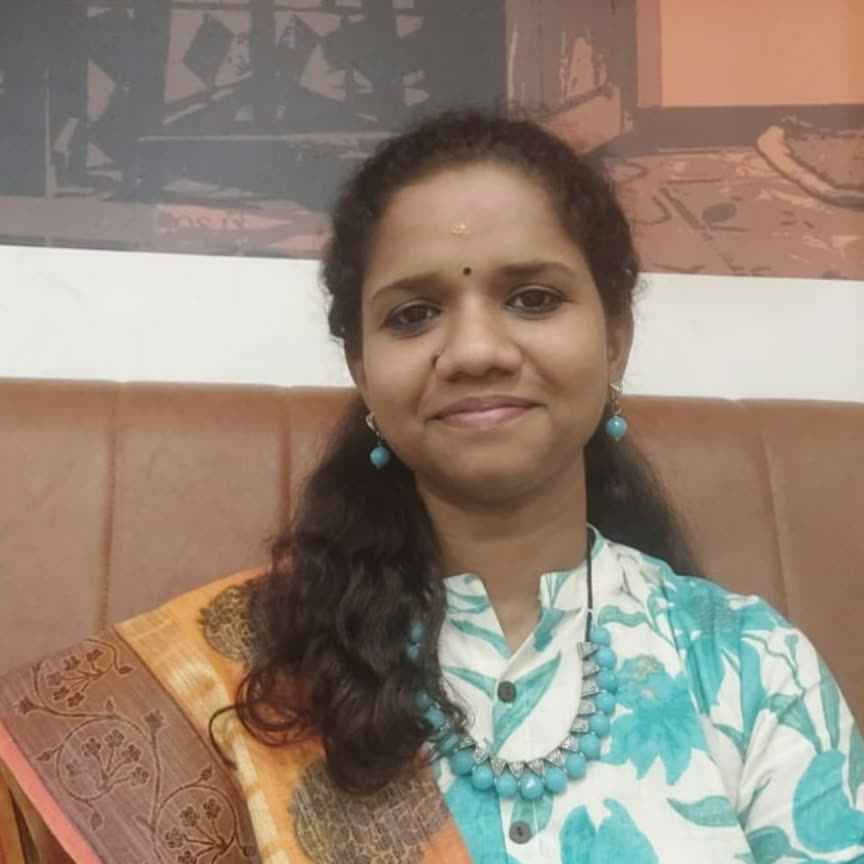
Middle School Coding Facilitator
Nithiyalakshmi S
With a background in software engineering, Nithiyalakshmi brings real-world technology experience into her work with Middle School learners. In her coding classes, a bug is not simply an error to fix. It becomes an opportunity to pause, investigate, try another approach and keep going.
Her approach helps learners build more than coding skills. As they work through problems and learn from what does not work the first time, they also practise resilience, confidence and persistence—habits that can travel well beyond a coding class.
What a typical school day looks like
About three hours of live, interactive classes each school day, Monday to Friday, with different timing options for families.
Classes incorporate structured breaks between active learning blocks. Optional language sessions may take place outside the main timetable. Learners spend off-screen time on reading, physical activities, hands-on projects, and independent practice.
- Option
- Morning Schedule
- Time Window (IST)
- 9:30 AM to 12:40 PM IST
- Equivalent Local Time Reference
- 8:00 AM – 11:10 AM GST (Gulf Region)
- Option
- Mid-Morning Schedule
- Time Window (IST)
- 11:10 AM to 2:20 PM IST
- Equivalent Local Time Reference
- 9:40 AM – 12:50 PM GST
- Option
- Afternoon Schedule
- Time Window (IST)
- 1:40 PM to 4:50 PM IST
- Equivalent Local Time Reference
- 12:10 PM – 3:20 PM GST
- Option
- Evening Schedule
- Time Window (IST)
- 3:20 PM to 6:30 PM IST
- Equivalent Local Time Reference
- 5:50 PM – 9:00 PM SGT (SE Asia Region)
Screen time with a purpose
Live time is active and interactive, while much of the learning continues away from the screen.
Live classroom hours focus on active learning, peer interaction, and real-time guidance from facilitators. Digital platforms provide structured practice, library access, and secure lesson recordings.
Learning shifts off-screen through physical textbooks, written exercises, scientific experiments, physical fitness routines, art projects, and real-world observation. This balance ensures screen time remains purposeful while supporting health, focus, and physical development.
The parent’s role in primary school
Parents support the routine and encourage growing independence; the facilitator remains responsible for teaching.
Parents support their child's learning routine without needing to act as their academic teacher.
In Grades 1 and 2, an adult acts as a learning coach—providing hands-on assistance with technology setup, organizing learning materials, and establishing daily routines. As your child develops self-management skills in Grades 3 to 5, this daily involvement reduces naturally.
Parents monitor progress via dashboard reports, attend scheduled parent-teacher meetings, and maintain a consistent home learning environment. The facilitator delivers instruction while the parent provides supportive home partnership.
How assessment helps your child progress
Four kinds of assessment and how you'll see results
Assessment at 21K School is used to understand learning, not merely record a score.
Assessment measures ongoing learning and guides instructional support through four distinct mechanisms:
Diagnostic Assessment
Identifies baseline understanding, strengths, and concept gaps at the start of learning modules.
Formative Assessment
Evaluates progress during lessons through questioning, short tasks, and projects, enabling immediate feedback.
Summative Assessment
Reviews overall achievement at the conclusion of units, terms, and academic years. Structured term reports are shared twice annually. Facilitators marked 49,680 pages of learner work in the 2025–26 academic year.
International Benchmark Testing
Eligible learners from Grade 3 upward participate in the International Benchmark Tests (ACER IBT) administered by the Australian Council for Educational Research in English, Mathematics, Science, and Reasoning. Nearly 2,000 learners participated in ACER IBT during the 2025–26 academic year.
Learning beyond the timetable
Fests, projects and leadership by grade and calendar
Learners explore their talents through co-curricular programs categorized across four core domains:
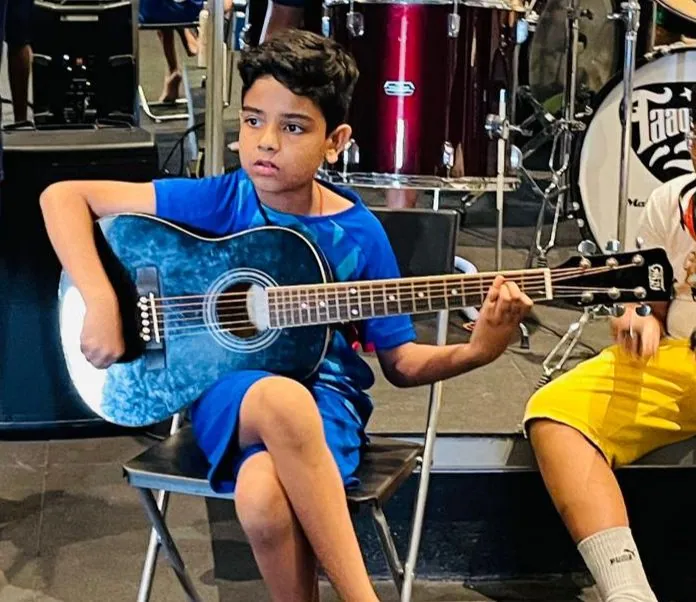
Academic Fests & Competitions
Mathalon, Science Fest & Exhibitions, Lit Fest, Art Fest, and public speaking events.
Entrepreneurship & Innovation
Shark Tank experiences, interdisciplinary projects, and passion-driven research.
Community & Leadership
Student assemblies, inter-house competitions, Community Action Service (CAS) initiatives, and student council roles.
Wellbeing & Skill Pathways
Mindfulness routines, physical fitness sessions, financial literacy, digital media, and public speaking modules.
Optional skill pathways and paid activities vary by grade level and annual calendar.
Friends, community and real-world connection
Familiar classmates, shared assemblies and school experiences help children build connections online, with selected opportunities to meet in person in major cities.
Online schooling builds genuine social connection. Learners collaborate in live classes, participate in school assemblies, present group projects, and engage in school clubs.
In-person social connections are facilitated through 21K School's four physical Learning Garages located in Bangalore, Hyderabad, Pune, and New Delhi (as of 1 September 2026). Families can participate in local sports days, art carnivals, field trips, day excursions, and community meet-ups scheduled across major cities.
Technology that supports learning
One set of tools for classes, practice and reports.
School technology provides responsive learning platforms while maintaining secure user environments. Depending on their pathway and grade, learners receive access to:
Live interactive virtual classrooms and secure class recordings for catch-up and revision
Learner dashboards, digital library resources, and parent progress portals
Virtual science tools, adaptive practice software, and personalized platform access
Physical learning kits delivered directly to the learner's home, including coursebooks, workbooks, planning guides, an ID card, and school merchandise
Safety privacy and support
Managed classrooms, trained facilitators and a clear escalation route.
Children attend classes within secure, invite-only online rooms. Facilitators undergo background checks and safety training covering child protection, cyber security, and cultural awareness. Review the camera-use policy before enrolment to understand webcam participation requirements.
A dedicated Learner Success Team connects families with academic advisors, technical assistance, and administrative support, ensuring parents have a direct escalation route for any concern.
Facilitators who teach, not just deliver
Qualified, trained and focused on understanding how your child thinks, participates and progresses.
Teachers at 21K School are called facilitators because they guide active thinking, inquiry, and discussion rather than lecturing passively.
All facilitators hold at least a graduate degree in the subject they teach, possess verified teaching experience, and hold formal teaching qualifications. Across the faculty, average teaching experience stands at 6.7 years. Facilitators completed 551 total hours of professional development during the 2025–26 academic year, covering Board standards, child safety, cyber security, and digital pedagogy.
Hear from 21K families
Discover how primary-school families found stronger learning, greater confidence and the flexibility to balance academics with important commitments.
“I would be happy to share my experience. My child Rhythm’s learning journey with 21K School has been very positive and meaningful for our family. Rhythm is suffering from a rare condition called Epidermolysis Bullosa, due to which his skin is extremely sensitive and fragile. Because of this, it was not possible for us to send him to a physical school environment. Choosing 21K School for online education has been one of the best decisions we made. The flexible learning environment, well-structured curriculum, and supportive teachers have helped Rhythm continue his education comfortably and safely from home. What we truly appreciate is the personalized attention and the ability to learn at his own pace, which has made learning engaging without adding any physical or emotional stress. The interactive sessions and exposure have also contributed positively to his confidence and overall development. We are genuinely grateful to the entire 21K School team for making quality education accessible for children like Rhythm.”
What the programme includes
Everything included in the primary programme
School fees cover comprehensive educational delivery alongside clearly defined optional extras:
Included in Core Tuition
Live weekday classes, choice of Indian (NCF) or British (Cambridge) pathway, assigned timing window, physical learning kit delivered home, digital library access, continuous assessment, parent portal access, and core co-curricular events.
What Costs Extra
Optional third-language classes, specialized skill pathways, external examination entry fees (where applicable), and optional city-based in-person events.
Fees
How fees are set, and where to see them
Fees vary based on the chosen pathway, grade level, class-size plan, and optional language subjects. Detailed fee schedules, payment options, and term inclusions are published transparently on the Fees page.
How admission works
Six steps from first look to first day
- 1
Step 1 explore
Understand the Indian and British pathways, class timings, subjects, fees and the role of learning at home.
- 2
Step 2 book a call
Speak with an academic counsellor about your child’s current grade, circumstances and intended progression.
- 3
Step 3 apply
Complete the online application and provide the information required for academic review.
- 4
Step 4 select the learning plan
Choose the appropriate pathway, class timing, class-size plan, languages and eligible options, subject to availability.
- 5
Step 5 complete admission
Pay the applicable fee and submit the required documents for verification.
- 6
Step 6 begin onboarding
Receive access, orientation, the learning kit and guidance for beginning the school year.
Questions parents ask about primary school
Is 21K School a complete online primary school?
Yes. Learners attend live weekday classes, follow a structured Indian (NCF) or Cambridge Primary curriculum, complete academic assignments and assessments, receive official term reports, and participate in peer activities. It operates as a full online school rather than a supplementary tuition platform.
Which grades are included in online primary school?
The primary school program covers Grades 1 to 5 in the Indian pathway and Years 2 to 6 in the British pathway (which corresponds directly to Grades 1 to 5).
How old should my child be for Grade 1?
Children entering Grade 1 or British Year 2 must turn 6 years old by the official age reference date of 1 July for the academic entry year.
How many hours are learners in live classes?
Primary school learners attend approximately three hours of live interactive classes per day, Monday through Friday. Optional language sessions or specialized co-curricular modules take place outside these core hours.
How large are primary classes?
21K School offers two class-size options across both Indian and British pathways: standard classes capped at a maximum of 24 learners, and small-group classes capped at 20 learners, subject to intake availability.
Can we choose the class timing?
Yes. Families select from available morning, mid-morning, afternoon, or evening class windows during the admission process, subject to seat availability in their chosen pathway.
What is the difference between Indian and British Primary?
Indian Primary follows the National Curriculum Framework (NCF) and progresses into Indian Middle School. British Primary follows the Cambridge Primary framework (Centre IA702) using Cambridge University Press courseware, progressing into Cambridge Lower Secondary.
Does my child need a parent beside them during class?
Younger children in Grades 1 and 2 benefit from adult setup help and routine support. As children develop independent learning habits in Grades 3 to 5, direct parental presence during live lessons reduces naturally.
How is progress measured?
Academic growth is measured through diagnostic tools, live formative checks, assignment grading, project rubrics, and end-of-term summative evaluations. Eligible learners from Grade 3 upward can also sit the external ACER International Benchmark Tests.
Are physical books provided?
Yes. Every enrolled learner receives a physical learning kit delivered to their home containing prescribed coursebooks, workbooks, school planning materials, a learner ID card, and school merchandise.
Can my child learn additional languages?
Yes. Second-language study is built into both pathways. Optional third-language classes (such as French, Spanish, Hindi, Sanskrit, or Japanese) are available depending on grade level and scheduling.
How will my child make friends?
Learners build friendships through active live class discussions, collaborative project groups, student clubs, assemblies, and regional in-person gatherings organized at Learning Garages and city venues.
Are classes recorded?
Yes. Secure class recordings are published for catch-up and revision purposes. Access and viewing privileges are managed according to the school's online recording and attendance policies.
Is online school suitable for a child with learning support needs?
21K School provides limited academic support through qualified professionals. Discuss your child's specific learning support needs confidentially with an academic counsellor before applying so the school can determine whether it can offer appropriate accommodations. Read more about learning support.
Can my child move from a physical school to 21K during the academic year?
Mid-term admissions are accepted depending on seat availability, grade level, and pathway alignment. Academic counsellors assist with transition planning and bridge learning support where needed.